Tag: Egypt

The Unfulfilled Dream and the Looming Challenge: Team Melli at a Crossroads

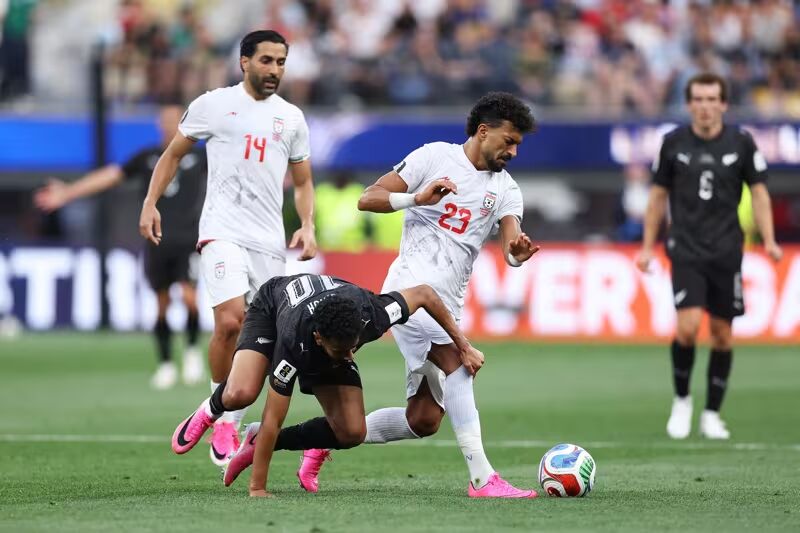
Team Melli’s campaign at the 2026 FIFA World Cup ended in bitter disappointment, despite widespread expectations that the expanded 48-team format would finally pave the way for a historic group-stage breakthrough. With twelve groups and an increased knockout berth allocation, the barrier to reaching the Round of 32 had ostensibly never been lower. Yet, three consecutive stalemates—a gritty but goalless draw against New Zealand, a resilient but ultimately fruitless point against Belgium, and a tightly contested tie with Egypt- proved to be Iran’s undoing. In a group where wins were imperative, these draws left the team stranded, falling agonizingly short of securing a spot among the world’s top 32.

In the immediate aftermath, the Football Federation Islamic Republic of Iran (FFIRI) published two separate assessment reports on its official platform. These documents served a dual purpose: they candidly acknowledged that the national team had fallen short of its pre-tournament objectives, while simultaneously pivoting the narrative toward the future—specifically, the upcoming AFC Asian Cup 2027. While such transparency is commendable on paper, the reports have done little to quell the growing unease among fans and pundits regarding the federation’s capacity to deliver tangible results.

As Team Melli now pivots its preparations toward the Asian Cup, the FFIRI has publicly declared an unequivocal ambition: to reach the final and lift the continental trophy for the first time since 1976. However, when measured against the current trajectory of the squad, the stagnation of the coaching philosophy, and the persistent managerial volatility, this goal appears more aspirational than achievable. The hard truth is that ambition, unaccompanied by structural reform, remains hollow rhetoric.

Looking back at the 2023 Asian Cup (held in early 2024) offers a stark point of contrast. At that tournament, Iran boasted a younger, more energetic core—a side capable of high-intensity transitions and resilient defensive work. Despite shaky group-stage performances against Hong Kong and Syria in the knock-out stage, where the team looked vulnerable and disjointed, they rose to the occasion in the quarter-finals. The dramatic, hard-fought victory over Japan, their perennial tormentor in recent decades, was undoubtedly the high-water mark of the campaign, exorcising deep-seated psychological barriers and igniting hopes of a long-awaited final berth. Yet, having scaled that monumental peak, the team suffered a catastrophic letdown against Qatar in the semi-finals, squandering a golden opportunity and extending Iran’s agonizing wait for a continental final appearance to more than half a century.

Fast-forward to the present, and the grim arithmetic is undeniable. How can a squad that was palpably younger and more dynamic just four years ago—now with its star veterans well into their thirties and physically declining—suddenly rediscover the legs and intensity required to conquer Asia? More pressingly, how can the same tactical blueprint, administered by the same coaching staff that oddly perceives the 2026 World Cup performance as a moral achievement, magically transform into a championship-winning formula? The insistence on defensive conservatism, a lack of creative midfield fluidity, and an over-reliance on aging individual brilliance rather than collective tactical evolution have rendered the team predictable and stagnant.

It is constructive for the Football Federation to speak openly about its aspirations, but its directors must internalize a fundamental principle: declaring a goal does not actualize it. To bridge the chasm between ambition and execution, the FFIRI must urgently conduct a rigorous, top-to-bottom gap analysis. This requires an aggressive, no-nonsense review of the entire footballing pyramid—from youth development pipelines to senior squad selection. Specifically, the federation must scrutinize preparation protocols, set-piece efficiency, physical conditioning regimes, and, most critically, the tactical flexibility of the coaching unit.

Currently, the federation’s proposed remedy is woefully vague. Promises of holding training camps in East and West Asia, devoid of specific opponents, logistical clarity, or strategic intent, inspire little confidence. In the modern competitive landscape, where rivals like Japan, South Korea, Australia, and Saudi Arabia are meticulously fine-tuning their systems with high-quality friendlies and data-driven methodologies, Iran cannot afford to rely on nebulous planning.

The bottom line is that in contemporary football, self-congratulation and hollow talking points are irrelevant currencies. At this juncture, with the current roster composition and an uninspired technical bench, the dream of reaching the Asian Cup final remains just that, a dream steeped in wishful thinking. The countdown is merciless. With barely six months remaining until the tournament kicks off in Saudi Arabia, the margin for error has completely evaporated. The FFIRI must move beyond rhetoric, embrace uncomfortable reforms, and act decisively—or risk watching yet another generation of talent squander its legacy on the continental stage.

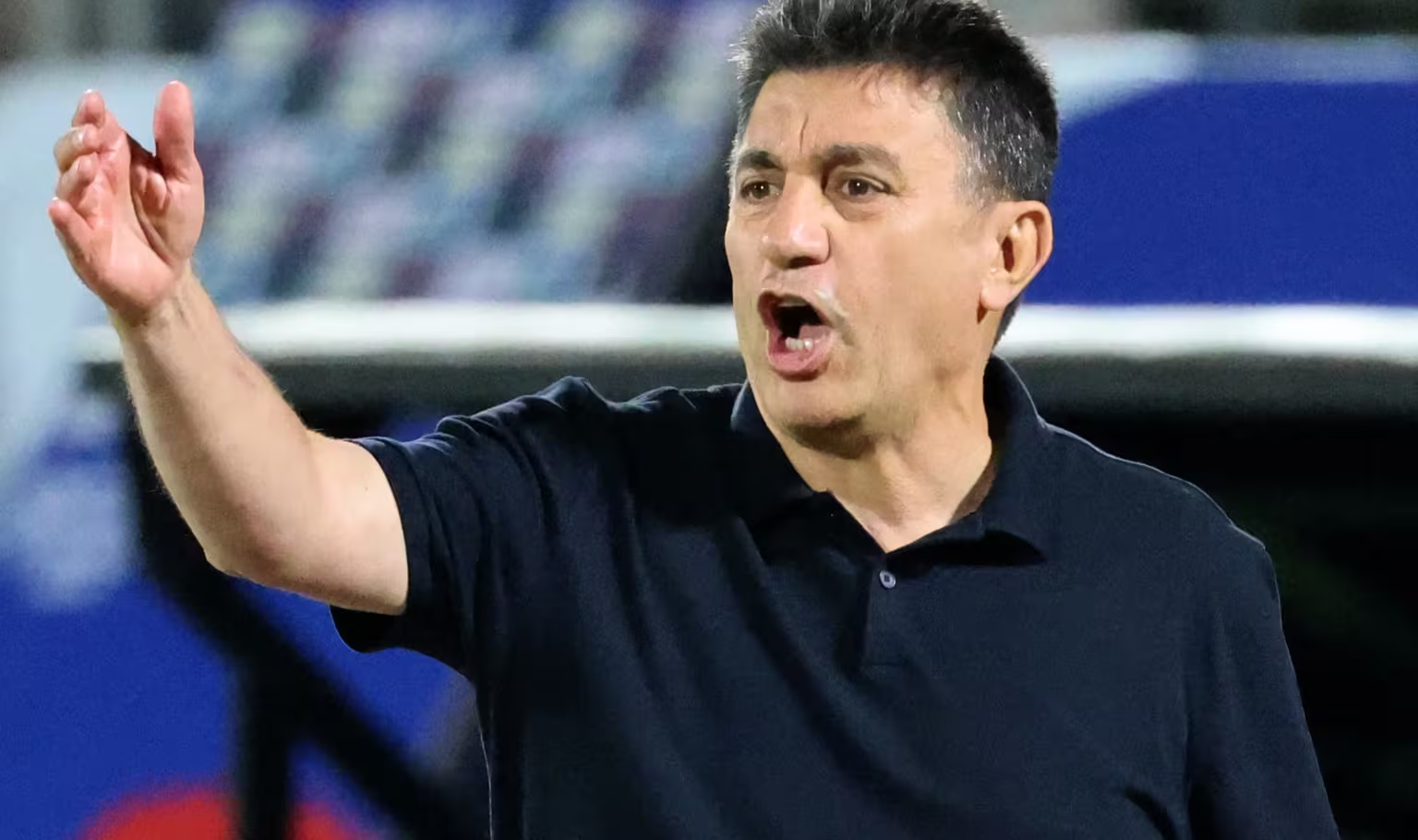
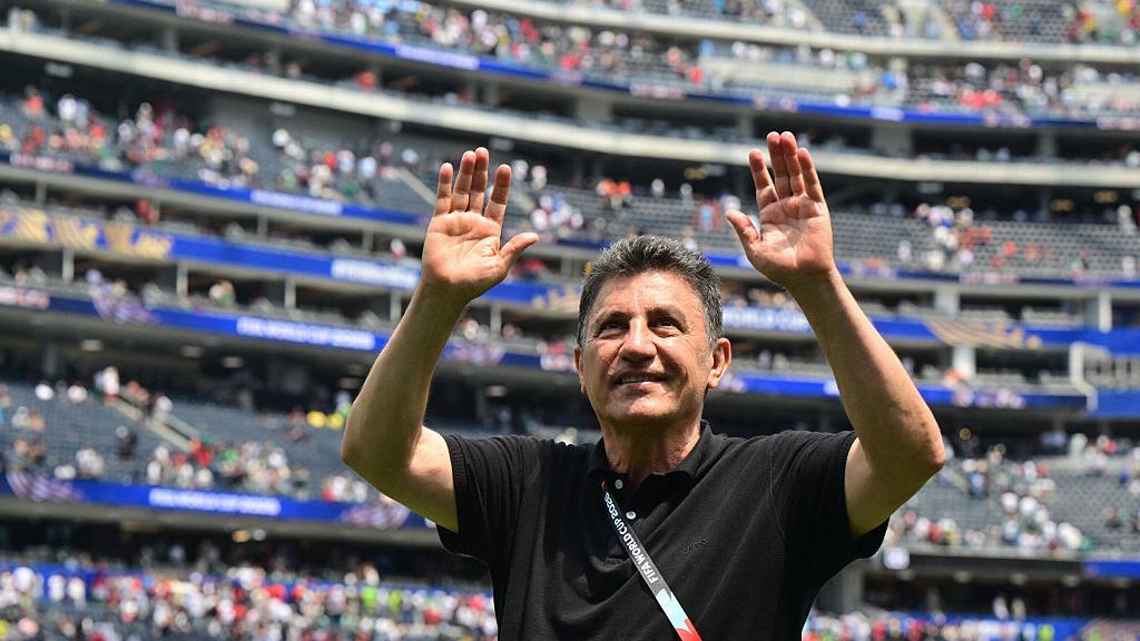
Amir Ghalenoei

The Ghalenoei Paradox: Statistical Brilliance or Competitive Failure?

A statistical examination of Amir Ghalenoei’s two managerial stints with Team Melli reveals a paradox: impressive numerical consistency on paper that contrasts sharply with a tangible lack of competitive pedigree.

First Tenure (2006–2007)
Ghalenoei’s initial spell began on August 8, 2006, with a 1–0 friendly victory over the UAE at Azadi Stadium. It lasted just over a year, culminating in a quarter-final exit from the 2007 AFC Asian Cup, where Iran were eliminated on penalty kicks by South Korea following a goalless draw. Remarkably, across these 21 matches, his side suffered only a single defeat—a heavy 4–0 loss away to Mexico in San Luis Potosí. His final record stood at:

  • P: 21 | W: 13 | D: 7 | L: 1 | Win%: 61.9%

Second Tenure (2023–Present)
His return to the helm began on March 23, 2023, with a 1–1 draw against Russia at Azadi. This second stint has featured participation in major tournaments and yielded one piece of silverware—the inaugural CAFA Nations Cup in 2023. His current record to date is:

  • P: 47 | W: 31 | D: 11 | L: 5 | Win%: 66.0%

The statistical veneer of Ghalenoei's record—particularly the low number of losses—belies a more troubling reality. A deeper critical assessment reveals persistent tactical shortcomings, a failure to capitalize on a favorable draw at the 2026 World Cup, and an inability to translate domestic success into continental or global glory.

🥇 The "CAFA" Asterisk

The solitary piece of silverware from his second tenure, the 2023 CAFA Nations Cup, offers limited vindication. The tournament's participants—Uzbekistan, Kyrgyzstan, Afghanistan, Tajikistan, Turkmenistan, and Oman—are not Asia's traditional powerhouses. While a victory is a victory, this triumph does little to address the more significant failures on the bigger stages that truly define a national team's legacy.

🏆 Continued Continental Failure

The primary indictment of Ghalenoei's tenure is the inability to end Iran's decades-long wait for an AFC Asian Cup title. At the 2023 Asian Cup, despite boasting a squad described as a potential "golden generation", Iran fell in the semi-finals to Qatar. The defeat was widely attributed to tactical errors in his lineup and substitutions, which Ghalenoei himself partially dismissed as misfortune. This failure to convert a talented squad into a championship, echoing the disappointment of his first stint in 2007, remains a significant blemish on his record.

🌍 A Wasted Opportunity at the 2026 World Cup

The 2026 World Cup represents perhaps the most glaring example of style over substance. Ghalenoei's side finished the group stage unbeaten, with draws against New Zealand, Belgium, and Egypt. However, they were still eliminated, finishing ninth among third-placed teams and missing the knockout rounds by a single spot.

This exit was particularly damning given the context:

  • A Favorable Draw: Iran was placed in a group with Belgium, Egypt, and New Zealand, which many saw as the team's most hopeful opportunity to advance in World Cup history.
  • Tactical Bankruptcy: The team was criticized for its "route one" or "Ali Asghari" football, a long-ball strategy that failed to create coherent attacking patterns. The coach was described as lacking the tactical flexibility required against elite opposition.
  • Questionable Squad Management: Perhaps most controversially, Ghalenoei left star striker Sardar Azmoun at home, a decision labeled a "tactical crime". He also relied on a core of players over 30, neglecting younger talent.
  • Poor In-Game Decisions: His substitutions and in-game reading were heavily criticized, with baffling decisions made against Belgium and a failure to adjust tactics when key players like Mehdi Taremi were isolated.

📉 Out of His Depth at the Highest Level

The recurring critique is that Ghalenoei, despite being a legend in the domestic league, is out of his depth at the international level. At the World Cup, he appeared "reactive, hesitant, and ultimately outmatched" compared to other coaches. His pragmatic, defensive approach may succeed against continental rivals, but it lacks the tactical nous required to compete with the world's elite.

📊 A Statistical Mirage

The impressive win percentage and low loss count are, therefore, a statistical mirage.

  • Inflated by Weak Opposition: Many of these victories have come against weaker Asian and Central Asian sides.
  • Context of the World Cup: The unbeaten record at the 2026 World Cup is a hollow achievement, as the team failed to secure the single win needed to progress from a group they were expected to navigate.
  • Elite-Level Failures: When faced with the highest level of competition or the pressure of a knockout tournament, the team has consistently fallen short.

In essence, Ghalenoei's record is one of a manager who has mastered the art of not losing but has repeatedly failed to master the art of winning when it truly matters.

TOURNAMENTS

#CompetetionYearLevelResult
1AFC Asian Cup 2007ContinentalQuarter-Finals
2CAFA Nations Cup2023RegionalChampion
3AFC Asian Cup 2023ContinentalSemi-Final
4CAFA Nations Cup2025RegionalFinal
5FIFA World Cup2026WorldGroup Stage

RESULTS OF THE LAST 10 MATCHES

#DateOpponentStage / TypeScoreResultVenue / Stadium
4721 Jun 2026BelgiumFIFA World Cup0 - 0DSofi Stadium , Los Angeles
4615 Jun 2026New ZealandFIFA World Cup2 - 2DSofi Stadium , Los Angeles
4504 Jun 2026MaliFriendly2 - 0WMardan Stadiuml
4429 May 2026GambiaFriendly3 - 1WMardan Stadium , Antalya
4331 Mar 2026Costa RicaFriendly5 - 0WMardan Stadium , Antalya
4227 Mar 2026NigeriaFriendly1 - 2LMardan Stadium , Antalya
4118 Nov 2025UzbekistanFriendly0 - 0DHazza Bin Zayed Stadium, Al Ain
4013 Nov 2025Cape VerdeFriendly0 - 0DHazza Bin Zayed Stadium, Al-Ain
3914 Oct 2025TanzaniaFriendly2 - 0WRashid Stadium, Dubai
3810 Oct 2025RussiaFriendly1 - 2LVolgograd Arena , Volgograd

Players used- 10 TOP

Ghalnnoei has selected 122 players in his two tenures with Team Melli. Some players he selected were not able to play any matches. The top players who played are as follows:

#Player NameMatches Played
1Mehdi TAREMI44 Caps
2Saman GHODDOS36 Caps
3Saeid EZATOLAHI35 Caps
4Shojaa KHALILZADEH35 Caps
5Mohammad MOHEBI35 Caps
6Alireza BEIRANVAND34 Caps
7AliReza JAHANBAKHSH33 Caps
8Hossein KANANI-ZADEGAN30 Caps
9Milad MOHAMMADI30 Caps
10Ramin REZAEIAN28 Caps

Framing Failure as Glory: The Dangerous Delusion Behind Iran's World Cup Exit

After Iran’s early exit from the group stage of the 2026 FIFA World Cup, social media has been flooded with criticism aimed at both the team and its head coach. Unsurprisingly, however, the official media and the team’s staunch defenders have framed the failure as a remarkable achievement.

The Minister of Sport, who had previously advocated for Iran’s withdrawal from the World Cup in response to American hostility, has now suddenly praised the team’s performance and fighting spirit. Meanwhile, IRIB commentators have consistently highlighted the positives—pointing out that Iran remained undefeated in all three matches—as if that alone were a triumph, conveniently ignoring the fact that a country with such a rich footballing pedigree has not advanced past the group stage since 1978.

Politics and the antagonistic treatment of Team Melli by the U.S. aside, the squad’s overall performance, coaching standards, leadership, and mentality left much to be desired. The team lacked a winning mindset, often faltered in crucial moments, and was, on the whole, mediocre and inconsistent. Technically and emotionally, Team Melli ranked low compared to its rivals.

Among the many critics is former national team coach Jalal Cheraghpour. Reflecting on Iran’s opening match, he said: “Caution was understandable for our first game, but we were overly cautious against a New Zealand side that grew in confidence precisely because of our passive approach. While it made sense to be wary of an unknown opponent, we took it too far. Every goal we conceded only deepened our fear. After that match, with the strategy apparently set on securing two draws in the remaining games, I knew we wouldn’t progress.”

He continued: “We should have played with more courage and fighting spirit in the next two matches. Moreover, the squad’s high average age meant we lacked the energy needed at this level of competition. On the other hand, if either Egypt or Belgium had won their match, our path would have been easier—but the draw complicated things. Qualification became a matter of ‘ifs’ and ‘buts.’ On the final matchday, none of the three possible scenarios that could have sent us through materialized, and we left the tournament empty-handed.”

Addressing the team’s defensive frailty—one of Team Melli’s Achilles’ heels throughout the tournament—Cheraghpour observed: “A team needs creative, talented players in attack. That kind of flair is innate; no one teaches Mehdi Taremi or Mehdi Ghaedi how to dribble. But defending is a scientific discipline that demands deeper knowledge and familiarity with modern tactics. Look at our games—when we don’t have the ball, we should press, but we don’t. When the opposition dominates, our job is to cover the spaces they can exploit. We failed to do that. We often had three or more defenders converging on the ball carrier in dangerous areas, yet we left gaps elsewhere because players bunched together. That was our undoing. Crowding an area without covering the spaces is like sending a soldier into battle without ammunition—it achieves nothing.”

He cited New Zealand’s second goal as an example: “In that scene, Chris Woods, the veteran Kiwi player, controls the ball, turns, and delivers a precise short pass completely unpressured—while our players simply watched. These defensive weaknesses, evident in all three games, stem from a lack of simulation and practice in training. Defenders must be able to read the game and anticipate an opponent’s next move. These skills are not being taught to defenders in our football, whether at club or national level. They keep making basic mistakes and tactical errors, with no apparent correction or guidance from the coaching staff.”

When asked what path Iranian football should take to move forward, Cheraghpour replied: “These shortcomings need to be analyzed and studied by the Football Federation’s training committee, and then compiled into training manuals and courses.”

He added: “Iranian football needs a major shake-up. Thirteen or fourteen players from this squad should be moved on. We have to move beyond traditional, direct tactics and embrace modern football—only then will we see real progress.”

Iran needed help to save their 'disaster' World Cup. Instead, they got more heartbreak

The Guardian
Story by Alexander Abnos
 

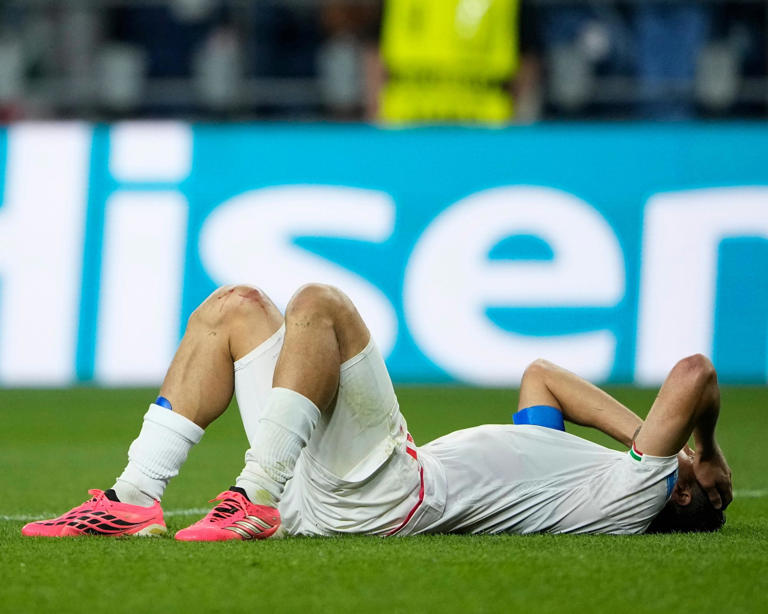
Mehdi Taremi lay on the ground at Seattle Stadium staring at the heavens, devastated. The Iran team he captains had just finished a 1-1 draw with Egypt in their final World Cup group game – one where a win would have put them through to the knockout round for the first time in seven tournament appearances. Taremi had missed a penalty in Friday’s contest, and a seeming late winner had sent the team into bedlam before being correctly ruled out for offside.

Taremi lay on the ground for several minutes. He did so as Alireza Jahanbakhsh, his longtime teammate on a veteran-laden Iran squad, offered comfort. Taremi remained after other teammates who had collapsed in exhaustion had arisen again, trudging to the locker room.

Minutes later, though, Taremi told the media there was “good energy” in that locker room. That they were proud of their performance. That they would look forward to the next day’s games and see what fate they’d bring.

Saturday brought only more heartbreak. Iran needed a Ghana win over Croatia, and got the opposite. They needed Uzbekistan to win or draw against the Democratic Republic of Congo, only to see the African side come back from 1-0 down to win. Most agonizingly, they got a jolt of hope when Riyad Mahrez scored in stoppage time to put Algeria up 3-2 over Austria in a game Iran simply needed either side to win. And then their World Cup ended about 120 seconds later, when Austria equalized, and the final whistle blew.

Iran had originally planned to have a senior federation official speak at the team’s training session on Saturday night. That appearance was canceled after DR Congo’s comeback. Then the training session itself was called off entirely. Just like that, 2026 Team Melli had played their last moments as a team.

It’s a moment of anguish that will rise to the very top of a football history full of them. In 2014, Iran’s hopes were dashed with a moment of magic from Lionel Messi. They were bounced from Russia 2018 after a devastating draw with Portugal. A frenetic nine-minute stoppage-time blitz against the United States in 2022 ended with tears. In this case, the matter was out of Iran’s hands. They needed help, and didn’t get it.

On a note board in the Seattle locker room, Iran left a message reading, in part, that “football is not just a competition for results. It is a test of character.”

What a test it was for Iran. The team qualified for the World Cup, and then their country was named in the Trump administration’s extensive travel ban. They began preparations as the US and Israel launched a bombing campaign on the country, killing their head of state and 168 people at a school in Minab, among others. They stood by as various officials traded barbs concerning their participation. They trained in Turkey because training in Iran would present visa issues. They trained in Mexico under armed guard because training in Arizona as planned would present visa issues. The US government denied 11 team staff visas to attend their World Cup games, including their entire media relations staff. US officials mused that they might be trying to sneak in terrorists.

They were delayed by security checks at airports, turning what should have been quick trips into several-hour ordeals. Outside US stadiums, they were greeted with protests, mostly driven by other Iranians. Even in the hours before they played the most crucial match in their history on Friday, news broke that the US had launched a fresh round of bombings on their homeland, with a supposed ceasefire in action.

How should a team manage this unprecedented state of affairs? According to Taremi, the answer was simple: “Run,” he demanded of his team before a 0-0 draw with Belgium. Run, and play without fear.

One can quibble with the technical quality of Iran’s players in their three-draw performance at this World Cup, but they certainly ran. Team Melli flew headlong into challenges, aggressively closed down passing lanes, threw themselves at anything that even looked like it might eventually make it towards their goal. Iran played tough, but fair. They won fans from Mexico to Seattle, and between those major efforts and their self-applied label as the “most oppressed” team in the tournament, it wasn’t hard to see why.

But were they fearless, really? For crucial periods, including most of the second half against Egypt, it seemed Iran barely wanted to attack at all. Iran were up a man for 24 minutes against Belgium and rarely threatened. They allowed a New Zealand team ranked more than 60 spots below them to dictate the terms of that opener. When waves of attacks came in all of these, it was often at the very end, as if they were driven by fear, not playing free of it.

Ultimately, Iran allowed their World Cup hopes to be determined by the closest of calls. A winning goal against Egypt by Shojae Khalilzadeh, ruled out for offside. Another winner by Taremi against Belgium, ruled out for offside. Taremi’s missed penalty and Saeid Ezatolahi’s header off the crossbar, both against Egypt.

“For a few centimeters, five centimeters, 10 centimeters, 30 centimeters, not even a meter, these goals were ruled out,” head coach Amir Ghalenoei lamented after Friday’s result. “I’m just unhappy and upset at the bad luck.”

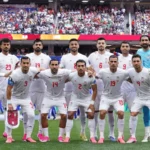
One would think a team with this much experience would know better. Iran were the second-oldest team at this World Cup, with the most players aged 30-plus of any side. This was a generation of players who hoped to advance to the knockout round for the first time in Iran’s history. Instead, their legacy will be even more heartbreak.

“I do not understand what is wrong with our football,” Ramin Rezaeian said on Friday, after the draw with Egypt took the team’s fate out of their hands. “At the end, [I am] just apologizing to my people in Iran, because they deserve more happiness.”

Perhaps they simply did not have the energy to attack. After all, their World Cup had been a “disaster”, striker Taremi said on Friday, once again remarking to journalists about the injustice of being made to leave a match on match night, usually a few hours after the final whistle.

“We don’t have [a chance to do] recovery, we don’t have any logistics people here to help us,” Taremi said. “We always complain about these things, but no one helps. No one.”

On Saturday, the help also failed to come on the field.

VAR Robs Iran of Glory – Controversial Offside Call Leaves Team Melli in Agonizing Limbo


VAR Heartbreak Denies Iran Historic Victory as Team Melli Left in Agonizing Limbo

Iran 1–1 Egypt: A Night of Drama, Controversy, and Unfinished Business

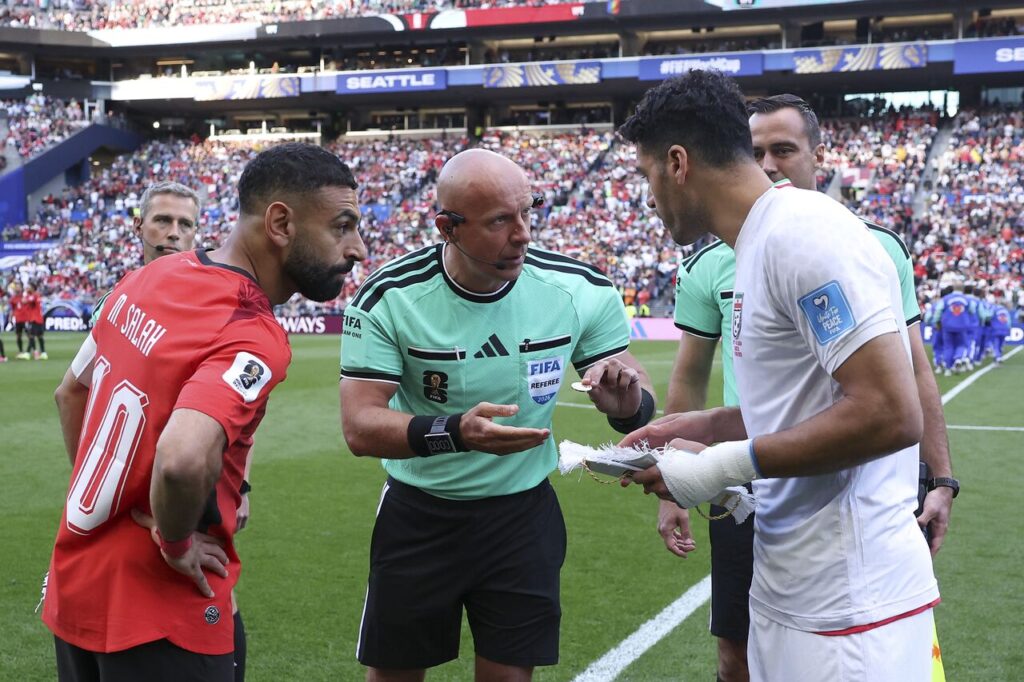
Team Melli played out a 1–1 draw against Egypt in their final Group G match, completing the group stage unbeaten—yet still uncertain of their qualification fate for the Round of 32. In a night filled with controversy, both on and off the pitch, Iran came agonizingly close to sealing their place in the knockout rounds, only to be denied by a brutal VAR decision in stoppage time.

A Distraction-Filled Spectacle

From the outset, this match was overshadowed by forces far beyond football. The American government and the organizing committee made every possible effort to provoke both the Iranian and Egyptian teams, using the tournament platform to promote the Pride movement against the explicit wishes of both nations. The bulk of the American mainstream media coverage focused not on the football being played, but on political protests and LGBTQ+ activism—a transparent attempt to distract from the sport and weaponize the World Cup for ideological purposes.

To their immense credit, Team Melli withstood this psychological warfare with remarkable composure. From the booing of the Iranian national anthem to the relentless political posturing in the stands, the players remained focused on the task at hand and delivered a performance to remember.

A Soft Goal, A Missed Penalty, and A Swift Response

Egypt struck early, scoring in the 5th minute with what was arguably the softest goal Iran has conceded in years. A defensive lapse compounded by uncharacteristic hesitation from Alireza Beiranvand allowed the Pharaohs to take an early lead. Yet, rather than collapsing—as Iranian teams have done in the past—this squad showed resilience.

Just minutes later, Mehdi Taremi won a penalty after being fouled inside the box. The captain grabbed the ball with intent, but his body language betrayed a lack of conviction. His feeble spot-kick was parried by the Egyptian goalkeeper—a miss that would prove costly in the final reckoning.

The savior, once again, was Ramin Rezaeian. In the 13th minute, from the most acute of angles, the indefatigable right-back fired home a stunning equalizer. It was a goal of sheer quality and determination, keeping Iran's hopes very much alive.

Route One Football – A Flawed Strategy

As in all previous matches, Ghalenoei opted for a direct, route-one approach. The advantage of this system lies in Iran's two clever and competent wingers—Milad Mohammadi and Ramin Rezaeian—who thrived when balls were played out wide. However, when the defense launched long balls directly toward the lone striker, Mehdi Taremi, the strategy proved wasteful. Taremi, for all his industry, lacks the pace and dribbling ability to consistently turn such deliveries into scoring opportunities. He disrupted Egypt's defense with his movement and physicality, but he lacked the quality to make those balls count.

Second-Half Chaos

The second half was a frantic, end-to-end affair. Egypt's talisman Mohamed Salah was withdrawn due to a knock—a significant blow to the Pharaohs' attacking threat—but his replacement, Omar Marmoush, proved a handful in his own right, creating several headaches for Iran's backline.

The VAR Nightmare – A Goal That Never Was

The match reached its dramatic crescendo in stoppage time. In a frenetic finale, Iran seemingly scored a game-winning goal when Shoja Khalilzadeh pounced on a loose ball and fired home from close range. Pandemonium erupted among the Iranian players and fans—they had done it. They had clinched a spot in the knockout round.

Then came the crushing blow.

VAR intervened. A lengthy review concluded that Khalilzadeh was marginally offside. The goal was disallowed. The celebration turned to devastation. Iran had been denied a historic victory by the finest of margins—a brutal, heart-wrenching ending that left players slumped on the pitch and fans in disbelief.

Qualification – A Nervous Wait

The other match in the group ended 5-1 in favor of Belgium. With three points and a goal difference of zero, Iran's fate is no longer in their own hands. They must now wait for the conclusion of matches in other groups, particularly those involving Croatia, Algeria, and DR Congo, whose results will determine whether Iran's unbeaten campaign is rewarded with a place in the Round of 32.

On paper, Iran's position is strong—but in the cruel arithmetic of World Cup qualification, nothing is guaranteed until the final whistle blows in every group.

Final Verdict

Iran's performance throughout the group stage has been a testament to their resilience, tactical discipline, and growing belief. They have gone unbeaten against New Zealand, Belgium, and Egypt—a feat that would have seemed improbable just weeks ago. Yet, the shadow of VAR and the lingering regret of a missed penalty will haunt them until their fate is confirmed.

If Iran does qualify, they will do so with the knowledge that they deserve it. If they fall short, they will be left to wonder what might have been—had that penalty been converted, had that goal stood, had the football been allowed to speak for itself.


Iran’s Tactical Blueprint vs. Egypt: Ghalenoei Rings the Changes to Neutralize Salah

As Team Melli prepares for their crucial Group Stage clash against Egypt, all eyes are on the tactical chess match that head coach Amir Ghalenoei is orchestrating. While Iran is expected to line up in a fluid 4-3-2-1 formation, the lineup reveals a significant tactical shift designed to counter the specific threats posed by the Pharaohs, particularly the talismanic Mohamed Salah.

The Defensive Backbone: Stability and a Key Swap

Between the sticks, there is no debate. Alireza Beiranvand, the hero of the previous outing against Belgium, will retain his position. His shot-stopping prowess and commanding presence will be vital against Egypt’s rapid transitions.

At the heart of the defense, the trusted partnership of Shoja'a Khalilzadeh and Mohammad Hossein Kananizadegan will resume their duties. Their chemistry and aerial dominance form the bedrock of Iran’s defensive solidity, and they will be tasked with keeping the Egyptian forwards at bay.

The most notable change, however, comes on the left flank. In the previous match, Ghalenoei deployed a three-center-back system, utilizing Ehsan Hajsafi as a hybrid left-sided defender. For this fixture, the coach is pivoting back to a traditional back-four. Ali Nemati is set to step in as the out-and-out left-back, and his primary objective will be a man-marking masterclass: containing the relentless dribbling and cutting-inside runs of Mohamed Salah. This is a bold bet on Nemati’s defensive discipline and pace.

On the opposite side, Saleh Hardani is expected to keep his place at right-back, despite a shaky performance against Belgium where he was substituted to spare him further exposure. Ghalenoei is showing faith in his recovery. However, to ensure the right flank is not a liability, the coaching staff has devised a protective mechanism: Ramin Rezaeian (playing further up the pitch) will be tasked with dropping deep to provide double coverage when Hardani is pressed into one-on-one situations.

The Engine Room: A Hybrid Midfield

The midfield pivot is where Ghalenoei’s tactical flexibility shines. Saeed Ezzatollahi and Ehsan Hajsafi are slated to operate as the two defensive midfielders. Ezzatollahi, who delivered a commanding, redemptive performance against Belgium after a lackluster opener against New Zealand, will be crucial in breaking up Egypt’s play. Fans will be hoping for a similar display of grit and distribution against the Egyptians.

Hajsafi, meanwhile, is the ultimate utility man. After excelling as a left fullback in the last match, he moves into the heart of midfield for this encounter. His versatility is Ghalenoei’s trump card: Should Iran need to shore up the defense late in the game, Hajsafi can seamlessly drop back to left-back, allowing Ghalenoei to swap Nemati for a more attacking outlet. Conversely, if Iran is chasing a goal, Hajsafi can push forward, providing veteran composure in the final third.

Completing the midfield trio is Saman Ghoddos, who will once again operate as the advanced playmaker, sitting just behind the forward line. The coaching staff is banking on Ghoddos’s incisive passing and visionary through-balls to unlock a compact Egyptian defense. He is the linchpin of Iran’s transition play.

The Attack: Width, Work Rate, and the Lone Wolf

On the wings, Iran boasts pace and industry. Ramin Rezaeian will occupy the right-wing role, but his duties extend far beyond attack; he will be the insurance policy for Hardani, embodying the modern "box-to-box" winger. On the left, Mohammad Mohebbi will provide the direct dribbling threat. Both players were standout performers in the first match, and their ability to track back while delivering dangerous crosses will be integral to Iran’s balance.

Leading the line as the lone striker is Mehdi Taremi. The Olympiakos forward was a relentless engine against Belgium, running channels and pressing high with astonishing speed. He came agonizingly close to scoring what would have been one of the most historic and beautiful goals in Iranian World Cup history, while denied by VAR on his well-taken free kick. Against Egypt, Taremi will carry the weight of the nation’s attacking hopes. His movement, hold-up play, and predatory instincts inside the box will be Iran’s primary route to goal.

Summary: A Calculated Risk

Ghalenoei’s selection is a clear signal: Iran will not sit back passively. By reverting to a four-man defense and isolating Salah with a dedicated fullback, Iran aims to stifle Egypt’s greatest weapon while releasing their own dynamic wingers. The midfield flexibility provided by Hajsafi allows for in-game adjustments without using a substitution.

It is a high-risk, high-reward strategy that hinges on defensive discipline and attacking efficiency. If Iran can weather the early Egyptian pressure and allow their creative players—Ghoddos, Mohebbi, and Taremi—to flourish, they have every chance of securing a result that propels them toward the knockout stages.

Belgium Blueprint, Egyptian Threat – Can Iran Finally Break Their World Cup Curse?


The Belgian Revelation – Iran Proves It Belongs on Football's Biggest Stage

The match against Belgium was a revelation on multiple levels. What it demonstrated, beyond any reasonable doubt, is that Team Melli possesses the quality, resilience, and tactical intelligence to qualify for the next round of the FIFA World Cup. This performance lent credibility to Iran's FIFA ranking and proved that—despite the discrimination, logistical hostility, and ill-treatment they have endured throughout this tournament—this team can genuinely challenge the very best in world football.

Ghalenoei's Masterclass – Silence the Critics

Amir Ghalenoei, the target of relentless criticism following the New Zealand draw, experienced a fit of tactical inspiration against Belgium. He had clearly done his homework with remarkable efficiency. Despite retaining both Ali Nemati and Shoja Khalilzadeh—two defenders who had performed poorly against the Kiwis—his masterstroke was the deployment of a three-man central defensive system. This formation suffocated Belgium's attack, neutralizing the most lethal forward line Iran has faced in years. The decision was bold, unconventional, and ultimately brilliant.

What the Draw Means for Group G

The 0-0 stalemate means Iran remains undefeated after two matches but is not yet assured of a place in the Round of 32. The equation is simple but fraught with pressure: Iran needs at least one point against Egypt to keep their destiny in their own hands, while a victory would guarantee qualification. Three points would seal the deal emphatically.

The Ghost of World Cup Finales – A Troubling Trend

Team Melli has previously played in six editions of the FIFA World Cup, and history is not on their side. In their final group matches, Iran has recorded four defeats and two draws—a record that translates into an alarming inability to deliver when it matters most. This is not merely a statistical curiosity; it is a deeply ingrained trend in Iranian football, evident at both club and national level in recent years.

We all remember the heartbreaks: the Asian Cup semi-final failures in 2019 and 2023, and the crushing disappointment of the 2022 World Cup when Iran needed only a draw against the United States to qualify—and fell short. Whatever the reasons for these last-minute flops—whether psychological fragility, tactical conservatism, or sheer misfortune—this time, the players and coaching staff must stand up and be counted. History is a lesson, not a life sentence.

Egypt – A Different Kind of Beast

Some analysts and fans believe Egypt represents a tougher challenge than Belgium. Ghalenoei and his players would certainly beg to differ. The game against Belgium should serve as the template for the Egypt encounter—but there are crucial differences. The towering presence of Romelu Lukaku is replaced by the devastating pace and guile of Mohamed Salah. The same defensive focus, discipline, and collective responsibility must be applied to nullify Egypt's talisman.

However, Salah is far from Egypt's only threat. Omar Marmoush and Mahmoud Trezeguet have proven themselves to be potent attacking weapons capable of exploiting any lapse in concentration. In simple terms, Iran's defense must replicate the near-flawless performance it produced against Belgium—or risk being undone by a single moment of brilliance.

The Peril of Defensive Conservatism

The fear among fans is that Ghalenoei will revert to a cautious, ultra-defensive game plan in pursuit of the single point needed for qualification. That approach is fraught with peril. Sitting deep against a team with Egypt's attacking quality could invite pressure, concede space, and ultimately end in the kind of heartbreaking disappointment that has become all too familiar.

Team Melli possesses genuine quality in attack. Mehdi Taremi, Mohammad Mohebi, Mehdi Torabi, Amirhossein Hosseinzadeh, Mehdi Ghaedi, and even the relatively untested Eckert are offensive weapons capable of causing serious problems for Egypt's defense. This is not a squad that should be shackled by fear. Iran has the tools to attack—and to win.

Mentality Is Everything

Ultimately, the outcome of this crucial fixture will be determined by mentality—both of the team and the coaching staff. If Ghalenoei decides that the reward is worth the risk and opts for an attacking approach, Iran could secure a historic victory. If he maintains the 5-4-1 formation and invites Egypt onto them, the consequences could be disastrous.

The Belgium match has given Iran a blueprint, a template, and a belief system. Now, they must execute. The players must play with freedom, confidence, and the unshakable conviction that they belong on this stage.

Final Verdict

The draw against Belgium was not just a result—it was a statement. It announced to the world that Iran is no longer a team that simply participates; it is a team that competes. With one match remaining, the opportunity to make history is there for the taking. The question is whether Ghalenoei and his players have the courage to seize it.


Ghalenoei : "Iran played 'beautiful game' vs. Belgium under 'worst' conditions"

INGLEWOOD, Calif. -- Iran coach Amir Ghalenoei said his team played a "beautiful game" under the "worst possible conditions" in their 0-0 draw with Belgium at SoFi Stadium on Sunday.

Among the reasons Ghalenoei listed that made life difficult on his team were short travel windows, visa complications entering the United States and Mexico in recent weeks, almost no time to properly prepare the team ahead of the tournament and a world-class opponent in Belgium, FIFA's No. 10-ranked team.

"We came into the World Cup under the worst possible conditions," Ghalenoei told reporters after the Group G game left Iran on two points from two matches. "And still we got a result against a great team and a great manager.

"We played a beautiful game."

Iran, whose travel from their base in Tijuana, Mexico, into and out of the U.S. has been restricted, landed in the U.S. on Saturday night, played Sunday and were due to return to Mexico on Sunday night.

"We had two great games without losing," Ghalenoei said, alluding to his team's opening 2-2 draw with New Zealand. "Tonight, we celebrate. Tomorrow, we focus on Egypt, which is a very strong team.

"We need to recover and then ... we have to fly back. We don't even have enough time to recover. Tomorrow, we will look at [today's] game and look at the game with Egypt."

"Right now, we need recovery," he continued. "Sixteen hours, two flights and a heavy game. I don't think anyone could have endured this. And our players have given everything. What we need the most now is to recover."

Winger Alireza Jahanbakhsh, who plays his club football in Belgium and came on at halftime Sunday, said at the bare minimum Iran wanted to have their entire support staff with them when they traveled and time to adapt to the location they played.

"That's just the fairness," Jahanbakhsh said. "I think for all the teams, and I don't think we are asking for much.

"From the other side, this is part of our culture that in a difficult situation we perform better. I think that united us even more, and that's one of the things we showed today. We showed a great deal of character, and part of it comes from the situation we are in, obviously."

Iran will play their final match against Egypt on Friday at Lumen Field in Seattle with an eye to reaching the knockout stage of the World Cup for the first time in the country's history.

"Hopefully, for the next game, we can go a bit earlier," Jahanbakhsh added. "Seattle is a different city, a different place and further from the place where we are staying in Tijuana."

Ghalenoei and Jahanbakhsh also singled out goalkeeper Alireza Beiranvand for keeping Iran in the game and helping them earn a valuable point.

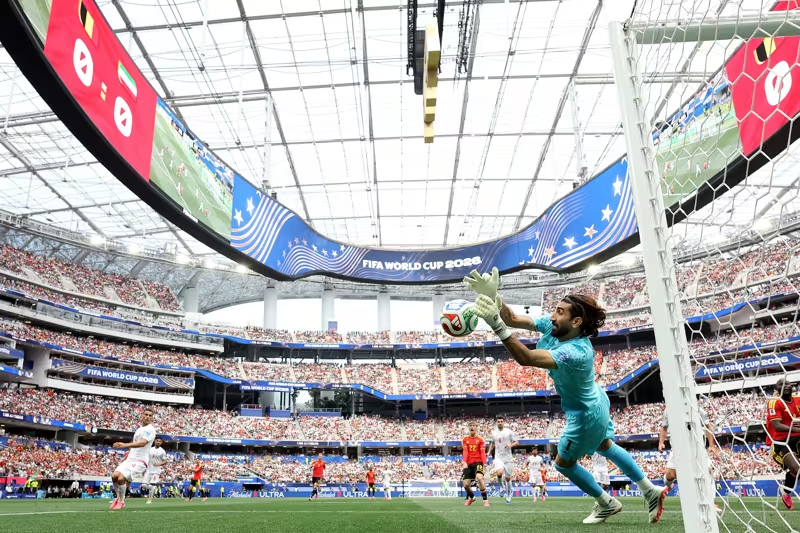
Beiranvand had several key saves in the game, including one on his own line midway through the second half to keep Belgium out after Kevin De Bruyne's cross rolled across the Iran goalmouth before Beiranvand smothered the chance.

"He is one of our greatest goalkeepers in the history of Iranian football, and he had one of his best days today," Ghalenoei said. "He had the right concentration, and he gave us one very valuable point."

For the second game in a row, Iran played in front of jam-packed stadium -- 70,317 was Sunday's official attendance -- and despite a solid showing from Belgium fans, Iran was roared on by a large contingent of supporters throughout the match.

Grievances Over Game Plans: How Injustice Overshadowed Tactics in Ghalenoei's Pre-Match Address

Amir Ghalenoei stepped up to the pre-match press conference ahead of Iran's crucial clash with Belgium with an opportunity to dissect tactics, address defensive frailties, and outline a coherent plan for upsetting one of Europe's traditional powerhouses. Instead, the microphone became a megaphone for frustration, a litany of complaints about inhospitality, inequity, and the systemic disadvantages his team has endured since setting foot on American soil.

Technical analysis took a backseat. Player selection, formation tweaks, and counter-strategies were scarcely mentioned. The dominant refrain was one of protest: Iran, Ghalenoei insisted, is not competing on a level playing field. Team Melli is handicapped by forces far beyond the white lines of the pitch, and he made certain the world heard it.


"Less Than 16 Hours": A Travel Nightmare

Ghalenoei opened his remarks by drawing a stark contrast between Iran's preparation timeline and that of their opponents:

"In the first game, we were in Los Angeles about 24 hours before kickoff, and we had time. Against Belgium, they gave us less than 16 hours. We were forced to conduct our training half-heartedly. This made the situation difficult for us."

He acknowledged FIFA President Gianni Infantino's efforts to alleviate some of the logistical burdens, but quickly pivoted back to the grim reality:

"Although I know the FIFA president tried his best to solve the problems, these problems have only increased. We left the training session incomplete because we simply did not have enough time. That made our job infinitely harder."

The tone was measured but unmistakably bitter, a coach who feels his team has been set up to fail before a ball is even kicked.


Defensive Woes Acknowledged, But Recovery Denied

When pressed about Iran's defensive vulnerabilities, so painfully exposed by New Zealand, Ghalenoei did not shy away from the issue, but framed it within the broader context of logistical sabotage:

"In the previous game, we had problems with individual mistakes and defensive structure. With the little time we had, we were unable to recover properly because we spent more time traveling by air than on the ground. That prevented us from fully covering our defensive problems."

He emphasized that mental and psychological recovery took precedence over tactical drilling—a telling admission that the team's focus has been fragmented by external stressors. Analysis, he noted, came second.

"What was important to me was the mental and psychological issues. Then we worked on the analysis. We will definitely make changes against Belgium, but we have a very difficult task ahead."


Belgium: Respect Without Fear

On the subject of Belgium—a team boasting stars like Lukaku, De Bruyne, and Doku—Ghalenoei offered respect but refused to concede intimidation:

"As you said, Belgium is one of the very good teams in the world. But the reality is that in football, the game starts when the referee blows the whistle. The players are able to implement tactical orders well during the match. We also have very good, quality players who play with their hearts."

It was a brief nod to footballing matters, quickly overshadowed by a broader lament about the conditions his squad has endured.


Gratitude for Mexico, Silence from Others

In a rare moment of warmth, Ghalenoei extended his thanks to Mexico for their hospitality during Iran's training camp in Tijuana:

"I would like to thank them once again for hosting the team. They made up for all the shortcomings of others. I thank all the Mexican fans in the Tijuana camp."

The gratitude, however, only sharpened the contrast with the treatment Iran has received in the United States—a treatment Ghalenoei characterized as unprofessional and deeply unjust.


"I Asked 47 Other Coaches—I Got No Answer"

Perhaps the most striking revelation came when Ghalenoei disclosed his attempts to seek solidarity:

"I asked 47 other coaches who are at the World Cup, but I did not get an answer. We arrived in Los Angeles very late. We wanted two weeks before the tournament to get acquainted with the hosting conditions."

The implication was clear: Iran stands alone in its struggles, isolated not only by logistical barriers but by the indifference of the wider football community.


Executive Absence: A Team Without Its Leadership

Ghalenoei did not stop at travel grievances. He escalated his critique to include the absence of key Iranian football executives:

"The president of the federation, the team manager, the communication manager, and especially the media team are not with us. These behaviors are not at all in the standards of World Cup hosting. How can a team participate in the World Cup but all the executive staff of that team is absent?"

He connected this injustice to a deeper national narrative:

"These behaviors showed how much the Iranian people—especially the martyrs of the homeland—have been hurt by such behaviors. Even if we had spent billions of dollars, we could not have shown the oppression and rightfulness of the Iranian nation like this. But these behaviors have shown how oppressed a country we are."


A Plea for Justice, Not Politics

Ghalenoei was careful to distinguish his protest from political posturing:

"We did not come here for politics. We are protesting the treatment that is being done to us. I did not see the head coaches of other teams to see how they would react, but if I were there and I saw such injustice being done to another team, I would definitely react."

He reiterated his hope that future World Cups would not institutionalize such discriminatory practices:

"I hope the world will be governed in peace and tranquility, and that these behaviors will not be institutionalized in future World Cups."


Infantino's Efforts: Acknowledged but Insufficient

Ghalenoei carefully parsed his words regarding FIFA's involvement:

"I didn't say Infantino has helped. I said he is trying. For example, they told me I could go to America at 6 o'clock yesterday, and I welcomed that—but no matter how long we waited, nothing happened. This injustice was not good for us."

He pointed to a glaring inconsistency:

"They did not give a visa to the president of our federation, who is the father of the team and can solve many issues with his presence."


The Belgian Contrast: A Tale of Two Preparations

The most damning comparison was reserved for Belgium's preparation timeline:

"Belgium arrived in Los Angeles two nights before the game and had the necessary recovery. We arrived 16 hours earlier. They say we can now go to Seattle two days earlier to play with Egypt. If they had done this earlier, we would not have had problems. I wish they had given us the opportunity to come two weeks earlier—to adapt to the conditions of the match venue. I wish they had done justice to football for Iran as well."

He concluded with a pointed challenge:

"FIFA said in the game with Egypt in Seattle that you can implement the method you want. My question is: why did they not issue our visas earlier, and then not let us come here earlier for the games?"


Final Assessment: A Press Conference of Protest, Not Preparation

By the time Ghalenoei stepped away from the microphone, the assembled media had heard far more about travel schedules, visa denials, and perceived injustices than about the tactical battle awaiting Iran against Belgium. The defensive structure, the midfield pivot, the double-teaming of Doku—all the hard tactical questions that fans and analysts craved answers to were either glossed over or buried beneath the weight of legitimate grievances.

Whether Ghalenoei's complaints will galvanize his squad or serve as a distraction remains to be seen. What is certain is that the press conference will be remembered less for its footballing insights and more for its raw, unfiltered indictment of a host nation's treatment of Team Melli.

The world may not have heard a tactical masterclass from the Iranian coach. But they heard something perhaps more important: a coach fighting not just for a result, but for the basic dignity and fairness that every team deserves—yet Iran, once again, has been denied.


System Shuffle or Structural Fracture? Dissecting Team Melli's Tactical Identity Crisis Ahead of Belgium


While Team Melli's performance and result against New Zealand fell short of expectations, the outing was far from the doomsday scenario that critics had prophesied. Predictions of collapse, fueled by contentious player selections, a perceived lack of attacking punch, questionable squad character, and the ever-present shadow of off-pitch political interference, proved exaggerated. Yet, to dismiss the concerns entirely would be equally misguided.

Tactical shortcomings were evident. The defensive fragility, a theme rehearsed ad nauseam, remains the most visible flaw. But more alarming, and arguably more consequential, was the glaring inadequacy in midfield: a void of depth, influence, and effective ball progression that left Iran disjointed and reactive for large stretches of the match.


Three Years, Five Systems, One Persistent Question

It has been three years and three months since Amir Ghalenoei assumed the reins of Team Melli. In that period, he has overseen 44 official matches—including the World Cup opener against New Zealand—deploying no fewer than five distinct starting formations. The preparatory friendlies in March and June, ostensibly the final testing ground for tactical experimentation, saw Ghalenoei cycle through a veritable carousel of systems:

  • Against Nigeria, he unveiled a three-center-back setup with a 4–4–1 structure for the first time.
  • Against Costa Rica, he reverted to his preferred 4–3–1–2, yielding an emphatic victory.
  • Against Gambia, he shifted to a 4–4–2 with two holding midfielders.
  • Against Mali, after a lengthy hiatus, he dusted off a 4–4–1–1.

Despite this tinkering, it was widely anticipated that Ghalenoei would lean on his favored system against New Zealand—arguably the group's most forgiving opponent. And so he did. Iran took the field in a 4–3–1–2 formation, the nineteenth time he has employed this setup from the opening whistle.

The Starting XI and Structural Blueprint:

  • Center-backs: Nemati and Khalilzadeh held the spine.
  • Full-backs: Ramin Rezaian (right) and Milad Mohammadi (left) provided width.
  • Sole defensive midfielder: Saeed Ezzatollahi sat deep, tasked with shielding the backline.
  • Wingers: Aria Yousefi (left) and Mohammad Mohebi (right), though Yousefi was deployed in an unnatural left-wing role, a position he had only recently trialed in training.
  • Playmaker: Saman Ghoddos operated between the lines.
  • Strikers: Shahriar Moghanloo and Mehdi Taremi formed the attacking duo, with their positioning fluctuating throughout.

Crucially, Yousefi's unfamiliarity with the left flank was compounded by Mohebi's altered responsibilities—he was forced to track back and cover the space behind Rezaian, who was given license to bomb forward relentlessly. The result was a lopsided, occasionally chaotic structure that invited pressure.


Substitutions Without Systemic Evolution

Recognizing the ineffectiveness of his initial setup, Ghalenoei turned to his bench. However, the substitutions did little to alter the underlying tactical framework:

  • Ghaedi replaced Yousefi on the left wing.
  • Alipour came on for Moghanloo.
  • Hajsafi took over Ghoddos's creative role.
  • Hosseinzadeh entered for Taremi.

Personnel changed; the system did not. Iran continued to labour within the same structural constraints, failing to address the midfield disconnect or the defensive vulnerabilities that New Zealand exploited with alarming ease.


Belgium: A Different Beast Entirely

The challenge against Belgium will be of an entirely different magnitude. The Red Devils possess superior technical quality, greater attacking depth, and a midfield engine capable of overrunning any opponent that fails to maintain structural integrity.

Ghalenoei's selection of Shahriar Moghanloo against New Zealand was a calculated, almost pragmatic move. Moghanloo's stature was prioritized not for his goal-scoring threat, but for his aerial presence in defending set pieces and his utility in both boxes. Against Belgium, however, where the game will be defined by transitional speed and midfield duels rather than cross-heavy assaults, Moghanloo's inclusion seems increasingly untenable. His departure from the starting XI against Belgium is all but certain.


Defensive Disarray: The Elephant on the Pitch

What was most glaring, and most heavily criticized against New Zealand, was the structural disintegration of Iran's defensive organization. Despite packing numbers into their own third, the Iranian backline allowed the Kiwis to carve through with just two or three attackers around the 18-yard box, conceding two goals far too easily.

The problems were systemic:

  • Poor spatial coverage in front of the defensive line.
  • Inadequate communication and coordination inside the penalty area.
  • Mismanagement of covering assignments during transitional phases.

These are not individual errors; they are collective breakdowns, and against a Belgian attack far more clinical and inventive than New Zealand's, such lapses would be fatal.


Expected Adjustments: A Shift to Two Holding Midfielders

Given the defensive frailties and Belgium's superior attacking pedigree, a systemic change is not just likely—it is imperative. Ghalenoei is expected to abandon the single-pivot setup and instead field two defensive midfielders in a 4–2–3–1 (or 4–3–1–2–1) shape.

  • Ezzatollahi will likely be joined by Mohammad Ghorbani (the more probable choice) or, less likely, Amir Mohammad Razaghinia, to form a double pivot.
  • This dual-screen arrangement aims to:
  • Better shield the central defensive duo (Khalilzadeh and Nemati, who are expected to retain their places).
  • Close the dangerous spaces in front of the backline.
  • Reduce the isolation of defenders when Belgium's midfielders drift into half-spaces.

In this recalibrated setup, Mehdi Taremi is likely to operate as a lone striker, with the freedom to drop deep and link play—a role he has performed with distinction at club level.


Wing Reconfiguration: Rezaian Unleashed, Hardani Anchors

Further changes are anticipated in the wide areas:

  • Aria Yousefi is expected to drop out, with Mohammad Mohebi shifting to the left wing, his more natural flank.
  • Ramin Rezaian, given his offensive instincts and goal-scoring ability, could be pushed higher to right wing.
  • Behind him, a more defensively disciplined full-back, likely Saleh Hardani, would provide cover, allowing Rezaian greater freedom to attack without exposing the flank.

Saman Ghoddos will retain his central playmaking role, operating at the tip of the midfield triangle, tasked with linking defense to attack and unlocking Belgium's defensive block.


Ghalenoei's System History: A Pattern of Pragmatism

It is worth contextualizing these potential changes within Ghalenoei's broader tactical portfolio:

  • 4–4–2 with two holding midfielders has been used in 11 matches.
  • 4–3–1–2 (as seen against New Zealand) has been deployed in 19 matches.
  • 4–2–3–1 (or its variant) has been used in 8 matches, which would become the ninth if selected against Belgium.
  • 4–1–4–1 has featured in 5 matches.
  • 4–1–4–1 with a single pivot has been used in 1 match.

The data suggests that Ghalenoei is not averse to systemic flexibility—but the question remains whether these shifts are proactive tactical evolutions or reactive patchwork responses to emerging crises.


Belgium's Vulnerabilities: Lessons from Egypt

It would be remiss not to acknowledge that Belgium, for all their star power, are far from invincible. Their last match against Egypt offered a revealing blueprint:

  • Doku, Belgium's most dynamic dribbler, was effectively neutralized by double-teaming, a tactic that nullified his direct threat and forced him into predictable passing lanes.
  • The midfield axis of Tielemans and De Bruyne was disrupted by Egypt's compact pressing and disciplined positional play, limiting their ability to dictate tempo and thread penetrating passes.

Ghalenoei would have been remiss not to take meticulous notes. If Iran can replicate Egypt's defensive discipline, doubling Doku when necessary, cutting off supply lines to De Bruyne, and maintaining compactness between the lines, they may find avenues to frustrate the European side and exploit counter-attacking opportunities.


Final Verdict: Adaptation or Repetition?

The Belgium match represents a crossroads. Ghalenoei has the personnel, the data, and the tactical history to make informed adjustments. But the recurring concern is whether he will commit to meaningful systemic evolution or simply shuffle personnel within a failing framework.

Iran's World Cup aspirations do not hinge solely on this single fixture—but the manner in which they approach it will speak volumes about the coaching staff's ability to learn, adapt, and impose their will on a high-caliber opponent. The fans, the pundits, and the players themselves deserve a coherent, courageous plan—not another chapter in an ongoing tactical identity crisis.