
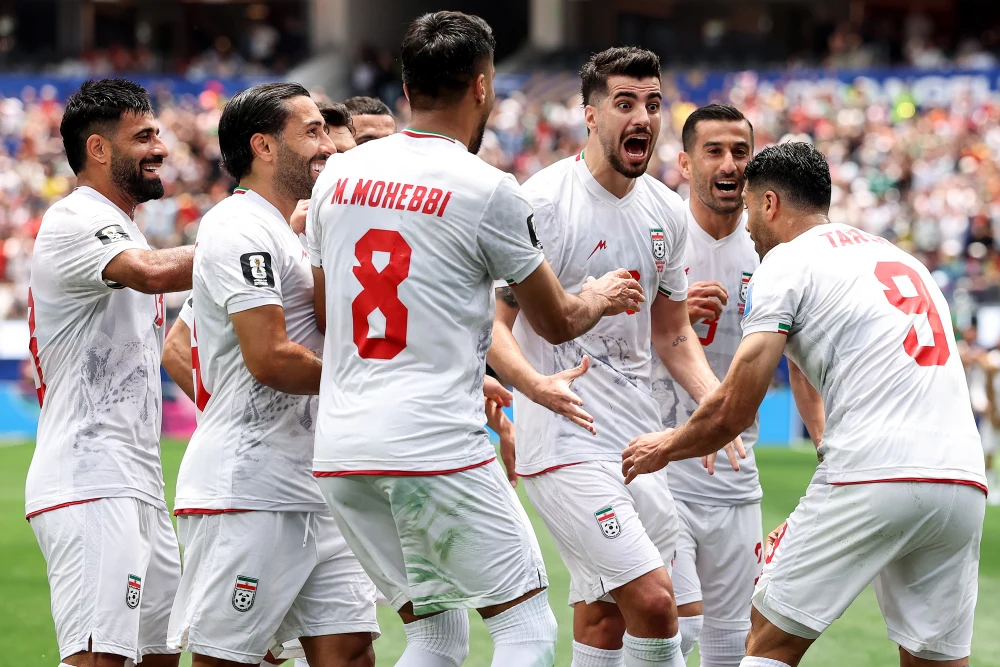
Team Melli’s campaign at the 2026 FIFA World Cup ended in bitter disappointment, despite widespread expectations that the expanded 48-team format would finally pave the way for a historic group-stage breakthrough. With twelve groups and an increased knockout berth allocation, the barrier to reaching the Round of 32 had ostensibly never been lower. Yet, three consecutive stalemates—a gritty but goalless draw against New Zealand, a resilient but ultimately fruitless point against Belgium, and a tightly contested tie with Egypt- proved to be Iran’s undoing. In a group where wins were imperative, these draws left the team stranded, falling agonizingly short of securing a spot among the world’s top 32.
In the immediate aftermath, the Football Federation Islamic Republic of Iran (FFIRI) published two separate assessment reports on its official platform. These documents served a dual purpose: they candidly acknowledged that the national team had fallen short of its pre-tournament objectives, while simultaneously pivoting the narrative toward the future—specifically, the upcoming AFC Asian Cup 2027. While such transparency is commendable on paper, the reports have done little to quell the growing unease among fans and pundits regarding the federation’s capacity to deliver tangible results.
As Team Melli now pivots its preparations toward the Asian Cup, the FFIRI has publicly declared an unequivocal ambition: to reach the final and lift the continental trophy for the first time since 1976. However, when measured against the current trajectory of the squad, the stagnation of the coaching philosophy, and the persistent managerial volatility, this goal appears more aspirational than achievable. The hard truth is that ambition, unaccompanied by structural reform, remains hollow rhetoric.
Looking back at the 2023 Asian Cup (held in early 2024) offers a stark point of contrast. At that tournament, Iran boasted a younger, more energetic core—a side capable of high-intensity transitions and resilient defensive work. Despite shaky group-stage performances against Hong Kong and Syria in the knock-out stage, where the team looked vulnerable and disjointed, they rose to the occasion in the quarter-finals. The dramatic, hard-fought victory over Japan, their perennial tormentor in recent decades, was undoubtedly the high-water mark of the campaign, exorcising deep-seated psychological barriers and igniting hopes of a long-awaited final berth. Yet, having scaled that monumental peak, the team suffered a catastrophic letdown against Qatar in the semi-finals, squandering a golden opportunity and extending Iran’s agonizing wait for a continental final appearance to more than half a century.
Fast-forward to the present, and the grim arithmetic is undeniable. How can a squad that was palpably younger and more dynamic just four years ago—now with its star veterans well into their thirties and physically declining—suddenly rediscover the legs and intensity required to conquer Asia? More pressingly, how can the same tactical blueprint, administered by the same coaching staff that oddly perceives the 2026 World Cup performance as a moral achievement, magically transform into a championship-winning formula? The insistence on defensive conservatism, a lack of creative midfield fluidity, and an over-reliance on aging individual brilliance rather than collective tactical evolution have rendered the team predictable and stagnant.
It is constructive for the Football Federation to speak openly about its aspirations, but its directors must internalize a fundamental principle: declaring a goal does not actualize it. To bridge the chasm between ambition and execution, the FFIRI must urgently conduct a rigorous, top-to-bottom gap analysis. This requires an aggressive, no-nonsense review of the entire footballing pyramid—from youth development pipelines to senior squad selection. Specifically, the federation must scrutinize preparation protocols, set-piece efficiency, physical conditioning regimes, and, most critically, the tactical flexibility of the coaching unit.
Currently, the federation’s proposed remedy is woefully vague. Promises of holding training camps in East and West Asia, devoid of specific opponents, logistical clarity, or strategic intent, inspire little confidence. In the modern competitive landscape, where rivals like Japan, South Korea, Australia, and Saudi Arabia are meticulously fine-tuning their systems with high-quality friendlies and data-driven methodologies, Iran cannot afford to rely on nebulous planning.
The bottom line is that in contemporary football, self-congratulation and hollow talking points are irrelevant currencies. At this juncture, with the current roster composition and an uninspired technical bench, the dream of reaching the Asian Cup final remains just that, a dream steeped in wishful thinking. The countdown is merciless. With barely six months remaining until the tournament kicks off in Saudi Arabia, the margin for error has completely evaporated. The FFIRI must move beyond rhetoric, embrace uncomfortable reforms, and act decisively—or risk watching yet another generation of talent squander its legacy on the continental stage.