
Tag: Mohammed Salah

VAR Robs Iran of Glory – Controversial Offside Call Leaves Team Melli in Agonizing Limbo


VAR Heartbreak Denies Iran Historic Victory as Team Melli Left in Agonizing Limbo

Iran 1–1 Egypt: A Night of Drama, Controversy, and Unfinished Business

Team Melli played out a 1–1 draw against Egypt in their final Group G match, completing the group stage unbeaten—yet still uncertain of their qualification fate for the Round of 32. In a night filled with controversy, both on and off the pitch, Iran came agonizingly close to sealing their place in the knockout rounds, only to be denied by a brutal VAR decision in stoppage time.

A Distraction-Filled Spectacle

From the outset, this match was overshadowed by forces far beyond football. The American government and the organizing committee made every possible effort to provoke both the Iranian and Egyptian teams, using the tournament platform to promote the Pride movement against the explicit wishes of both nations. The bulk of the American mainstream media coverage focused not on the football being played, but on political protests and LGBTQ+ activism—a transparent attempt to distract from the sport and weaponize the World Cup for ideological purposes.

To their immense credit, Team Melli withstood this psychological warfare with remarkable composure. From the booing of the Iranian national anthem to the relentless political posturing in the stands, the players remained focused on the task at hand and delivered a performance to remember.
A Soft Goal, A Missed Penalty, and A Swift Response

Egypt struck early, scoring in the 5th minute with what was arguably the softest goal Iran has conceded in years. A defensive lapse compounded by uncharacteristic hesitation from Alireza Beiranvand allowed the Pharaohs to take an early lead. Yet, rather than collapsing—as Iranian teams have done in the past—this squad showed resilience.

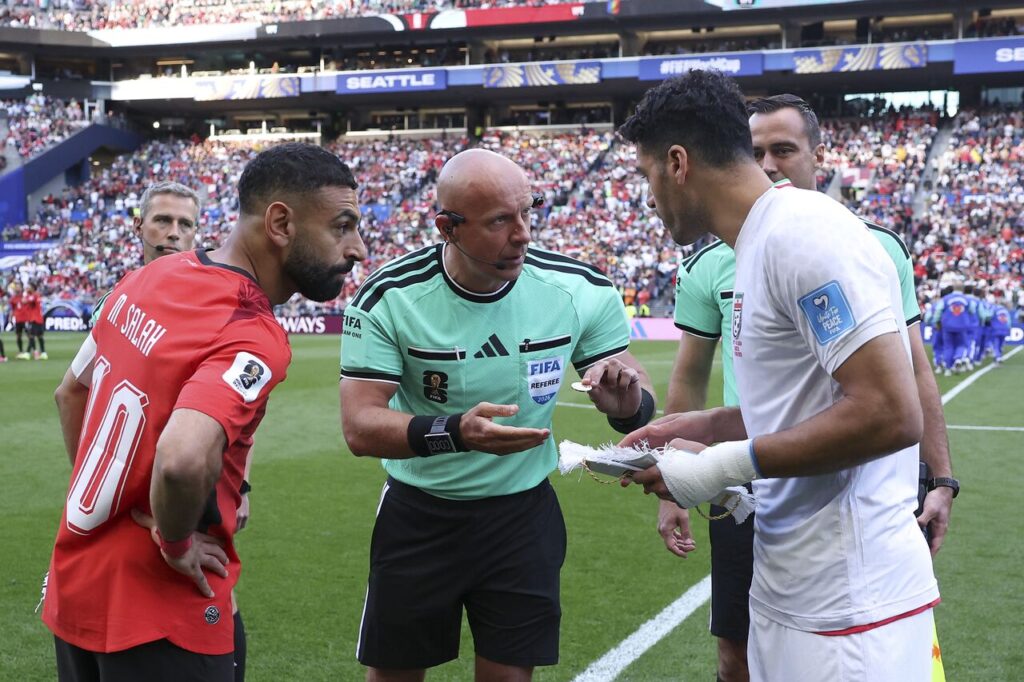
Just minutes later, Mehdi Taremi won a penalty after being fouled inside the box. The captain grabbed the ball with intent, but his body language betrayed a lack of conviction. His feeble spot-kick was parried by the Egyptian goalkeeper—a miss that would prove costly in the final reckoning.

The savior, once again, was Ramin Rezaeian. In the 13th minute, from the most acute of angles, the indefatigable right-back fired home a stunning equalizer. It was a goal of sheer quality and determination, keeping Iran's hopes very much alive.

Route One Football – A Flawed Strategy

As in all previous matches, Ghalenoei opted for a direct, route-one approach. The advantage of this system lies in Iran's two clever and competent wingers—Milad Mohammadi and Ramin Rezaeian—who thrived when balls were played out wide. However, when the defense launched long balls directly toward the lone striker, Mehdi Taremi, the strategy proved wasteful. Taremi, for all his industry, lacks the pace and dribbling ability to consistently turn such deliveries into scoring opportunities. He disrupted Egypt's defense with his movement and physicality, but he lacked the quality to make those balls count.

Second-Half Chaos

The second half was a frantic, end-to-end affair. Egypt's talisman Mohamed Salah was withdrawn due to a knock—a significant blow to the Pharaohs' attacking threat—but his replacement, Omar Marmoush, proved a handful in his own right, creating several headaches for Iran's backline.

The VAR Nightmare – A Goal That Never Was

The match reached its dramatic crescendo in stoppage time. In a frenetic finale, Iran seemingly scored a game-winning goal when Shoja Khalilzadeh pounced on a loose ball and fired home from close range. Pandemonium erupted among the Iranian players and fans—they had done it. They had clinched a spot in the knockout round.

Then came the crushing blow.

VAR intervened. A lengthy review concluded that Khalilzadeh was marginally offside. The goal was disallowed. The celebration turned to devastation. Iran had been denied a historic victory by the finest of margins—a brutal, heart-wrenching ending that left players slumped on the pitch and fans in disbelief.

Qualification – A Nervous Wait

The other match in the group ended 5-1 in favor of Belgium. With three points and a goal difference of zero, Iran's fate is no longer in their own hands. They must now wait for the conclusion of matches in other groups, particularly those involving Croatia, Algeria, and DR Congo, whose results will determine whether Iran's unbeaten campaign is rewarded with a place in the Round of 32.

On paper, Iran's position is strong—but in the cruel arithmetic of World Cup qualification, nothing is guaranteed until the final whistle blows in every group.

Final Verdict

Iran's performance throughout the group stage has been a testament to their resilience, tactical discipline, and growing belief. They have gone unbeaten against New Zealand, Belgium, and Egypt—a feat that would have seemed improbable just weeks ago. Yet, the shadow of VAR and the lingering regret of a missed penalty will haunt them until their fate is confirmed.

If Iran does qualify, they will do so with the knowledge that they deserve it. If they fall short, they will be left to wonder what might have been—had that penalty been converted, had that goal stood, had the football been allowed to speak for itself.
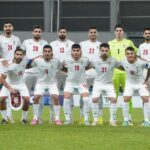
Iran’s Tactical Blueprint vs. Egypt: Ghalenoei Rings the Changes to Neutralize Salah

As Team Melli prepares for their crucial Group Stage clash against Egypt, all eyes are on the tactical chess match that head coach Amir Ghalenoei is orchestrating. While Iran is expected to line up in a fluid 4-3-2-1 formation, the lineup reveals a significant tactical shift designed to counter the specific threats posed by the Pharaohs, particularly the talismanic Mohamed Salah.

The Defensive Backbone: Stability and a Key Swap

Between the sticks, there is no debate. Alireza Beiranvand, the hero of the previous outing against Belgium, will retain his position. His shot-stopping prowess and commanding presence will be vital against Egypt’s rapid transitions.

At the heart of the defense, the trusted partnership of Shoja'a Khalilzadeh and Mohammad Hossein Kananizadegan will resume their duties. Their chemistry and aerial dominance form the bedrock of Iran’s defensive solidity, and they will be tasked with keeping the Egyptian forwards at bay.

The most notable change, however, comes on the left flank. In the previous match, Ghalenoei deployed a three-center-back system, utilizing Ehsan Hajsafi as a hybrid left-sided defender. For this fixture, the coach is pivoting back to a traditional back-four. Ali Nemati is set to step in as the out-and-out left-back, and his primary objective will be a man-marking masterclass: containing the relentless dribbling and cutting-inside runs of Mohamed Salah. This is a bold bet on Nemati’s defensive discipline and pace.

On the opposite side, Saleh Hardani is expected to keep his place at right-back, despite a shaky performance against Belgium where he was substituted to spare him further exposure. Ghalenoei is showing faith in his recovery. However, to ensure the right flank is not a liability, the coaching staff has devised a protective mechanism: Ramin Rezaeian (playing further up the pitch) will be tasked with dropping deep to provide double coverage when Hardani is pressed into one-on-one situations.

The Engine Room: A Hybrid Midfield

The midfield pivot is where Ghalenoei’s tactical flexibility shines. Saeed Ezzatollahi and Ehsan Hajsafi are slated to operate as the two defensive midfielders. Ezzatollahi, who delivered a commanding, redemptive performance against Belgium after a lackluster opener against New Zealand, will be crucial in breaking up Egypt’s play. Fans will be hoping for a similar display of grit and distribution against the Egyptians.

Hajsafi, meanwhile, is the ultimate utility man. After excelling as a left fullback in the last match, he moves into the heart of midfield for this encounter. His versatility is Ghalenoei’s trump card: Should Iran need to shore up the defense late in the game, Hajsafi can seamlessly drop back to left-back, allowing Ghalenoei to swap Nemati for a more attacking outlet. Conversely, if Iran is chasing a goal, Hajsafi can push forward, providing veteran composure in the final third.

Completing the midfield trio is Saman Ghoddos, who will once again operate as the advanced playmaker, sitting just behind the forward line. The coaching staff is banking on Ghoddos’s incisive passing and visionary through-balls to unlock a compact Egyptian defense. He is the linchpin of Iran’s transition play.

The Attack: Width, Work Rate, and the Lone Wolf

On the wings, Iran boasts pace and industry. Ramin Rezaeian will occupy the right-wing role, but his duties extend far beyond attack; he will be the insurance policy for Hardani, embodying the modern "box-to-box" winger. On the left, Mohammad Mohebbi will provide the direct dribbling threat. Both players were standout performers in the first match, and their ability to track back while delivering dangerous crosses will be integral to Iran’s balance.

Leading the line as the lone striker is Mehdi Taremi. The Olympiakos forward was a relentless engine against Belgium, running channels and pressing high with astonishing speed. He came agonizingly close to scoring what would have been one of the most historic and beautiful goals in Iranian World Cup history, while denied by VAR on his well-taken free kick. Against Egypt, Taremi will carry the weight of the nation’s attacking hopes. His movement, hold-up play, and predatory instincts inside the box will be Iran’s primary route to goal.

Summary: A Calculated Risk

Ghalenoei’s selection is a clear signal: Iran will not sit back passively. By reverting to a four-man defense and isolating Salah with a dedicated fullback, Iran aims to stifle Egypt’s greatest weapon while releasing their own dynamic wingers. The midfield flexibility provided by Hajsafi allows for in-game adjustments without using a substitution.

It is a high-risk, high-reward strategy that hinges on defensive discipline and attacking efficiency. If Iran can weather the early Egyptian pressure and allow their creative players—Ghoddos, Mohebbi, and Taremi—to flourish, they have every chance of securing a result that propels them toward the knockout stages.

Belgium Blueprint, Egyptian Threat – Can Iran Finally Break Their World Cup Curse?


The Belgian Revelation – Iran Proves It Belongs on Football's Biggest Stage

The match against Belgium was a revelation on multiple levels. What it demonstrated, beyond any reasonable doubt, is that Team Melli possesses the quality, resilience, and tactical intelligence to qualify for the next round of the FIFA World Cup. This performance lent credibility to Iran's FIFA ranking and proved that—despite the discrimination, logistical hostility, and ill-treatment they have endured throughout this tournament—this team can genuinely challenge the very best in world football.

Ghalenoei's Masterclass – Silence the Critics

Amir Ghalenoei, the target of relentless criticism following the New Zealand draw, experienced a fit of tactical inspiration against Belgium. He had clearly done his homework with remarkable efficiency. Despite retaining both Ali Nemati and Shoja Khalilzadeh—two defenders who had performed poorly against the Kiwis—his masterstroke was the deployment of a three-man central defensive system. This formation suffocated Belgium's attack, neutralizing the most lethal forward line Iran has faced in years. The decision was bold, unconventional, and ultimately brilliant.

What the Draw Means for Group G

The 0-0 stalemate means Iran remains undefeated after two matches but is not yet assured of a place in the Round of 32. The equation is simple but fraught with pressure: Iran needs at least one point against Egypt to keep their destiny in their own hands, while a victory would guarantee qualification. Three points would seal the deal emphatically.

The Ghost of World Cup Finales – A Troubling Trend

Team Melli has previously played in six editions of the FIFA World Cup, and history is not on their side. In their final group matches, Iran has recorded four defeats and two draws—a record that translates into an alarming inability to deliver when it matters most. This is not merely a statistical curiosity; it is a deeply ingrained trend in Iranian football, evident at both club and national level in recent years.

We all remember the heartbreaks: the Asian Cup semi-final failures in 2019 and 2023, and the crushing disappointment of the 2022 World Cup when Iran needed only a draw against the United States to qualify—and fell short. Whatever the reasons for these last-minute flops—whether psychological fragility, tactical conservatism, or sheer misfortune—this time, the players and coaching staff must stand up and be counted. History is a lesson, not a life sentence.

Egypt – A Different Kind of Beast

Some analysts and fans believe Egypt represents a tougher challenge than Belgium. Ghalenoei and his players would certainly beg to differ. The game against Belgium should serve as the template for the Egypt encounter—but there are crucial differences. The towering presence of Romelu Lukaku is replaced by the devastating pace and guile of Mohamed Salah. The same defensive focus, discipline, and collective responsibility must be applied to nullify Egypt's talisman.

However, Salah is far from Egypt's only threat. Omar Marmoush and Mahmoud Trezeguet have proven themselves to be potent attacking weapons capable of exploiting any lapse in concentration. In simple terms, Iran's defense must replicate the near-flawless performance it produced against Belgium—or risk being undone by a single moment of brilliance.

The Peril of Defensive Conservatism

The fear among fans is that Ghalenoei will revert to a cautious, ultra-defensive game plan in pursuit of the single point needed for qualification. That approach is fraught with peril. Sitting deep against a team with Egypt's attacking quality could invite pressure, concede space, and ultimately end in the kind of heartbreaking disappointment that has become all too familiar.

Team Melli possesses genuine quality in attack. Mehdi Taremi, Mohammad Mohebi, Mehdi Torabi, Amirhossein Hosseinzadeh, Mehdi Ghaedi, and even the relatively untested Eckert are offensive weapons capable of causing serious problems for Egypt's defense. This is not a squad that should be shackled by fear. Iran has the tools to attack—and to win.

Mentality Is Everything

Ultimately, the outcome of this crucial fixture will be determined by mentality—both of the team and the coaching staff. If Ghalenoei decides that the reward is worth the risk and opts for an attacking approach, Iran could secure a historic victory. If he maintains the 5-4-1 formation and invites Egypt onto them, the consequences could be disastrous.

The Belgium match has given Iran a blueprint, a template, and a belief system. Now, they must execute. The players must play with freedom, confidence, and the unshakable conviction that they belong on this stage.

Final Verdict

The draw against Belgium was not just a result—it was a statement. It announced to the world that Iran is no longer a team that simply participates; it is a team that competes. With one match remaining, the opportunity to make history is there for the taking. The question is whether Ghalenoei and his players have the courage to seize it.


Team Melli Set for Quadrangular Tournament in November FIFA Window


The Iranian national football team is set for a busy and competitive schedule during the next FIFA international break in November. Following warm-up matches against Russia and Tanzania in October, the Football Federation (FFIRI) has secured Team Melli's participation in a four-nation tournament hosted by the United Arab Emirates.

The tournament, which promises a high level of competition, will feature Iran, Egypt, Uzbekistan, and Cape Verde. This provides crucial preparation for the teams that have already qualified for the 2026 FIFA World Cup, offering a stern test against diverse playing styles.

Tournament Schedule and Potential Showdowns

According to the tournament format, the semi-finals are scheduled for November 7. Iran will face the Cape Verde national team, currently ranked 70th in the FIFA World Rankings. A victory would see Team Melli advance to the final on November 17, where they would face the winner of the other semi-final between Uzbekistan and Egypt.

The prospect of a final between Iran and Egypt, featuring Mohamed Salah, is a tantalizing one for football fans in West Asia and North Africa, promising an exciting clash of styles and star power. Both Egypt and Uzbekistan, like Iran, have already secured their passage to the 2026 World Cup.

If Iran loses its semi-final against Cape Verde, the team will not be idle, facing the loser of the Uzbekistan-Egypt match in a third-place playoff on November 12.

A Closer Look at Iran's Opponent: Cape Verde

The upcoming match will be the first-ever international meeting between Iran and Cape Verde, adding an element of the unknown to the fixture.

Cape Verde, known as the "Blue Sharks," are far from a minor opponent. They are one of Africa's most respected and formidable teams, consistently punching above their weight. Their recent performance in the 2023 Africa Cup of Nations (AFCON), where they topped a group containing Egypt and Ghana before reaching the quarter-finals, announced them as a serious force.

Despite a recent 2-1 loss to Libya—a match where they were reportedly hampered by a refereeing error that cost them a direct path to World Cup qualification—they remain a dangerous and organized side. Coached by Bubista, their team is built on a foundation of tactical discipline, physical strength, and explosive counter-attacks. They boast talented players such as Jovane Cabral (Sampdoria), Ryan Mendes (Fatih Karagümrük), and captain Stopira, many of whom ply their trade in top European leagues.

For Amir Ghalenoei's Iranian squad, this match against a motivated and athletic African opponent will be a vital test, particularly in assessing the team's tactical flexibility and discipline—areas that have recently come under scrutiny.

This quadrangular tournament represents a significant step in Iran's preparations for the 2026 World Cup, offering two high-stakes matches against quality opposition that will challenge the team and its management.