Tag: Mehdi Taremi

Team Melli’s Star Ali Gholizadeh Suffers Severe Knee Injury, World Cup Hopes in Jeopardy

TEHRAN – In a devastating blow for both club and country, Iranian national team winger Ali Gholizadeh sustained a serious left knee injury during Lech Poznan’s Polish Ekstraklasa clash against Motor Lublin. Polish sports outlets have since reported that the 28-year-old is likely to miss the 2026 FIFA World Cup.

Lech Poznan secured a narrow 1-0 victory over Motor Lublin in the 31st week of the Polish league. Gholizadeh, who started the match, was involved in a distressing incident just 16 minutes into the game.

The unfortunate event unfolded when Gholizadeh leapt over an opposing player from Motor Lublin. Upon landing, he collided awkwardly with another defender, causing his left knee to buckle severely under his weight. The player immediately collapsed to the turf and, despite several agonizing moments, was unable to rise. Teammates and medical staff quickly rushed to his side, with visible concern on their faces , especially given the proximity of the upcoming World Cup.

Polish outlet Interia reported that the initial assessments are alarming. “The nature of the non-contact landing and the immediate reaction of the player suggest a potential cruciate ligament injury,” the site noted. “It appears that Gholizadeh could face a prolonged period on the sidelines, effectively ruling him out of the 2026 World Cup.”

Lech Poznan has yet to release an official medical statement, but sources close to the club fear the worst. The Iranian national team medical staff has reportedly been in contact with their Polish counterparts.

A Painful Déjà Vu

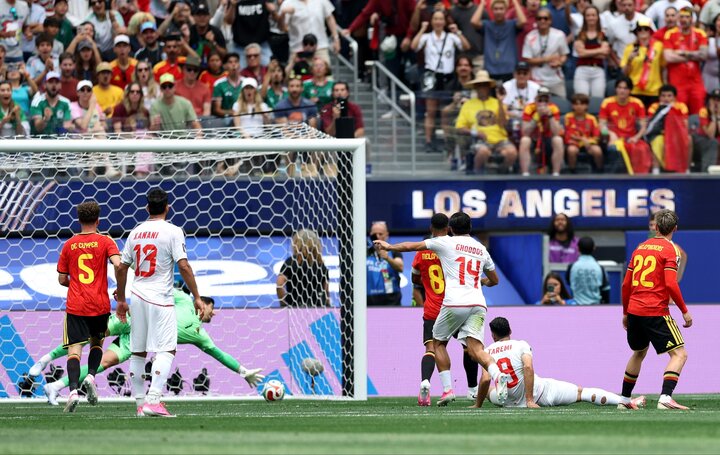
The timing of the injury is especially cruel. Gholizadeh was a key member of Team Melli under Carlos Queiroz during the 2022 FIFA World Cup in Qatar. In Iran’s historic Group B match against England, which ended 6-2 in favor of the Three Lions, Gholizadeh delivered a moment of pride for Iranian football. It was his precise cross from the right wing that found Mehdi Taremi, who scored Iran’s first goal of the tournament, a strike that briefly silenced the packed Khalifa International Stadium.

Since then, Gholizadeh has remained a consistent performer for both his club and country, known for his dribbling ability, pace, and work rate. His potential absence would leave a significant gap on Iran’s right flank as they prepare for the 2026 World Cup, where they are expected to face top-tier opposition.

What’s Next?

Gholizadeh is expected to undergo an MRI scan in the coming days to determine the full extent of the damage. If a torn anterior cruciate ligament (ACL) is confirmed, recovery typically takes six to nine months, making a summer 2026 return impossible. Iranian fans and pundits are anxiously awaiting official news, but early signs point to a heartbreaking setback.

For now, the entire Iranian football community holds its breath, hoping for a less severe diagnosis—but preparing for the worst.

Team Melli Thrash Costa Rica 5-0 in Antalya Friendly

Team Melli delivered a commanding performance in their second friendly international, routing a physical Costa Rica side 5-0 at the Mardan Titanic Sports Complex in Antalya.

After the disappointment of a narrow defeat to Nigeria on Friday, head coach Amir Ghalenoei abandoned the experimental 3-5-1-1 formation in favor of the more familiar 4-3-3. The tactical switch yielded immediate dividends.

Iran were on the scoresheet inside ten minutes. Mehdi Taremi, who would go on to have a starring role, produced excellent work down the flank before setting up Ali Gholizadeh, who finished immaculately past the Costa Rican goalkeeper.

The lead was doubled nine minutes later when Hosseinzadeh was fouled in the box. Captain Taremi stepped up and converted the resulting penalty with ease to make it 2-0.

Taremi then turned provider once more, delivering a pinpoint assist for Mohammad Mohebi, who netted Iran’s third goal in the 31st minute. Shortly after, another foul on Mohebi resulted in a second penalty, which Taremi again dispatched to give Iran a 4-0 advantage at the break.

Early in the second half, substitute Mehdi Ghayedi produced the goal of the game, lashing home from the edge of the box after a rebound from a corner to complete the 5-0 rout.

Ghalenoei utilized the friendly to its full extent, making nine substitutions throughout the match. There were notable debuts for young talents, including 19-year-old Persepolis forward Amirhossein Mahmoudi. Amirmohammad Razzaghinia, another promising youngster, started the contest and played the full 90 minutes.

While Iran had suffered from wasteful finishing in the defeat to Nigeria, there were no such issues against a Costa Rican side that had drawn 2-2 with Jordan on Friday.

The performance was marked by a fluid passing game, with Iran showing composure even in congested areas. Diagonal balls and well-worked combinations produced another pleasing display, achieved despite the emotional stresses facing the squad.

Defensively, Iran were resolute. The central partnership of Nemati and Khalilzadeh provided stability, while Danial Esmaeilifar and Milad Mohammadi controlled the flanks. Goalkeeper Hossein Hosseini, who replaced Beiranvand, enjoyed a quiet first half with little to do.

Ali Gholizadeh continued his impressive form, capping his performance with the opening goal. Taremi, who had been disappointing against Nigeria, delivered a man-of-the-match display with two goals and two assists.

Costa Rica offered little attacking threat, but the match served as a valuable exercise for a Team Melli side that continues to grow in both stature and confidence. The integration of two young debutants also provided a refreshing boost for Ghalenoei’s squad.

In a surprise appearance, FIFA President Gianni Infantino attended the match at the Mardan Stadium practice field. Cameras frequently focused on Infantino throughout the first half. It is believed that the FIFA chief was present to meet with the Team Melli squad and management, offering support and reassurance ahead of the World Cup.

However, Infantino’s words may carry limited weight given the context of the host nation. Its president has publicly stated that he cannot guarantee the safety of the Iranian delegation, casting a shadow over what was otherwise a triumphant day on the pitch.


Mehdi Taremi becomes the second highest Team Melli scorer on record.

Mehdi Taremi, the prolific striker for both Iran’s national team, Team Melli, and Olympiacos, reached a historic milestone on Friday, March 27, by scoring his 58th international goal against Nigeria. With that strike, he became the second-highest goalscorer in Iranian history, trailing only the legendary Ali Daei, who remains firmly atop the all-time list.

Taremi’s journey to this achievement has been marked by a distinguished club career spanning several countries. Beginning in his hometown of Bushehr, he went on to represent clubs such as Al-Gharafa in Qatar, Rio Ave, Porto, Inter Milan, and now Olympiacos.


While his international exploits continue to make headlines, Taremi’s impact in European competitions has been unparalleled among Iranian players. He holds the record for the most appearances and goals by an Iranian in Europe. All eight of his UEFA Champions League goals came during his highly successful stint with Porto—a period widely regarded as the peak of his career. Among them was a spectacular scissor-kick volley against Chelsea, which earned a nomination for the FIFA Puskás Award.

By comparison, Ali Daei scored three goals in the Champions League, including a memorable brace against Chelsea during the 1999–2000 season. With eight goals to his name, Mehdi Taremi remains the highest-scoring Iranian player in Champions League history.

Iranian Players in the UEFA Champions League — Ranking

RankPlayerUCL GoalsUCL MatchesClubs Played For in UCLNotes
1Mehdi Taremi827FC PortoAll goals scored for Porto between 2020–2024.
2Ali Daei36Hertha BSCScored 2 vs Chelsea + 1 vs Milan (1999–2000).
3Sardar Azmoun221Rubin Kazan, Rostov, Zenit, LeverkusenGoals vs Bayern (2015) & Atlético (2016).
4Karim Ansarifard16OlympiacosScored vs Sporting CP (2017).
5Mehdi Mahdavikia17HamburgScored vs Juventus (2000).

Team Melli Falls to Nigeria in Antalya Friendly: Progress Evident, but Flaws Persist

In their first international friendly of 2026, Team Melli suffered a narrow 2-1 defeat to Nigeria at the Mardan Stadium in Antalya. Goals from Moses Simon (7’) and Akor Adams (51’) secured the win for the Super Eagles, while Mehdi Taremi scored the lone consolation for Iran in the 67th minute.

The match served as a crucial test for Iran as they resumed preparations for the upcoming World Cup, following a lengthy break from international action. While the final score favored the Africans, the performance offered a mixed bag for head coach Amir Ghalenoei. Despite playing the more cohesive brand of football for large stretches, familiar shortcomings ultimately undermined the result.

Defensive Lapses Prove Costly

The two goals conceded highlighted ongoing concerns at the back, stemming from individual errors rather than systemic breakdowns. Veteran defender Hossein Kanani and Ali Nemati were culpable on the day, with each making costly mistakes that Nigeria ruthlessly exploited.

Tactical Shift Shows Promise

In a bid to inject more attacking impetus, Ghalenoei shifted to a three-man defensive line, deploying a 3-5-2 formation. The tactical adjustment allowed wing-backs Milad Mohammadi and Arya Yousefi to operate as advanced wide midfielders, a change that yielded positive results. Mohammadi, in particular, was a livewire on the left flank; one surging dribble saw him carve through the Nigerian defense to the byline, only for his cut-back to miss , Mohebbi , its intended target by inches inside the six-yard box.

Midfield Control but Attacking Frustration

The midfield trio functioned effectively, with Saman Ghoddos pulling the strings as the deep-lying playmaker. His intelligent distribution provided the platform for the advanced movements of Ghorbani and Ali Gholizadeh.

However, the offensive duo of Mohammad Mohebbi and Mehdi Taremi struggled to find consistent chemistry. Taremi, despite converting Iran’s only goal, delivered a performance that raised concerns. The veteran striker appeared sluggish and was frequently seen appealing for fouls rather than maintaining possession. Whether the issue is a lack of match fitness or a tendency to over-dramatize contact, Taremi’s physical edge, a hallmark of his game, was notably absent.

The second half represented Iran’s best period of the match. They controlled the tempo and created the better chances, yet once again fell victim to a recurring problem: poor finishing. What could have been a winning half instead became a frustrating reminder of the team’s inability to capitalize on momentum.

Lingering Concerns Ahead of the World Cup

Despite the encouraging overall display against a strong African side, the friendly illuminated several critical areas requiring immediate attention. Chief among them is the lack of clinical execution in the final third. Whether it is the weight of the final pass, the composure in front of goal, or the accuracy of the shot, this essential skill set remains alarmingly deficient.

Furthermore, questions linger regarding squad composition. The team’s discipline, on-field body language, and the advanced age of the core squad cast doubt on their ability to withstand the physical demands and high-pressure environment of the World Cup. If Iran is to compete on the global stage, addressing these vulnerabilities will be as crucial as refining the tactical framework that showed flashes of promise against Nigeria.

Taremi’s wonder strike keeps Olympiacos hopes alive

Olympiacos secured an important victory against Bayer 04 Leverkusen with a 2–0 win at the Karaiskakis Stadium, keeping their qualification hopes alive for the next stage of Europe’s premier club competition.

The “Red-and-whites” started the match aggressively and, backed by their roaring fans, took the lead as early as the 2nd minute. Rodinei delivered a corner kick, and Costinha rose highest to head the ball into the net for the opening goal.

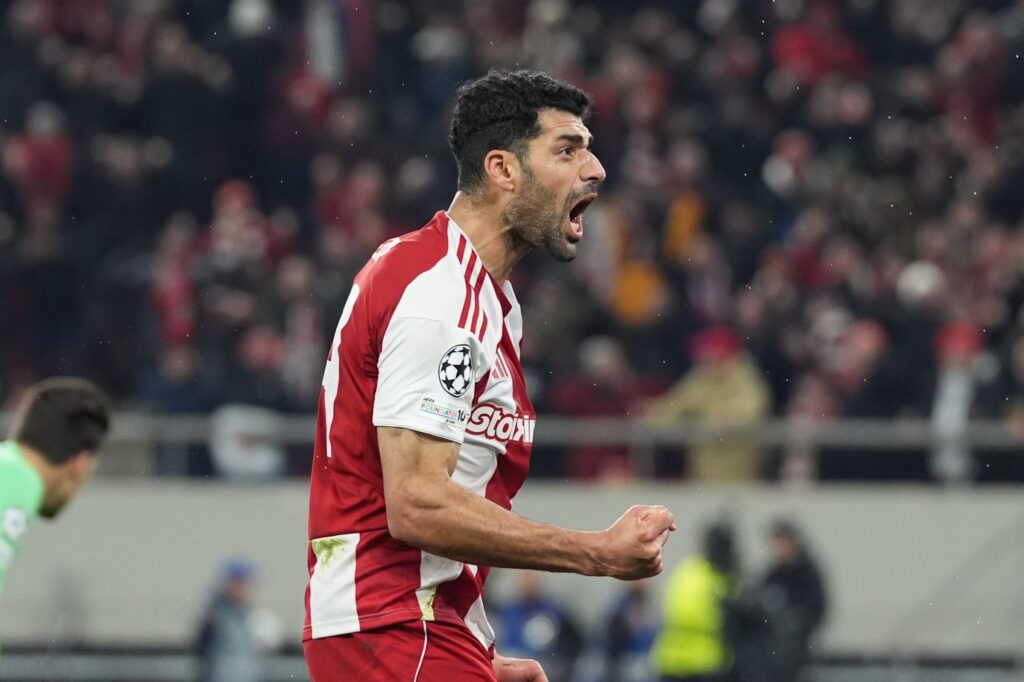
The final score was sealed in first-half stoppage time (45+1′). Olympiacos broke quickly down the right flank through Rodinei, who played a perfectly weighted through ball to Mehdi Taremi. The experienced striker calmly finished with a thunderous right shot, sending the ball into the net and making it 2–0.

Team Melli striker Mehdi Taremi has been in superb form this season. He has scored 8 goals in 11 matches in the Greek Super League and assisted with 2 goals. In the Champions League, he has already scored against Real Madrid in addition to Leverkusen .

In the last match, Olympiacos is away to Ajax Amsterdam. A win will assure the Greek champion’s qualification to the next round.

Football and politics in Iran

Mehdi Taremi is the latest player to receive threats from Iran’s regime after criticising the conditions in his home country. Photograph: Anadolu/Getty Images

Mehdi Taremi is the latest player to receive threats from Iran’s regime after criticising the conditions in his home country. Photograph: Anadolu/Getty Images© Photograph: Anadolu/Getty Images

Story by John Duerden

 •The Guardian

Mehdi Taremi did what he does best. On Saturday, the Iranian striker turned inside the area and scored for Olympiakos, a well-taken eighth goal of the season for the 33-year-old that clinched a 2-0 win at Atromitos and a place at the top of the Greek Super League. Usually, millions of people in Iran follow every step of Taremi’s European career, one that took off with Porto and has settled in Piraeus via Milan, but not this time.

The ruling regime in Tehran has cut the internet and all communications, which meant that residents of the football-loving nation also missed the non-celebration that followed. “It actually has to do with the conditions in my country,” Taremi said. “There are problems between the people and the government. The people are always with us, and that’s why we are with them. I couldn’t celebrate in solidarity with the Iranian people. I know that Olympiakos fans would like me to be happy, but I don’t celebrate the goals, in solidarity with what the Iranian people are going through.”

And what they are going through seems worse than at any time since the 1979 Islamic Revolution deposed the Shah and put Ayatollah Khomeini in power. Surging inflation and a collapsing currency have sparked major anti-government protests and unrest across Iran. The response has been brutal. The ruling regime is clinging on to power by dealing out death, more repression and an internet blackout that has lasted for days. WhatsApp messages remain with one tick, emails are undelivered and websites are unreachable. For the millions of people outside the country with loved ones inside, there is fear and worry.

Football has always occupied a central place in Iran, a country where the government, like many authoritarian regimes, is wary of the power of mass gatherings and their potential to turn political but is also ready to use success for its own ends. When Iran qualified for the 1998 World Cup, players were told to delay their return so celebrations could subside, and in a vital 2010 qualifier, several wore green armbands in support of the opposition leader Mir Hossein Mousavi during protests over a disputed election. Mahmoud Ahmadinejad, the declared winner, visibly tied himself to the team, visiting training sessions and lending his presidential plane for World Cup qualifiers, while at home most clubs remain closely linked, directly or indirectly, to the state.

Speaking out is not easy. Ali Daei, like Taremi a cultural icon, backed protests in 2022 and subsequently saw his family prevented from leaving the country. During the last World Cup, which coincided with nationwide protests following the death of Mahsa Amini – a 22-year-old woman arrested for allegedly wearing her hijab improperly – former national team defender Voria Ghafouri was detained for, according to the Fars News Agency, “spreading propaganda against Iran”.

Last week, Ghafouri, the former captain of 10-time champions Tehran Esteghlal, reportedly announced that he was closing his cafes in the capital in solidarity with the protesters. IranWire, a news outlet run by Iranian journalists in exile and citizen reporters inside the country, reported that Fars had warned of repercussions. “These unrests will soon come to an end, but the real test for officials of the football federation will begin afterwards, when they must show that calls for chaos will receive a firm response.”

Threats against Taremi may not work. Few Iranians are better known internationally. Despite once being seen as a supporter of the regime, it seems as though the player has evolved since making a name for himself at Tehran giants Persepolis. Taremi has criticised the state of facilities back home, including the capital’s iconic Azadi Stadium, and has asked why there is a reluctance to allow big crowds to gather. He was the leader of the team at the 2022 World Cup that did not sing the national anthem in the first game with England, an act repeated on 7 January in the Under-23 Asian Cup in Saudi Arabia when the Iranian team kept quiet before their fixture against South Korea.

In Qatar three years ago, the players and head coach, Carlos Queiroz, grew frustrated at what they saw as constant questions from western media on the protests back home, rather than football issues, and demanded to know why counterparts went unquizzed. “Why don’t you ask the other coaches?” Queiroz said. “Why don’t you ask Southgate: ‘What do you think about England and the United States that left Afghanistan and all the women alone?’”

Now there is a desire for more questions and more information with Iran cut off from the world. At the weekend, Queiroz took to social media with a post that included a line attributed to the influential Tehran-born poet Ahmad Shamlou, born 100 years ago last month. “Freedom is breathing in an air where there is no lie.”

“To all Iranian people, My beloved Players, Staff and Friends,” Queiroz added, “I have spent many years among the Iranian people – players, staff, families, friends – and I know their dignity, warmth, and resilience. My heart and thoughts are with the people of Iran during these difficult but challenging days of hope. I am deeply concerned for their safety and well-being.”

Mehdi Taremi faces possible World Cup ban over Iranian military service

The Daily Mirror, UK.
Story by Nathan Ridley
 

Mehdi Taremi of Iran is celebrating after scoring a goal during the AFC Asian Cup 2023 match between Iran and the United Arab Emirates at Education City Stadium in Al Rayyan, Qatar, on January 23, 2023. (Photo by Noushad Thekkayil/NurPhoto via Getty Images)

Mehdi Taremi of Iran is celebrating after scoring a goal during the AFC Asian Cup 2023 match between Iran and the United Arab Emirates at Education City Stadium in Al Rayyan, Qatar, on January 23, 2023. (Photo by Noushad Thekkayil/NurPhoto via Getty Images)© Noushad Thekkayil/NurPhoto via Getty Images

Iran striker Mehdi Taremi faces being denied entry to the 2026 World Cup over his mandatory military service. Taremi, 33, was prolific during qualification, scoring 10 goals in 15 games as Iran topped both of their groups.

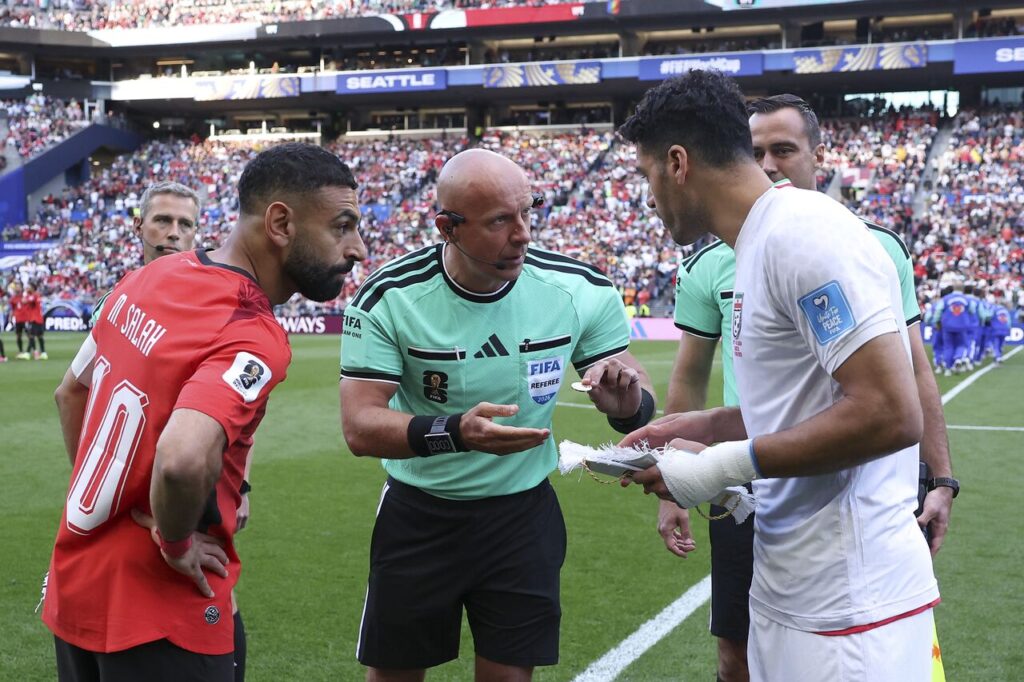
Amir Ghalenoei’s side have been placed in Group G alongside BelgiumEgypt and New Zealand. They’ll play their fixtures in the US cities of Los Angeles and Seattle.

But Taremi might not be involved. It comes after the president of the Football Federation Islamic Republic of Iran, Mehdi Taj, revealed that some players are at risk of not receiving visas.

“The United States might not issue visas to some players due to their military service location,” Taj warned. “That’s why we’ve started now and have selected replacements for players who might not receive visas.”

It quickly emerged from various Iranian media outlets that Taremi was among those who the federation chief was referencing. All Iranian men must serve time in a military once they turn 19.

Taremi’s situation, however, is markedly different from most of his team-mates. Between 2010 and 2012, the Olympiacos star served in the Navy of the Islamic Revolutionary Guard Corps (IRGC) in the city of Bushehr near his home.

“My service was right there in Bushehr,” Taremi explained in a 2015 interview. “Close to our own home, at the IRGC Navy base. It wasn’t hard at all.”

The US State Department has firm restrictions for individuals with ties to organisations which it deems as foreign terrorist entities. Their list includes the IRGC.

In a statement provided to Pro Soccer Wire, a US State Department spokesperson didn’t rule out the possibility that some of Iran’s players could see their visa applications denied. “The Trump Administration is committed to doing everything we can to support a successful World Cup,” they said.

Iran's forward #09 Mehdi Taremi celebrates scoring his team's second goal during the FIFA World Cup 2026 Asia zone qualifiers group A football match between Iran and the North Korea at the Azadi Sports Complex in Tehran on June 10, 2025. (Photo by ATTA KENARE / AFP) (Photo by ATTA KENARE/AFP via Getty Images)

Iran’s forward #09 Mehdi Taremi celebrates scoring his team’s second goal during the FIFA World Cup 2026 Asia zone qualifiers group A football match between Iran and the North Korea at the Azadi Sports Complex in Tehran on June 10, 2025. (Photo by ATTA KENARE / AFP) (Photo by ATTA KENARE/AFP via Getty Images)© ATTA KENARE/AFP via Getty Images

“At the same time, the administration will not waver in upholding US law and the highest standards of national security and public safety in the conduct of our visa process.

“We adjudicate each visa application on a case-by-case basis after rigorous review and thorough vetting to determine whether the individual is eligible under US law.”

The ex-Inter Milan and Porto star could therefore miss out on the chance to play at back-to-back World Cups. In 2022, Iran came third in a group alongside EnglandWales and the United States, finishing third on three points.

Ghalenoei and Ghoddos on touchline

Taremi’s Unauthorized Penalty Decision Sparks crises in Team Melli dressing room.

A controversial incident involving captain Mehdi Taremi has overshadowed Iran’s penalty shoot-out defeat to Uzbekistan in the final of the Al-Ain International Cup. Contrary to the coaching staff’s explicit plans, Taremi unilaterally decided not to take the team’s fifth and crucial penalty, instead assigning it to defender Milad Mohammadi, who subsequently missed with an amateurish kick.

While a loss in a friendly match is often dismissed as inconsequential, Taremi’s act of insubordination—overriding the coach’s direct orders—has raised significant alarms within the national team. The financial implication of forfeiting the tournament’s prize money further compounds the seriousness of the defeat.

According to an ISNA report, the conflict erupted immediately after the match when a furious head coach, Amir Ghalenoei, confronted Taremi on the pitch. The confrontation escalated in the locker room, where Ghalenoei severely criticized his captain for what he deemed an arbitrary and costly decision.

In an attempt to justify his actions, Taremi stated to the media in the mixed zone that his reason for not taking the penalty was to “give other players a chance to gain experience.”

However, this justification has been met with widespread skepticism. Even if well-intentioned, it is widely viewed as a feeble, poor judgment and an unreasonable excuse for such a critical, game-deciding moment. Making a significant tactical change without the coordination and approval of the head coach is a clear breach of protocol. The established procedure in football grants the head coach and his staff the final say on penalty takers, a decision based on training data, player psychology, and in-game conditions. While a captain may offer input, the ultimate authority rests unequivocally with the coach.

Taremi’s actions constitute a direct challenge to the coach’s authority. This move not only undermines the credibility of the technical staff but also sets a dangerous precedent for player insubordination, creating a crisis of leadership that extends far beyond the result of a single friendly.

In light of this incident, Taremi’s captaincy is now seriously in question. His blatant insubordination against Uzbekistan, coupled with a perceived general lack of leadership on and off the field, has eroded his standing. With Taremi’s own form also a subject of widespread media criticism, the under-pressure and reportedly furious Ghalenoei may have no choice but to consider an alternative for the captain’s armband to reassert his authority and stabilize the squad.


Clash of Styles and Spirits: Iran’s Pedigree vs. Uzbekistan’s Momentum in Al Ain Final


The stage is set for a compelling final in the Al Ain International Cup, as Team Melli of Iran prepares to lock horns with a resurgent Uzbekistan at the Hazza Bin Zayed Stadium. While the FIFA rankings and historical prestige heavily favor the Iranians, the narrative on the pitch tells a vastly different and more intriguing story.

The Road to the Final: A Tale of Two Semis

The semi-finals provided a stark contrast in team morale and performance. Iran labored to a 0-0 draw against Cape Verde, a team ranked 77th in the world, before narrowly securing their final berth with a 5-4 victory in a penalty shootout. The performance was characterized by a disjointed offense, poor ball distribution, and a palpable lack of creativity. In worrying signs for Iranian fans, star striker Mehdi Taremi was effectively neutralized, while domestic league top scorer Amirhossein Hossenzadeh failed to test the Cape Verdean goalkeeper.

In the other semi-final, Uzbekistan delivered a masterclass, dismantling a strong Egyptian side with a commanding 2-0 victory. The White Wolves displayed a modern, fluid brand of football that their opponents struggled to contain. Their performance was a symphony of coordinated pressing, incisive passing, and clinical finishing—a world away from the disjointed display from Team Melli.

The Uzbek Juggernaut: Led by a Familiar Foe

The undisputed architect of Uzbekistan’s victory was Oston Urunov. The Persepolis winger was in scintillating form, scoring a well-taken brace and terrorizing the Egyptian defense throughout the match. Urunov’s performance was a showcase of offensive prowess that the Iranian forward line conspicuously lacked; he was unlucky not to have scored four, with one effort cannoning off the woodwork and another denied by a spectacular save.

His display serves as a poignant reminder to the Iranian federation and fans: the quality exists within the Persian Gulf Pro League, but harnessing it for the national team remains a significant challenge. For Uzbekistan, Urunov symbolizes a new generation of technically gifted and confident players who excel in their defined roles within a coherent tactical system.

Iran’s Identity Crisis: System over Stars?

On paper, Iran, ranked 21st in the world, should be the clear favorite. They boast a squad featuring stars from Europe’s top leagues and a pedigree that includes consistent World Cup appearances. However, football is not played on paper. The recent form presents a grim picture for Team Melli, who are winless in their last five encounters against Uzbekistan, including a 1-0 loss in Tashkent in their most recent meeting.

The core issue appears to be systemic. Under the current coaching regime, the team often looks less than the sum of its talented parts. There is a reliance on individual brilliance to break down opponents, which, when it fails—as it did against Cape Verde—leaves the team looking rudderless. The midfield often fails to control the tempo or provide a link between defense and attack, leaving isolated forwards to feed on scraps.

The prevailing mentality is also under scrutiny. If a goalless draw against a lower-ranked opponent is perceived as an acceptable result, it raises questions about the ambition and attacking philosophy driving the team forward.

The Final Verdict: A Clash of Contradictions

This final is a classic clash of contradiction: historic reputation versus current form; individual stars versus a cohesive unit; cautious pragmatism versus confident, attacking football.

While Uzbekistan enters the match beaming with confidence and a clear tactical identity, Iran seems burdened by expectation and a lack of a defined playing style. For Team Melli to lift the trophy, they must engineer a massive turnaround—something they have shown little evidence of being capable of in recent times. Relying on the defensive solidity that held firm against Cape Verde will not be enough against a multifaceted Uzbek attack.

Prediction:

Based on the evidence of the semi-finals and recent head-to-head records, the momentum is firmly with Uzbekistan. They play as a confident, modern team that believes in its system and its players. Iran, in contrast, looks fragile and creatively bankrupt. A draw within regulation time, potentially leading to another nerve-wracking penalty shootout, seems the most optimistic outcome for Iran. On current form, however, Uzbekistan are the clear favorites to be crowned champions, poised to prove that a well-drilled team with a clear vision can triumph over a collection of individuals struggling for an identity.

Iran 0-0 Cape Verde. Issues Under Ghalenoei persists

Al Ain, UAE – In another underwhelming performance that has become characteristic of the Amir Ghalenoei era, Iran’s national football team struggled to a goalless draw against World Cup debutants Cape Verde in the Al Ain International Cup on Tuesday. The match, which required a penalty shootout to determine progression, saw Alireza Beiranvand emerge as the unlikely hero with a crucial save that secured Iran’s place in the final.

Tactical Deficiencies Laid Bare

From the opening whistle, the African archipelago nation—ranked 71st in the world—seized control of the match, forcing Team Melli into a defensive posture that has become all too familiar under Ghalenoei’s leadership. While Cape Verde demonstrated why they earned their historic qualification for the 2026 World Cup, their lack of clinical finishing spared Iran from what could have been an embarrassing defeat.

The tactical approach from the Iranian side raised serious questions about Ghalenoei’s footballing philosophy. Team Melli reverted to what has become their default strategy: route-one football characterized by long balls launched from defense toward the forward line. This simplistic approach consistently failed to yield results, primarily due to the glaring absence of pace in Iran’s attacking third.

Second-Half Glimmer Quickly Extinguished

The second half offered marginal improvement, with Iran creating two clear opportunities to break the deadlock. The most notable chance came when Ezzatollah found himself with an open goal, only to see his effort miraculously cleared off the line by a Cape Verde defender’s heroic header. This moment encapsulated Iran’s ongoing struggles in front of the goal, an issue that has plagued the team throughout Ghalenoei’s tenure.

Individual performances further highlighted the team’s decline. Hosseinzadeh, typically a creative spark, delivered a subdued performance that warranted his substitution. Mehdi Taremi, expected to lead the line, endured another forgettable outing in what is becoming a worrying pattern of underperformance. The midfield unit operated on the periphery of the game, failing to establish control or provide meaningful service to the attackers.

Defensive Solitude in a Sea of Mediocrity

Ironically, Iran’s defenders emerged as the team’s strongest performers—a damning indictment of the overall team display when facing a nation ranked 41 places below them in the FIFA rankings. That the backline stood out as the brightest aspect of Team Melli’s performance against Cape Verde underscores the alarming regression of a team that once commanded respect in Asian football.

Ghalenoei’s Post-Match Narrative Defies Reality

Following the match, Ghalenoei continued his pattern of fact-twisting statements that have become hallmarks of his press conferences. Rather than addressing the evident tactical shortcomings and lack of coherent gameplay, the coach opted to glorify what he described as a “disciplined performance” , a characterization that starkly contradicts the reality witnessed by spectators and analysts alike.

The persistence with broken tactical approaches and the refusal to adapt to opponents’ strengths has become a defining feature of Ghalenoei’s leadership. His post-match explanations increasingly resemble exercises in denial rather than genuine assessments of performance.

World Cup Prospects Look Bleak

With the 2026 World Cup expanding to 48 teams, Iran’s qualification prospects should theoretically be more favorable. However, recent performances and especially Thursday’s performance against Cape Verde raise serious doubts about whether Ghalenoei possesses the tactical acumen to navigate even this more accessible pathway. The team’s steady decline under his guidance suggests that Iran risks becoming mere participants rather than competitive forces in global football’s premier tournament.

The technical deficiencies, an aging team, lack of creative solutions, and persistent reliance on outdated tactical approaches paint a worrying picture for Iranian football. As the team prepares to face either Egypt or Uzbekistan in the final, the fundamental questions surrounding Ghalenoei’s leadership remain unanswered—and indeed, grow more urgent with each disappointing performance.

The victory in penalties may have secured progression, but it did little to mask the systemic issues that continue to undermine Iranian football. For the growing number of critics, this match served as further evidence that a change in direction may be necessary before the team’s decline becomes irreversible.