Tag: Saudi Arabia

The Unfulfilled Dream and the Looming Challenge: Team Melli at a Crossroads

Team Melli’s campaign at the 2026 FIFA World Cup ended in bitter disappointment, despite widespread expectations that the expanded 48-team format would finally pave the way for a historic group-stage breakthrough. With twelve groups and an increased knockout berth allocation, the barrier to reaching the Round of 32 had ostensibly never been lower. Yet, three consecutive stalemates—a gritty but goalless draw against New Zealand, a resilient but ultimately fruitless point against Belgium, and a tightly contested tie with Egypt- proved to be Iran’s undoing. In a group where wins were imperative, these draws left the team stranded, falling agonizingly short of securing a spot among the world’s top 32.

In the immediate aftermath, the Football Federation Islamic Republic of Iran (FFIRI) published two separate assessment reports on its official platform. These documents served a dual purpose: they candidly acknowledged that the national team had fallen short of its pre-tournament objectives, while simultaneously pivoting the narrative toward the future—specifically, the upcoming AFC Asian Cup 2027. While such transparency is commendable on paper, the reports have done little to quell the growing unease among fans and pundits regarding the federation’s capacity to deliver tangible results.

As Team Melli now pivots its preparations toward the Asian Cup, the FFIRI has publicly declared an unequivocal ambition: to reach the final and lift the continental trophy for the first time since 1976. However, when measured against the current trajectory of the squad, the stagnation of the coaching philosophy, and the persistent managerial volatility, this goal appears more aspirational than achievable. The hard truth is that ambition, unaccompanied by structural reform, remains hollow rhetoric.

Looking back at the 2023 Asian Cup (held in early 2024) offers a stark point of contrast. At that tournament, Iran boasted a younger, more energetic core—a side capable of high-intensity transitions and resilient defensive work. Despite shaky group-stage performances against Hong Kong and Syria in the knock-out stage, where the team looked vulnerable and disjointed, they rose to the occasion in the quarter-finals. The dramatic, hard-fought victory over Japan, their perennial tormentor in recent decades, was undoubtedly the high-water mark of the campaign, exorcising deep-seated psychological barriers and igniting hopes of a long-awaited final berth. Yet, having scaled that monumental peak, the team suffered a catastrophic letdown against Qatar in the semi-finals, squandering a golden opportunity and extending Iran’s agonizing wait for a continental final appearance to more than half a century.

Fast-forward to the present, and the grim arithmetic is undeniable. How can a squad that was palpably younger and more dynamic just four years ago—now with its star veterans well into their thirties and physically declining—suddenly rediscover the legs and intensity required to conquer Asia? More pressingly, how can the same tactical blueprint, administered by the same coaching staff that oddly perceives the 2026 World Cup performance as a moral achievement, magically transform into a championship-winning formula? The insistence on defensive conservatism, a lack of creative midfield fluidity, and an over-reliance on aging individual brilliance rather than collective tactical evolution have rendered the team predictable and stagnant.

It is constructive for the Football Federation to speak openly about its aspirations, but its directors must internalize a fundamental principle: declaring a goal does not actualize it. To bridge the chasm between ambition and execution, the FFIRI must urgently conduct a rigorous, top-to-bottom gap analysis. This requires an aggressive, no-nonsense review of the entire footballing pyramid—from youth development pipelines to senior squad selection. Specifically, the federation must scrutinize preparation protocols, set-piece efficiency, physical conditioning regimes, and, most critically, the tactical flexibility of the coaching unit.

Currently, the federation’s proposed remedy is woefully vague. Promises of holding training camps in East and West Asia, devoid of specific opponents, logistical clarity, or strategic intent, inspire little confidence. In the modern competitive landscape, where rivals like Japan, South Korea, Australia, and Saudi Arabia are meticulously fine-tuning their systems with high-quality friendlies and data-driven methodologies, Iran cannot afford to rely on nebulous planning.

The bottom line is that in contemporary football, self-congratulation and hollow talking points are irrelevant currencies. At this juncture, with the current roster composition and an uninspired technical bench, the dream of reaching the Asian Cup final remains just that, a dream steeped in wishful thinking. The countdown is merciless. With barely six months remaining until the tournament kicks off in Saudi Arabia, the margin for error has completely evaporated. The FFIRI must move beyond rhetoric, embrace uncomfortable reforms, and act decisively—or risk watching yet another generation of talent squander its legacy on the continental stage.


Why so many Managerial Changes , but not in Iran !

As is customary in global football, failure at a FIFA World Cup almost always triggers accountability. Consequently, coaches resign, federations sack managers, and administrators step aside. Even so, although the 2026 edition is still ongoing, we already have 15 departures — a clear sign that many nations take their shortcomings seriously.

However, what stands out is that almost every manager on that list performed better than Team Melli, yet Iran once again appears immune to change. Despite this, and despite failing to qualify from one of the weakest groups in the tournament, there is no indication of introspection, responsibility, or even basic acknowledgment of failure.

In fact, although not officially announced, the head of FFIRI has already hinted that Amir Ghalenoei will continue leading Iran into the AFC Asian Cup 2027 and beyond. Ultimately, continuity is not the problem — blind continuity is.

The Illusion of Success

The hope for fundamental change in mentality, player selection, or tactical evolution remains remote. Moreover, what has improved, ironically, is the federation’s ability — along with the head coach — to manipulate public perception. As a result, a clear failure has been reframed as a “respectable performance,” a narrative that is repeated so often it begins to sound like truth.

Therefore, this is not football analysis; it is political messaging.

The Media’s Role in Manufacturing Consent

Furthermore, another striking element is the behavior of the domestic media. Almost all major outlets are state-controlled, and the football federation itself is under the same umbrella. Consequently, the result is predictable: full‑fledged support for the team, regardless of performance, wrapped in nationalistic rhetoric and political justification.

Instead, of honest evaluation, we get excuses. Instead, of accountability, we get slogans. Instead, of progress, we get stagnation.

Ultimately, the missed opportunity of this World Cup — a tournament where Iran genuinely had a chance to advance — is buried under layers of propaganda.

A Contrast: Saudi Arabia’s Example

Among the many departures worldwide, one stands out: Saudi Arabia’s football federation president, Yasser Al‑Misehal, resigned after his team failed to reach the knockout stage.

His statement was simple, direct, and refreshing:

“The failure of the national team to qualify for the next round of the World Cup is a result that falls short of all our ambitions, and I bear full responsibility for it. I offer my apologies to everyone who hoped to see our team in a better position.”

He continued:

“A sense of responsibility requires giving the opportunity to open a new chapter, and I have decided not to continue until the end of my current term.”

Clearly, this is not just a resignation — it is a culture of accountability. It also signals a country seeking progress, acknowledging shortcomings, and making room for improvement.

By contrast, such honesty is almost alien within FFIRI’s current culture and its political backers.

The Core Problem

Iran’s footballing stagnation is not due to lack of talent, resources, or passion. Rather, it is due to a system that:

  • refuses to admit mistakes,
  • punishes criticism,
  • rewards loyalty over competence,
  • and treats football as a political tool rather than a sporting project.

Until this changes, Iran will continue celebrating imaginary achievements while other nations — even those who performed better — take real steps toward improvement.

📌 Summary Count

Across all sources, at least 15 managers and coaches left their positions after the 2026 World Cup — roughly 25–27% of all head coaches, according to The Guardian and beIN SPORTS.

🟦 Post–World Cup 2026 Departures (Managers + Federation Chiefs)

Resigned / Sacked / Mutual Termination

Country / TeamNameRoleReason / NotesSource
Saudi ArabiaYasser Al‑MisehalPresident, Saudi Arabian Football FederationResigned after Saudi Arabia’s group‑stage exitbeIN SPORTS
TunisiaSabri LamouchiHead CoachSacked after 5–1 loss to SwedenCAF / beIN
TunisiaHervé RenardHead CoachResigned 18 days after appointmentAFP / Arab News
GhanaCarlos QueirozHead CoachResigned after Round of 32 exitGhana FA
Senegal Pape ThiawHead CoachSacked following  elimination in the round of 16 AP Sports
South KoreaHong Myung‑boHead CoachResigned after group‑stage eliminationNDTV / Guardian
CzechiaMiroslav KoubekHead CoachResigned after winless group stageCzech FA
ScotlandSteve ClarkeHead CoachResigned after failing to reach knockoutsBBC
NetherlandsRonald KoemanHead CoachResigned after Round of 32 loss to MoroccoDutch FA
GermanyJulian NagelsmannHead CoachLeft role after Round of 32 elimination to ParaguayDFB
PortugalRoberto MartínezHead CoachResigned after Round of 16 defeat to SpainPortuguese FA
CroatiaZlatko DalićHead CoachResigned after Round of 32 defeat to PortugalbeIN
MexicoJavier AguirreHead CoachDeparted as part of federation transition after eliminationFMF
UruguayMarcelo BielsaHead CoachLeft role after group‑stage eliminationCONMEBOL
EcuadorSebastián BeccaceceHead CoachDeparted after Round of 32 loss to MexicoEcuador FA

📌 Total Count

15 confirmed departures (14 head coaches + 1 federation president)

.

Tough win for Iran futsal.

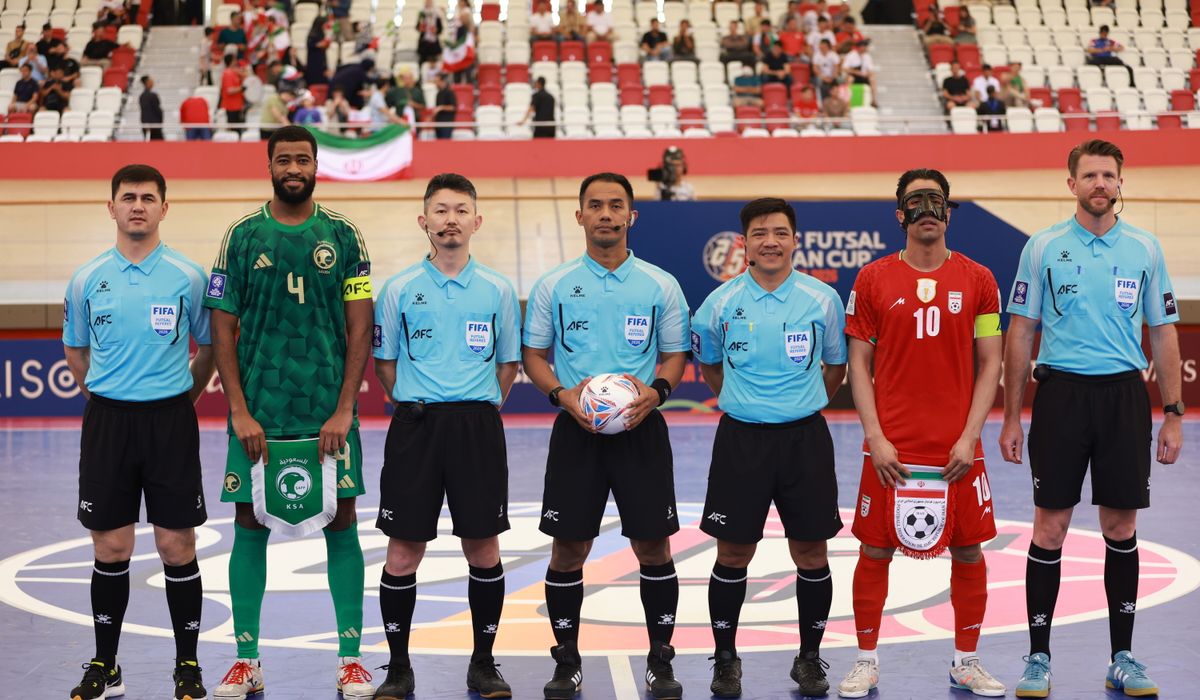
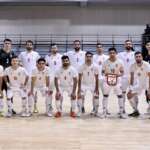
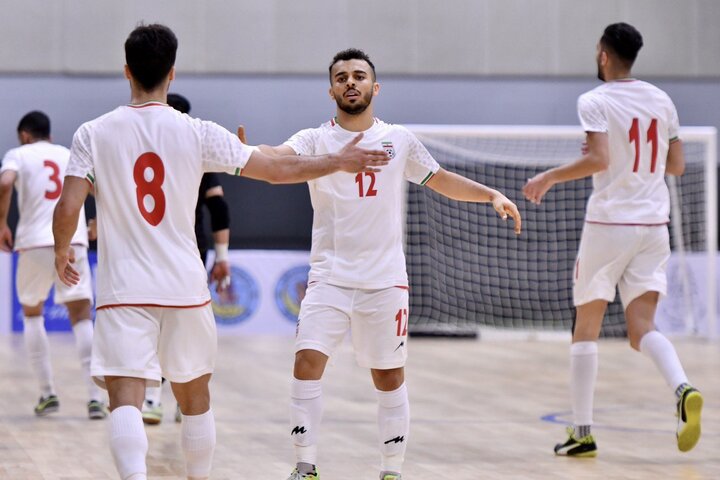
Jakarta: Iran survived a stern test to defeat Saudi Arabia 2-0 in their AFC Futsal Asian Cup Indonesia 2026™ Group D tie on Friday.

The defending champions had to withstand heavy pressure from Saudi Arabia throughout the match before two second half goals and Afghanistan’s 7-0 win against Malaysia in the later game, saw them advancing to the quarter-finals.

image content

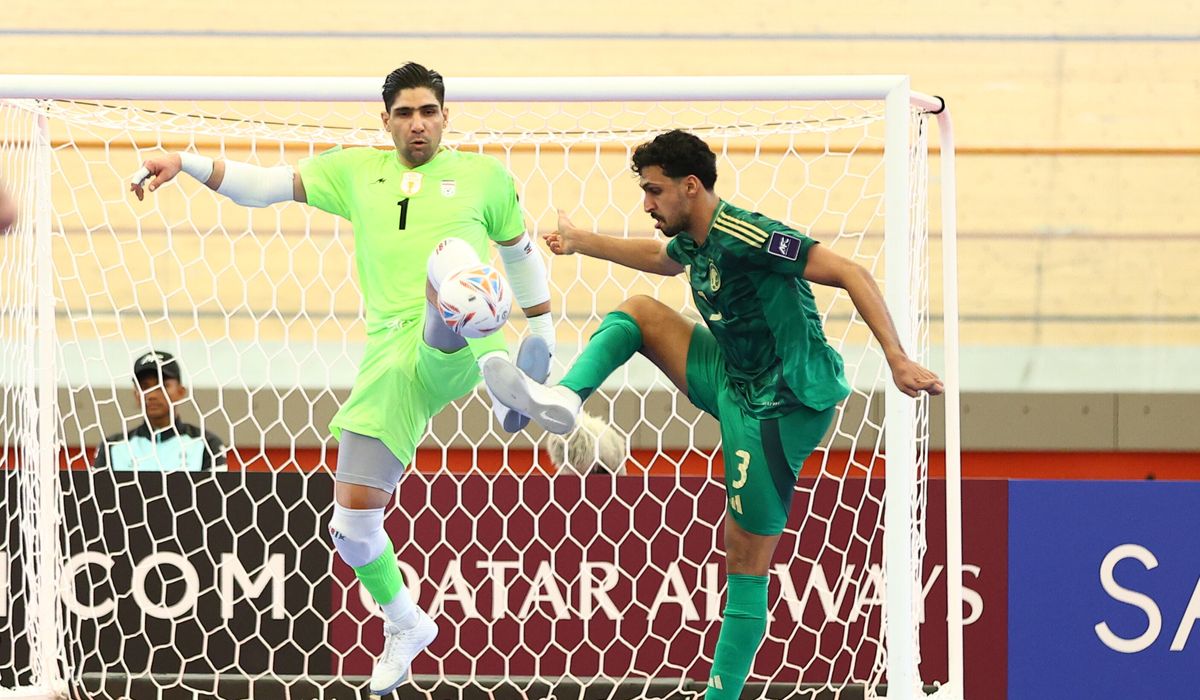
Saudi Arabia took the game to Iran from the opening whistle with Bagher Mohammadi having to make multiple stops to deny efforts from Eihab Mohamed and Saleh Alqarni.

Despite being put under intense pressure, Iran forced a chance in the seventh minute when Saied Ahmad Abbasi was sent through on goal in a quick breakaway but saw his low shot kept out by Humood Aldahhan’s outstretched leg.

Rotating their players with regular frequency, Saudi Arabia were able to keep their intensity high throughout the first half, forcing Mohammadi to make another good save in the 10th minute after Moath Alasiri had broken through.

image content

As the first half edged towards its end, Iran started to find gaps with Aldahhan having to be at his best to make a double save, first from Behrooz Azimi then getting back on his feet to block out Salar Aghapour’s follow-up header.

Iran did find the net when Azimi fired home from Aghapour’s corner delivery but the goal was ruled out after Video Support review with the half-time buzzer having sounded before the ball went in.

Group D: Saudi Arabia v IR Iran

After the break, Mohammadi showed why he’s one of the best in the game, coming out of his goalmouth to block successive efforts from Abdullah Alaqeeli and Alqarni after Nawaf Aroan started the play with a run out of defence.

Saudi Arabia, however, spurned a great opportunity in the 25th minute after an interchange of passes between Alaqeeli and Alasiri took the Iranian keeper out of position but the former scuffed his shot wide with the goalmouth gaping.

image content

Against the run of play, Iran broke the deadlock in the 29th minute after Ahmad Abbasi’s strike had been turned away for a corner kick with Moslem Oladghobad’s delivery nodded in by Amirhossein Gholami.

image content

Saudi Arabia went for broke in their search for the equaliser but their efforts were in vain with Mohammadi securing the win for Iran with a stunning volley in the 35th minute from almost the full length of the court.

Meanwhile, Afghanistan jumped to the top of the table above Iran after a convincing 7-0 win against Malaysia. Iran's final group match against Afghanistan will decide the leader of the group. Both teams have already qualified for the next stage regardless of the Sunday match.

Team Melli to leave for AFC Futsal Asian Cup

Iran's National Futsal team will depart Tehran to Jakarta on Friday, to participate in the 18th edition of Asian Premier Futsal Competition. The defending champions are coached by Vahid Shamsaei.

Thrilling battles await at the AFC Futsal Asian Cup Indonesia 2026™ when it kicks off on January 27 (Tuesday) in Jakarta as 16 teams chase ultimate glory.

The 18th edition of the tournament features a host of familiar contenders, with 13 returning from the previous campaign in 2024, including the ever-present quartet of Islamic Republic of Iran, Japan, Thailand and Uzbekistan, who extend their record of appearing in every Finals to date.

Hosting the hard-court showpiece for the second time after 2002, Indonesia will stage the matches across two venues, with the champions to be crowned on February 7.

The first matchday opens at the Jakarta International Velodrome with a 1pm clash between Thailand (FIFA Rank: 11) and Lebanon (54) in Group B. Having thrice finished as runners-up, including in 2024, the Thais will hope to make the final breakthrough this time, while their opponents—seven-time quarter-finalists—are back for a 13th occasion, following their last appearance in 2022. At 5pm, 2016 fourth-place finishers Vietnam (20) start their eighth Finals quest against Kuwait (40), whose best placings are also fourth (2003, 2014) and are marking their 14th Finals showing.

Over at the Indonesia Arena at 3pmGroup A gets underway with Iraq (37), who placed fourth in 2018, commencing their 14th involvement against a Kyrgyz Republic (43) outfit that finished fourth twice (2006, 2007) and are contesting a 17th Finals. Indonesia (24), who registered their best finish in 2022—their most recent showing—by reaching the last eight, can expect a boisterous backing at 7pm in their 11th appearance as they face Korea Republic (57), involved for a 16th occasion and looking to better their runners-up finish from 1999.

View this post on Instagram

A post shared by #AFCU23 (@afcasiancup)

Having enjoyed a memorable debut in 2024 by reaching the Quarter-finals to qualify for the FIFA Futsal World Cup Uzbekistan 2024, Afghanistan (28) will be hungry for more as they gear up to face Saudi Arabia (45)—notching their fourth Finals appearance—in Group D on January 28 at 1pm at the Jakarta International Velodrome. Reigning champions IR Iran (5), the only team to have never finished outside the top three, will commence their hunt for a record-extending 14th crown at 5pm against Malaysia (70), who will feature at a 13th Finals and first since 2018.

Japan (13) go in search of a fifth title after falling well short in 2024 when they suffered their first-ever Group Stage exit and start with a Group C opener at 3pm at the Indonesia Arena against Australia (51), who are appearing at their ninth Finals and count fourth place in 2012 as their best result. A maiden success will be on the minds of four-time finalists Uzbekistan (22) ahead of their 7pm showdown against Tajikistan (47), who registered a best-ever fourth-place finish in 2024—an achievement they will aim to surpass at their 13th Finals.

Group D


Wednesday, January 28, 2026 GROUP STAGE - GROUP D

AFGHANISTAN - SAUDI ARABIA


IRAN - MALAYSIA


Friday, January 30, 2026 GROUP STAGE - GROUP D

SAUDI ARABIA - IRAN

MALAYSIA - AFGHANISTAN

Sunday, February 1, 2026 - GROUP STAGE - GROUP D

SAUDI ARABIA - MALAYSIA

IRAN - AFGHANISTAN

Iran's Omid Team Opens AFC U23 Qualifiers with Commanding 4-0 Win Over Hong Kong

In their opening match of Group I in the AFC U23 Asian Cup qualifiers, Iran's Omid Team secured a comprehensive 4-0 victory against Hong Kong.

The goals for Iran were scored by Mahdi Jaafari, Amir Mohammad Razzaghnia, and a brace from Kasra Taheri.

Iran U23 has been drawn into Group I of the qualifying tournament alongside the UAE, Guam, and Hong Kong. Head coach Omid Ravankhah selected a starting lineup consisting of Mohammad Khalifa, Masoud Mohebbi, Farzin Maqsadagari, Arshia Vosoughifard, Seyed Mehdi Mahdavi, Amir Mohammad Razzaghinia, Pouria Latififar, Abbas Habibi, Erfan Jamshidi, Yadgar Rostami, and Saeed Saharkhizan.

The two teams had previously met in a warm-up match prior to the tournament, which ended in a 5-1 victory for Iran. This competitive encounter, however, proved more challenging initially.

Iran began the match with dominance, controlling possession and the flow of play. Despite their advantage, Hong Kong's organized and tight defense limited Iran's opportunities to create clear-cut chances. The first half concluded with the scoreline locked at 0-0.

Hong Kong's resilient defense continued into the second half, frustrating the Iranian attackers, who were also hampered by wayward finishing. Midway through the half, Coach Ravankhah made several crucial substitutions, introducing captain Mohammad Javad Hosseinnejad and Kasra Taheri to reinforce the forward line, replacing Saeid Saharkhizan.

The changes invigorated Iran's attack. The breakthrough finally came in the 69th minute from a free kick on the edge of the penalty area, awarded by the Korean referee. Mahdi Jaafari stepped up and executed a clever shot that left the Hong Kong goalkeeper stranded, putting Iran ahead 1-0 and relieving the growing pressure on the team.

The floodgates opened just three minutes later. A swift run down the left flank breached Hong Kong's tiring defense, and the resulting cross found Amir Mohammad Razzaghnia, who calmly finished from close range to double Iran's lead.

Substitute Kasra Taheri then took center stage, sealing the victory with two well-taken goals. His first came in the 83rd minute, and he added another in the second minute of stoppage time (90+2) to complete the 4-0 rout.

The match was played in intense heat, which challenged both sides. For much of the game, it seemed Iran's superiority might not translate into goals. However, the impactful substitutions by Ravankhah, combined with Hong Kong's fatigue in the latter stages and a confident finish from the Omid Team, ultimately made the difference.

Iran's next match will be against Guam.

Roberto Mancini furious at some Saudi Players, expels six from the squad

The Italian Roberto Mancini, the head coach of the Saudi national football team, revealed the reasons for the expulsion of several players from the squad in Doha, indicating that whoever hesitates or refuses to stay has to leave without hesitation.
This came during the press conference held along with Saleh Al-Shehri, the Saudi striker, on Monday, before confronting the Oman team on Tuesday, in Doha in the AFC Asian Cup Qatar 2023. The Italian explained the events with each player and the reason for the expulsion, as the conference inaugurated, saying: “We have 3 players who do not want to participate, They are Salman Al-Faraj, Sultan Al-Ghannam, and Nawaf Al-Aqidi." He explained: “Salman Al-Faraj does not want to play experimental matches. He said that when he first joined the squad. The other two wanted to start the games and would not be content to sit on the bench. Either start all matches or they are not going to stay with the team!!

The problems were not limited to the trio that Mancini mentioned in the press conference. He revealed the circumstances of other cases by saying: “Also, Mohammad Maran, Ali Hazazi, and Khaled Al-Ghannam all have expressed their unhappiness in the camp for various reasons, and were quite vocal about it. So, our response was quick: leave the camp now.”
On the future of the players who were excluded for non-technical reasons, he said: “There is no room to call them again. There are lots of players who want to represent the national team of their homeland and it is worth giving them the opportunity. What happened here is a strange matter. In my whole career as a player and a coach, I have never experienced such behavior before. This is alien to the sport of football"

About the chances of the Saudi national team, in the AFC Asian Cup, the former Italy and Manchester City coach said: "There are many strong teams here such as Japan, Australia, Iran, and South Korea, and we will do what we can in this tournament. We will deal with each stage as it comes. Right now. the focus is on our match with Oman. Certainly, it is a difficult match, which we will have to play with a greater focus in this meeting, especially as it is the opening match."

Who will lift the AFC Asian Cup 2023?

Predicting the team that will lift the AFC Asian Cup is not something that has any value at this stage as football, time and again, has proven to be a strange game, full of surprises, and winning a title in the most prestigious tournament can have twists and turns that not even the best analyst can predict.

However, what can be said makes sense is the ranking and performance of the teams beforehand and the expected results based on the earlier performance.

Japan: Without a shadow of a doubt, Japan sits right at the top of the ranking and their chances of lifting the trophy for the fourth time are quite high. Not only did the Japanese perform well at the Asian level, they even managed to beat the best of Europe in their own home. A 4-1 result against Germany will stand as a monument of the might of the Japanese and the resilience, power, and strength of depth of this team. Japan also put 4 past Turkey and Canada also beat Tunisia 2-0. Before that Japan toyed with El Salvador beating them 6-0 and five days later Japan gave Peru a lesson in football with a 4-1 win just before humiliating Germany 4-1.

It does not take much expertise to predict that Japan is the team to beat. that is easier said than done.

TEAM INFO

Coach: Hajime Moriyasu (from 2018-)

Injured or Suspect Players: Takehiro Tomiyasu (Arsenal) - Kaoru Mitoma (Brighton)

LAST FIVE MATCHES

Odds: 1 : 3.2

*****************************************************************************************

South Korea has a star-studded squad, and by the virtue of having perhaps the best Asian footballer in Son Heung-Min, the chances of this team are only second to Japan. Despite their results not matching the greatness of Japan, they are still a powerful team with a great military-like discipline that has a lot to say in Qatar. They have demonstrated their strength against Iran and can surprise any of the teams. The recent appointment of the German Jurgen Klinsmann and and former hero Ch Du-ri as an assistant and perhaps an interpreter as Cha is fluent in German, shows that the Korean FA are determined to seriously challenge for the title that eluded them since 1956. A strong team with many stars playing in Europe the Koreans are confident that this might be their year.

TEAM INFO

Coach: Jurgen Klinsmann (from 2023)

Injured or Suspect Players: NONE

LAST FIVE MATCHES

3/10/23FRIKorea Republic4 - 0Tunisia
17/10/23FRIKorea Republic6 - 0Vietnam
16/11/23AWCKorea Republic5 - 0Singapore
21/11/23AWCChina PR0 - 3Korea Republic
06/01/24FRIIraq0 - 1Korea Republic

Odds: 1 : 5.5

*****************************************************************************************

Iran, under Amir Ghalenoei, has proven to be one of the strongest in Asia and a difficult team to beat. Despite a few problems and shortfalls the team has enough talent to seriously challenge the likes of Japan and South Korea. In Azmoun and Taremi, Iran has a prolific duo up front not matched by any other Asian team. A near-half-century wait to lift the Asian Cup will give the Persians the greatest motive in making this tournament one to remember for the Iranian Fans.

TEAM INFO

Coach: Amir Ghalenoei (from 2022)

Injured or Suspect Players: Ramin Rezaeian (under treatment)

LAST FIVE MATCHES

17/10/23FRIQatar0 - 4IR Iran
16/11/23AWCIR Iran4 - 0Hong Kong, China
21/11/23AWCUzbekistan2 - 2IR Iran
05/01/24FRIIR Iran2 - 1Burkina Faso
09/01/24FRIIndonesia0 - 5IR Iran

Odds: 1:8

*****************************************************************************************

Australia, a powerhouse in Asian football a team that has already lifted the title once at home in 2015. The Socceroos is still a force to be reckoned with in this year's edition. The Socceroos are a mix of experienced and young players with 19 of the 26 currently plying trade in European leagues while only four are playing in the domestic A-League. The remaining three play in Japan and Saudi Arabia.

TEAM INFO

Coach: Graham Arnold (from 2018)

Injured or Suspect Players: None

LAST FIVE MATCHES

13/10/23FRIEngland1 - 0Australia
17/10/23FRIAustralia2 - 0New Zealand
16/11/23AWCAustralia7 - 0Bangladesh
21/11/23AWCPalestine0 - 1Australia
06/01/24FRIBahrain0 - 2Australia

Odds: 1:6.5

*****************************************************************************************

Saudi Arabia: Conquerors of Argentina in the group stage at the Qatar 2022 World Cup, Saudi Arabia are is on nearly equal terms in challenging for the trophy with Iran and Australia.

The Saudi Pro League underwent a huge transformation in 2023 with the arrival of Cristiano Ronaldo, Sadio Mane, and Neymar headlining an importation of talent that lifted the competition to a new level. That uplift will, in turn, have had a trickle-down effect on the Saudi players already plying their trade in the league. The recruitment of the most expensive coach in the tournament shows how the Saudi Government is determined to win this Asian Cup. Surprisingly, the last two friendly matches against Hong Kong and Palestine, both Team Mellio opponents at the group stages, were less than convincing.

TEAM INFO

Coach: Roberto Mancini (from 2023)

Injured or Suspect Players: None

LAST FIVE MATCHES

16/11/23AWCSaudi Arabia4 - 0Pakistan
21/11/23AWCJordan0 - 2Saudi Arabia
04/01/24FRISaudi Arabia1 - 0Lebanon
09/01/24FRISaudi Arabia0 - 0Palestine
10/01/24FRISaudi Arabia2 - 0Hong Kong

Odds: 1:8

outsiders

Uzbekistan intends to gate-crash the party. The Central Asian teams have seen a big stride in football from youth to senior level. In this third stint at the helm of an Asian nation, Katanec will be -- at the very least -- looking to achieve with Uzbekistan what he managed with Iraq at the 2019 Asian Cup, when he led his former side to the round of 16 before they were beaten by eventual champions Qatar. The team has many young players augmenting the experiences of the likes of Eldor Shomurodov a player who has been the best in Uzbekistan football in the last few years.

Qatar: The Defending Champions and Host is considered an outsider. The Team has suffered under the Carlos Queiroz regime. The Qatari selectors failed in their due diligence in picking Queiroz who is a devotee of defensive football while the Qatari Team has always thrived in their attacking mentality. That marriage did not last long and now Qatar under a new head coach Tintin Márquez has a mountain to climb. An experienced Spaniard drafted in from Qatar Stars League side Al Wakrah, Márquez was appointed less than a month out from the Asian Cup after the Qatar FA sacked former Real Madrid boss Carlos Queiroz.

Age factor in AFC Asian Cup 2023

It is hardly surprising that Team Melli, one of the contenders for lifting the AFC Asian Cup, has the highest average age among the teams who are also laying a claim for the prestigious continental title.

The AFC Asian Cup 2023, which was originally scheduled to be held in China, will instead start in Qatar in a fortnight after a year delay as Iran will take on Palestine in its first match.

Japan, Australia, South Korea, and Saudi Arabia in addition to Iran are traditionally among the strongest contenders for the championship in Asia, while Uzbekistan and host Qatar, can be included among the contenders. In the 27-man list that Amir Ghalenoei has published, there are a few names added, but it is doubtful if any one of them will feature in the upcoming matches.

Team Melli will only have a cosmetic change as the structure has remained quite exclusive since the 2018 World Cup until today. In fact, two aging players Omid Ebrahimi and Karim Ansarifard are part of the squad after being out for some time.

Much has been said about the aging Team Melli and the reluctance of Ghalenoei to introduce younger and promising players on the pretense of a shortage of time! however, it is interesting to compare the average age of other teams to find if younger age claims translate to success.

There is no doubt that Japan is the team to beat in this tournament. They have the strongest and most feared team that has beaten the likes of Germany amongst many other teams. Among these seven top contenders, the Japanese national football team is the youngest average age of 25.1 years. Uzbekistan is 25.68 years, Saudi Arabia is the third with 26 years and Australians follow at 26.15, while South Korea has an average age of 27.8 and Qatar with an average of 27.9 years (see table below)

The average age of the players of the Iranian national team is 28.6 years, which is the highest compared to the other five contenders.

Amir Ghalenoei once again has drawn the line on the names of young players, including Mohammad Amin Hizbavi, Abolfazl Jalali, Allahyar Sayadmanesh, Saeed Saharkhizan, and others, preferring experienced and seasoned players. Although the age of players is one factor for a victorious team, it is by no means the only factor.

It has been a tradition amongst the Iranian coaches to stick to a group of few players that they can rely on. That is painfully clear at club levels, however, at the international level within a short period where the teams play an average of a game every three or four days, that could become a liability, especially with older players who do not have the energy to be involved in intense competitions.

#TeamAverage Age23 & below30 & above
1Japan25.182
2Uzbekistan25.6885
3Saudi Arabia2694
4Australia26.1568
5Korea Rep.27.8410
6Qatar27.9312
7Iran28.6312
Players Average Age

Iran crushes Saudi Arabia in Thailand's Futsal Tournament

Iran's Futsal national team started the NFDF Futsal Championship Pattaya Thailand 2023 with a crushing win against Saudi Arabia this evening.

lead by head coach  Vahid Shamsaei,  Iran defeated the Saudi team 11-0.

After losing the Asian Cup title to Japan, this tournament is the first opportunity to test new players, and in the first step, the players easily defeated the Saudi team, which was one of the surprises in the AFC Asian Cup in Kuwait. Saudi Arabia managed to defeat Japan in the championship. Iran scorers were Hossein Tayyebi and Hamzah Kodkhodaei (three goals each), Saeed Mambini, Saeed Ahmad Abbasi, Mojtabi Parsapour, Salar Aghapour, and Moslim Oladaghbad

The first half of this match ended 3-0 with goals by Hossein Tayibi, Hamzeh Kodkhodaei, and Saeed Membini. While it was expected that Saudi Arabia with its Spanish head coach would put more pressure on Iran in the second half to get back in the match, this did not materialize and the second 20 minutes of the game was completely one-sided in favor of Shamsaei's men with Saudi Arabia players barely entering the penalty area of Iran's team.

In the second half, Saudi Arabia's goal was opened by Hossein Tayyebi (2 goals), Hamzah Kodkhodaei (2 goals), Saeed Ahmad Abbasi, Mojtaba Parsapour, Salar Aghapour, and Muslim Oladaghbad, for the match to end 11-0.  It was a devasting result for the Saudi team which is laying claims to be one f the best teams in Asia. Iran is in the second group of this tournament with Saudi Arabia and Egypt and will face Egypt in the second game at noon on Friday. Japan, Thailand, and Mozambique are present in the other group of this competition which will be held in Pattaya. Mehdi Taj and Ehsan Usoli, the president and spokesperson of the Football Federation, have traveled to Thailand to accompany the team.

Saudi Arabia set to host 2027 Asian Cup after India withdraws bid

Saudi Arabia looks set to host the 2027 Asian Cup after becoming the sole bidder for the tournament when India withdrew its bid.
LUSAIL CITY, QATAR - NOVEMBER 22: Saudi Arabia players celebrate the 2-1 win during the FIFA World Cup Qatar 2022 Group C match between Argentina and Saudi Arabia at Lusail Stadium on November 22, 2022 in Lusail City, Qatar. (Photo by Clive Brunskill / Getty Images)
LUSAIL CITY, QATAR - NOVEMBER 22: Saudi Arabia players celebrate the 2-1 win during the FIFA World Cup Qatar 2022 Group C match between Argentina and Saudi Arabia at Lusail Stadium on November 22, 2022 in Lusail City, Qatar. (Photo by Clive Brunskill / Getty Images)© Clive Brunskill

The Asian Football Confederation (AFC) said in a statement that the All India Football Federation had pulled out from the selection but did not provide any reasons for India's decision.

In October, the AFC's executive committee shortlisted India and Saudi Arabia as potential hosts. Iran which submitted its own bid also withdrew for unknown reasons.

"The Asian Football Confederation has been officially notified by the All India Football Federation (AIFF) of their decision to withdraw their bid from the AFC Asian Cup 2027 host selection process," the regional body said Monday without elaborating.

Three-time champions Saudi Arabia will now probably host their first AFC Asian Cup. The AFC Congress will formally decide on the host in the Bahrain capital of Manama in February next year.

Saudi Arabia caused one of the biggest shocks in the ongoing World Cup in Qatar when they beat Argentina 2-1 in their opening match, although the team were not able to advance past the group stage.

The 2023 Asian Cup will also be hosted by Qatar. It was previously set to be held in China but the country withdrew because of its Covid-19 guidelines.

The Asian Cup is staged every four years. Qatar won the tournament's last edition, in 2019, which was hosted by the UAE.

Results by nation

AFC Asian Cup winners 
National team Winners Runners-up Total Years won Years runners-up
 Japan 4 1 5 1992200020042011 2019
 Saudi Arabia 3 3 6 198419881996 199220002007
 Iran 3 0 3 196819721976
 South Korea 2 4 6 19561960 1972198019882015
 Israel 1 2 3 1964 19561960
 Kuwait 1 1 2 1980 1976
 Australia 1 1 2 2015 2011
 Iraq 1 0 1 2007
 Qatar 1 0 1 2019