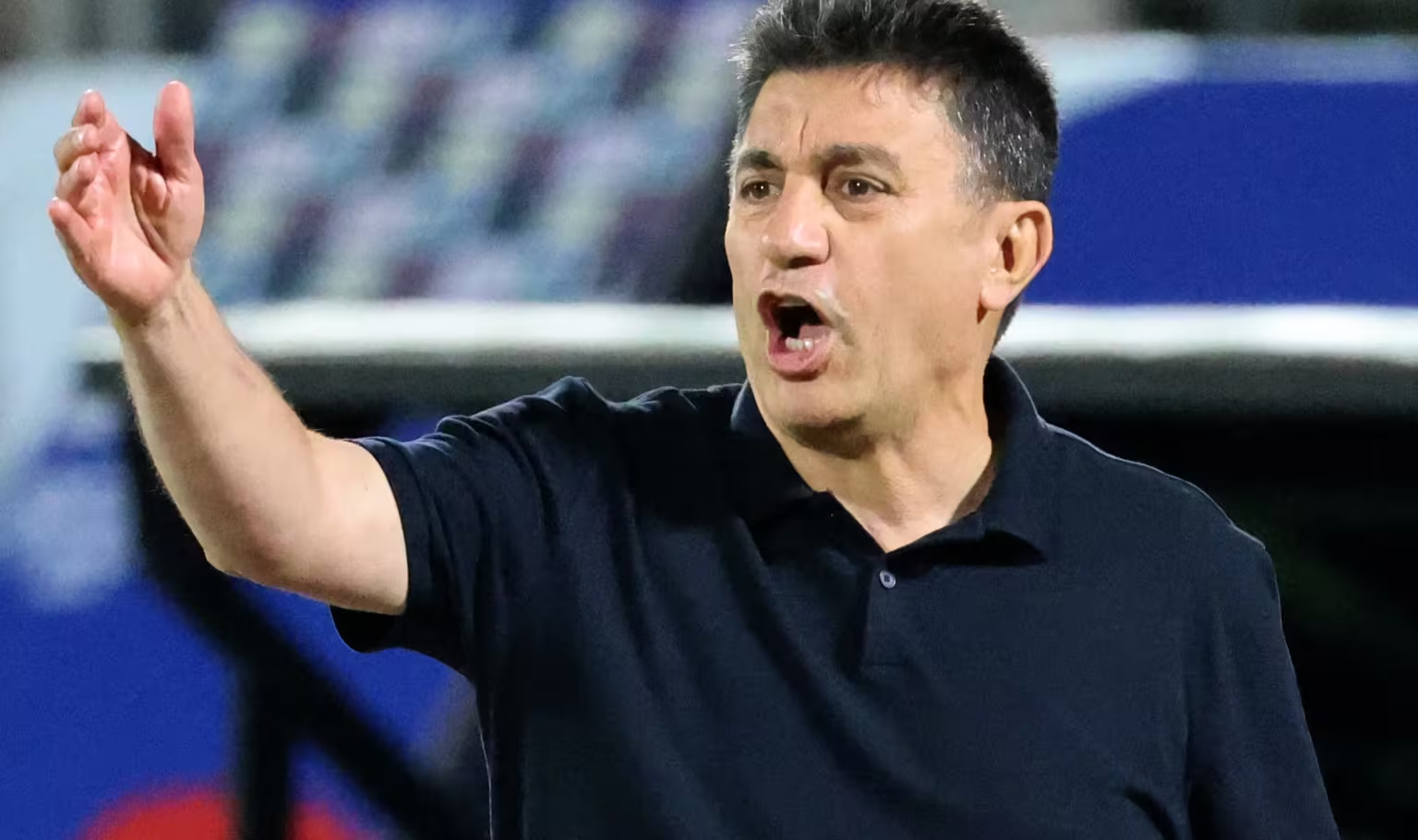
Amir Ghalenoei's own words have exposed the Football Federation of the Islamic Republic of Iran (FFIRI) as an institution where oversight is a fiction, accountability is absent, and the national team coach operates with a level of impunity that should alarm every Iranian football fan.
In a statement to the press following the FFIRI board meeting on October 13, Ghalenoei revealed a level of institutional dysfunction that borders on the surreal. "I explained and spoke for ten minutes during the meeting, but I swear to God, not a single person asked a question," he said. "I am available to address any concerns, but since no one raised a question, we simply left the meeting." He further added: "I made no promises whatsoever about winning the championship during that meeting. None of the board members asked me even the slightest question."
This is not a minor procedural anecdote. It is a damning indictment of a governance structure that has abdicated its most fundamental responsibility: to scrutinize, challenge, and hold accountable those entrusted with the nation's footballing fortunes. When the coach himself—a man with a vested interest in presenting board meetings as collegial and uneventful—openly admits that no board member posed a single question about the national team's strategy, preparations, or performance targets, the conclusion is unavoidable: FFIRI's board has become a rubber stamp, and Ghalenoei knows it.
The Structural Rot Beneath the Surface
Ghalenoei's remarks did not emerge in a vacuum. They are the logical product of an institutional culture that has systematically dismantled meaningful oversight over years.
Since Mehdi Taj's return to the federation presidency in 2023—an election held under the direct intervention of security institutions to approve or disqualify candidates—the federation's governance has been marked by opacity, factionalism, and a persistent refusal to subject decision-making to genuine scrutiny. IranWire's investigation into the federation's power network revealed that documents leaked in 2022 following the hacking of Fars News Agency detailed Taj's coordination with the Islamic Revolutionary Guard Corps and his commitments prior to returning to the presidency. These are not incidental facts. They describe a federation whose leadership answers to forces far removed from the sporting mandate it is supposed to serve.
The composition of the current board itself reflects this reality. The board members who sat in silence as Ghalenoei delivered his ten-minute monologue include individuals who have themselves been at the center of financial and ethical controversies. The 2023 election brought in figures like Mehdi Mohammad Nabi, Heydar Baharvand, and Farideh Shojaei as vice presidents, while the seven-member board includes Hojjat Karimi, Ali Taheri, and Ali Khatir—names that have since become synonymous with the internal warfare consuming the federation.
This is the same Hojjat Karimi whom Ghalenoei referenced in his statement. "It is interesting to note that Hojjat Karimi—a member of the federation's board—is a friend of ours, yet the only point he endorsed during the meeting was his own remarks." Ghalenoei's tone here is telling: he speaks of a board member's silence not with concern but with something approaching satisfaction. The absence of challenge has become normalized.
The Contract That Nobody Questioned
The most damning illustration of FFIRI's failure of oversight is not what Ghalenoei said in the board meeting, but what the board failed to scrutinize beforehand.
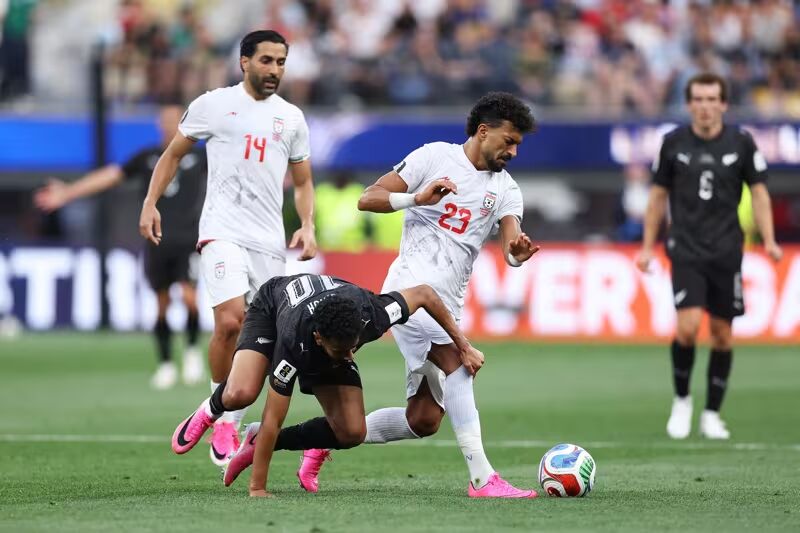
Ghalenoei's contract was extended through the 2027 AFC Asian Cup despite Iran's deeply disappointing World Cup campaign, in which Team Melli drew all three group matches against New Zealand, Belgium, and Egypt, finishing third and failing to reach the knockout stage of the expanded 48-team tournament. The decision to extend the contract of a coach who had just overseen the national team's exit from the World Cup's group stage—without a single victory—would have been contentious in any federation with functioning oversight mechanisms.
But the circumstances surrounding the extension are even more extraordinary. According to Shahraranews, Ghalenoei submitted a blank contract—a سفیدامضا—to the federation, leaving the financial terms entirely unspecified and at the discretion of FFIRI. The federation's spokesperson, Amirmehdi Alavi, framed this as evidence of Ghalenoei's commitment to the national team over financial gain. But from a governance perspective, this arrangement is deeply troubling. A blank contract means the federation has accepted an open-ended commitment with no defined financial parameters, no performance benchmarks tied to compensation, and no safeguards for public funds.
This is precisely the kind of arrangement that a functioning board of directors would scrutinize. Yet not a single question was asked.
A Board That Fights in Public but Abdicates in Private
The absurdity of the board's passivity in formal meetings becomes even more glaring when set against its behavior outside them. In September 2026, two board members—Ali Khatir and Hojjat Karimi—engaged in a televised verbal brawl on the program Football Bartar, trading accusations that included allegations of brokerage, financial irregularities, a $20,000 payment to Godwin Mensha, €350,000 linked to Antonio Gagliardi, and even Khatir's own eligibility to serve on the board. The dispute began with disagreement over Ghalenoei's contract extension and escalated into threats of legal action and personal attacks.
Karimi claimed during the broadcast that board members had initially opposed the four-year contract extension for Ghalenoei, but that Taj's intervention changed their position—and that Khatir, who had been opposed, eventually agreed and even traveled with the national team. If Karimi's account is accurate, it describes a decision-making process in which the board's initial opposition was overridden by the president's will, and where a member's reversal of position was attributed to personal benefit rather than principle.
So we have a board that cannot agree on fundamental decisions in private, cannot formulate a single question for the national team coach in a formal meeting, yet is perfectly willing to air its grievances and accusations on live television. This is not oversight. This is theater.
The Consequences of Impunity
The direct consequence of this governance vacuum is that Ghalenoei operates without meaningful constraints. His statement to the press—delivered with the casual confidence of a man who knows he will face no institutional challenge—reveals a coach who understands that his position is secure regardless of results. He can speak for ten minutes, leave the meeting, and face no follow-up questions. He can make no promises about winning the championship, and no one will hold him to any standard of achievement.
This impunity has consequences beyond Ghalenoei himself. The national team's preparation has been criticized as inadequate, with domestic analysts noting that the federation's silence and poor logistical arrangements have placed the coach under mounting pressure even as it refuses to provide the institutional support that would relieve it. The federation's own newspaper published a glowing, sycophantic profile of Ghalenoei under the headline "The Plan to Conquer Asia on the Coach's Desk"—a piece described by critics as "completely supportive and detached from existing realities".
Meanwhile, the federation faces serious allegations of financial mismanagement. Iran International reported that the federation's disciplinary committee collected over 138 billion tomans in fines from clubs, players, and coaches over just seven months. An investigative journalist announced that indictments on embezzlement charges had been issued for several senior federation officials. And FIFA's official data shows that while over $5.2 million in committed resources are registered for Iranian football development projects, the figures for "national team support" and "competitions" are listed as zero.
The Question Nobody Is Asking
Ghalenoei's statement should be read not merely as a description of a single board meeting, but as a window into the entire architecture of Iranian football governance. The question is not why the board failed to ask Ghalenoei about his plans. The question is what purpose the board serves at all.
When a federation's highest decision-making body cannot formulate a single question for the person responsible for the most visible manifestation of Iranian football on the international stage, it has ceased to function as a governing institution. When a coach can publicly boast of this failure—and frame it as evidence of his own transparency and availability—the culture of impunity has become so entrenched that it no longer even attempts to disguise itself.
Amir Ghalenoei's unbroken silence in the face of scrutiny is not a personal failing alone. It is the predictable outcome of a system that has systematically eliminated the mechanisms by which accountability might be enforced. The board that asked no questions will bear the consequences when the answers that were never demanded become impossible to ignore.