Tag: 2026 FIFA World Cup

Belgium Blueprint, Egyptian Threat – Can Iran Finally Break Their World Cup Curse?


The Belgian Revelation – Iran Proves It Belongs on Football's Biggest Stage

The match against Belgium was a revelation on multiple levels. What it demonstrated, beyond any reasonable doubt, is that Team Melli possesses the quality, resilience, and tactical intelligence to qualify for the next round of the FIFA World Cup. This performance lent credibility to Iran's FIFA ranking and proved that—despite the discrimination, logistical hostility, and ill-treatment they have endured throughout this tournament—this team can genuinely challenge the very best in world football.

Ghalenoei's Masterclass – Silence the Critics

Amir Ghalenoei, the target of relentless criticism following the New Zealand draw, experienced a fit of tactical inspiration against Belgium. He had clearly done his homework with remarkable efficiency. Despite retaining both Ali Nemati and Shoja Khalilzadeh—two defenders who had performed poorly against the Kiwis—his masterstroke was the deployment of a three-man central defensive system. This formation suffocated Belgium's attack, neutralizing the most lethal forward line Iran has faced in years. The decision was bold, unconventional, and ultimately brilliant.

What the Draw Means for Group G

The 0-0 stalemate means Iran remains undefeated after two matches but is not yet assured of a place in the Round of 32. The equation is simple but fraught with pressure: Iran needs at least one point against Egypt to keep their destiny in their own hands, while a victory would guarantee qualification. Three points would seal the deal emphatically.

The Ghost of World Cup Finales – A Troubling Trend

Team Melli has previously played in six editions of the FIFA World Cup, and history is not on their side. In their final group matches, Iran has recorded four defeats and two draws—a record that translates into an alarming inability to deliver when it matters most. This is not merely a statistical curiosity; it is a deeply ingrained trend in Iranian football, evident at both club and national level in recent years.

We all remember the heartbreaks: the Asian Cup semi-final failures in 2019 and 2023, and the crushing disappointment of the 2022 World Cup when Iran needed only a draw against the United States to qualify—and fell short. Whatever the reasons for these last-minute flops—whether psychological fragility, tactical conservatism, or sheer misfortune—this time, the players and coaching staff must stand up and be counted. History is a lesson, not a life sentence.

Egypt – A Different Kind of Beast

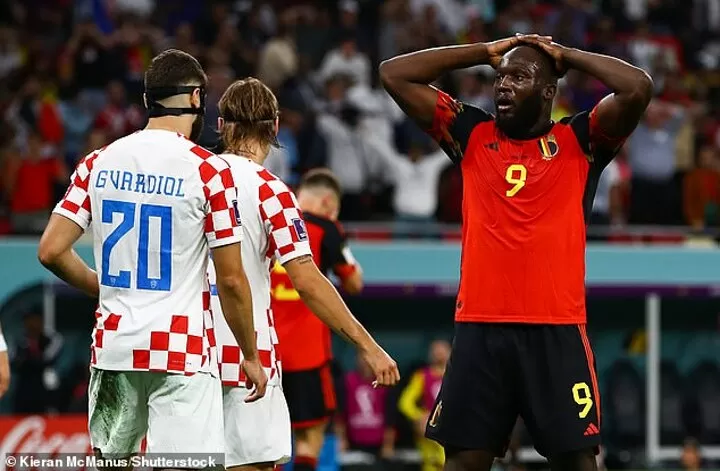
Some analysts and fans believe Egypt represents a tougher challenge than Belgium. Ghalenoei and his players would certainly beg to differ. The game against Belgium should serve as the template for the Egypt encounter—but there are crucial differences. The towering presence of Romelu Lukaku is replaced by the devastating pace and guile of Mohamed Salah. The same defensive focus, discipline, and collective responsibility must be applied to nullify Egypt's talisman.

However, Salah is far from Egypt's only threat. Omar Marmoush and Mahmoud Trezeguet have proven themselves to be potent attacking weapons capable of exploiting any lapse in concentration. In simple terms, Iran's defense must replicate the near-flawless performance it produced against Belgium—or risk being undone by a single moment of brilliance.

The Peril of Defensive Conservatism

The fear among fans is that Ghalenoei will revert to a cautious, ultra-defensive game plan in pursuit of the single point needed for qualification. That approach is fraught with peril. Sitting deep against a team with Egypt's attacking quality could invite pressure, concede space, and ultimately end in the kind of heartbreaking disappointment that has become all too familiar.

Team Melli possesses genuine quality in attack. Mehdi Taremi, Mohammad Mohebi, Mehdi Torabi, Amirhossein Hosseinzadeh, Mehdi Ghaedi, and even the relatively untested Eckert are offensive weapons capable of causing serious problems for Egypt's defense. This is not a squad that should be shackled by fear. Iran has the tools to attack—and to win.

Mentality Is Everything

Ultimately, the outcome of this crucial fixture will be determined by mentality—both of the team and the coaching staff. If Ghalenoei decides that the reward is worth the risk and opts for an attacking approach, Iran could secure a historic victory. If he maintains the 5-4-1 formation and invites Egypt onto them, the consequences could be disastrous.

The Belgium match has given Iran a blueprint, a template, and a belief system. Now, they must execute. The players must play with freedom, confidence, and the unshakable conviction that they belong on this stage.

Final Verdict

The draw against Belgium was not just a result—it was a statement. It announced to the world that Iran is no longer a team that simply participates; it is a team that competes. With one match remaining, the opportunity to make history is there for the taking. The question is whether Ghalenoei and his players have the courage to seize it.



System Shuffle or Structural Fracture? Dissecting Team Melli's Tactical Identity Crisis Ahead of Belgium


While Team Melli's performance and result against New Zealand fell short of expectations, the outing was far from the doomsday scenario that critics had prophesied. Predictions of collapse, fueled by contentious player selections, a perceived lack of attacking punch, questionable squad character, and the ever-present shadow of off-pitch political interference, proved exaggerated. Yet, to dismiss the concerns entirely would be equally misguided.

Tactical shortcomings were evident. The defensive fragility, a theme rehearsed ad nauseam, remains the most visible flaw. But more alarming, and arguably more consequential, was the glaring inadequacy in midfield: a void of depth, influence, and effective ball progression that left Iran disjointed and reactive for large stretches of the match.


Three Years, Five Systems, One Persistent Question

It has been three years and three months since Amir Ghalenoei assumed the reins of Team Melli. In that period, he has overseen 44 official matches—including the World Cup opener against New Zealand—deploying no fewer than five distinct starting formations. The preparatory friendlies in March and June, ostensibly the final testing ground for tactical experimentation, saw Ghalenoei cycle through a veritable carousel of systems:

  • Against Nigeria, he unveiled a three-center-back setup with a 4–4–1 structure for the first time.
  • Against Costa Rica, he reverted to his preferred 4–3–1–2, yielding an emphatic victory.
  • Against Gambia, he shifted to a 4–4–2 with two holding midfielders.
  • Against Mali, after a lengthy hiatus, he dusted off a 4–4–1–1.

Despite this tinkering, it was widely anticipated that Ghalenoei would lean on his favored system against New Zealand—arguably the group's most forgiving opponent. And so he did. Iran took the field in a 4–3–1–2 formation, the nineteenth time he has employed this setup from the opening whistle.

The Starting XI and Structural Blueprint:

  • Center-backs: Nemati and Khalilzadeh held the spine.
  • Full-backs: Ramin Rezaian (right) and Milad Mohammadi (left) provided width.
  • Sole defensive midfielder: Saeed Ezzatollahi sat deep, tasked with shielding the backline.
  • Wingers: Aria Yousefi (left) and Mohammad Mohebi (right), though Yousefi was deployed in an unnatural left-wing role, a position he had only recently trialed in training.
  • Playmaker: Saman Ghoddos operated between the lines.
  • Strikers: Shahriar Moghanloo and Mehdi Taremi formed the attacking duo, with their positioning fluctuating throughout.

Crucially, Yousefi's unfamiliarity with the left flank was compounded by Mohebi's altered responsibilities—he was forced to track back and cover the space behind Rezaian, who was given license to bomb forward relentlessly. The result was a lopsided, occasionally chaotic structure that invited pressure.


Substitutions Without Systemic Evolution

Recognizing the ineffectiveness of his initial setup, Ghalenoei turned to his bench. However, the substitutions did little to alter the underlying tactical framework:

  • Ghaedi replaced Yousefi on the left wing.
  • Alipour came on for Moghanloo.
  • Hajsafi took over Ghoddos's creative role.
  • Hosseinzadeh entered for Taremi.

Personnel changed; the system did not. Iran continued to labour within the same structural constraints, failing to address the midfield disconnect or the defensive vulnerabilities that New Zealand exploited with alarming ease.


Belgium: A Different Beast Entirely

The challenge against Belgium will be of an entirely different magnitude. The Red Devils possess superior technical quality, greater attacking depth, and a midfield engine capable of overrunning any opponent that fails to maintain structural integrity.

Ghalenoei's selection of Shahriar Moghanloo against New Zealand was a calculated, almost pragmatic move. Moghanloo's stature was prioritized not for his goal-scoring threat, but for his aerial presence in defending set pieces and his utility in both boxes. Against Belgium, however, where the game will be defined by transitional speed and midfield duels rather than cross-heavy assaults, Moghanloo's inclusion seems increasingly untenable. His departure from the starting XI against Belgium is all but certain.


Defensive Disarray: The Elephant on the Pitch

What was most glaring, and most heavily criticized against New Zealand, was the structural disintegration of Iran's defensive organization. Despite packing numbers into their own third, the Iranian backline allowed the Kiwis to carve through with just two or three attackers around the 18-yard box, conceding two goals far too easily.

The problems were systemic:

  • Poor spatial coverage in front of the defensive line.
  • Inadequate communication and coordination inside the penalty area.
  • Mismanagement of covering assignments during transitional phases.

These are not individual errors; they are collective breakdowns, and against a Belgian attack far more clinical and inventive than New Zealand's, such lapses would be fatal.


Expected Adjustments: A Shift to Two Holding Midfielders

Given the defensive frailties and Belgium's superior attacking pedigree, a systemic change is not just likely—it is imperative. Ghalenoei is expected to abandon the single-pivot setup and instead field two defensive midfielders in a 4–2–3–1 (or 4–3–1–2–1) shape.

  • Ezzatollahi will likely be joined by Mohammad Ghorbani (the more probable choice) or, less likely, Amir Mohammad Razaghinia, to form a double pivot.
  • This dual-screen arrangement aims to:
  • Better shield the central defensive duo (Khalilzadeh and Nemati, who are expected to retain their places).
  • Close the dangerous spaces in front of the backline.
  • Reduce the isolation of defenders when Belgium's midfielders drift into half-spaces.

In this recalibrated setup, Mehdi Taremi is likely to operate as a lone striker, with the freedom to drop deep and link play—a role he has performed with distinction at club level.


Wing Reconfiguration: Rezaian Unleashed, Hardani Anchors

Further changes are anticipated in the wide areas:

  • Aria Yousefi is expected to drop out, with Mohammad Mohebi shifting to the left wing, his more natural flank.
  • Ramin Rezaian, given his offensive instincts and goal-scoring ability, could be pushed higher to right wing.
  • Behind him, a more defensively disciplined full-back, likely Saleh Hardani, would provide cover, allowing Rezaian greater freedom to attack without exposing the flank.

Saman Ghoddos will retain his central playmaking role, operating at the tip of the midfield triangle, tasked with linking defense to attack and unlocking Belgium's defensive block.


Ghalenoei's System History: A Pattern of Pragmatism

It is worth contextualizing these potential changes within Ghalenoei's broader tactical portfolio:

  • 4–4–2 with two holding midfielders has been used in 11 matches.
  • 4–3–1–2 (as seen against New Zealand) has been deployed in 19 matches.
  • 4–2–3–1 (or its variant) has been used in 8 matches, which would become the ninth if selected against Belgium.
  • 4–1–4–1 has featured in 5 matches.
  • 4–1–4–1 with a single pivot has been used in 1 match.

The data suggests that Ghalenoei is not averse to systemic flexibility—but the question remains whether these shifts are proactive tactical evolutions or reactive patchwork responses to emerging crises.


Belgium's Vulnerabilities: Lessons from Egypt

It would be remiss not to acknowledge that Belgium, for all their star power, are far from invincible. Their last match against Egypt offered a revealing blueprint:

  • Doku, Belgium's most dynamic dribbler, was effectively neutralized by double-teaming, a tactic that nullified his direct threat and forced him into predictable passing lanes.
  • The midfield axis of Tielemans and De Bruyne was disrupted by Egypt's compact pressing and disciplined positional play, limiting their ability to dictate tempo and thread penetrating passes.

Ghalenoei would have been remiss not to take meticulous notes. If Iran can replicate Egypt's defensive discipline, doubling Doku when necessary, cutting off supply lines to De Bruyne, and maintaining compactness between the lines, they may find avenues to frustrate the European side and exploit counter-attacking opportunities.


Final Verdict: Adaptation or Repetition?

The Belgium match represents a crossroads. Ghalenoei has the personnel, the data, and the tactical history to make informed adjustments. But the recurring concern is whether he will commit to meaningful systemic evolution or simply shuffle personnel within a failing framework.

Iran's World Cup aspirations do not hinge solely on this single fixture—but the manner in which they approach it will speak volumes about the coaching staff's ability to learn, adapt, and impose their will on a high-caliber opponent. The fans, the pundits, and the players themselves deserve a coherent, courageous plan—not another chapter in an ongoing tactical identity crisis.


Claudia Sheinbaum - Mexico President

Mexico Confirms Readiness to Host Iran's 2026 FIFA World Cup Matches

TEHRAN (Tasnim) – Mexico said on Tuesday that the country stands ready to host some of Iran’s matches during the 2026 FIFA World Cup.

Mexican President Claudia Sheinbaum confirmed her country’s readiness when responding to a question about whether Mexico would welcome Iran's participation in Mexico’s home ground for the tournament. "Yes," she replied with a clear endorsement, emphasizing that Mexico maintains diplomatic relations with all countries worldwide and is eagerly awaiting FIFA's final decision on the hosting arrangement.

This announcement comes as US President Donald Trump issued a thinly veiled threat to Iran’s national football team last week by declaring they are “welcome” but warning it would not be “appropriate” for them to attend “for their own life and safety.”

The statement was posted on his Truth Social platform, following the US-Israeli aggression that has severely damaged several Iranian sports facilities.

In response to these events, Tehran has vowed to boycott the tournament as a protest against the assassination of its leaders and the ongoing imposed war. 

The statement by the US president came just days after Trump assured FIFA President Gianni Infantino that Iran would be allowed to compete in the tournament co-hosted by the United States, Mexico, and Canada.

Internal Strife Threatens Iran's World Cup Hopes


As the 2026 World Cup approaches, with just five months until the tournament kicks off, the Iranian national football team finds itself grappling not only with technical deficiencies but with a deeply concerning lack of unity—a stark contrast to the harmonious picture painted by head coach Amir Ghalenoei.

Despite repeated warnings from experts about persistent performance and management issues, Football Federation head Mehdi Taj has opted for stability, deciding to retain Ghalenoei. This move signals a clear departure from the federation's previous approach, which saw the sudden dismissal of a successful Dragan Skocic, who led the team to qualification just before the final of the competition in Qatar in the 2022 World Cup. The message is clear: change is off the agenda, and Ghalenoei will remain at the helm regardless of the team's precarious state.

The coach has consistently lauded the squad’s exceptional unity over the past three years. Recent events, however, reveal a troubling reality. Growing evidence suggests Ghalenoei may be papering over significant rifts within the Team Melli camp, with claims of solidarity appearing to exist only on paper.

A Public Feud Between Defensive Pillars

The simmering tensions erupted into public view following the Persepolis-Tractor match. Key defenders Shoja Khalilzadeh and Mohammad Hossein Kanaanizadegan, once close enough to call each other “brother”, have engaged in a bitter, public exchange of verbal abuses over minor on-field incidents. This discord is not isolated; similar altercations occurred during the match against Mes Rafsanjan. The rift has grown so severe that videos of the two players “unfollowing” each other on social media have circulated online, fanning flames among supporters and poisoning the team atmosphere.

Beyond the Pitch: Players in the Political Fray

The issue extends beyond a personal feud. These experienced players have entangled themselves in the federation's political battles, notably the ongoing dispute between businessman Mohammad Reza Zenozi and Mehdi Taj. Instead of focusing on defensive coordination, they have each seemingly aligned with opposing factions, a glaring misstep that highlights a severe lack of managerial control and player discretion.

Their conduct is, unfortunately, characteristic. Both Khalilzadeh and Kanaanizadegan have histories of controversy, abusive, and unprofessional behavior, marked by petulance and unpredictability. At the national team level, Ghalenoei has proven to be a poor disciplinarian, a fact underscored after the Uzbekistan match when star forward Mehdi Taremi bluntly walked away from the coach who was attempting to speak with him. This culture of impunity is pervasive, with disciplinary committees at both club and federation levels often acting as mere formalities rather than enforcing regulations strictly.

A Dire Warning with the World Cup Looming

Drawn into a challenging Group G alongside Belgium, Egypt, and New Zealand, Iran faces an uphill battle. The internal disputes, managerial indecisiveness, and the divisive behavior of key players present a serious threat to the team's World Cup campaign.

Retaining Ghalenoei without addressing these foundational issues—particularly the breakdown of locker room discipline and the dangerous blurring of lines between playing and political roles—risks catastrophic consequences. It threatens not only Iran’s performance on the world’s biggest stage but also the credibility and honor of Iranian football itself.

World Cup 2026 Draw: Iran's Golden Opportunity in a Tantalizing Group G


The path for Iran’s historic quest to reach the knockout stages of a FIFA World Cup for the first time since 1978 has been revealed. Drawn into Group G for the 2026 tournament alongside Belgium, Egypt, and New Zealand, Team Melli finds itself in a promising, yet delicately balanced, constellation.

On paper, this is arguably the most favorable draw Iran could have hoped for from Pot 3. Avoiding global powerhouses and continental giants, the group presents a clear hierarchy and a defined target: second place.

The Hierarchical Favorite: A Belgian Juggernaut

At the summit sits Belgium, the undeniable frontrunner. A nation brimming with elite talent, they represent Iran's most formidable challenge. Stars like the creative force of Leandro Trossard (Arsenal), the electrifying Jérémy Doku (Manchester City), and the prolific Romelu Lukaku (Napoli) form an attack capable of breaching any defense.

For Iran, this matchup is a dual threat. Not only is it a first-ever meeting at any level, posing tactical unknowns, but it also starkly highlights Team Melli's most significant vulnerability: a historically inconsistent and vulnerable defensive line. Containing Belgium will require peak organization, discipline, and likely a game plan built on resilient defending and exploiting rare counter-attacking opportunities. A point against the Belgians would be a monumental result; the primary objective will be to keep the goal difference intact.

The Decisive Duel: Iran vs. Egypt for Progression

The pivotal battle in Group G will almost certainly be the clash between Iran and Egypt. This is the match that will likely determine which nation advances alongside Belgium. The Pharaohs, record seven-time African champions, present a fascinating paradox.

While they have experienced a slide in consistency under new manager Hossam Hassan, they possess the ultimate wildcard: Mohamed Salah (Liverpool). Alongside the rising talent of Omar Marmoush (Manchester City), Egypt boasts individual brilliance that can single-handedly decide matches. Iran’s task is clear: neutralize these threats. The midfield battle will be crucial, requiring Iran to control the tempo and deny service to Egypt's star forwards. A draw here would be a setback; victory would place Iran's destiny firmly in its own hands.

The Presumed Must-Win: Navigating New Zealand

Completing the group is New Zealand. While the All Whites are a physically robust and organized side, they represent a matchup where anything less than three points would severely damage Iran's progression hopes. Iran's historical advantage (undefeated in previous meetings) and New Zealand's lack of week-in, week-out high-level competition in the OFC confederation are tangible factors in Team Melli's favor.

However, underestimating New Zealand would be a grave mistake. Their athleticism and set-piece prowess demand utmost respect. This match is where Iran must demonstrate the clinical edge and tactical maturity that has sometimes been lacking in past World Cups.

The Road Ahead: Beyond the Paper Advantage

Labeling this a "golden opportunity" is accurate, but the real work begins now. To transform this favorable draw into history, Team Melli must address deep-seated challenges in the coming months:

  • Tactical Cohesion: Coach Ghalenoei must devise a flexible system—one that can withstand Belgian pressure, wrestle control from Egypt, and break down a stubborn New Zealand.
  • Defensive Solidity: Fixing the frail defense is non-negotiable. This requires identifying a stable backline and cultivating an understanding that can survive 90 minutes against the world's best.
  • Mental Fortitude: The weight of 48 years of knockout-stage absence is heavy. The team must cultivate a winning mentality, replacing fear with belief in high-stakes moments.
  • Administrative Stability: Off-field harmony and unwavering support from the football federation are essential to provide the team with an optimal environment to prepare.

Conclusion: Group G is a gift of chance, but advancement will be earned through preparation, precision, and passion. The dream is alive and well. For the first time in generations, the path for Iran to make World Cup history is not just a hope—it's a clear and achievable mission.


Tanzania Set for Crucial Dubai Friendly Against World Cup-Bound Iran

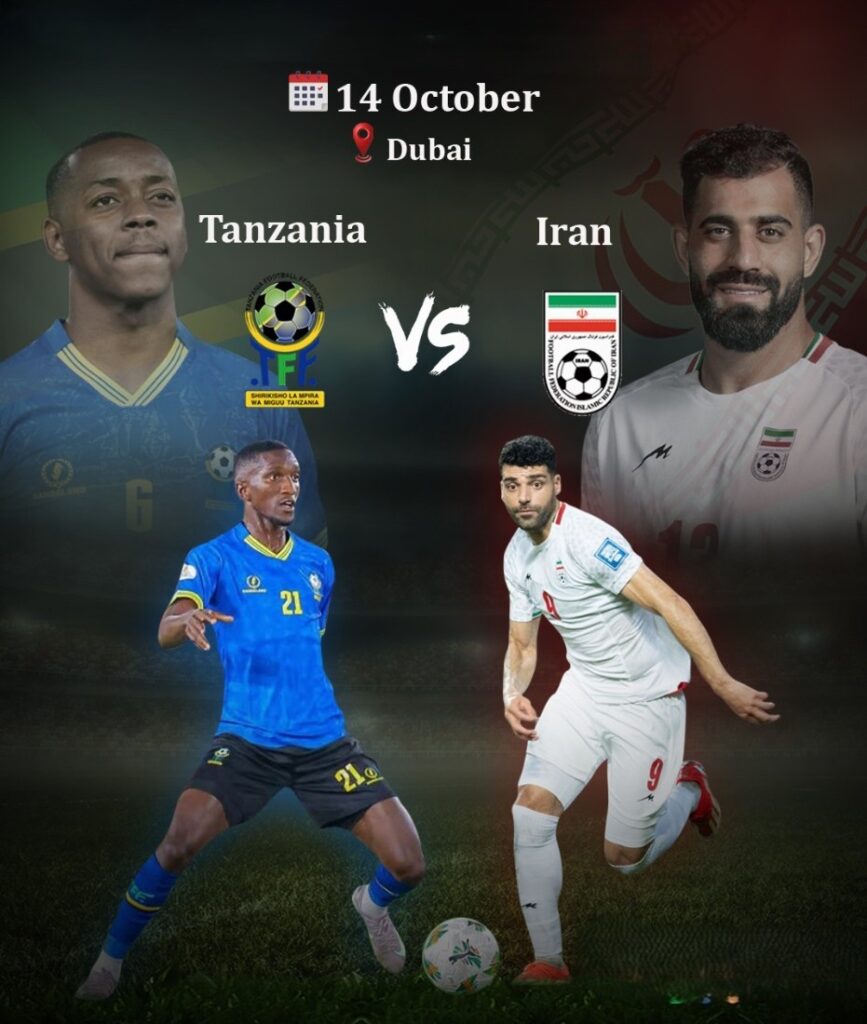
DAR ES SALAAM – The Tanzania national football team, the Taifa Stars, have departed for Dubai ahead of a high-profile international friendly against Iran on October 14, 2025. The match, scheduled on the official FIFA international calendar, presents a critical challenge for the East African side as they look to rebuild after a disappointing end to their 2026 World Cup qualifying campaign.

The fixture pits a Tanzanian team in a phase of renewal against an Iranian squad already preparing for the global stage, having secured qualification for the 2026 FIFA World Cup.

A Vital Test for Rebuilding

Speaking before the team’s departure, head coach Hemed “Morocco” Seleman described the friendly as a "vital test" for his side. He emphasized its importance in rebuilding squad confidence and improving overall performance after a string of disappointing results.

“It is true that we have not done well in our recent World Cup qualifying matches,” said Morocco, referencing losses to Niger and Zambia. “But that cannot discourage us. We must look ahead, especially with the AFCON 2027 tournament on the horizon. This match will help us assess our squad, raise our standards, and start preparing early.”

The Taifa Stars' hopes of advancing to the World Cup play-offs were dashed after failing to win their last three qualifying games, a 1-1 draw with Congo Brazzaville followed by 1-0 defeats to both Niger and Zambia. These results leave Tanzania third in their qualifying group.

Despite the setback, Coach Morocco remains optimistic, viewing the game against Iran as a potential turning point. He stressed the need for tactical discipline and mental resilience, noting that the match will provide his technical bench a valuable opportunity to evaluate new players and strengthen team chemistry.

A Unifying Fixture for the Diaspora

Beyond the tactical implications, the friendly has generated significant excitement, particularly within the East African community in the UAE. For many expatriates, the game is more than a fixture; it is a celebration of football culture, unity, and a chance to rally behind their national heroes.

The match is expected to be a vibrant display of support, strengthening sporting ties between Africa and Asia and showcasing football's power to unite nations. While the exact venue and kick-off time are yet to be officially confirmed, anticipation is steadily building for the Tuesday clash.

Iran: A Formidable Opponent Coming Off a Tight Loss

Tanzania will face a formidable Iranian team that is using this friendly window as crucial preparation for the 2026 World Cup. Iran comes into the match on the back of a tightly contested 2-1 loss to Russia in Volgograd.

A Review of Iran's Last Game: Russia 2-1 Iran
In a hard-fought encounter against a strong Russian side, Iran demonstrated their characteristic organization and resilience. Despite ultimately falling to a 2-1 defeat, the match was a valuable exercise for Team Melli. They held their own for large periods against a physically imposing opponent, showing flashes of the cohesive, counter-attacking football that earned them World Cup qualification. The narrow scoreline, away from home, against a European powerhouse (albeit one currently suspended from FIFA and UEFA competitions), underscores Iran's quality and the scale of the challenge awaiting the Taifa Stars. This performance indicates that Iran will be a sharp and battle-tested opponent, eager to refine their tactics in Dubai.

Match Details

  • Who: Iran vs. Tanzania
  • When: October 14, 2025
  • Where: Dubai, United Arab Emirates
  • Significance: For Iran, it's vital preparation for the 2026 World Cup. For Tanzania, it's a key building block for their AFCON 2027 preparations and a chance to restore confidence.