Tag: Japan

A Last Chance in Rotterdam: Jahanbakhsh’s Make-or-Break Return

Alireza Jahanbakhsh's free transfer to Excelsior Rotterdam marks a poignant, yet deeply telling, juncture in the rapidly dwindling career of the former Team Melli captain. Returning to the Eredivisie—the very stage where his European odyssey first ignited and where he scaled his greatest individual heights—represents less a triumphant homecoming and more a calculated, last-ditch gamble. For his agent, this move is a masterclass in damage control; a shrewd exercise in leveraging past glories to secure a lifeline in a familiar environment, despite a glaring absence of recent form.

For a player whose trajectory has been a disheartening spiral of diminishing returns, this is a stark reality check. Jahanbakhsh, once the undisputed talisman and emotional leader for Iran, has visibly deprioritized his on-pitch excellence, leaving fans bewildered and disillusioned. The nadir of this decline was painfully laid bare in Belgium, where he failed to command a starting berth even at a club languishing near the bottom of the Pro League. Such obscurity is a world away from the halcyon days of 2017-18, when he etched his name into football history as the first Asian player to clinch the Eredivisie Golden Boot—a record that now feels like a relic of a bygone era.

"We have signed a player who has played at the highest level of football and recently participated in the World Cup. He has a good understanding of the Dutch league and our style of football and brings a lot of experience and personality to the team. His technical quality and winning spirit can be very valuable to the team both on and off the field."
Mark Roel, technical director of Excelsior Rotterdam

Excelsior have incurred zero financial risk in acquiring the winger, which is both a blessing and a potential pitfall for the player. Because he cost them nothing, the club's patience will be exceptionally wafer-thin; if his performances fail to impress, the board will have no qualms about severing ties sooner rather than later. Crucially, the squad he is joining is a vibrant, youthful ensemble brimming with confidence and high-octane energy—a stark contrast to the sluggish pace of his recent outings. In such an environment, seniority alone will not guarantee minutes; he must actively scrap for his place against hungry youngsters eager to stamp their authority on the pitch.

This brings us to the lingering, uncomfortable question hanging over his head: Does he still possess the requisite attitude and hunger? Critics have long doubted his mental fortitude, pointing to a visible dip in work rate and questionable body language. However, if Jahanbakhsh can recalibrate his approach, double down on his training intensity, and embrace a hybrid role—offering both mentorship and competitive grit—his vast experience could prove invaluable to a developing side. Yet, there is no escaping the fact that this is his final opportunity to prove he still belongs at a credible European level.

The unforgiving nature of European leagues offers no sanctuary for complacency. The competition for places has never been fiercer; a flood of exceptionally talented African players and an ever-increasing contingent of disciplined Asian stars—particularly from Japan and South Korea—are vying relentlessly for coveted contracts in lucrative European markets. This surplus of ready-made replacements means that any lapse in effort from Jahanbakhsh will be immediately exploited. Excelsior would have no shortage of alternatives knocking on the door.

While the past two years have offered little reason for optimism, it would be premature to completely write him off. The technical quality, blistering pace, and innate crossing ability that once made him a nightmare for defenders are likely still buried within his repertoire. The defining variable now is not talent, but sheer, unadulterated commitment. If he can summon the drive and humility required to reinvent himself at 32, he might just orchestrate a remarkable career resurrection. If not, this Rotterdam stint will be remembered as the final, quiet footnote to a once-promising journey—a cautionary tale of what happens when potential outruns professionalism.
The Asian Games: A Daunting Test Awaits Iran’s Omid Team in Nagoya

The Asian Games have always occupied a unique space in Asian football. While the AFC Asian Cup remains the continent’s premier senior national team tournament, East Asian nations, in particular, place immense value on Asian Games success, often integrating it into their long-term grassroots development strategies.

Iran, boasting a proud history in the Asian Games Football. It won its first Gold Medal back in 1974 , then repeated the feat 3 more times (( 1990, 1998, 2002), has endured a difficult two decades in the competition. Since the shift to an U-23 format, Iran's Omid team has struggled, even recording some of its worst defeats against less-fancied East Asian opponents.

Conversely, Japan, China, and South Korea approach the tournament with special regard, viewing success as a key benchmark for their youth development. Given this context, the Nagoya 2026 Asian Games men's football draw was far from generous to Iran. Hossein Abdi's squad finds itself in Group B, pitted against China, the UAE, and North Korea—three distinct tactical challenges that demand peak technical, tactical, and mental readiness to advance.


China – The Heavyweight Test

Iran’s most formidable group-stage obstacle is China, the runners-up of the 2024 AFC U-23 Asian Cup. The Chinese are no longer the pushovers of previous years. Their historic run to the final—where they ultimately fell to Japan—signaled a dramatic narrowing of the gap between Chinese grassroots football and Asia's traditional elites. Through substantial investments in academies, scouting networks, and coaching infrastructure, this generation boasts valuable experience on the continental stage. Their presence makes Iran's opening fixtures a stern examination of Abdi's tactical acumen.

North Korea – The Unpredictable Adversary

Alongside China, North Korea poses a significant threat. Renowned for their relentless physicality, strict tactical discipline, high work rate, and unyielding fighting spirit, they are never an easy out. Their showing at the Hangzhou 2022 Asian Games—reaching the quarterfinals and defeating Bahrain before bowing out to Japan—underscored their status as one of Asia's toughest grassroots sides. For Iran, this fixture is as much a physical and mental battle as it is a technical one; the North Koreans rarely allow opponents to settle into a rhythm.

UAE – The Emerging Force

Although the UAE did not compete in the previous Asian Games, they have recently ramped up their focus on youth development. Enhanced academy systems, targeted talent programs, and consistent exposure to international competition have markedly improved their U-23 ranks. Dismissing them as easy points would be a grave mistake for Iran, who must maintain full concentration to secure a result.


A Grueling Road to the Podium

The Omid team's challenges do not end with the group stage. Final group standings will be critical, as they dictate the knockout bracket. With host nation Japan anchored in Group A, a potential early-round clash with one of Asia's footballing superpowers looms large. Ultimately, there are no easy routes to a medal in Nagoya. Any team with podium aspirations must navigate the group with authority before confronting the continent's best. Hossein Abdi's men travel to Nagoya with the ambition of re-establishing Iran among Asia's contenders, yet the draw ensures this journey begins uphill—starting with the Asian runners-up and potentially leading to a collision with the giants of the East.

Realistic Expectations

Realistically, Abdi inherits an unenviable task. The Omid team's preparation has been modest, squad cohesion remains a work in progress, and frequent player withdrawals by clubs have destabilized the roster—all before facing the continent's powerhouses. Under these circumstances, a successful campaign would likely be defined simply by progressing beyond the group stage.

Matches Schedule:
First match(es) will be played: 15 September 2026. Source: OCA

18 September 2026

China v North Korea

18 September 2026

United Arab Emirates v Iran

20 September 2026

China v Iran

20 September 2026

United Arab Emirates v North Korea

23 September 2026

China v United Arab Emirates

23 September 2026

Iran v North Korea


Top honors list Asian Games football

TeamGoldSilverBronze
 South Korea6 (1970, 1978, 1986*, 2014*, 2018, 2022)3 (1954, 1958, 1962)3 (1990, 2002*, 2010)
 Iran4 (1974*, 1990, 1998, 2002)2 (1951, 1966)1 (2006)
 India2 (1951*, 1962)1 (1970)

The Unfulfilled Dream and the Looming Challenge: Team Melli at a Crossroads

Team Melli’s campaign at the 2026 FIFA World Cup ended in bitter disappointment, despite widespread expectations that the expanded 48-team format would finally pave the way for a historic group-stage breakthrough. With twelve groups and an increased knockout berth allocation, the barrier to reaching the Round of 32 had ostensibly never been lower. Yet, three consecutive stalemates—a gritty but goalless draw against New Zealand, a resilient but ultimately fruitless point against Belgium, and a tightly contested tie with Egypt- proved to be Iran’s undoing. In a group where wins were imperative, these draws left the team stranded, falling agonizingly short of securing a spot among the world’s top 32.

In the immediate aftermath, the Football Federation Islamic Republic of Iran (FFIRI) published two separate assessment reports on its official platform. These documents served a dual purpose: they candidly acknowledged that the national team had fallen short of its pre-tournament objectives, while simultaneously pivoting the narrative toward the future—specifically, the upcoming AFC Asian Cup 2027. While such transparency is commendable on paper, the reports have done little to quell the growing unease among fans and pundits regarding the federation’s capacity to deliver tangible results.

As Team Melli now pivots its preparations toward the Asian Cup, the FFIRI has publicly declared an unequivocal ambition: to reach the final and lift the continental trophy for the first time since 1976. However, when measured against the current trajectory of the squad, the stagnation of the coaching philosophy, and the persistent managerial volatility, this goal appears more aspirational than achievable. The hard truth is that ambition, unaccompanied by structural reform, remains hollow rhetoric.

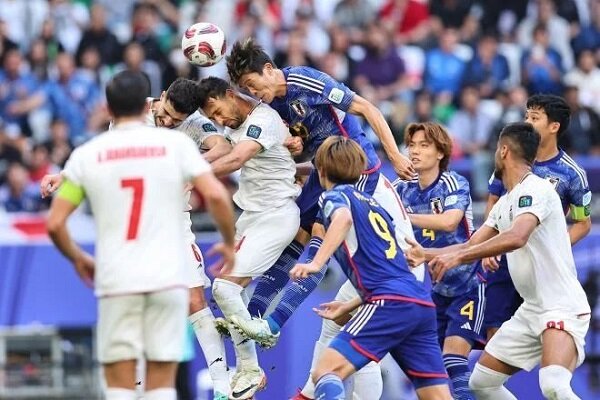
Looking back at the 2023 Asian Cup (held in early 2024) offers a stark point of contrast. At that tournament, Iran boasted a younger, more energetic core—a side capable of high-intensity transitions and resilient defensive work. Despite shaky group-stage performances against Hong Kong and Syria in the knock-out stage, where the team looked vulnerable and disjointed, they rose to the occasion in the quarter-finals. The dramatic, hard-fought victory over Japan, their perennial tormentor in recent decades, was undoubtedly the high-water mark of the campaign, exorcising deep-seated psychological barriers and igniting hopes of a long-awaited final berth. Yet, having scaled that monumental peak, the team suffered a catastrophic letdown against Qatar in the semi-finals, squandering a golden opportunity and extending Iran’s agonizing wait for a continental final appearance to more than half a century.

Fast-forward to the present, and the grim arithmetic is undeniable. How can a squad that was palpably younger and more dynamic just four years ago—now with its star veterans well into their thirties and physically declining—suddenly rediscover the legs and intensity required to conquer Asia? More pressingly, how can the same tactical blueprint, administered by the same coaching staff that oddly perceives the 2026 World Cup performance as a moral achievement, magically transform into a championship-winning formula? The insistence on defensive conservatism, a lack of creative midfield fluidity, and an over-reliance on aging individual brilliance rather than collective tactical evolution have rendered the team predictable and stagnant.

It is constructive for the Football Federation to speak openly about its aspirations, but its directors must internalize a fundamental principle: declaring a goal does not actualize it. To bridge the chasm between ambition and execution, the FFIRI must urgently conduct a rigorous, top-to-bottom gap analysis. This requires an aggressive, no-nonsense review of the entire footballing pyramid—from youth development pipelines to senior squad selection. Specifically, the federation must scrutinize preparation protocols, set-piece efficiency, physical conditioning regimes, and, most critically, the tactical flexibility of the coaching unit.

Currently, the federation’s proposed remedy is woefully vague. Promises of holding training camps in East and West Asia, devoid of specific opponents, logistical clarity, or strategic intent, inspire little confidence. In the modern competitive landscape, where rivals like Japan, South Korea, Australia, and Saudi Arabia are meticulously fine-tuning their systems with high-quality friendlies and data-driven methodologies, Iran cannot afford to rely on nebulous planning.

The bottom line is that in contemporary football, self-congratulation and hollow talking points are irrelevant currencies. At this juncture, with the current roster composition and an uninspired technical bench, the dream of reaching the Asian Cup final remains just that, a dream steeped in wishful thinking. The countdown is merciless. With barely six months remaining until the tournament kicks off in Saudi Arabia, the margin for error has completely evaporated. The FFIRI must move beyond rhetoric, embrace uncomfortable reforms, and act decisively—or risk watching yet another generation of talent squander its legacy on the continental stage.

Japan considering AFC exit.


Rumors Swirl: Japan Football Association Reportedly Considers AFC Exit to Form New East Asian Federation

Recent reports from various East Asian media outlets have sparked significant discussion within the football community. According to these sources, officials from the Japan Football Association (JFA) are reportedly exploring the possibility of withdrawing from the Asian Football Confederation (AFC). This news follows the Japanese national team's consistent and remarkable performances on the global stage, where they have established themselves as Asia's top-ranked team, currently sitting at 19th in the FIFA World Rankings.

The speculation gained traction after reports from outlets like India's "IFTWC" (Indian Football Team For World Cup) and Iran's Mehr News Agency. These reports suggest that the JFA is not only considering an exit but is also spearheading an initiative to form a new, FIFA-recognized confederation tentatively named the "East Asian Football Federation" (EAFF).

Alleged Motivations Behind the Move

The reported motivations for this drastic step are rooted in long-standing grievances within the AFC. The primary reasons cited include:

  • Governance and Integrity Concerns: Significant dissatisfaction with allegations of manipulation and corruption within the AFC's governance structure. These concerns suggest that certain decisions, from refereeing appointments to competition scheduling, have been unfair and unjust, undermining the sport's integrity.
  • Geopolitical and Financial Influence: A perceived disproportionate influence of West Asian nations, particularly Saudi Arabia, the United Arab Emirates (UAE), and Qatar, within the AFC. Their substantial financial investments in football are believed by some critics to translate into undue influence over competition outcomes, hosting rights, and confederation policies, often to the detriment of East Asian member associations.

Proposed New Confederation and Potential Members

The proposed "East Asian Football Confederation" aims to create a more cohesive and geographically concentrated footballing body. The idea has reportedly attracted global attention and preliminary interest from several regional nations, including:

  • East Asian Football Federation (EAFF) Members: Japan, South Korea, China, North Korea, Hong Kong (China), Macau (China), Chinese Taipei, and Mongolia.
  • ASEAN Region Interest: Several Southeast Asian nations have also been mentioned as potential members, including Malaysia, Singapore, Thailand, Vietnam, and Indonesia. Their inclusion would significantly expand the new confederation's footprint and competitive diversity.

Important Context and Official Stance

It is crucial to note that these reports remain speculative and have not been officially confirmed by the Japan Football Association. As of the current date, no formal announcement or application to leave the AFC has been made.

While these rumors underscore genuine regional tensions and frustrations, the path to forming a new confederation is fraught with monumental logistical and political hurdles. Any such move would require formal approval from FIFA, necessitating the navigation of complex diplomatic relationships, particularly concerning the inclusion of all proposed member nations.

Furthermore, the geopolitical landscape of global football presents a significant obstacle. The influence of oil-rich Persian Gulf states extends deeply into the very fabric of FIFA's governance and financial structure. Given their vested interest in maintaining a unified AFC, these nations would likely oppose the formation of a breakaway federation. In such a scenario, FIFA, an organization itself no stranger to allegations of corruption, political horse-trading, and profit-driven decision-making, would be unlikely to endorse a move that threatens its most lucrative continental body and internal power balances. The close relationships between FIFA President Gianni Infantino and various world leaders, including those in the Persian Gulf and beyond, further complicate the political calculus, making any such realignment a profoundly geopolitical affair.

Consequently, while the football world will monitor any official statements from the JFA or AFC with keen interest, the current proposition remains a highly speculative, though revealing, indicator of deep-seated issues within Asian football. Should these plans ever materialize against the odds, they would undoubtedly represent the most significant realignment in Asian football history, fundamentally reshaping the continental competitive landscape for generations to come.

AFC Women's Futsal Asian Cup Preview - SF: Japan v Iran

Hohhot: Head coach Takehiro Suga is confident Japan will end their winless run against Iran when they meet in the AFC Women’s Futsal Asian Cup™ China 2025 semi-finals on Thursday.

The two sides have historic rivalry, having met in the finals of the 2015 and 2018 editions, with Iran emerging victorious on both occasions.

Suga is not only hopeful of reversing the trend but also going on to lift their maiden continental title. 

“We don't change anything. We believe in ourselves and we will play our style. But we have to play effectively and our determination will need to improve a little. If we do that we can win the match,” said Suga. 

image content

“I’m happy to be in the semi-finals. Iran are one of the toughest opponents in this tournament. The next match will be a difficult one but we will do our best.

“We want to show how much we’ve grown over the past seven years. I believe in my players and their ability. We have to win tomorrow.”

image content

Captain Kaho Ito, while expecting a challenging match, was equally of a Japanese victory.  

“Tomorrow’s match will be very difficult, but we will do our best and aim to win,” said Ito. “I’m glad to play against Iran in the semi-final. All of Iran’s players are very good, so I need to think carefully about how we manage the game. We must stay focused, collaborate with the team, and help each other to win."

https://www.instagram.com/p/DJnc3SzztQe/embed/captioned/?cr=1&v=14&wp=665&rd=https%3A%2F%2Fwww.the-afc.com&rp=%2Fen%2Fnational%2Fafc_womens_futsal_asian_cup.html%2Fnews%2Fpreview-sf-japan-v-ir-iran#%7B%22ci%22%3A0%2C%22os%22%3A396587.2999999821%2C%22ls%22%3A396020.7999999821%2C%22le%22%3A396583.59999999404%7D

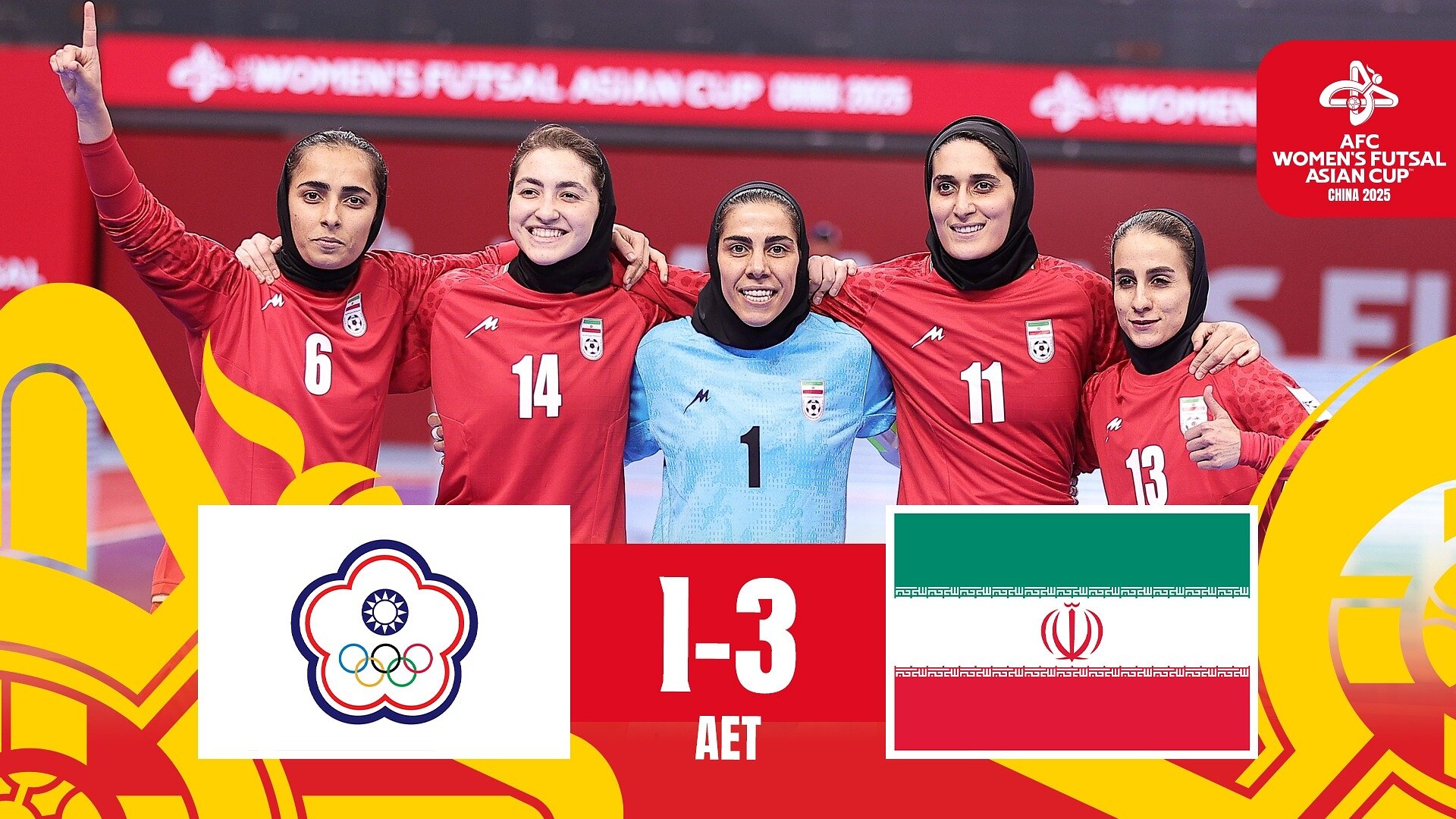
Iran advanced after a gruelling 3-1 extra-time victory over Chinese Taipei in the quarter-finals but head coach Foruzan Solymani firmly believes they will go on to seal a third title. 

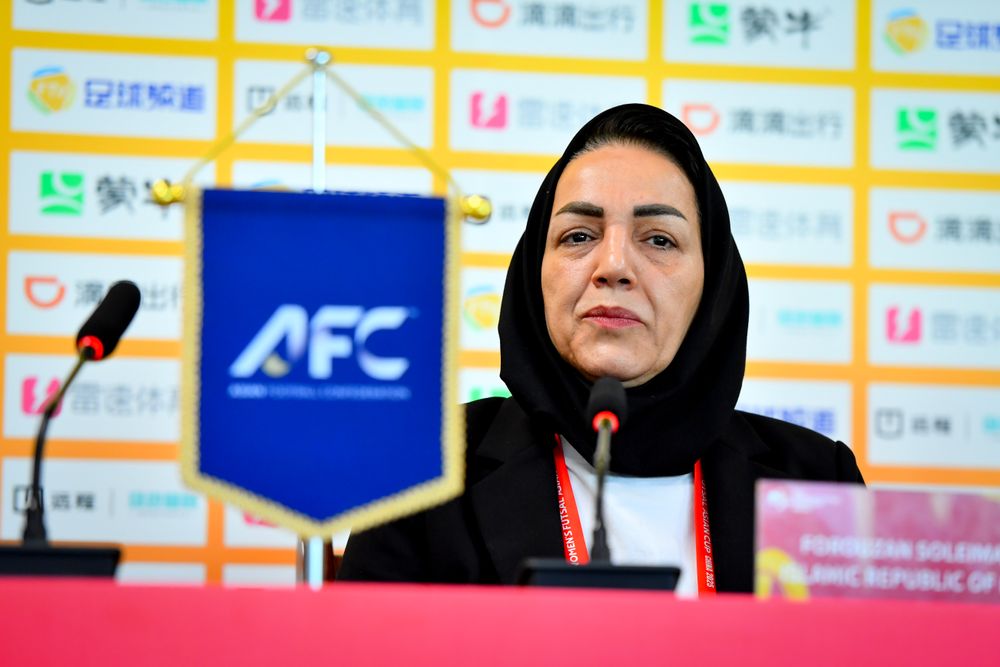
“All teams came here to show their best performance. We are two-time champions, but this will be a very tough match. The situation is difficult for all teams and everyone has improved a lot and wants to perform at their best,” said Solymani.

image content

“Our players were tired after the quarter-finals, but tomorrow’s match is for a place in the World Cup. The players are highly motivated and have recovered well, both mentally and physically.”

Iran goalkeeper Farzaneh Tavasoli is looking forward to another thrilling encounter between two of Asia’s best teams.

image content

“Tomorrow we will have another great match, just like in 2015 and 2018. These are the two best teams in Asia, and it will be a highly competitive game,” said the 38-year-old captain.

“We are two-time champions, and we understand the feeling of winning and lifting the trophy. That’s why we can’t afford to lose focus. We must stay focused and aim to win the title for the third time.”


Japan v Iran 

Venue: Hohhot Sports Centre

Kick-off: Thursday, 20:00 (UTC+8) - Iran Time 15:30 (UTC +3.30)

2026 FIFA World Cup Asian Qualifying Draw Mechanism

The road to the 2026 FIFA World Cup in the Asian region is an exciting journey, with teams vying for a chance to compete on the global stage. Here’s how the draw mechanism works for the third qualifying round:

Key Details:

  • Date and Location: The draw for the third qualifying round will take place on Thursday, July 7, at 10:30 a.m. in Kuala Lumpur, Malaysia.
  • Teams Involved: The teams participating in this round will discover their opponents during the draw.

Group Allocation Process:

  1. Seeding: Teams are divided into six seeds based on their FIFA rankings and historical performance.
    • 1st Seed: Japan, Iran, and South Korea
    • 2nd Seed: Australia, Qatar, and Iraq
    • 3rd Seed: Saudi Arabia, Uzbekistan, and Jordan
    • 4th Seed: UAE, Oman, and Bahrain
    • 5th Seed: China, Palestine, and Kyrgyzstan
    • 6th Seed: North Korea, Indonesia, and Kuwait
  2. Group Formation:
    • The process begins by drawing the ball of the sixth-seeded teams from the pot first.
    • The first team drawn from this pot is placed in Group A, the second in Group B, and the third in Group C.
    • The process continues for the 5th, 4th, 3rd, and 2nd seeds.
    • Finally, the draw concludes with the first-seeded teams being allocated to their respective groups.
  3. Group of Death:
    • The group of death refers to a challenging group with strong teams.
    • In this case, Team Melli finds itself as the first seed alongside Japan and South Korea.
    • While football progress in Asia has been remarkable, the team names and prestige still matter.
    • The presence of Australia and Qatar in the second seed, Saudi Arabia in the third seed, and the UAE in the 4th seed adds intrigue.
    • Placing the UAE in the 4th seed, Saudi Arabia in the 3rd seed, and one of Australia’s teams and Qatar in the 2nd seed next to a first-seeded team could create a formidable group.
  4. Qualification Path:
    • The top two teams from each group (3 groups of 6 teams) will qualify directly for the World Cup.
    • The third and fourth teams in each group will compete in two groups of 3 teams.
    • The winners of these smaller groups will secure the seventh and eighth quotas for Asia.
    • The remaining half of the quotas will be determined through playoff matches against teams from other continents.
  5. Ideal Group for Iran
    • IRAN – IRAQ – JORDAN -BAHRAIN -KYRGYSZTAN- KUWAIT.
  6. Worst case scenario
    • IRAN – AUSTRALIA – SAUDI ARABIA-UAE-CHINA- NORTH KOREA.

In summary, the 2026 World Cup Asian qualifying draw promises thrilling matchups, surprises, and intense battles as teams vie for their spot in the prestigious tournament. Let the journey continue!

Team Melli, is one win away from qualifying for World Cup 2026 - Round 3 preliminaries.

Team Melli needs to repeat its victory against Turkmenistan next Tuesday in Asghabad, to clinch a place in the third round stages of FIFA World Cup 2026 - AFC zone.

#TeamPWDLGFGAGDPTS
1IRAN3210112+97
2UZBEKISTAN321073+47
3HONG KONG301228-61
4TURKMENISTAN3012310-71
FIFA World Cup 2026 qualifiers- AFC ZONE Round 2 -Group E

Iran plus seven other teams will advance to the Round Three of the 2026 World Cup qualifiers if they win the next game in Day 4 to be played next Tuesday. With seven points and a better goal difference than Uzbekistan, Iran is topping the group. Other teams include Iraq, Saudi Arabia, Qatar, Uzbekistan, Japan, Australia, and the UAE are the eight teams that are certain to advance.

Iran will face Turkmenistan on Tuesday 26th at Asghhabat

Iran is one spot higher in FIFA Ranking.

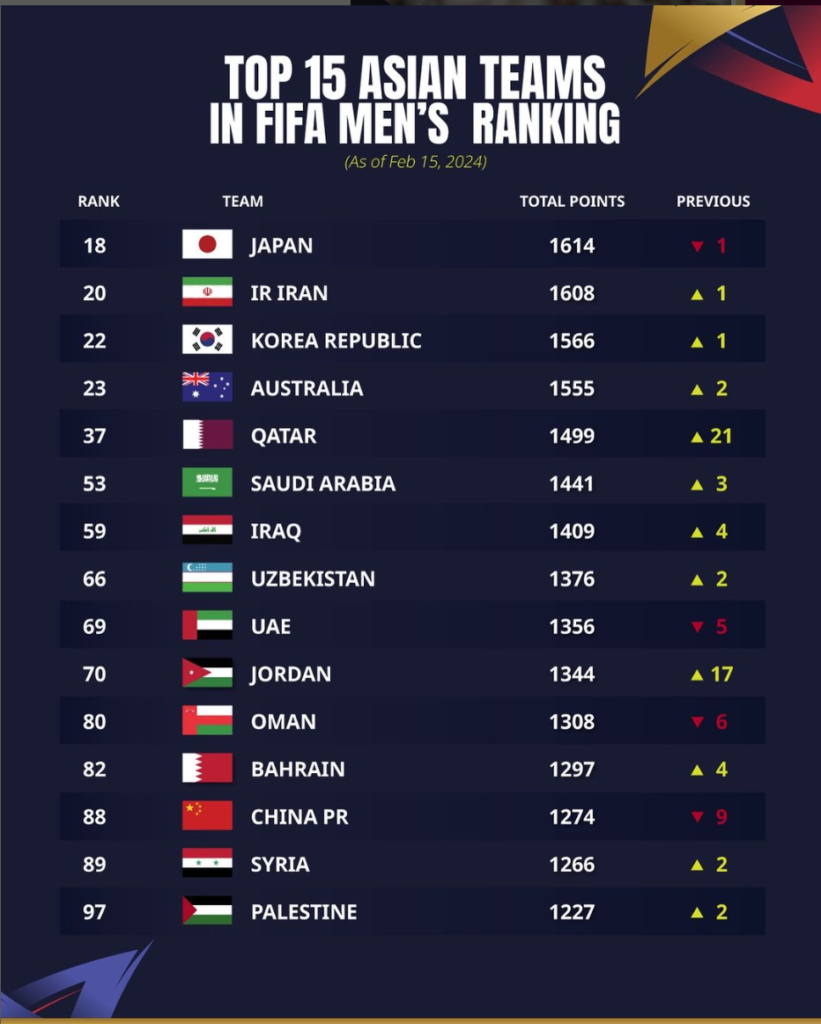
Team Melli climbed one spot higher to number 20 in the world in the first FIFA Ranking published in 2024. Iran is also closing the gap on Japan which slipped one spot down to 18th, however, despite the loss in the quarter-finals to Iran, Japan is still the top-ranked Asian Team followed by Iran.

Korea Republic climbed one place up while Australia climbed to 23rd.

There is plenty of movement further down the standings following the matches contested in the CAF Africa Cup of Nations and the AFC Asian Cup. Amongst the African sides, Ivory Coast jumped 10 spots to be placed 39th, reaping the rewards of their continental triumph on home soil, secured following an eventful AFCON campaign.

The FIFA rankings serve as a testament to the current global football landscape, reflecting the performances and achievements of national teams worldwide. As the football calendar progresses, these rankings will likely witness shifts and changes based on upcoming tournaments and events. Football enthusiasts eagerly await the unfolding of the year's sporting events that will inevitably impact these influential standings.

AFCON runners-up Nigeria sit at 28th after jumping 14 places making significant strides but are no match for Angola (93rd, up 24), a side they ousted in the last eight, who are the biggest climbers in the latest installment of the global ranking. Two-time Asian Cup winners Qatar (37th, up 21) chalk up the biggest tally (92.04 points) after capitalizing on home comforts to successfully defend their continental crown.

Elsewhere, Jordan (70th, up 17), who was edged out in the Asian Cup final, make good ground, as do Thailand (101st, up 12), whose journey came to an end at the last-16 stage.

What is required for Qatar?

Team Melli's done it again, folks — they've blasted their way into the semi-finals of the AFC Asian Cup in Qatar, just like they pulled off in 2019. And guess what? They're just one heart-thumping match away from hitting the finals for the first time in a whopping 48 years. Feels like forever since they last made it this far back in 1976, right?

So, mark your calendars for Wednesday, because Iran's squaring off against the home team, Qatar, in the semis. And yeah, while we did give them a 4-0 drubbing recently in Amman, don’t kid yourself thinking this rematch is in the bag. We're talking about a fresh showdown at Al Thumama Stadium, and this ain't gonna be a walk in the park. We're in for a slugfest that’s gonna be gritty, fierce, and all kinds of intense. And if it comes down to penalties, you better buckle up — it's gonna be edge-of-your-seat stuff. All that jazz about Iran's past domination? Throw it out the window, because when that whistle blows, it's anybody's game.

 It is a new chapter and a new game.

The heartwarming aspect from inside the camp is that Coach Ghalenoei has acknowledged the significance of psychology within his squad. While the emotional side of the game hasn’t traditionally been a strong point for the Iranian team, their recent victory against Japan showcased the grit, determination, and discipline of Team Melii players. As they face Qatar, who have the home advantage and crowd support, maintaining this mental fortitude will be crucial. In terms of player abilities and skills, Team Melli holds a clear edge. However, the potential pitfall lies in other factors that could affect their performance.

The physical side of the game is also an advantage for Iran, What are the potential fail points, though, are these factors:

  •  Arrogance
  •  Undermining the opposition
  •  Discipline failure.

Although the technical and tactical aspects of the game are important, Ghalenoei has greatly improved his reputation in this tournament by making smart decisions even under pressure. It is hoped that he will continue to follow this strategy and build upon it in the final match. This game will be crucial in terms of mental preparedness and emotional intelligence, as even a single mistake could mean the end of the team's dreams. Iran has come close to advancing to the finals and winning the title in many AFC Asian Cups, but has always fallen short. However, a great team can create its own luck and emerge victorious despite any setbacks. Considering the fact that this match is being hosted by Qatar, it is likely that the refereeing may be biased towards them. It is important for the players to understand this and avoid making unnecessary protests against the referee. Additionally, the use of VAR technology may also work against Team Melli.

The defenders must be extra careful not to commit fouls in the penalty area. In the last five games, two penalties have been called against Iran, and such statistics are considered risky. Players' behavior is of utmost importance.
The sweet win against Japan should not overshadow the fact that Team Melli still has problems in several areas. Players need to forget Japan completely and prepare for Qatar. Japan is history, and the result will not guarantee success against Qatar, which is ranked 58, 37 ranks below Iran (ranked 21).

Throughout various matches, we've observed Team Melli perform inconsistently, sometimes playing well in the first half and poorly in the second, or vice versa. It's crucial for Ghaleneoi to not only select the best players but also to analyze the strengths and weaknesses of the Qatar team and choose players who are better suited to face their style of play, even if they are not necessarily the most skilled players in the squad.

Qatar is expected to employ a similar strategy to Syria, which involves maintaining a compact defense and relying on its fast forwards for quick counterattacks. This tactic was successful for Syria, as they were able to frustrate Iran. It is crucial for all Team Melli players to be aware of these tactics, and patience will be essential in this match. This game presents the best chance for Iran to qualify for the finals of the Asian Cup, and it would be a shame to see this opportunity lost due to careless mistakes that have been made before.

A grand performance by the boys deserving of champion.

The win against a Japanese team, which has dominated Iran for many years including that bitter defeat in Ali Ain in the semi-finals of the AFC Asian Cup 2019, was a big relief in all senses.

In the best performances of Team Melli in Asian Cup so far, Mohebbi and Jahanbaksh scored, but the credit goes to every single player in the team. Those players stood up to their biggest challenge and came out as winners.

Credit has to go to Aradeshir 'Amir' Ghalenoei, the head coach who had to arrange a makeshift team due to the suspension of Taremi, injury to Majid Hosseini and Sadegh Moharrami. In a masterstroke, Ghalenoei played Milad Mohammadi instead of the Captain and much more experienced Ehsan Hajsafi, He supplemented the defensive midfield role by playing Omid Ebrahimi to support Ezatollahi and finally, he used the stronger Mohebbi instead of Ghayedi on the flanks.

It was indeed a gamble that worked very well. The return of Kananizadegan stabilized the central defense. Ramin and Milad Mohammadi on the wings were a source of headaches for the Japanese.

Sardar Azmoun was majestic. Top-notch performance, powerful in attack, visionary, individual skills, and provider of the gem of pass to assist Mohebbi's goal. Azmoun played one of his best matches for a long time. He should have been awarded that wonderful goal, except for VAR which declared him offside by a millimeter.

Beiranvand was never really tested because of the solid defense protecting him, and the goal he conceded was a touch of fortune for the Japanese. Mohebbi exceeded expectations. His constant runs, hustle, and physicality were marvelous. His finishing from the Azmoun pass was a touch of class.

Even Ezatollahi upgraded his performance in this match.

And what about the warrior Omid Ebrahimi? He was all over the pitch, tackling, shooting, and hustling as if he was 20 years old. Perhaps one of his best games in the long career with Team Melli.

It is difficult to pick up the MVP of this match, but Saman Ghoddos and Sardar Azmoun are the closest to the title. Ghoddos was inspirational. His Vision, tact, skills, and determination were the qualities that a player needed to challenge the top team in Asia. He was never intimidated by the quick and pacey Japanese. Hardly put a foot wrong.

And Finally to Alireza Jahanbaksh. The Captain and the man who was assigned the heavy responsibility to take the penalty kick in the last moments of the game. The psychological pressure was immense not just in front of the capacity crowd but with 88 million Iranians watching.

He took the penalty in a style appropriate for the Captain of the team.

Now, comes the more difficult task, not necessarily technical or tactical but emotional and psychological. The players need to be back on the ground treat the next opponent with respect and play the best football that they have proved they are capable of.