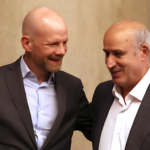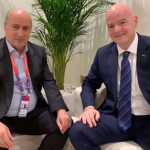
Tag: Mehdi Taj

Ghalenoei’s Reign of Mediocrity – How Iran’s World Cup Dream Was Wasted by Incompetence

The Inquest Begins: Ghalenoei’s Failures Leave Iran’s World Cup Dream in Tatters

A Golden Opportunity, Squandered

This was supposed to be Iran’s moment. With three winnable matches, a favorable group draw, and a squad boasting genuine quality, Team Melli had perhaps the most hopeful—and certainly the easiest—opportunity to qualify out of the group stage in the entire history of their World Cup participation. Instead, they leave with unfinished business, unanswered questions, and the bitter taste of what might have been.

The excuses are already being prepared. The Iranian Football Federation (FFIRI) has begun circulating the usual litany of justifications: Iran was the most oppressed team in the tournament; the Americans made life deliberately difficult; the logistical hurdles were insurmountable. These narratives, recycled after every failure, have become a convenient smokescreen—hiding the bitter truth that an incompetent and self-serving establishment has run Iranian football into the ground for decades, systematically preventing natural progress.

Ghalenoei’s Culpability: A Catalogue of Errors

When it comes to World Cup performance, the head coach and his assistants must bear the brunt of responsibility. Amir Ghalenoei’s failures were numerous, repeated, and inexcusable—and they began long before the first whistle blew in Los Angeles.

The Azmoun Exclusion: A Tactical Crime

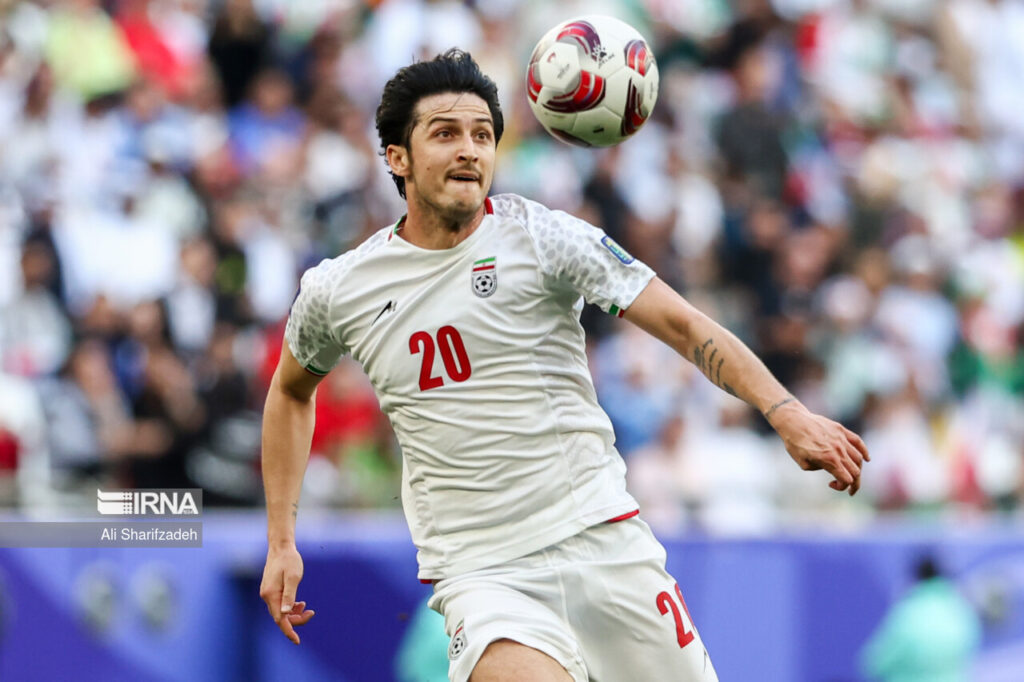
Months ago, when Ghalenoei announced his preliminary training camp squad, the exclusion of Sardar Azmoun bordered on a tactical crime. Iran’s most ready, most competent striker—a player with proven pedigree at the highest level—was left at home without any credible explanation. Ghalenoei has yet to offer a satisfactory reason for this omission, and the void left by Azmoun’s absence was glaring throughout the campaign.

Beyond the Azmoun debacle, Ghalenoei’s player selection was suspect at best. He leaned heavily on a core of players over 30, ignoring several promising young talents who could have injected energy and freshness into the squad. This was not a team built for the future—it was a team built for comfort, familiarity, and short-term expediency.

Tactical Bankruptcy: Route One Football

Ghalenoei’s tactical failures were equally damning. His insistence on “route one” football—referred to derisively in Iran as “Ali Asghari” football—was exposed time and again. Against New Zealand, the team that would later be handsomely beaten by both Belgium and Egypt, Iran struggled to impose any coherent attacking pattern. The long-ball strategy may have suited a squad with pace and aerial dominance, but Iran possessed neither in sufficient measure.

His reading of the game was poor; his substitutions, extremely so. Against Belgium, the baffling decision to introduce Alireza Jahanbakhsh—who offered nothing—while leaving more dynamic options on the bench was emblematic of a coach who simply does not trust his squad. Against Egypt, the failure to adjust tactics when it became clear that Taremi was isolated and ineffective was inexcusable.

Out of His Depth

The uncomfortable truth is that Ghalenoei is out of his depth at the international level. He lacks the charisma, character, and technical know-how to lead Iran at the highest level of football. Compared with other opponent coaches,ff, Ghalenoei appeared reactive, hesitant, and ultimately outmatched. This is not a coach who inspires confidence—it is a coach who inspires anxiety.

Taremi: A Captain’s Failure

While leaving your best forward out of the squad is inexplicable, the other best forward—Mehdi Taremi—proved to be one of the tournament’s major disappointments. With 60 goals to his name as Iran’s active top scorer, Taremi carried the weight of the nation’s expectations. He failed to deliver. The missed penalty against Egypt—a spot-kick that would have changed the complexion of the match and perhaps the entire campaign—was the defining moment of his tournament. A captain must lead by example; Taremi’s body language, decision-making, and finishing all fell short when it mattered most.

A Cycle of Failure

The fear among Iranian football fans is that Ghalenoei is going nowhere soon. Despite repeated failures and heartbreaks, he is expected to remain at the helm for the AFC Asian Cup 2027. The reason is simple: Ghalenoei pulls the right strings and wields considerable influence alongside his ally, FFIRI President Mehdi Taj. Taj himself is untouchable, protected by powerful connections that insulate him from accountability. This toxic partnership ensures that mediocrity is rewarded, and genuine progress is stifled.

The Illusion of Renewal

While everyone expects a new generation of players to emerge after this failure, fans should not place their hopes too high with Ghalenoei still in charge. He has shown no inclination to rebuild, no appetite for youth development, and no capacity for tactical evolution. The squad will age, the opportunities will diminish, and the cycle of failure will continue—unless the federation finally acts or forces more powerful than the federation.

A Final Word on the Excuses

Let us be clear: the Americans and FIFA undoubtedly made life difficult for Team Melli. The logistical hurdles, the visa games, and the political posturing were all real and unacceptable. But let us also remember that Iraq won the AFC Asian Cup in 2007, just years after their country was devastated by war. They overcame unimaginable adversity, not by complaining about it, but by rising above it. Iran’s excuses ring hollow when compared to such resilience.

The Verdict

Iran’s World Cup campaign will be remembered not for the moments of brilliance—Beiranvand’s heroics, Rezaeian’s stunning equalizer—but for the opportunities squandered. A favorable group, a talented squad, and a golden chance to make history—all wasted by a coach who was simply not up to the task.

The inquest has begun. The question is whether anyone in Iranian football has the courage to act on its findings.

Inside the U.S. Decision to Block Iran’s World Cup Delegation

While all 26 players and head coach Amir Ghalenoei have successfully received U.S. entry visas for the upcoming World Cup matches, nearly the entire administrative and a portion of the technical and coaching staff have been denied. In total, 12 team personnel will not be permitted to accompany Team Melli on U.S. soil.

The Iranian national football team departed Turkey today, en route to Tijuana, Mexico, where they will establish their base for the tournament. The travel list notably included Mehdi Taj, the head of the Football Federation of the Islamic Republic of Iran (FFIRI).

Key figures denied visas :

Mehdi Mohammadnabi, Team Manager and Board Member of FFIRI.

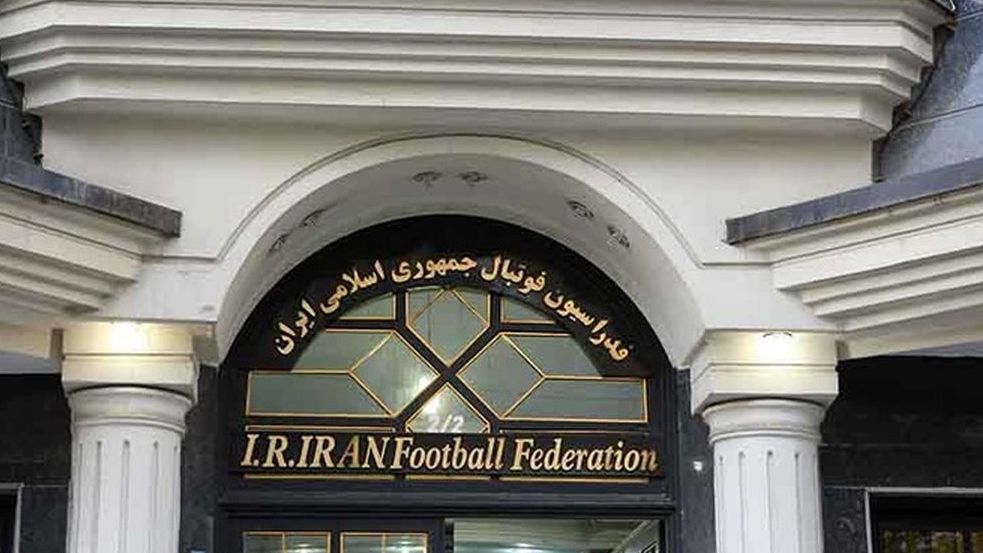
Mehdi Taj , FFIRI President

Hedayat Mombini, Secretary General of the Football Federation

Siamak Ghlichkhani, media team member

Mohsen Motamedkia, Communications and Media Director

Mehdi Kharati, Executive Director of the national team


Apart from the top two, none of the above individuals are known to have current or prior affiliations with the Islamic Revolutionary Guard Corps (IRGC). Mehdi Taj and Mohammadnabi have faced previous scrutiny over past connections. It has been suggested that the U.S. visa denials may have been informed by intelligence provided by Iranian diaspora groups in California, many of whom are vocally opposed to the current Iranian government. However, this claim remains unverified.

Additionally, sources indicate that none of the security and intelligence personnel, often accompanying Team Melli as informal minders (known as Herasat), applied for U.S. visas altogether, reportedly fearing certain rejection or even arrest upon arrival in the United States.

Technical Impact vs. Logistical Challenges

From a sporting perspective, the team remains intact. The absence of these 12 individuals is not expected to directly affect game plans, player preparation, or on-field training. However, the loss of key administrative and logistical personnel could severely disrupt operations behind the scenes, potentially handicapping Team Melli’s World Cup campaign through disorganized coordination, travel arrangements, and media management.

All 12 denied individuals are expected to remain in Tijuana, Mexico, for the duration of the World Cup, operating from across the border.

Concerns Over Entry Procedures for Players and Coaches

Despite being granted visas, there are growing fears among the Iranian camp that the team’s actual entry into the United States may not go smoothly. U.S. Customs and Border Protection (ICE) officials retain broad discretionary powers at ports of entry, and there are concerns that players and coaching staff could be subjected to extended questioning or detention for hours, adding unnecessary emotional and physical strain ahead of crucial matches.

Some Iranian officials have alleged that U.S. authorities may exploit procedural measures to pressure the team, with one source quoted as saying, “the Americans will do everything in the book and outside it to hurt Iran.” Such claims remain unconfirmed and reflect the heightened political tensions surrounding the Iranian team’s participation in a U.S.-hosted sporting event.

Uncertainty Over FIFA’s Guarantees

It remains to be seen whether FIFA President Gianni Infantino’s personal assurances of safe and swift passage for all World Cup participants will hold true for Iran. With off-field political pressures already mounting, Team Melli faces the dual challenge of navigating both on-field competition and a complicated, high-stakes logistical environment.

FULL LIST OF TEAM MELLI STAFF

Coaching Staff — Iran

AG

Amir GhalenoeiHead Coach
Rahman Rezaei – Assistant Coach
Andranik Teymourian – Assistant Coach
Alin Dincă – Goalkeepers Coach
Ali Asghar Ghorbanalipour – Fitness Coach
Alireza Shahab – Physiotherapist
Parhan Khanlari – Team Doctor
Amir Esmaeili – Staff

Age of Stagnation: Why Ghalenoei’s Conservative Selections Have Made Iran the Second-Oldest Team at the 2026 World Cup

PERSIAN VERSION
  • پیریِ مرگبار: چرا انتخاب‌های محافظه‌کارانهٔ قلعه‌نویی، ایران را دومین تیم پیر جهان در جام جهانی ۲۰۲۶ کرده است
    با نزدیک شدن به جام جهانی ۲۰۲۶، تمام تیم‌ها لیست نهایی بازیکنان خود را به کمیته برگزاری تحویل داده‌اند. طبق آمار منتشرشده از میانگین سنی هر تیم، تصویری روشن و برای برخی، هشداردهنده به دست آمده است:

Continue reading “Age of Stagnation: Why Ghalenoei’s Conservative Selections Have Made Iran the Second-Oldest Team at the 2026 World Cup”

With the 2026 World Cup rapidly approaching, all participating nations have submitted their official player lists to the organizing committee. Recent data released on the average age of each squad has painted a telling, and for some, alarming picture. According to the records:

  • Panama (30.4 years)
  • Iran (30.3 years)
  • Colombia (30.1 years)

These three nations stand as the oldest teams in the competition. At the opposite end of the spectrum, the Ivory Coast boasts the youngest squad with an average age of just 25.8 years—a full 4.5 years younger than Team Melli.

Iran’s Aging Roster: A Symptom, Not a Coincidence

For Iranian fans and analysts, seeing their national team ranked as the second-oldest in the world is not merely a statistical curiosity. It is a glaring indictment of head coach Amir Ghalenoei’s philosophy, risk aversion, and failure to regenerate the squad since he took over in March 2023, barely three months after the 2022 World Cup in Qatar.

On the surface, relying on experienced players might seem prudent for a team facing the likes of England and European powerhouses. Veterans bring composure, tactical discipline, and big-match know-how. However, the deeper problem is that under Ghalenoei, experience has become an excuse for exclusion, specifically, the systematic exclusion of young, dynamic, and technically gifted emerging talents.

Ghalenoei’s Core Failure: A Closed Door to Youth

The most damning charge against Ghalenoei is his inability, or outright refusal, to introduce a single player of lasting value to the national squad during his entire tenure. In nearly four years at the helm, spanning the AFC Asian Cup 2023, World Cup qualifiers and friendly matches, he has not blooded a promising young star who could credibly claim a starting spot in 2026.

Unlike predecessors who at least attempted transitions (e.g., Queiroz introducing Sardar Azmoun and Saman Ghoddos as youngsters, or even Branko Ivanković giving early caps to Ehsan Hajsafi), Ghalenoei has fallen back on the same core of aging, often injury-prone players. Names like Shoja Khalilzadeh (37), Ramin Rezaeian (36), and Ehsan Hajsafy (36) continue to receive call-ups, while talents such as:

  • Kasra Taheri
  • Mohammad Amin Hazbavi (defensive prodigy)
  • Saeid Saharkhizan (prolific young striker)
  • Javad Hosseinnejad

Are given token minutes that amount to little more than window dressing.

A Culture of Distrust and Fear

Ghalenoei’s selection patterns reveal a deep-seated distrust of youth, often rationalized in press conferences with vague phrases like “they are not ready” or “the pressure is too high.” But this is a smokescreen. The reality is a conservative, fear-driven approach: the coach prioritizes short-term results (avoiding a humiliating loss in a qualifier) over long-term development (giving a 21-year-old 45 minutes against a weaker Asian side).

This fear has paralyzed Iran’s natural footballing cycle. While Japan, Australia, and even Saudi Arabia have lowered their average age and injected pace and energy, Iran has remained static. The result is a squad that, by 2026, will rely on several players past their physical prime, easily exploited by faster, younger opponents in a condensed tournament schedule.

Impunity and Institutional Failure: The Role of Mehdi Taj and FFIRI

Yet, Ghalenoei alone is not the culprit. His job security, despite underwhelming performances and a visible lack of tactical evolution, is underwritten by the blind trust of Mehdi Taj, the president of the Football Federation Islamic Republic of Iran (FFIRI), and a notoriously silent, ineffective board.

The FFIRI has historically oscillated between micromanagement and neglect. Under Taj, the federation has abdicated its responsibility to challenge the head coach. No public questioning of Ghalenoei’s squad selection. No pressure to integrate U-23 players. No performance reviews with clear KPIs regarding player development. Instead, Ghalenoei operates with impunity, knowing that as long as Iran scrapes past Hong Kong or Turkmenistan, his position is secure.

This institutional complacency is catastrophic. It sends a message to every young player in the Persian Gulf Pro League: no matter how well you perform, you will not be trusted until you are nearly 30. That kills ambition, depresses the league’s competitive intensity, and accelerates the exodus of promising talent to Qatar or the UAE merely for playing time.

The Cost of Impunity

The shadow of doubt cast by Ghalenoei’s tenure extends far beyond the 2026 World Cup. Even if Iran manages a respectable performance (e.g., a single win or a draw against top-tier opposition), the underlying structural damage remains. By refusing to build for the future, Ghalenoei and the FFIRI are setting up Iranian football for a hard landing after the tournament.

When the current crop of 30-somethings retires en masse post-2026, there will be no experienced replacements—only a generation of 24-to-27-year-olds with fewer than ten caps and zero big-tournament experience. That is the hallmark of managerial negligence.

Conclusion: A Lost Cycle

The statistic that Iran is the second-oldest team at the 2026 World Cup is not a badge of honor. It is a funeral bell for a lost development cycle. Amir Ghalenoei’s distrust of young players, rooted in a conservative and fearful mindset, has denied a generation the chance to grow. And with Mehdi Taj’s FFIRI offering no oversight, there is no incentive to change.

Iranian football deserves a coach who sees youth as an asset, not a liability. Until Ghalenoei is held accountable, or replaced by someone willing to take calculated risks, Team Melli will remain old, slow, and predictable. And that is a far more dangerous opponent for Iran than any European powerhouse.

Ivory Coast, with an average age of 25.8 years, is known as the youngest team in the competition.

Ranking of the top 10 teams (oldest and youngest) The oldest teams in the 2026 World Cup:

1 – Panama 30.4 years
2 – Iran 30.3 years
3 – Colombia 30.1 years
4 – Cape Verde 29.7 years
5 – Qatar 29.4 years
6 – Brazil 29.2 years
7 – Scotland 29.2 years
8 – Argentina 29.1 years
9 – Congo 29.1 years
10 – Paraguay 29.0 years

The youngest teams in the 2026 World Cup:
1 – Ivory Coast 25.8 years
2 – Bosnia 26.0 years
3 – Ecuador 26.1 years
4 – Morocco 26.4 years
5 – Tunisia 26.6 years
6 – Spain 26.7 years
7 – South Africa 26.8 years
8 – Norway 26.8 years
9 – Algeria 26.9 years
10 – USA 26.9 years

PERSIAN VERSION
  • پیریِ مرگبار: چرا انتخاب‌های محافظه‌کارانهٔ قلعه‌نویی، ایران را دومین تیم پیر جهان در جام جهانی ۲۰۲۶ کرده است
    با نزدیک شدن به جام جهانی ۲۰۲۶، تمام تیم‌ها لیست نهایی بازیکنان خود را به کمیته برگزاری تحویل داده‌اند. طبق آمار منتشرشده از میانگین سنی هر تیم، تصویری روشن و برای برخی، هشداردهنده به دست آمده است:

Continue reading “Age of Stagnation: Why Ghalenoei’s Conservative Selections Have Made Iran the Second-Oldest Team at the 2026 World Cup”

Political Tensions Force Iranian Delegation to Rethink US World Cup Trip

The escalating political situation and the ongoing hostilities between the United States and Iran have forced the Iranian official delegation to reconsider its plans to accompany Team Melli to the 2026 World Cup in the United States.

It is standard practice for all participating nations to send an official delegation alongside their national team during the World Cup. These delegations typically include officials responsible for public relations, diplomacy, player support, and promotional activities. However, this year’s tournament, hosted by a hostile adversary that has attacked the country along with Israel, has introduced unprecedented complications.

Sources suggest that the government in Tehran has actively discouraged the Football Federation Islamic Republic of Iran (FFIRI) from sending a large delegation. This caution stems in part from a recent episode involving Mehdi Taj, the head of the FFIRI, who encountered difficulties while transiting through Canada en route to the FIFA Annual Conference. That incident has reportedly heightened concerns among Iranian officials about traveling through North America.

From Tehran’s perspective, the United States remains a hostile nation capable of taking adverse actions against visiting Iranian officials. Fears range from arrests and politically motivated trials to systematic harassment at airports. Even if delegation members obtain legitimate U.S. visas, many Iranian officials believe that movement restrictions, prolonged interrogations, and public humiliation at points of entry are all but foregone conclusions.

Board Members Reluctant to Travel

As is customary, the FFIRI initially nominated several members of its Board of Directors to travel to the United States and accompany the national team during the tournament. However, it now appears that none of the board members are willing to make the trip and take risks.

To date, three board members—Ali Khatir, Heydar Baharvand, and Mohammad Rahman Salari, have officially canceled their travel plans to the United States. Six other members, Farideh Shojaei, Hojjat Karimi, Farzin Dabiri, Mohammad Esfandiarpour, Tahmoorth Heydari, and Ali Taheri, have yet to confirm their participation, and sources indicate they are unlikely to do so.

The sole exception is Mehdi Mohammad Nabi, the only board member currently present with Team Melli at their training camp in Antalya, Turkey. Serving as the national team’s manager, Nabi holds a dual role that involves direct oversight of the team’s day-to-day operations. While he remains committed to traveling to the United States, there is no guarantee he will be spared the difficulties expected to await Iranian officials on American soil.

Team’s Preparatory Schedule

Meanwhile, the national football team is continuing its preparations abroad. After completing their current phase of training in Turkey, Team Melli will travel to Mexico for the third stage of their pre-World Cup camp, based in Tijuana. From there, the squad is scheduled to fly directly to the United States for the tournament matches.

As the clock ticks down to kickoff, the absence of a full official delegation could impact not only logistical coordination but also Iran’s diplomatic and public relations presence at the world’s most-watched sporting event.

Iran announces preliminary 30 players list for the World Cup.

Agence France-Presse

Iran’s World Cup squad will travel to Turkey on Monday for a training camp, friendlies and to complete visa applications before heading to the United States.

Team Melli will be returning to Antalya, where they trained and played friendlies in March.

They are taking a squad of 30 players, which will have to be trimmed to the World Cup maximum of 26. Perhaps the best known is 33-year-old former Porto striker Mehdi Taremi, now with Olympiacos.

“Selecting 30 players for this final training camp ahead of the World Cup was the most difficult technical decision of my coaching career,” head coach Amir Ghalenoei told the Iranian football federation website, adding he had selected players solely on “technical criteria”.

Iran hope to play two friendlies in Antalya. They have already confirmed one match, against Gambia, on May 29, said Sam Mehdizadeh, an Iranian-Canadian who heads a company that sets up friendlies for the team.

Iran and the US cut diplomatic ties in 1980 and the players are expected to use their time in Turkey to complete the necessary procedures for obtaining visas.

“No visas have been issued yet,” Mehdi Taj, the Iranian football federation head, told Iranian media.

Taj said players were expected to undergo fingerprinting in Turkey as part of the visa process but wished to avoid a trip of more than 280 miles (450km) from Antalya to Ankara.

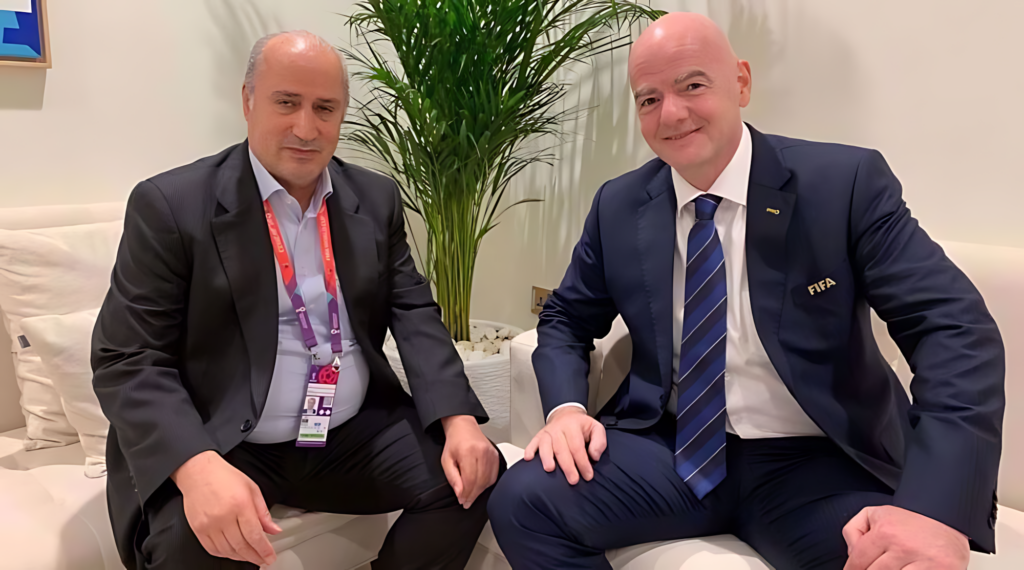
Taj is expected to hold talks with Fifa president Gianni Infantino as Tehran seeks assurances for its squad amid tensions increased by the ongoing war.

He and the Iranian delegation met with Turkish football federation (TFF) president Ibrahim Ethem Haciosmanoglu and Mattias Grafstrom, the Fifa secretary general, on Saturday in Istanbul.

Dennis Dargahi , the German Iranian player, was recently added to Team Mell

“During this meeting, assessments were made regarding the training camp and preparations planned by the Iranian national team in Turkey ahead of the World Cup,” the TFF said on social media.

When the squad reaches the US, Iran will set up their base camp in Tucson, Arizona.
They are expected to kick off their World Cup campaign against New Zealand in Los Angeles on 15 June, before facing Belgium in the same city and then Egypt in Seattle, in Group G.

INITIAL 30 MAN ROSTER.

Goalkeepers: Alireza Beiranvand, Seyed Hossein Hosseini, Mohammad Khalifa, Payam Niazmand

Defenders: Daniyal Iri, Ehsan Hajsafi, Saleh Hardani, Hossein Kananizadegan, Shoja Khalilzadeh, Milad Mohammadi, Ali Nemati, Omid Noorafkan, Ramin Rezaian, Aria Yousefi

Midfielders: Roozbeh Cheshmi, Saeed Ezzatollahi, Mehdi Ghaedi, Saman Ghoddos, Mohammad Ghorbani, Alireza Jahanbakhsh, Mohammad Mohebi, Amir Mohammad Razaghinia, Mehdi Torabi.

Forwards: Ali Alipour, Dennis Dargahi (AKA Dennis Eckert), Hadi Habibinejad, Amir Hossein Hosseinzadeh, Amir Hossein Mahmoudi, Kasra Taheri, and Mehdi Taremi

MAJOR ABSENTEES:

There is no place on this list for Sardar Azmoun (the third-highest scorer in Iranian history) due to non-sporting reasons. Also, Allahyar Sayyadmanesh (winger for Belgian team Westerlo) has been excluded, while the rising star Mohammad Javad Hosseinnejad (a young midfielder playing in Russia).
Other absentees include Ali Gholizadeh, Lech Poznan winger, who suffered a serious injury in the Polish League.

FIFA says it held positive talks with Mehdi Taj ahead of World Cup

By Ali Kucukgocmen

ISTANBUL, May 16 (Reuters) – FIFA Secretary-General Mattias Grafstrom held a constructive and positive meeting with Iran’s FA (FFIRI) President Mehdi Taj on Saturday, he told Reuters, expressing confidence about the country’s participation at this year’s World Cup.

Iran are scheduled to play all three of their group matches in the United States but the team’s participation in the June 11 to July 19 tournament has been in question since the U.S. and Israel attacked Iran in late February.

Soccer Football - Iran Football Association president Mehdi Taj meets FIFA secretary general Mattias Grafstrom - Istanbul, Turkey - May 16, 2026 Iranian FA President Mehdi Taj, FIFA Secretary-General Mattias Grafstrom, Turkish Football Federation president Ibrahim Haciosmanoglu and Secretary General Hedayat Mombeni. REUTERS/Murad Sezer

Iran Football Association president Mehdi Taj meets FIFA secretary general Mattias Grafstrom – Istanbul, Turkey – May 16, 2026 Iranian FA President Mehdi Taj, FIFA Secretary-General Mattias Grafstrom, Turkish Football Federation president Ibrahim Haciosmanoglu and Secretary General Hedayat Mombeni. REUTERS/Murad Sezer© Thomson Reuters

“We’ve had an excellent and constructive meeting together with the Iran FA,” Grafstrom said during a visit to Istanbul. “We’re working closely together and looking very much forward to welcoming them in the FIFA World Cup.”

More questions have arisen after FFIRI’s Taj was refused entry to Canada for the FIFA Congress in Vancouver earlier this month because of his links to the Islamic Revolutionary Guard Corps (IRGC).

Soccer Football - Iran Football Association president Mehdi Taj meets FIFA secretary general Mattias Grafstrom - Istanbul, Turkey - May 16, 2026 Iranian FA President Mehdi Taj and Secretary General Hedayat Mombeni with FIFA Secretary General Mattias Grafstrom. REUTERS/Murad Sezer

Iran Football Association president Mehdi Taj meets FIFA secretary general Mattias Grafstrom – Istanbul, Turkey – May 16, 2026 Iranian FA President Mehdi Taj and Secretary General Hedayat Mombeni with FIFA Secretary General Mattias Grafstrom. REUTERS/Murad Sezer© Thomson Reuters

The U.S. and Canada, who are co-hosting the World Cup with Mexico, classify the IRGC as a “terrorist entity” and have made it clear they will not admit people with links to the elite military force.

Grafstrom declined to provide details on the visa situation for Iran’s players, but said the two sides had the opportunity to discuss some of the operational matters and had a positive exchange.

Taj told Reuters that FFIRI had a very good meeting with Grafstrom and other FIFA officials.

“I am pleased that they listened to Iran’s points, all 10 points that we had raised, and they offered solutions for each of them. I hope, God willing, that our national team can go to the World Cup without any problems and achieve very good results there,” he said.Soccer Football - Iran Football Association president Mehdi Taj meets FIFA secretary general Mattias Grafstrom - Istanbul, Turkey - May 16, 2026 Iranian FA President Mehdi Taj and FIFA Secretary General Mattias Grafstrom speak with Reuters after their meeting. REUTERS/Murad Sezer

Iran Football Association president Mehdi Taj meets FIFA secretary general Mattias Grafstrom – Istanbul, Turkey – May 16, 2026 Iranian FA President Mehdi Taj and FIFA Secretary General Mattias Grafstrom speak with Reuters after their meeting. REUTERS/Murad Sezer© Thomson Reuters

Asked if FIFA had secured assurances on entry and visa arrangements for Iran’s players, Grafstrom declined to elaborate.

“We’ve discussed all relevant matters, but I think it’s not the place to discuss the details,” he said. “Overall, a very positive meeting and we’re looking forward to continuing the dialogue.”

Iran had asked for their World Cup matches to be switched to Mexico but FIFA President Gianni Infantino insists that all games must be played at the grounds originally scheduled.

Iran’s squad will leave Tehran for a training camp in Turkey on Monday before moving on to their U.S. base at the Kino Sports Complex in Tucson, Arizona in early June.

Iran are scheduled to get their World Cup campaign under way against New Zealand in Los Angeles on June 15. They are also due to play Belgium and Egypt in Group G.

(Reporting by Ali Kucukgocmen: Writing by Daren Butler; Editing by Ken Ferris

Mehdi Taj “Iran Ready for World Cup, despite US government hostalities”


The head of the Football Federation Islamic Republic of Iran (FFIRI) has addressed the situation of the national football team regarding the 2026 FIFA World Cup in the United States, expressing deep concern over American hostility while reaffirming Iran’s determination to prepare vigorously for the tournament.

“Given the evils of the American authorities, we do not see a favorable prospect for holding the World Cup under current conditions,” the FFIRI chief stated. “Nevertheless, we are preparing ourselves for a strong and honorable presence in these competitions.”

He confirmed that the list of national team players for the upcoming camp has been announced, with training set to begin Monday at the national teams’ camp in Tehran. “Our effort is to ensure that there is no disruption to the national team’s preparation process,” he added.

Common Goal: World Cup Qualification and Honor

Referring to Team Melli’s objectives, the FFIRI head emphasized national unity: “All our efforts are to prepare the national team for a strong presence on the path to qualifying for the World Cup. The federation, the country’s sports complex, and the people all support the national team. Our common goal is to advance and participate honorably in the World Cup.”

Request to Move Matches to Mexico. No Final Decision Yet

Regarding the FFIRI’s formal request to change the venue for Iran’s matches from the United States to Mexico, the official provided an update: “Requests have been made, and follow-ups are ongoing regarding moving the venue of the games to Mexico. However, FIFA has already carried out processes such as ticket sales, the lottery, and stadium determinations. Any change requires extensive coordination. We are following up so that this important step can be taken if possible.”

He clarified that no final decision has been made, and the outcome depends on FIFA’s cooperation and security assurances from host authorities.
The FIFA President has already confirmed that there is no chance of Iran’s matches being moved to Mexico.

Warm-up Match with Spain Still Under Review

On the possibility of a friendly match with Spain, the FFIRI head said: “The match with Spain has not yet been finalized for cancellation. We are still discussing whether the conditions for holding this warm-up match will be met. This issue is being followed up, and an announcement will be made if it is finalized.”

No Interference in Player Selection – Denis Eckert Addition Planned

Addressing rumors about Sardar Azmoun’s invitation to the national team camp, the FFIRI chief stressed: “The head of the federation does not interfere in the selection or invitation of any player. The selection of players, determining the main squad, and selecting warm-up opponents are within the authority of the national team head coach. The federation does not interfere in which player must be in the permanent squad or in technical decisions. We provide the frameworks and facilities; the technical decisions are the responsibility of the head coach.”
The exclusion of Sardar Azmoun from Iran’s last two friendlies against Nigeria and Costa Rica, allegedly over a social media post showing him with the Ruler of Dubai, has become the catalyst for what many view as a politically motivated decision. To date, no official explanation has been provided for his absence. Neither the FFIRI, head coach Amir Ghalenoei, nor any other authoritative source has offered a reason for sidelining Team Melli’s second-highest all-time scorer.

The lack of transparency has fueled speculation, especially given that Azmoun is now fully fit and is set to play in the AFC Champions League Elite semi-final on Monday.

Mehdi Taj also confirmed a new addition: “We have planned to add a striker from Belgium, Denis Eckert, to the national team.”


remature Coronation: Why Taj’s World Cup Guarantee for Ghalenoei Undermines Team Melli’s Ambition

In a move that has raised more eyebrows than confidence within Iranian football circles, Football Federation President Mehdi Taj has effectively removed any suspense or accountability from Team Melli’s impending 2026 World Cup campaign. By publicly assuring that Amir Ghalenoei will remain at the helm regardless of results in North America, Taj has traded the hard edge of professional sport for the comfort of administrative inertia.

Speaking in response to comments made by Ghalenoei, who suggested that after the World Cup, Team Melli would be at the “disposal of the next head coach”, Taj interpreted this as a selfless concession rather than a standard procedural reality. “Ghalenoei has made a concession; he will be the head coach of the national team after the World Cup,” Taj stated.

He doubled down on this assurance, adding: “There is no problem with Ghalenoei’s presence in the national team, and we are very satisfied with him. Ghalenoei is trying to say that he is leaving the federation’s hands open, but he is managing the national team very well.”

While stability is a cherished commodity in the volatile world of international football management, stability without scrutiny is merely stagnation. To confirm a coach’s future without conducting a post-World Cup performance appraisal is not just a vote of confidence; it is an abdication of professional responsibility.

The Illusion of the “Open Hand”

The federation’s framing of this announcement centers on the idea that Ghalenoei is “leaving the federation’s hands open.” In reality, this premature assurance closes the federation’s hands entirely. By locking in the current leadership before a ball is kicked against the world’s elite, the Federation has sent a clear message to the squad and the public: The process in the United States, Canada, and Mexico is an exhibition, not an examination.

What happens if Team Melli suffers a historic defeat? What if the tactical approach that worked in the later stages of Asian qualification proves utterly inadequate against the pace and power of a World Cup group stage? Under this new decree, the answer is apparently nothing. Ghalenoei returns to the bench for the next AFC Asian Cup qualification cycle, safe in the knowledge that the federation’s “satisfaction” predates any actual evidence from the sport’s biggest stage.

This approach stands in stark contrast to the principles of high-performance sport. In any serious footballing nation, or any professional organization, a major project like a World Cup is a natural inflection point. It is a moment for review, for recalibration, and, if necessary, for a fresh voice. By skipping the appraisal step entirely, Taj is demonstrating a lack of desire for improvement and a troubling contentment with the status quo.

A Haunting Precedent

The irony of this situation is not lost on observers. Just over three years ago, the Iranian Football Federation dismissed Dragan Skocic, a coach who had secured qualification for the 2022 World Cup, mere months before the tournament began, citing a lack of confidence in his ability to perform on the world stage. The decision threw the team into a tailspin of instability from which they never recovered in Qatar.

Now, the pendulum has swung to the opposite extreme. Where once the federation acted with rash, destabilizing haste, it now clings to a premature, unearned loyalty. Both extremes stem from the same root: an institutional failure to manage coaching transitions with data-driven professionalism rather than reactive, behind-closed-doors politics.

The Risk of Complacency

The most damaging aspect of this announcement is the potential impact on the dressing room and the coaching staff’s mentality. The World Cup demands every ounce of a team’s focus and fear of consequence. That fear, the knowledge that jobs and legacies are on the line, drives performance. By erecting a safety net in April 2026, two months before the tournament, Taj has softened the ground beneath Ghalenoei’s feet.

While the federation views this as a gesture of unity and support, it is equally plausible that it masks deeper, unaddressed fissures within the national team setup. Maintaining the coach’s position unconditionally is an easy way to avoid confronting internal issues that might otherwise surface during a rigorous post-tournament review.

Conclusion

Mehdi Taj is right to praise the work Amir Ghalenoei has done to steady the ship and navigate Asian qualification. But international football is not an industry of lifetime appointments or performance-blind loyalty. The World Cup is the ultimate litmus test.

By removing the stakes for the man in the technical area, the Federation President has undercut the very essence of competition. It is an unprofessional statement that comforts the coach but shortchanges the 90 million Iranians who expect their national team to be held to the highest possible standard—not just during the World Cup, but in the honest, critical moments that follow it.

Azmoun kicked off national team for disloyalty, say reports!

March 20 (Reuters) – Sardar Azmoun, one of Iran’s top soccer players, has been expelled from the national team for a perceived act of disloyalty to the government, Iranian media has reported, making it unlikely he will play any part in the World Cup.

Iran’s participation in the World Cup as a whole is under a cloud because of the ongoing conflict with the United States, which is co-hosting the June 11-July 19 tournament with Mexico and Canada.

If Team Melli do turn up for their opening-round group matches, they will undoubtedly be weakened by the absence of striker Azmoun, who has scored 57 goals in 91 internationals since making his debut as a teenager in 2014.

Azmoun, who plays his club football in the United Arab Emirates for Shabab Al-Ahli, upset the Iranian authorities this week by posting a picture on his Instagram feed of a meeting with Dubai’s ruler, Mohammed bin Rashid Al Maktoum.

Iran has launched rocket and drone attacks on the UAE following air strikes by the United States and Israel, which killed the country’s Supreme Leader, Ayatollah Ali Khamenei.

A report on the Fars News Agency, which has links to the hardline Islamic Revolutionary Guard Corps, cited “an informed source within the national team” as saying Azmoun had been expelled from the squad.

PICTURES REMOVED

Azmoun later removed the pictures but was still lambasted on state TV on Thursday, with football pundit Mohammad Misaghi saying the striker’s actions had been an act of disloyalty.

“It’s unfortunate that you don’t have enough sense to understand what kind of behaviour is appropriate at a given time,” Misaghi said.

“We should not mince words with such people. They should be told that they are not worthy of wearing the national team jersey.

“We have no patience for this sulking and childish behaviour. National team players should be people who proudly belt out the national anthem and deserve to wear the Iran jersey.”

There was no immediate response to a request for comment on the matter from the Football Federation of the Islamic Republic of Iran (FFIRI).

Azmoun, 31, is one of the best-known footballers in Iran, where the game is a national obsession.

He has played his entire club career abroad with stints at Zenit Saint Petersburg, Bayer Leverkusen and Roma, as well as featuring for Iran in the 2018 and 2022 World Cups.

An unsourced report on the Navad News channel said on Thursday that an order had been issued for the seizure of the assets of Azmoun, another UAE-based national team forward Mehdi Ghayedi, and former international Soroush Rafiei.

Misaghi was speaking against the backdrop of pictures of a ceremony welcoming the Iranian women’s national team back to Tehran on their return from Australia.

Seven of the delegation accepted asylum in Australia after the team was branded “wartime traitors” on Iranian state TV for not singing the national anthem before a Women’s Asian Cup match. Five later decided to return to Iran.

Iran’s men are scheduled to play friendly internationals in Antalya, Turkey, against Nigeria on March 27 and Costa Rica four days later as part of their World Cup preparations.

Iran could face sanctions if it withdraws from the World Cup.

Iran could face disciplinary action from FIFA, including a possible ban from future tournaments, if they unilaterally withdraw from the World Cup.

Donald Trump told Politico last week that he “really doesn’t care” if Iran fail to take part in this summer’s tournament, but FIFA remains committed to the World Cup going ahead with all qualified teams participating.

The president of the country’s football federation, Mehdi Taj, cast doubt on Iran’s involvement last week by saying “we cannot be expected to look forward to the World Cup with hope”, but pulling out may not be straightforward.

Under FIFA statutes, member associations are not permitted to withdraw from competitions, and declining to take part in a World Cup would be unprecedented in the modern era. No country has pulled out of the tournament after the draw since France and India did not take part in 1950, citing travel costs.

FIFA has protections in its tournament rules, which sources have indicated would be upheld. The regulations state that withdrawing before the tournament incurs a fine of between €275,000 (£238,000) and €555,000, depending on the date of the withdrawal, and triggers a referral to FIFA’s disciplinary committee, which could impose sporting sanctions.

“Participating associations that withdraw at any stage of the Fifa World Cup 2026 shall be required to reimburse all funds received from Fifa for the preparation of their national team, as well as any competition-related contributions received from Fifa,” the regulations state.

“The Fifa disciplinary committee may impose additional disciplinary measures, taking into account in particular the timing of the withdrawal or exclusion, the seriousness of the infringement that led to the inadmission or exclusion, possible mitigating factors, and any other relevant circumstances.

“These disciplinary sanctions may include the exclusion of the association concerned from a future Fifa competition or the replacement of that association by another.”

Iran have played at six World Cups, including the past three, in Brazil, Russia and Qatar. Their Group G opponents this summer are New Zealand, Belgium and Egypt, and they would face the United States in the knockout stage if both sides qualify as group runners-up.

Iranians are barred from entering the US under a travel ban introduced by the Trump administration last June, although it permits exemptions for athletes involved in the World Cup or 2028 Olympics in Los Angeles.

FIFA was contacted for comment.