Tag: AFC Asian Cup 2027

Amir Ghalenoei

Ghalenoei's contract officially extended.

The board of directors of the Football Federation (FFIRI) held a meeting today, Wednesday, in the presence of Amir Ghalenoei. The board decided to extend the contract of the head coach until the end of the Asian Cup.

Ghalenoei presented a master plan in this meeting entitled the roadmap for preparing the national team for the Asian Cup 2027.

The 19th Asian Cup will be hosted by Saudi Arabia from January 7 to February 5, 2027 . Under Ghalenoei, Team Melli's last participation in 2023 was elimination in the semi-final after the loss to Qatar.

Iranian Football at the Crossroads: Stagnation, Regional Rivalry, and the Long Wait for a Savior


Iran's Football Crossroads: A Tale of Two Federations

In a striking contrast that underscores the widening gap between strategic vision and bureaucratic inertia, the Iranian Football Federation finds itself at a critical juncture while regional rivals surge ahead with bold, calculated moves.

The Familiar Path of Stagnation

As the Iranian Football Federation persists in its contentious relationship with the public—marked by ongoing conflicts and mutual recrimination—it has chosen to extend Amir Ghalenoei's contract. This decision comes despite a track record that many consider underwhelming: an expected fourth consecutive major tournament campaign that ended in disappointment, with the team failing to advance past the group stages in the World Cup 2026 while failing to win the title in two Asian Cup tournaments in 2007 and 2023. The contract renewal has been met with widespread criticism from fans and pundits alike, who view it as yet another symptom of a system that prioritizes familiarity over performance.

A Contrast in Ambition

Meanwhile, the Emirati Football Federation—widely regarded as one of the most proactive and opportunistic governing bodies in the region—has executed a coup of considerable magnitude. They have secured the services of Zlatko Dalić, a manager whose credentials include guiding Croatia to a World Cup final appearance and a third‑place finish, establishing himself as one of the most respected tacticians in contemporary football. The appointment signals the UAE's serious intent to elevate its footballing standing on the Asian and global stage.

An Intriguing Reunion

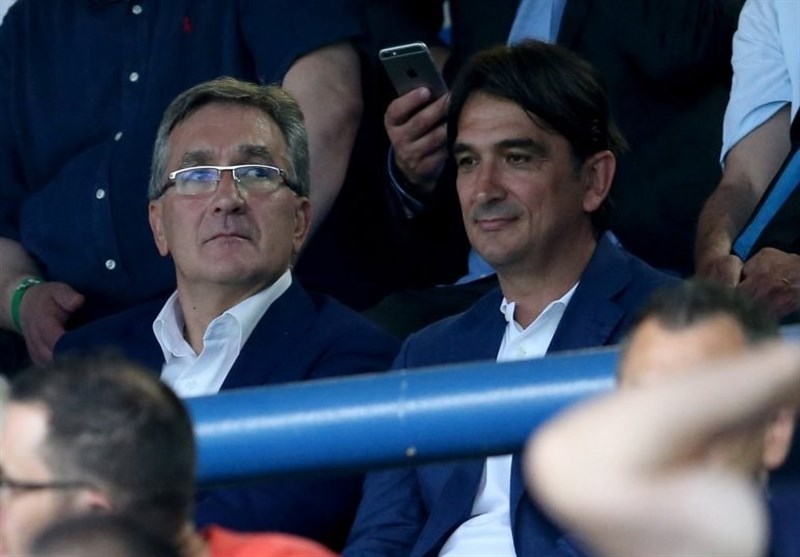
Perhaps even more intriguing for Iranian football enthusiasts is the accompanying appointment of Branko Ivanković as technical advisor alongside Dalić. Ivanković, who had officially announced his retirement from football management not long ago, has been persuaded by his friend and compatriot to return to the game. Dalić, in welcoming Ivanković, referred to him as "the great advisor," emphasizing that his extensive knowledge of the regional football landscape and proven track record of success would be invaluable assets.

This is the same Ivanković who, during his tenure as Team Melli's head coach, guided Iran to a comfortable World Cup qualification and presided over what many consider one of the most successful periods in Iranian football history. His subsequent golden era at Persepolis further cemented his legendary status in Iranian football folklore.

Prophetic Warnings

Ivanković's name has resurfaced in Iranian sports circles recently for reasons beyond his coaching achievements. His famous prediction that Iranian football would regress to "amateur level" now appears increasingly prophetic, as the warning signs he identified have become starkly visible. The manner in which he handled the Ramin Rezaeian situation also continues to generate discussion, with each passing day seemingly validating Ivanković's approach and judgment in that controversial episode.

A Formidable Regional Force

The Dalić‑Ivanković partnership represents a formidable alliance in Middle Eastern football—a combination of world‑class tactical acumen and deep regional expertise that could reshape the competitive landscape. For Iran, this represents yet another threat to its regional standing, particularly at a time when the national team's management structure appears incapable of learning from past failures.

The Erosion of Standards

The current state of Iranian football raises profound questions about institutional priorities. In a system where failures and disappointments go unquestioned—indeed, seem to be rewarded with contract extensions—competence has become a desirable but non‑essential attribute for those leading Team Melli. Surprises and controversies have become so routine that they barely register as cause for concern.

A Generation Disillusioned

Across Iran and throughout the global diaspora, a generation of fans who have witnessed Team Melli's gradual decline watches with growing disillusionment. The team's popularity has reached one of its lowest points in recent memory, with attendance figures and television ratings reflecting a significant erosion of public enthusiasm. While the management and coaching structures bear considerable responsibility for this decline, another factor has emerged as a major source of fan frustration: the astronomical salaries commanded by so‑called professional footballers in Iran, despite decades of collective underachievement. This disparity between compensation and results has become a festering wound, breeding apathy and, increasingly, outright hostility toward the national team.

The Path Forward

As regional rivals invest in world‑class leadership and strategic planning, Iranian football stands at a crossroads. The contrast between the UAE's proactive approach and Iran's reactive stagnation could not be more stark. Without fundamental reform—starting with accountability at the highest levels and a genuine commitment to merit‑based selection—the decline may prove irreversible. The passionate support of Iranian football fans, once the team's greatest asset, now appears to be its most severely tested resource.

The question is not whether the Iranian Football Federation recognizes the urgency of the moment—it has repeatedly demonstrated its inability to learn from its missteps and stubbornly clings to a failing strategy that has already eroded the nation's footballing prestige. The true question is far more pressing: who will emerge as the savior of Iranian football? And perhaps more critically, when and how will the long‑overdue revolution and revival finally begin?

Team Melli's Coaching Future: A Shift in Federation Dynamics

The Evolving Equation of Iran's National Team Bench

The complex calculations surrounding Team Melli's technical leadership have crystallized into a new phase in recent days, as the Football Federation of Iran's (FFIRI) board of directors experiences a notable recalibration of positions. Several board members who previously stood firmly against extending Amir Ghalenoei's contract have now reconsidered their stance, marking a significant development in the ongoing saga of the national team's coaching future.

This transformation in perspective gained momentum following extensive consultations and strategic discussions that have dominated the board's agenda over the past week. The extension of the senior national team head coach's contract has emerged as perhaps the most consequential item among their deliberations, with the issue commanding considerable attention and debate.

The Gradual Shift in Decision-Making Dynamics

The outcome of these intensive consultations has been a gradual yet discernible evolution in the board's decision-making climate. Those who once comprised the opposition faction have increasingly aligned themselves with the continuity camp, advancing the argument that technical stability serves as a crucial prerequisite for the national team's aspirations in the AFC Asian Cup 2027, scheduled to be hosted by Saudi Arabia.

The prevailing sentiment among this reconfigured group suggests that maintaining the existing technical structure would provide the team with the consistency and institutional memory necessary to mount a serious challenge for continental honors. This reasoning appears to have resonated sufficiently to bridge the previously entrenched divisions within the federation's leadership.

An Atmosphere of Anticipation

While no official pronouncement regarding the national team bench's future has materialized, the federation's internal environment has undergone a palpable transformation compared to the tensions of previous weeks. The balance of influence has demonstrably tilted in favor of retaining the incumbent coach through the conclusion of the AFC Asian Cup 2027 campaign in Saudi Arabia.

Should this trajectory persist, it would effectively eliminate any substantive discussion regarding technical staff changes from the federation's agenda, at least until the tournament's completion. Such an outcome would represent a decisive victory for the pro-continuity faction and would establish a clear pathway for the team's preparation cycle.

The Shadow of Political Maneuvering

This apparent leaning toward Ghalenoei's retention has not escaped the scrutiny of observers, many of whom attribute the shift to political calculations and strategic maneuvering rather than an objective assessment of merit and technical competency. These influences, according to analysts, now permeate the corridors of the FFIRI with increasing intensity.

The political dimensions of this decision cannot be understated, as they intersect with broader power dynamics within Iranian football governance. The federation's deliberations appear to reflect considerations that extend beyond purely sporting criteria, raising questions about the decision-making processes that determine the national team's technical direction.

A Record of Unfulfilled Expectations

The context of this shift is particularly noteworthy given Ghalenoei's recent record with Team Melli. Under his stewardship, the national team experienced disappointment at the last AFC Asian Cup, failing to meet the elevated expectations that traditionally accompany Iran's participation in the continent's premier competition.

Furthermore, the team's campaign in the FIFA World Cup 2026 proved equally challenging, as Iran was unable to secure qualification from the group stage and failed to register a single victory throughout the tournament. These results have cast a long shadow over Ghalenoei's tenure and have fueled skepticism regarding his capacity to deliver the continental success that has eluded Iranian football for five decades.

The Verdict of Public Opinion

The reaction on social media platforms has been overwhelmingly critical, with users directing sharp commentary toward both Ghalenoei and his squad. This digital discontent reflects a broader sentiment among the fan base, many of whom harbor deep reservations about the team's prospects of ending the nation's 50-year Asian Cup drought under the current technical leadership.

The disconnect between the federation's apparent inclination and the grassroots sentiment underscores the challenging environment in which Iranian football operates. The divergence between institutional decision-making and public opinion has become increasingly pronounced, creating tensions that may prove difficult to reconcile as the Asian Cup approaches.

The Road Ahead

As the FFIRI board continues its deliberations, the decision regarding Ghalenoei's future will carry implications that extend far beyond the technical staff appointment itself. The choice will signal the federation's strategic direction, its responsiveness to public sentiment, and its commitment to performance-based evaluation versus other considerations.

The coming days will likely prove decisive in determining whether the current trend toward continuity solidifies into official policy or whether a last-minute reversal introduces yet another twist in this unfolding narrative. Whatever the outcome, the decision will shape the trajectory of Iranian football as it prepares for one of its most significant challenges in recent years.


This article is based on developments within the Football Federation of Iran and reflects the evolving situation regarding the national team's technical leadership as of the date of publication.

Why so many Managerial Changes , but not in Iran !

As is customary in global football, failure at a FIFA World Cup almost always triggers accountability. Consequently, coaches resign, federations sack managers, and administrators step aside. Even so, although the 2026 edition is still ongoing, we already have 15 departures — a clear sign that many nations take their shortcomings seriously.

However, what stands out is that almost every manager on that list performed better than Team Melli, yet Iran once again appears immune to change. Despite this, and despite failing to qualify from one of the weakest groups in the tournament, there is no indication of introspection, responsibility, or even basic acknowledgment of failure.

In fact, although not officially announced, the head of FFIRI has already hinted that Amir Ghalenoei will continue leading Iran into the AFC Asian Cup 2027 and beyond. Ultimately, continuity is not the problem — blind continuity is.

The Illusion of Success

The hope for fundamental change in mentality, player selection, or tactical evolution remains remote. Moreover, what has improved, ironically, is the federation’s ability — along with the head coach — to manipulate public perception. As a result, a clear failure has been reframed as a “respectable performance,” a narrative that is repeated so often it begins to sound like truth.

Therefore, this is not football analysis; it is political messaging.

The Media’s Role in Manufacturing Consent

Furthermore, another striking element is the behavior of the domestic media. Almost all major outlets are state-controlled, and the football federation itself is under the same umbrella. Consequently, the result is predictable: full‑fledged support for the team, regardless of performance, wrapped in nationalistic rhetoric and political justification.

Instead, of honest evaluation, we get excuses. Instead, of accountability, we get slogans. Instead, of progress, we get stagnation.

Ultimately, the missed opportunity of this World Cup — a tournament where Iran genuinely had a chance to advance — is buried under layers of propaganda.

A Contrast: Saudi Arabia’s Example

Among the many departures worldwide, one stands out: Saudi Arabia’s football federation president, Yasser Al‑Misehal, resigned after his team failed to reach the knockout stage.

His statement was simple, direct, and refreshing:

“The failure of the national team to qualify for the next round of the World Cup is a result that falls short of all our ambitions, and I bear full responsibility for it. I offer my apologies to everyone who hoped to see our team in a better position.”

He continued:

“A sense of responsibility requires giving the opportunity to open a new chapter, and I have decided not to continue until the end of my current term.”

Clearly, this is not just a resignation — it is a culture of accountability. It also signals a country seeking progress, acknowledging shortcomings, and making room for improvement.

By contrast, such honesty is almost alien within FFIRI’s current culture and its political backers.

The Core Problem

Iran’s footballing stagnation is not due to lack of talent, resources, or passion. Rather, it is due to a system that:

  • refuses to admit mistakes,
  • punishes criticism,
  • rewards loyalty over competence,
  • and treats football as a political tool rather than a sporting project.

Until this changes, Iran will continue celebrating imaginary achievements while other nations — even those who performed better — take real steps toward improvement.

📌 Summary Count

Across all sources, at least 15 managers and coaches left their positions after the 2026 World Cup — roughly 25–27% of all head coaches, according to The Guardian and beIN SPORTS.

🟦 Post–World Cup 2026 Departures (Managers + Federation Chiefs)

Resigned / Sacked / Mutual Termination

Country / TeamNameRoleReason / NotesSource
Saudi ArabiaYasser Al‑MisehalPresident, Saudi Arabian Football FederationResigned after Saudi Arabia’s group‑stage exitbeIN SPORTS
TunisiaSabri LamouchiHead CoachSacked after 5–1 loss to SwedenCAF / beIN
TunisiaHervé RenardHead CoachResigned 18 days after appointmentAFP / Arab News
GhanaCarlos QueirozHead CoachResigned after Round of 32 exitGhana FA
Senegal Pape ThiawHead CoachSacked following  elimination in the round of 16 AP Sports
South KoreaHong Myung‑boHead CoachResigned after group‑stage eliminationNDTV / Guardian
CzechiaMiroslav KoubekHead CoachResigned after winless group stageCzech FA
ScotlandSteve ClarkeHead CoachResigned after failing to reach knockoutsBBC
NetherlandsRonald KoemanHead CoachResigned after Round of 32 loss to MoroccoDutch FA
GermanyJulian NagelsmannHead CoachLeft role after Round of 32 elimination to ParaguayDFB
PortugalRoberto MartínezHead CoachResigned after Round of 16 defeat to SpainPortuguese FA
CroatiaZlatko DalićHead CoachResigned after Round of 32 defeat to PortugalbeIN
MexicoJavier AguirreHead CoachDeparted as part of federation transition after eliminationFMF
UruguayMarcelo BielsaHead CoachLeft role after group‑stage eliminationCONMEBOL
EcuadorSebastián BeccaceceHead CoachDeparted after Round of 32 loss to MexicoEcuador FA

📌 Total Count

15 confirmed departures (14 head coaches + 1 federation president)

.

Iran's World Cup 2026 Post-Mortem: Denial, Decline, and the Urgent Need for Revolution


The dust has settled on the FIFA World Cup 2026, and for Iran’s Team Melli, the tournament ended not with a bang, but with a whimper of controversy and a stubborn refusal to face reality. Despite exiting the group stage without a single victory—a historic low for the nation in this competition—Head Coach Amir Ghalenoei and his staunch supporters have strangely tried to spin a lackluster campaign into a badge of honor.

While the World Cup continues to showcase spectacular performances from underdogs like Egypt and Cape Verde, Iran returned home empty-handed, failing to register a win. This is in stark contrast to regional rivals like Japan and South Korea, who, despite also being eliminated, managed a victory and have already initiated a major rebuild. The Korean FA has wasted no time in overhauling their squad and strategic vision ahead of the AFC Asian Cup 2027. In Iran, however, the administration seems frozen. The typical pattern involves taking their "sweet time," only to later complain that there was "not enough time" for necessary changes.


The Coaching Conundrum: The Search for a Savior

Ghalenoei’s contract expires with the end of this tournament. The Football Federation Islamic Republic of Iran (FFIRI) has discreetly stated its intention to pursue a European coach. However, given the country's volatile socio-economic and geopolitical climate, it is highly unrealistic to expect a reputable manager to accept the post.

Realistically, the federation’s options are limited. They are likely to attract only third or fourth-tier coaches—many from Latin America or Eastern Europe—who are willing to overlook the instability for a lucrative paycheck. Such an appointment could prove disastrous, likely yielding results even worse than keeping the conservative Ghalenoei at the helm.

The Options:

  • Keep Ghalenoei: A continuation of the status quo; likely leads to stagnation but offers "stability" in terms of familiarity with the domestic league and veteran players.
  • Foreign Gamble: Hiring a low-tier foreign coach risks a culture clash, tactical confusion, and an eventual acrimonious exit, leaving the team in shambles.
  • Young Local Prospect: The most sensible, albeit unpopular, approach might be to appoint a younger domestic coach willing to embrace a long-term youth project, similar to what other Asian nations are doing.

Player Analysis: The Verdict is In

Regardless of who sits in the dugout, Team Melli requires a profound upheaval in personnel. Several players have clearly passed their "sell-by" date, while others are teetering on the brink. Below is a comprehensive analysis of the squad’s performance, complete with a verdict on their future with the national team.

(Key: ✅ Continue, ❌ Retire/Drop, ⚠️ Conditional/Evaluate)

#PlayerPositionPerformance & AnalysisVerdict
1Alireza BeiranvandGKA mix of hero and villain. At fault for goals against New Zealand and Egypt, yet delivered a world-class performance against Belgium. His continuation is born of necessity; a lack of viable domestic alternatives keeps him in the squad.YES
2Saleh HardaniRBhis showing against Belgium was embarrassing. Despite possessing pace and crossing ability, he lacks the fundamental defensive instincts required at this level. Iran has plenty of options for his post.NO
3Ehsan HajsafiDFThe end of a remarkable career. A loyal servant to Team Melli, but his legs are gone, and he is no longer able to keep up with international pace.NO
4Shoja'a KhalilzadehCBGave his best for Team Melli with solid performances, but this must be the end of the road. His age and lack of pace have been evident for years; Ghalenoei's persistence with him was a mistake.NO
5Milad MohammadiLBDid not perform as expected. His performance has been on a downward trend for several seasons. He is replaceable, and the team would not miss him.NO
6Saeid EzatolahiCMOne of the players who stood up and played his heart out. He was one of the best players at his club this season and still possesses the energy and determination. A definite candidate for the future.YES
7Alireza JahanbakhshRFHis poor form over the last few seasons made his inclusion a mystery. He should gracefully retire from international duty and focus on reviving his club career in the twilight of his playing days.NO
8Mohammad MohebiRFStill good enough for the team. He should improve with experience and is a vital part of the squad's future core.YES
9Mehdi Taremi (c)CMThe Captain's disappointing performances are a worrying sign. His lack of mobility is becoming a liability. While he should be in the squad for the Asian Cup, his playing time must be reduced drastically.YES
10Mehdi GhayediFWIt is unfortunate that this nifty winger did not play a leading role. He possesses the skills and pace the team desperately needs and would be a definite asset in the 2027 AFC Asian Cup.YES
11Ali AlipourFWNot a versatile forward. He lacks the necessary skills and footballing IQ to play at the international level.NO
13Hossein KananiCBA mixed performance—solid against Belgium but disappointing against Egypt. Another player on a downward trend.NO
14Saman GhoddosCMA disappointing tournament for a player expected to be the team's dynamo. Perhaps the direct football deployed rendered him ineffective, but he retains significant skill and running ability. A sure member of the squad.YES
15Roozbeh CheshmiCMWas in the USA carrying an injury and didn't feature. With plenty of players who can easily fill his role, his time with Team Melli should end.NO
16Mehdi TorabiCMA versatile player who still has a lot to offer Team Melli, but only if he is given consistent playing time.⚠️ YES
17Arya YousefiLFHas not been given many minutes, but he remains a solid player with lots of potential to develop.YES
18Amirhossein HosseinzadehFWWas not given the opportunity to prove himself as a capable replacement for Taremi. He has scoring instincts, powerful shots, and vision. Deserves more chances.YES
19Ali NematiCBNot a solid central defender, but could be useful on the wings. He can be omitted if better players are available.⚠️ CONDITIONAL
20Shahriyar MoghanlouCFThis player has little to no value for Team Melli. His inclusion was a mistake, especially considering Sardar Azmoun was left out. Should never be included in future squads.NO
21Mohammad GhorbaniCMA defensive midfielder who has shown a good standard at the club level. Was not given enough time at the World Cup, but he is worthy of a place in the Asian Cup squad.YES
23Ramin RezaeianRBThe best performer in the squad. He seems to get better with age, scoring two goals (while no forward managed even one). A certain member of the squad for the Asian Cup.YES
24Dennis DargahiMFThe fans and pundits have never seen this player in action. Common sense dictates that if he were good enough, he would have played. A wasted slot.NO
25Danial IriCDMuch positive talk has been said about this player, yet he did not get a minute of play. Should be integrated into the squad.YES
26Amirmohammad RazaghiniaMFThere is no doubt he should be in the squad. Young, strong, and capable of playing in midfield or as a winger.YES

Building for the Future: The "New Blood" Pool

To facilitate a proper transition, Team Melli must immediately look to integrate these players—either proven stars left at home or promising youngsters who have been knocking on the door.

The Obvious Returns (Must be selected):

  • Sardar Azmoun (FW): Ignoring him was a tactical travesty. He remains the nation's most lethal striker.
  • Ali Gholizadeh (MF): His creativity and pace were sorely missed because of the injury.
  • Omid Noorafkan (MF): Provides excellent versatility and energy.
  • Majid Hosseini (DF): A solid, dependable defender who should have been in the squad.
  • Allahyar Sayyadmanesh (FW): The young striker needs minutes to realize his immense potential.

The Youth & Uncapped Prospects (Pool for National Team Camp):

  • Amirhossein Mahmoudi (FW)
  • Amin Hezbavi (DF)
  • Mohammad Khalifa (GK)
  • Nima Andarz (DF)
  • Mohammad Javad Hosseinnejad (MF)
  • Kasra Taheri (FW)
  • Yousef Mazraeh (LW)
  • Esmaeil Gholizadeh (MF)
  • Mahan Sadeghi (MF)
  • Alireza Koushki (FW)
  • Mehdi Hashiminejad (FW)
  • Saman Fallah (DF)

Conclusion: The Path Forward

To compete in the 2027 AFC Asian Cup—let alone qualify for the next World Cup—Team Melli must abandon its nostalgia and complacency. The era of honoring veteran players over merit must end. The performance in 2026 should serve as a wake-up call, not a banner of defiance.

The Federation has three clear tasks:

  1. Appoint a competent coach who understands the need for transition and is not afraid to drop underperforming stars.
  2. Immediately integrate senior players who have not featured, like Azmoun, Gholizadeh, and the uncapped prospects.
  3. Develop a modern tactical identity that moves away from ineffective, ultra-defensive "death or glory" tactics to a more balanced, possession-based game.

If Iran continues to lean on a fragile status quo, they will find themselves falling further behind rising Asian powers. The next few months will define the trajectory of Iranian football for the next decade. The question is: will they take the hard road to glory, or the easy road to mediocrity?

Teymourian discusses Team Melli preperations.


National team coach Andranik Teymourian has emphasized that the upcoming training camp in Turkey will be a vital phase for refining the squad’s weaknesses ahead of the World Cup, with the preliminary player list set to be announced within days.

Speaking to ISNA, Teymourian detailed how the Turkey camp is designed to be the final piece in the team’s tactical preparation. “The technical staff monitored the players and designed exercises for them based on their physical conditions,” he said. “The players had a few good weeks of training, and with Mr. Ghalenoei’s guidance, it was decided to hold intra-squad matches because the Premier League hasn’t started. But Turkey is where everything must come together.”

He confirmed that the initial squad list will be unveiled shortly, noting that a few players are likely to miss the crucial gathering. “The preliminary list will be announced in the next one to two days. I think there are a few people who will not accompany us in the Turkish camp—that decision rests with Mr. Ghalenoei’s perspective.”

Teymourian stressed that the camp is intended to transform the team’s remaining flaws into strengths. “We did very well in defense, midfield, and attack phases, but turning weaknesses into strengths takes time. I hope this process will be fully completed during our time in Turkey, so we can attend the World Cup fully prepared. I want all our players available there so we can maximize every session.”

Regarding the friendly schedule leading into the camp, Teymourian explained that two matches were canceled at the last minute, but a confirmed game against Gambia will serve as a key test. “There has also been some talk about a match with Puerto Rico,” he added.

Looking beyond the training camp to the World Cup itself, the coach voiced strong optimism. “Everyone’s wish is for the national team to advance to the higher stages of the World Cup. Iran has a real chance to do so, and the work we put in now in Turkey will be the foundation for that.”

On the Asian Cup, he remained focused on the immediate task. “We had a very good draw for the Asian Cup, but it is too early to discuss it. Our priority now is the World Cup. We first need a good result in the World Cup, and then we can talk about the Asian Cup. After the World Cup, newer players will be added, though we already have a strong blend of youth and experience.”

Iran grouped with China, Syria, and the Kyrgyz Rep. in the AFC Asian Cup 2007

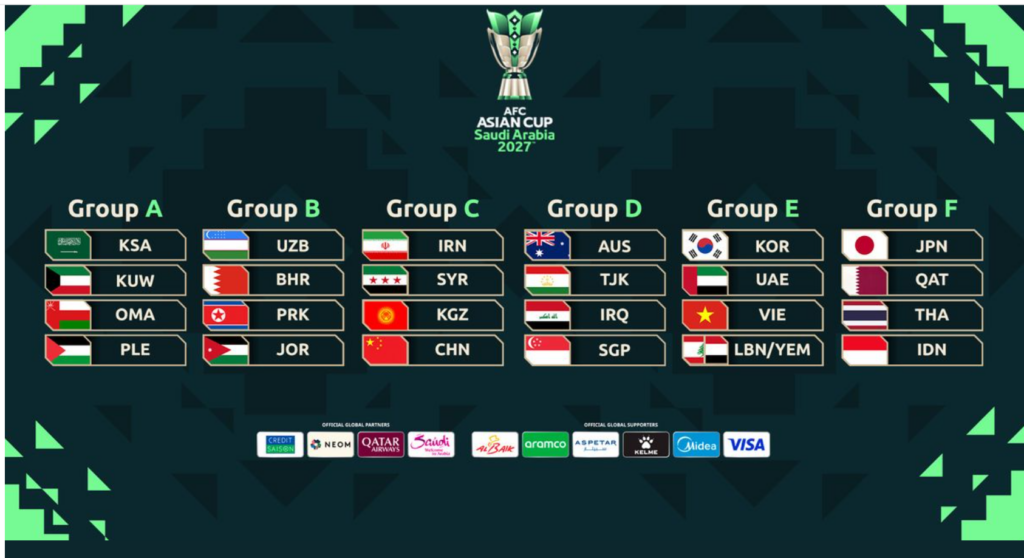
The draw ceremony for the AFC Asian Cup 2027 was concluded in Riyadh, Saudi Arabia.

Iran is grouped with China, Syria nd Kyrgyz Republic.

Team Melli will start the campaign on 9th January 2027 by facing its closest rival in the group, China.

Draw Result

Group A: Saudi Arabia, Kuwait, Oman, Palestine
Group B: Uzbekistan, Bahrain, DPR Korea, Jordan
Group C: IR Iran, Syria, Kyrgyz Republic, China PR
Group D: Australia, Tajikistan, Iraq, Singapore
Group E: Korea Republic, UAE, Vietnam, Lebanon/Yemen
Group F: Japan, Qatar, Thailand, Indonesia

GROUP C Match schedule


9 January 2027
Iran vs China
Syria vs Kyrgyz Republic.

13 January 2027
Kygyz Rep. vs Iran
China vs Syria

18 January 2027
Iran vs Syria
Kygyz Rep. vs China

Iran quietly pulls out from hosting AFC Asian Cup 2027!

While there was no confirmation or news from FFIRI, the Asian Football Confederation has removed the name of Iran as a candidate for hosting AFC Asian Cup 2027. Iran, or specifically, FFIRI has sent the required documentation to the AFC and prepared an extensive file on the facilities, accommodations, and logistics in addition to culture and country attractions.  However, the withdrawal of Iran's name while Saudi Arabia and India are the front runners for hosting is a bit of a mystery. Iran last hosted the competition in 1976 after it was the host in 1968 for the first time. Meanwhile, Qatar will be hosting the championship for the third time in 2027. It hosted the Asian Cup in 1988 and 2011 too.
India and Saudi Arabia have emerged as the final two bidders to host the AFC Asian Cup 2027, the Asian Football Confederation (AFC) announced on Tuesday. The development came to the fore after Qatar was chosen as the host country for the AFC Asian Cup 2023. The next year’s continental men’s football showpiece was earlier set to be held in China but they withdrew, prompting AFC to look for new hosts. Qatar, the reigning Asian champions, was earlier interested in hosting the 2027 AFC Asian Cup. But since the Qatar Football Association (QFA) is now hosting the 2023 edition, they dropped out of the 2027 race. Uzbekistan and Iran, the two other countries interested in hosting the AFC Asian Cup 2027, officially withdrew their bids on December 14, 2020, and October 13, 2022, respectively. The final decision about who will host the AFC Asian Cup 2027 will be taken by the AFC Congress at its next meeting scheduled in February 2023. “In the All India Football Federation (AIFF) and the Saudi Arabian Football Federation, we have two exemplary bids,” AFC president Shaikh Salman bin Ebrahim Al Khalifa said. If the AIFF wins the bid, it will be the first time that India will be hosting the marquee continental football tournament. Three-time champions Saudi Arabia are also bidding to host their maiden AFC Asian Cup. The last edition of the AFC Asian Cup was held in the UAE in 2019. India exited the tournament in the group stages.  

Hashemi-Taba "AFC does not trust us"

The debate on Iran's intention to apply to host the Asian Cup for the third time after the previously hosting the 1968 and 1976 tournaments, is heating up in Iran with many finding the idea as futile.

The former head of the Physical Education Organization was interviewed in "Iran Today" radio program on the subject of the country's bid for AFC Asian Cup 2027 and said, "the AFC's much prefers to award the hosting of the AFC Asian Cup to other countries rather than Iran, and that is why Iran will not host the event in 2027."

Seyyed Mostafa Hashemi Taba, former head of the Physical Education Organization, commented "We can implement and manage such project, however, from what we have all witnessed in the last few years in the country, management of the clubs has caused disappointment and despair, as it seems that we do not have a competent cadre of managers who can proficiently run their clubs and succeed in their jobs that is what is happening now. Finally, we have not and cannot respond positively to AFC requests. We have been maneuvering and using all sorts of tricks to circumvent the AFC bylaws. Maybe we can finally modernize and complete the stadiums, some of which have taken 10 years to complete, and prepare them according to the standards of the AFC, however, that is not all".

* The cat and mouse game would not work in Hosting.

"In the first place, they give a commitment to AFC & FIFA that women will be allowed to enter the stadium, but it is not possible to play cat and mouse game with this subject. It is not very clever to usher a selected group of women to the stadium in Tehran for a show, but not allow them to enter in another city. I don't think we can meet the demands of AFC by such ploy."

 * AFC does not trust us.

Hashemi Taba in the interview with "Iran Today" program of Radio Iran, emphasized the fact that FFIRI is a repeat offender, with so many cases of non-compliance, provision of false information, player’s registration inaccuracies and false data on Iranian clubs legibility, AFC has lost its trust”

“Even now The AFC does not trust us. When we are about to complete the documents, the AFC is not sure if we have provided accurate and correct information and even worst, they know that we cannot meet the demands and standards set by the international ruling bodies. AFC is looking for countries that have provided the necessary guarantees and have a clean sheet in their history. They go to a place where there is no problem and they are comfortable thinking that the country is doing the right thing. Just submitting the request in a bid to host the Asian Cup is not a big deal, any member country has the right to do so with for the Asian Football Confederation. All the countries around the Persian Gulf have the necessary facilities and can easily host such an event. Even East Asian countries are ready to compete. I think the motive behind the bid by FFIRI, as it seems we are on the verge of registration, is just to announce that we exist.

* The regime does not consider count the Asian Cup amongst the priorities

“One of the missions of the Islamic Revolution is to present ourselves in the world and not to isolate ourselves. Due to the various predicaments in the country and the region, and with the world's great powers, I don't think the authorities prioritize this, namely hosting the Asian Cup, as an essential part of the sports project. This is a kind of involvement with the international community and we just cannot act in the global arena the way we want and by the ideologies that we think are right. Some time ago, I heard that one of the gentlemen suggested we establish an Islamic FIFA (…), and 20 countries announced their willingness to join. When they mentioned the names of the 20 countries, it was immediately apparent that these countries already face problems in FIFA and had been subject to sanctions and suspensions! I think that these 20 countries want to become members of this Islamic FIFA to take money from us. We can go through the registration process, then organize and host a few small events that nobody cares for, but what then?”

  Meanwhile, Qatar has officially announced its bid for the AFC Asian Cup 2027

Iran hosting of AFC Asian Cup 2027!

Recently there have been some reports, possibly leaked to the media by FFIRI, about Iran requesting the hosting of AFC Asian Cup 2027.  This suggestion has been carried by many media and sports publications.  The is article discusses whether this possibility is realistic or just another gag to entertain the Iranian fans under the lockdown of COVID-19.

For a starter, news, or rumors of  FFIRI application for Iran to host the AFC Asian Cup 2027 has been met by a wave of criticism from football fans and critics mainly targeting the Iranian federation's action. This comes at a time when the Asian Football's most prestigious event  (AFC Asian Cup) requires major resources and infrastructure while Iran’s football, in general, is in the midst of a major crisis that is unparalleled in the country and will probably take years to recover.

* Hosting under current infrastructure?

At first glance, attention needs to be drawn to stadiums with FIFA standards, which are not available in Iran, as Sheikh Salman, the AFC president, recently announced that to host the event, which will be 24 teams tournament, eight to ten stadiums will be required. Despite the construction of stadiums such as Imam Reza, Shohadaye Foolad and Naghshe Jehan, etc., Iran is still miles away from such a standard required for hosting.

* Logistics and accommodation

 The important issues are those related to the transportation, logistics, accommodation, and marketing in such competitions, which require high fortitude and cooperation of government agencies and cannot be done by an organization such as the Football Federation or the Ministry of Sports. A look at the list of requirements for each country to hold this event shows that Iran has not had a history of holding major events since 1976, that is 44 years ago when the competition had 8 teams and most matches were played in the state-of-the-art newly built Arayamehr Stadium.

The current sporting infrastructure has not developed efficiently since the revolution. War, Political environment, priorities, sanctions, and most importantly financial resources were poorly allocated for sports venues.  Unless one believes in a miracle, it is really difficult to envisage all the factors merging towards achieving the target of 10 stadia by 2027

* Poor facilities of host cities.

Of course, there will be other Iranian cities that will host the group matches. Not all efforts and resources would be channeled towards hosting in Tehran only. In the current state, there are many problems in terms of transportation, logistics, and sports infrastructure, across the main cities in Iran. Although some cities have good facilities such as Mashhad which has an international airport and modern subway system, it lacks a proper FIFA Standard stadium while other options such as Esfahan has a good stadium that can easily host matches, but their transportation facilities and accommodations lag behind.

The most vital of the facilities, accommodation is a problem in other cities as well. The lack of  5-star hotels in some cities, as well as the difficulties of obtaining customs and visa permits, and finally the ban on women's presence in the stadiums culminate in a poor chance of hosting.

Naghshe Jehan Stadium, Esfahan.

* Advertising revenues and copyright laws.

In a strange system, in Iran, the broadcaster never pays the football federation. In fact, IRIB the government-owned broadcaster and the only authorized TV and Radio broadcaster had the audacity to claim that it should be the other way round as IRIB is doing football a favor by broadcasting matches!

In Iran, there is no Copyright laws either, at least not the way it is recognized and practiced internationally.  Clubs or the federation cannot claim nor count on revenues from companies who commercially use logos or other materials to sell their products. Therefore there are no official kits or jerseys by the clubs because cheaper products can be sold alongside genuine products without the protection or respect of copyrights.

While, the case of advertising revenues can be easily sorted out for the Asian Cup tournament, as the AFC has a solid and well laid down contractual clause that is legally binding, the copyright laws is well outside the football federation’s jurisdiction and AFC has no role to play in it. Copyright protection requires the government to initiate and produce legislation. It has to be passed as a law.  Then the suggested copyright law clauses need to be approved by the Majlis (parliament) and that in itself is not an easy task. The judiciary also needs to be on board and prosecute the offenders. Different government within governments like Pasdaran, Sepah, and the religious establishment will always have their own rules and understanding of any law. In brief, it is not an easy task to create copyright laws in Iran,  where chaotic political-religious system rules supreme.

Several attempts of the establishment of this law have failed, and it is unlikely that such laws will be established by 2027 or before.

* Financial and executive crisis in the Football Federation.

 Iran's request for hosting the Asian Cup will be looked upon in association with the integrity, strength, legitimacy, and competency of the persons running the football federation. At the moment, FFIRI is in crisis and facing sanctions by FIFA for many issues but mainly due to government interference. With such shady administration, it is unlikely that many will vote for Iran while the administrators are busy saving their own skins.

Former FFIRI President, who has been outside Iran for many months, is under scrutiny for financial irregularities
     

in 2014, UAE won the hosting of the 2019 Asian Cup instead of Iran. The UAE, met the conditions and the requirements to host the event and was able to prepare for the competition in four years. It has a well-established copyright law that is strictly implemented. There are plenty of international airports that are served by hundreds of airlines, it had the ideal infrastructure, hotels, stadia, perfect road system, Trams(Dubai), and resources, so it was a no brainer for it to be chosen as hosts.

How is Iran compared now? will it have the chance this time with competition from Saudi Arabia and India?

Given the country's economic situation and existing sanctions, the efforts required to establish or amend laws like copyright, intellectual property protection, women in the stadium, and the resources required to massively upgrade the stadiums in Tehran and other Iranian cities, the answer is a categorical NO.

There are far too many problems and issues for Iran’s hosting of major sporting events in the magnitude of the Asian Cup. Any such attempt by FFIRI to send the hosting file to AFC as a candidate for AFC Asian Cup 2027 will only be an embarrassment for Iran while it may serve as a propaganda tool for the current FFIRI administrators.