Category: News

“Fear, Favoritism, and Failure” – Abedini’s Brutal Verdict on Iran’s World Cup Collapse


Amir Abedini, a veteran football administrator with years of experience at Persepolis, the Football Federation, and across various sports and political roles, has emerged as one of the most outspoken critics of Team Melli’s World Cup campaign. In an exclusive interview with IRNA’s sports reporter, Abedini delivers a damning analysis of Iran’s failure to advance to the Round of 32, pointing to a lack of planning, technical incompetence, and a culture of fear that permeates the national team setup. According to Abedini, had the head coach shown even a modicum of boldness, Iran would now be preparing for a showdown with Switzerland—not packing their bags for Tehran.

Q: Two days after Team Melli’s elimination, we want to analyze the reasons for failing to reach the second round. Is three points from three matches and an unbeaten campaign acceptable, or is it a failure?

A: When we achieve a positive result, we bask in the glory and everyone rushes to congratulate one another. We convince ourselves that everything is fine. But God forbid we fail—then we pivot sharply in the opposite direction. We blame the earth and the sky, fabricating excuses for local consumption. We must learn to be self-critical before pointing fingers at external factors. That is where growth begins.

I believe we need fundamental changes and developments in our football. Perhaps, if someone with real decision-making power steps forward, they will make the tough choices for the future. Time is passing quickly, and in four years, we will be at the World Cup again. The question is whether we will be any better prepared.

Q: You haven’t explicitly stated whether the team’s performance was appropriate or not.

A: I have a question that I have yet to find an answer to: Why are we so easily satisfied with such results? We are capable of so much more than celebrating mediocrity. Do we truly want to qualify for a 48-team tournament and then be content with a ranking below 32 teams? Should we really pat ourselves on the back simply because we remained unbeaten? That is not success—it is delusion.

Q: In your opinion, what are the reasons we couldn’t go one step further?

A: The national team’s management and organization were fundamentally flawed. The Football Federation’s structure is contaminated at its core—contaminated by interference from those who have no business meddling in football affairs. I am referring to certain individuals ( Abedini is referring to the Minister of Sports) who have imposed their will on the federation, dictating terms like, “If this happens, we won’t go to the tournament,” or “If such and such occurs, we will go.” Federations are specialized entities. Iranian football is rich with expertise and elite talent. If we fail to utilize them in development or management, the problem lies at the top, with those who cannot recognize talent. If anyone claims there are no experts in Iranian football, I will tell them they are wrong. We have the knowledge and the experience, we simply lack the will to use them effectively.

Q: What should the Football Federation have done that it didn’t do?

A: Did the Football Federation, months before the tournament, establish a dedicated headquarters or committee for the World Cup? If they did, what tangible operations were carried out? If it was effective, why did we face such a chaotic margin of error? I acknowledge that the country has been grappling with critical conditions, but let’s not forget: we fought a madman for eight years—a regime that used chemical weapons and unleashed unimaginable horrors upon us. Yet we lived, we traveled, we held competitions, and we won championships. Adversity is no excuse for incompetence.

Q: At the beginning of your interview, you mentioned that when we fail, we weave together earth and sky to justify our shortcomings. Can you provide concrete examples from this World Cup?

A: This pattern has repeated itself countless times, but let me give you a specific example from this tournament. Before we ask why the penalty was missed, let’s discuss why Shoja’s goal was ruled offside. We fail to see our own shortcomings. We leave some of our greatest players at home, pinning all our hopes on Mr. Taremi. Look at the penalty moment: Taremi stands behind the ball, and instead of concentrating and taking a deep breath, he is adjusting his eyebrows. A player of his caliber, with the nation’s hopes resting on his shoulders, and his focus is on his appearance? Watch his body language. The result? A feeble penalty that was easily saved. The Egyptian goalkeeper made mistakes—many of them, but we couldn’t capitalize. It’s as if we didn’t want to.

Q: Your phrase “we didn’t want to” carries deep meaning. It suggests the technical staff was more concerned with preserving their unbeaten record than with winning.

A: Exactly. We could have qualified for the next round without relying on other teams’ results, but we squandered every opportunity. Should we have drawn the first match? No—we should have put all our concentration and strategy into defeating New Zealand. That was the winnable game. And look at the final 10 minutes against Egypt—when Ghalenoei finally allowed the players to express themselves, we pushed Egypt back. But why only in the final minutes? He was afraid. He was terrified. Why bring on Alireza Jahanbakhsh in the 90th minute? If you need attacking speed, why not introduce him in the 80th minute? Why wasn’t Ghaedi given meaningful minutes? It was this fear and panic that caused our defenders to remain static, playing only 10 minutes of actual football in the second half. The coach’s caution was our undoing.

Q: Are you suggesting we could have beaten both Belgium and Egypt? Weren’t they formidable opponents?

A: Fortunately, we haven’t contracted Alzheimer’s—we haven’t forgotten Ghalenoei’s own words. After the draw, he was ecstatic, confidently declaring that Iran could advance from the group stage. Before the tournament, he promised at least five points. Was Belgium the same formidable force we expected? And was Egypt truly a solid team when they had to withdraw Mohamed Salah due to injury?

A. Let me be blunt: if Firouz Karimi had been on the bench, he would have made bolder decisions. He understands football and would have seized the opportunity to guide this team into the top 20. If the former Team Melli coach, Maeli-Kohan, were still in charge, he would have instilled an attacking mentality. Our technical staff focuses only on their own substitutions, but the likes of Firouz Karimi, Carlos Queiroz, Stanko, Ivic, and Skocic all had the ability to read and react to the opposition’s tactical shifts. Egypt effectively said to us, “Come and score if you can.” And we didn’t. After the match, we were left stunned, once again blaming God for our failures, as if He alone is responsible for our lack of preparation.

Q: Do you believe the decisions of the technical staff were a primary reason for the elimination?

A: Absolutely. We had zeal and grit, but we lacked a coherent plan. Here’s a question: Can anyone explain why Roozbeh Cheshmi was taken to the World Cup? He was injured! Couldn’t we have taken a young, promising player in his place? Are we taking tourists on a recreational tour? This is elite sport, even if you are Hassan Yazdani, World and Olympic Champion, if you are injured, you cannot compete. Why waste a valuable squad spot on a player who cannot contribute?

Q: What do you think was the real reason for selecting Cheshmi and other questionable choices?

A: When Jahanbakhsh, as captain, was unable to attend a particular ceremony, they substituted him with Cheshmi. Now, they had to return the favor. They felt obliged to take Cheshmi—even if he had to be carried on crutches. This is not selection based on merit; it is selection based on patronage.

  • Abedini Exposes the Rot: “We Took Tourists, Not Footballers, to the World Cup”

Q: Are you referring to the internal politics of the Football Federation?

A: I have already spoken on this matter. Those who need to understand, already know exactly what I mean.

Q: You have addressed both managerial and technical deficiencies. Frankly, do you believe Iran should retain Ghalenoei or appoint a new head coach? For context, the South Korean coach, despite securing three points, offered his resignation after elimination.

A: I believe we need changes and development in our football. If decision-makers act wisely, they will plan for the future, as time passes quickly and in four years we will be at the World Cup again. I looked at the map and saw that everyone else had advanced. We are Iran; we shine on that map. We will qualify under any circumstances, but we must plan strategically once and for all. For 20 years, we have dreamed of reaching the World Cup, and for 20 years, we have hoped to reach the next round. Look at Japan, they have built a sustainable footballing culture. We should follow their example.

Q: Do you anticipate any changes?

A: Change is inevitable. The mentality must shift; innovation and planning are essential. You cannot continue running football in this haphazard manner. I believe changes will come, because they must.
Iran needed help to save their ‘disaster’ World Cup. Instead, they got more heartbreak

The Guardian
Story by Alexander Abnos
 

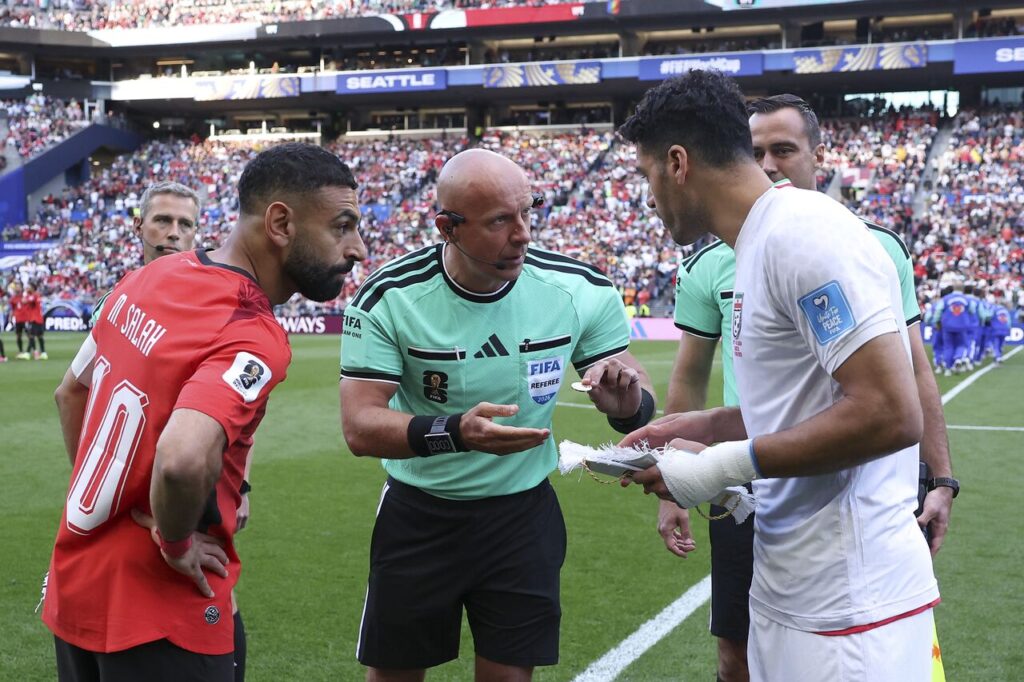
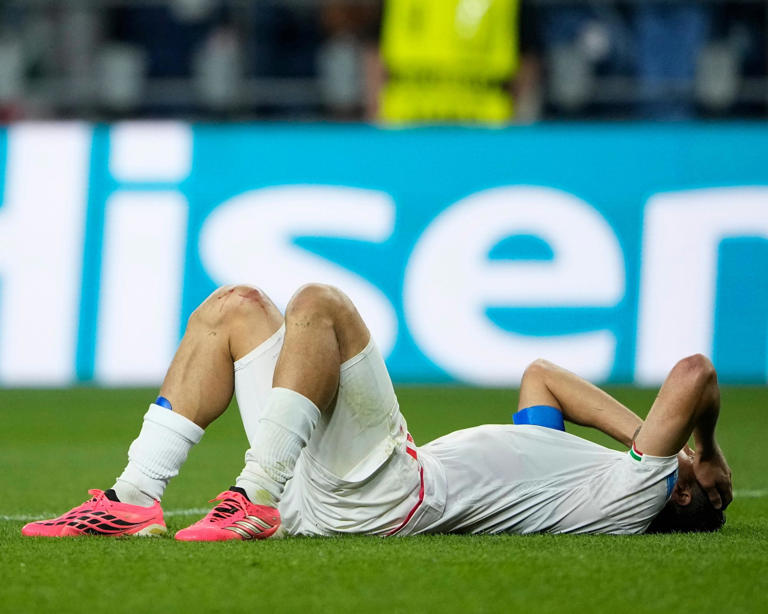
Mehdi Taremi lay on the ground at Seattle Stadium staring at the heavens, devastated. The Iran team he captains had just finished a 1-1 draw with Egypt in their final World Cup group game – one where a win would have put them through to the knockout round for the first time in seven tournament appearances. Taremi had missed a penalty in Friday’s contest, and a seeming late winner had sent the team into bedlam before being correctly ruled out for offside.

Taremi lay on the ground for several minutes. He did so as Alireza Jahanbakhsh, his longtime teammate on a veteran-laden Iran squad, offered comfort. Taremi remained after other teammates who had collapsed in exhaustion had arisen again, trudging to the locker room.

Minutes later, though, Taremi told the media there was “good energy” in that locker room. That they were proud of their performance. That they would look forward to the next day’s games and see what fate they’d bring.

Saturday brought only more heartbreak. Iran needed a Ghana win over Croatia, and got the opposite. They needed Uzbekistan to win or draw against the Democratic Republic of Congo, only to see the African side come back from 1-0 down to win. Most agonizingly, they got a jolt of hope when Riyad Mahrez scored in stoppage time to put Algeria up 3-2 over Austria in a game Iran simply needed either side to win. And then their World Cup ended about 120 seconds later, when Austria equalized, and the final whistle blew.

Iran had originally planned to have a senior federation official speak at the team’s training session on Saturday night. That appearance was canceled after DR Congo’s comeback. Then the training session itself was called off entirely. Just like that, 2026 Team Melli had played their last moments as a team.

It’s a moment of anguish that will rise to the very top of a football history full of them. In 2014, Iran’s hopes were dashed with a moment of magic from Lionel Messi. They were bounced from Russia 2018 after a devastating draw with Portugal. A frenetic nine-minute stoppage-time blitz against the United States in 2022 ended with tears. In this case, the matter was out of Iran’s hands. They needed help, and didn’t get it.

On a note board in the Seattle locker room, Iran left a message reading, in part, that “football is not just a competition for results. It is a test of character.”

What a test it was for Iran. The team qualified for the World Cup, and then their country was named in the Trump administration’s extensive travel ban. They began preparations as the US and Israel launched a bombing campaign on the country, killing their head of state and 168 people at a school in Minab, among others. They stood by as various officials traded barbs concerning their participation. They trained in Turkey because training in Iran would present visa issues. They trained in Mexico under armed guard because training in Arizona as planned would present visa issues. The US government denied 11 team staff visas to attend their World Cup games, including their entire media relations staff. US officials mused that they might be trying to sneak in terrorists.

They were delayed by security checks at airports, turning what should have been quick trips into several-hour ordeals. Outside US stadiums, they were greeted with protests, mostly driven by other Iranians. Even in the hours before they played the most crucial match in their history on Friday, news broke that the US had launched a fresh round of bombings on their homeland, with a supposed ceasefire in action.

How should a team manage this unprecedented state of affairs? According to Taremi, the answer was simple: “Run,” he demanded of his team before a 0-0 draw with Belgium. Run, and play without fear.

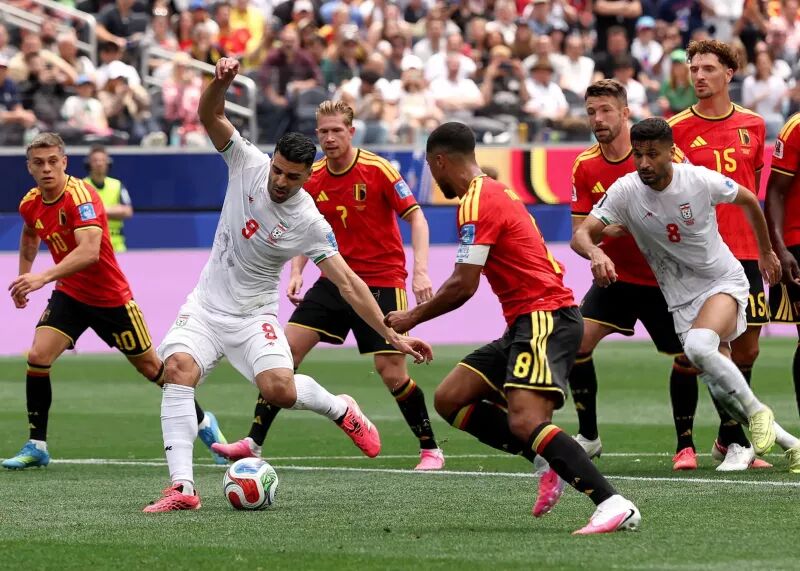
One can quibble with the technical quality of Iran’s players in their three-draw performance at this World Cup, but they certainly ran. Team Melli flew headlong into challenges, aggressively closed down passing lanes, threw themselves at anything that even looked like it might eventually make it towards their goal. Iran played tough, but fair. They won fans from Mexico to Seattle, and between those major efforts and their self-applied label as the “most oppressed” team in the tournament, it wasn’t hard to see why.

But were they fearless, really? For crucial periods, including most of the second half against Egypt, it seemed Iran barely wanted to attack at all. Iran were up a man for 24 minutes against Belgium and rarely threatened. They allowed a New Zealand team ranked more than 60 spots below them to dictate the terms of that opener. When waves of attacks came in all of these, it was often at the very end, as if they were driven by fear, not playing free of it.

Ultimately, Iran allowed their World Cup hopes to be determined by the closest of calls. A winning goal against Egypt by Shojae Khalilzadeh, ruled out for offside. Another winner by Taremi against Belgium, ruled out for offside. Taremi’s missed penalty and Saeid Ezatolahi’s header off the crossbar, both against Egypt.

“For a few centimeters, five centimeters, 10 centimeters, 30 centimeters, not even a meter, these goals were ruled out,” head coach Amir Ghalenoei lamented after Friday’s result. “I’m just unhappy and upset at the bad luck.”

One would think a team with this much experience would know better. Iran were the second-oldest team at this World Cup, with the most players aged 30-plus of any side. This was a generation of players who hoped to advance to the knockout round for the first time in Iran’s history. Instead, their legacy will be even more heartbreak.

“I do not understand what is wrong with our football,” Ramin Rezaeian said on Friday, after the draw with Egypt took the team’s fate out of their hands. “At the end, [I am] just apologizing to my people in Iran, because they deserve more happiness.”

Perhaps they simply did not have the energy to attack. After all, their World Cup had been a “disaster”, striker Taremi said on Friday, once again remarking to journalists about the injustice of being made to leave a match on match night, usually a few hours after the final whistle.

“We don’t have [a chance to do] recovery, we don’t have any logistics people here to help us,” Taremi said. “We always complain about these things, but no one helps. No one.”

On Saturday, the help also failed to come on the field.

Ghalenoei’s Reign of Mediocrity – How Iran’s World Cup Dream Was Wasted by Incompetence

The Inquest Begins: Ghalenoei’s Failures Leave Iran’s World Cup Dream in Tatters

A Golden Opportunity, Squandered

This was supposed to be Iran’s moment. With three winnable matches, a favorable group draw, and a squad boasting genuine quality, Team Melli had perhaps the most hopeful—and certainly the easiest—opportunity to qualify out of the group stage in the entire history of their World Cup participation. Instead, they leave with unfinished business, unanswered questions, and the bitter taste of what might have been.

The excuses are already being prepared. The Iranian Football Federation (FFIRI) has begun circulating the usual litany of justifications: Iran was the most oppressed team in the tournament; the Americans made life deliberately difficult; the logistical hurdles were insurmountable. These narratives, recycled after every failure, have become a convenient smokescreen—hiding the bitter truth that an incompetent and self-serving establishment has run Iranian football into the ground for decades, systematically preventing natural progress.

Ghalenoei’s Culpability: A Catalogue of Errors

When it comes to World Cup performance, the head coach and his assistants must bear the brunt of responsibility. Amir Ghalenoei’s failures were numerous, repeated, and inexcusable—and they began long before the first whistle blew in Los Angeles.

The Azmoun Exclusion: A Tactical Crime

Months ago, when Ghalenoei announced his preliminary training camp squad, the exclusion of Sardar Azmoun bordered on a tactical crime. Iran’s most ready, most competent striker—a player with proven pedigree at the highest level—was left at home without any credible explanation. Ghalenoei has yet to offer a satisfactory reason for this omission, and the void left by Azmoun’s absence was glaring throughout the campaign.

Beyond the Azmoun debacle, Ghalenoei’s player selection was suspect at best. He leaned heavily on a core of players over 30, ignoring several promising young talents who could have injected energy and freshness into the squad. This was not a team built for the future—it was a team built for comfort, familiarity, and short-term expediency.

Tactical Bankruptcy: Route One Football

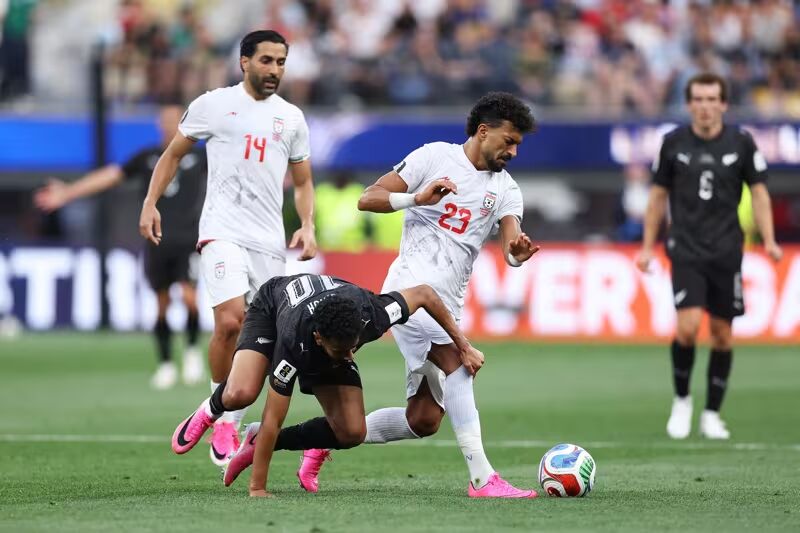
Ghalenoei’s tactical failures were equally damning. His insistence on “route one” football—referred to derisively in Iran as “Ali Asghari” football—was exposed time and again. Against New Zealand, the team that would later be handsomely beaten by both Belgium and Egypt, Iran struggled to impose any coherent attacking pattern. The long-ball strategy may have suited a squad with pace and aerial dominance, but Iran possessed neither in sufficient measure.

His reading of the game was poor; his substitutions, extremely so. Against Belgium, the baffling decision to introduce Alireza Jahanbakhsh—who offered nothing—while leaving more dynamic options on the bench was emblematic of a coach who simply does not trust his squad. Against Egypt, the failure to adjust tactics when it became clear that Taremi was isolated and ineffective was inexcusable.

Out of His Depth

The uncomfortable truth is that Ghalenoei is out of his depth at the international level. He lacks the charisma, character, and technical know-how to lead Iran at the highest level of football. Compared with other opponent coaches,ff, Ghalenoei appeared reactive, hesitant, and ultimately outmatched. This is not a coach who inspires confidence—it is a coach who inspires anxiety.

Taremi: A Captain’s Failure

While leaving your best forward out of the squad is inexplicable, the other best forward—Mehdi Taremi—proved to be one of the tournament’s major disappointments. With 60 goals to his name as Iran’s active top scorer, Taremi carried the weight of the nation’s expectations. He failed to deliver. The missed penalty against Egypt—a spot-kick that would have changed the complexion of the match and perhaps the entire campaign—was the defining moment of his tournament. A captain must lead by example; Taremi’s body language, decision-making, and finishing all fell short when it mattered most.

A Cycle of Failure

The fear among Iranian football fans is that Ghalenoei is going nowhere soon. Despite repeated failures and heartbreaks, he is expected to remain at the helm for the AFC Asian Cup 2027. The reason is simple: Ghalenoei pulls the right strings and wields considerable influence alongside his ally, FFIRI President Mehdi Taj. Taj himself is untouchable, protected by powerful connections that insulate him from accountability. This toxic partnership ensures that mediocrity is rewarded, and genuine progress is stifled.

The Illusion of Renewal

While everyone expects a new generation of players to emerge after this failure, fans should not place their hopes too high with Ghalenoei still in charge. He has shown no inclination to rebuild, no appetite for youth development, and no capacity for tactical evolution. The squad will age, the opportunities will diminish, and the cycle of failure will continue—unless the federation finally acts or forces more powerful than the federation.

A Final Word on the Excuses

Let us be clear: the Americans and FIFA undoubtedly made life difficult for Team Melli. The logistical hurdles, the visa games, and the political posturing were all real and unacceptable. But let us also remember that Iraq won the AFC Asian Cup in 2007, just years after their country was devastated by war. They overcame unimaginable adversity, not by complaining about it, but by rising above it. Iran’s excuses ring hollow when compared to such resilience.

The Verdict

Iran’s World Cup campaign will be remembered not for the moments of brilliance—Beiranvand’s heroics, Rezaeian’s stunning equalizer—but for the opportunities squandered. A favorable group, a talented squad, and a golden chance to make history—all wasted by a coach who was simply not up to the task.

The inquest has begun. The question is whether anyone in Iranian football has the courage to act on its findings.

VAR Robs Iran of Glory – Controversial Offside Call Leaves Team Melli in Agonizing Limbo


VAR Heartbreak Denies Iran Historic Victory as Team Melli Left in Agonizing Limbo

Iran 1–1 Egypt: A Night of Drama, Controversy, and Unfinished Business

Team Melli played out a 1–1 draw against Egypt in their final Group G match, completing the group stage unbeaten—yet still uncertain of their qualification fate for the Round of 32. In a night filled with controversy, both on and off the pitch, Iran came agonizingly close to sealing their place in the knockout rounds, only to be denied by a brutal VAR decision in stoppage time.

A Distraction-Filled Spectacle

From the outset, this match was overshadowed by forces far beyond football. The American government and the organizing committee made every possible effort to provoke both the Iranian and Egyptian teams, using the tournament platform to promote the Pride movement against the explicit wishes of both nations. The bulk of the American mainstream media coverage focused not on the football being played, but on political protests and LGBTQ+ activism—a transparent attempt to distract from the sport and weaponize the World Cup for ideological purposes.

To their immense credit, Team Melli withstood this psychological warfare with remarkable composure. From the booing of the Iranian national anthem to the relentless political posturing in the stands, the players remained focused on the task at hand and delivered a performance to remember.

A Soft Goal, A Missed Penalty, and A Swift Response

Egypt struck early, scoring in the 5th minute with what was arguably the softest goal Iran has conceded in years. A defensive lapse compounded by uncharacteristic hesitation from Alireza Beiranvand allowed the Pharaohs to take an early lead. Yet, rather than collapsing—as Iranian teams have done in the past—this squad showed resilience.

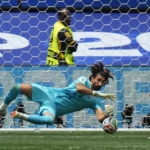
Just minutes later, Mehdi Taremi won a penalty after being fouled inside the box. The captain grabbed the ball with intent, but his body language betrayed a lack of conviction. His feeble spot-kick was parried by the Egyptian goalkeeper—a miss that would prove costly in the final reckoning.

The savior, once again, was Ramin Rezaeian. In the 13th minute, from the most acute of angles, the indefatigable right-back fired home a stunning equalizer. It was a goal of sheer quality and determination, keeping Iran’s hopes very much alive.

Route One Football – A Flawed Strategy

As in all previous matches, Ghalenoei opted for a direct, route-one approach. The advantage of this system lies in Iran’s two clever and competent wingers—Milad Mohammadi and Ramin Rezaeian—who thrived when balls were played out wide. However, when the defense launched long balls directly toward the lone striker, Mehdi Taremi, the strategy proved wasteful. Taremi, for all his industry, lacks the pace and dribbling ability to consistently turn such deliveries into scoring opportunities. He disrupted Egypt’s defense with his movement and physicality, but he lacked the quality to make those balls count.

Second-Half Chaos

The second half was a frantic, end-to-end affair. Egypt’s talisman Mohamed Salah was withdrawn due to a knock—a significant blow to the Pharaohs’ attacking threat—but his replacement, Omar Marmoush, proved a handful in his own right, creating several headaches for Iran’s backline.

The VAR Nightmare – A Goal That Never Was

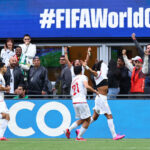
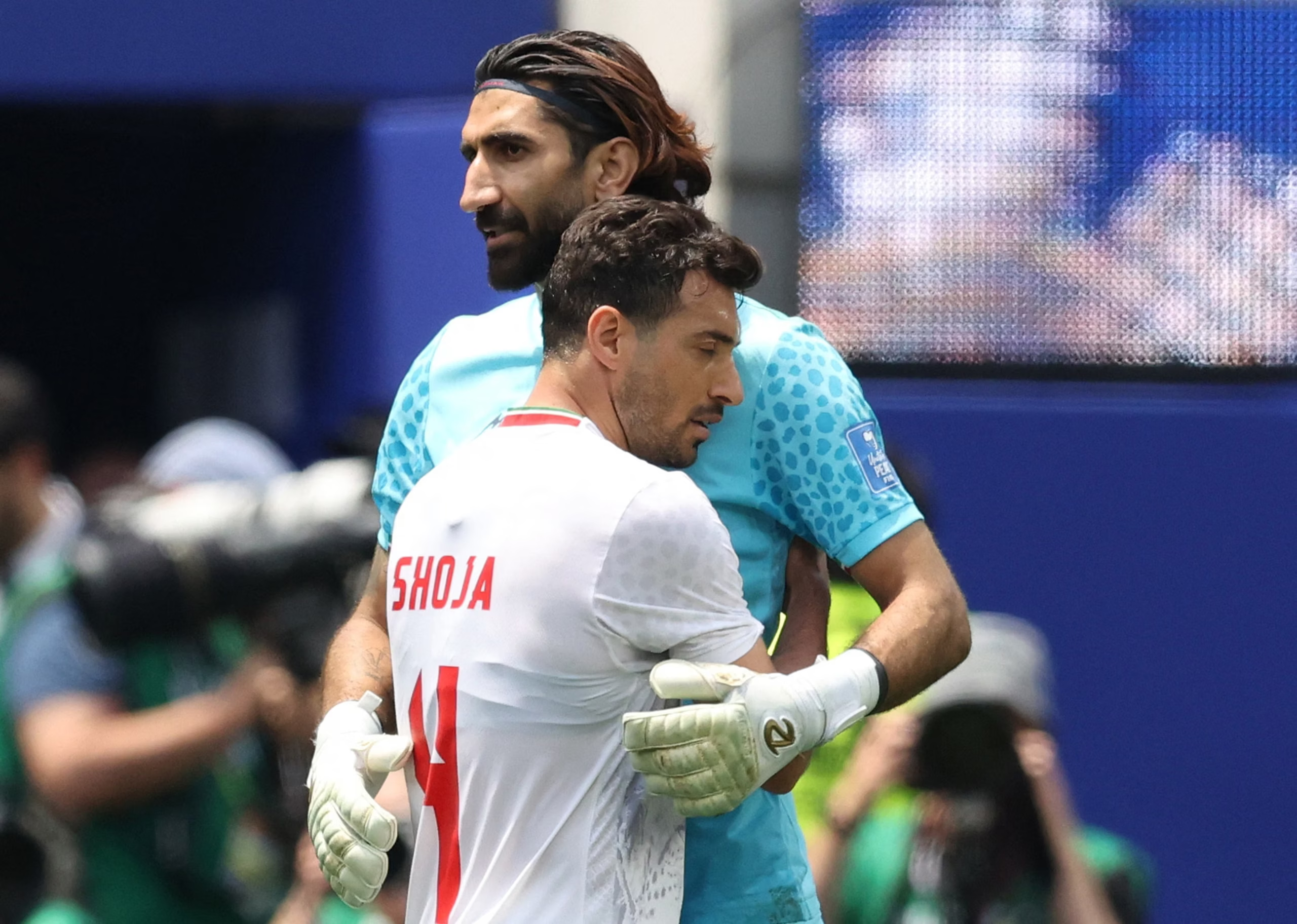
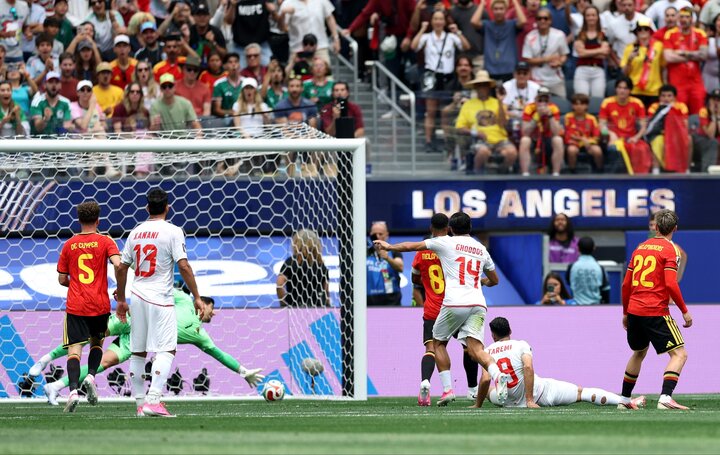
The match reached its dramatic crescendo in stoppage time. In a frenetic finale, Iran seemingly scored a game-winning goal when Shoja Khalilzadeh pounced on a loose ball and fired home from close range. Pandemonium erupted among the Iranian players and fans—they had done it. They had clinched a spot in the knockout round.

Then came the crushing blow.

VAR intervened. A lengthy review concluded that Khalilzadeh was marginally offside. The goal was disallowed. The celebration turned to devastation. Iran had been denied a historic victory by the finest of margins—a brutal, heart-wrenching ending that left players slumped on the pitch and fans in disbelief.

Qualification – A Nervous Wait

The other match in the group ended 5-1 in favor of Belgium. With three points and a goal difference of zero, Iran’s fate is no longer in their own hands. They must now wait for the conclusion of matches in other groups, particularly those involving Croatia, Algeria, and DR Congo, whose results will determine whether Iran’s unbeaten campaign is rewarded with a place in the Round of 32.

On paper, Iran’s position is strong—but in the cruel arithmetic of World Cup qualification, nothing is guaranteed until the final whistle blows in every group.

Final Verdict

Iran’s performance throughout the group stage has been a testament to their resilience, tactical discipline, and growing belief. They have gone unbeaten against New Zealand, Belgium, and Egypt—a feat that would have seemed improbable just weeks ago. Yet, the shadow of VAR and the lingering regret of a missed penalty will haunt them until their fate is confirmed.

If Iran does qualify, they will do so with the knowledge that they deserve it. If they fall short, they will be left to wonder what might have been—had that penalty been converted, had that goal stood, had the football been allowed to speak for itself.


Iran’s Tactical Blueprint vs. Egypt: Ghalenoei Rings the Changes to Neutralize Salah

As Team Melli prepares for their crucial Group Stage clash against Egypt, all eyes are on the tactical chess match that head coach Amir Ghalenoei is orchestrating. While Iran is expected to line up in a fluid 4-3-2-1 formation, the lineup reveals a significant tactical shift designed to counter the specific threats posed by the Pharaohs, particularly the talismanic Mohamed Salah.

The Defensive Backbone: Stability and a Key Swap

Between the sticks, there is no debate. Alireza Beiranvand, the hero of the previous outing against Belgium, will retain his position. His shot-stopping prowess and commanding presence will be vital against Egypt’s rapid transitions.

At the heart of the defense, the trusted partnership of Shoja’a Khalilzadeh and Mohammad Hossein Kananizadegan will resume their duties. Their chemistry and aerial dominance form the bedrock of Iran’s defensive solidity, and they will be tasked with keeping the Egyptian forwards at bay.

The most notable change, however, comes on the left flank. In the previous match, Ghalenoei deployed a three-center-back system, utilizing Ehsan Hajsafi as a hybrid left-sided defender. For this fixture, the coach is pivoting back to a traditional back-four. Ali Nemati is set to step in as the out-and-out left-back, and his primary objective will be a man-marking masterclass: containing the relentless dribbling and cutting-inside runs of Mohamed Salah. This is a bold bet on Nemati’s defensive discipline and pace.

On the opposite side, Saleh Hardani is expected to keep his place at right-back, despite a shaky performance against Belgium where he was substituted to spare him further exposure. Ghalenoei is showing faith in his recovery. However, to ensure the right flank is not a liability, the coaching staff has devised a protective mechanism: Ramin Rezaeian (playing further up the pitch) will be tasked with dropping deep to provide double coverage when Hardani is pressed into one-on-one situations.

The Engine Room: A Hybrid Midfield

The midfield pivot is where Ghalenoei’s tactical flexibility shines. Saeed Ezzatollahi and Ehsan Hajsafi are slated to operate as the two defensive midfielders. Ezzatollahi, who delivered a commanding, redemptive performance against Belgium after a lackluster opener against New Zealand, will be crucial in breaking up Egypt’s play. Fans will be hoping for a similar display of grit and distribution against the Egyptians.

Hajsafi, meanwhile, is the ultimate utility man. After excelling as a left fullback in the last match, he moves into the heart of midfield for this encounter. His versatility is Ghalenoei’s trump card: Should Iran need to shore up the defense late in the game, Hajsafi can seamlessly drop back to left-back, allowing Ghalenoei to swap Nemati for a more attacking outlet. Conversely, if Iran is chasing a goal, Hajsafi can push forward, providing veteran composure in the final third.

Completing the midfield trio is Saman Ghoddos, who will once again operate as the advanced playmaker, sitting just behind the forward line. The coaching staff is banking on Ghoddos’s incisive passing and visionary through-balls to unlock a compact Egyptian defense. He is the linchpin of Iran’s transition play.

The Attack: Width, Work Rate, and the Lone Wolf

On the wings, Iran boasts pace and industry. Ramin Rezaeian will occupy the right-wing role, but his duties extend far beyond attack; he will be the insurance policy for Hardani, embodying the modern “box-to-box” winger. On the left, Mohammad Mohebbi will provide the direct dribbling threat. Both players were standout performers in the first match, and their ability to track back while delivering dangerous crosses will be integral to Iran’s balance.

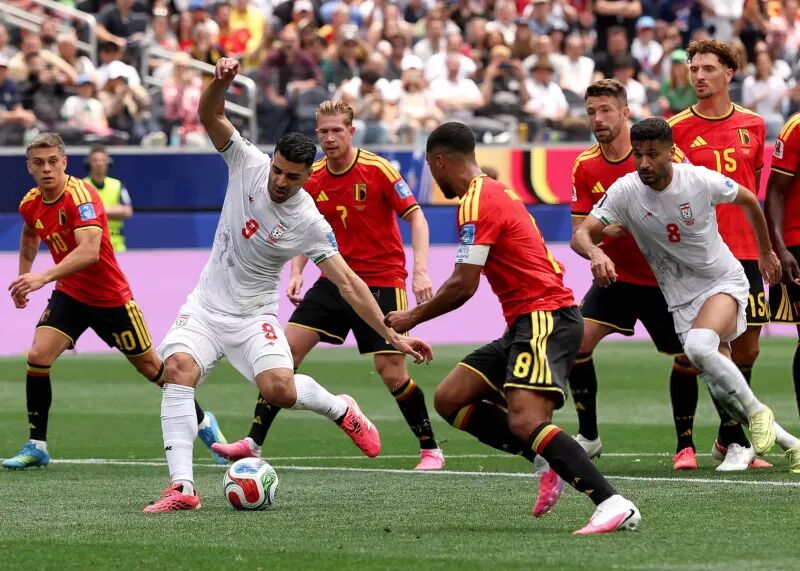
Leading the line as the lone striker is Mehdi Taremi. The Olympiakos forward was a relentless engine against Belgium, running channels and pressing high with astonishing speed. He came agonizingly close to scoring what would have been one of the most historic and beautiful goals in Iranian World Cup history, while denied by VAR on his well-taken free kick. Against Egypt, Taremi will carry the weight of the nation’s attacking hopes. His movement, hold-up play, and predatory instincts inside the box will be Iran’s primary route to goal.

Summary: A Calculated Risk

Ghalenoei’s selection is a clear signal: Iran will not sit back passively. By reverting to a four-man defense and isolating Salah with a dedicated fullback, Iran aims to stifle Egypt’s greatest weapon while releasing their own dynamic wingers. The midfield flexibility provided by Hajsafi allows for in-game adjustments without using a substitution.

It is a high-risk, high-reward strategy that hinges on defensive discipline and attacking efficiency. If Iran can weather the early Egyptian pressure and allow their creative players—Ghoddos, Mohebbi, and Taremi—to flourish, they have every chance of securing a result that propels them toward the knockout stages.

Belgium Blueprint, Egyptian Threat – Can Iran Finally Break Their World Cup Curse?


The Belgian Revelation – Iran Proves It Belongs on Football’s Biggest Stage

The match against Belgium was a revelation on multiple levels. What it demonstrated, beyond any reasonable doubt, is that Team Melli possesses the quality, resilience, and tactical intelligence to qualify for the next round of the FIFA World Cup. This performance lent credibility to Iran’s FIFA ranking and proved that—despite the discrimination, logistical hostility, and ill-treatment they have endured throughout this tournament—this team can genuinely challenge the very best in world football.

Ghalenoei’s Masterclass – Silence the Critics

Amir Ghalenoei, the target of relentless criticism following the New Zealand draw, experienced a fit of tactical inspiration against Belgium. He had clearly done his homework with remarkable efficiency. Despite retaining both Ali Nemati and Shoja Khalilzadeh—two defenders who had performed poorly against the Kiwis—his masterstroke was the deployment of a three-man central defensive system. This formation suffocated Belgium’s attack, neutralizing the most lethal forward line Iran has faced in years. The decision was bold, unconventional, and ultimately brilliant.

What the Draw Means for Group G

The 0-0 stalemate means Iran remains undefeated after two matches but is not yet assured of a place in the Round of 32. The equation is simple but fraught with pressure: Iran needs at least one point against Egypt to keep their destiny in their own hands, while a victory would guarantee qualification. Three points would seal the deal emphatically.

The Ghost of World Cup Finales – A Troubling Trend

Team Melli has previously played in six editions of the FIFA World Cup, and history is not on their side. In their final group matches, Iran has recorded four defeats and two draws—a record that translates into an alarming inability to deliver when it matters most. This is not merely a statistical curiosity; it is a deeply ingrained trend in Iranian football, evident at both club and national level in recent years.

We all remember the heartbreaks: the Asian Cup semi-final failures in 2019 and 2023, and the crushing disappointment of the 2022 World Cup when Iran needed only a draw against the United States to qualify—and fell short. Whatever the reasons for these last-minute flops—whether psychological fragility, tactical conservatism, or sheer misfortune—this time, the players and coaching staff must stand up and be counted. History is a lesson, not a life sentence.

Egypt – A Different Kind of Beast

Some analysts and fans believe Egypt represents a tougher challenge than Belgium. Ghalenoei and his players would certainly beg to differ. The game against Belgium should serve as the template for the Egypt encounter—but there are crucial differences. The towering presence of Romelu Lukaku is replaced by the devastating pace and guile of Mohamed Salah. The same defensive focus, discipline, and collective responsibility must be applied to nullify Egypt’s talisman.

However, Salah is far from Egypt’s only threat. Omar Marmoush and Mahmoud Trezeguet have proven themselves to be potent attacking weapons capable of exploiting any lapse in concentration. In simple terms, Iran’s defense must replicate the near-flawless performance it produced against Belgium—or risk being undone by a single moment of brilliance.

The Peril of Defensive Conservatism

The fear among fans is that Ghalenoei will revert to a cautious, ultra-defensive game plan in pursuit of the single point needed for qualification. That approach is fraught with peril. Sitting deep against a team with Egypt’s attacking quality could invite pressure, concede space, and ultimately end in the kind of heartbreaking disappointment that has become all too familiar.

Team Melli possesses genuine quality in attack. Mehdi Taremi, Mohammad Mohebi, Mehdi Torabi, Amirhossein Hosseinzadeh, Mehdi Ghaedi, and even the relatively untested Eckert are offensive weapons capable of causing serious problems for Egypt’s defense. This is not a squad that should be shackled by fear. Iran has the tools to attack—and to win.

Mentality Is Everything

Ultimately, the outcome of this crucial fixture will be determined by mentality—both of the team and the coaching staff. If Ghalenoei decides that the reward is worth the risk and opts for an attacking approach, Iran could secure a historic victory. If he maintains the 5-4-1 formation and invites Egypt onto them, the consequences could be disastrous.

The Belgium match has given Iran a blueprint, a template, and a belief system. Now, they must execute. The players must play with freedom, confidence, and the unshakable conviction that they belong on this stage.

Final Verdict

The draw against Belgium was not just a result—it was a statement. It announced to the world that Iran is no longer a team that simply participates; it is a team that competes. With one match remaining, the opportunity to make history is there for the taking. The question is whether Ghalenoei and his players have the courage to seize it.


Players Ratings: Beiranvand Shines. Team Melli vs Belgium.


Alireza Beiranvand – [9.5]
The undisputed Man of the Match and the architect of Iran’s invaluable point. Beiranvand delivered a performance for the ages, single-handedly denying Belgium what appeared to be two certain winners with a series of breathtaking saves. His command of the penalty area was majestic, claiming crosses with authority and never once flinching in the face of Romelu Lukaku’s physical presence. This was the Beiranvand of 2018 reborn—confident, fearless, and world-class. A performance that will be remembered for years to come.


Ali Nemati – [7.0]
Deployed as the left-sided center-back in a three-man defensive system, Nemati produced a composed and error-free display. He read the game intelligently, blocked several shots before they could trouble Beiranvand, and showed far greater comfort than he had against New Zealand. A solid, understated performance that deserved recognition.


Shoja Khalilzadeh – [7.8]
A redemption arc in the making. After his nightmare showing against New Zealand, Khalilzadeh was a completely transformed player at the heart of Iran’s defense. He neutralized Lukaku with a combination of physicality and tactical awareness, making timely interceptions and keeping Belgium’s frontline largely quiet. This was the experienced, battle-hardened defender Iran needed—and he delivered.


Hossein Kanaani – [7.2]
Making his first appearance of the tournament, Kanaani slotted seamlessly into the back three alongside Khalilzadeh and Nemati. His understanding with his defensive partners was commendable, and he proved a genuine aerial threat from set-pieces, testing Courtois with his excellent heading ability on multiple occasions. A strong return to the starting lineup.


Ehsan Hajsafi – [6.5]
On the left flank, the veteran was solid if unspectacular. Unlike his usual marauding self, Hajsafi rarely ventured forward, clearly under instructions to prioritize defensive stability. He performed his duties adequately without offering much in attack—a functional rather than influential performance from Iran’s most experienced outfield player.


Saleh Hardani – [4.0]
The weakest link in Iran’s lineup by some distance. Hardani had no answer to Trossard’s pace, trickery, and intelligent movement, repeatedly being turned inside out by the Belgian winger. His inability to cope defensively posed the single greatest threat to Iran’s game plan, and it came as no surprise when Ghalenoei mercifully substituted him at half-time. A night to forget for the young defender.


Mohammad Mohebi – [6.2]
A muted performance from the forward, who struggled to impose himself on the right wing. He created little of note in support of Taremi and registered no shots on goal—a stark contrast to his goal-scoring contribution against New Zealand. His work rate was evident, but his influence on the match was minimal.


Saeid Ezatollahi – [7.1]
A significant upgrade from his disappointing display against New Zealand. Ezatollahi was disciplined and robust, providing excellent cover for the back three and breaking up Belgium’s attacks with timely tackles. He rarely ventured forward, but his defensive contribution was invaluable. A much-needed bounce-back performance.


Saman Ghoddos – [6.8]
Another less-than-optimal outing for the midfield dynamo, who has yet to produce the level of performance expected of him at this tournament. Whether due to tactical constraints—with Iran relying heavily on direct, route-one football—or personal form, Ghoddos was largely bypassed in offensive transitions. He worked hard defensively, but his creative spark remained conspicuously absent.


Ramin Rezaeian – [6.8]
Deployed in a more advanced wing role rather than his natural right-back position, Rezaeian failed to replicate the brilliance he displayed against New Zealand. While he remained solid and industrious, his crosses lacked precision and his attacking impact was subdued. Not a poor performance, but certainly not the game-changing display Iran had hoped for from their most in-form player.


Mehdi Taremi – [7.8]
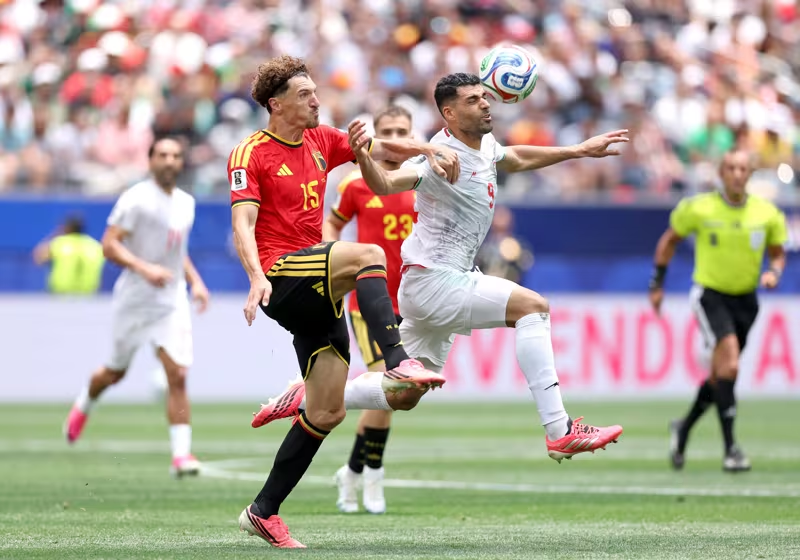
The captain was immense in every sense of the word. His unfortunate disallowed goal—ruled out after a lengthy VAR review—and a thunderous strike brilliantly parried by Courtois were the highlights of a tireless display. Taremi ran relentlessly, disrupted Belgium’s defensive rhythm, and produced the game’s pivotal moment when he robbed Nathan Ngoy of possession, forcing the Belgian defender into a red-card foul. He may not have found the net, but his influence on the match was undeniable.


Substitutes:

Alireza Jahanbakhsh – [5.0]
Introduced at half-time to replace the struggling Hardani, Jahanbakhsh offered little reassurance on the right flank. His defensive awareness was questionable, and his attacking contributions were negligible. At this level, and with Iran needing to exploit Belgium’s numerical disadvantage, his continued anonymity is a growing concern.


Mehdi Torabi – [6.6]
Entered the fray with energy and purpose, showing glimpses of his quality in limited minutes. He was lively, ran at defenders, and attempted to inject creativity into Iran’s forward play. While he couldn’t change the outcome, his return to fitness and form is a positive sign for Ghalenoei ahead of the final group match.


Milad Mohammadi – [6.5]
A like-for-like replacement for Hajsafi on the left flank. Mohammadi was defensively solid, disciplined, and conservative in his attacking forays—providing exactly what was required in the closing stages without offering anything extraordinary.


Shahriar Moghanlou – [4.8]
Introduced specifically to exploit Belgium’s numerical disadvantage after Ngoy’s red card, Moghanlou failed to make any impact whatsoever. He was static, struggled to hold up the ball, and offered no aerial threat. On this evidence, the forward looks out of his depth at the international level—a harsh but fair assessment.


Amirhossein Hosseinzadeh – [N/A]
Entered too late in the contest to warrant a rating. No meaningful contribution to assess.


Summary:

Iran’s defensive transformation was the story of the match, with Beiranvand’s heroics rightly earning top billing. However, the persistent struggles in possession, the ineffectiveness of several key players, and the failure to capitalize on a one-man advantage remain serious concerns. Ghalenoei’s tactical adjustment was largely successful, but his substitutions—particularly the introduction of Jahanbakhsh and Moghanlou—raised more questions than answers.

With qualification still in Iran’s hands, the final group match will demand even greater composure, creativity, and clinical finishing.


Alireza Beiranvand MVP performance

Team Melli goalkeeper Alireza Beiranvand was awarded the Most Valuable Player award after his sterling performance against Belgium on Monday. The match ended goal-less.

Beiranvand repeatedly ⁠saved his side with crucial interventions, including an extraordinary stop from a point-blank-range effort from Maxim De Cuyper in the second half.

lireza Beiranvand was named Player of the Match after Iran’s 0–0 draw against Belgium.

Goalkeeper statBeiranvand
Total saves7
Goals prevented1.7
Saves from inside the box7
Punches1
Runs out (successful)1 (1)
High claims3

This is the second match in a row that an Iranian player has won the MVP award after Ramin Rezaeian won the same in the firt match of FOFA World Cup 2026 Group G.

Jahanbakhsh Joins the Century Club: Iran’s Tenth Player to Reach 100 Caps


Alireza Jahanbakhsh has officially joined the illustrious century club for Team Melli, earning his 100th international cap after coming on as a substitute in Iran’s Group G match against Belgium on Sunday, 21 June, at the FIFA World Cup 2026.

The 32-year-old winger, who is currently under contract with a Belgian club, has enjoyed a distinguished career spanning 12 years and 5 months at the international level. Over that period, he has represented several prominent European clubs, including Feyenoord in the Netherlands and Brighton & Hove Albion in the English Premier League.

Jahanbakhsh holds a unique place in football history as the only Iranian player to have won the Eredivisie’s Top Scorer award. During the 2017–18 season while playing for AZ Alkmaar, he netted 21 goals to finish as the league’s leading marksman—becoming the first Asian player ever to top the scoring charts in a major European league. The achievement remains a landmark moment for Iranian football on the continental stage.

With this milestone appearance, Jahanbakhsh becomes the tenth Iranian player to reach 100 caps for the national team. He now takes his place among an elite group of Iranian football legends, a list headlined by:

  • Javad Nekounam – 151 caps
  • Ali Daei – 149 caps (and the world’s all-time leading international goalscorer)
  • Ehsan Hajsafi – currently among the most capped active players

The achievement is a testament to Jahanbakhsh’s longevity, professionalism, and enduring value to Team Melli—a player who has evolved from a promising young talent into a seasoned veteran and a source of pride for Iranian football.


Statistics: Team Melli

From Shambles to Solidity: Iran’s Defensive Masterclass Stuns Belgium


Beiranvand Heroics Earn Team Melli a Vital Point Against Belgium

Iran and Belgium played out a goalless draw at the SoFi Stadium in Los Angeles in the second Group G encounter for both teams. With this result, Iran temporarily sits atop the group on two points, followed by Belgium, New Zealand, and Egypt—all of whom remain in contention ahead of the later match between the Kiwis and the Pharaohs.

A Transformed Team Takes the Pitch

After the disappointing draw and lackluster performance against New Zealand, Amir Ghalenoei made decisive changes that revitalized the team. The individual errors that had plagued Iran in the opener were conspicuously absent, and the team’s weakest link, the defense, emerged as the undisputed star of the show against the Belgian golden generation.

Starting Lineup:
Beiranvand (GK); Hardani, Kanaani, Khalilzadeh, Nemati, Hajsafi; Rezaeian, Ghoddos, Ezatollahi; Mohebi, Taremi.

These changes were clearly designed to neutralize the speed and trickery of Belgium’s wingers, Jérémy Doku and Leandro Trossard. In the end, however, Doku was declared unfit due to a medical issue, sparing Iran one significant headache, though Trossard proved more than capable of causing problems on his own.

Beiranvand: A World-Class Performance

Alireza Beiranvand was the undoubted MVP of the match, delivering a performance that harked back to his heroics at the 2018 World Cup. The Iranian goalkeeper made an astonishing 17 saves, commanding his area with the confidence of a world-class shot-stopper. His timely catches and fearless collection of crosses frustrated Romelu Lukaku, who, despite a strong individual display, was repeatedly denied by Beiranvand before being substituted late in the match.

Defensive Solidity – A Monumental Improvement

Iran’s backline produced one of its most disciplined and cohesive performances in recent memory. Solid positioning, excellent covering work, and timely interceptions ensured that Belgium’s attacking riches were kept largely at bay. The only black mark came on the right flank, where Saleh Hardani was not only ineffective but a genuine liability. Trossard bamboozled him repeatedly, forcing Ghalenoei to haul him off at half-time—a merciful end to a torrid 45 minutes.

Midfield Battle – Grit Over Glamour

The midfield was far more active than in the New Zealand match, with both Saeed Ezzatollahi and Saman Ghoddos contributing their fair share of defensive work. The game plan leaned heavily toward direct, route-one football, bypassing Belgium’s press and targeting Taremi in advanced areas. Ramin Rezaeian, deployed in a more advanced midfield role, was less effective on the right flank than he had been against New Zealand and failed to replicate his Man of the Match performance from the opener.

Taremi: The Captain’s Crusade

Up front, Mehdi Taremi was immense in every sense of the word. He tackled relentlessly, distributed intelligently, and scored a brilliant goal that was cruelly ruled out for offside after a lengthy VAR review. The captain also tested Thibaut Courtois on multiple occasions, but the Belgian goalkeeper, widely regarded as one of the world’s best, was equal to every effort.

Taremi’s crowning contribution came in the 66th minute, when he robbed Nathan Ngoy of possession after the Belgian defender’s poor ball control. As Taremi bore down on goal, Ngoy hauled him down, resulting in a straight red card. The sending-off tilted the dynamics of the match decisively in Iran’s favor.

Numerical Advantage – But No Decisive Blow

With Belgium reduced to ten men, Iran enjoyed prolonged possession and territorial dominance. Yet, despite the man advantage, Team Melli failed to find the elusive winning goal that would have all but secured qualification. The inability to capitalize on the extra man will rankle with Ghalenoei and his staff—a missed opportunity that could prove costly in the final reckoning.

A Worrying Trend: Ball Retention Woes

One persistent issue that marred an otherwise encouraging display was Iran’s failure to retain possession. Throughout the match, Team Melli lost the ball on average every 12 seconds—a damning statistic that reflected a lack of composure and technical security. This improved somewhat after Belgium went down to ten men, but the underlying fragility in possession remains a serious concern.

Substitutions: A Mixed Bag

Ghalenoei’s substitutions were a mixed bag. Removing Hardani at half-time was unquestionably the right call, but replacing him with Alireza Jahanbakhsh, who offered even less defensive cover and attacking thrust, was a baffling decision. Jahanbakhsh’s introduction did little to stabilize the right flank or exploit Belgium’s numerical disadvantage, raising questions about Ghalenoei’s in-game management.

What It Means for Group G

With two points on the board, nothing is decided in Group G until the final round of matches. However, Iran’s disciplined and resilient performance against a formidable Belgium side has injected genuine hope into fans and critics alike. For the first time in their World Cup history, Team Melli stands on the verge of qualifying for the Round of 32—provided they can deliver one more decisive performance in the final group fixture against Egypt.

The dream is alive. But the hard work is far from over.