
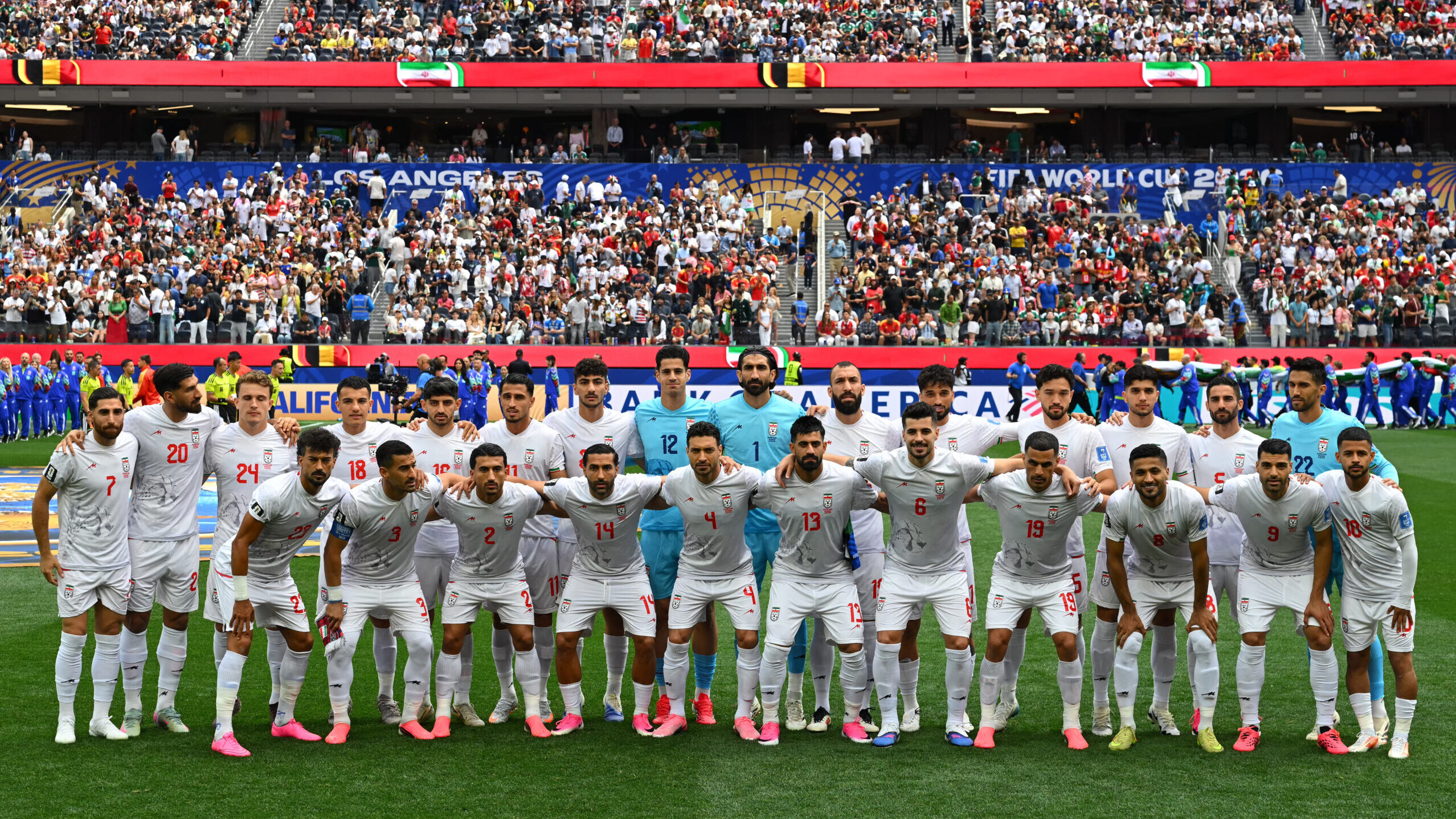
Alireza Beiranvand – [9.5]
The undisputed Man of the Match and the architect of Iran's invaluable point. Beiranvand delivered a performance for the ages, single-handedly denying Belgium what appeared to be two certain winners with a series of breathtaking saves. His command of the penalty area was majestic, claiming crosses with authority and never once flinching in the face of Romelu Lukaku's physical presence. This was the Beiranvand of 2018 reborn—confident, fearless, and world-class. A performance that will be remembered for years to come.
Ali Nemati – [7.0]
Deployed as the left-sided center-back in a three-man defensive system, Nemati produced a composed and error-free display. He read the game intelligently, blocked several shots before they could trouble Beiranvand, and showed far greater comfort than he had against New Zealand. A solid, understated performance that deserved recognition.
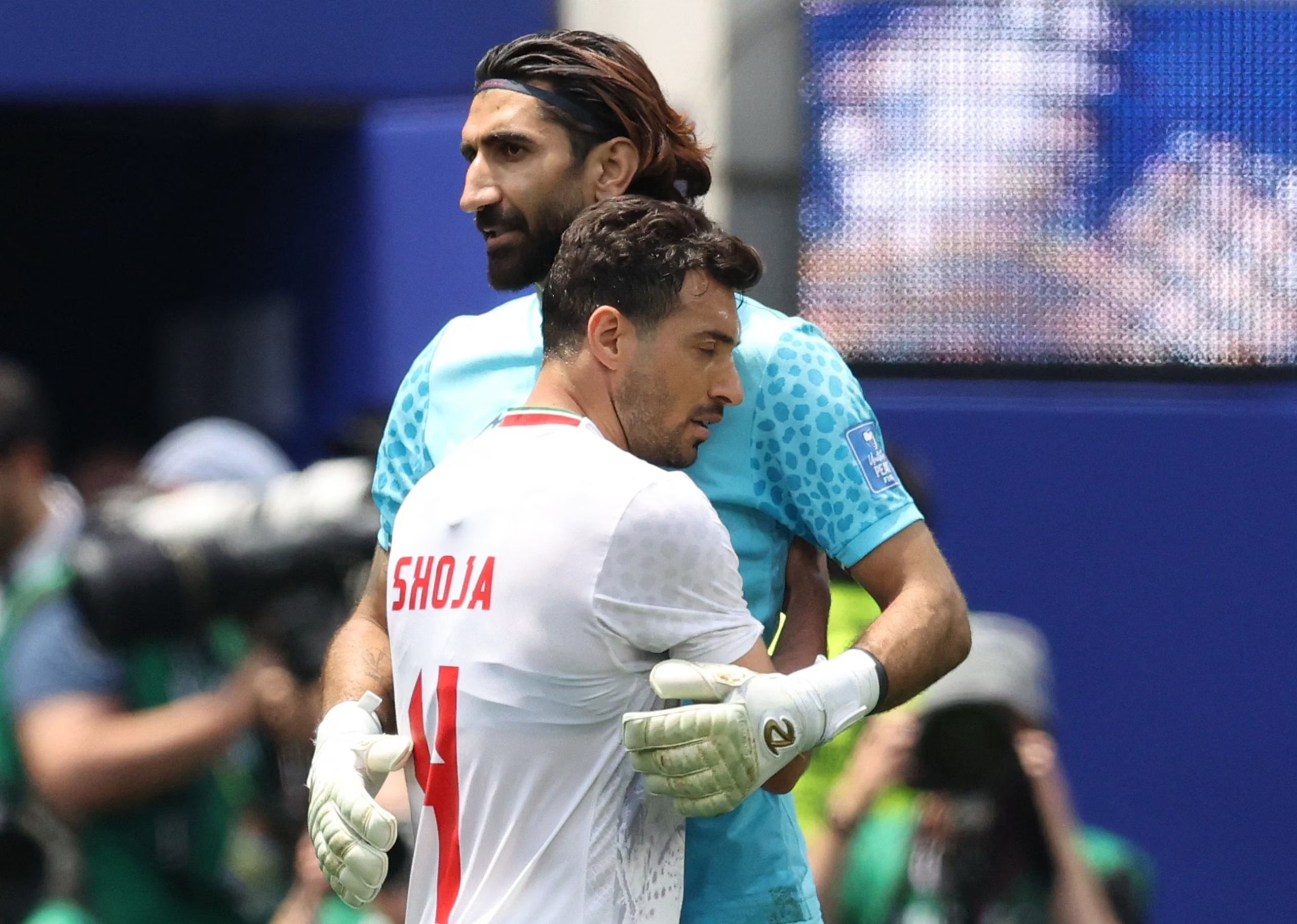
Shoja Khalilzadeh – [7.8]
A redemption arc in the making. After his nightmare showing against New Zealand, Khalilzadeh was a completely transformed player at the heart of Iran's defense. He neutralized Lukaku with a combination of physicality and tactical awareness, making timely interceptions and keeping Belgium's frontline largely quiet. This was the experienced, battle-hardened defender Iran needed—and he delivered.
Hossein Kanaani – [7.2]
Making his first appearance of the tournament, Kanaani slotted seamlessly into the back three alongside Khalilzadeh and Nemati. His understanding with his defensive partners was commendable, and he proved a genuine aerial threat from set-pieces, testing Courtois with his excellent heading ability on multiple occasions. A strong return to the starting lineup.
Ehsan Hajsafi – [6.5]
On the left flank, the veteran was solid if unspectacular. Unlike his usual marauding self, Hajsafi rarely ventured forward, clearly under instructions to prioritize defensive stability. He performed his duties adequately without offering much in attack—a functional rather than influential performance from Iran's most experienced outfield player.
Saleh Hardani – [4.0]
The weakest link in Iran's lineup by some distance. Hardani had no answer to Trossard's pace, trickery, and intelligent movement, repeatedly being turned inside out by the Belgian winger. His inability to cope defensively posed the single greatest threat to Iran's game plan, and it came as no surprise when Ghalenoei mercifully substituted him at half-time. A night to forget for the young defender.
Mohammad Mohebi – [6.2]
A muted performance from the forward, who struggled to impose himself on the right wing. He created little of note in support of Taremi and registered no shots on goal—a stark contrast to his goal-scoring contribution against New Zealand. His work rate was evident, but his influence on the match was minimal.
Saeid Ezatollahi – [7.1]
A significant upgrade from his disappointing display against New Zealand. Ezatollahi was disciplined and robust, providing excellent cover for the back three and breaking up Belgium's attacks with timely tackles. He rarely ventured forward, but his defensive contribution was invaluable. A much-needed bounce-back performance.
Saman Ghoddos – [6.8]
Another less-than-optimal outing for the midfield dynamo, who has yet to produce the level of performance expected of him at this tournament. Whether due to tactical constraints—with Iran relying heavily on direct, route-one football—or personal form, Ghoddos was largely bypassed in offensive transitions. He worked hard defensively, but his creative spark remained conspicuously absent.
Ramin Rezaeian – [6.8]
Deployed in a more advanced wing role rather than his natural right-back position, Rezaeian failed to replicate the brilliance he displayed against New Zealand. While he remained solid and industrious, his crosses lacked precision and his attacking impact was subdued. Not a poor performance, but certainly not the game-changing display Iran had hoped for from their most in-form player.
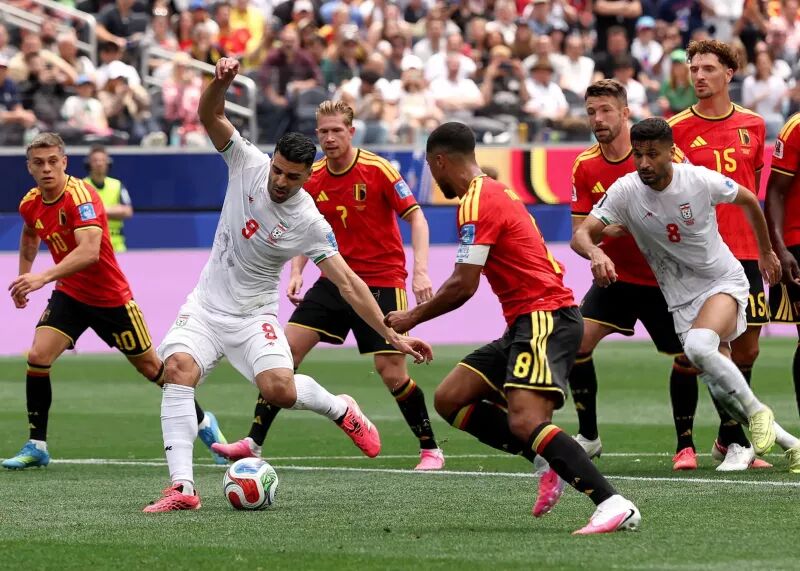
Mehdi Taremi – [7.8]
The captain was immense in every sense of the word. His unfortunate disallowed goal—ruled out after a lengthy VAR review—and a thunderous strike brilliantly parried by Courtois were the highlights of a tireless display. Taremi ran relentlessly, disrupted Belgium's defensive rhythm, and produced the game's pivotal moment when he robbed Nathan Ngoy of possession, forcing the Belgian defender into a red-card foul. He may not have found the net, but his influence on the match was undeniable.
Substitutes:
Alireza Jahanbakhsh – [5.0]
Introduced at half-time to replace the struggling Hardani, Jahanbakhsh offered little reassurance on the right flank. His defensive awareness was questionable, and his attacking contributions were negligible. At this level, and with Iran needing to exploit Belgium's numerical disadvantage, his continued anonymity is a growing concern.
Mehdi Torabi – [6.6]
Entered the fray with energy and purpose, showing glimpses of his quality in limited minutes. He was lively, ran at defenders, and attempted to inject creativity into Iran's forward play. While he couldn't change the outcome, his return to fitness and form is a positive sign for Ghalenoei ahead of the final group match.
Milad Mohammadi – [6.5]
A like-for-like replacement for Hajsafi on the left flank. Mohammadi was defensively solid, disciplined, and conservative in his attacking forays—providing exactly what was required in the closing stages without offering anything extraordinary.
Shahriar Moghanlou – [4.8]
Introduced specifically to exploit Belgium's numerical disadvantage after Ngoy's red card, Moghanlou failed to make any impact whatsoever. He was static, struggled to hold up the ball, and offered no aerial threat. On this evidence, the forward looks out of his depth at the international level—a harsh but fair assessment.
Amirhossein Hosseinzadeh – [N/A]
Entered too late in the contest to warrant a rating. No meaningful contribution to assess.
Summary:
Iran's defensive transformation was the story of the match, with Beiranvand's heroics rightly earning top billing. However, the persistent struggles in possession, the ineffectiveness of several key players, and the failure to capitalize on a one-man advantage remain serious concerns. Ghalenoei's tactical adjustment was largely successful, but his substitutions—particularly the introduction of Jahanbakhsh and Moghanlou—raised more questions than answers.
With qualification still in Iran's hands, the final group match will demand even greater composure, creativity, and clinical finishing.