

Tag: Amir Abedini

"Fear, Favoritism, and Failure" – Abedini's Brutal Verdict on Iran's World Cup Collapse


Amir Abedini, a veteran football administrator with years of experience at Persepolis, the Football Federation, and across various sports and political roles, has emerged as one of the most outspoken critics of Team Melli's World Cup campaign. In an exclusive interview with IRNA's sports reporter, Abedini delivers a damning analysis of Iran's failure to advance to the Round of 32, pointing to a lack of planning, technical incompetence, and a culture of fear that permeates the national team setup. According to Abedini, had the head coach shown even a modicum of boldness, Iran would now be preparing for a showdown with Switzerland—not packing their bags for Tehran.

Q: Two days after Team Melli's elimination, we want to analyze the reasons for failing to reach the second round. Is three points from three matches and an unbeaten campaign acceptable, or is it a failure?

A: When we achieve a positive result, we bask in the glory and everyone rushes to congratulate one another. We convince ourselves that everything is fine. But God forbid we fail—then we pivot sharply in the opposite direction. We blame the earth and the sky, fabricating excuses for local consumption. We must learn to be self-critical before pointing fingers at external factors. That is where growth begins.

I believe we need fundamental changes and developments in our football. Perhaps, if someone with real decision-making power steps forward, they will make the tough choices for the future. Time is passing quickly, and in four years, we will be at the World Cup again. The question is whether we will be any better prepared.

Q: You haven't explicitly stated whether the team's performance was appropriate or not.

A: I have a question that I have yet to find an answer to: Why are we so easily satisfied with such results? We are capable of so much more than celebrating mediocrity. Do we truly want to qualify for a 48-team tournament and then be content with a ranking below 32 teams? Should we really pat ourselves on the back simply because we remained unbeaten? That is not success—it is delusion.

Q: In your opinion, what are the reasons we couldn't go one step further?

A: The national team's management and organization were fundamentally flawed. The Football Federation's structure is contaminated at its core—contaminated by interference from those who have no business meddling in football affairs. I am referring to certain individuals ( Abedini is referring to the Minister of Sports) who have imposed their will on the federation, dictating terms like, "If this happens, we won't go to the tournament," or "If such and such occurs, we will go." Federations are specialized entities. Iranian football is rich with expertise and elite talent. If we fail to utilize them in development or management, the problem lies at the top, with those who cannot recognize talent. If anyone claims there are no experts in Iranian football, I will tell them they are wrong. We have the knowledge and the experience, we simply lack the will to use them effectively.

Q: What should the Football Federation have done that it didn't do?

A: Did the Football Federation, months before the tournament, establish a dedicated headquarters or committee for the World Cup? If they did, what tangible operations were carried out? If it was effective, why did we face such a chaotic margin of error? I acknowledge that the country has been grappling with critical conditions, but let's not forget: we fought a madman for eight years—a regime that used chemical weapons and unleashed unimaginable horrors upon us. Yet we lived, we traveled, we held competitions, and we won championships. Adversity is no excuse for incompetence.

Q: At the beginning of your interview, you mentioned that when we fail, we weave together earth and sky to justify our shortcomings. Can you provide concrete examples from this World Cup?

A: This pattern has repeated itself countless times, but let me give you a specific example from this tournament. Before we ask why the penalty was missed, let's discuss why Shoja's goal was ruled offside. We fail to see our own shortcomings. We leave some of our greatest players at home, pinning all our hopes on Mr. Taremi. Look at the penalty moment: Taremi stands behind the ball, and instead of concentrating and taking a deep breath, he is adjusting his eyebrows. A player of his caliber, with the nation's hopes resting on his shoulders, and his focus is on his appearance? Watch his body language. The result? A feeble penalty that was easily saved. The Egyptian goalkeeper made mistakes—many of them, but we couldn't capitalize. It's as if we didn't want to.

Q: Your phrase "we didn't want to" carries deep meaning. It suggests the technical staff was more concerned with preserving their unbeaten record than with winning.

A: Exactly. We could have qualified for the next round without relying on other teams' results, but we squandered every opportunity. Should we have drawn the first match? No—we should have put all our concentration and strategy into defeating New Zealand. That was the winnable game. And look at the final 10 minutes against Egypt—when Ghalenoei finally allowed the players to express themselves, we pushed Egypt back. But why only in the final minutes? He was afraid. He was terrified. Why bring on Alireza Jahanbakhsh in the 90th minute? If you need attacking speed, why not introduce him in the 80th minute? Why wasn't Ghaedi given meaningful minutes? It was this fear and panic that caused our defenders to remain static, playing only 10 minutes of actual football in the second half. The coach's caution was our undoing.

Q: Are you suggesting we could have beaten both Belgium and Egypt? Weren't they formidable opponents?

A: Fortunately, we haven't contracted Alzheimer's—we haven't forgotten Ghalenoei's own words. After the draw, he was ecstatic, confidently declaring that Iran could advance from the group stage. Before the tournament, he promised at least five points. Was Belgium the same formidable force we expected? And was Egypt truly a solid team when they had to withdraw Mohamed Salah due to injury?

A. Let me be blunt: if Firouz Karimi had been on the bench, he would have made bolder decisions. He understands football and would have seized the opportunity to guide this team into the top 20. If the former Team Melli coach, Maeli-Kohan, were still in charge, he would have instilled an attacking mentality. Our technical staff focuses only on their own substitutions, but the likes of Firouz Karimi, Carlos Queiroz, Stanko, Ivic, and Skocic all had the ability to read and react to the opposition's tactical shifts. Egypt effectively said to us, "Come and score if you can." And we didn't. After the match, we were left stunned, once again blaming God for our failures, as if He alone is responsible for our lack of preparation.

Q: Do you believe the decisions of the technical staff were a primary reason for the elimination?

A: Absolutely. We had zeal and grit, but we lacked a coherent plan. Here's a question: Can anyone explain why Roozbeh Cheshmi was taken to the World Cup? He was injured! Couldn't we have taken a young, promising player in his place? Are we taking tourists on a recreational tour? This is elite sport, even if you are Hassan Yazdani, World and Olympic Champion, if you are injured, you cannot compete. Why waste a valuable squad spot on a player who cannot contribute?

Q: What do you think was the real reason for selecting Cheshmi and other questionable choices?

A: When Jahanbakhsh, as captain, was unable to attend a particular ceremony, they substituted him with Cheshmi. Now, they had to return the favor. They felt obliged to take Cheshmi—even if he had to be carried on crutches. This is not selection based on merit; it is selection based on patronage.

  • Abedini Exposes the Rot: "We Took Tourists, Not Footballers, to the World Cup"

Q: Are you referring to the internal politics of the Football Federation?

A: I have already spoken on this matter. Those who need to understand, already know exactly what I mean.

Q: You have addressed both managerial and technical deficiencies. Frankly, do you believe Iran should retain Ghalenoei or appoint a new head coach? For context, the South Korean coach, despite securing three points, offered his resignation after elimination.

A: I believe we need changes and development in our football. If decision-makers act wisely, they will plan for the future, as time passes quickly and in four years we will be at the World Cup again. I looked at the map and saw that everyone else had advanced. We are Iran; we shine on that map. We will qualify under any circumstances, but we must plan strategically once and for all. For 20 years, we have dreamed of reaching the World Cup, and for 20 years, we have hoped to reach the next round. Look at Japan, they have built a sustainable footballing culture. We should follow their example.

Q: Do you anticipate any changes?

A: Change is inevitable. The mentality must shift; innovation and planning are essential. You cannot continue running football in this haphazard manner. I believe changes will come, because they must.
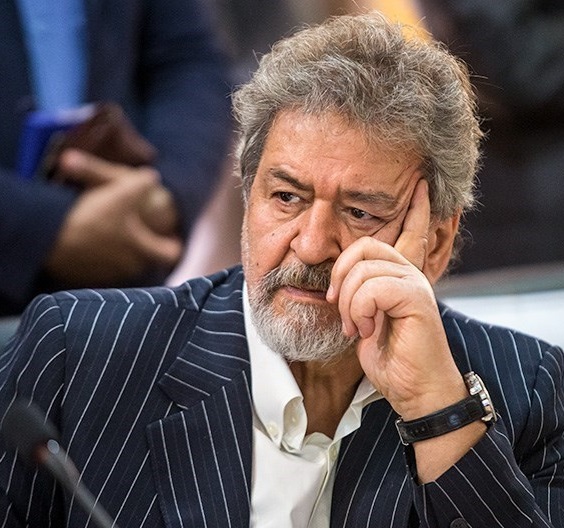
Amir Abedini: Queiroz must go.

Amir Abedini is a former club chairman, former professional footballer, and currently a member of the City Council of Tehran. Abedini's views on football and politics have always been direct and bold. He has no issues speaking up against corruption, shortfalls, and anything that he deems to be harmful to society. In football, he rarely holds back and is most critical of the football establishment, the nepotism, and the mismanagement of the federation. He does not get much press exposure because his views are deemed to be controversial and since the FFIRI and football, in general, are under direct government control, it will be detrimental to the ruling clan and the political system.

Abedini was recently interviewed by Mehrnews post the Tehran derby that ended in a 2-2 draw. He was critical of the standard of the match, the lack of atmosphere as the match was played behind closed doors in the 100,000-capacity Azadi stadium, and the general lack of quality, and skills by the players of Esteghlal and Persepolis. Abedini then remarked that "after the Excitement of the World Cup and the beautiful games we have witnessed, perhaps our expectation of this derby was far too high."

Amir Abedini was then asked about team Melli.

The former president of the Football Federation emphasized: "One of the issues that play a role in the quality of the league is the national team, which we do not see in Iran at the moment. Queiroz's national team means a predetermined package; A certain group of players who, if Queiroz could, would even be taken with him to Colombia! In my opinion, our league is useless and its output is nothing for the national team. This hurts the league, the players, and the clubs in many ways.

Mehdi Taj is losing his bearings. Abedini also responded to Mehdi Taj's strange behavior and answers, which caused a lot of controversy on the sports network a few days ago, and added: Taj is losing his integrity due to the intense pressure he is under. One of the admirable merits of Taj was his coolness and his reasonable dealings with the media. Today Taj is tense and nervous and this nervousness plays a role in his behavior and decision-making. The bad failure in the World Cup made him nervous. The expectations of the people and the media are quite high and yet I have not seen any true critique from the media so far.

Team Melli was disappointing in the World Cup. " We didn't see anything of worth from Iran in the World Cup," the former member of the Football Federation stated: "People expected the National Team to show its face and turn up to play football in the World Cup, but we didn't see such thing. The beating by England hurt badly. In the 2018 World Cup, we defeated Morocco, but what happened to Morocco, who lost to us, four years later? they became among the top four teams in the world and were so good that the people of Asia, Africa, and some of the people of other continents wanted Morrocco to reach the final. . Or, for example, Japan, Saudi Arabia, and South Korea, which performed significantly better than Iran.

Unwanted Queiroz was reborn and became alive with Iran. Abedini added: We defeated the modest team of Wales. A team that really had nothing to say, but we messed up the national team's camp and created false expectations. The same package of players that I mentioned earlier, threw that gentleman (Queiroz) up and down 6 times against England. Was it the same case for Korean and Japanese coaches? No one wanted Queiroz anywhere, but we brought him back to life. Taj defends something that has been rejected by the people and the media. People are not thrilled anymore;  Why do they insist that Queiroz remains one of the options for the head coach of the national team? Mr. Taj! People attack you because you are defending something that has been rejected by the people. People enjoy and rave about winners and enjoy success. Failures have no place in society.

Queiroz needs to go.  "I am against the renewal of Queiroz's contract. His work is not good enough." The former president of the Football Federation emphasized that he is against the continuation of Queiroz's work in the national team and said: "I am expressing my opinion. If Mr. Taj wants to stay in football, he must create a platform for consensus, that is, elites and experts who believe that change is necessary for football. It is good that the league is held, but the important thing is how our matches are held and what quality.

Imaginary enemies "The media is not the enemy of football." Abedini said, in response to the criticism of Mehdi Taj's performance," Taj should be spoken to and the public is entitled to know what is his plan for football and Team Melli. How does he want to continue his work? The General Assembly members and board of directors need to address that. Fand=s and experts should feel relaxed and be assured that football is being properly run (...) . These are football fanatics. The media is not an enemy, and neither are the people. Mehdi Taj must have a master plan with checkpoints to determine whether it is moving in the right direction or not.

Plans for Team Melli "I think people like Dadkan and Maeli Kohn can provide good advice to Taj in regard to Team Melli. Asked about, what advice the former Head of FFIRI  has for the Federation Assembly regarding the national team. He said: "Elites must decide. The football federation is for the people and the football elites become the representatives of the people. Make a decision and accept responsibility for it. People like Dadkan or Maeli Kohn or those who have experienced the ups and downs of football should help Taj as a consultant and support him. This would be a good option. It is not just a matter of having foreign or domestic coaches; whoever takes over in Team Melli, should be a coach who is proud of his appointment and capable, skillful, and competent for the post.

Kaffashian " I will be honored to be ousted from my position!"

Ali Kaffashian has stated that it is an honor to be ousted from his position as the President of the FFIRI by the General Assembly!

The comment by Kaffashian was in response to Amir Abedini who has started a move to dislodge Kaffashian from his position citing amongst various issues, the poor management and administration of the federation, poor planning and lack of strategic outlook  , bad results by National football Teams representing the country.

“I welcome such a move, in fact , I will even show them how to do it (…) It needs 15 representatives to declare the no-confidence vote and if that quota is reached , then it will be my honor to be removed”.

Commenting on the results of youth teams, Kaffashian claimed that “Iran teams have not played so badly in the recent tournaments. We are not after results, in any case. Admittedly, the other Asian Teams have worked quite hard.”

Kaffashian reiterated the admission of committing a mistake in the arrangement of Iran’s U23 squad to Asian Games. “Originally we planned to send the U21 team to Incheon, but due to a last minute decision change, we added a few older players. This has disrupted the team rhythm”

“We are supposed to upkeep this U21 team and prepare it for the Olympics qualifiers. If we wanted to send this team to Incheon, where most of the opponents are sending their full strength teams, it would  have been an unfair competition (…) !”

“Our aim is to keep Vingada until the Olympics. God willing, we will arrange a few friendly games to assess his work with the squad. After the analysis and review of those games, we will decide on our future relationship with Vingada.”

Kaffashian confirmed that Team Melli players, who have been suspended by the authorities for holding fake Military Service Release Certificates, will not be invited to Team Melli. The Head of FFIRI also confirmed that he will not interfere with Queiroz selection or lack of in regards to Aghili and Rahmati.

Ali Kaffashian is known for his contentious and controversial statements. Some amount of tongue-in-cheek is usually attached to his statements to add fun , according to his justification. However, he is going beyond the border of professionalism and authenticity by these latest statements. Not only is he covering the trues facts of the events, he is making a mockery of his position by sheer lack of knowledge or deceitful whatever the case might be.

 No team is allowed to field more than 3 over-aged players in the Asian Games that has an age restriction of U23. Kaffashian’s statement that the other teams are fielding their full strength team is quite misleading. The last minute change of mind of the federation which led to replacing 7 players, was enforced by the Iranian Olympic Committees (IOC) policy that mandates teams/athletes representing  Iran in Asian and Olympic Games must stand a chance of winning a medal. The Asian and the Olympic Games have never been a trial fields for athletes as Kaffashian is suggesting.

The Irony of all this is that Kaffashian , being an ex-executive of IOC , should have known this fact!

Kaffashian’s statement that he will be honored to be dislodged from his position is as zany as they come!  Who, in his right mind, will be honored to be kicked out of his job?

 In hindsight, it will be an honor for all Iranian fans if he is actually removed or replaced but given a decent farewell party and a thank you for a job that was not very well done. Someone else, less talkative more industrious, a strong leader, knowledgeable decision-making, a veteran in sports administration should be given the opportunity to turn the fortunes of football in Iran.