Category: News

Andranik Teymourian Departs Iran Coaching Staff Ahead of Asian Cup Preparations

Andranik Teymourian has parted ways with the Iranian national football team and will no longer serve as a coach or assistant to Amir Ghalenoei. He had been appointed to Ghalenoei's staff in April 2023. The reason for his departure has not yet been disclosed, according to report from ISNA.

His exit comes at a delicate moment: the team has just begun its first preparation camp ahead of the AFC Asian Cup 2027 and is scheduled to play two friendly matches, against Uzbekistan and Russia.

Teymourian's departure follows rumors of differences of opinion between him and Ghalenoei. There has also been speculation that Ghalenoei sidelined both Rezaei and Teymourian—two figures with extensive experience of European football—in favor of insisting on his own tactics and game plans.

This is not the first time Ghalenoei has lost a staff member unexpectedly. Shortly before the World Cup, his Italian assistant also left his post, though that departure was attributed to a career opportunity to manage a team in Italy's Serie B.

Teymourian was a popular figure within Team Melli, respected by both the players and the rest of the technical staff.


Team Melli call-ups for Uzbekistan & Russia friendlies

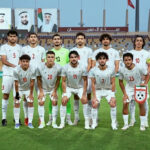
TEHRAN – The head coach of the national football team has called up 18 players from the domestic league for a training camp ahead of friendlies against Uzbekistan and Russia.

Team Melli is scheduled to play two friendlies during the upcoming FIFA international window: against Uzbekistan on September 24 and Russia on September 29. Accordingly, the national team’s coaching staff has summoned 18 players active in the domestic league to join the upcoming camp and the matches against Uzbekistan and Russia.

The 18 players are:

  • Alireza Beiranvand
  • Hossein Hosseini
  • Payam Niazmand
  • Mohammad Naderi
  • Ehsan Hajsafi
  • Shojae Khalilzadeh
  • Mohammad Mehdi Zare
  • Aref Aghasi
  • Saman Fallah
  • Saleh Hardani
  • Ramin Rezaeian
  • Aria Yousefi
  • Milad Sourgi
  • Aref Haji-Eidi
  • Omid Noorafkan
  • Mehdi Limouchi
  • Mehdi Mohebbi
  • Amirhossein Mahmoudzadeh

The players will begin their camp and report to the coaching staff tomorrow (Friday, September 18) at 1:00 p.m. The names of foreign-based players will be announced subsequently, and players from the under-23 (Omid) team will be called up to the national squad in the next international window.

This list is a damning admission, not a plan. Once again, Ghalenoei has retreated to the same aging core that has repeatedly failed him when it mattered. His promises of new blood—pledges he made contingent on keeping his job—have been exposed as empty, cynical PR. The uncapped players are not the beginning of a rebuild; they are a smokescreen, a few convenient names tossed out to pacify public and media anger before the final squad is handed back to the same tired, untouchable veterans.

This is not leadership; it is self-preservation dressed up as squad selection. Ghalenoei’s mindset is the real problem: conservative to the point of cowardice, loyal to reputation rather than form, and pathologically resistant to renewal. His tactics are just as bankrupt, no clear identity, no coherent pressing structure, no courage to impose Iran’s will, and no plan beyond praying that an individual moment or an overused veteran rescues him. He has turned Team Melli into a monument to his own stubbornness, wasting precious years and a generation of talent. If this continues, the 2027 Asian Cup will not be a tournament Iran competes in with conviction; it will be the reckoning that exposes how much time, potential, and goodwill his arrogance and tactical inertia have squandered. And when that failure arrives, no one should pretend it was bad luck. It will be the inevitable product of a coach who refuses to learn, refuses to adapt, and refuses to put Team Melli before his own ego.

Iran Omid Make Strong Start with 3–1 Win over UAE

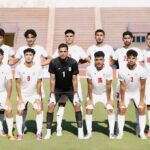
Iran’s Omid team began their Group B campaign at the Aichi-Nagoya 2026 Asian Games with a convincing 3–1 victory over the United Arab Emirates. The first half ended goalless.

Omid head coach Hossein Abdi rested several key players who had joined the squad late after playing for their clubs in AFC Champions League matches.

Both teams started cautiously and created few serious chances. The match came to life at the start of the second half, as Iran made a whirlwind start and scored two quick goals.

In the 49th minute, Pourya Shahrabadi scored a beautiful header that left the Emirati goalkeeper wrong-footed and unable to react.

Four minutes later, Iran added a second. After a scramble in the UAE penalty area, the ball ended up in the net, with UAE defender Yousif AlMarzooqi credited with an own goal.

UAE increased their pressure in search of a quick response and pulled one back in the 57th minute. Mansoor AlMenhali crossed from the right, and the ball evaded everyone before ending up in the far corner of Khalifa’s goal. It was a soft goal to concede, and it gave the UAE confidence that they could equalise.

Timely substitutions and tactical changes by Hossein Abdi ensured that UAE’s attacking pressure was limited to long-range, inaccurate shots at Khalifa’s goal.

Iran held on to their lead, and the icing on the cake was a late goal by Yousef Mazraeh, who headed low into the net after a rebound.

Iran will next play China on 20 September.

Match details

16 September, 14:00
Wave Stadium, Kariya

United Arab Emirates 1–3 Iran

Goals:
49' Pourya Shahrabadi (IRI)
53' Yousif AlMarzooqi (OG) (IRI)
57' Mansoor AlMenhali (UAE)
88' Yousef Mazraeh (IRI)

IRAN STARTING LINEUP
1 KHALIFEH Mohammad Goalkeeper 90:00
6 DEHGHAN Mobin Midfielder 90:00
15 MOHEBBI Masoud Defender 90:00
5 HAZBAVI Mohammad Amin Defender 90:00
14 JAFARI Mehdi Midfielder45:00
16 KAHRIZI Abbas Midfielder 90:00
2 KOOHI Abolfazl Midfielder 90:00
3 MOAMELEHGARI Farzin Midfielder 73:00
18 LATIFIFAR Pouria Midfielder 69:00
20 MAZRAEH Yousef Forward 90:00
21 SHAHRABADI Pourya Forward 68:00

SUSBTITUTIONS
11 TAHERI Kasra Forward 44:00
13 SAHRAEI Soheil Midfielder 22:00
23 LATIFI Ghasem Midfielder 21:00
19 JORJANI Yasin Defender 17:00
10 HOSSEINZADEH Amirhossein Midfielder 1:00

BENCH
12 ZAREI Adib Goalkeeper 0:00
22 ABASI Armin Goalkeeper
4 IRI Danial Defender 0:00
7 GHOLIZADEH SAMIAN Esmaeil Forward 0:00
8 RAZAGHINIA Amirmohammad Midfielder 0:00
9 SAHARKHIZAN GENDESHMIN Saeid Forward 0:00
17 GHANDI POUR Reza Forward

Iran Football Federation Legal Chief: $20,000 Bonus Case Is Preliminary, Funds Were Returned

Several media outlets have reported that the judiciary has summoned several Football Federation of the Islamic Republic of Iran (FFIRI) managers and personnel over alleged embezzlement and misappropriation of government funds. The dispute concerns bonuses of about US$20,000 per person awarded to FFIRI managers after Iran qualified for the 2022 World Cup. The funds were intended to support FFIRI activities, including grassroots football development and daily expenses; instead, reports allege, they ended up in the pockets of federation president Mehdi Taj, his deputy Mohammad Nabi, and several other officials and board members. Mehr News Agency questioned the FFIRI and sought clarification.

It is worth noting that the bulk of the FFIRI’s expenses comes in the form of government handouts intended to sustain the operation of football activities—a fact that makes questions about the classification, oversight, and disbursement of such funds particularly sensitive.

“Case remains preliminary”

In response to the issuance of an indictment against Mehdi Taj and certain former members of the Board of Directors, the head of the Football Federation’s legal department stressed that the case remains at a preliminary stage.

According to a Mehr News Agency reporter, Mohammad-Ali Ghoddousi addressed the controversy surrounding the indictment of the federation president and former board members, saying: “Regarding the reports published in the mass media concerning the indictment of football officials and figures associated with the Federation, I feel it is necessary to highlight a few points.”

He continued: “The first and most obvious point is this: how does the media proceed to publish news about this matter before the individuals and stakeholders involved have even been formally notified? In other words, while the football officials have received no official or legal notice regarding the case, reports that an indictment has been issued are already circulating in the media. This matter warrants serious consideration.”

Legal status of the FFIRI

Referring to the Federation’s legal status, Ghoddousi stated: “Another significant point concerns the legal status of the Football Federation. The Federation is a non-governmental organization; based on the binding precedents set by the General Board of the Court of Administrative Justice, it falls outside the scope of executive agencies and public non-governmental institutions, and is recognized as a non-governmental institution with an independent legal personality.” He added that this distinction is important for the fundamental nature and legal consequences associated with the operations of the FFIRI and its officials.

The $20,000 bonus

Elaborating on the details, he said: “The sole issue in this case—and I emphasize, solely and exclusively—concerns the $20,000 bonus awarded to the Football Federation’s Board of Directors members. Following the successful qualification for the 2022 World Cup in Qatar, the then-senior official at the Ministry of Sport and Youth had allocated this sum to the Board members in recognition of their services and as a reward.”

The head of the FFIRI legal department continued: “All administrative and legal procedures regarding this matter within the Football Federation, a non-governmental entity, including the preparation of financial statements, the Board’s resolution, and the General Assembly’s approval, were carried out with precision, clarity, and transparency.”

Return of funds

Ghodousi clarified: “Despite all this, due to objections raised by the General Inspection Organization—and the subsequent complaint filed with the Culture and Media Prosecutor’s Office alleging that the Board members could not receive these funds because they were in a position of conflict of interest—the members proceeded to return the exact amount received to the originating account. They did so out of an abundance of caution and to absolve themselves of any potential accusations; thus, the matter is fully resolved in this regard.”

Indictment is preliminary

Regarding the issuance of an indictment, he added: “However, the complaint filed by the General Inspection Organization has—apparently, and I emphasize apparently, based on media reports—resulted in the issuance of an indictment.” Ghoddousi continued: “Naturally, an indictment is a decision that commands respect but is entirely preliminary; it is subject to review at the trial stage—specifically in Criminal Court No. 2—and, like other legal cases and complaints, is open to adjudication in both the court of first instance and the court of appeal. Therefore, for the time being, the matter has—apparently—only reached the stage of indictment issuance within the prosecutor’s office.”

Which law applies?

Addressing the legal basis of the case, the head of the FFIRI legal department remarked: “It appears that when the law is cited in this interview, one must ask: which law? The specific law is not identified. We ought to ask the interviewee: ‘Are you well-versed in the law—specifically the law pertaining to this matter?’”

He added: “If the reference is to Note 5 of Article 5 of the Law on Intensifying Punishment for Perpetrators of Embezzlement, Bribery, and Fraud, I must point out that this note applies to government organizations or institutions managed with continuous state aid; furthermore, Note 5 specifically employs the term ‘Minister.’”

Ghoddousi continued: “This implies that the provision applies to a government employee. Moreover, I emphasize that under Note 5, the Minister may act—meaning the necessary authority is granted to the Minister—yet the Minister is under no obligation to do so.” He clarified: “However, given the Football Federation’s legal status as a non-governmental institution—falling outside the scope of executive agencies or public non-governmental bodies—it appears that this provision and its subject matter should not, and cannot, extend to the Football Federation or its officials.”

Concluding the first part of his remarks, he said: “I remain at the service of the dear people of Iran. Good day.”

Audit and ethics findings

Continuing, Ghodousi noted: “There is another important point I must raise: the State Audit Court has examined the matter and, based on legal grounds and reasoning, found no evidence of any violation.” He added: “Similarly, the Football Federation’s Ethics Committee investigated the issue and, finding no violation, issued a ruling of acquittal.”

It also bears mentioning that the FFIRI—at least as a matter of ethics and transparency—has never publicly disclosed this case at any point since 2022. It was investigative journalism that brought the matter to light, which raises the question of why the FFIRI and its legal department failed to disclose both the incident and the subsequent investigation.

Iran's U-20 Football Team Advances to AFC U-20 Cup with Victory Over Vietnam

Iran's national youth football team secured their place in the AFC U-20 Cup after a convincing 3-1 victory over Vietnam in their final Group C qualifier match on Sunday.

The match, held at Viet Tri Stadium, saw Iran finish the group stage with 6 points, ultimately advancing as one of the best second-placed teams. Iran's campaign began with a 2-1 win against Palestine, followed by a narrow 2-1 defeat to North Korea. Today's decisive victory ensured their progression to the next round, where they will face China.

Match Summary

First Half

The first half proved challenging for Iran, despite creating several promising opportunities. Vietnam took the lead in the 40th minute through a goal by Nguyen, sending the hosts into halftime with a 1-0 advantage.

Second Half Comeback

Iran emerged with renewed determination in the second half, delivering a dominant performance that ultimately turned the match in their favor.

Equalizer (50th minute): Following a long throw-in by Amir Mohammad Karimi and a header from Erfan Khodadadian, Mohammad Mehdi Jannia set up Arian Moali, who fired a precise shot from close range to level the score.

Go-Ahead Goal (61st minute): The referee awarded Iran a penalty after the Vietnamese goalkeeper fouled Mehdi Cheshmbarah. Mahan Beheshti stepped up confidently and slotted the ball into the right corner of the net, giving Iran a 2-1 lead.

Third Goal (83rd minute): Iran earned another penalty when Abolfazl Zadeh-Attar was brought down inside the box. Zadeh-Attar took the responsibility himself and sent the goalkeeper the wrong way, calmly placing the ball to the right of the goal to seal a 3-1 victory.

Iran's Lineup

The following players represented Iran in this crucial encounter:

Starting XI: Amir Mehdi Maghsoudi, Mohammad Amin Hosseini, Abolfazl Kazemi, Amir Mohammad Karimi, Mohammad Akbari (46' – Mahan Alipour), Mohammad Mehdi Jannia, Arian Moali, Mehdi Cheshmbarah (88' – Pooya Esmi), Benjamin Alipour (46' – Jafar Asadi), Mahan Beheshti (68' – Amir Mehdi Yahyaei), and Erfan Khodadadian (80' – Abolfazl Zadeh-Attar).

Match Officials

The match was officiated by referee Harish Kondo from India, assisted by Ajlal Halder (India) and Saad Saud (Saudi Arabia).


Omid Team's final list for Asian Games 2026 announced

The final list of 23 players for the Asian Games 2026 Nagoya has been announced. The team, under the coaching of Hossein Abdi, is grouped with China, UAE and Korea DPR.

The list includes many current Team Melli players and some prominent league players. It also includes two legionnaires playing their professional football in the UAE League.

According to the federation communique, the camp will start on Monday 9th September.

GK Mohammad Khalifa, Aluminium Arak
GK Adib Zarei, Shams Azar
GK Armin Abbasi, Paykan
DF Amin Hezbavi, Sepahan
DF Masoud Mohebbi, Kheybar
DF Daniyal Iri, Persepolis
DF Yasin Jorjani, Sepahan
DF Farzin Moamalehgari, Malavan
DF Soheil Sahraei, Gol Gohar
DF Abolfazl Kouhi, Nassaji
MF Amir Mohammad Razaghinia, Esteghlal
MF Ghasem Latifi, Foolad Khuzestan
MF Pouria Latififar, Persepolis
MF Mobin Dehghan, Al-Wehda (UAE)
MF Mehdi Jafari, Malavan
FW Yousef Mazra'a, Foolad Khuzestan
MF Abbas Kahrizi, Aluminium Arak
FW Esmaeil Gholizadeh, Esteghlal
FW Amir Hossein Hosseinzadeh, Tractor
FW Saeed Saharkhizan, Esteghlal
FW Reza Ghandipour, Shabab Al-Ahli (UAE)
FW Kasra Taheri, Sepahan
FW Pouria Shahrabadi, Persepolis

Matches Schedule

All matches are played at Wave Stadium Kariya

16th Sep. vs UAE
20th Sep. vs China
23rd Sep. vs. Korea DPR

Iran’s U17 Volleyball Triumph: A Model of Success That Football Would Do Well to Study

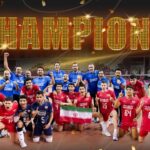
On Saturday, Iran’s U17 volleyball team clinched the world title in Doha, defeating their French counterparts to complete a remarkable sweep of age‑group world championships. This latest achievement adds yet another glittering accolade to Iran’s volleyball legacy—and reaffirms the sport’s status as the country’s most successful athletic federation since the 1979 Revolution.

Once considered a respectable but mid‑to‑lower‑ranked volleyball nation in Asia, Iran has now firmly established itself among the global elite. Its senior team has competed in the prestigious Nations League for a decade, consistently holding its own against the world’s best. This trajectory from regional obscurity to world‑class standing is a testament to strategic vision, sound management, and relentless grassroots development.

Yet, against this backdrop of triumph, one cannot help but ask a troubling question: Why has this extraordinary success—at all levels, in management, infrastructure, and on‑court performance—not been replicated by other federations, especially those enjoying far greater government financial support?

The glaring example is the Iranian football federation. Since the revolution, it has been mired in a cycle of disappointment and underachievement. Led largely by individuals who have lacked the acumen, drive, and strategic foresight to elevate Iran’s football, the federation has repeatedly fallen short on both domestic and international stages. While a comprehensive analysis of the volleyball federation’s decades‑long work is beyond the scope of this article, a simple comparison of outcomes speaks volumes: the Iran Volleyball Federation (IRIVF) has delivered world‑class results on a fraction of the budget allocated to its football counterpart (FFIRI).

To understand this disparity, one must look at the bigger picture—and it starts at the top. Volleyball has consistently been steered by competent, skilled managers who have devised and adhered to long‑term strategies since the mid‑1980s. Today, those plans are bearing fruit, but the foundation was laid years ago through patience, discipline, and a clear sense of purpose.

The Financial Factor

Football in Iran generates enormous revenue. Clubs are heavily subsidised by the state, yet financial oversight is weak and auditing is often superficial. Money flows freely, but it is frequently wasted—or worse, embezzled. This is the result of an unspoken pact between negligent club officials and complacent government bodies, each profiting from opaque transactions while the sport itself stagnates.

Volleyball, in contrast, has never been a magnet for quick‑money schemes. Until recently, the sport operated on modest budgets; only with the arrival of corporate backing—notably from telecommunications companies—has the federation’s financial position improved. Agents and intermediaries have little influence over policy or selection, and there are few opportunities for unscrupulous individuals to exploit the system for personal gain. This is not to suggest that volleyball is entirely free of misconduct, but the federation’s consistent record of regional, continental, and world success insulates it from the chaotic and corrupt practices that plague football.

Coaching Excellence

One of volleyball’s greatest strengths is its ability to produce a steady stream of accomplished Iranian coaches. This is no accident. It is the outcome of a deliberate, phased process: top‑quality players, upon retirement, enter coaching programmes that emphasise proper training, certification, and incremental experience—starting with junior club sides and progressing through various levels before taking charge of the national team.

Compare this with football, where a player can hang up his boots one day and take over a league club the next. There is a pervasive belief that expensive European coaching courses are unnecessary for managing in Iran’s top flight. This “fast‑lane” mentality explains why volleyball has cultivated a superb grassroots foundation while football languishes as a third‑tier nation in Asia at youth levels.

The Media’s Double‑Edged Sword

Despite modest media coverage overall, volleyball has managed to double or even triple its popular support in Iran through consistent planning, grassroots engagement, international exposure, and prudent spending. Yet, the country’s sporting media remains overwhelmingly fixated on the two Tehran giants, Persepolis and Esteghlal. Almost every news report references these clubs, creating a bipolar media landscape that leaves little room for other sports.

For volleyball, however, this relative neglect has been a blessing in disguise. Without the intense rivalries and controversies that fuel football’s headlines, the sport enjoys an immunity from the venomous media battles that often distract and destabilise. There is no “Esteghlal versus Persepolis” equivalent in volleyball—and that absence of constant conflict allows the sport to focus on what truly matters: performance and development.

Rising Popularity Among the Youth

Iran’s volleyball success has had a profound impact on the younger generation. Increasingly, young athletes are choosing volleyball over football when it comes to team sports. The sight of so many Iranian volleyball players securing contracts in Europe and other leading leagues serves as powerful inspiration. More regional clubs are embracing volleyball, and they are consistently producing high‑quality players across all age groups—especially at the grassroots level. This virtuous cycle reinforces the sport’s growth and ensures a bright future.

Conclusion

One can only hope that the football federation will learn from volleyball’s exemplary model of sustained achievement. The lessons are there: visionary leadership, financial discipline, rigorous coaching development, and insulation from counterproductive media sensationalism. Realistically, however, such hope may be wishful thinking. Volleyball’s success is no accident—it is the product of decades of hard work, integrity, and intelligent planning. Whether football can summon the will to follow suit remains to be seen, but the blueprint is clear for all to examine.

Amir Ghalenoei

Ghalenoei's contract officially extended.

The board of directors of the Football Federation (FFIRI) held a meeting today, Wednesday, in the presence of Amir Ghalenoei. The board decided to extend the contract of the head coach until the end of the Asian Cup.

Ghalenoei presented a master plan in this meeting entitled the roadmap for preparing the national team for the Asian Cup 2027.

The 19th Asian Cup will be hosted by Saudi Arabia from January 7 to February 5, 2027 . Under Ghalenoei, Team Melli's last participation in 2023 was elimination in the semi-final after the loss to Qatar.

Iran to meet Uzbekistan on FIFA day

Tashkent, Uzbekistan — Uzbekistan's national football team will play a series of friendly matches during the upcoming FIFA international window as head coach Fabio Cannavaro continues rebuilding the squad following the country's World Cup debut, the UFA said in a statement.

The Uzbeks are set to face Iran on September 24, with the original schedule naming Fergana's Istiqlol Stadium as the venue, though some regional outlets have more recently reported the match will instead be staged in Tashkent. The Uzbekistan Football Association had been negotiating with Iran's federation over a friendly for weeks, with the fixture only added to the calendar once both sides agreed on the date, organizational terms and venue.

The match continues one of Uzbekistan's most heated regional rivalries. Uzbekistan and Iran were drawn in the same group during 2026 World Cup qualifying, producing tightly contested meetings, including a goalless draw in Tashkent in October 2024. The sides also met twice in the buildup to the tournament, playing to a 2-2 draw in Tehran in March 2025 and a penalty-shootout draw in the United Arab Emirates last November.

On the Iranian side, federation head Mehdi Taj has said his team is scheduling three matches during the September window, one of them against an Asian side that competed at the World Cup — most likely Uzbekistan — alongside a game against Russia and a fixture against a yet-to-be-confirmed European opponent. Taj noted that Iran's federation was determined not to repeat the mistake of skipping high-level friendlies before this year's World Cup, and wants a more rigorous preparation cycle going forward.

For Cannavaro, the Iran match is part of a broader effort to evaluate his squad after Uzbekistan's difficult run at its first-ever World Cup, where the team lost all three group matches, falling to Colombia 3-1, Portugal 5-0 and DR Congo 3-1. One bright spot from the tournament was captain Eldor Shomurodov, whose goal against DR Congo was recognized by FIFA as one of the two best strikes of the World Cup.

Cannavaro has said he intends to use the coming friendlies to rejuvenate the squad, prioritizing players in strong current form over reputation, and to shift the team's tactical setup to a 4-3-3 system. The Iran game is expected to be just the opening test in a packed autumn schedule. Uzbekistan is also finalizing a friendly against Russia, provisionally set for September in Nizhny Novgorod, while a high-profile meeting with Argentina is being planned for September 30 in China, followed by a clash with South Korea on October 6.

Should the Argentina fixture be confirmed, it would rank among Uzbekistan's most high-profile friendlies in years, testing Cannavaro's squad against elite opposition on pace, pressure and individual quality.

The match against Iran will serve as a friendly fixture for the Uzbekistan national team during the upcoming FIFA days. Team Melli will then travel to Kazan, Russia, for another friendly match against Russia.
Both Iran and Uzbekistan played in the FIFA World Cup 2026, with neither of them being able to qualify from their group in the 48-team tournament.

Al Wasl Confirms Signing of Mehdi Taremi from Olympiacos


UAE Pro League outfit Al Wasl FC have officially confirmed the acquisition of Iranian international striker Mehdi Taremi from Greek Super League giants Olympiacos. According to several reports emerging from the Persian Gulf region, the deal is structured around a nominal transfer fee of approximately $400,000, with the experienced forward set to join the Dubai-based club for the upcoming 2026–27 season.

Taremi lands in the Emirates carrying an impressive European football résumé. The 33-year-old enjoyed his most prolific years at Portuguese powerhouse FC Porto, where he established himself as one of Europe's most clinical finishers—consistently delivering in the UEFA Champions League and securing multiple Primeira Liga titles. Following his highly successful stint in Portugal, Taremi completed a free transfer to Serie A heavyweights Inter Milan, where he added an Italian Scudetto to his trophy cabinet before making a brief move to Olympiacos earlier this year.

Al Wasl officials have expressed their delight at securing the veteran marksman, emphasizing that his elite finishing ability, aerial dominance, and invaluable experience on the continental stage will significantly bolster their attacking options. "Mehdi is a player of genuine international pedigree," a club representative noted. "His knack for decisive goals and his leadership on the pitch will be crucial as we push for domestic silverware."

While the transfer effectively draws the curtain on Taremi's distinguished European adventure, it represents a pragmatic and strategic pivot for the latter phase of his career. The lack of substantive offers from Europe's top five leagues was largely anticipated, given the forward's advancing age and significant wage demands, rather than an acute decline in his technical attributes. Although his influence within Team Melli has naturally evolved—transitioning from an undisputed talisman to a rotational figure amid the emergence of a new generation of Iranian talents—Taremi's goal-scoring instincts remain remarkably sharp. His recent outings, while less dominant than his peak years, continue to feature vital contributions in front of goal.

For Al Wasl, this move is a clear statement of intent. The club, based in the Zabeel district of Dubai, is looking to build on its rich history by marrying local talent with seasoned internationals. For Taremi, the switch to the UAE Pro League offers a lucrative and competitive new challenge in a rapidly growing footballing region, allowing him to extend his legacy as one of Asia's greatest-ever strikers while competing in a league that continues to attract high-profile names.