
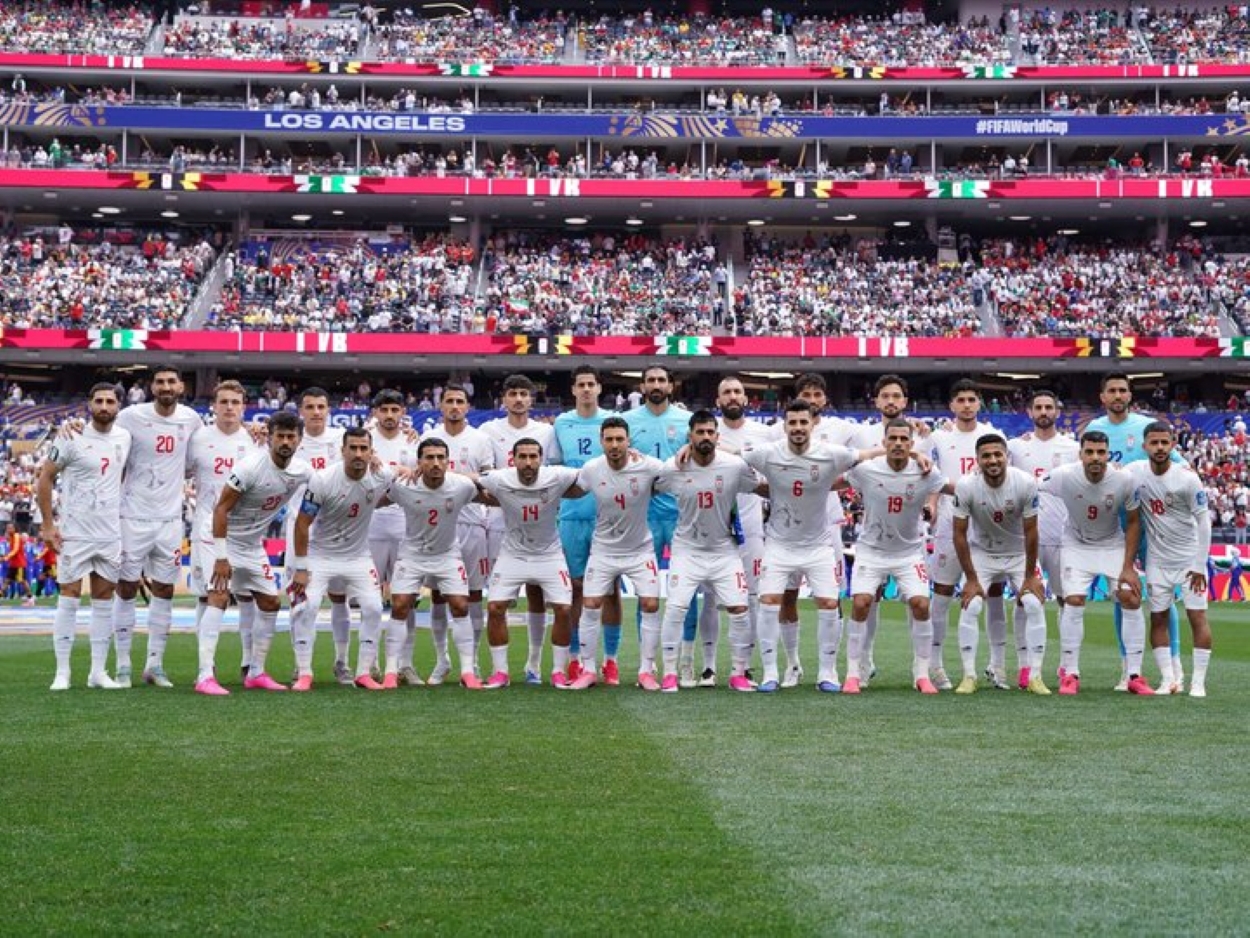
Beiranvand Heroics Earn Team Melli a Vital Point Against Belgium
Iran and Belgium played out a goalless draw at the SoFi Stadium in Los Angeles in the second Group G encounter for both teams. With this result, Iran temporarily sits atop the group on two points, followed by Belgium, New Zealand, and Egypt—all of whom remain in contention ahead of the later match between the Kiwis and the Pharaohs.
A Transformed Team Takes the Pitch
After the disappointing draw and lackluster performance against New Zealand, Amir Ghalenoei made decisive changes that revitalized the team. The individual errors that had plagued Iran in the opener were conspicuously absent, and the team's weakest link, the defense, emerged as the undisputed star of the show against the Belgian golden generation.
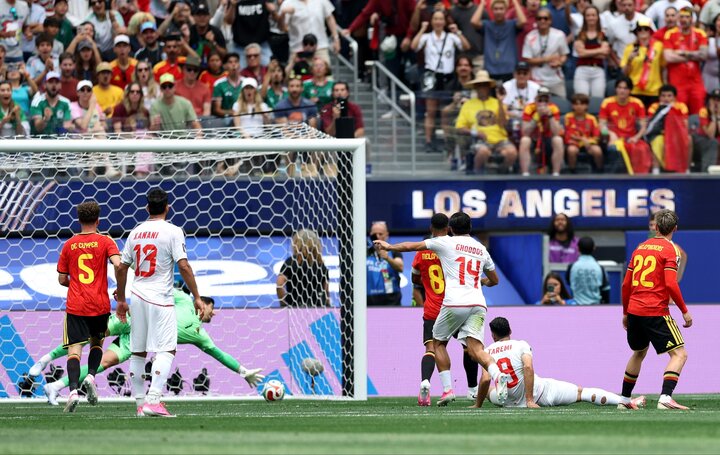
Starting Lineup:
Beiranvand (GK); Hardani, Kanaani, Khalilzadeh, Nemati, Hajsafi; Rezaeian, Ghoddos, Ezatollahi; Mohebi, Taremi.
These changes were clearly designed to neutralize the speed and trickery of Belgium's wingers, Jérémy Doku and Leandro Trossard. In the end, however, Doku was declared unfit due to a medical issue, sparing Iran one significant headache, though Trossard proved more than capable of causing problems on his own.
Beiranvand: A World-Class Performance
Alireza Beiranvand was the undoubted MVP of the match, delivering a performance that harked back to his heroics at the 2018 World Cup. The Iranian goalkeeper made an astonishing 17 saves, commanding his area with the confidence of a world-class shot-stopper. His timely catches and fearless collection of crosses frustrated Romelu Lukaku, who, despite a strong individual display, was repeatedly denied by Beiranvand before being substituted late in the match.
Defensive Solidity – A Monumental Improvement
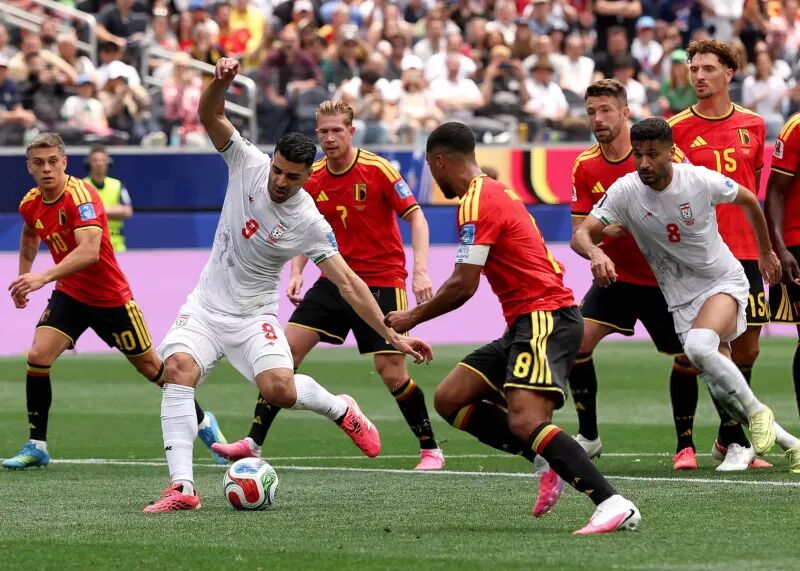
Iran's backline produced one of its most disciplined and cohesive performances in recent memory. Solid positioning, excellent covering work, and timely interceptions ensured that Belgium's attacking riches were kept largely at bay. The only black mark came on the right flank, where Saleh Hardani was not only ineffective but a genuine liability. Trossard bamboozled him repeatedly, forcing Ghalenoei to haul him off at half-time—a merciful end to a torrid 45 minutes.
Midfield Battle – Grit Over Glamour
The midfield was far more active than in the New Zealand match, with both Saeed Ezzatollahi and Saman Ghoddos contributing their fair share of defensive work. The game plan leaned heavily toward direct, route-one football, bypassing Belgium's press and targeting Taremi in advanced areas. Ramin Rezaeian, deployed in a more advanced midfield role, was less effective on the right flank than he had been against New Zealand and failed to replicate his Man of the Match performance from the opener.
Taremi: The Captain's Crusade
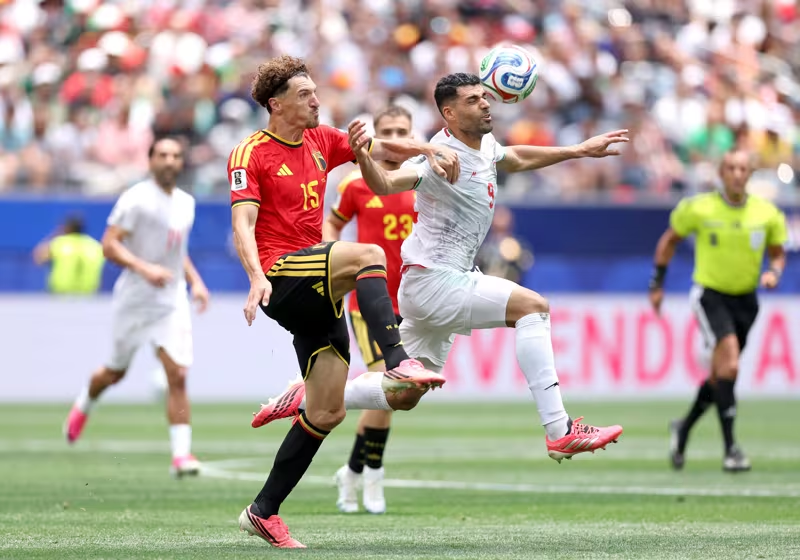
Up front, Mehdi Taremi was immense in every sense of the word. He tackled relentlessly, distributed intelligently, and scored a brilliant goal that was cruelly ruled out for offside after a lengthy VAR review. The captain also tested Thibaut Courtois on multiple occasions, but the Belgian goalkeeper, widely regarded as one of the world's best, was equal to every effort.
Taremi's crowning contribution came in the 66th minute, when he robbed Nathan Ngoy of possession after the Belgian defender's poor ball control. As Taremi bore down on goal, Ngoy hauled him down, resulting in a straight red card. The sending-off tilted the dynamics of the match decisively in Iran's favor.
Numerical Advantage – But No Decisive Blow
With Belgium reduced to ten men, Iran enjoyed prolonged possession and territorial dominance. Yet, despite the man advantage, Team Melli failed to find the elusive winning goal that would have all but secured qualification. The inability to capitalize on the extra man will rankle with Ghalenoei and his staff—a missed opportunity that could prove costly in the final reckoning.
A Worrying Trend: Ball Retention Woes
One persistent issue that marred an otherwise encouraging display was Iran's failure to retain possession. Throughout the match, Team Melli lost the ball on average every 12 seconds—a damning statistic that reflected a lack of composure and technical security. This improved somewhat after Belgium went down to ten men, but the underlying fragility in possession remains a serious concern.
Substitutions: A Mixed Bag
Ghalenoei's substitutions were a mixed bag. Removing Hardani at half-time was unquestionably the right call, but replacing him with Alireza Jahanbakhsh, who offered even less defensive cover and attacking thrust, was a baffling decision. Jahanbakhsh's introduction did little to stabilize the right flank or exploit Belgium's numerical disadvantage, raising questions about Ghalenoei's in-game management.
What It Means for Group G
With two points on the board, nothing is decided in Group G until the final round of matches. However, Iran's disciplined and resilient performance against a formidable Belgium side has injected genuine hope into fans and critics alike. For the first time in their World Cup history, Team Melli stands on the verge of qualifying for the Round of 32—provided they can deliver one more decisive performance in the final group fixture against Egypt.
The dream is alive. But the hard work is far from over.