Author: admin

Guide to Group G at World Cup 2026

Guide to Group G at World Cup 2026

Dan Goldfarb/The Athletic By The Athletic UK Staff

Dec. 5, 2025Updated Dec. 6, 2025 9:41 pm GMT+3

The World Cup draw is complete and Belgium, Egypt, Iran and New Zealand have been drawn together in Group G.

How did the teams qualify? How do the different countries play? And who are the key protagonists in the group?

Group G

Games in: Los Angeles, Seattle, Vancouver, Canada

See full draw results


The schedule: Games, venues, dates and kick-off times

Matchday 1

  • Monday, June 15: Iran vs New Zealand (9pm ET, 6pm PT, 2am BST+1) — SoFi Stadium, Los Angeles
  • Monday, June 15: Belgium vs Egypt (3pm ET, 12pm PT, 8pm BST) — Lumen Field, Seattle

Matchday 2

  • Sunday, June 21: Belgium vs Iran (3pm ET, 12pm PT, 8pm BST) — SoFi Stadium, Los Angeles
  • Sunday, June 21: New Zealand vs Egypt (9pm ET, 6pm PT, 2am BST+1) — BC Place, Vancouver

Matchday 3

  • Friday, June 26: Egypt vs Iran (11pm ET, 8pm PT, 4am BST+1) — Lumen Field, Seattle
  • Friday, June 26: New Zealand vs Belgium (11pm ET, 8pm PT, 4am BST+1) — BC Place, Vancouver

Belgium

Dan Mullan/Getty Images

How did they qualify?

With relative ease. Despite two draws against North Macedonia and another with Kazakhstan delaying the inevitable, Belgium still went unbeaten across their eight games.

It was never going to be a tough group for Belgium, given it’s been a decade since they last lost a World Cup or European Championship qualifying game. That defeat came against Wales, but the Belgians paid them back in this qualification competition. The Welsh were their closest challengers for top spot, and will be in the UEFA playoffs in March, but got beaten 4-3 and then 4-2 in the two meetings.

What is their World Cup pedigree?

Belgium first made a dent in a World Cup in 1986, finishing fourth. Argentina’s Diego Maradona prevented them reaching the final but Enzo Scifo was named the young player of the tournament, before helping them get out of the group stage again four years later.

It was not until the 2014 World Cup that Belgium were considered a powerful nation once more but they lost to Argentina again in the quarter-finals that year and then at Russia 2018, when they were among the favourites, they lost to eventual champions France beat them in the semi-finals. Both 1-0 defeats were seen as missed opportunities for a team of such quality. Belgium’s failure to make it out of the group in 2022 was widely regarded as the end of that chapter for a golden generation of players who had grown old together.

Who is the coach?

Rudi Garcia. The Frenchman took over in January from Domenico Tedesco, who failed to build on Roberto Martinez’s six-year tenure, half of which they spent in first place in the FIFA world rankings.

Garcia, who oversaw a 4-3 aggregate play-off victory against Ukraine in March to keep Belgium in the top tier of the UEFA Nations League, made his name in club management by winning the French title with Lille in 2011 and finishing second in Italy’s Serie A twice with Roma in 2014 and 2015. Known for his attractive style of play, he also took Lyon to the Champions League semi-finals in 2020 by beating Manchester City but his star has faded in recent years after Napoli’s form dropped off after he was appointed in summer 2023.

The 61-year-old Frenchman’s previous role had been at Saudi Pro League club Al Nassr, but the two parties mutually parted ways after 10 months with the team trailing Al Ittihad in the table and reports of an uneasy relationship between Garcia and star player Cristiano Ronaldo.

How do they play?

Garcia has stuck with a 4-3-3 shape so far, in contrast with Tedesco’s regular switches of formation. Right-back Thomas Meunier has praised how he has breathed fresh optimism into the group with a major focus on possession and counter-pressing. Garcia has been bold in giving opportunities to several new faces, including Rangers midfielder Nicolas Raskin and Club Brugge full-back Joaquin Seys.

Other defenders, such as Sporting CP’s Zeno Debast, Koni De Winter of Milan and Brighton & Hove Albion’s Maxim De Cuyper are taking on the mantle left by the ‘golden generation’ back line featuring Vincent Kompany, Toby Alderweireld, Jan Vertonghen and Thomas Vermaelen. Garcia is blessed in terms of his wide options. Jeremy Doku, Leandro Trossard, Charles De Ketelaere, Alexis Saelemaekers and Malick Fofana have all been utilised, but it is Doku who is emerging as the key threat.

Who is their key player?

Doku. The 23-year-old Manchester City winger has taken a step up at club level this season and looks to be taking on more responsibility with Belgium, too. He started all eight games during qualification, scoring five goals and assisting three, as he switched between the left and right flanks. Napoli midfielder Kevin De Bruyne, once he returns from the serious hamstring injury suffered in late October, could still be their talisman with his vision as a passer but is slowing down at age 34 (he’ll turn 35 during the World Cup). Doku is the player Belgium look to feed most often now, because of his unrivalled one-v-one ability.

What else should we know about them?

They have Thibaut Courtois back in goal after his controversial refusal to play under Tedesco. The Real Madrid goalkeeper fell out with their previous manager and said in August 2024 that he would not add to his then total of 102 caps as long as he remained in the job. Fortunately for Courtois, he only had to wait just over six months and was brought back into the fold post-Euros after talks with new coach Garcia. However, Belgium have had internal problems previously, with big-name players such as De Bruyne and Vertonghen clashing at the last World Cup over the midfielder’s comments about their aging defence.

Jordan Campbell


Egypt

NurPhoto via Getty Images

How did they qualify?

Egypt did not lose a single game in Group A in the African qualifiers, winning eight and drawing twice.

However, they only confirmed their qualification in October, by topping the group after beating Djibouti 3-0 with two goals from Mohamed Salah.

Burkina Faso were tailing them throughout the qualifiers, but the 0-0 draw between the sides in Ouagadougou in September maintained Egypt’s five-point gap and solidified their status at the top of the group.

FIFA MEN'S WORLD CUPTop FIFA MEN'S WORLD CUP Stories

2026 World Cup final set for 3pm ET kick-off: Full tournament schedule

Determining hardest, easiest groups, best games and Golden Boot winner at the 2026 World Cup

This was a World Cup draw to whet the appetite for a tournament full of stars and intrigue

What is their World Cup pedigree?

Despite being the first Arab and African nation to participate in the World Cup, in 1934, Egypt has never won a match at the tournament.

Granted, they only qualified two times after that, in 1990 and 2018, with World Cup qualification being a hoodoo in the period in between. Egypt were pitted in the group of death in the 2002 and 2006 qualifiers, lost a tie-breaker against Algeria in 2009, and broke down against Ghana in the play-off round of the 2014 qualifiers.

The 2018 edition was a disappointment, with Salah entering the tournament injured and the team losing their three matches in the group stage.

Who is the coach?

The legendary striker, Hossam Hassan.

The three-time AFCON winner is one of the best centre-forwards in Egypt’s history. He holds the record for the most goals scored for the national team (69) and is only bettered by Ahmed Hassan (no relation) in terms of the number of appearances.

Hassan, who played in the 1990 World Cup, won numerous domestic trophies alongside the CAF Champions League in 2002 with Zamalek.

However, he had to cross the biggest divide in Egyptian football to join Zamalek. As a young player, Hassan was brought up through Al Ahly’s youth ranks, and went on to become one of the best players in the club’s history.

His managerial career has mainly been inside Egypt, apart from a brief spell with Jordan’s national team in 2013-14.

How do they play?

In their 4-3-3, Salah and Manchester City’s Omar Marmoush flank the front line. It is therefore understandable why Egypt focus on attacking the wide areas, with Salah having the freedom to drop and roam.

Zizo operates as the right-sided midfielder, and his attacking profile complements Salah’s tendency to drop and create from midfield.

The left No 8 role has recently been occupied by Trezeguet, but Emam Ashour’s return from injury might alter the team’s starting line-up.

Ashour’s profile is more suited to the midfield role, and he offers something different than the ex-Aston Villa winger.

Who is their key player?

The man needs no introduction.

Salah has been the key player in Egypt’s national team for many years now, and unlike other Egyptian legends, he has not played with the strongest of squads.

Despite that, he managed to guide Egypt to the 2018 World Cup, ending the country’s 28-year wait to appear at the finals. However, the Liverpool forward’s shoulder injury in the 2018 Champions League final against Real Madrid affected the national team going into the tournament.

Then, his penalty miss in the shootout in the play-off round against Senegal in 2022 harmed Egypt’s chance of reaching the 2022 World Cup.

In 2026, he will be hoping to help open a new page in his country’s World Cup history.

What else should we know about them?

By the World Cup, Salah might be in position to surpass his head coach as the top goalscorer in Egypt’s history.

Currently, Salah is on 63 goals – six away from Hassan – and can increase his tally in the upcoming AFCON.

Yet, it would be a greater achievement if Salah can couple that with winning AFCON and helping Egypt reach the knockout stage of the World Cup for the first time in their history.

Ahmed Walid


Iran

Markus Gillar/Getty Images

How did they qualify?

There were a few bumps along the way and some unconvincing performances, but ultimately Iran made it through without too many alarms and with two games to spare — their only defeat of the entire 16-match, two-round qualifying campaign came against Qatar, after safe passage had already been sealed.

What is their World Cup pedigree?

This will be their fourth World Cup in a row, meaning they will have now participated in more tournaments since 2014 than in their entire history before that. Iran are yet to make it past the group stage, though, with their best performance coming in 2018, when they dramatically beat Morocco and drew with Portugal but a narrow defeat by Spain kept them from the knockouts. Last time, they were comfortably beaten by England and the United States, their only success coming thanks to goals in the 98th and 101st minutes against a Wales side down to 10 men by that stage.

Who is the coach?

This will be their first World Cup since 2006 without Carlos Queiroz in the dugout, his successor Amir Ghalenoei having taken over for a second spell in charge following that 2022 World Cup. On paper, Ghalenoei’s record is pretty good: qualification was relatively straightforward and his win percentage is up in the 70s. But there is plenty of dissatisfaction with his approach, not least that he still relies on the old guard — players in their thirties such as Alireza Jahanbakhsh and former Brentford midfielder Saman Ghoddos.

How do they play?

Do not expect attractive, expansive football. Under Queiroz, they were very solid: no frills, two banks of four with a couple of forwards, usually Mehdi Taremi and Sardar Azmoun. It largely worked, and it continues to work in terms of results, but there has been a desire to offer something slightly more interesting and attacking, which in theory should have come with a younger generation of players emerging, but neither has really materialised.

Who is their key player?

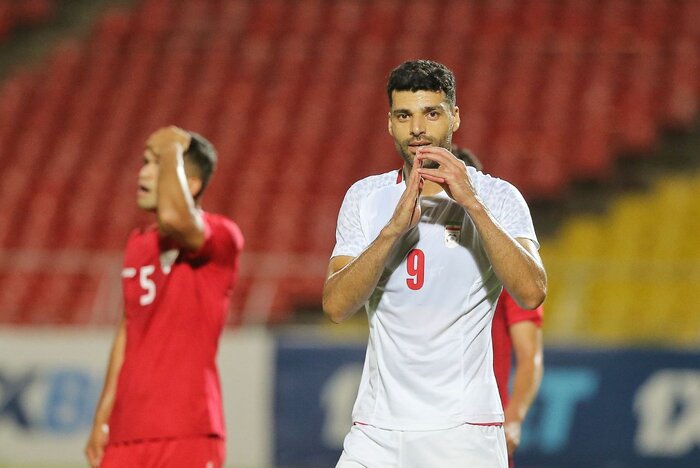
It is still probably Taremi, now scoring goals for Greek champions Olympiacos after a season in Italy with Inter. It will be fascinating to see how they deal with Jahanbakhsh if he does not find a club before the tournament starts. On talent, he would still probably be in their strongest team, but surely they cannot pick someone who, by the time Iran’s first group game kicks off in June, will not have played club football for over a year. In terms of young talent, watch out for midfielder Mohammad Hosseinnejad and striker Kasra Taheri.

What else should we know about them?

Of all the teams at the tournament who will have to deal with outside distractions, Iran surely have the most. The issue of how many of their fans will even be allowed into the United States to watch their games is something that will run and run from now until the whole thing starts in June. And also remember that at the previous World Cup three years ago, Iran’s players protested against the repression of protests back home. Will all of that be too much for them to actually perform as they can?

Nick Miller


New Zealand

Sebastian Frej/Getty Images

How did they qualify?

Since Australia became Asian for footballing purposes ahead of South Africa 2010, New Zealand are the game’s big hitters in Oceania. A bye into the second stage of that confederation’s qualifying competition for the side ranked 86th in the world by FIFA, was followed by three wins from three, 19 goals scored and one conceded as New Zealand breezed past Tahiti, Vanuatu and Samoa. A 7-0 thrashing of Fiji in a third-phase semi-final and then a 3-0 defeat of New Caledonia sealed their World Cup place at a canter.

What is their World Cup pedigree?

Modest. This will be New Zealand’s third appearance at the finals, though each has represented progress of various kinds. Their debut came in 1982, the first edition that was expanded from 16 teams to 24. It started with New Zealand’s first World Cup goals, coming in a 5-2 opening defeat by Scotland. Their group-stage exit was sealed by defeats to the Soviet Union (3-0) and Brazil (4-0). Then in 2010, Winston Reid’s stoppage-time equaliser against Slovakia gave them their first World Cup point. They also led a match in the finals for the first time, during a 1-1 draw against Italy, before finishing third in their four-team group after a goalless draw with Paraguay. New Zealand were the only team to finish that South Africa World Cup unbeaten (eventual winners Spain ost their opening group match against Switzerland).

Who is the coach?

Darren Bazeley will be familiar to some Watford fans. The English-born full-back made almost 300 appearances for that club to begin a senior playing career during which he eventually swapped EFL side Walsall for the Auckland-based New Zealand Knights in the Australian A-League 20 years ago. His subsequent coaching career led him to joining the New Zealand setup as under-17s assistant in 2009 — his only break from the national team since being a stint in MLS with Colorado Rapids and A-League at Newcastle Jets. Come July 2023, Bazeley was appointed New Zealand’s head coach for this World Cup cycle, while simultaneously leading the under-23s at the 2024 Olympics. Bazeley’s side were knocked out in the group stage there, finishing behind the United States and hosts France, who went on to win silver medals.

How do they play?

Despite New Zealand’s limited resources and lowly FIFA ranking, Bazeley has his side trying to play possession football. They use a 4-2-3-1 formation and look to build up without the default option of whacking long balls up to the obvious focal point of Nottingham Forest striker Chris Wood. A 1-0 defeat in Poland and 1-1 draw in Norway — albeit the latter was against a team without Erling Haaland — during their two October friendlies showed this team can make that plan work to a point. The greater difficulty was taking the chances they did create, especially when falling to someone other than their No 9. Wood’s involvement in those two friendlies was limited to 68 minutes.

Who is their key player?

A very simple answer to this. Shall we say it all together? Yes, it’s Wood. The 33-year-old, long-time Premier League striker with West Brom, Leicester, Burnley, Newcastle and now Forest is New Zealand’s highest-profile player, the country’s all-time leading scorer with 45 goals and the joint highest appearance-maker alongside former Eredivisie defender Ivan Vicelich, with 88. The tall, rangy, dangerous finisher is also their captain. Wood has already been prolific in the English top flight, and has scored at European level this season. Come the summer, he will aim to get his first goal at a World Cup.

What else should we know about them?

New Zealand’s All Whites nickname came about when the team appeared in a — no prizes here — all-white kit for the first time in the lead-up to that World Cup debut in Spain. No surprises either that it is a soccer counterpoint to the continuing legend of New Zealand’s rather more successful All Blacks rugby union squad. However, in recent years there have been discussions over cultural diversity and representation, and whether the name should continue to be used. More colourful kits for match officials in modern football at least ensure New Zealand can have an all-black change strip these days.

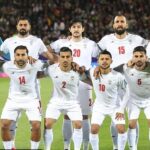
Amir Ghalenoei

WORLD CUP 2026: NO MORE EXCUSES. GHALENOEI'S "GOLDEN DRAW" DEMANDS HISTORY.

The lot is cast. The path is clear. For Iran's Team Melli, the 2026 FIFA World Cup draw wasn't just favorable—it was a screaming mandate from destiny itself.

Group G: Belgium. Egypt. New Zealand.

This is the draw Head Coach Amir Ghalenoei practically conjured in his sleep. Now, his grand, repeated promise—to finally smash the 48-year curse and reach the knockout stages—isn't just a coach's hopeful chatter. It's a blood contract with 85 million expectant souls. There are no more shadows to hide in. The spotlight is white-hot and fixed squarely on him and his squad.

The Equation is Brutally Simple:
Belgium is the Goliath. New Zealand is the appetizer. Egypt is the DOOR. That single, 90-minute battle against the Pharaohs is the gate to history. Win that, and the promised land is in sight. Stumble, and the "golden generation" becomes another footnote in a chronicle of heartbreak.

Forget "What If." This is "What Must Be."

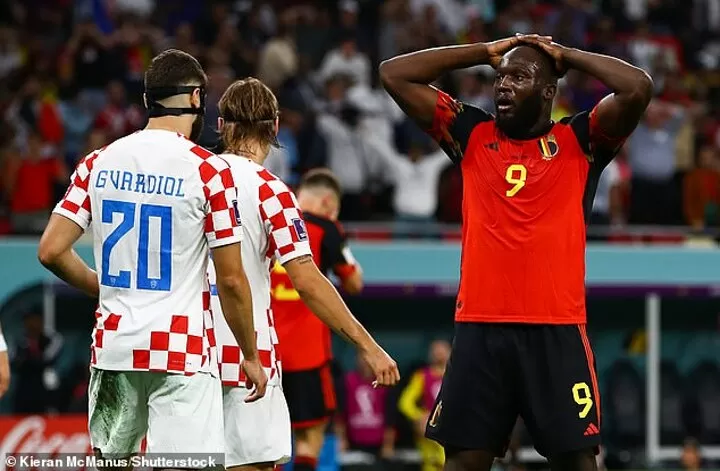
Ghalenoei wanted this. He called it. Now he must own it. The excuses of "groups of death" are gone. The lament of impossible odds is silenced. This group is a corridor, not a cage. Belgium's glittering stars—Doku, Trossard, Lukaku—are a test, not a death sentence. Egypt's Mohamed Salah is a challenge to be neutralized, not a myth to be feared.

The Pathways to Glory (or Infamy):

  • Finish Second. Slay the Dragon. Do the job. Beat Egypt, handle New Zealand, and you'll likely face the USA in a Round of 16 firestorm dripping with a quarter-century of geopolitical tension. It's the blockbuster the world wants and the trial by fire Iran needs to prove it belongs.
  • Win the Group. Seize the Throne. Shock Belgium, and the tournament cracks wide open. A smoother path emerges, daring the nation to dream not of one win, but of a quarter-final run.
  • Squeak Through Third. Walk Through Hell. The coward's path. It likely means France in the last 16, then Germany. A brutal, glorious slaughterhouse.

The calculus is clear. Second place is the only acceptable answer. Third is a nervous disgrace. First is a statement that would echo for decades.

This is it. The perfect storm of opportunity, talent, and timing. The draw has handed Iran a blade sharp enough to cut through its own history of anguish. The question is no longer about possibility. It's about nerve. Does Team Melli have the cold-blooded fortitude to grip that blade, look Egypt—and its own haunted past—in the eye, and finally, finally, carve its name into the next round?

Ghalenoei made the promise. The football gods have delivered the stage. Now, Iran must deliver the blood, sweat, and glory. No more excuses. No more "next time." The clock starts now.

World Cup 2026 Draw: Iran's Golden Opportunity in a Tantalizing Group G


The path for Iran’s historic quest to reach the knockout stages of a FIFA World Cup for the first time since 1978 has been revealed. Drawn into Group G for the 2026 tournament alongside Belgium, Egypt, and New Zealand, Team Melli finds itself in a promising, yet delicately balanced, constellation.

On paper, this is arguably the most favorable draw Iran could have hoped for from Pot 3. Avoiding global powerhouses and continental giants, the group presents a clear hierarchy and a defined target: second place.

The Hierarchical Favorite: A Belgian Juggernaut

At the summit sits Belgium, the undeniable frontrunner. A nation brimming with elite talent, they represent Iran's most formidable challenge. Stars like the creative force of Leandro Trossard (Arsenal), the electrifying Jérémy Doku (Manchester City), and the prolific Romelu Lukaku (Napoli) form an attack capable of breaching any defense.

For Iran, this matchup is a dual threat. Not only is it a first-ever meeting at any level, posing tactical unknowns, but it also starkly highlights Team Melli's most significant vulnerability: a historically inconsistent and vulnerable defensive line. Containing Belgium will require peak organization, discipline, and likely a game plan built on resilient defending and exploiting rare counter-attacking opportunities. A point against the Belgians would be a monumental result; the primary objective will be to keep the goal difference intact.

The Decisive Duel: Iran vs. Egypt for Progression

The pivotal battle in Group G will almost certainly be the clash between Iran and Egypt. This is the match that will likely determine which nation advances alongside Belgium. The Pharaohs, record seven-time African champions, present a fascinating paradox.

While they have experienced a slide in consistency under new manager Hossam Hassan, they possess the ultimate wildcard: Mohamed Salah (Liverpool). Alongside the rising talent of Omar Marmoush (Manchester City), Egypt boasts individual brilliance that can single-handedly decide matches. Iran’s task is clear: neutralize these threats. The midfield battle will be crucial, requiring Iran to control the tempo and deny service to Egypt's star forwards. A draw here would be a setback; victory would place Iran's destiny firmly in its own hands.

The Presumed Must-Win: Navigating New Zealand

Completing the group is New Zealand. While the All Whites are a physically robust and organized side, they represent a matchup where anything less than three points would severely damage Iran's progression hopes. Iran's historical advantage (undefeated in previous meetings) and New Zealand's lack of week-in, week-out high-level competition in the OFC confederation are tangible factors in Team Melli's favor.

However, underestimating New Zealand would be a grave mistake. Their athleticism and set-piece prowess demand utmost respect. This match is where Iran must demonstrate the clinical edge and tactical maturity that has sometimes been lacking in past World Cups.

The Road Ahead: Beyond the Paper Advantage

Labeling this a "golden opportunity" is accurate, but the real work begins now. To transform this favorable draw into history, Team Melli must address deep-seated challenges in the coming months:

  • Tactical Cohesion: Coach Ghalenoei must devise a flexible system—one that can withstand Belgian pressure, wrestle control from Egypt, and break down a stubborn New Zealand.
  • Defensive Solidity: Fixing the frail defense is non-negotiable. This requires identifying a stable backline and cultivating an understanding that can survive 90 minutes against the world's best.
  • Mental Fortitude: The weight of 48 years of knockout-stage absence is heavy. The team must cultivate a winning mentality, replacing fear with belief in high-stakes moments.
  • Administrative Stability: Off-field harmony and unwavering support from the football federation are essential to provide the team with an optimal environment to prepare.

Conclusion: Group G is a gift of chance, but advancement will be earned through preparation, precision, and passion. The dream is alive and well. For the first time in generations, the path for Iran to make World Cup history is not just a hope—it's a clear and achievable mission.


Team Melli chances in the FIFA World Cup 2026 draw.


WASHINGTON, D.C. – The path to glory will be set on Friday, December 5th, 2025, as the draw for the expanded 48-team FIFA World Cup 2026 takes place. For the 42 qualified nations, the ceremony will be a pivotal moment of excitement and strategy, defining their tournament destiny.

The Qualified Contingent
The field is nearly complete, with six final spots still to be decided via playoffs.

  • Hosts: Canada, Mexico, USA
  • AFC (Asia): Australia, Iran, Japan, Jordan, Korea Republic, Qatar, Saudi Arabia, Uzbekistan
  • CAF (Africa): Algeria, Cabo Verde, Côte d’Ivoire, Egypt, Ghana, Morocco, Senegal, South Africa, Tunisia
  • CONCACAF: Curaçao, Haiti, Panama
  • CONMEBOL (South America): Argentina, Brazil, Colombia, Ecuador, Paraguay, Uruguay
  • OFC (Oceania): New Zealand
  • UEFA (Europe): Austria, Belgium, Croatia, England, France, Germany, Netherlands, Norway, Portugal, Scotland, Spain, Switzerland

The Draw Pots
Based on the latest FIFA Rankings (November 2025), teams have been allocated into four pots. Iran finds itself in the highly competitive Pot 2.

Pot 1: Canada (45), Mexico (15), USA (11), Spain (1), Argentina (2), France (3), England (4), Brazil (5), Portugal (6), Netherlands (7), Belgium (8), Germany (9)

Pot 2: Croatia (10), Morocco (12), Colombia (13), Uruguay (14), Switzerland (16), Japan (17), Senegal (18), Iran (20), Korea Republic (22), Ecuador (23), Austria (24), Australia (25)

Pot 3: Norway (26), Panama (27), Egypt (28), Algeria (29), Scotland (30), Paraguay (31), Tunisia (32), Côte d’Ivoire (33), Uzbekistan (34), Qatar (35), Saudi Arabia (36), South Africa (37)

Pot 4: Jordan (38), Cabo Verde (39), Ghana (40), Curaçao (41), Haiti (42), New Zealand (43), + 6 Playoff Winners (TBD)


Team Melli's Dream Scenario

For Iran, ranked 20th globally, the draw strategy is clear: secure the weakest possible opponent from Pot 1, a manageable team from Pot 3, and the most favorable draw from Pot 4, all while navigating strict confederation rules that prevent two AFC teams (like Iran and Saudi Arabia) from sharing a group.

  • Ideal Pot 1 Draw: Canada. As the lowest-ranked host, it presents the most beatable top-seed scenario. A European side like Germany or Belgium would be preferable to facing a South American powerhouse like Argentina or Brazil.
  • Ideal Pot 3 Draw: A non-AFC, non-South American opponent. Panama (CONCACAF) or an African side like South Africa or Cabo Verde would offer a more balanced matchup than a technical CONMEBOL team like Paraguay.
  • Ideal Pot 4 Draw: New Zealand (OFC). A familiar foe Iran has historically outperformed, it represents the "kindest" draw from the final pot.

Example "Dream Group":

  • Canada (Pot 1 – [45] CONCACAF)
  • Iran (Pot 2 – [20] AFC)
  • South Africa (Pot 3 – [37] CAF)
  • New Zealand (Pot 4 – [43] OFC)

Why it works: This combination respects all confederation limits and pairs Iran with the most favorable host, a struggling African nation, and an Oceanic side they have never lost to. It is the clearest path to a top-two finish and a historic knockout-stage berth.

Team Melli's Nightmare Scenario

Conversely, the "Group of Death" would see Iran pitted against elite teams from multiple powerhouses.

  • Nightmare Pot 1 Draw: France or Argentina. Their world-class talent could overwhelm Iran's disciplined structure.
  • Nightmare Pot 3 Draw: Colombia. The most dangerous "floating" team in the pot, boasting creativity and pressure that can break down any defense.
  • Nightmare Pot 4 Draw: A strong European playoff winner, such as Poland or Sweden, slotting into the final spot.

Example "Group of Death":

  • France (Pot 1 – UEFA)
  • Iran (Pot 2 – AFC)
  • Colombia (Pot 3 – CONMEBOL)
  • Poland* (Pot 4 – UEFA)
    (Assuming Poland wins a UEFA playoff)*

Why it’s a nightmare: Two elite European sides with contrasting styles—France's flair and Poland's physicality—combined with a top South American contender. Every match would be a brutal battle for survival.

The Strategic Bottom Line for Iran

The confederation restrictions add a critical layer of complexity. Iran's ideal path hinges on two key events during the draw:

  1. Landing Canada from Pot 1.
  2. Seeing the potent South American teams from Pot 3 (like Paraguay) drawn into other groups before Iran's is finalized.

While the dream scenario offers a realistic chance to advance, the nightmare draw would require a heroic effort to secure even a single point. All will be revealed on December 5th, when hope and fear collide in Washington.

Iran Withdraws from 2026 World Cup Draw in Protest Over U.S. Visa Denials


Tehran – In a significant diplomatic and sporting escalation, the Iranian Football Federation has announced it will boycott the official draw ceremony for the 2026 FIFA World Cup, citing "unsportsmanlike" and politically motivated visa denials by the United States for two members of its delegation.

The decision, confirmed by Iranian football official Amir Mehdi Alavi, follows days of frantic negotiations and represents a direct challenge to FIFA's authority and its guarantees of fair access to all member associations.

A Decision Forced by "Unsportsmanlike" Actions

According to Alavi, the crisis unfolded when the United States failed to grant visas to several essential members of the Iranian contingent slated to travel for the draw ceremony. The U.S., along with Canada and Mexico, is a co-host of the 2026 tournament.

"After extensive inquiries within the Football Federation, a meeting of the Board of Directors, and high-level consultations with officials from the Ministry of Youth and Sports and the Ministry of Foreign Affairs, this issue was formally reported to FIFA," Alavi stated.

He emphasized that the nature of the visa denials forced Iran's hand. "Given that the decisions taken are unsportsmanlike and the path has strayed entirely from the sporting process, it was decided that the Iranian delegation will not be present at the Official World Cup 2026 draw ceremony," Alavi declared. "We cannot participate in a process that is already compromised."

Direct Appeals to FIFA's Highest Levels

The Iranian Federation has not been silent in its protest. Alavi revealed that over the past 48 hours, the federation has been in urgent correspondence with world football's governing body, bringing the matter directly to the attention of FIFA President Gianni Infantino and Secretary General Mattias Grafström.

"FIFA has acknowledged the gravity of the situation and has announced that it will seriously follow up on the issue," Alavi said. "We believed it was our duty to inform FIFA, and President Infantino personally, that the fundamental principles of fair play and inclusion are being violated."

Broken Promises and a Precedent of Assurance

Alavi pointed to a specific precedent that makes the current visa denials particularly jarring. He recalled that during the 2025 CAFA Nations Cup final against Uzbekistan, President Infantino was present in the Iranian national team's locker room.

"On that occasion," Alavi recounted, "President Infantino personally assured our players that the presence of the Iranian convoy would be guaranteed from the beginning of the draw ceremony until the last day of the national team's participation in the World Cup, including all essential workshops and events."

This assurance now rings hollow, as the logistical foundation for Iran's participation has collapsed before the tournament draw has even taken place.

A Delegation in Limbo

The practical implications of the visa issue are stark. Alavi explained that even the president of the Iranian Football Federation, who holds official positions within the Asian Football Confederation (AFC) and FIFA, has had his flight ticket issued.

However, the delegation faces a crippling imbalance. "The security director and the executive director, who are indispensable for our participation in the mandatory pre-tournament workshops, have not been granted visas," Alavi revealed. This creates an untenable situation where the delegation's leadership could attend, but the operational staff responsible for safety and logistics could not.

"There is no guarantee that the five people scheduled to attend the drawing ceremony will not face problems," Alavi concluded, underscoring the profound uncertainty that now clouds Iran's entire pathway to the 2026 World Cup.

A Deeper Conflict Behind the Boycott

However, a different perspective on the visa denials has emerged from sources familiar with the U.S. position. It should be noted that neither the security director nor the executive director, who were denied the visa, are considered essential for Iran's presence at the drawing ceremony itself. Their roles are primarily relevant for subsequent operational workshops.

In fact, the inclusion of a security director in a delegation for a football draw ceremony has reportedly raised alarms with U.S. authorities. The presence of such a role is unusual for a sporting event of this nature and is understood to be a significant factor in the visa denial. This decision comes as U.S. authorities are in the midst of a broader, heightened crackdown on the activities of non-U.S. citizens within the United States, particularly those affiliated with certain foreign governments.

A Test for FIFA's Authority

This incident places FIFA in an extraordinarily difficult position, caught between the protest of a member association and the legitimate security and immigration policies of one of its host nations. Iran's boycott represents a powerful symbolic protest, but the underlying reasons for the visa denials reveal a more complex dispute that extends far beyond the football pitch. The world football body's next steps will be closely watched as it attempts to navigate this profound diplomatic impasse, which raises serious questions about its ability to insulate the World Cup from international political tensions.

Ghalenoei and Ghoddos on touchline

Taremi's Unauthorized Penalty Decision Sparks crises in Team Melli dressing room.

A controversial incident involving captain Mehdi Taremi has overshadowed Iran's penalty shoot-out defeat to Uzbekistan in the final of the Al-Ain International Cup. Contrary to the coaching staff's explicit plans, Taremi unilaterally decided not to take the team's fifth and crucial penalty, instead assigning it to defender Milad Mohammadi, who subsequently missed with an amateurish kick.

While a loss in a friendly match is often dismissed as inconsequential, Taremi's act of insubordination—overriding the coach's direct orders—has raised significant alarms within the national team. The financial implication of forfeiting the tournament's prize money further compounds the seriousness of the defeat.

According to an ISNA report, the conflict erupted immediately after the match when a furious head coach, Amir Ghalenoei, confronted Taremi on the pitch. The confrontation escalated in the locker room, where Ghalenoei severely criticized his captain for what he deemed an arbitrary and costly decision.

In an attempt to justify his actions, Taremi stated to the media in the mixed zone that his reason for not taking the penalty was to "give other players a chance to gain experience."

However, this justification has been met with widespread skepticism. Even if well-intentioned, it is widely viewed as a feeble, poor judgment and an unreasonable excuse for such a critical, game-deciding moment. Making a significant tactical change without the coordination and approval of the head coach is a clear breach of protocol. The established procedure in football grants the head coach and his staff the final say on penalty takers, a decision based on training data, player psychology, and in-game conditions. While a captain may offer input, the ultimate authority rests unequivocally with the coach.

Taremi's actions constitute a direct challenge to the coach's authority. This move not only undermines the credibility of the technical staff but also sets a dangerous precedent for player insubordination, creating a crisis of leadership that extends far beyond the result of a single friendly.

In light of this incident, Taremi's captaincy is now seriously in question. His blatant insubordination against Uzbekistan, coupled with a perceived general lack of leadership on and off the field, has eroded his standing. With Taremi's own form also a subject of widespread media criticism, the under-pressure and reportedly furious Ghalenoei may have no choice but to consider an alternative for the captain's armband to reassert his authority and stabilize the squad.


Uzbekistan Lifts Al Ain International Cup After Penalty Shoot-Out Victory Over Iran

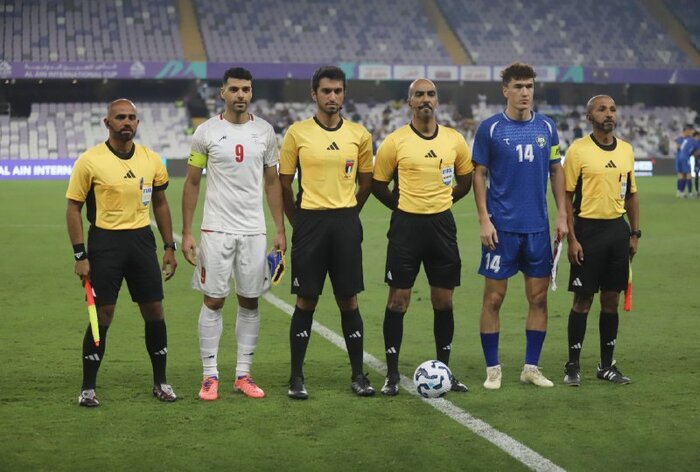
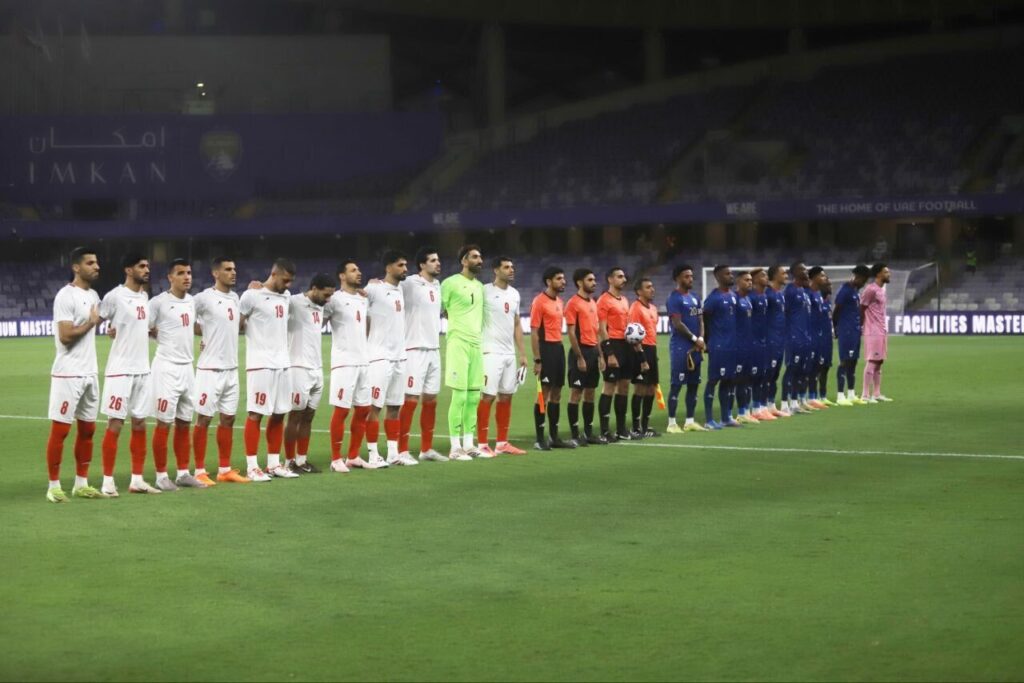
Uzbekistan clinched the Al Ain International Cup on Tuesday evening, defeating Iran in a penalty shoot-out following a 0-0 draw at the Hazza Bin Zayed Stadium. This was Iran's second consecutive goalless draw, having previously advanced past Cape Verde 5-4 on penalties in the semi-final.

The final began cautiously, with both sides appearing reserved and reluctant to take risks in attack. Uzbekistan initially held a slight edge, but Team Melli, grew in confidence as the match progressed. Despite their increasing possession, poor finishing let Iran down, failing to seriously test Uzbekistan's goalkeeper, Nematov. Uzbekistan was similarly wasteful in front of goal, missing two golden opportunities that arose from lapses in the Iranian defense.

The game saw an early setback for Iran when Saeid Ezatollahi suffered an injury in the 9th minute, forcing his substitution with Mohammad Ghorbani.

The second half was more dynamic, with a more organized Team Melli forcing Uzbekistan to work harder. Saman Ghoddos became more influential, supported by Ghorbani and the newly introduced Omid Noorafkan, who replaced Mehdi Hashiminejad. Despite Iran's control, its insistence on crosses from the flanks, most of which were poorly delivered, proved ineffective. Milad Mohammadi was particularly guilty of wayward crosses, highlighting a lack of alternative offensive strategies from the coaching staff.

The match's pivotal moment came when Uzbekistan's central defender, Abdulqadir Khusanov (of Manchester City), was shown a straight red card. He blatantly fouled the quicker Ali Alipour, who was through on goal following a defensive error, denying a clear scoring opportunity.

Playing with ten men, Uzbekistan retreated to defend their goal. This gave Iran ample opportunity to find a winner, but a familiar lack of quality, amateurish passing, and a general absence of drive meant Nematov had a more comfortable time than expected. The introduction of Alireza Koushki in the 81st minute provided a late spark. Koushki ran havoc in the Uzbek defense, dazzling with his dribbling and creating a brilliant chance in the six-yard box that went unfinished. In his brief eight minutes on the pitch, he was a constant threat and was arguably the Man of the Match, outshining his below-par teammates.

The Penalties

In the shoot-out, Iran missed two penalties while goalkeeper Alireza Beiranvand saved one. The spot-kicks taken by Mehdi Mohebbi and especially Milad Mohammadi were of such poor quality that they proved costly. The decision to entrust Mohammadi, a player not known for his composure or penalty-taking skill, with a crucial penalty, while leaving regular taker Mehdi Taremi on the sidelines, raised serious questions about Coach Ghalenoei's strategic decision-making.

In the end, Uzbekistan deservedly won the tournament and the prize money, while Team Melli failed to score a single goal in their two matches of the competition.

A solitary positive for Iran is that they have now kept three consecutive clean sheets, including their recent friendly against Tanzania, suggesting a foundation of defensive solidity to build upon.

Clash of Styles and Spirits: Iran's Pedigree vs. Uzbekistan's Momentum in Al Ain Final


The stage is set for a compelling final in the Al Ain International Cup, as Team Melli of Iran prepares to lock horns with a resurgent Uzbekistan at the Hazza Bin Zayed Stadium. While the FIFA rankings and historical prestige heavily favor the Iranians, the narrative on the pitch tells a vastly different and more intriguing story.

The Road to the Final: A Tale of Two Semis

The semi-finals provided a stark contrast in team morale and performance. Iran labored to a 0-0 draw against Cape Verde, a team ranked 77th in the world, before narrowly securing their final berth with a 5-4 victory in a penalty shootout. The performance was characterized by a disjointed offense, poor ball distribution, and a palpable lack of creativity. In worrying signs for Iranian fans, star striker Mehdi Taremi was effectively neutralized, while domestic league top scorer Amirhossein Hossenzadeh failed to test the Cape Verdean goalkeeper.

In the other semi-final, Uzbekistan delivered a masterclass, dismantling a strong Egyptian side with a commanding 2-0 victory. The White Wolves displayed a modern, fluid brand of football that their opponents struggled to contain. Their performance was a symphony of coordinated pressing, incisive passing, and clinical finishing—a world away from the disjointed display from Team Melli.

The Uzbek Juggernaut: Led by a Familiar Foe

The undisputed architect of Uzbekistan's victory was Oston Urunov. The Persepolis winger was in scintillating form, scoring a well-taken brace and terrorizing the Egyptian defense throughout the match. Urunov’s performance was a showcase of offensive prowess that the Iranian forward line conspicuously lacked; he was unlucky not to have scored four, with one effort cannoning off the woodwork and another denied by a spectacular save.

His display serves as a poignant reminder to the Iranian federation and fans: the quality exists within the Persian Gulf Pro League, but harnessing it for the national team remains a significant challenge. For Uzbekistan, Urunov symbolizes a new generation of technically gifted and confident players who excel in their defined roles within a coherent tactical system.

Iran's Identity Crisis: System over Stars?

On paper, Iran, ranked 21st in the world, should be the clear favorite. They boast a squad featuring stars from Europe's top leagues and a pedigree that includes consistent World Cup appearances. However, football is not played on paper. The recent form presents a grim picture for Team Melli, who are winless in their last five encounters against Uzbekistan, including a 1-0 loss in Tashkent in their most recent meeting.

The core issue appears to be systemic. Under the current coaching regime, the team often looks less than the sum of its talented parts. There is a reliance on individual brilliance to break down opponents, which, when it fails—as it did against Cape Verde—leaves the team looking rudderless. The midfield often fails to control the tempo or provide a link between defense and attack, leaving isolated forwards to feed on scraps.

The prevailing mentality is also under scrutiny. If a goalless draw against a lower-ranked opponent is perceived as an acceptable result, it raises questions about the ambition and attacking philosophy driving the team forward.

The Final Verdict: A Clash of Contradictions

This final is a classic clash of contradiction: historic reputation versus current form; individual stars versus a cohesive unit; cautious pragmatism versus confident, attacking football.

While Uzbekistan enters the match beaming with confidence and a clear tactical identity, Iran seems burdened by expectation and a lack of a defined playing style. For Team Melli to lift the trophy, they must engineer a massive turnaround—something they have shown little evidence of being capable of in recent times. Relying on the defensive solidity that held firm against Cape Verde will not be enough against a multifaceted Uzbek attack.

Prediction:

Based on the evidence of the semi-finals and recent head-to-head records, the momentum is firmly with Uzbekistan. They play as a confident, modern team that believes in its system and its players. Iran, in contrast, looks fragile and creatively bankrupt. A draw within regulation time, potentially leading to another nerve-wracking penalty shootout, seems the most optimistic outcome for Iran. On current form, however, Uzbekistan are the clear favorites to be crowned champions, poised to prove that a well-drilled team with a clear vision can triumph over a collection of individuals struggling for an identity.

Iran 0-0 Cape Verde. Issues Under Ghalenoei persists

Al Ain, UAE – In another underwhelming performance that has become characteristic of the Amir Ghalenoei era, Iran's national football team struggled to a goalless draw against World Cup debutants Cape Verde in the Al Ain International Cup on Tuesday. The match, which required a penalty shootout to determine progression, saw Alireza Beiranvand emerge as the unlikely hero with a crucial save that secured Iran's place in the final.

Tactical Deficiencies Laid Bare

From the opening whistle, the African archipelago nation—ranked 71st in the world—seized control of the match, forcing Team Melli into a defensive posture that has become all too familiar under Ghalenoei's leadership. While Cape Verde demonstrated why they earned their historic qualification for the 2026 World Cup, their lack of clinical finishing spared Iran from what could have been an embarrassing defeat.

The tactical approach from the Iranian side raised serious questions about Ghalenoei's footballing philosophy. Team Melli reverted to what has become their default strategy: route-one football characterized by long balls launched from defense toward the forward line. This simplistic approach consistently failed to yield results, primarily due to the glaring absence of pace in Iran's attacking third.

Second-Half Glimmer Quickly Extinguished

The second half offered marginal improvement, with Iran creating two clear opportunities to break the deadlock. The most notable chance came when Ezzatollah found himself with an open goal, only to see his effort miraculously cleared off the line by a Cape Verde defender's heroic header. This moment encapsulated Iran's ongoing struggles in front of the goal, an issue that has plagued the team throughout Ghalenoei's tenure.

Individual performances further highlighted the team's decline. Hosseinzadeh, typically a creative spark, delivered a subdued performance that warranted his substitution. Mehdi Taremi, expected to lead the line, endured another forgettable outing in what is becoming a worrying pattern of underperformance. The midfield unit operated on the periphery of the game, failing to establish control or provide meaningful service to the attackers.

Defensive Solitude in a Sea of Mediocrity

Ironically, Iran's defenders emerged as the team's strongest performers—a damning indictment of the overall team display when facing a nation ranked 41 places below them in the FIFA rankings. That the backline stood out as the brightest aspect of Team Melli's performance against Cape Verde underscores the alarming regression of a team that once commanded respect in Asian football.

Ghalenoei's Post-Match Narrative Defies Reality

Following the match, Ghalenoei continued his pattern of fact-twisting statements that have become hallmarks of his press conferences. Rather than addressing the evident tactical shortcomings and lack of coherent gameplay, the coach opted to glorify what he described as a "disciplined performance" , a characterization that starkly contradicts the reality witnessed by spectators and analysts alike.

The persistence with broken tactical approaches and the refusal to adapt to opponents' strengths has become a defining feature of Ghalenoei's leadership. His post-match explanations increasingly resemble exercises in denial rather than genuine assessments of performance.

World Cup Prospects Look Bleak

With the 2026 World Cup expanding to 48 teams, Iran's qualification prospects should theoretically be more favorable. However, recent performances and especially Thursday's performance against Cape Verde raise serious doubts about whether Ghalenoei possesses the tactical acumen to navigate even this more accessible pathway. The team's steady decline under his guidance suggests that Iran risks becoming mere participants rather than competitive forces in global football's premier tournament.

The technical deficiencies, an aging team, lack of creative solutions, and persistent reliance on outdated tactical approaches paint a worrying picture for Iranian football. As the team prepares to face either Egypt or Uzbekistan in the final, the fundamental questions surrounding Ghalenoei's leadership remain unanswered—and indeed, grow more urgent with each disappointing performance.

The victory in penalties may have secured progression, but it did little to mask the systemic issues that continue to undermine Iranian football. For the growing number of critics, this match served as further evidence that a change in direction may be necessary before the team's decline becomes irreversible.

Cape Verde: From Independence Jubilee to World Cup Debut

Cape Verde – A nation of fewer than 525,000 people is celebrating a historic milestone—50 years of independence and its first-ever qualification for the FIFA World Cup. Last month, scenes of unrestrained joy erupted at the Estadio Nacional as more than 15,000 fans, draped in Cape Verdean blue, witnessed their national team secure a place in football’s greatest tournament.

Players from across the globe—Ireland, North America, and Cape Verde itself—embraced, danced, and celebrated together on the pitch, embodying the pride of a nation that has become the second-smallest by population to qualify for the World Cup, trailing only Iceland.

A Footballing Rise Rooted in History

Since gaining independence from Portugal in 1975, Cape Verde has steadily built its footballing identity. The national football federation was established in 1982, and by 1986, the country became a FIFA member. For over two decades, Cape Verde has competed in World Cup qualifiers, gradually emerging as a rising force in African football.

The team first announced its arrival on the continental stage by qualifying for the 2013 Africa Cup of Nations, where it reached the quarterfinals. A decade later, Cape Verde repeated the feat, bowing out in the top eight after a hard-fought penalty shootout loss to South Africa.

Recent Form and Key Players

Cape Verde enters the World Cup on a strong run of form, with recent results including:

  • Cape Verde 1–0 Mauritius
  • Angola 1–2 Cape Verde
  • Cape Verde 1–0 Cameroon
  • Libya 3–3 Cape Verde
  • Cape Verde 3–0 Eswatini

Leading the attack is Ryan Mendes, the national team’s all-time top scorer with 22 goals. A teammate of Sardar Dursun at Turkey’s Kocaelispor, Mendes embodies the global reach of this squad.

While Cape Verde has no players in Europe’s top five leagues, the team relies on a diaspora of talent competing across Slovakia, Portugal, Belgium, Hungary, Ireland, Morocco, Bulgaria, USA, Azerbaijan, Russia, UAE, Greece, Poland, Saudi Arabia, Spain, Switzerland, and Scotland.

Among the standout performers is Ricardo Santos, a commanding defender for Swansea City in the English Championship.

Looking Ahead: Iran vs. Cape Verde

Cape Verde will continue its World Cup preparations in a quadrangle tournament in the UAE, where it is set to face Iran on November 12 in Al Ain. The match offers a valuable test for both sides ahead of next year’s global showdown.

For Cape Verde, it’s another opportunity to showcase how far this island nation has come—on and off the pitch.
Mounting Pressure on Team Melli

While Cape Verde enters their upcoming match with nothing to lose and everything to gain, the stakes are considerably higher for Iran. Despite securing early qualification for the 2026 FIFA World Cup, Team Melli under coach Amir Ghalenoei faces intense scrutiny and growing disillusionment among its fanbase.

Three disappointing losses this year—to Qatar, Russia, and Uzbekistan—coupled with unconvincing game plans, poor finishing, and disorganized defending have fueled widespread criticism. A palpable disconnect has emerged between the team and its supporters, exacerbated by Ghalenoei’s perceived reluctance to address recurring tactical shortcomings.

The decline in public support was starkly evident during Iran’s recent 2–0 victory over Tanzania in Dubai. The match attracted only 1,340 spectators—the lowest attendance in Team Melli’s history—with most present supporting the opposition. This is particularly telling in a city home to one of the largest and most passionate Iranian diasporas, signaling a rapid erosion of faith in the national squad.

Looking Ahead: Iran vs. Cape Verde

As the two sides prepare to meet on November 12 in Al Ain, expectations for a tactical revival from Iran remain low. Ghalenoei is expected to field a familiar lineup and stick to his established approach—a strategy that may offer coaching staff a sense of continuity, but one that could prove costly.

For Cape Verde, the match is another opportunity to build momentum ahead of their World Cup debut. For Iran, it is a critical test of morale and direction. A loss against the African newcomers could sound alarm bells within the Football Federation of the Islamic Republic of Iran (FFIRI), potentially forcing a long-overdue reckoning with the team’s direction under its current leadership.