Tag: Uzbekistan

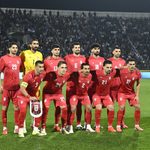
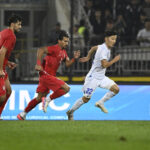
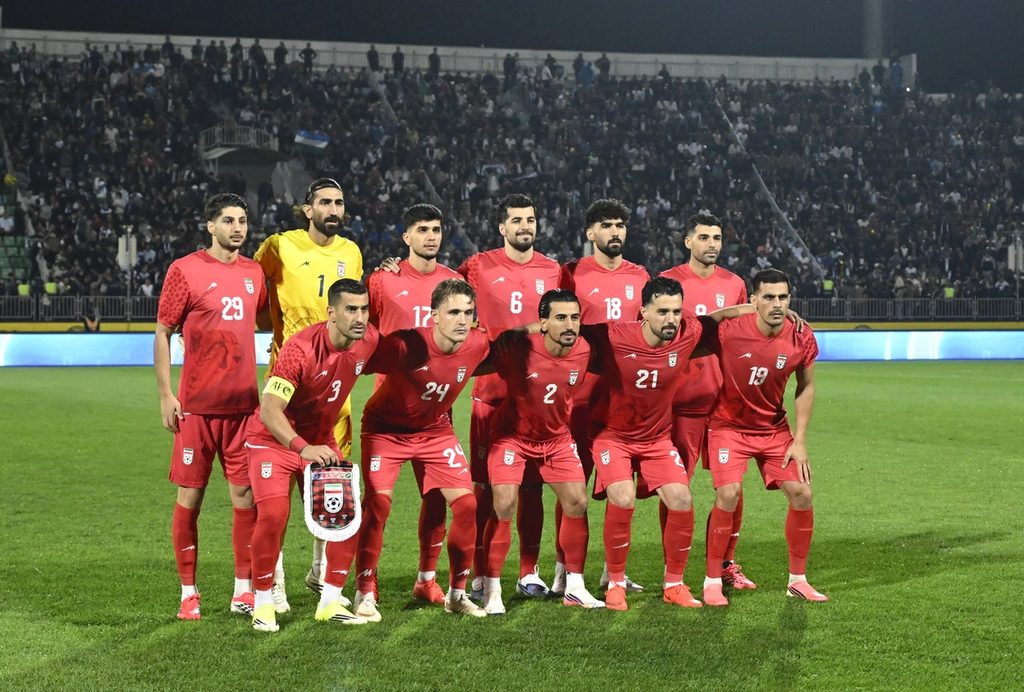
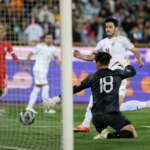
Iran to meet Uzbekistan on FIFA day

Tashkent, Uzbekistan — Uzbekistan's national football team will play a series of friendly matches during the upcoming FIFA international window as head coach Fabio Cannavaro continues rebuilding the squad following the country's World Cup debut, the UFA said in a statement.

The Uzbeks are set to face Iran on September 24, with the original schedule naming Fergana's Istiqlol Stadium as the venue, though some regional outlets have more recently reported the match will instead be staged in Tashkent. The Uzbekistan Football Association had been negotiating with Iran's federation over a friendly for weeks, with the fixture only added to the calendar once both sides agreed on the date, organizational terms and venue.

The match continues one of Uzbekistan's most heated regional rivalries. Uzbekistan and Iran were drawn in the same group during 2026 World Cup qualifying, producing tightly contested meetings, including a goalless draw in Tashkent in October 2024. The sides also met twice in the buildup to the tournament, playing to a 2-2 draw in Tehran in March 2025 and a penalty-shootout draw in the United Arab Emirates last November.

On the Iranian side, federation head Mehdi Taj has said his team is scheduling three matches during the September window, one of them against an Asian side that competed at the World Cup — most likely Uzbekistan — alongside a game against Russia and a fixture against a yet-to-be-confirmed European opponent. Taj noted that Iran's federation was determined not to repeat the mistake of skipping high-level friendlies before this year's World Cup, and wants a more rigorous preparation cycle going forward.

For Cannavaro, the Iran match is part of a broader effort to evaluate his squad after Uzbekistan's difficult run at its first-ever World Cup, where the team lost all three group matches, falling to Colombia 3-1, Portugal 5-0 and DR Congo 3-1. One bright spot from the tournament was captain Eldor Shomurodov, whose goal against DR Congo was recognized by FIFA as one of the two best strikes of the World Cup.

Cannavaro has said he intends to use the coming friendlies to rejuvenate the squad, prioritizing players in strong current form over reputation, and to shift the team's tactical setup to a 4-3-3 system. The Iran game is expected to be just the opening test in a packed autumn schedule. Uzbekistan is also finalizing a friendly against Russia, provisionally set for September in Nizhny Novgorod, while a high-profile meeting with Argentina is being planned for September 30 in China, followed by a clash with South Korea on October 6.

Should the Argentina fixture be confirmed, it would rank among Uzbekistan's most high-profile friendlies in years, testing Cannavaro's squad against elite opposition on pace, pressure and individual quality.

The match against Iran will serve as a friendly fixture for the Uzbekistan national team during the upcoming FIFA days. Team Melli will then travel to Kazan, Russia, for another friendly match against Russia.
Both Iran and Uzbekistan played in the FIFA World Cup 2026, with neither of them being able to qualify from their group in the 48-team tournament.

Road to Saudi Arabia: Iraq to Host Elite Four-Nation Tournament in Basra This November

BASRA, Iraq — The Iraqi Football Association (IFA) has announced plans to host a high-profile, four-nation international friendly tournament at the Basra International Stadium from November 9 to 17, 2026. Scheduled during the official FIFA international match window, the tournament serves as a critical, star-studded dress rehearsal for the 2027 AFC Asian Cup in Saudi Arabia.

In a bold competitive move, the IFA is targeting an elite lineup. The tournament organizers aim to feature four teams that competed in the 2026 FIFA World Cup, ensuring maximum intensity and tactical preparation for the continental championship.

The Lineup: Who is in and Who is Pending?

While negotiations are fast-moving, the tournament's final roster is taking clear shape. The response status of the invited Football Associations reveals a mix of confirmed regional giants and ongoing negotiations:

  • Iran (Confirmed): The Football Federation Islamic Republic of Iran (FFIRI) was the first to officially accept the invitation. Following scheduling complexities earlier in the year, Team Melli’s coaching staff heavily prioritized this tournament, viewing the Basra training camp as an ideal competitive environment.
  • Uzbekistan (Initial Approval): The Uzbekistan Football Association has provided initial verbal approval. While internal administrative processes are being finalized, the IFA expects formal written confirmation from Tashkent shortly.
  • Jordan (Invited/Pending): The Jordan Football Association remains a top priority for the IFA. Negotiations are active, but the Jordanian FA has not yet officially confirmed its participation, leaving them as a highly anticipated "proposed option."
  • The Search for an East Asian Variant: If any spots open up, or to solidify the final bracket, the IFA is actively negotiating with prominent East Asian federations.

Solving the "Singapore Puzzle"

The hunt for an East Asian opponent is not random; it is a deliberate tactical move by Iraq's coaching staff. Iraq has drawn Singapore in the group stage of the upcoming 2027 Asian Cup.

The national team's technical staff has explicitly requested at least one opponent in Basra that mimics the disciplined, low-block, or counter-attacking playing style typical of East Asian sides. This tournament is designed to give the Lions of Mesopotamia the exact tactical look they need to unlock their Asian Cup group rivals.

A Continental Rehearsal in Basra

By hosting the event at the Basra International Stadium, the IFA is maximizing its home-field advantage while testing tournament logistics. With the Asian Cup taking place in neighboring Saudi Arabia, the climate, fan passion, and competitive stakes in Basra will offer the perfect regional simulation.

For local fans, the November window promises a rare treat: a mini-championship on home soil featuring World Cup-caliber talent, all while Iraq fine-tunes its squad for a historic continental run.


📋 Fact Sheet for Editors

  • Event: Four-Nation International Friendly Tournament
  • Host: Iraqi Football Association (IFA)
  • Venue: Basra International Stadium, Iraq (65,000 capacity)
  • Dates: November 9 – 17, 2026
  • Tournament Tier: FIFA International Match Window (A-Matches)
  • Primary Objective: Tactical preparation for the 2027 AFC Asian Cup.

World Cup Sacrifice: Iran Suspends Domestic League for Three Months, Leaving Foreign Players in Limbo

TEHRAN – The FFIRI Football League Committee has confirmed the suspension of the Persian Gulf Pro League until the conclusion of Iran’s 2026 World Cup campaign, a move the federation describes as essential for national team preparation but one that plunges the domestic league’s foreign contingent into a three-month professional void.

In a statement released via the federation's official public relations channels, the committee detailed that the decision was reached following extensive consultations with top-flight club executives. The federation cited the need to prioritize "safety and security conditions" in light of ongoing regional tensions following the recent American-Israeli military aggression, alongside a desire to protect player welfare.

Rationale vs. Reality of a Compressed Return
The committee acknowledged studying the adverse effects of a compressed league format. They concluded that cramming the remaining fixtures into a tight window post-World Cup would increase the risk of player injury and degrade the quality of the competition. Consequently, the 25th season of the Premier League will remain frozen until Team Melli's journey in the United States, Mexico, and Canada concludes.

"Such an arrangement will give home-based Team Melli players plenty of time for preparation and training in camps," the committee's assessment noted. This aligns with the federation's long-standing policy of clearing the calendar to give the national team coach maximum access to the domestic player pool.

The Foreign Player Fallout
While the hiatus is a logistical win for Amir Ghalenoei's World Cup preparations, it creates a significant professional crisis for the league's international imports. With no competitive matches scheduled for over three months, foreign players are effectively out of work and out of match rhythm during a critical period of the global football calendar.

The situation is particularly acute for the strong contingent of Uzbek players currently plying their trade in Iran. Uzbekistan has qualified for the FIFA World Cup 2026 . A three-month gap in competitive action leaves these players in a precarious position regarding their national team futures. Unlike their Iranian teammates who will be in structured camps, these foreign nationals face the prospect of training in empty stadiums with no tangible match fitness to show for it, placing their selection for the Uzbekistan national team under direct threat.


Iran turn on the power to see off Uzbekistan

the-afc.com
Jakarta: Iran came from two goals down to defeat Uzbekistan 7-4 in a thrilling AFC Futsal Asian Cup Indonesia 2026™ quarter-final on Tuesday.

The win for the 13-time champions sets up a semi-final clash with Iraq - who defeated Thailand 4-2 in their quarter-final, on Tuesday.

image content

Uzbekistan were awarded a penalty after a Video Support review within the first minute when Iran keeper Bagher Mohammadi barged into Ikhtiyor Ropiev, with the latter firing into the left corner past the flat-footed custodian.

Shakram Fakhriddinov extended their lead in the sixth minute when he slipped past his marker on the left and slammed the ball from the edge of the semi-circle into the top right corner.

image content

In response, Iran piled on the pressure with Moslem Oladghobad pulling one back a minute later, collecting a pass from Mehdi Mehdikhani and sending a low drive that deflected off opposing skipper Khamroev Ilkhomjon and past a rooted Abbos Elmurodov.

They leveled in the ninth minute through Ahmad Abbasi who, from a long throw by his keeper, chested the ball and produced an acrobatic volley from the edge of the circle that bounced off the floor and past Elmurodov.

image content

The keeper made a fine save to deny Abbasi moments later, but was caught off-position in the 12th minute when Behrooz Azimi came down the right and fed the ball to Mohammadhossein Derakshani, who lashed his shot into an empty goal.

Mohammadi palmed away Ropiev’s rising shot in the 18th minute, and the next Iran attack saw Hossein Sabzi come from behind the Uzbekistan defence on the right and slip the ball past Elmurodov for goal number four.

Q-final - IR Iran v Uzbekistan

Uzbekistan went into overdrive after the break, Mohammadi working hard to make consecutive saves from Eldor Nigmatov’s close-range effort and one from distance by Anaskhon Rakhmatov.

Their hopes were dealt a blow in the 23rd minute when an Ilkhomjon handball saw Iran awarded a penalty, with skipper Hossesin Tayebi duly converting to send his side further ahead. 

image content

Sunatalla Juraev, however, brought Uzbekistan back into the game three minutes later with a stiff drive from the left that zipped past both Mohammadi and midfielder Khalilvand Somehsoflam and came to rest in the far right corner.

Their joy was short-lived as Elmurodov was sent off in the 29th minute when he handled the ball outside the circle, with Azimi tapping in from the left past stand-in keeper Shavkat Ibragimov from the resulting free-kick.

image content

Uzbekistan again bounced back, this time through Muzaffar Akhadjonov, whose stinging shot from just past the centreline gave Mohammadi no chance at all but Sabzi sealed the match in the closing seconds to send Iran into yet another semi-final.

Omid Team failure. a result of chronic failures.

The failure to qualify from the group stages of the AFC U23 Asian Cup 2026 came as little surprise to most observers. From the outset, South Korea and Uzbekistan were the clear favorites—footballing nations that have established themselves as formidable rivals to Iran.
What proved truly shocking, however, was Iran U23 finishing bottom of their group and failing to score a single goal across three matches.

The irony is heightened by the Sports Minister’s prior prediction that this very team would qualify for the Los Angeles Olympics. One need not be an expert to recognize why this squad struggled to compete, yet progressing beyond the group stage was the minimum expectation held by supporters. It is worth recalling that this Omid Team effectively serves as the "B" side of Team Melli. These are not untested youngsters; there are no U15 or U19 players here learning their trade. All are active in domestic leagues, with several—such as Javad Hosseinnezhad, Reza Ghandipour, and Mohammadmahdi Zare—playing abroad as legionnaires. These are grown professionals expected to compete at football’s higher levels.

The U23 team’s performance reflects the broader decline of Iranian football. It mirrors systemic issues: a lack of quality, chronic mismanagement, inadequate coaching, and poor fundamentals and professionalism. The system that produces these players is inept, chaotic, and fundamentally broken. Iranian football has long relied on individual talent to produce moments of brilliance, but even that seems to be fading within the complexities of modern football. Tellingly, one of Iran’s most promising talents in recent years, captain Javad Hosseinnezhad, was left on the bench during a critical match. Whether due to injury or other reasons, his absence extinguished any hope that individual skill might turn the tide.

Lebanon, beaten by both South Korea and Uzbekistan, managed to defeat Iran U23 1-0 via a solitary penalty. Omid needed to win at least 2-0 to assure qualification after two goal-less draws with Korea Rep and Uzbekistan. There was ample time for the coach to adjust, to shift tactics, alter formations, and inject energy into the side following Lebanon's goal. Yet Omidreza Ravankhah, arguably one of the least experienced coaches ever to lead the Omid Team, appeared out of his depth and devoid of solutions. While Ravankhah’s appointment warrants scrutiny, placing blame solely on him is misguided. The failure began many years ago within a system and an organization too dysfunctional to appoint qualified, competent leadership.

Little can be expected from figures such as FFIRI head Mehdi Taj, whose leadership is unlikely to steer Iranian football toward success. Wielding influence with backing from entities like the IRGC, he remains entrenched in power, presiding over Iranian football’s descent into a deeper crisis. If fans despair over the Omid Team’s repeated failures, the prospect of watching Team Melli at the 2026 World Cup offers little solace; the underlying issues remain unchanged.

While Iranian football has endured many shocks in recent years, one stark revelation stands out: the exposure of grassroots coaches, some of whom have never played the sport yet are tasked with training children. This unsettling fact, highlighted by an Iranian FIFA coaching instructor during a televised analysis of the Iran-Lebanon match, may well be the epitome of a failed footballing system.

Omid Team second goal-less draw. Qualificatio is in peril.

Riyadh: Head coach Ravshan Khaydarov was happy that his Uzbekistan side were able to stand their own in an intense AFC U23 Asian Cup Saudi Arabia 2026™ Group C encounter with Iran on Saturday.

The goalless result favoured Uzbekistan - having defeated Lebanon 3-2 in their opening match - and set up a clash with leaders Korea Republic on Tuesday with both teams on four points.

#AFCU23 | Group C: IR Iran 0-0 Uzbekistan

“It was a very intense, exciting match,” said Khaydarov. “We know of Iran’s strength and how smart and confident they are from previous encounters, and we played with discipline and according to our game plan."

image content

“Our intention was to stick to our tactics and attack, test and fight on the field,” said Khaydarov, whose side can expect another bumper ride against Korea Republic.

Iran head coach Omid Ravankhah  said he had expected to pick up three points after having settled for a goalless draw with Korea Republic in their opening match.

“We came here to win, but I’m happy our players gave their best and tried hard, and thank them for their effort and dedication."

image content

“We couldn't make the most of our chancess today, and so we need to be more focused during our attacks to maximise our chances,” said Ravankhah, whose side will qualify if they win against Lebanon and either Korea Republic or Uzbekistan lose in their encounter.

If the Uzbekistan-Korea Republic tie ends in a stalemate and Iran win, goal difference will decide which teams progress. 

AFC U23 Asian Cup: Korea Republic v Iran

The-afc.com
Tue, 06 January, 2026

Riyadh:  Korea Republic are determined to kick off their campaign on a winning note when they face Iran in their AFC U23 Asian Cup Saudi Arabia 2026™ Group C opening tie on Wednesday.

The 2020 champions are aiming to go all the way after making their exit at the quarter-final stage in the last two editions, and head coach Lee min-Sung is confident of their chances.

“We have studied the way Iran play, and they have very good strikers and are good in their build-up,” he said.

“We need to control these aspects, and this will prove to be a very exciting match. "

image content

“The players have had seven training camps since I took over as head coach, and they faced some problems with teamwork and fitness levels, but we overcame these at our final camp.

“Today we are in peak condition, our confidence is high and it is really important that we obtain the best possible result in our opening match.”  

#AFCU23 Saudi Arabia 2026 | Group Stage Preview

Iran head coach Omid Ravankhah echoed Lee’s sentiments about Group C being composed of exceptional teams.

“This is a group with respected teams, but we have set our objective and are determined to perform well,” he said. “We are familiar with the Korea Republic game and they are very strong, but we will go out to win.” 

image content

The Central Asian side did not qualify for the 2024 edition, but their perfect showing in the Saudi Arabia 2026 Qualifiers has boosted their confidence. 

“We have very strong, talented players, and all of them are looking forward to succeeding and achieving a significant result in our first match.”


Trivia

  • This will be the second encounter between Korea Republic and Iran in the AFC U23 Asian Cup, with the former winning the previous meeting 2-1 in 2020.
  • Korea Republic have won 18 games in the AFC U23 Asian Cup, the joint-most by any side in competition history alongside Japan.
  • Iran have failed to progress beyond the group stage in each of their last two AFC U23 Asian Cup participations (in 2022 and 2020), after having done so in their debut edition in 2016.

Korea Republic v Iran
Venue: Al Shabab Stadium (Riyadh)
Kick-off: Wednesday, 14:30 (UTC+3)

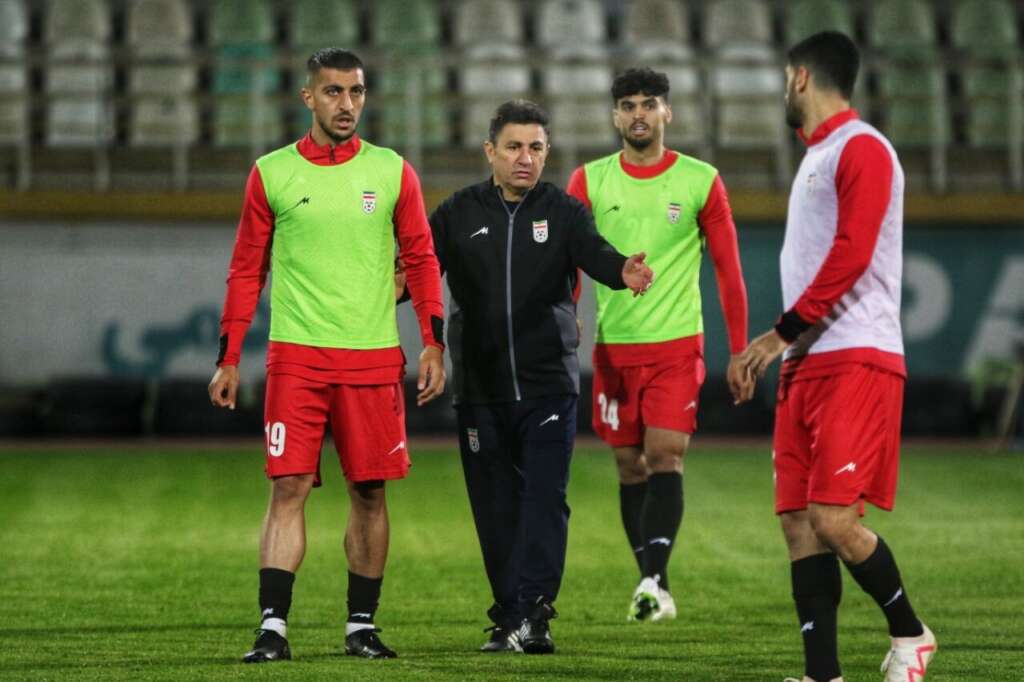
Ghalenoei and Ghoddos on touchline

Taremi's Unauthorized Penalty Decision Sparks crises in Team Melli dressing room.

A controversial incident involving captain Mehdi Taremi has overshadowed Iran's penalty shoot-out defeat to Uzbekistan in the final of the Al-Ain International Cup. Contrary to the coaching staff's explicit plans, Taremi unilaterally decided not to take the team's fifth and crucial penalty, instead assigning it to defender Milad Mohammadi, who subsequently missed with an amateurish kick.

While a loss in a friendly match is often dismissed as inconsequential, Taremi's act of insubordination—overriding the coach's direct orders—has raised significant alarms within the national team. The financial implication of forfeiting the tournament's prize money further compounds the seriousness of the defeat.

According to an ISNA report, the conflict erupted immediately after the match when a furious head coach, Amir Ghalenoei, confronted Taremi on the pitch. The confrontation escalated in the locker room, where Ghalenoei severely criticized his captain for what he deemed an arbitrary and costly decision.

In an attempt to justify his actions, Taremi stated to the media in the mixed zone that his reason for not taking the penalty was to "give other players a chance to gain experience."

However, this justification has been met with widespread skepticism. Even if well-intentioned, it is widely viewed as a feeble, poor judgment and an unreasonable excuse for such a critical, game-deciding moment. Making a significant tactical change without the coordination and approval of the head coach is a clear breach of protocol. The established procedure in football grants the head coach and his staff the final say on penalty takers, a decision based on training data, player psychology, and in-game conditions. While a captain may offer input, the ultimate authority rests unequivocally with the coach.

Taremi's actions constitute a direct challenge to the coach's authority. This move not only undermines the credibility of the technical staff but also sets a dangerous precedent for player insubordination, creating a crisis of leadership that extends far beyond the result of a single friendly.

In light of this incident, Taremi's captaincy is now seriously in question. His blatant insubordination against Uzbekistan, coupled with a perceived general lack of leadership on and off the field, has eroded his standing. With Taremi's own form also a subject of widespread media criticism, the under-pressure and reportedly furious Ghalenoei may have no choice but to consider an alternative for the captain's armband to reassert his authority and stabilize the squad.


Clash of Styles and Spirits: Iran's Pedigree vs. Uzbekistan's Momentum in Al Ain Final


The stage is set for a compelling final in the Al Ain International Cup, as Team Melli of Iran prepares to lock horns with a resurgent Uzbekistan at the Hazza Bin Zayed Stadium. While the FIFA rankings and historical prestige heavily favor the Iranians, the narrative on the pitch tells a vastly different and more intriguing story.

The Road to the Final: A Tale of Two Semis

The semi-finals provided a stark contrast in team morale and performance. Iran labored to a 0-0 draw against Cape Verde, a team ranked 77th in the world, before narrowly securing their final berth with a 5-4 victory in a penalty shootout. The performance was characterized by a disjointed offense, poor ball distribution, and a palpable lack of creativity. In worrying signs for Iranian fans, star striker Mehdi Taremi was effectively neutralized, while domestic league top scorer Amirhossein Hossenzadeh failed to test the Cape Verdean goalkeeper.

In the other semi-final, Uzbekistan delivered a masterclass, dismantling a strong Egyptian side with a commanding 2-0 victory. The White Wolves displayed a modern, fluid brand of football that their opponents struggled to contain. Their performance was a symphony of coordinated pressing, incisive passing, and clinical finishing—a world away from the disjointed display from Team Melli.

The Uzbek Juggernaut: Led by a Familiar Foe

The undisputed architect of Uzbekistan's victory was Oston Urunov. The Persepolis winger was in scintillating form, scoring a well-taken brace and terrorizing the Egyptian defense throughout the match. Urunov’s performance was a showcase of offensive prowess that the Iranian forward line conspicuously lacked; he was unlucky not to have scored four, with one effort cannoning off the woodwork and another denied by a spectacular save.

His display serves as a poignant reminder to the Iranian federation and fans: the quality exists within the Persian Gulf Pro League, but harnessing it for the national team remains a significant challenge. For Uzbekistan, Urunov symbolizes a new generation of technically gifted and confident players who excel in their defined roles within a coherent tactical system.

Iran's Identity Crisis: System over Stars?

On paper, Iran, ranked 21st in the world, should be the clear favorite. They boast a squad featuring stars from Europe's top leagues and a pedigree that includes consistent World Cup appearances. However, football is not played on paper. The recent form presents a grim picture for Team Melli, who are winless in their last five encounters against Uzbekistan, including a 1-0 loss in Tashkent in their most recent meeting.

The core issue appears to be systemic. Under the current coaching regime, the team often looks less than the sum of its talented parts. There is a reliance on individual brilliance to break down opponents, which, when it fails—as it did against Cape Verde—leaves the team looking rudderless. The midfield often fails to control the tempo or provide a link between defense and attack, leaving isolated forwards to feed on scraps.

The prevailing mentality is also under scrutiny. If a goalless draw against a lower-ranked opponent is perceived as an acceptable result, it raises questions about the ambition and attacking philosophy driving the team forward.

The Final Verdict: A Clash of Contradictions

This final is a classic clash of contradiction: historic reputation versus current form; individual stars versus a cohesive unit; cautious pragmatism versus confident, attacking football.

While Uzbekistan enters the match beaming with confidence and a clear tactical identity, Iran seems burdened by expectation and a lack of a defined playing style. For Team Melli to lift the trophy, they must engineer a massive turnaround—something they have shown little evidence of being capable of in recent times. Relying on the defensive solidity that held firm against Cape Verde will not be enough against a multifaceted Uzbek attack.

Prediction:

Based on the evidence of the semi-finals and recent head-to-head records, the momentum is firmly with Uzbekistan. They play as a confident, modern team that believes in its system and its players. Iran, in contrast, looks fragile and creatively bankrupt. A draw within regulation time, potentially leading to another nerve-wracking penalty shootout, seems the most optimistic outcome for Iran. On current form, however, Uzbekistan are the clear favorites to be crowned champions, poised to prove that a well-drilled team with a clear vision can triumph over a collection of individuals struggling for an identity.

Squad annoucned for Al-Ain International Cup.

Team Melli selectors announced the list of 26 players for the Al Ain International Cup tournament

Al Ain International Cup Unites Four World Cup-Bound Teams in November Showcase

Al Ain, UAE – Hazza Bin Zayed Stadium will host the prestigious Al Ain International Cup from November 13-18, bringing together four national teams that have secured their places in the 2026 FIFA World Cup. The tournament, organized by Windsunited, will feature Egypt, Iran, Uzbekistan, and Cape Verde competing during the official FIFA international window.

Tournament Structure & Schedule

The four-team competition will see full-strength squads as these nations prepare for major international competitions, including the Africa Cup of Nations in Morocco this December and the 2026 World Cup across the United States, Canada, and Mexico.

Match Schedule (All matches at 8:00 PM UAE time):

  • November 13: Iran vs. Cape Verde
  • November 14: Egypt vs. Uzbekistan
  • November 17: Third-Place Match
  • November 18: Tournament Final

World-Class Venue & Fan Experience

Rashed Abdullah, CEO of Al Ain Investment Club, emphasized the significance of hosting such a prestigious event: "We are delighted to announce this tournament as part of Al Ain's vibrant events calendar under the patronage and guidance of Sheikh Hazza bin Zayed Al Nahyan, Ruler's Representative in Al Ain Region."

"Al Ain has become a distinguished destination for elite teams and athletes worldwide, thanks to its world-class infrastructure and facilities," Abdullah added. "Hazza bin Zayed Stadium is among the best stadiums globally, and we are pleased to welcome all participating teams and ensure that fans, residents, and visitors alike enjoy unforgettable moments during the matches."

Tournament Organization & Expectations

Andrea Ferran, CEO of organizing company Windsunited, expressed enthusiasm for the upcoming event: "We look forward to making this tournament a valuable addition to the series of successful international events hosted at Hazza bin Zayed Stadium. Fans can expect a true sporting festival, with top players competing and side events for all ages."

"We ensured participation from four of the best teams from Africa and Asia — all qualified for the 2026 World Cup — which promises high-level matches featuring world-class players," Ferran noted, adding that delegations will begin arriving on November 10 for a full week of training and official matches.

Star-Studded Rosters

The tournament promises exceptional talent, with each team bringing their standout players:

Egypt: Features global superstar Mohamed Salah (Liverpool), Omar Marmoush (Manchester City), Rami Rabia (Al Ain), plus several players from Al Ahly, Zamalek, and Pyramids clubs.

Iran: Led by prolific striker Mehdi Taremi of Olympiacos.

Uzbekistan: Boasts Abdukodir Khusanov from Manchester City.

Cape Verde: Welcomes the return of Ryan Mendes to Hazza Bin Zayed Stadium.

Ticket Information

Tickets are available through the Platinumlist website, with organizers promising family-friendly activities to create an exceptional experience combining football excitement with Al Ain City's outstanding amenities.

The tournament represents a unique opportunity for football enthusiasts to witness World Cup-bound teams in competitive action while celebrating the multicultural community of the UAE through the universal language of football.

The names of the 26 players invited to Team Melli camp are as follows:

GOALKEEPERS: Alireza Beiranvand, Payam Niazand, Seyed Hossein Hosseini, Mohammad Reza Akhbari.

DEFENDERS: Ali Nemati, Milad Mohammadi, Amin Hezbavi, Shojaa Khalilzadeh, Mohammad Hossein Kanaani, Seyed Majid Hosseini, Saleh Hardani, Aria Yousefi, Daniyal Esmaili,

MIDFIELD: Mehdi Hashemnejad, Alireza Koushki, Saeed Ezzatollahi, Omid Noorafkan, Saman Ghoddos, Mohammad Ghorbani, Mohammad Mohebi, Mohammad Tikdari, Hadi Habibinejad,

FORWARDS: Amir Hossein Hosseinzadeh, Mohammad Omri, Mehdi Taremi, Ali Alipour.

Absent from the list is the team Captain, Alireza Jahanbakhsh, who has recently joined Belgian Club FC Dender as he was allowed this FIFA Day period to join the club for better preparation and much-needed practice and training with the new team. Also Absent are Sardar Azmoun, Mehdi Ghaedi , Ali Gholizadeh and Mehdi Mohebi.