Tag: Gianni Infantino

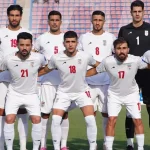
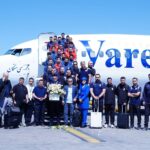
Team Melli departs to Turkey.

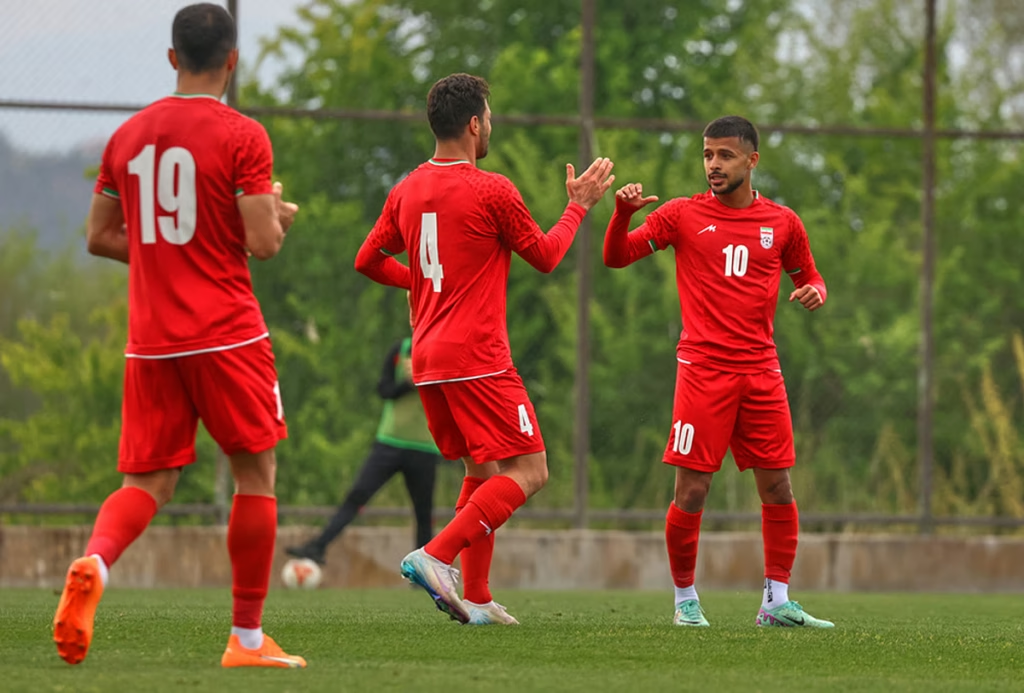
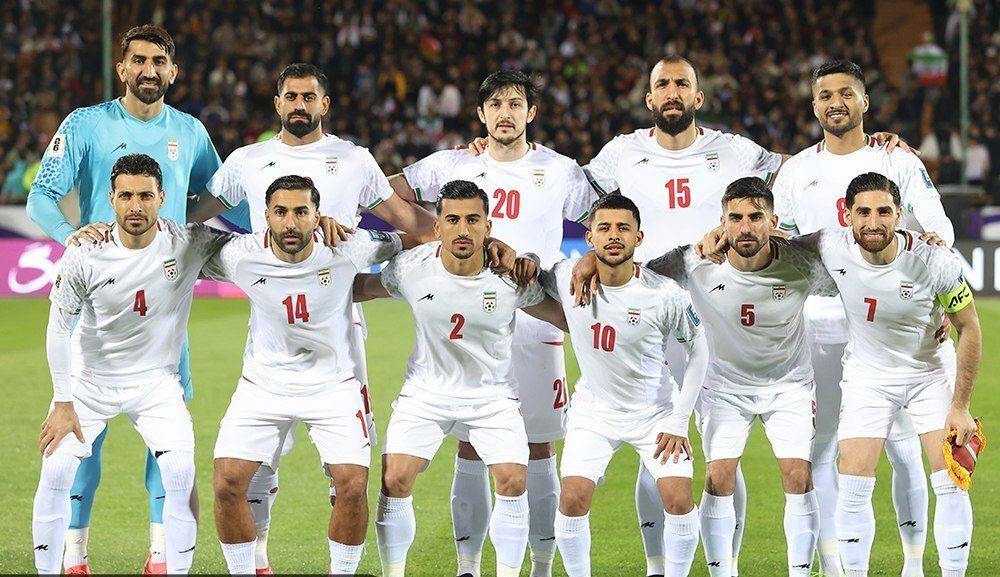
TEHRAN – Team Melli, the Iranian national football team, departed for Antalya, Turkey, this morning (Monday, May 18, 2026) to commence a crucial training camp and a friendly match against Gambia. The provisional squad consists of 30 players, 22 domestic-based and eight legionnaires. However, with FIFA mandating a final roster of just 26 players, four will be cut following the camp.

Upon concluding their Turkish preparations, the squad is scheduled to move to their U.S. base at the Kino Sports Complex in Tucson, Arizona, in early June, before heading to California for their first two World Cup matches. Team Melli manager Mohammad Nabi has indicated the possibility of facing another African side after Gambia, while expressing hope that the previously canceled friendly against Puerto Rico, originally planned on U.S. soil, might be revived.

Visa Hurdles Loom Large

Yet overshadowing these plans is a growing concern over entry to the United States. As of now, no member of the Iranian delegation, players or staff, has been granted permission to enter the country. The possibility that some staff members or players could be denied a U.S. visa remains very real, casting a pall over the team’s logistical preparations.

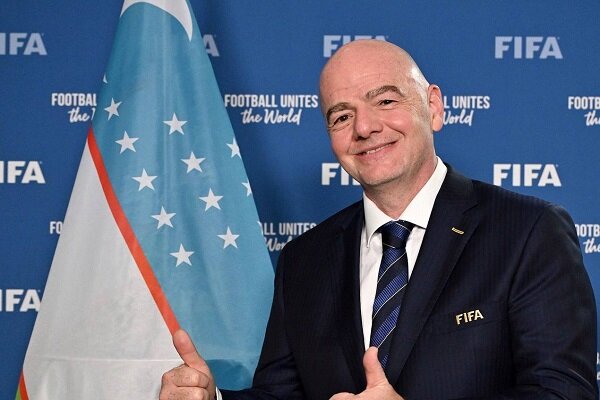
When asked whether FIFA had secured any assurances regarding entry and visa arrangements for Iran’s players, FIFA Secretary-General Mattias Grafstrom declined to elaborate. His reticence signaled that the world football governing body may have little to no influence on such matters, despite public assurances previously given by FIFA President Gianni Infantino.

A Troubling Precedent

Compounding these anxieties is the recent experience of Mehdi Taj, the head of Iran’s football federation, who encountered significant difficulties entering Canada for a FIFA conference. Although Canada is only fractionally less hostile to Iran than the United States, the incident serves as a stark warning of the type of challenges the Iranian delegation will likely face when attempting to enter North America.

For a squad already grappling with a plethora of issues, ranging from finalizing the roster to managing political pressures and logistical hurdles, the threat of visa denials represents an added burden before a single ball is even kicked in the World Cup.
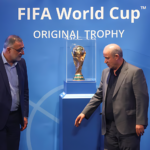
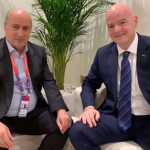
Taj was allowed into Canada but returned back in protest.

May 1 (Reuters) – Iranian soccer federation president Mehdi Taj said Canadian officials cleared him to enter the country for the FIFA Congress, but Iran’s delegation chose to turn back after being held for three hours and questioned at a Toronto airport, Iranian media reported on Friday.

Taj, a former member of Iran’s Islamic Revolutionary Guard Corps (IRGC), said he was questioned by Canadian immigration about his ties to the group, but was ultimately allowed into the country for the pre-World Cup gathering in Vancouver.

Canadian authorities have said members of the IRGC are prohibited from entering the country, which is set to co-host the World Cup from June along with the United States and Mexico.

“We all had visas and were even checked in Turkey. They told us they had questions for you and asked if we were members of the IRGC,” Iran’s semi-official news agency Tasnim quoted Taj as saying.

“We told them that there are 90 million IRGC members in Iran. They said that we don’t allow people from this organisation in. They said that it is the laws of our country.

“After a while, they said you can enter but we decided to return. They didn’t deport us and we decided to return ourselves… I told the Canadians that you kept us at the airport for three hours, you made us wait for nothing.”

Reuters has contacted Immigration, Refugees and Citizenship Canada, which issues visas to travel to the country, for comment.

Taj said FIFA president Gianni Infantino had offered to send a jet to take the Iranian delegation to Canada after they returned to Turkey, but they refused.

“I told the FIFA secretary general (Mattias Grafstrom) that you are intimidated by America and that you say ‘yes sir’ to whatever they say,” he said.

Reuters has reached out to FIFA for comment.

Infantino insisted on Thursday that Iran would play World Cup matches in the United States, despite tensions between the two countries since the U.S. and Israel launched a war against Iran in February. FIFA earlier rejected Tehran’s request for alternative venues for matches on U.S. soil.

“We need to hold a meeting with FIFA officials to ensure that if we are to come to the World Cup, there should be no side issues and controversies for our team,” Taj said about Iran’s participation.

Mehdi Taj “Iran Ready for World Cup, despite US government hostalities”


The head of the Football Federation Islamic Republic of Iran (FFIRI) has addressed the situation of the national football team regarding the 2026 FIFA World Cup in the United States, expressing deep concern over American hostility while reaffirming Iran’s determination to prepare vigorously for the tournament.

“Given the evils of the American authorities, we do not see a favorable prospect for holding the World Cup under current conditions,” the FFIRI chief stated. “Nevertheless, we are preparing ourselves for a strong and honorable presence in these competitions.”

He confirmed that the list of national team players for the upcoming camp has been announced, with training set to begin Monday at the national teams’ camp in Tehran. “Our effort is to ensure that there is no disruption to the national team’s preparation process,” he added.

Common Goal: World Cup Qualification and Honor

Referring to Team Melli’s objectives, the FFIRI head emphasized national unity: “All our efforts are to prepare the national team for a strong presence on the path to qualifying for the World Cup. The federation, the country’s sports complex, and the people all support the national team. Our common goal is to advance and participate honorably in the World Cup.”

Request to Move Matches to Mexico. No Final Decision Yet

Regarding the FFIRI’s formal request to change the venue for Iran’s matches from the United States to Mexico, the official provided an update: “Requests have been made, and follow-ups are ongoing regarding moving the venue of the games to Mexico. However, FIFA has already carried out processes such as ticket sales, the lottery, and stadium determinations. Any change requires extensive coordination. We are following up so that this important step can be taken if possible.”

He clarified that no final decision has been made, and the outcome depends on FIFA’s cooperation and security assurances from host authorities.
The FIFA President has already confirmed that there is no chance of Iran’s matches being moved to Mexico.

Warm-up Match with Spain Still Under Review

On the possibility of a friendly match with Spain, the FFIRI head said: “The match with Spain has not yet been finalized for cancellation. We are still discussing whether the conditions for holding this warm-up match will be met. This issue is being followed up, and an announcement will be made if it is finalized.”

No Interference in Player Selection – Denis Eckert Addition Planned

Addressing rumors about Sardar Azmoun’s invitation to the national team camp, the FFIRI chief stressed: “The head of the federation does not interfere in the selection or invitation of any player. The selection of players, determining the main squad, and selecting warm-up opponents are within the authority of the national team head coach. The federation does not interfere in which player must be in the permanent squad or in technical decisions. We provide the frameworks and facilities; the technical decisions are the responsibility of the head coach.”
The exclusion of Sardar Azmoun from Iran’s last two friendlies against Nigeria and Costa Rica, allegedly over a social media post showing him with the Ruler of Dubai, has become the catalyst for what many view as a politically motivated decision. To date, no official explanation has been provided for his absence. Neither the FFIRI, head coach Amir Ghalenoei, nor any other authoritative source has offered a reason for sidelining Team Melli’s second-highest all-time scorer.

The lack of transparency has fueled speculation, especially given that Azmoun is now fully fit and is set to play in the AFC Champions League Elite semi-final on Monday.

Mehdi Taj also confirmed a new addition: “We have planned to add a striker from Belgium, Denis Eckert, to the national team.”


Ghalenoei: Costa Rica Victory Should Not Deceive Us; Infantino Heard the Voice of the Oppressed

Amir Ghalenoei, head coach of Team Melli, spoke candidly following his side’s emphatic 5–0 victory over Costa Rica, cautioning against overconfidence while praising his players’ performance.

“After a demanding training camp, our players produced an excellent result today and secured a high-scoring win against a respectable and hardworking opponent,” Ghalenoei said. “However, this decisive result might mislead some into believing Costa Rica were a weak team, that is far from the truth.”

He pointed to Costa Rica’s recent form as evidence: “Just days ago, this same team managed to neutralize Jordan under their new coach and continued fighting until the final whistle. That is why I insist this victory should not fool us. Costa Rica has long been one of the strongest sides in the North American region and has even reached the World Cup quarterfinals in their history.”

Ghalenoei noted that despite Costa Rica’s absence from this year’s World Cup, they are in the midst of a rebuilding phase. “They are integrating several young players into their squad,” he explained. “Anyone who understands football knows that a team undergoing renewal can pose serious challenges to any opponent.”

Turning to his own squad’s performance, Ghalenoei expressed satisfaction while stressing the importance of continued growth. “From the very first whistle, our players implemented the tactical points we had emphasized, particularly in the attacking third. But we cannot afford to rest on this result. From the beginning, we made it clear that our objective in the friendlies against Nigeria and Costa Rica was never merely the outcome. Instead, we aimed to reinforce our strengths, address our weaknesses, and enhance overall team cohesion.”

He added: “We had the capacity to score even more goals today, but overall it was a solid, competitive, and highly beneficial match for us. In many respects, it was a valuable accomplishment.”

A Meaningful Encounter with Infantino

Ghalenoei also highlighted a significant off-field moment during the team’s Antalya training camp, the presence of FIFA President Gianni Infantino.

“This was a positive development in its own right,” Ghalenoei remarked. “One of the key outcomes of the Antalya camp was that the FIFA president joined us, and we were able to convey the voices of Iran’s oppressed people directly to Infantino.”

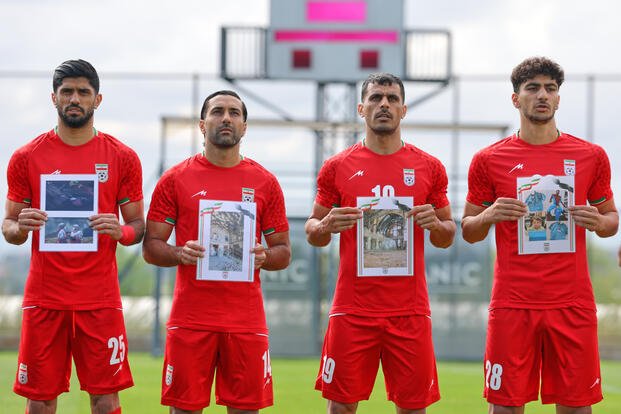
He elaborated on the message delivered: “In this brutal, imposed war that the enemies have waged unjustly against our country, it is not only national figures who have dedicated years of service to Iran who have suffered, but also ordinary citizens, among them, innocent children from Minab who have been martyred. We made this oppression known to him firsthand. You saw how they have even targeted our sports and historical sites in acts of cowardice.”

According to Ghalenoei, Infantino’s response was striking. “Despite threats from the U.S. president, the FIFA president announced his full support for our safe participation and necessary preparations for the World Cup.”


Team Melli Thrash Costa Rica 5-0 in Antalya Friendly

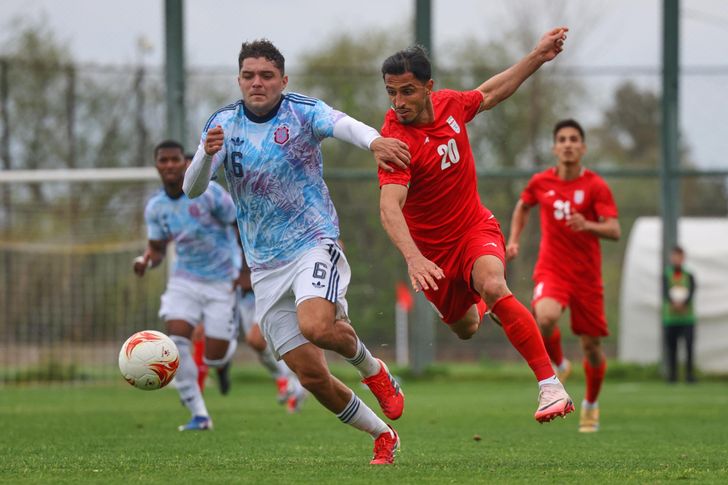
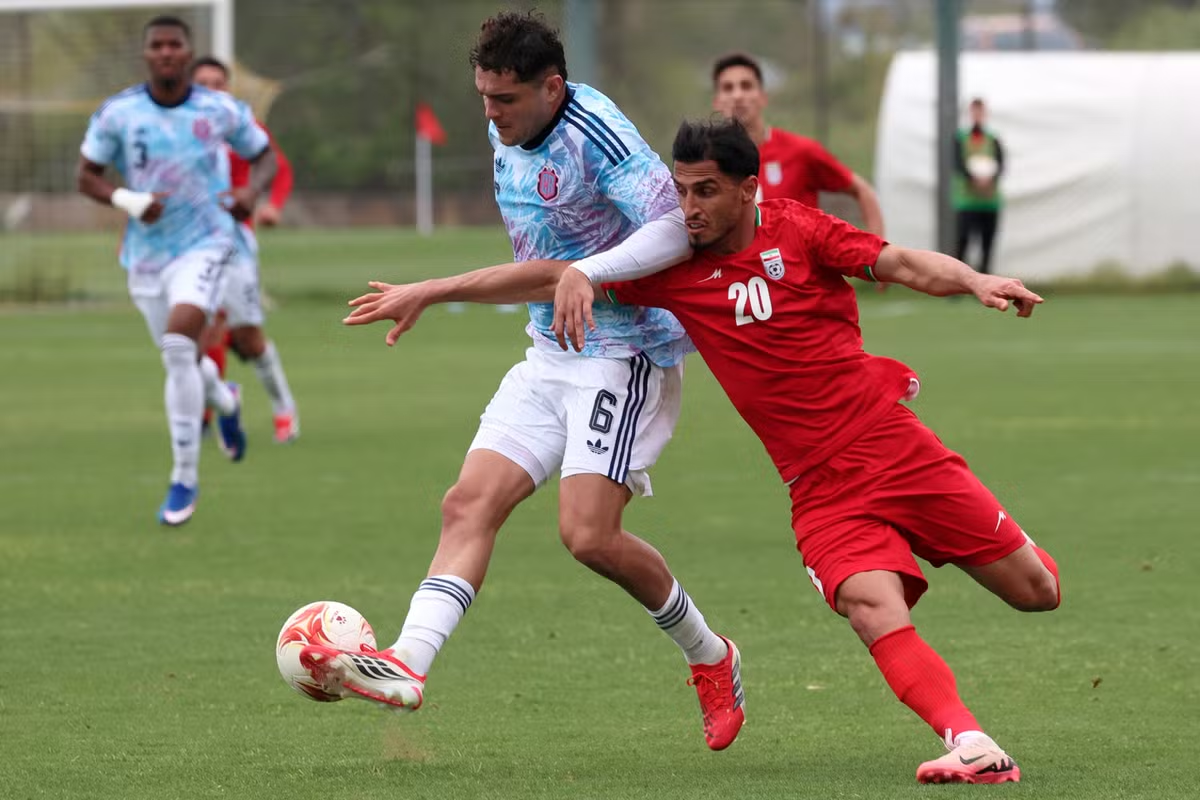
Team Melli delivered a commanding performance in their second friendly international, routing a physical Costa Rica side 5-0 at the Mardan Titanic Sports Complex in Antalya.

After the disappointment of a narrow defeat to Nigeria on Friday, head coach Amir Ghalenoei abandoned the experimental 3-5-1-1 formation in favor of the more familiar 4-3-3. The tactical switch yielded immediate dividends.

Iran were on the scoresheet inside ten minutes. Mehdi Taremi, who would go on to have a starring role, produced excellent work down the flank before setting up Ali Gholizadeh, who finished immaculately past the Costa Rican goalkeeper.

The lead was doubled nine minutes later when Hosseinzadeh was fouled in the box. Captain Taremi stepped up and converted the resulting penalty with ease to make it 2-0.

Taremi then turned provider once more, delivering a pinpoint assist for Mohammad Mohebi, who netted Iran’s third goal in the 31st minute. Shortly after, another foul on Mohebi resulted in a second penalty, which Taremi again dispatched to give Iran a 4-0 advantage at the break.

Early in the second half, substitute Mehdi Ghayedi produced the goal of the game, lashing home from the edge of the box after a rebound from a corner to complete the 5-0 rout.

Ghalenoei utilized the friendly to its full extent, making nine substitutions throughout the match. There were notable debuts for young talents, including 19-year-old Persepolis forward Amirhossein Mahmoudi. Amirmohammad Razzaghinia, another promising youngster, started the contest and played the full 90 minutes.

While Iran had suffered from wasteful finishing in the defeat to Nigeria, there were no such issues against a Costa Rican side that had drawn 2-2 with Jordan on Friday.

The performance was marked by a fluid passing game, with Iran showing composure even in congested areas. Diagonal balls and well-worked combinations produced another pleasing display, achieved despite the emotional stresses facing the squad.

Defensively, Iran were resolute. The central partnership of Nemati and Khalilzadeh provided stability, while Danial Esmaeilifar and Milad Mohammadi controlled the flanks. Goalkeeper Hossein Hosseini, who replaced Beiranvand, enjoyed a quiet first half with little to do.

Ali Gholizadeh continued his impressive form, capping his performance with the opening goal. Taremi, who had been disappointing against Nigeria, delivered a man-of-the-match display with two goals and two assists.

Costa Rica offered little attacking threat, but the match served as a valuable exercise for a Team Melli side that continues to grow in both stature and confidence. The integration of two young debutants also provided a refreshing boost for Ghalenoei’s squad.

In a surprise appearance, FIFA President Gianni Infantino attended the match at the Mardan Stadium practice field. Cameras frequently focused on Infantino throughout the first half. It is believed that the FIFA chief was present to meet with the Team Melli squad and management, offering support and reassurance ahead of the World Cup.

However, Infantino’s words may carry limited weight given the context of the host nation. Its president has publicly stated that he cannot guarantee the safety of the Iranian delegation, casting a shadow over what was otherwise a triumphant day on the pitch.


Will Iran withdarw from the World Cup?

Donald Trump has said that it would not be “appropriate” for Iran to play in this summer’s World Cup following the US and Israeli strikes on the country.

Iran’s sports minister Ahmad Donyamali had previously appeared to rule out the possibility of the country playing at the tournament, saying that “the conditions for participation do not exist”, before Trump’s latest intervention struck a similar tone.
The US president posted on Truth Social: “The Iran National Soccer Team is welcome to The World Cup, but I really don’t believe it is appropriate that they be there, for their own life and safety. Thank you for your attention to this matter!”

Fifa president Gianni Infantino insisted at one point that he had received assurances from Trump that Iran would be welcome at the tournament. However, the organisation is yet to respond to requests for comment regarding Iran’s participation in the finals in the light of Donyamali’s comments or Trump’s remarks.

The tournament takes place across multiple cities in the United States, Mexico and Canada this summer. Iran’s group games are scheduled to be played in the US, between Los Angeles and Seattle.

Iran were the only nation to be missing from a World Cup planning event that included participating teams, held earlier this month in Atlanta.

Could Iran boycott the World Cup?
Iran are scheduled to play two World Cup games in Los Angeles and another in Seattle. They will face New Zealand and Belgium in LA on June 15 and June 21, followed by the match against Egypt in Seattle on June 26.

But little is known about how Iran could respond to the US and Israeli strikes in a sporting context. Iran’s supreme leader Ayatollah Khamenei has been killed, with his son Mojtaba Khamenei replacing him.

There has never been a boycott of the World Cup on political grounds and the last World Cup boycott was 60 years ago, when African teams refused to play in protest of receiving just one-third of a qualifying berth.

There has never before been a situation where a World Cup host has attacked a qualified team so close to the start of the tournament, with just four months to go before the opening game.

As the Independent’s Miguel Delaney highlighted, several European countries discussed a World Cup boycott when the United States threatened to annex Greenland in January.

Even before the strikes, there was political tension over Iran’s involvement in the tournament due to visa restrictions. The country’s football federation followed through on a threat to boycott Novembers’s World Cup draw in Washington DC.

At the time, Iranian Football Federation spokesman Amir Mehdi Alavi said the US had granted visas to four members of the Iranian delegation, including head coach Amir Ghalenoei, but had not issued one to its football president Mehdi Taj.

The boycott of the World Cup draw, Alavi said, followed “unsportsmanlike actions” by one of the host countries.

And the situation has only escalated since then. Athletes, teams members and family members were previously excluded from Trump’s travel ban but the US government could also decide to restrict Iran from competing at all if they cited security risks.

What could happen if Iran don’t play?
In Fifa’s World Cup regulations, published last year and before the qualifying stage of the tournament was complete, it states: “If any Participating Member Association withdraws and/or is excluded from the Fifa World Cup 26, Fifa shall decide on the matter at its sole discretion and take whatever action is deemed necessary. Fifa may decide to replace the Participating Member Association in question with another association.”

Iran qualified automatically for the World Cup, with the United Arab Emirates losing out on an automatic qualification spot and subsequently going out in the play-off rounds. In the event of Iran not playing in the World Cup, they would be the closest replacement. Iraq could only be an option, if they do not come through their intercontinental play-off against either Bolivia or Suriname in Mexico later this month.

But the uncertainty in the Persian Gulf as a result of the US strikes means that replacing Iran with either the UAE or Iraq could be far from straight-forward, and Fifa’s regulations indicate that they could do whatever they would like, anyway.

There is some precedent from last summer when Mexican side Club Leon were kicked out of the Club World Cup due to multi-club ownership rules. Fifa then announced a play-off between Los Angeles Football Club (LAFC) and Mexican team Club America which was won by LAFC, granting them access to the tournament.

Fifa’s World Cup regulations also state: “Fifa has the right to cancel, reschedule or relocate one or more matches (or the entire FIFA World Cup 26) for any reason at its sole discretion, including as a result of force majeure or due to health, safety or security concerns.”

Seemingly, there is therefore the possibility that Iran’s games could be moved from the US; but there is also the possibility that the US and Iran could play each other at the tournament. This would happen if both teams were runners-up in Group D and Group G respectively, with that fixture scheduled to be played in Arlington, Texas.

Infantino’s idolisation of Trump has left football with blood on its hands

Story by Barney Ronay
 The Guardian

Mr President. Fellow exco members. We’re going to need a bigger Board of Peace. How many mini‑pitches are we up to now? Gaza got 50 of them last month. What will it take to football-fix the global conflict being set in train by Fifa’s own Peace Prize Boy? A hundred mini-pitches? Four billion mini-pitches? All the mini‑pitches in the universe?

In a more sane version of what we must, out of habit, call the real world, it would seem absurd to talk about sports administration in the context of the US, Iran and the airborne conflict being played out across the borders of their allies.

Sport is the most important of all the unimportant things. Sport is a part of a culture you fight for, but not a part of the battle. Sport is also prone to insisting on its own importance, shoving itself to the front of every photo like a particularly deluded family Labrador.

When news emerged on Monday that Iran had launched a drone attack on the Ras Tanura oil refinery in Saudi Arabia, there was an urge to point out this is a mere 250 miles from Cristiano Ronaldo’s house. Do we need a footballers‑and-their-war-menaced-mansions gallery? Meanwhile the UK government has advised British nationals in Saudi to stay inside and take cover. So … you’re saying this is an Ivan Toney story?

There are two reasons why this dynamic has now shifted, why football is not just an observer but an active participant in this picture; reasons that should in any sane version of reality be hugely damaging for Fifa and its executive.

The basic premise is jaw‑dropping enough. The co‑host of the Fifa World Cup finals this summer is currently bombing one of its participating nations. The co‑host of the tournament has murdered the head of state of the third‑ranked team in Group G.

Nothing quite like this has happened before. Britain was involved in bloody conflicts in Borneo and Aden while it hosted the 1966 World Cup. Russia has been banned from international sport as a consequence of invading the borders of a sovereign state, although this was still deemed unproblematic in 2018.

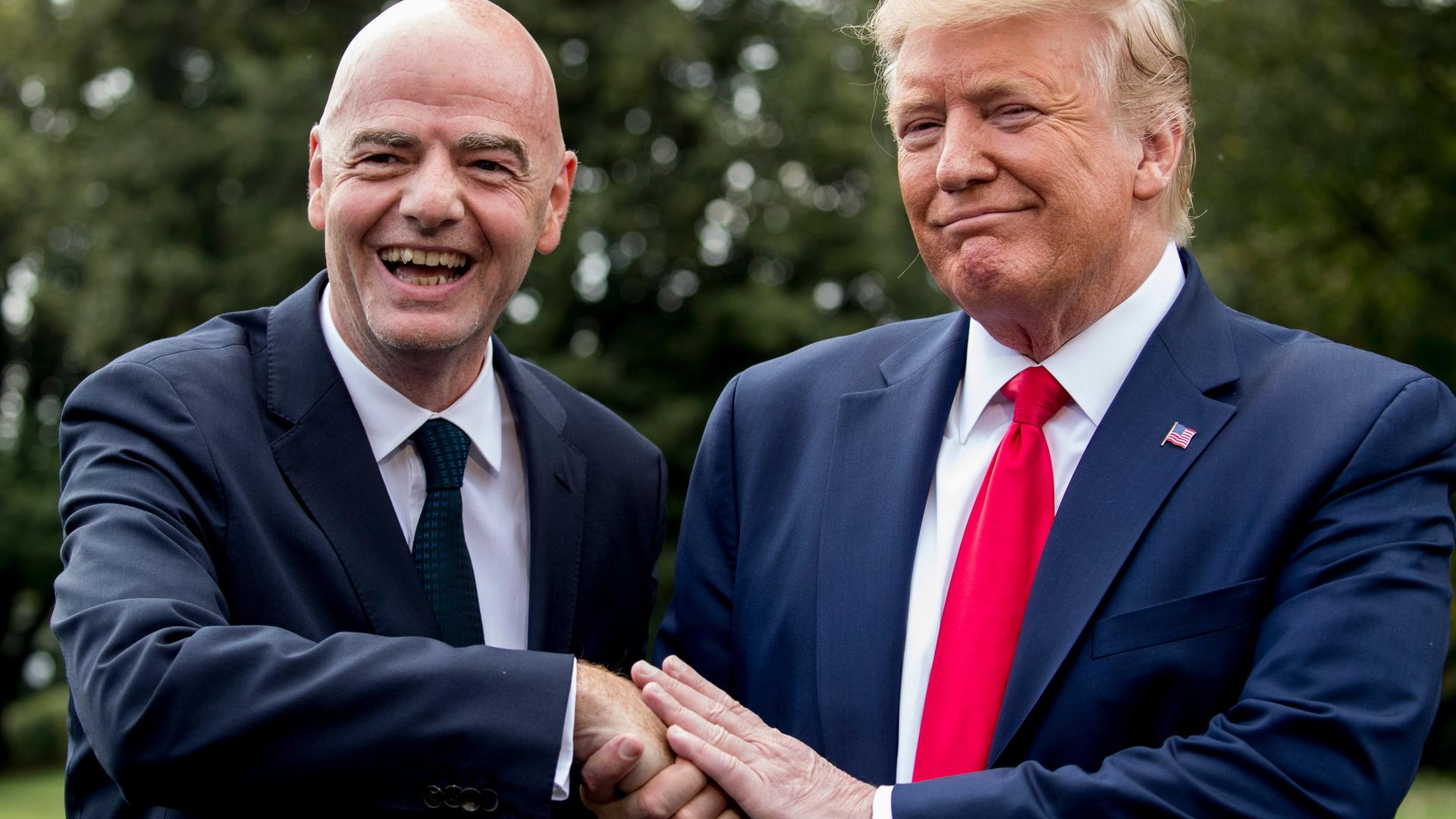
Clearly, nobody out there will have the will or the courage to apply a similar logic to the US. The issue is the extent of Fifa and Gianni Infantino’s willingness to act as a fluffer, ally and de facto propaganda mouthpiece for Donald Trump’s regime.

Never mind how gravely Infantino might frown, while pretending this has all been necessary realpolitik. The fact is, Fifa has tied itself with unquestioning zeal to a US president who has initiated eight acts of overseas aggression in his second term. And football has blood on its hands now, too.

This might seem like a stretch, or an overly dramatic take on the necessary exercise of Fifa’s global remit. But this has also been a choice. Infantino has, in full view of the consequences, repeatedly put Fifa in the same room as Trump’s autocratic exercise of power. Not as a guest or a bystander, but as an enabler, an active participant in the publicity machine.

Under its own statutes Fifa is supposed to be politically neutral. And yet this has still happened, to a degree that it has by now moved past cartoonish to grotesque. It was a choice to trail after the president like a goggle-eyed teenager offering gifts, a bauble here, a peace prize there, a strange and frightening Club World Cup trophy replica that looks like it contains a tiny drawer full of crow’s heads.

It was a choice not just to award Trump a peace prize, but to invent a peace prize from scratch so he could win it, that fittingly gruesome drag‑me‑to‑hell golden bauble with its nest of clawing hands.

As was the related announcement of the weird and pointless Gaza mini-pitch construction project, with its manipulative background imagery of rubble and displaced people casually tossed into the mix, a gruesome form of public conscience washing.

All of this is doubly absurd given the continued participation in the Fifa-verse of Israel, the same nation that is levelling Gaza’s existing infrastructure. Almost as an afterthought, it goes without saying that the weapons being used to reduce these people’s homes to rubble are being part-funded by the hosts of this summer’s tournament and Infantino’s own daddy‑regime. But never mind. The president has a golden peace ball. Keep looking at the peace ball.

In the end this will catch up with you. The open doors, the hours at the buffet table, the ballroom passes, all come at a cost. Fifa may not be directly responsible for all this. But it is now decisively part of the image-making that has empowered Trump to take his extreme executive actions.

There is of course a hugely complex set of demands in play here. The idea of a right and wrong side of history is never really clear. Sometimes you might straddle many of them all at once. But Fifa is so clearly drawn to the nearest power source, the biggest stick, the grandest stage, all the while presenting itself as grave and stately ambassador of hope, led by a man who increasingly resembles essence of pure inauthenticity, reconstituted into human form, packed into a blue suit and pushed out on stage to talk about peace, in the voice of a man addressing you from the bridge of his own golden ship of hope.

What happens next is entirely uncertain. As news broke of the US bombardment of Tehran, Fifa executives were at Hensol Castle in Wales overseeing the 140th annual general meeting of the International Football Association Board, which is at least a suitably scaled occupation for a bunch of sports administrators.

It seems impossible that Iran can now compete at the World Cup this summer, or indeed that it should have been present in any case given the regime is accused of killing tens of thousands of civilian protesters. The Iranian FA has stated it “cannot be expected to look forward to the World Cup with hope”. Its fans were already banned from entering the US.

Under Fifa’s statutes, there is no direct remedy should Iran drop out, although there is pretty much a free hand under force majeure for the executive committee to act as it sees fit. The United Arab Emirates and Qatar, struck by Iranian bombs in the past few days, were in the same qualifying group. As were North Korea. Perhaps Infantino has a route here to usher in another dear leader.

Some kind of fudge will be offered. A World Cup will take place if there is still a world left to contest it. The US needs this to happen. The show must continue. And this is an incidental aspect of the extraordinary story of Trump and Infantino. Football is always telling you things about the world, always running ahead to the tide.

Amir Ghalenoei

In this case it is providing the ideal, textbook, read-it-and-take-notes lesson in how dictatorships and propaganda work, how power glosses its actions with noise. How spectacle is used to flood the zone, and how nothing floods the zone like football.

In any sane version of sports governance Infantino should, at the end of all this, be forced to explain his actions, to justify taking global football into this space. It won’t happen. His own executive power is absolute.

The money continues to flow to his sub-partners. But history will still judge him, and judge his version of Fifa. There is no way of escaping that lens. And from here it already looks like the most grotesque, post-truth, fawningly complicit version of big sport ever devised.

Iran Withdraws from 2026 World Cup Draw in Protest Over U.S. Visa Denials


Tehran – In a significant diplomatic and sporting escalation, the Iranian Football Federation has announced it will boycott the official draw ceremony for the 2026 FIFA World Cup, citing “unsportsmanlike” and politically motivated visa denials by the United States for two members of its delegation.

The decision, confirmed by Iranian football official Amir Mehdi Alavi, follows days of frantic negotiations and represents a direct challenge to FIFA’s authority and its guarantees of fair access to all member associations.

A Decision Forced by “Unsportsmanlike” Actions

According to Alavi, the crisis unfolded when the United States failed to grant visas to several essential members of the Iranian contingent slated to travel for the draw ceremony. The U.S., along with Canada and Mexico, is a co-host of the 2026 tournament.

“After extensive inquiries within the Football Federation, a meeting of the Board of Directors, and high-level consultations with officials from the Ministry of Youth and Sports and the Ministry of Foreign Affairs, this issue was formally reported to FIFA,” Alavi stated.

He emphasized that the nature of the visa denials forced Iran’s hand. “Given that the decisions taken are unsportsmanlike and the path has strayed entirely from the sporting process, it was decided that the Iranian delegation will not be present at the Official World Cup 2026 draw ceremony,” Alavi declared. “We cannot participate in a process that is already compromised.”

Direct Appeals to FIFA’s Highest Levels

The Iranian Federation has not been silent in its protest. Alavi revealed that over the past 48 hours, the federation has been in urgent correspondence with world football’s governing body, bringing the matter directly to the attention of FIFA President Gianni Infantino and Secretary General Mattias Grafström.

“FIFA has acknowledged the gravity of the situation and has announced that it will seriously follow up on the issue,” Alavi said. “We believed it was our duty to inform FIFA, and President Infantino personally, that the fundamental principles of fair play and inclusion are being violated.”

Broken Promises and a Precedent of Assurance

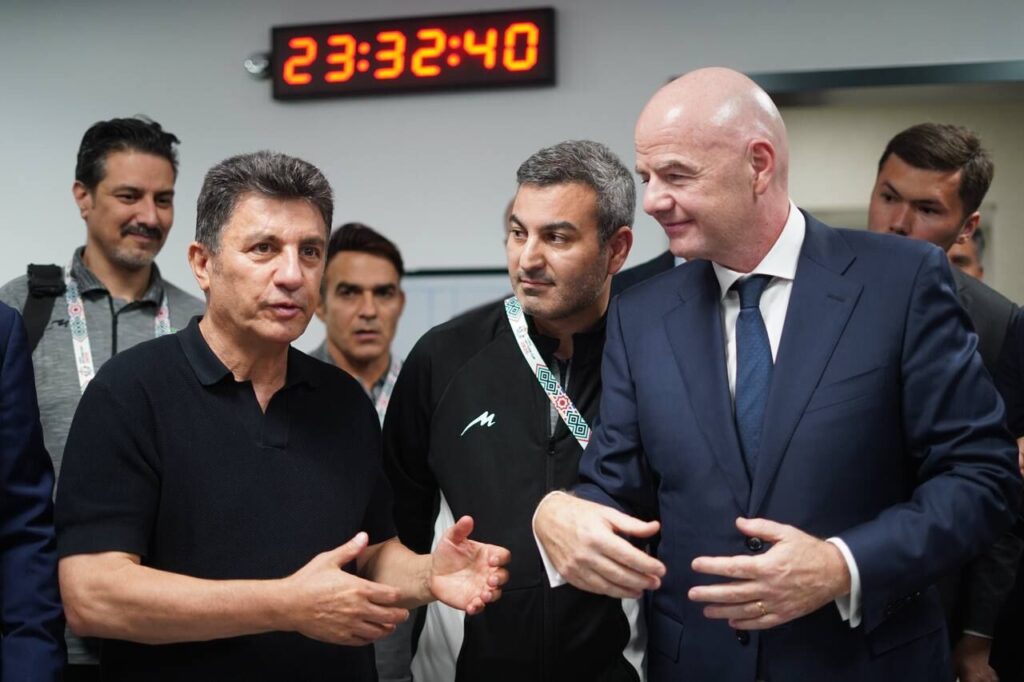
Alavi pointed to a specific precedent that makes the current visa denials particularly jarring. He recalled that during the 2025 CAFA Nations Cup final against Uzbekistan, President Infantino was present in the Iranian national team’s locker room.

“On that occasion,” Alavi recounted, “President Infantino personally assured our players that the presence of the Iranian convoy would be guaranteed from the beginning of the draw ceremony until the last day of the national team’s participation in the World Cup, including all essential workshops and events.”

This assurance now rings hollow, as the logistical foundation for Iran’s participation has collapsed before the tournament draw has even taken place.

A Delegation in Limbo

The practical implications of the visa issue are stark. Alavi explained that even the president of the Iranian Football Federation, who holds official positions within the Asian Football Confederation (AFC) and FIFA, has had his flight ticket issued.

However, the delegation faces a crippling imbalance. “The security director and the executive director, who are indispensable for our participation in the mandatory pre-tournament workshops, have not been granted visas,” Alavi revealed. This creates an untenable situation where the delegation’s leadership could attend, but the operational staff responsible for safety and logistics could not.

“There is no guarantee that the five people scheduled to attend the drawing ceremony will not face problems,” Alavi concluded, underscoring the profound uncertainty that now clouds Iran’s entire pathway to the 2026 World Cup.

A Deeper Conflict Behind the Boycott

However, a different perspective on the visa denials has emerged from sources familiar with the U.S. position. It should be noted that neither the security director nor the executive director, who were denied the visa, are considered essential for Iran’s presence at the drawing ceremony itself. Their roles are primarily relevant for subsequent operational workshops.

In fact, the inclusion of a security director in a delegation for a football draw ceremony has reportedly raised alarms with U.S. authorities. The presence of such a role is unusual for a sporting event of this nature and is understood to be a significant factor in the visa denial. This decision comes as U.S. authorities are in the midst of a broader, heightened crackdown on the activities of non-U.S. citizens within the United States, particularly those affiliated with certain foreign governments.

A Test for FIFA’s Authority

This incident places FIFA in an extraordinarily difficult position, caught between the protest of a member association and the legitimate security and immigration policies of one of its host nations. Iran’s boycott represents a powerful symbolic protest, but the underlying reasons for the visa denials reveal a more complex dispute that extends far beyond the football pitch. The world football body’s next steps will be closely watched as it attempts to navigate this profound diplomatic impasse, which raises serious questions about its ability to insulate the World Cup from international political tensions.

FIFA President Infantino Visits Iran Locker Room, Congratulates Team on World Cup Qualification

(Tashkent, Uzbekistan) – Following Iran’s narrow 1-0 defeat to Uzbekistan in the CAFA Nations Cup 2025 final, FIFA President Gianni Infantino made a surprise visit to the Team Melli locker room to personally congratulate the players on their recent qualification for the 2026 FIFA World Cup.

According to IRNA, the President’s message was one of unwavering support and admiration for Iranian football. He emphasized the significance of their World Cup achievement, stating, “Congratulations on qualifying for the World Cup; it was not an easy task. You have made your country and your families proud, and you have also made Iranians abroad happy.”

Infantino expressed his personal fondness for the team, revealing, “I am a big fan of Iranian football. One of your players gave me his shirt in 2019, and I still have it. It is very valuable to me.”

He went on to highlight a iconic moment from the team’s recent history, recalling, “I still remember the Qatar World Cup. The Iran-Wales match was unbelievable. This is the feeling that football can give us; the whole stadium was happy at that moment.”

Addressing the immediate disappointment of the CAFA final loss, the FIFA President offered words of encouragement: “You played very well today, but in football, there are always wins and losses. You are a strong team and should be proud of yourselves.”

Looking ahead to the 2026 tournament in the United States, Canada, and Mexico, Infantino provided a definitive assurance: “As the President of FIFA, I say welcome to the World Cup. I guarantee your presence.”

Concluding his address, Infantino reflected on the unifying power of the sport: “With the help of football, we want to unite the whole world. Unfortunately, the global situation is complex, but football can create this unity that politics often cannot. For the sake of your parents and your families, continue on this path so that you can bring joy to your people. I look forward to seeing you at the World Cup.”


Uzbekistan and Iran meet in the final of CAFA Nations Cup 2025

The national football teams of Iran and Uzbekistan will face each other in the final of the CAFA Nations Cup on Monday, September 7, at 6:00 PM local time at the Olympic Stadium in Tashkent. Both Iran and Uzbekistan entered the final with 7 points, finishing as the top teams in their respective groups and setting the stage for a highly anticipated clash.

Iran, the highest-ranked team in the region, will be looking to defend its title after winning the previous edition of the tournament. Uzbekistan, playing with the immense support of a home crowd, will be determined to claim the championship on their own soil and secure a historic victory against a regional powerhouse.

The match has garnered significant international attention, notably with the confirmed attendance of FIFA President Gianni Infantino. The Uzbekistan Football Federation announced that President Infantino will travel to Uzbekistan to review projects related to the further development of football in the country, visit the state-of-the-art National Football Center, and personally watch the final match of the CAFA Nations Cup 2025. His presence as a special guest underscores the growing importance of Central Asian football on the global stage.

This final is not just about regional supremacy but also serves as crucial preparation for both teams ahead of the upcoming joint FIFA World Cup 2026 qualification campaigns, adding an extra layer of significance to the encounter.
Iran defeated Afghanistan 3-1, India 3-0, and drew with Tajikistan 2-2 to reach the final.
Uzbekistan drew with Oman 1-1, defeated Turkmenistan 2-1, and Kyrgyzstan 4-0 to reach the final.