WASHINGTON, D.C. – The path to glory will be set on Friday, December 5th, 2025, as the draw for the expanded 48-team FIFA World Cup 2026 takes place. For the 42 qualified nations, the ceremony will be a pivotal moment of excitement and strategy, defining their tournament destiny.
The Qualified Contingent
The field is nearly complete, with six final spots still to be decided via playoffs.
- Hosts: Canada, Mexico, USA
- AFC (Asia): Australia, Iran, Japan, Jordan, Korea Republic, Qatar, Saudi Arabia, Uzbekistan
- CAF (Africa): Algeria, Cabo Verde, Côte d’Ivoire, Egypt, Ghana, Morocco, Senegal, South Africa, Tunisia
- CONCACAF: Curaçao, Haiti, Panama
- CONMEBOL (South America): Argentina, Brazil, Colombia, Ecuador, Paraguay, Uruguay
- OFC (Oceania): New Zealand
- UEFA (Europe): Austria, Belgium, Croatia, England, France, Germany, Netherlands, Norway, Portugal, Scotland, Spain, Switzerland
The Draw Pots
Based on the latest FIFA Rankings (November 2025), teams have been allocated into four pots. Iran finds itself in the highly competitive Pot 2.
Pot 1: Canada (45), Mexico (15), USA (11), Spain (1), Argentina (2), France (3), England (4), Brazil (5), Portugal (6), Netherlands (7), Belgium (8), Germany (9)
Pot 2: Croatia (10), Morocco (12), Colombia (13), Uruguay (14), Switzerland (16), Japan (17), Senegal (18), Iran (20), Korea Republic (22), Ecuador (23), Austria (24), Australia (25)
Pot 3: Norway (26), Panama (27), Egypt (28), Algeria (29), Scotland (30), Paraguay (31), Tunisia (32), Côte d’Ivoire (33), Uzbekistan (34), Qatar (35), Saudi Arabia (36), South Africa (37)
Pot 4: Jordan (38), Cabo Verde (39), Ghana (40), Curaçao (41), Haiti (42), New Zealand (43), + 6 Playoff Winners (TBD)
Team Melli's Dream Scenario
For Iran, ranked 20th globally, the draw strategy is clear: secure the weakest possible opponent from Pot 1, a manageable team from Pot 3, and the most favorable draw from Pot 4, all while navigating strict confederation rules that prevent two AFC teams (like Iran and Saudi Arabia) from sharing a group.
- Ideal Pot 1 Draw: Canada. As the lowest-ranked host, it presents the most beatable top-seed scenario. A European side like Germany or Belgium would be preferable to facing a South American powerhouse like Argentina or Brazil.
- Ideal Pot 3 Draw: A non-AFC, non-South American opponent. Panama (CONCACAF) or an African side like South Africa or Cabo Verde would offer a more balanced matchup than a technical CONMEBOL team like Paraguay.
- Ideal Pot 4 Draw: New Zealand (OFC). A familiar foe Iran has historically outperformed, it represents the "kindest" draw from the final pot.
Example "Dream Group":
- Canada (Pot 1 – [45] CONCACAF)
- Iran (Pot 2 – [20] AFC)
- South Africa (Pot 3 – [37] CAF)
- New Zealand (Pot 4 – [43] OFC)
Why it works: This combination respects all confederation limits and pairs Iran with the most favorable host, a struggling African nation, and an Oceanic side they have never lost to. It is the clearest path to a top-two finish and a historic knockout-stage berth.
Team Melli's Nightmare Scenario
Conversely, the "Group of Death" would see Iran pitted against elite teams from multiple powerhouses.
- Nightmare Pot 1 Draw: France or Argentina. Their world-class talent could overwhelm Iran's disciplined structure.
- Nightmare Pot 3 Draw: Colombia. The most dangerous "floating" team in the pot, boasting creativity and pressure that can break down any defense.
- Nightmare Pot 4 Draw: A strong European playoff winner, such as Poland or Sweden, slotting into the final spot.
Example "Group of Death":
- France (Pot 1 – UEFA)
- Iran (Pot 2 – AFC)
- Colombia (Pot 3 – CONMEBOL)
- Poland* (Pot 4 – UEFA)
(Assuming Poland wins a UEFA playoff)*
Why it’s a nightmare: Two elite European sides with contrasting styles—France's flair and Poland's physicality—combined with a top South American contender. Every match would be a brutal battle for survival.
The Strategic Bottom Line for Iran
The confederation restrictions add a critical layer of complexity. Iran's ideal path hinges on two key events during the draw:
- Landing Canada from Pot 1.
- Seeing the potent South American teams from Pot 3 (like Paraguay) drawn into other groups before Iran's is finalized.
While the dream scenario offers a realistic chance to advance, the nightmare draw would require a heroic effort to secure even a single point. All will be revealed on December 5th, when hope and fear collide in Washington.

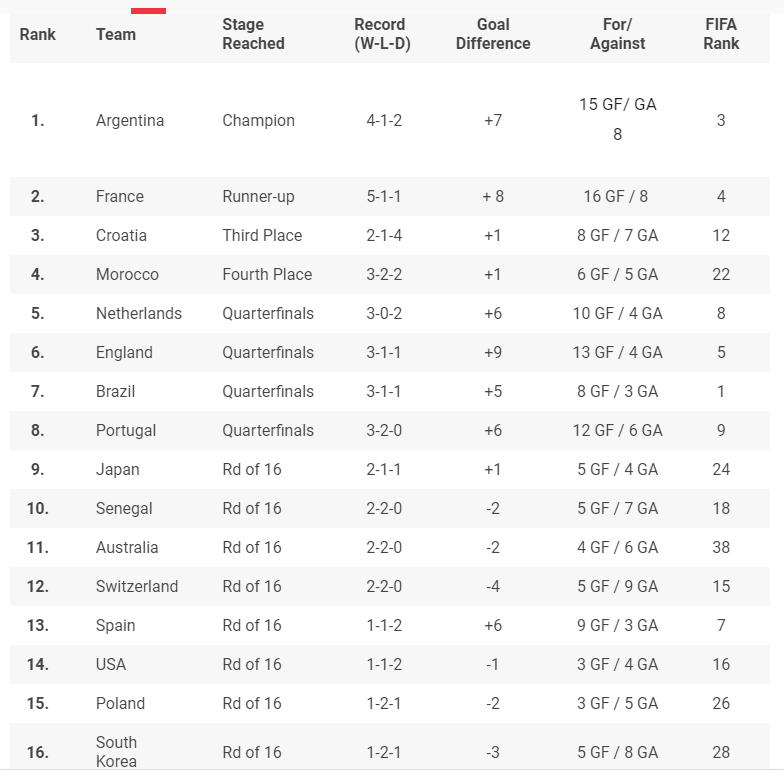 The rest of the rankings were calculated based on the group stages results for the teams that failed to qualify from their groups. Iran lies in 26th place below Saudi Arabia and above Costa Rica. The host nation Qatar was the bottom-ranked team after ending its run with 3 defeats and with just 1 goal scored.
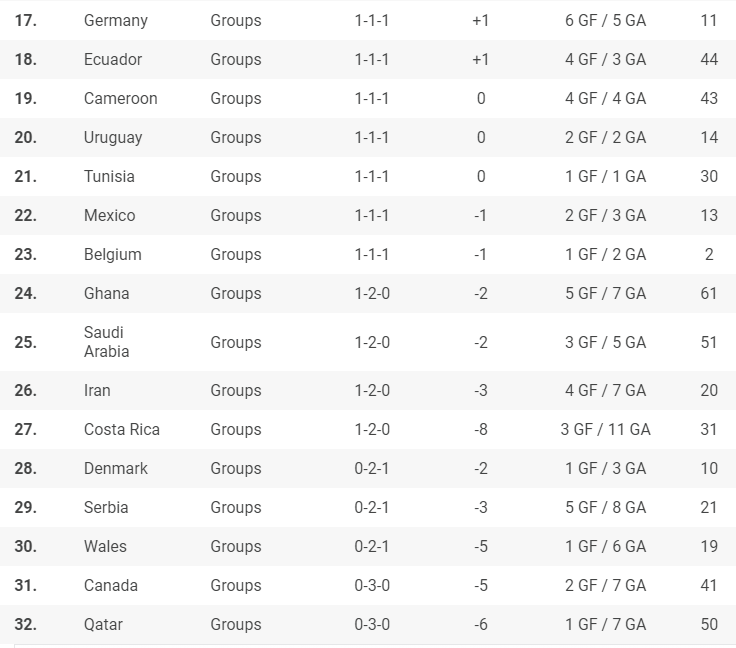 The heartbreaking ranking of Team Melli, coached by the perpetual failure Carlos Queiroz, will be reflected in the latest FIFA ranking which will be published shortly. Iran will lose its top Asian ranking which will be claimed by Japan after a long time. As the World Cup points are valuable, it is not expected that Iran will regain its top Asian ranking for a long time to come.


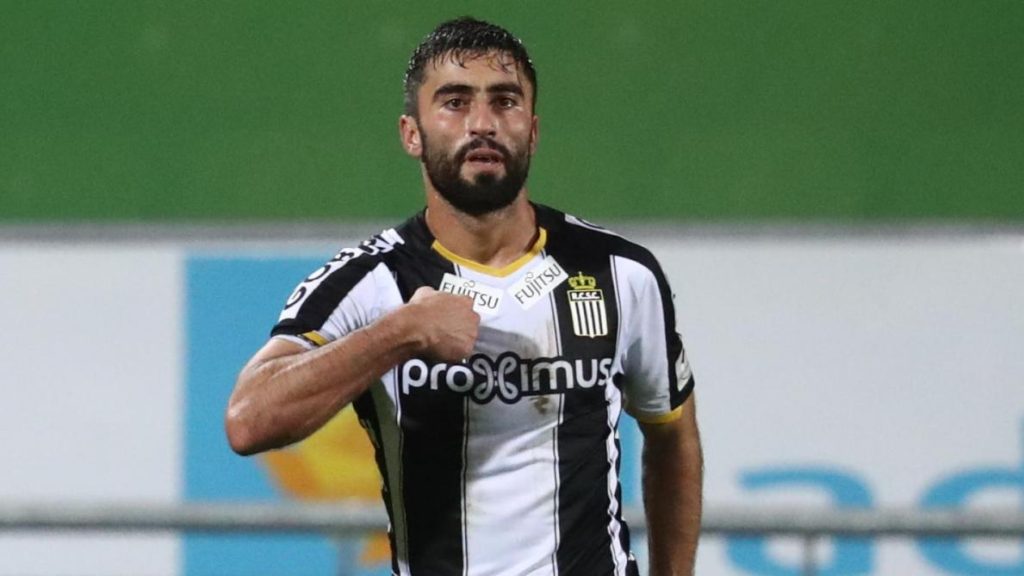
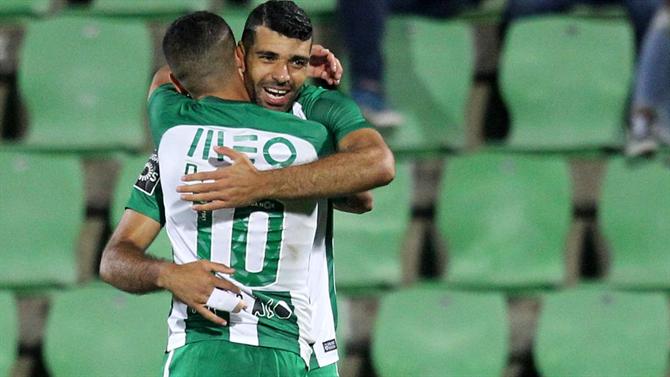
 Two very disappointing stories of Team Melli players are those of Saeid Ezatollahi and Samman Ghoddos. The former had a long injury that threatened his career. After a full recovery, he struggled to regain even a fraction of his previous level. He is now warming the bench in AS Eupen, a team in the Belgian league at the bottom of the standing. The 23-year-old Ezatollahi has made one appearance for Eupen this season, while his Team Melli teammate in the same club, Omid Ebrahimi has featured 12 times in the league for AS Eupen.
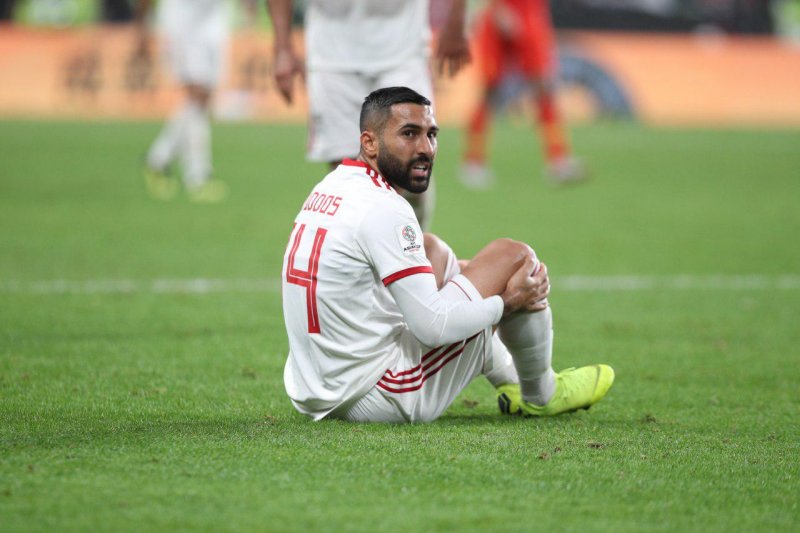 About two years later, Saman Goddos is committing the same act of indiscretion. Ghoddos , of course, has the right to appeal and he might succeed in reducing the ban, although it is quite doubtful. The point that needs emphasis, however, is the lack of professionalism and poor awareness of Iranian players. It does not take a distinguished person to realize that contracts have to be honored and breaking it is unlawful. It is not only about the law but also the ethics and integrity of a person involved in a contract.
The lack of success of the many Iranian players in Europe can be summarized in one main phrase, lack of professionalism. That of course entails, ethics, commitments, teamwork, team integration and dedication. Iranian players seemed to be poorly prepared for Europe and the lack of true professional management and advisors has reduced their value and potential to succeed outside Iran. Saman Ghoddos should have known much better as he grew up in the European environment, but!
Marc Wilmots has not yet commented on the Ghoddos suspension.
About two years later, Saman Goddos is committing the same act of indiscretion. Ghoddos , of course, has the right to appeal and he might succeed in reducing the ban, although it is quite doubtful. The point that needs emphasis, however, is the lack of professionalism and poor awareness of Iranian players. It does not take a distinguished person to realize that contracts have to be honored and breaking it is unlawful. It is not only about the law but also the ethics and integrity of a person involved in a contract.
The lack of success of the many Iranian players in Europe can be summarized in one main phrase, lack of professionalism. That of course entails, ethics, commitments, teamwork, team integration and dedication. Iranian players seemed to be poorly prepared for Europe and the lack of true professional management and advisors has reduced their value and potential to succeed outside Iran. Saman Ghoddos should have known much better as he grew up in the European environment, but!
Marc Wilmots has not yet commented on the Ghoddos suspension.