Author: admin

Omid Team second goal-less draw. Qualificatio is in peril.

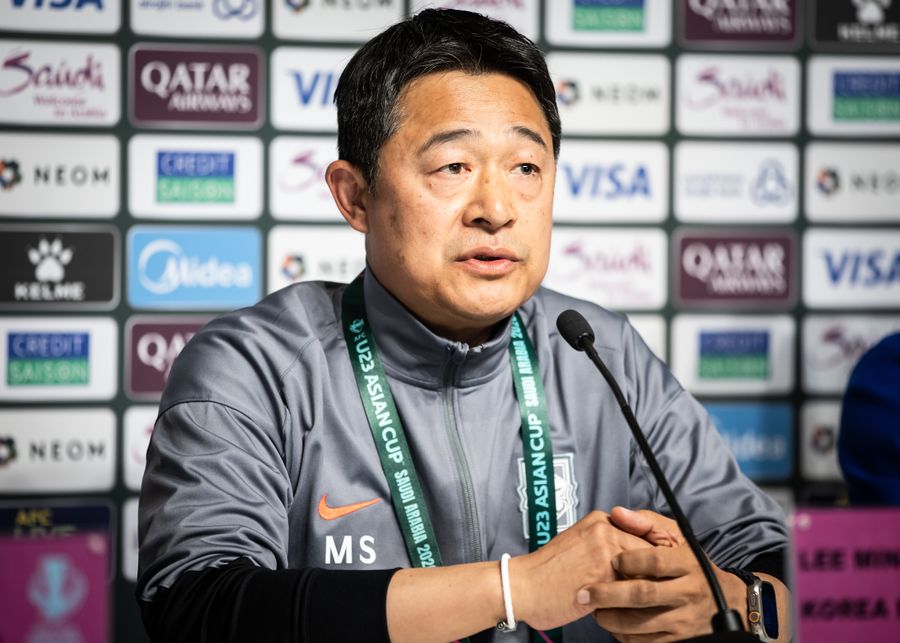
Riyadh: Head coach Ravshan Khaydarov was happy that his Uzbekistan side were able to stand their own in an intense AFC U23 Asian Cup Saudi Arabia 2026™ Group C encounter with Iran on Saturday.

The goalless result favoured Uzbekistan - having defeated Lebanon 3-2 in their opening match - and set up a clash with leaders Korea Republic on Tuesday with both teams on four points.
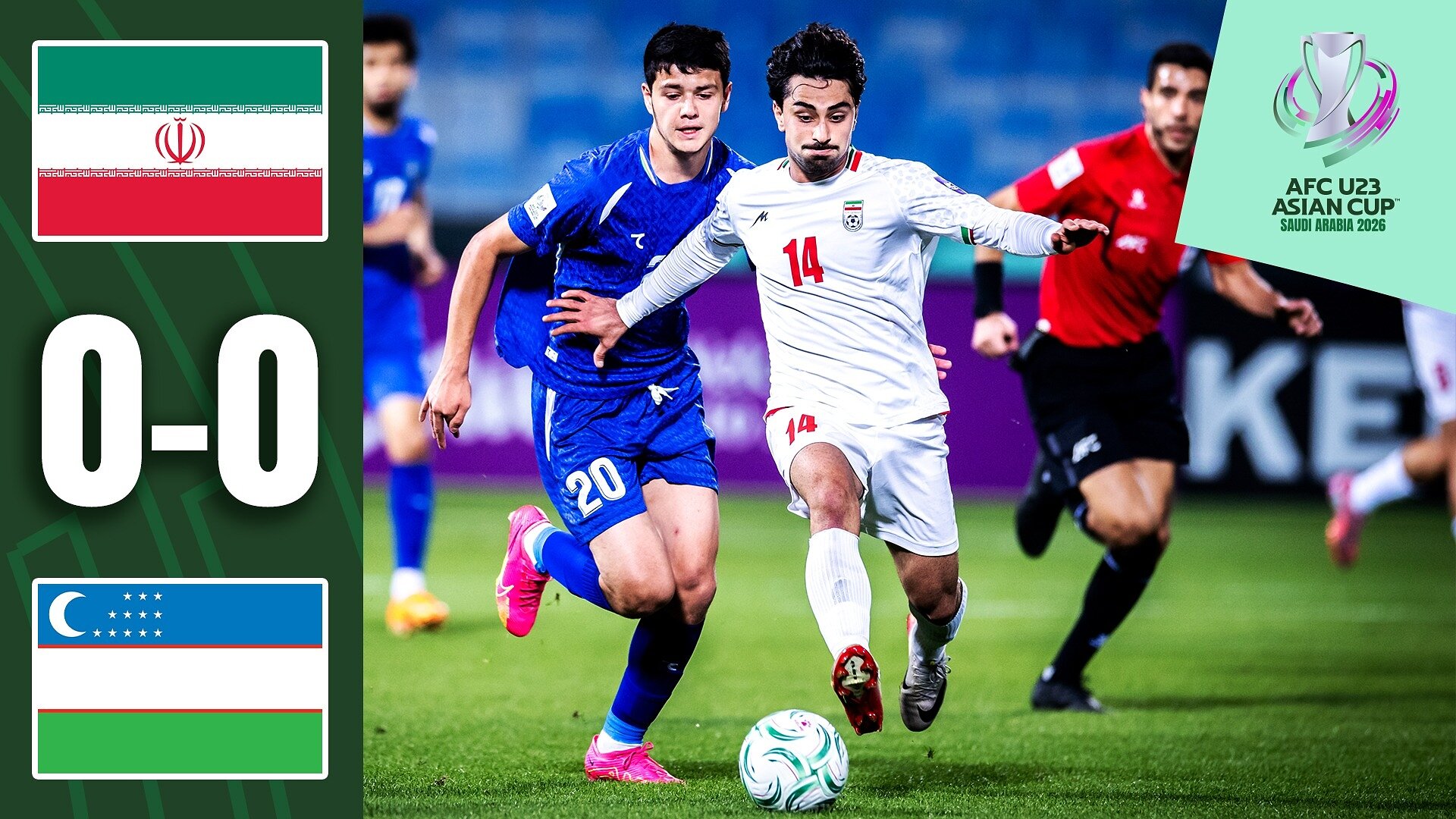
#AFCU23 | Group C: IR Iran 0-0 Uzbekistan

“It was a very intense, exciting match,” said Khaydarov. “We know of Iran’s strength and how smart and confident they are from previous encounters, and we played with discipline and according to our game plan."
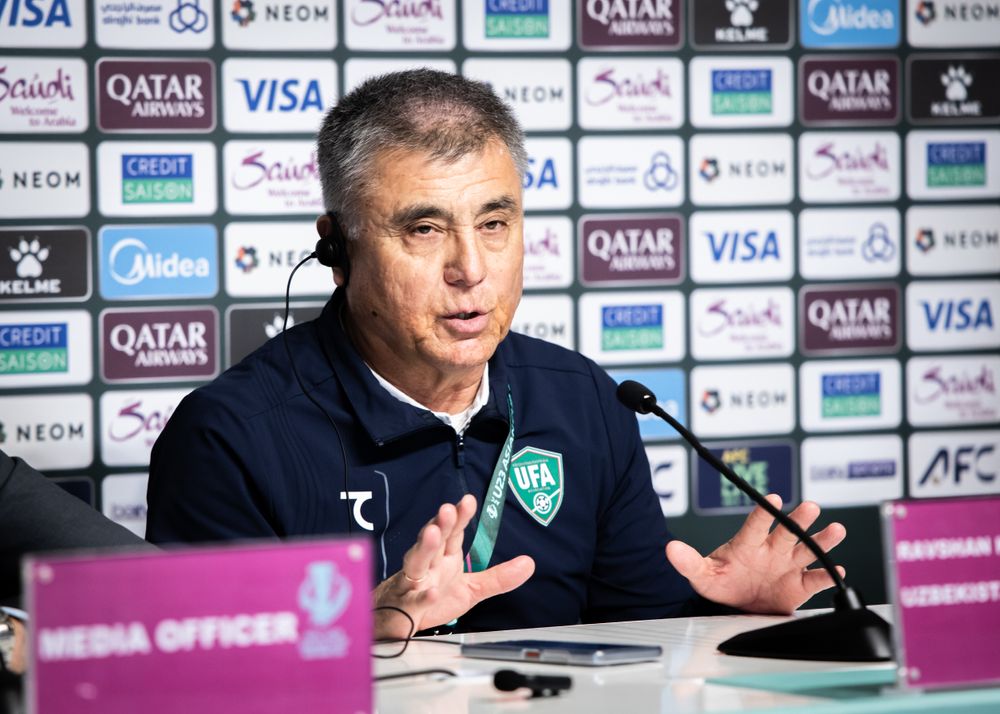
image content

“Our intention was to stick to our tactics and attack, test and fight on the field,” said Khaydarov, whose side can expect another bumper ride against Korea Republic.

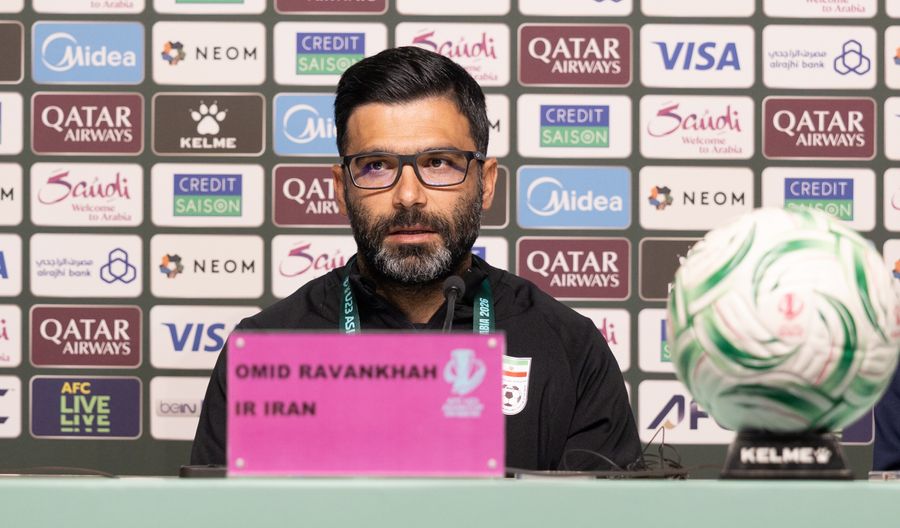
Iran head coach Omid Ravankhah  said he had expected to pick up three points after having settled for a goalless draw with Korea Republic in their opening match.

“We came here to win, but I’m happy our players gave their best and tried hard, and thank them for their effort and dedication."
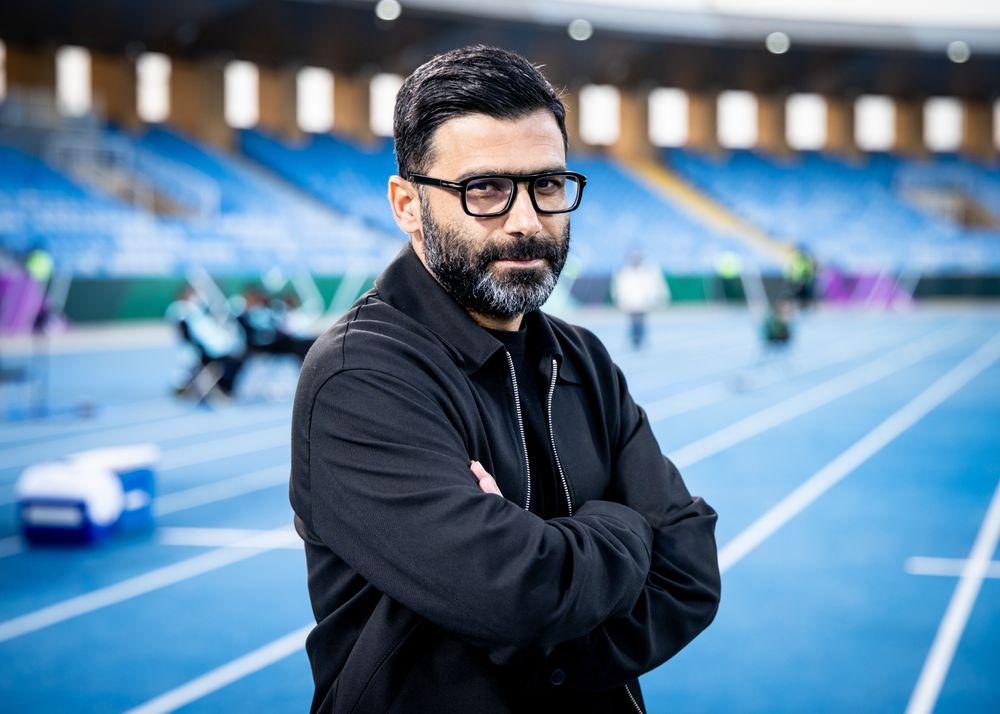
image content

“We couldn't make the most of our chancess today, and so we need to be more focused during our attacks to maximise our chances,” said Ravankhah, whose side will qualify if they win against Lebanon and either Korea Republic or Uzbekistan lose in their encounter.

If the Uzbekistan-Korea Republic tie ends in a stalemate and Iran win, goal difference will decide which teams progress. 

Omid Team Holds Mighty South Korea to a Stalemate in Tense AFC U23 Opener


- First points of Iran U23

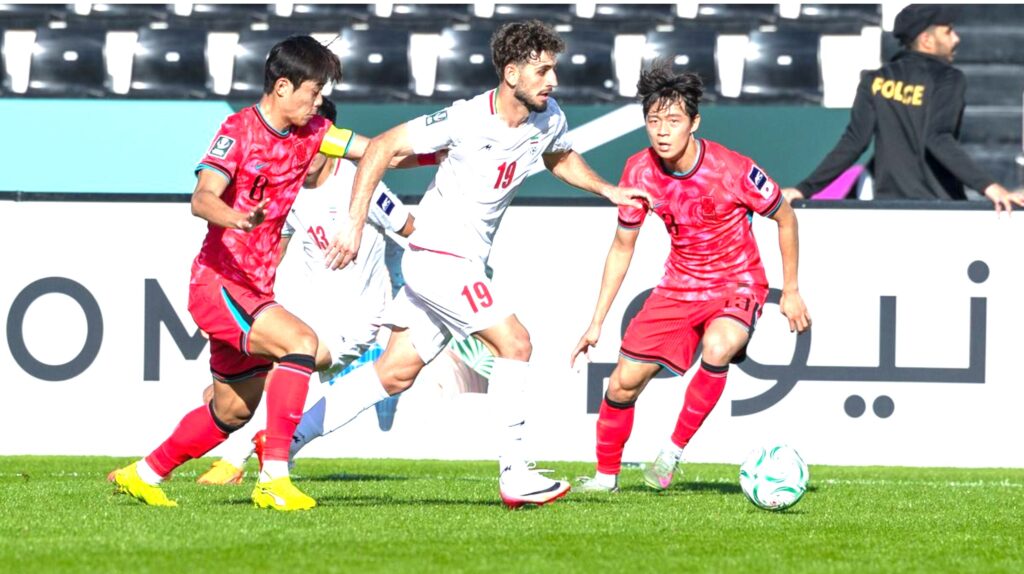
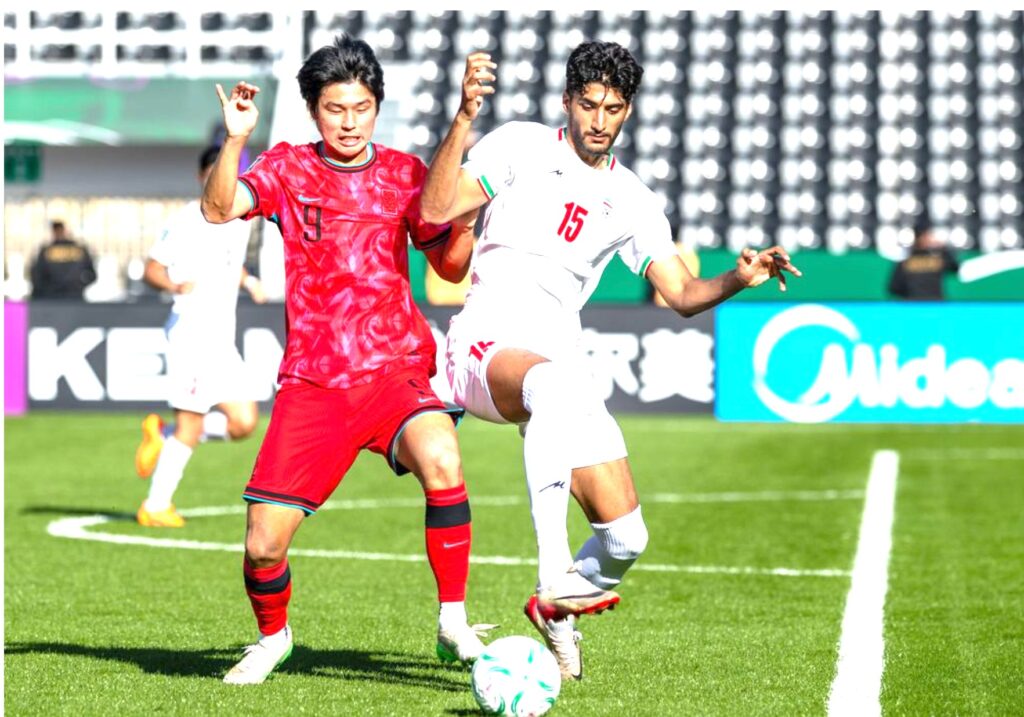
Iran’s U-23 national team, the Omid Team, began their challenging AFC U23 Asian Cup 2026 campaign with a disciplined and resilient performance, holding tournament favorites South Korea to a 0-0 draw in a tense, tactical affair.

While the match will not be remembered for attacking flair or goalmouth drama, it will be noted for Iran’s impressive defensive organization and control of the game’s tempo. Contrary to pre-match predictions, it was Iran who looked the more composed side for large periods, effectively neutralizing the traditional high-energy, offensive threat of their East Asian rivals.

A Match of Tactical Chess, Not Fireworks

From the outset, the Omid Team, under coach Reza Ravankhah, executed a clear game plan: maintain defensive concentration, control the midfield, and patiently probe the notoriously solid Korean backline. The strategy succeeded in limiting South Korea to half-chances, with the Iranian defense, marshaled superbly, showing little vulnerability.

The Koreans, unusually subdued, appeared wary of Iran’s counter-attacking potential. Their typically relentless pressing and quick transitions were replaced by a more cautious, possession-based approach, which played into Iran’s organized defensive structure.

Iran’s lone moment of true attacking quality in the first half came from their standout player, Javan Hosseinnezhad. The elegant midfielder delivered a perfectly weighted diagonal ball from the right, finding Ali Rostami in stride. Rostami’s powerful first-time volley whistled just past the upright, a near-miss that served as the half’s most serious threat.

A Dull Game Sparks to Life at the Death

The second half followed a similar pattern—a slow-paced, midfield battle with few clear-cut chances. Iran continued to prefer intricate ground passes in an attempt to unlock the defense, often opting for safe diagonal switches of play rather than risky penetrating runs.

Just as the match seemed destined to peter out into a forgettable draw, it erupted in a thrilling finale during injury time. First, Iranian substitute Mehdi Jafari unleashed a powerful, low drive from distance, forcing Korean goalkeeper Hong Seong-Min into a spectacular, full-stretch save to his right.

Almost immediately, the action raced to the other end. A desperate scramble in Iran’s penalty area presented South Korea with a golden chance to steal a late winner. However, goalkeeper Mohammad Khalifa emerged as the hero, making a crucial intervention amidst the chaos, allowing his defenders to clear the danger to safety and preserve the hard-earned point.

Analysis: A Solid Foundation, But Room for Growth

The final whistle confirmed a valuable point for Iran in the tournament’s “Group of Death,” a creditable result against one of Asia’s youth football powerhouses. The performance demonstrated significant improvement in tactical discipline and defensive solidity, the foundations upon which campaigns are built.

However, the match also highlighted a clear area for improvement. Iran’s lack of attacking ambition and variety ultimately cost them a chance at a historic victory. Despite showing clear aerial superiority, the team persistently relied on ground strokes against a compact defense. The reluctance to deliver early crosses or utilize long balls to test the Korean backline made their offensive efforts largely predictable.

For Coach Ravankhah, the takeaway is twofold: pride in a well-earned clean sheet against a top opponent, and a clear cue to inject more offensive daring and tactical variety into their next crucial fixture. This draw proves the Omid Team belongs on this stage; their upcoming match will show if they have the tools to advance from it.

MATCH DETAILS

Korea Republic
21 Hong Seong-Min GK
2 Kang Min-Jun DF
3 Bae Hyun-Seo  DF YC 53‎'‎
5 Lee Hyun-Yong DF  YC 33‎'‎
23 Shin Min-Ha DF
6 Lee Chan-Ouk MF [73' Jung Ji-Hun]
8 Kim Dong-Jin MF
9 Kim Tae-Won FW [80' Jeong Jae-Sang ]
10 Kang Sang-Yoon FW [28‎'‎ Jung Seung-Ba]
13 Kim Do-Hyun MF [73' Kim Han-Seo]
17 Kim Yong-Hak MF [46‎' Kang Seong-Jin]
‎

Substitutes
1Moon Hyun-Ho
4Jo Hyun-Tae
7Kang Seong-Jin 46‎'‎
11Jung Ji-Hun
12Hwang Jae-Yun
14Jung Seung-Bae 28‎'‎
15Baek Ga-On
16Kim Han-Seo
18Jeong Jae-Sang
19Lee Geon-Hee
20Park Jun-Seo
Manager-Min-Sung Lee
Iran
1 Mohammad Khalifeh GK
3 Arsha Vosoughifard DF
13 Mahdi Mahdavi DF
15 M. Mohebi DF [83' Danial Iri YC 89']
16 Farzin Moamelehgari DF
8 Pouria Latififar MF
9 Yadegar Rostami MF
10 Javad Hosseinnejad MF [62 'A. M. Sadeghi]
19 Mahdi Goudarzi MF [71' M.Askari]
20 Abbas Habibi MF [72' Razzaghinia YC 69']
7 Reza Ghandipour FW [71' M. Jaffari]


Substitutes
2 B. Goudarzi
4 D. IriSub5M. Zare
6 A. Razzaghinia
11 M. Askari
12 P. Rafiei
14 F. Jafari
17 E. Jamshidi
18 A. Sheikhi Rad
21 H. Zaruni
22 A. Maghsoudi
23 M. Sadeghi
Manager-Omid Reza Ravankhah
Omid Team 2025

Omid Team Line up vs Korea Rep.

With a few hours to go for the start of Iran's U23 team in the AFC U23 Asian Cup Saudi Arabia 2026, the lineup has been announced:
The Match in Group C against South Korea will start at 14:30 local time (Iran time: 3:00 PM Wednesday, January 7).

The following players are in the starting lineup :
Mohammad Khalifa,
Masoud Mohebbi,
Mehdi Mahdavi,
Arshia Vosoughifard,
Farzin Moghadgari,
Pouria Latififar,
Mohammad Javad Hosseinnejad,
Mehdi Goodarzi,
Abbas Habibi,
Yadgar Rostami,
Reza Ghandipour.

Head Coach: Omidreza Ravankhah,

Omid Team 2026 prospects: A Phoenix Rising from Decades of Ashes?


For over four decades, Iran's U-23 national team, known as the "Omid Team" (Team Hope), has embodied a painful irony in Iranian football. Its name promises a future that has consistently failed to materialize, making it a perennial source of frustration and, at times, the laughingstock of a success-starved fanbase. The statistics tell a grim tale: the team has not qualified for the Olympic Games since the 1980 Moscow edition—a tournament Iran itself boycotted, meaning the Omid Team has never truly appeared on football's biggest global stage. This long-term failure has been compounded by repeated disappointments at the continental level, including the AFC U-23 Asian Cup and the Asian Games.

The consequence has been a profound and pervasive apathy. Long ago, the fans turned their attention elsewhere, their hopes reserved for the senior Team Melli. This wave of disinterest eventually washed over the press and media, who largely ceased in-depth analysis or consistent coverage of the team's fortunes. The Omid Team became a forgotten project, its failures met with a resigned shrug rather than outrage.

A Mission No Wanted Coach Would Touch

This context is crucial to understanding the Iranian Football Federation's (FFIRI) startling decision ahead of the AFC U-23 Asian Cup 2026 qualifiers. With the Omid Team seen as a career graveyard, no respected, established Iranian coach was willing to stake their reputation on it. The core reason is a structural crisis within Iranian football: the relentless club-versus-country conflict.

Without stringent legal frameworks to force compliance, Iranian clubs routinely—and understandably, from their perspective—prioritize their own domestic and continental commitments. The standard practice is to withhold Omid-eligible players, especially if they are on the fringes of the first team, from national team duty. Any coach taking the job would be guaranteed a fractured preparation camp and a weakened squad, setting them up for almost certain failure.

Into this void stepped Reza Ravankhah, a coach with minimal top-flight experience and, consequently, very little to lose. His appointment was less a strategic choice and more a testament to the role's undesirability. He accepted a challenge defined by institutional neglect and systemic obstacles.

A Glimmer of Unseen Talent

Against all expectations, the qualifying round provided a startling and welcome narrative shift. In their three matches, Ravankhah's Omid presented itself as a well-organized, disciplined, and technically gifted unit. At the heart of this revival was the elegant midfielder, Javad Hosseinnezhad, whose intelligent movement, crisp passing, and orchestration of the tempo were a delight to watch. Around him, a cohort of lesser-known players rose to the occasion, demonstrating that a deep well of talent exists, often obscured by the domestic game's logistical chaos.

However, a significant caveat tempers this optimism. Apart from a strong opponent in hosts UAE, Iran's qualification path was not the most arduous. The true litmus test was always going to be the main tournament.

The Crucible of Saudi Arabia: A Group of Death

That test has arrived, and it is formidable. Drawn in what is arguably the tournament's "Group of Death" in Saudi Arabia, Iran's Omid finds itself alongside continental giants. They face South Korea, a perennial powerhouse and a favorite to lift the trophy, renowned for its athleticism and structured play. Equally daunting is the challenge of Uzbekistan, a nation that has meticulously built a footballing renaissance, becoming a consistent force and frequent champion at every youth level in Asia.

The opening match against South Korea will be revelatory, offering a clear measure of the gap this Omid team must bridge. While the positive football shown in qualifiers provides a foundation of hope, advancement from this group remains a distant and difficult prospect. Korea and Uzbekistan rightly enter as the overwhelming favorites to progress.

A Test of Will and Wit

The task for Coach Ravankhah and his young squad is now one of transcendent defiance. Success will depend on more than talent; it will require exceptional leadership, ironclad discipline, and tactical acumen. They must play with the unity and strategic clarity of a team with nothing to lose and everything to prove.

For the first time in a generation, the Omid Team carries a flicker of genuine promise into a major tournament. Whether that flicker is extinguished in a brutally tough group or fanned into a flame that can re-ignite national interest is the captivating story about to unfold. The decades of failure have set the stage; now, this new generation has a rare chance to begin rewriting a long-sorrowful history.

THE OFFICIAL SQUAD

jerseyPostFull NameDOBClubHeightWeight
1GoalkeeperMohammad Khalifeh19-08-2004Aluminium Arak19588
2DefenderBahram Goudarzi15-11-2004Aluminium Arak17567
3DefenderArshiya Vosoughifard26-04-2004Fajr Shahid Sepasi18073
4DefenderDanial Iri26-10-2003Malavan SC18680
5DefenderMohammadmahdi Zare25-01-2003FC Akhmat (RUS)19284
6MidfielderAmirmohammad Razaghinia11/4/2006Esteghlal18782
7ForwardReza Ghandipour13-01-2006Al Wahda (UAE)18073
8MidfielderPouria Latififar16-08-2003Golgohar Sirjan18481
9ForwardYadegar Rostami2/1/2004Fajr Shahid Sepasi18073
10ForwardMohammadjavad Hosseinnezhad26-06-2003Dynamo MAKHACHKALA (RUS)18071
11ForwardMohammad Askari7/2/2006Sepahan SC18682
12GoalkeeperPouria Rafiei24-02-2006Sepahan SC19685
13DefenderSeyed Mahdi Mahdavi30-09-2005Aluminium Arak18270
14MidfielderMehdi Jafari2/12/2005Malavan SC17270
15DefenderMasoud Mohebbi6/2/2005Kheybar Khorramabad19286
16DefenderFarzin Moamelehgari14-01-2003Shams Azar Qazvin18375
17DefenderErfan Jamshidi26-06-2003Paykan FC17065
18MidfielderAmirreza SheikhiRad24-03-2005F.C. Nassaji Mazandaran17671
19MidfielderMahdi Goodarzi9/12/2003Kheybar Khorramabad17870
20MidfielderAbbas Habibi25-03-2006Malavan SC18075
21ForwardHamidreza Zarouni8/10/2005Kheybar Khorramabad17773
22GoalkeeperAmirmahdi Maghsoudi16-10-2007Sepahan S.C.19488
23ForwardMohammadhossein Sadeghi20-02-2005Persepolis17369
HeadCoachOmid Reza ravankhahISLAMICREPUBLIC

AFC U23 Asian Cup: Korea Republic v Iran

The-afc.com
Tue, 06 January, 2026

Riyadh:  Korea Republic are determined to kick off their campaign on a winning note when they face Iran in their AFC U23 Asian Cup Saudi Arabia 2026™ Group C opening tie on Wednesday.

The 2020 champions are aiming to go all the way after making their exit at the quarter-final stage in the last two editions, and head coach Lee min-Sung is confident of their chances.

“We have studied the way Iran play, and they have very good strikers and are good in their build-up,” he said.

“We need to control these aspects, and this will prove to be a very exciting match. "

image content

“The players have had seven training camps since I took over as head coach, and they faced some problems with teamwork and fitness levels, but we overcame these at our final camp.

“Today we are in peak condition, our confidence is high and it is really important that we obtain the best possible result in our opening match.”  

#AFCU23 Saudi Arabia 2026 | Group Stage Preview

Iran head coach Omid Ravankhah echoed Lee’s sentiments about Group C being composed of exceptional teams.

“This is a group with respected teams, but we have set our objective and are determined to perform well,” he said. “We are familiar with the Korea Republic game and they are very strong, but we will go out to win.” 

image content

The Central Asian side did not qualify for the 2024 edition, but their perfect showing in the Saudi Arabia 2026 Qualifiers has boosted their confidence. 

“We have very strong, talented players, and all of them are looking forward to succeeding and achieving a significant result in our first match.”


Trivia

  • This will be the second encounter between Korea Republic and Iran in the AFC U23 Asian Cup, with the former winning the previous meeting 2-1 in 2020.
  • Korea Republic have won 18 games in the AFC U23 Asian Cup, the joint-most by any side in competition history alongside Japan.
  • Iran have failed to progress beyond the group stage in each of their last two AFC U23 Asian Cup participations (in 2022 and 2020), after having done so in their debut edition in 2016.

Korea Republic v Iran
Venue: Al Shabab Stadium (Riyadh)
Kick-off: Wednesday, 14:30 (UTC+3)

Iran Announces Preliminary Squad for AFC Futsal Asian Cup

I

In accordance with AFC regulations, the Iranian national futsal team has submitted its preliminary 25-player list for the upcoming AFC Futsal Asian Cup, hosted by Indonesia.

The submitted squad is as follows:

Saeed Momeni, Bagher Mohammadi, Mehdi Rostamiha, Behzad Rasouli, Mohammad Mehdi Esmailpour, Mohammad Hossein Derakhshani, Amir Hossein Gholami, Hossein Sabzi, Soran Balkaneh, Mehdi Asadshir, Mehdi Yousef, Mehdi Karimi, Muslim Olaghabad, Sajjad Yousefkhah, Amir Hossein Dehghani, Salar Aghapour, Ali Khalilvand, Ali Akrami, Mehdi Mehdikhani, Mohammad Hossein Baziar, Hossein Tayyibi, Saeed Ahmad Abbasi, Amir Hossein Abtahi, Behrouz Azimi, and Amir Hamzeh Sedighzadeh.

Following the conclusion of the 21st week of the domestic league, the technical staff, led by Vahid Shamsaei, will narrow this list down to 20 players for a national team training camp. Tournament rules ultimately permit only 14 players to be registered for the final competition squad.

Iran finds itself in Group D alongside Afghanistan, Saudi Arabia, and Malaysia.

The 18th edition of the AFC Futsal Asian Cup will take place in Indonesia from January 27 to February 7. The tournament will feature 16 teams competing across two venues within a single host city.

Iran enters as the most successful nation in the competition's history, having claimed the championship title 13 times.


Tournament Details:

  • Dates: 27 January – 7 February
  • Host Country: Indonesia
  • Host City: 1
  • Venues: 2
  • Teams: 16

Dates: 27 January – 7 February

Venue: 2 (in 1 host city)

Host country: Indonesia

Teams 16

Mehdi Taremi faces possible World Cup ban over Iranian military service

The Daily Mirror, UK.
Story by Nathan Ridley
 

Mehdi Taremi of Iran is celebrating after scoring a goal during the AFC Asian Cup 2023 match between Iran and the United Arab Emirates at Education City Stadium in Al Rayyan, Qatar, on January 23, 2023. (Photo by Noushad Thekkayil/NurPhoto via Getty Images)

Mehdi Taremi of Iran is celebrating after scoring a goal during the AFC Asian Cup 2023 match between Iran and the United Arab Emirates at Education City Stadium in Al Rayyan, Qatar, on January 23, 2023. (Photo by Noushad Thekkayil/NurPhoto via Getty Images)© Noushad Thekkayil/NurPhoto via Getty Images

Iran striker Mehdi Taremi faces being denied entry to the 2026 World Cup over his mandatory military service. Taremi, 33, was prolific during qualification, scoring 10 goals in 15 games as Iran topped both of their groups.

Amir Ghalenoei's side have been placed in Group G alongside Belgium, Egypt and New Zealand. They'll play their fixtures in the US cities of Los Angeles and Seattle.

But Taremi might not be involved. It comes after the president of the Football Federation Islamic Republic of Iran, Mehdi Taj, revealed that some players are at risk of not receiving visas.

"The United States might not issue visas to some players due to their military service location," Taj warned. "That's why we've started now and have selected replacements for players who might not receive visas."

It quickly emerged from various Iranian media outlets that Taremi was among those who the federation chief was referencing. All Iranian men must serve time in a military once they turn 19.

Taremi's situation, however, is markedly different from most of his team-mates. Between 2010 and 2012, the Olympiacos star served in the Navy of the Islamic Revolutionary Guard Corps (IRGC) in the city of Bushehr near his home.

"My service was right there in Bushehr," Taremi explained in a 2015 interview. "Close to our own home, at the IRGC Navy base. It wasn't hard at all."

The US State Department has firm restrictions for individuals with ties to organisations which it deems as foreign terrorist entities. Their list includes the IRGC.

In a statement provided to Pro Soccer Wire, a US State Department spokesperson didn't rule out the possibility that some of Iran's players could see their visa applications denied. "The Trump Administration is committed to doing everything we can to support a successful World Cup," they said.

Iran's forward #09 Mehdi Taremi celebrates scoring his team's second goal during the FIFA World Cup 2026 Asia zone qualifiers group A football match between Iran and the North Korea at the Azadi Sports Complex in Tehran on June 10, 2025. (Photo by ATTA KENARE / AFP) (Photo by ATTA KENARE/AFP via Getty Images)

Iran's forward #09 Mehdi Taremi celebrates scoring his team's second goal during the FIFA World Cup 2026 Asia zone qualifiers group A football match between Iran and the North Korea at the Azadi Sports Complex in Tehran on June 10, 2025. (Photo by ATTA KENARE / AFP) (Photo by ATTA KENARE/AFP via Getty Images)© ATTA KENARE/AFP via Getty Images

"At the same time, the administration will not waver in upholding US law and the highest standards of national security and public safety in the conduct of our visa process.

"We adjudicate each visa application on a case-by-case basis after rigorous review and thorough vetting to determine whether the individual is eligible under US law."

The ex-Inter Milan and Porto star could therefore miss out on the chance to play at back-to-back World Cups. In 2022, Iran came third in a group alongside England, Wales and the United States, finishing third on three points.

The Friendly Match Fallacy: Why Iran's Football Problems Run Deeper Than a High-Profile Game


A persistent narrative among some Iranian football pundits suggests that the key to elevating Team Melli’s standards lies in securing a handful of high-profile friendly matches against European or South American opponents. This notion, while appealing, is a superficial solution that mistakes exposure for evolution. The belief that sharing a pitch with world-class talent can magically transform a national team is not only naive but diverts attention from the deep-rooted, systemic issues that truly dictate success on the global stage.

The genuine criteria for improving Iran’s World Cup prospects are foundational, not ceremonial. They include:

  • Domestic Football Health: The quality of the Persian Gulf Pro League, its infrastructure, training facilities, and talent development pipelines.
  • Player Development & Professionalism: The standard of Iran’s legionnaires abroad, coupled with the technical discipline, personal conduct, and professional attitude of all players.
  • Governance & Leadership: The competence, experience, and integrity of the Football Federation (FFIRI) and its administration.
  • Technical Direction: The quality of coaching, tactical vision, and strategic planning within the national team setup.

With approximately six months until the 2026 World Cup begins, the prospect of meaningful improvement in these areas appears bleak. The domestic league struggles with quality and fan engagement, failing to consistently produce elite talent. Most of Iran’s foreign-based players have yet to set their leagues alight, often occupying modest roles. The nation’s training facilities and stadiums—epitomized by the long-term closure of Azadi, which has left giants like Persepolis and Esteghlal looking like displaced refugees—remain a profound embarrassment.

The FFIRI itself is widely viewed as ineffective, lacking the strategic foresight and operational skill required for modern football governance, with persistent whispers of corruption further eroding trust. This institutional failure directly impacts the pitch.

Coach Amir Ghalenoei, despite his dedication, operates with significant handicaps. Questions surrounding his tactical acumen have grown louder, and his authority within the squad appears weakened. His public communications, often sounding more like political rhetoric than technical analysis, have done little to reassure a frustrated fanbase. The persistent sugar-coating of subpar performances is testing the patience of even the most loyal supporters.

These are not deficits cured by 90 minutes against a top-tier nation. While such friendlies offer valuable exposure and test player cohesion, they are diagnostic tools, not cures. The core pathology remains untreated. Furthermore, the logistical fantasy of such matches collides with reality: serious football nations plan years in advance, while the FFIRI is notorious for last-minute planning and citing prohibitive costs.

With only two FIFA windows remaining before the World Cup, comprising a potential four matches, the pursuit of "realistic" opposition is a more prudent strategy than chasing glamorous, expensive fixtures that may only highlight existing flaws without fixing them.

In conclusion, while fans may dream of seeing Iran face France or Spain, the administration must wake up to a harder truth. Friendly matches can refine a team, but they cannot rebuild a system. Without confronting the profound shortcomings in infrastructure, governance, and domestic football culture, no amount of high-profile friendlies will significantly alter Team Melli’s chances of advancing in the 2026 World Cup. The quest for improvement must look inward, long before it looks for prestigious opponents.

FFIRI President Details World Cup Preparations Amid Challenges.


In a comprehensive update on Iran’s preparations for the 2026 FIFA World Cup, Football Federation President Mehdi Taj addressed critical issues, including friendly match negotiations, visa denials for staff, and logistical planning for the team’s camp in the United States.

Friendly Matches: Portugal and Spain in Sight

Taj confirmed that efforts to secure high-profile friendly matches are advancing. “We aimed to arrange matches for March and June [early spring],” he stated. “For June, we targeted European opponents and have held significant talks with Portugal. This has progressed considerably, and within the next two to three days, we should sign a memorandum of understanding.”

He indicated that Portugal’s second friendly match in that window could be against Iran. Furthermore, Taj revealed ongoing coordination with Qatar for the earlier March window, where Spain and Egypt are scheduled to play. “Spain will come to Qatar and likely play them first, then potentially face us,” he added.

While talks have also been held with Scotland and Iceland, Taj emphasized that no agreements are yet final. “None are definitive at the moment. We must have replacement plans and alternative options ready.”

Visa Denials and Contingency Planning

Addressing the sensitive issue of U.S. visa refusals for some national team members, Taj outlined the federation’s proactive stance. “After consultations, we decided to send three representatives to the draw. We have started identifying replacement options for the World Cup squad,” he explained. “If, for any reason, a player is told he cannot come, we must have an alternative ready.”

He cited the case of team official Saeed Al-Hawie, who was denied a visa, possibly due to his professional history. “Those who may have served in certain capacities could face problems,” Taj noted. He confirmed that Iran has protested the matter to FIFA, suggesting the global body “could have stood up to the United States more firmly.”

Taj also mentioned a joint protest with Egypt regarding the official naming of their World Cup group stage match, which he labeled “unreasonable and supportive of a specific political group,” vowing to pursue the issue.

U.S. Training Camp and Ticket Sales

Regarding Team Melli’s base camp in the United States, Taj identified a preferred location. “We visited a camp approximately 56 kilometers from Los Angeles. The team can reach the city in under an hour, and it is only 12 minutes from the airport,” he said, highlighting its logistical advantage for Iran’s third group match in Seattle. “We hope no complications arise and this camp is secured for us.”

On ticketing, Taj stated that the average ticket price is around $500. While fans inside Iran will not be granted visas for the tournament, the federation plans to facilitate sales for the diaspora. “We must prepare to sell approximately eight thousand tickets per match for our supporters. Iranians living abroad will be able to purchase them through the federation’s website.”


FIFA Days
23–31 March 2026
1–9 June 2026

FIFA World Cup 2026
11 June – 19 July 2026

Group G

June 15, 2026 Belgium Match 16 EgyptLumen Field, Seattle
June 15, 2026Iran Match 15 New ZealandSoFi Stadium, Inglewood
June 21, 2026Belgium Match 39 IranSoFi Stadium, Inglewood
June 21, 2026New Zealand Match 40 EgyptBC Place, Vancouver
June 26, 2026Egypt Match 63 IranLumen Field, Seattle
June 26, 2026New Zealand Match 64 BelgiumBC Place, Vancouver

Team Melli’s Rumored German Target: A Logical Fit?


Strong rumors are circulating that a German player, currently without Iranian citizenship or a passport, is in the process of being naturalized and invited to join Team Melli. The player in question is Dennis-Yerai Eckert Ayensa, a 27-year-old forward who currently plays for Standard Liège in the Belgian Pro League. His eligibility reportedly stems from his German-Iranian father.

Eckert’s connection to Iran appears strictly ancestral. He does not speak Farsi, nor is there any indication he has ever visited the country. Culturally, he is rooted in his German and Spanish heritage (his mother is Spanish), and he speaks German, Spanish, and English.

His name has surfaced in Iranian football circles several times. What remains unclear is why he is being singled out and what specific skills he is believed to offer the national team with only six months remaining until the World Cup.

Iran’s attacking options already feature established names such as Mehdi Taremi, Sardar Azmoun, and younger talents like Amir Hossein Hosseinzadeh and Allahyar Sayyadmanesh. In this context, the potential addition of Eckert—a player with no prior connection to Iranian football—risks appearing out of place, both culturally and tactically.

A review of his professional record suggests a modest career trajectory. After coming through the youth ranks at 1. FC Köln, Eckert has played for seven clubs across Germany, Spain, and Belgium. His most productive spell came at FC Ingolstadt in the German third division (3. Liga), where between 2019 and 2022 he scored 25 goals in 78 matches. He permanently signed for Standard Liège in 2023, where he has recorded 7 goals in 33 appearances. At the international youth level, he earned a single cap for Germany's U19 team in 2015 and was not selected for any further age-group squads.

Given this profile, Eckert appears to be a journeyman player without a significant pedigree. The motivation behind this potential move is ambiguous—it could be interpreted as a sign of desperation or simply another unsubstantiated rumor in the often-volatile sphere of Iranian football politics.

Logic dictates that any new player, particularly one without cultural or linguistic ties to Iran, would require considerable time to acclimate to the team’s dynamics, style, and environment before being expected to contribute meaningfully. With the World Cup on the horizon, there is legitimate doubt whether Eckert’s induction, should it materialize, would yield any tangible benefit for Team Melli in time for the tournament.