Author: admin

Mehdi Taremi Close to Joining UAE Side Al-Wasl as Olympiacos Exit Nears

Iran national team captain and Olympiacos forward Mehdi Taremi appears to be on the verge of leaving the Greek club, with reports indicating that a move to UAE Pro League side Al-Wasl is in its final stages.

Taremi's future at Olympiacos has been uncertain for several weeks. Following the arrival of several new players during the summer transfer window, it became clear that the 34-year-old striker was not in the plans of head coach José Luis Mendilibar for the upcoming season. Greek media reported that Mendilibar intended to trim his squad to 25 players, and Taremi was placed on the transfer list alongside Roman Yaremchuk, Clayton, and Lorenzo Shivioni.

The most telling sign of his diminished standing came when Taremi was left out of Olympiacos' squad for the UEFA Champions League third-round qualifying tie against Dutch side NEC Nijmegen. The club registered only one established centre-forward, Ayoub El Kaabi, for the two-legged tie, a decision that was seen as a clear indication that Taremi and Yaremchuk were no longer considered essential to the club's European plans.

With his days at the Greek club numbered, Taremi actively sought a move elsewhere in Europe. According to Iranian media, the forward received offers from several European clubs, including Genoa (Italy), Porto (Portugal), and Lille (France). However, none of these proposals materialised into a firm agreement. There was also an expression of interest from Brazilian club Vasco da Gama, but Taremi reportedly had no intention of moving to South America.

As the summer transfer window approached its closure, both Olympiacos and Taremi were eager to find a satisfactory solution. Now, Greek and Iranian media reports strongly suggest that UAE club Al-Wasl, based in Dubai, has reached an agreement with both the player and Olympiacos. According to Greek sports website Gazzetta, Al-Wasl came to a full agreement with the Iranian striker and the Greek club, with Taremi's contract set to expire next summer. Fellow Greek outlet Sport24 reported that Taremi made a final visit to Olympiacos' training centre in Renti on Thursday, August 20, bidding farewell to his teammates, coaching staff, and club employees before departing for Dubai to complete the move.

Al-Wasl, who play their home matches at Zabeel Stadium, are one of the most successful clubs in the United Arab Emirates, having won eight UAE Pro League titles, most recently in the 2023–24 season. The club was briefly coached by the legendary Diego Maradona in 2011. They are currently managed by Portuguese coach Rui Vitória, formerly of Panathinaikos, and began the 2026–27 campaign with a resounding 5-1 victory over United.

At the time of writing, neither Olympiacos nor Al-Wasl have made an official announcement regarding the transfer, and no details have been released concerning the transfer fee or the length of the proposed contract. However, the latest reports indicate that the move is in its final stages.

If the transfer is completed, Taremi will return to Asian football after approximately seven years. His last spell in the region was with Qatar's Al-Gharafa, before he moved to Portugal's Rio Ave in 2019, later going on to play for Porto, Inter Milan, and Olympiacos. He joined Olympiacos from Inter Milan last summer for a fee of around €2 million. In his single season with the Greek club, he made 39 appearances across all competitions, scoring 16 goals and providing six assists.

Taremi would join a growing contingent of Team Melli players in the UAE Pro League, including Sardar Azmoun and Saeid Ezatollahi (Shabab Al-Ahli), Mohammad Ghorbani (Al-Wehda), Ahmad Nourallahi (Kalba), and Mehdi Ghaedi (Al-Nasr). Notably, Al-Wasl are competing in the new AFC Champions League Elite and, in that competition, would face Iranian sides Esteghlal and Tractor, potentially setting up a reunion between Taremi and clubs from his home country.


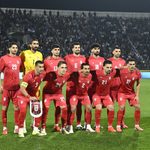
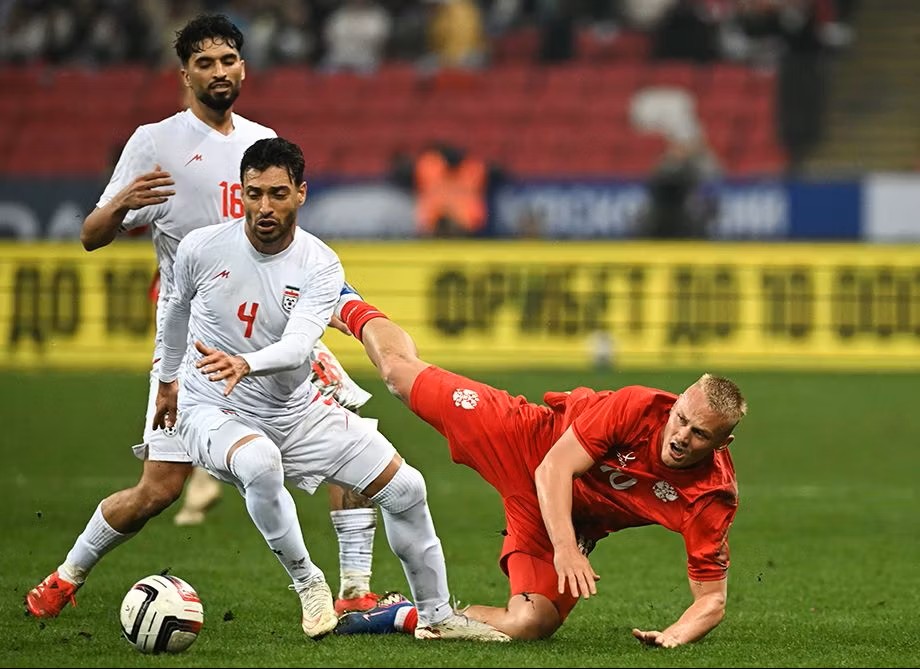
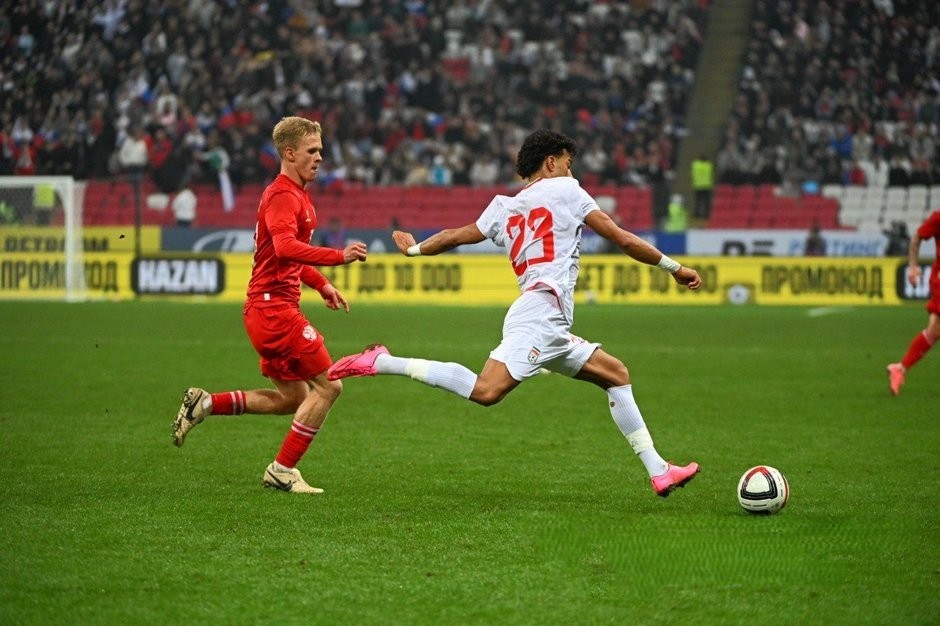
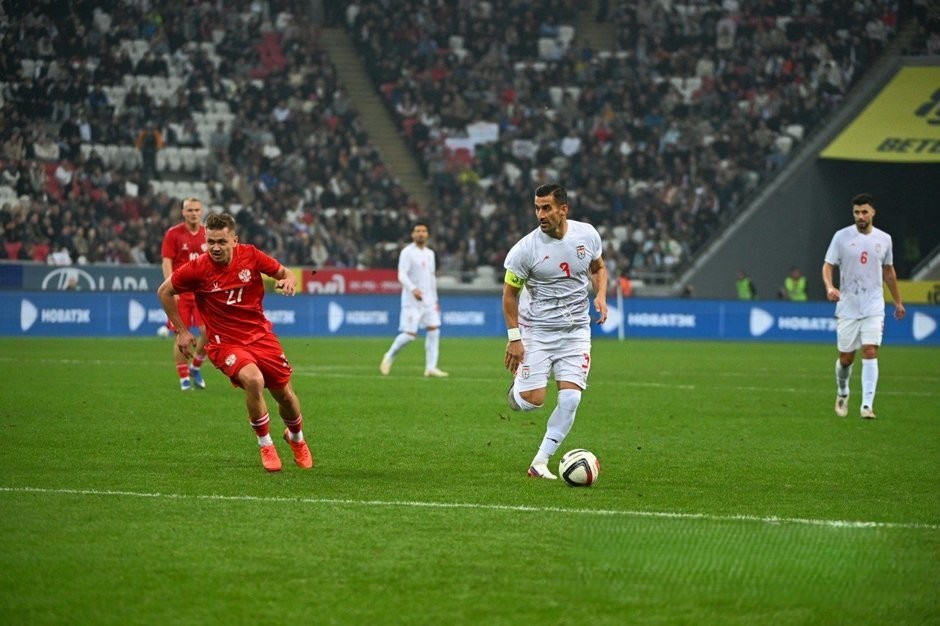
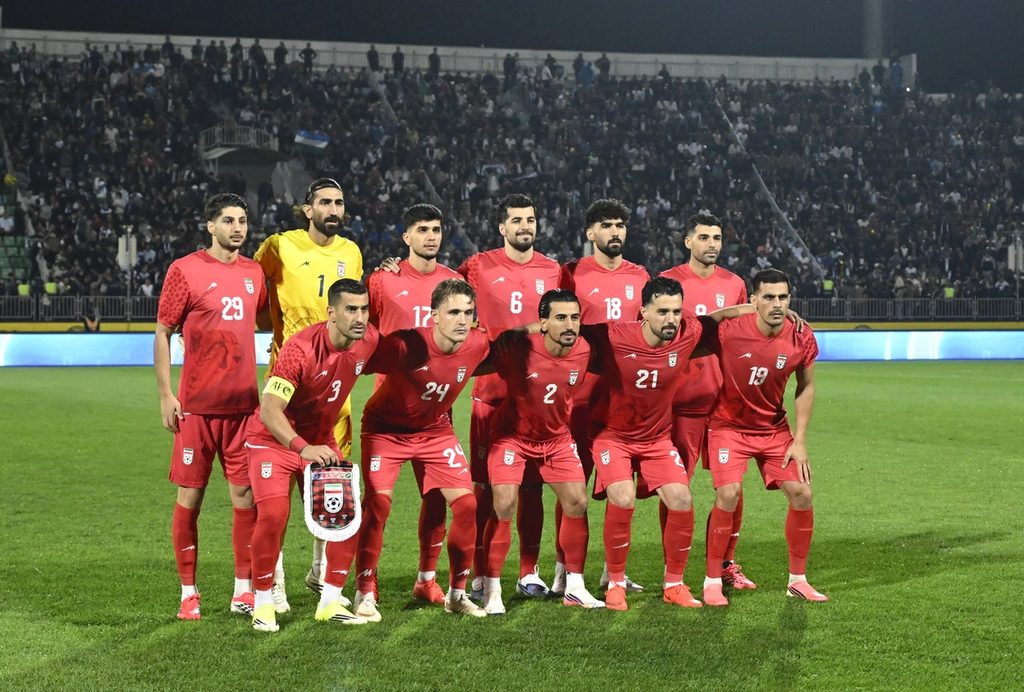
Team Melli to face Russia in Kazan.

The Russia and Iran national men's football teams will play an international friendly match on September 29, 2026, at the Ak Bars Arena in Kazan, Russia, as announced by the Russian Football Union.

Match Details & Context

  • Date: September 29, 2026
  • Location: Ak Bars Arena (Kazan, Tatarstan, Russia)
  • Capacity: Over 45,000 seats
  • Kickoff Time: To be announced (along with ticket sale details)

Head-to-Head History

  • The two teams have faced each other four times previously in friendly matches.
  • Their most recent encounter was in October 2025 in Volgograd, where Russia won 2–1.
  • The overall historical record stands at one win for Russia, one win for Iran, and two draws.
  • FIFA Rankings place Iran 22nd and Russia 35th globally.

Iranian Football at the Crossroads: Stagnation, Regional Rivalry, and the Long Wait for a Savior


Iran's Football Crossroads: A Tale of Two Federations

In a striking contrast that underscores the widening gap between strategic vision and bureaucratic inertia, the Iranian Football Federation finds itself at a critical juncture while regional rivals surge ahead with bold, calculated moves.

The Familiar Path of Stagnation

As the Iranian Football Federation persists in its contentious relationship with the public—marked by ongoing conflicts and mutual recrimination—it has chosen to extend Amir Ghalenoei's contract. This decision comes despite a track record that many consider underwhelming: an expected fourth consecutive major tournament campaign that ended in disappointment, with the team failing to advance past the group stages in the World Cup 2026 while failing to win the title in two Asian Cup tournaments in 2007 and 2023. The contract renewal has been met with widespread criticism from fans and pundits alike, who view it as yet another symptom of a system that prioritizes familiarity over performance.

A Contrast in Ambition

Meanwhile, the Emirati Football Federation—widely regarded as one of the most proactive and opportunistic governing bodies in the region—has executed a coup of considerable magnitude. They have secured the services of Zlatko Dalić, a manager whose credentials include guiding Croatia to a World Cup final appearance and a third‑place finish, establishing himself as one of the most respected tacticians in contemporary football. The appointment signals the UAE's serious intent to elevate its footballing standing on the Asian and global stage.

An Intriguing Reunion

Perhaps even more intriguing for Iranian football enthusiasts is the accompanying appointment of Branko Ivanković as technical advisor alongside Dalić. Ivanković, who had officially announced his retirement from football management not long ago, has been persuaded by his friend and compatriot to return to the game. Dalić, in welcoming Ivanković, referred to him as "the great advisor," emphasizing that his extensive knowledge of the regional football landscape and proven track record of success would be invaluable assets.

This is the same Ivanković who, during his tenure as Team Melli's head coach, guided Iran to a comfortable World Cup qualification and presided over what many consider one of the most successful periods in Iranian football history. His subsequent golden era at Persepolis further cemented his legendary status in Iranian football folklore.

Prophetic Warnings

Ivanković's name has resurfaced in Iranian sports circles recently for reasons beyond his coaching achievements. His famous prediction that Iranian football would regress to "amateur level" now appears increasingly prophetic, as the warning signs he identified have become starkly visible. The manner in which he handled the Ramin Rezaeian situation also continues to generate discussion, with each passing day seemingly validating Ivanković's approach and judgment in that controversial episode.

A Formidable Regional Force

The Dalić‑Ivanković partnership represents a formidable alliance in Middle Eastern football—a combination of world‑class tactical acumen and deep regional expertise that could reshape the competitive landscape. For Iran, this represents yet another threat to its regional standing, particularly at a time when the national team's management structure appears incapable of learning from past failures.

The Erosion of Standards

The current state of Iranian football raises profound questions about institutional priorities. In a system where failures and disappointments go unquestioned—indeed, seem to be rewarded with contract extensions—competence has become a desirable but non‑essential attribute for those leading Team Melli. Surprises and controversies have become so routine that they barely register as cause for concern.

A Generation Disillusioned

Across Iran and throughout the global diaspora, a generation of fans who have witnessed Team Melli's gradual decline watches with growing disillusionment. The team's popularity has reached one of its lowest points in recent memory, with attendance figures and television ratings reflecting a significant erosion of public enthusiasm. While the management and coaching structures bear considerable responsibility for this decline, another factor has emerged as a major source of fan frustration: the astronomical salaries commanded by so‑called professional footballers in Iran, despite decades of collective underachievement. This disparity between compensation and results has become a festering wound, breeding apathy and, increasingly, outright hostility toward the national team.

The Path Forward

As regional rivals invest in world‑class leadership and strategic planning, Iranian football stands at a crossroads. The contrast between the UAE's proactive approach and Iran's reactive stagnation could not be more stark. Without fundamental reform—starting with accountability at the highest levels and a genuine commitment to merit‑based selection—the decline may prove irreversible. The passionate support of Iranian football fans, once the team's greatest asset, now appears to be its most severely tested resource.

The question is not whether the Iranian Football Federation recognizes the urgency of the moment—it has repeatedly demonstrated its inability to learn from its missteps and stubbornly clings to a failing strategy that has already eroded the nation's footballing prestige. The true question is far more pressing: who will emerge as the savior of Iranian football? And perhaps more critically, when and how will the long‑overdue revolution and revival finally begin?

A Last Chance in Rotterdam: Jahanbakhsh’s Make-or-Break Return

Alireza Jahanbakhsh's free transfer to Excelsior Rotterdam marks a poignant, yet deeply telling, juncture in the rapidly dwindling career of the former Team Melli captain. Returning to the Eredivisie—the very stage where his European odyssey first ignited and where he scaled his greatest individual heights—represents less a triumphant homecoming and more a calculated, last-ditch gamble. For his agent, this move is a masterclass in damage control; a shrewd exercise in leveraging past glories to secure a lifeline in a familiar environment, despite a glaring absence of recent form.

For a player whose trajectory has been a disheartening spiral of diminishing returns, this is a stark reality check. Jahanbakhsh, once the undisputed talisman and emotional leader for Iran, has visibly deprioritized his on-pitch excellence, leaving fans bewildered and disillusioned. The nadir of this decline was painfully laid bare in Belgium, where he failed to command a starting berth even at a club languishing near the bottom of the Pro League. Such obscurity is a world away from the halcyon days of 2017-18, when he etched his name into football history as the first Asian player to clinch the Eredivisie Golden Boot—a record that now feels like a relic of a bygone era.

"We have signed a player who has played at the highest level of football and recently participated in the World Cup. He has a good understanding of the Dutch league and our style of football and brings a lot of experience and personality to the team. His technical quality and winning spirit can be very valuable to the team both on and off the field."
Mark Roel, technical director of Excelsior Rotterdam

Excelsior have incurred zero financial risk in acquiring the winger, which is both a blessing and a potential pitfall for the player. Because he cost them nothing, the club's patience will be exceptionally wafer-thin; if his performances fail to impress, the board will have no qualms about severing ties sooner rather than later. Crucially, the squad he is joining is a vibrant, youthful ensemble brimming with confidence and high-octane energy—a stark contrast to the sluggish pace of his recent outings. In such an environment, seniority alone will not guarantee minutes; he must actively scrap for his place against hungry youngsters eager to stamp their authority on the pitch.

This brings us to the lingering, uncomfortable question hanging over his head: Does he still possess the requisite attitude and hunger? Critics have long doubted his mental fortitude, pointing to a visible dip in work rate and questionable body language. However, if Jahanbakhsh can recalibrate his approach, double down on his training intensity, and embrace a hybrid role—offering both mentorship and competitive grit—his vast experience could prove invaluable to a developing side. Yet, there is no escaping the fact that this is his final opportunity to prove he still belongs at a credible European level.

The unforgiving nature of European leagues offers no sanctuary for complacency. The competition for places has never been fiercer; a flood of exceptionally talented African players and an ever-increasing contingent of disciplined Asian stars—particularly from Japan and South Korea—are vying relentlessly for coveted contracts in lucrative European markets. This surplus of ready-made replacements means that any lapse in effort from Jahanbakhsh will be immediately exploited. Excelsior would have no shortage of alternatives knocking on the door.

While the past two years have offered little reason for optimism, it would be premature to completely write him off. The technical quality, blistering pace, and innate crossing ability that once made him a nightmare for defenders are likely still buried within his repertoire. The defining variable now is not talent, but sheer, unadulterated commitment. If he can summon the drive and humility required to reinvent himself at 32, he might just orchestrate a remarkable career resurrection. If not, this Rotterdam stint will be remembered as the final, quiet footnote to a once-promising journey—a cautionary tale of what happens when potential outruns professionalism.

Road to Saudi Arabia: Iraq to Host Elite Four-Nation Tournament in Basra This November

BASRA, Iraq — The Iraqi Football Association (IFA) has announced plans to host a high-profile, four-nation international friendly tournament at the Basra International Stadium from November 9 to 17, 2026. Scheduled during the official FIFA international match window, the tournament serves as a critical, star-studded dress rehearsal for the 2027 AFC Asian Cup in Saudi Arabia.

In a bold competitive move, the IFA is targeting an elite lineup. The tournament organizers aim to feature four teams that competed in the 2026 FIFA World Cup, ensuring maximum intensity and tactical preparation for the continental championship.

The Lineup: Who is in and Who is Pending?

While negotiations are fast-moving, the tournament's final roster is taking clear shape. The response status of the invited Football Associations reveals a mix of confirmed regional giants and ongoing negotiations:

  • Iran (Confirmed): The Football Federation Islamic Republic of Iran (FFIRI) was the first to officially accept the invitation. Following scheduling complexities earlier in the year, Team Melli’s coaching staff heavily prioritized this tournament, viewing the Basra training camp as an ideal competitive environment.
  • Uzbekistan (Initial Approval): The Uzbekistan Football Association has provided initial verbal approval. While internal administrative processes are being finalized, the IFA expects formal written confirmation from Tashkent shortly.
  • Jordan (Invited/Pending): The Jordan Football Association remains a top priority for the IFA. Negotiations are active, but the Jordanian FA has not yet officially confirmed its participation, leaving them as a highly anticipated "proposed option."
  • The Search for an East Asian Variant: If any spots open up, or to solidify the final bracket, the IFA is actively negotiating with prominent East Asian federations.

Solving the "Singapore Puzzle"

The hunt for an East Asian opponent is not random; it is a deliberate tactical move by Iraq's coaching staff. Iraq has drawn Singapore in the group stage of the upcoming 2027 Asian Cup.

The national team's technical staff has explicitly requested at least one opponent in Basra that mimics the disciplined, low-block, or counter-attacking playing style typical of East Asian sides. This tournament is designed to give the Lions of Mesopotamia the exact tactical look they need to unlock their Asian Cup group rivals.

A Continental Rehearsal in Basra

By hosting the event at the Basra International Stadium, the IFA is maximizing its home-field advantage while testing tournament logistics. With the Asian Cup taking place in neighboring Saudi Arabia, the climate, fan passion, and competitive stakes in Basra will offer the perfect regional simulation.

For local fans, the November window promises a rare treat: a mini-championship on home soil featuring World Cup-caliber talent, all while Iraq fine-tunes its squad for a historic continental run.


📋 Fact Sheet for Editors

  • Event: Four-Nation International Friendly Tournament
  • Host: Iraqi Football Association (IFA)
  • Venue: Basra International Stadium, Iraq (65,000 capacity)
  • Dates: November 9 – 17, 2026
  • Tournament Tier: FIFA International Match Window (A-Matches)
  • Primary Objective: Tactical preparation for the 2027 AFC Asian Cup.

The Kralingen Rescue Mission: Can Alireza Jahanbakhsh Reclaim His Spark at Excelsior?

Alireza Jahanbakhsh has signed a one-year contract with Eredivisie side Excelsior Rotterdam, sealing a return to the Netherlands on August 10, 2026. Joining as a free agent, the 32-year-old Iranian winger holds a club option to extend for a second season. The move marks his fifth stint with a Dutch club, arriving on the heels of a challenging phase in his career spent with FCV Dender in Belgium.

For Excelsior, securing a player of Jahanbakhsh’s pedigree is a high-profile gamble. For the player, it represents a desperate final opportunity to prove he still belongs in professional European football.


From Dutch Royalty to Premier League Nightmare

Jahanbakhsh’s career background is rooted in historic success within the Eredivisie. During the 2017/18 season with AZ Alkmaar, he scored 21 goals to become the first Asian player to claim the Eredivisie Golden Boot.

That phenomenal peak triggered a club-record £17 million transfer to Brighton & Hove Albion in 2018. However, his time in the English Premier League turned into an absolute nightmare. He managed a meager two league goals across three seasons, struggling severely with the pace, physicality, and tactical demands of English football.

A Staggering Fall from Grace

While a subsequent move to Feyenoord brought a brief respite and an Eredivisie title, his career has suffered a staggering statistical and qualitative decline over the last few years. The numbers paint a clear picture of a winger losing his clinical edge:

SeasonClubLeagueMatchesGoalsAssistsKey Context
2017/18AZ AlkmaarEredivisie332112Golden Boot Winner; Peak career form.
2018–21BrightonPremier League5021Struggled for consistent minutes and form.
2023/24FeyenoordEredivisie1602Reduced to a minor rotation role.
2024/25SC HeerenveenEredivisie10+20Short stint; club declined contract extension.
2025/26FCV DenderBelgian Pro League2111Relegated to bench; accumulated 5 yellow cards.

His career plummeted further down the European pecking order last season at Belgian side FCV Dender. He was relegated primarily to a bench role—starting rarely and scoring only once. Analysts also noted a telling lack of sporting ambition when Jahanbakhsh admitted his recent club choices in the Netherlands were motivated heavily by securing passport eligibility rather than sporting prestige.


Paradox and Struggles at Team Melli

His domestic decline has mirrored a highly frustrating and paradoxical reality with the Iran national team, known affectionately as Team Melli. Despite missing sharp competitive form at club level, managers have stubbornly kept him as a staple of the squad, leading to mounting international struggles:

  • World Cup 2026 Fading Impact: Although he captained Iran at the recent 2026 FIFA World Cup, he was no longer an indispensable focal point on the pitch. He failed to register a single goal or assist, making only two substitute appearances and accumulating a mere 45 minutes of total playtime.
  • Logistical and Tactical Hardships: The tournament exposed harsh physical limits. Team Melli was forced to set up camp outside the U.S. border in Tijuana, Mexico, due to visa restrictions. Traveling constantly under tight schedules took a visible toll on an aging forward line that struggled to move beyond the group stage.
  • Polarized Fanbase: Beyond tactics, Jahanbakhsh has lost substantial popularity among segments of Iranian fans due to his strict alignment with the political state and his ongoing silence regarding the social and economic hardships faced by ordinary citizens back home.

The Excelsior Blueprint: A New Tactical Role

Manager Ruben den Uil and Technical Director Mark Ruijl view Jahanbakhsh as a "mentor-winger"—a specific role designed to balance their youthful attack. Excelsior's squad is incredibly young, featuring emerging talents like Gyan de Regt and Nesto Groen. Jahanbakhsh is expected to guide them on and off the pitch.

Unlike his AZ days where he was the primary scorer, his role here will likely be to stay wide and provide quality crosses for strikers like Mike van Duinen, rather than cutting inside to shoot. Given his age and recent lack of 90-minute fitness, he may initially be used as an impact substitute to bring composure to the final 30 minutes of tight matches.

+--------------------------------------------------------------+

|               JAHANBAKHSH CONTRACT SNAPSHOT                  |
+----------------------+---------------------------------------+

| New Club             | Excelsior Rotterdam (Netherlands)     |
| Signed Date          | August 10, 2026                       |
| Status / Fee         | Free Agent                            |
| Duration             | 1 Year (Plus 1-year extension option) |
+----------------------+---------------------------------------+

Baptism by Fire: The Upcoming Debut

Jahanbakhsh’s registration should be completed in time for a massive home fixture against the reigning champions.

  • Fixture: Excelsior Rotterdam vs. PSV Eindhoven
  • Date: Saturday, August 15, 2026
  • Venue: Van Donge & De Roo Stadion
  • Kick-off: 21:00 (Local Time)

Excelsior opened their Eredivisie campaign strongly with a stunning 4-0 away win against SC Cambuur on August 7. Because the team is in high spirits, Jahanbakhsh will likely start on the bench, as the manager will be hesitant to disrupt a winning starting eleven immediately. Whether the veteran winger can reinvent himself in Kralingen remains to be seen, but his journey back to the Eredivisie spotlights one final shot at redemption.

Team Melli's Coaching Future: A Shift in Federation Dynamics

The Evolving Equation of Iran's National Team Bench

The complex calculations surrounding Team Melli's technical leadership have crystallized into a new phase in recent days, as the Football Federation of Iran's (FFIRI) board of directors experiences a notable recalibration of positions. Several board members who previously stood firmly against extending Amir Ghalenoei's contract have now reconsidered their stance, marking a significant development in the ongoing saga of the national team's coaching future.

This transformation in perspective gained momentum following extensive consultations and strategic discussions that have dominated the board's agenda over the past week. The extension of the senior national team head coach's contract has emerged as perhaps the most consequential item among their deliberations, with the issue commanding considerable attention and debate.

The Gradual Shift in Decision-Making Dynamics

The outcome of these intensive consultations has been a gradual yet discernible evolution in the board's decision-making climate. Those who once comprised the opposition faction have increasingly aligned themselves with the continuity camp, advancing the argument that technical stability serves as a crucial prerequisite for the national team's aspirations in the AFC Asian Cup 2027, scheduled to be hosted by Saudi Arabia.

The prevailing sentiment among this reconfigured group suggests that maintaining the existing technical structure would provide the team with the consistency and institutional memory necessary to mount a serious challenge for continental honors. This reasoning appears to have resonated sufficiently to bridge the previously entrenched divisions within the federation's leadership.

An Atmosphere of Anticipation

While no official pronouncement regarding the national team bench's future has materialized, the federation's internal environment has undergone a palpable transformation compared to the tensions of previous weeks. The balance of influence has demonstrably tilted in favor of retaining the incumbent coach through the conclusion of the AFC Asian Cup 2027 campaign in Saudi Arabia.

Should this trajectory persist, it would effectively eliminate any substantive discussion regarding technical staff changes from the federation's agenda, at least until the tournament's completion. Such an outcome would represent a decisive victory for the pro-continuity faction and would establish a clear pathway for the team's preparation cycle.

The Shadow of Political Maneuvering

This apparent leaning toward Ghalenoei's retention has not escaped the scrutiny of observers, many of whom attribute the shift to political calculations and strategic maneuvering rather than an objective assessment of merit and technical competency. These influences, according to analysts, now permeate the corridors of the FFIRI with increasing intensity.

The political dimensions of this decision cannot be understated, as they intersect with broader power dynamics within Iranian football governance. The federation's deliberations appear to reflect considerations that extend beyond purely sporting criteria, raising questions about the decision-making processes that determine the national team's technical direction.

A Record of Unfulfilled Expectations

The context of this shift is particularly noteworthy given Ghalenoei's recent record with Team Melli. Under his stewardship, the national team experienced disappointment at the last AFC Asian Cup, failing to meet the elevated expectations that traditionally accompany Iran's participation in the continent's premier competition.

Furthermore, the team's campaign in the FIFA World Cup 2026 proved equally challenging, as Iran was unable to secure qualification from the group stage and failed to register a single victory throughout the tournament. These results have cast a long shadow over Ghalenoei's tenure and have fueled skepticism regarding his capacity to deliver the continental success that has eluded Iranian football for five decades.

The Verdict of Public Opinion

The reaction on social media platforms has been overwhelmingly critical, with users directing sharp commentary toward both Ghalenoei and his squad. This digital discontent reflects a broader sentiment among the fan base, many of whom harbor deep reservations about the team's prospects of ending the nation's 50-year Asian Cup drought under the current technical leadership.

The disconnect between the federation's apparent inclination and the grassroots sentiment underscores the challenging environment in which Iranian football operates. The divergence between institutional decision-making and public opinion has become increasingly pronounced, creating tensions that may prove difficult to reconcile as the Asian Cup approaches.

The Road Ahead

As the FFIRI board continues its deliberations, the decision regarding Ghalenoei's future will carry implications that extend far beyond the technical staff appointment itself. The choice will signal the federation's strategic direction, its responsiveness to public sentiment, and its commitment to performance-based evaluation versus other considerations.

The coming days will likely prove decisive in determining whether the current trend toward continuity solidifies into official policy or whether a last-minute reversal introduces yet another twist in this unfolding narrative. Whatever the outcome, the decision will shape the trajectory of Iranian football as it prepares for one of its most significant challenges in recent years.


This article is based on developments within the Football Federation of Iran and reflects the evolving situation regarding the national team's technical leadership as of the date of publication.

European Legionnaires News


Allahyar Sayyadmanish Scores First Goal as Lech Poznan Secure First Win.

Allahyar Sayyadmanish scored his first goal in Poland on Saturday evening, August 2, as Lech Poznan faced Wisła Krakow in the second week of the Polish Ekstraklasa. The match ended 2–1 in favor of Lech Poznan, earning the team its first victory of the new season. The Iranian striker netted his side's second goal of the evening.

After the match, Sayyadmanish expressed his delight: "I am very happy to have scored my first goal, but the most important thing was to get the three points. Following our first league match last Wednesday, we were all really disappointed, but we focused on the game against Wisła Krakow. Fortunately, we were able to bounce back. I think we reacted well as a team. Now we must continue on this path and maintain our momentum."

Ali Gholizadeh , who is Sayyadmanish's teammate in the Polish club, is still in the recovery phase after his injury late last season. The left winger missed Iran's World Cup squad.

Lech Poznan had drawn their opening fixture, but this win gives them four points and lifts them to second place in the early table.


Taremi Faces Uncertain Future at Olympiacos

Meanwhile, Mehdi Taremi is going through a difficult period at Olympiacos. The Greek club has announced its European squad for the UEFA Champions League qualifier against NEC Nijmegen of the Netherlands, scheduled for Tuesday, August 4, in Athens—and Taremi's name was notably absent.

Greek media outlet sportal reported on the situation: "Mehdi Taremi's case has its own complications. The Iranian striker is not considered match-fit at the moment. Moreover, before the World Cup, his agent informed Olympiacos that they were actively looking for a new club for the player."

In light of this, it is not unlikely that Olympiacos will move to sign two new strikers to reinforce their attack alongside Ayoub Al-Kaabi. The coming days will be pivotal for the club's forward line, as they must make important decisions to ensure they are fully prepared for European competition.

For Taremi, there are growing concerns that his declining form and rapidly decreasing market value could make a meaningful move to a respected European league increasingly difficult. So far, only Brazilian Série A side Clube de Regatas Vasco da Gama has shown concrete interest. Taremi is rumored to have turned down that offer, as he remains determined to continue his career in Europe.


Jahanbakhsh Still Searching for New Club

Alireza Jahanbakhsh, the Team Melli winger, has been without a club since being released by Belgian side FCV Dender EH at the beginning of July 2026. The 32-year-old's agent has so far been unable to find him a new team. Like Taremi, Jahanbakhsh is insisting on staying in a European league, despite having received offers from Iranian clubs.

Olympiacos VP Drops Transfer Bombshell: Taremi on the Chopping Block as Contract Dilemma Looms


Mehdi Taremi made a high-profile move to Greek Super League side Olympiacos last season, swapping the glitz of Serie A giants Inter Milan for the historic port of Athens. The transition was swiftly validated by a torrent of goals, as the Iranian striker finished the campaign with an impressive haul of 16 strikes and 6 assists across all competitions.

However, his international exploits failed to match that club form. During Iran’s three group-stage fixtures at the World Cup, Taremi's contributions were largely muted—his only notable moment being a solitary goal against Belgium, which was ultimately ruled out for offside. His feeble penalty kick, which was saved by the Egyptian goalkeeper, did not help enhance his reputation either.

Currently under contract with Olympiacos until the end of next season, the 34-year-old captain’s future has become a hotbed of speculation. With persistent rumors swirling about a potential summer exit, the club’s vice-president has now publicly addressed the situation, effectively confirming that a departure is a distinct possibility.

The crux of the matter lies in the final year of Taremi's deal. Olympiacos faces a stark financial dilemma: cash in on their star striker this summer for a meaningful transfer fee, or risk losing him for nothing on a free transfer when his contract expires next season—giving the player total control over his next destination.

Vice-president Kostas Karapapas, currently accompanying the squad during their pre-season training camp in the Netherlands, offered a candid briefing to reporters regarding the transfer landscape, squad balance, and recent criticisms surrounding the roster.

Addressing the forward line specifically, Karapapas contextualized Olympiacos's attacking depth relative to their domestic rivals. He acknowledged that the club currently boasts four elite-level strikers: Ayoub El Kaabi, Mehdi Taremi, Roman Yaremchuk, and Clayton. He stressed that while their competitors typically rely on just one or two central forwards, it is neither practical nor sustainable to retain all four players within the same squad.

"Our competitors in Greece have one, or at best one and a half strikers, but we have El Kaabi, Taremi, Yaremchuk, and Clayton—four out-and-out forwards," Karapapas stated. "It is highly unlikely that all four will remain here, because players of Taremi, Yaremchuk, and Clayton's caliber will simply not accept diminished playing time. I hope you understand the context. This is purely a footballing decision."

The vice-president concluded by reinforcing that his remarks were intended to highlight the exceptional quality and depth of the roster, rather than single out any individual for criticism. "What I want to convey is that we have a very complete team—a squad that is deeper than any of our competitors," he added.

Karapapas's comments come amid intense media speculation regarding Taremi's next move. This indirect confirmation from a senior executive has only fueled further debate about his immediate future.

Various rumors have linked the veteran striker with a lucrative return to the Persian Gulf, particularly given his successful prior stint with Al Gharafa—the very club that served as his springboard to European football. Nevertheless, sources suggest Taremi remains determined to exhaust every opportunity to stay in Europe and continue his career at the highest competitive level. A return to the Gulf or the Iran Premier League is widely considered his absolute last resort.

Financially, Taremi's market valuation has taken a sharp downward trajectory in recent years. From a peak of €20 million during the 2022–23 season, his current estimated worth has plummeted to around €2 million—a stark decline that underscores the urgency for Olympiacos to make a definitive move in this transfer window.

The Asian Games: A Daunting Test Awaits Iran’s Omid Team in Nagoya

The Asian Games have always occupied a unique space in Asian football. While the AFC Asian Cup remains the continent’s premier senior national team tournament, East Asian nations, in particular, place immense value on Asian Games success, often integrating it into their long-term grassroots development strategies.

Iran, boasting a proud history in the Asian Games Football. It won its first Gold Medal back in 1974 , then repeated the feat 3 more times (( 1990, 1998, 2002), has endured a difficult two decades in the competition. Since the shift to an U-23 format, Iran's Omid team has struggled, even recording some of its worst defeats against less-fancied East Asian opponents.

Conversely, Japan, China, and South Korea approach the tournament with special regard, viewing success as a key benchmark for their youth development. Given this context, the Nagoya 2026 Asian Games men's football draw was far from generous to Iran. Hossein Abdi's squad finds itself in Group B, pitted against China, the UAE, and North Korea—three distinct tactical challenges that demand peak technical, tactical, and mental readiness to advance.


China – The Heavyweight Test

Iran’s most formidable group-stage obstacle is China, the runners-up of the 2024 AFC U-23 Asian Cup. The Chinese are no longer the pushovers of previous years. Their historic run to the final—where they ultimately fell to Japan—signaled a dramatic narrowing of the gap between Chinese grassroots football and Asia's traditional elites. Through substantial investments in academies, scouting networks, and coaching infrastructure, this generation boasts valuable experience on the continental stage. Their presence makes Iran's opening fixtures a stern examination of Abdi's tactical acumen.

North Korea – The Unpredictable Adversary

Alongside China, North Korea poses a significant threat. Renowned for their relentless physicality, strict tactical discipline, high work rate, and unyielding fighting spirit, they are never an easy out. Their showing at the Hangzhou 2022 Asian Games—reaching the quarterfinals and defeating Bahrain before bowing out to Japan—underscored their status as one of Asia's toughest grassroots sides. For Iran, this fixture is as much a physical and mental battle as it is a technical one; the North Koreans rarely allow opponents to settle into a rhythm.

UAE – The Emerging Force

Although the UAE did not compete in the previous Asian Games, they have recently ramped up their focus on youth development. Enhanced academy systems, targeted talent programs, and consistent exposure to international competition have markedly improved their U-23 ranks. Dismissing them as easy points would be a grave mistake for Iran, who must maintain full concentration to secure a result.


A Grueling Road to the Podium

The Omid team's challenges do not end with the group stage. Final group standings will be critical, as they dictate the knockout bracket. With host nation Japan anchored in Group A, a potential early-round clash with one of Asia's footballing superpowers looms large. Ultimately, there are no easy routes to a medal in Nagoya. Any team with podium aspirations must navigate the group with authority before confronting the continent's best. Hossein Abdi's men travel to Nagoya with the ambition of re-establishing Iran among Asia's contenders, yet the draw ensures this journey begins uphill—starting with the Asian runners-up and potentially leading to a collision with the giants of the East.

Realistic Expectations

Realistically, Abdi inherits an unenviable task. The Omid team's preparation has been modest, squad cohesion remains a work in progress, and frequent player withdrawals by clubs have destabilized the roster—all before facing the continent's powerhouses. Under these circumstances, a successful campaign would likely be defined simply by progressing beyond the group stage.

Matches Schedule:
First match(es) will be played: 15 September 2026. Source: OCA

18 September 2026

China v North Korea

18 September 2026

United Arab Emirates v Iran

20 September 2026

China v Iran

20 September 2026

United Arab Emirates v North Korea

23 September 2026

China v United Arab Emirates

23 September 2026

Iran v North Korea


Top honors list Asian Games football

TeamGoldSilverBronze
 South Korea6 (1970, 1978, 1986*, 2014*, 2018, 2022)3 (1954, 1958, 1962)3 (1990, 2002*, 2010)
 Iran4 (1974*, 1990, 1998, 2002)2 (1951, 1966)1 (2006)
 India2 (1951*, 1962)1 (1970)