
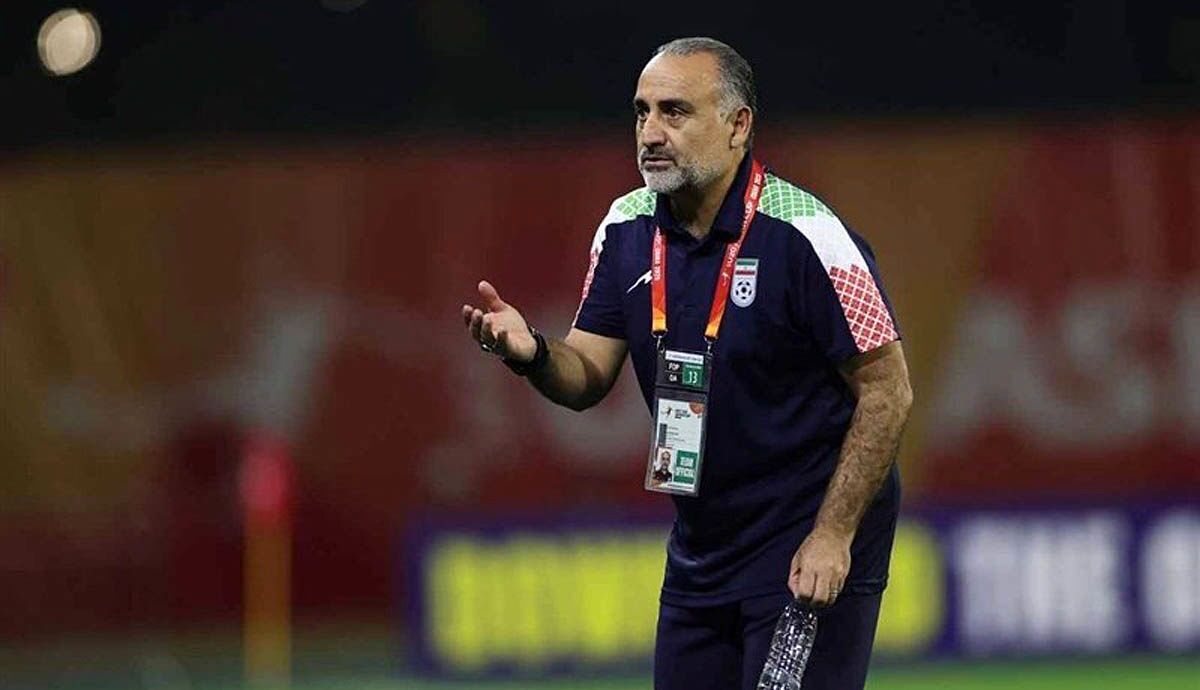
Hossein Abdi has apologized to Iranian fans after his Omid team failed to escape what he falsely claimed was a brutally difficult group at the Asian Games in Nagoya 2026.
The apology was predictable. So was everything that came with it.
Iranian coaches have long since turned excuse-making into an art form. What they lack in tactics, man management, and style, they make up for in creative deflection. The young and inexperienced are the worst offenders, but they are merely inheriting a tradition perfected by generations of coaches before them.
Rarely do they confront their own shortcomings—tactical naivety, technical deficiencies, poor preparation. There is always another culprit: the referee, the schedule, the lack of time, the players, the federation, the weather. It is a culture of blame that has taken root in Iran and shows no sign of loosening its grip. And despite everything available to them—global media, European coaching literature, modern data analysis—Iranian coaches keep failing at the human element of the job. The public's verdict, sadly, stands: too many of them simply do not possess the mentality, maturity, or character to coach at the highest level.
This Omid team gave little reason for optimism. They lacked urgency and application. There were flashes of individual quality, but as a collective they were disjointed, incoherent, and easy to read. The coaching was no better: substitutions came too late, tactical adjustments never came at all. Yes, preparation time was short—but every team at these Asian Games faced the same constraint. Adapting to adversity is part of the job. Hossein Abdi did not adapt.
What stings most is the contrast. Many North Korean players are not even attached to a professional club. Meanwhile, Iran's squad carries a combined Transfermarkt valuation of roughly 9.1 million euros. Many of them earn multi-million-toman contracts and play for the biggest clubs in Iran. The gap in resources was enormous. The gap in results went the other way. The North Korean U23 total value was 1.9 million euros.
This defeat is not an isolated failure. It is a mirror held up to the entire system. Success and failure always begin at the top, and when the top is rotten, miracles are the only remaining strategy. What unfolds in the Omid team is painfully familiar—it echoes through every age-level side and, most alarmingly, through the senior Team Melli itself.
Until the culture changes at the top, the apologies will keep coming. And so will the excuses.