
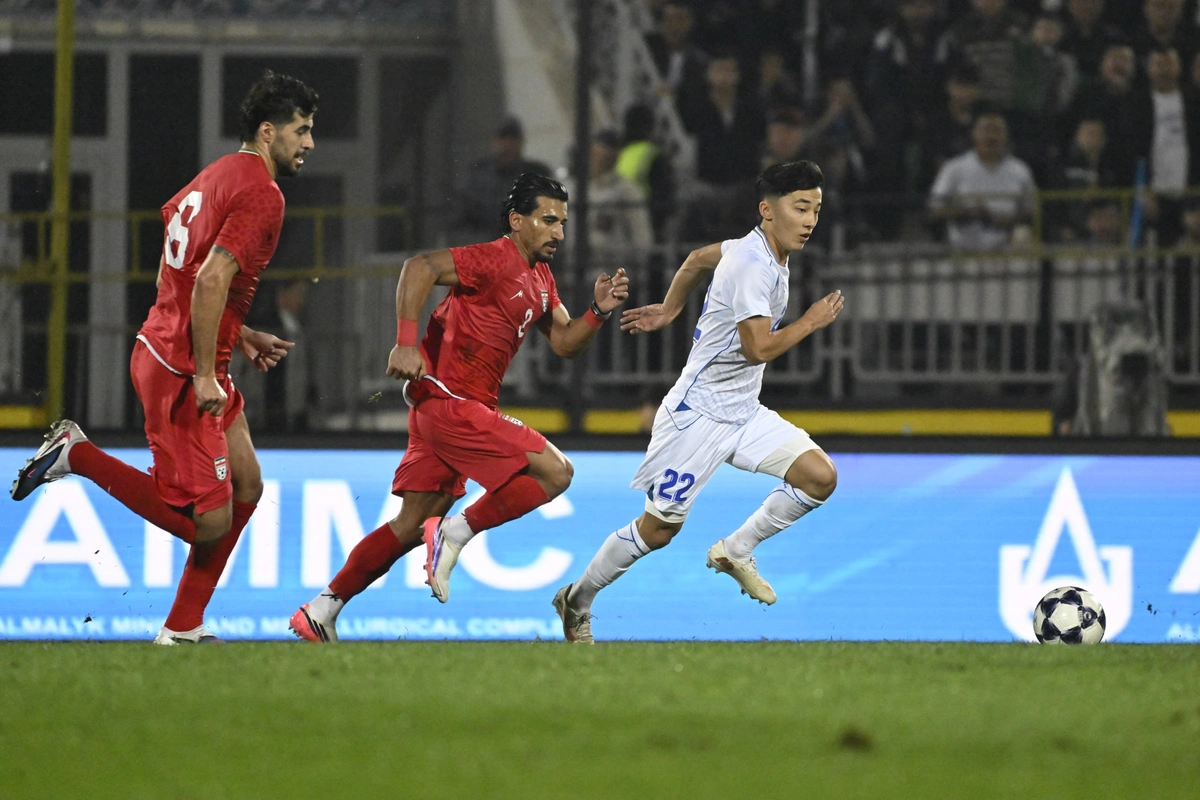
FERGANA, Uzbekistan — Iran’s national football team opened its September 2026 FIFA international window with a chastening 3–1 friendly defeat against Uzbekistan on Thursday at Fergana’s Istiqlol Stadium. The match, which kicked off at 17:30, carried significance beyond a routine warm-up given the long history between the two sides.
From the opening whistle, both teams looked to control possession and build attacks, but the first half turned on a bizarre error by Iran’s captain, Ehsan Hajsafi. In the 10th minute, his misplaced pass akin to a perfect assist , was seized upon by Eldor Shomurodov, who capitalized and beat goalkeeper Alireza Beiranvand to give Uzbekistan an early lead. Iran were fortunate not to concede again shortly afterward. In the 25th minute, another Shomurodov effort struck the woodwork and went wide, keeping the score at 1–0.
The remainder of the first half offered little comfort for Amir Ghalenoei’s side. Beiranvand made a mistake, the defense lacked coordination, and Iran’s finishing was inaccurate. At the break, Ghalenoei’s men trailed and had produced little to suggest a comeback.
Ghalenoei responded with tactical changes at halftime, introducing Sardar Azmoun, Ramin Rezaeian, and Khalilzadeh in place of Denis Dargahi, Saleh Hardani, and Saman Fallah. Azmoun was immediately handed the captain’s armband and took up a position in Iran’s attack for the final 45 minutes.
The changes paid off quickly. In the 49th minute, Iran equalized from a set piece. Rezaeian’s delivery went straight into Vladimir Nazarov’s net without touching any other player, bringing the score to 1–1 and giving Iran renewed hope.
But parity was short-lived. Minutes later, after a questionable incident in Iran’s penalty area caused by a lapse in judgment from Beiranvand, Uzbekistan were awarded a penalty, albeit a harsh one. Shomurodov stepped up and converted, scoring his second goal of the match and restoring Uzbekistan’s lead.
In the 80th minute, the referee sent off Uzbekistan’s Djiyanov, but the decision was reversed after a VAR review, allowing both teams to continue with eleven players. As the match entered stoppage time, Hossein Norchaev scored a third goal past Beiranvand, sealing a heavy defeat for Ghalenoei’s squad.
The result was made more striking by the age gap between the sides: Iran’s average age was 29.5, compared with 25.6 for Uzbekistan. Uzbekistan, coached by Fabio Cannavaro, looked sharper and more energetic in key moments.
Uzbekistan lineup: Vladimir Nazarov, Abdukodir Khusanov, Sonatullo Karimov, Mukhammadkodir Urozov, Akmal Mozgovoy, Odil Khamrobekov, Azizjon Ganiev, Sherzod Nasrullaev, Eldor Shomurodov, Dostonbek Khamdamov, Abbosbek Fayzullaev.
Head coach: Fabio Cannavaro.
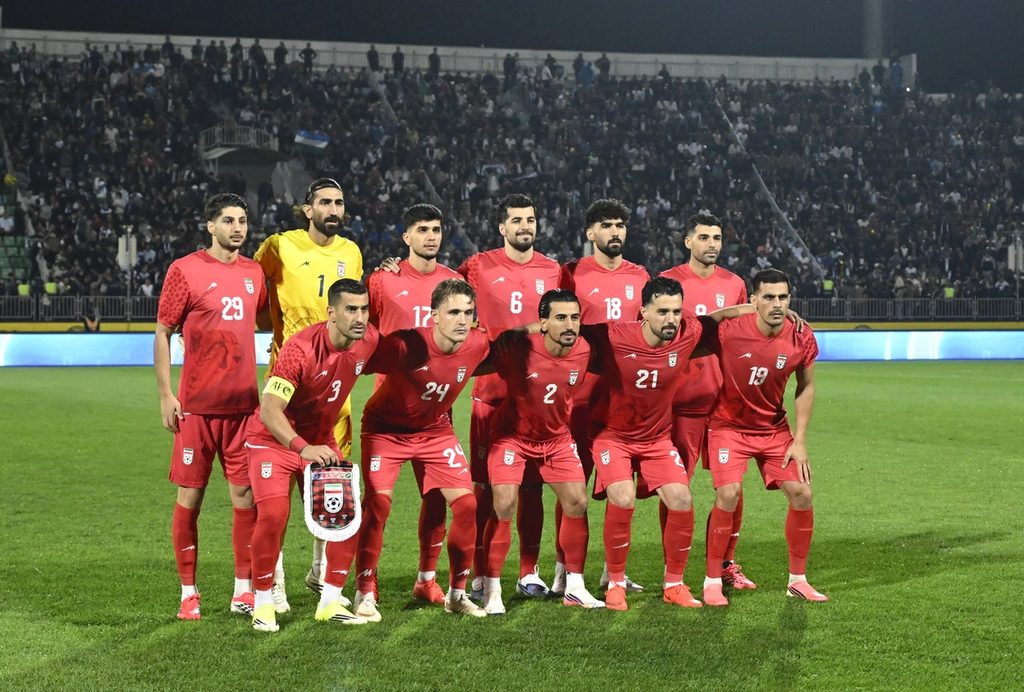
Iran lineup: STANDING L2R: Mohammad-Mehdi Mohebbi, Alireza Beiranvand, Aria Yousefi, Saeid Ezatolahi, Saman Fallah, Mehdi Taremi, SITTING L2R: Ehsan Hajsafi, Denis Dargahi, Saleh Hardani, Omid Noorafkan, Ali Nemati, .
Head coach: Amir Ghalenoei.
Substitutes used: Sardar Azmoun, Ramin Rezaeian, Khalilzadeh, Limouchi, Ghorbani, Mahmoudi
For Iran, the match will serve as a warning. Defensive lapses, a costly goalkeeper error, and an inability to turn first-half possession into chances left Ghalenoei’s side with a heavy defeat. While it is expected that those defensive shortfalls will be addressed in the next warm-up fixtures ahead, the concern is that Ghalenoei and his coaching staff lack the tactical prowess and skill needed to provide solutions and turn this ageing team into winners come AFC Asian Cup 2027.
But the defeat also raised a more fundamental question: Ghalenoei’s insistence on ageing players. Iran’s average age was 29.5, compared with Uzbekistan’s 25.6, and the gap showed. The veterans entrusted with key roles—Hajsafi, Beiranvand, Ezatolahi, Taremi and later Azmoun , Khalilzadeh and Rezaeian—could not match Uzbekistan’s energy, speed or pressing. The captain’s error led directly to the first goal, Beiranvand’s lapse contributed to the penalty, and the team’s overall lack of legs made it easy for a younger, sharper opponent to exploit spaces.
Ghalenoei’s substitutions, rather than injecting youth, simply replaced one set of experienced players with another. That conservatism may buy short-term stability, but it is not a credible path to renewal. If Ghalenoei and his staff cannot adapt their tactics, trust younger players, and build a side capable of coping with modern, high-tempo opponents, then this defeat will be more than a warning: it will be a preview of what awaits Iran at the AFC Asian Cup 2027.