Tag: Yahya Golmohammadi

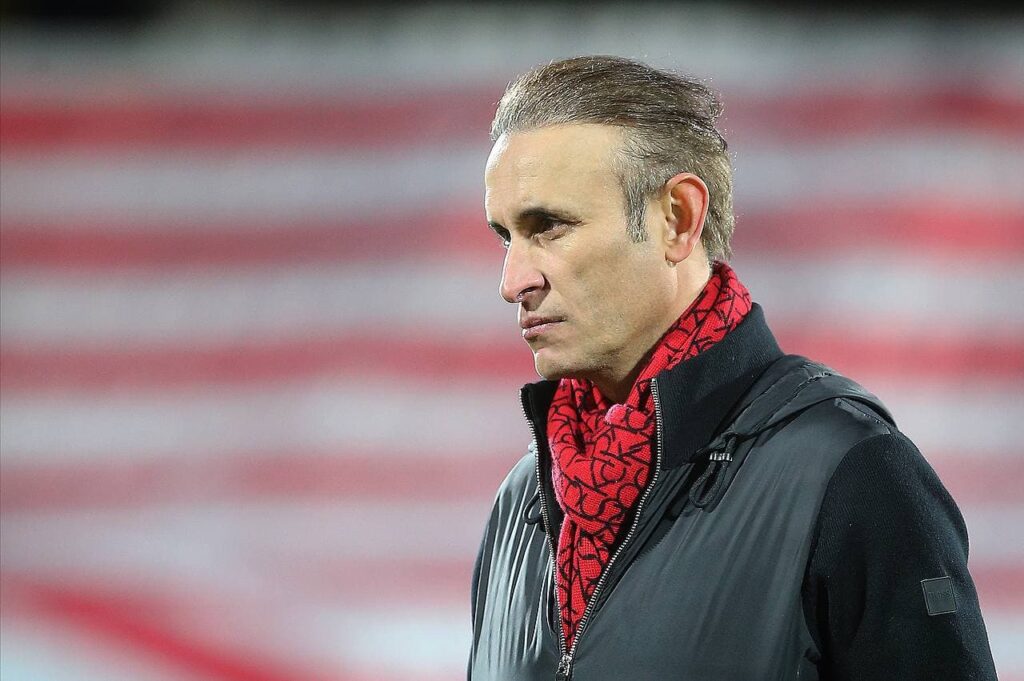
Yahya Golmohammadi , determined to succeed where others failed. The near-impossible task.


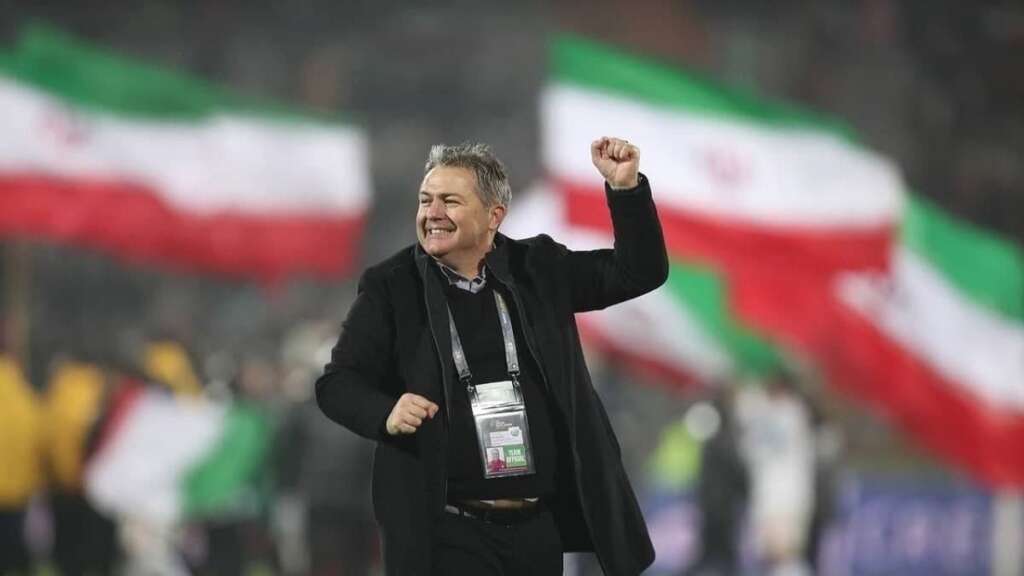
Speaking at the ceremony confirming his appointment as head coach of Iran's U-23 (Olympic) football team, Yahya Golmohammadi was unequivocal: "The moment the offer was put to me, I accepted it—immediately and with all my heart." The weight of the role, he made clear, is not lost on him: "I know full well how much this position demands and how heavy the responsibility is. I am honoured to carry it. This country is bursting with extraordinary talent—countless young players, both across the nation and within Iranian football, who have simply never been given the chance to be seen."

Golmohammadi then set out his ambitions, and they extend well beyond the immediate prize: "Qualifying for the Olympics is our primary goal, but our larger and more important mission is to build the future of football in this country. The doors of the U-23 team are open to everyone. I firmly believe that not one talented player should slip through our fingers." That mission, he acknowledged, cannot be carried out alone: "It demands foundational, substantive work—work I cannot do single-handed. I need to expand my staff so that we can identify and unearth all the footballing talent this country has to offer." He also turned to the media, whose role in that search he regards as vital: "The media, too, must help create an environment in which talented young players are brought to our attention—so that we can find those who, until now, have never had the opportunity to be seen."

And a bright spot is precisely what Golmohammadi's appointment represents—a rare one in an Iranian football landscape that is otherwise chaotic and in decline. Yet the post he has taken on remains one of the most undesirable in Iranian football, rejected by many candidates who were offered the job before Golmohammadi. Since the 1980 qualification for the Moscow Olympic Games, no coach and no federation have managed to reach the Olympics—a drought of 48 years, counting down to Los Angeles. Nor can those failures always be laid at the door of coaches, federations, or players. The failure is systemic, and no federation president has managed to confront it. Even with the Iranian Olympic Committee stepping in, several generations of Iranian footballers have been denied the glory of Olympic football.

Golmohammadi may well bring a breath of fresh air to the Omid team, but he appears under no illusion that his skills, his man-management, and his pragmatic character will be enough on their own. Perhaps the biggest obstacles are the clubs that consistently refuse to release players to Omid Teams. Qualifying for the LA Olympics ought not to be harder than Iran qualifying for the World Cup. The reality, however, is that while the Omid team's head coach has changed for the better, the surrounding factors have not improved—and may well have deteriorated further—making Golmohammadi's task that much harder.
A Crisis in Riyadh, an Opportunity in Tehran: How the Asian Cup's Possible Postponement Could Save Iran from Its Own Coach

As missiles rain down on King Khalid International Airport and Asian federations scramble to assess the safety of their players, the Football Federation of the Islamic Republic of Iran faces a moment of reckoning—and a potential escape route from a coaching disaster of its own making.

The missile and drone attacks on Riyadh have shattered the assumption that Saudi Arabia can safely host the 2027 AFC Asian Cup. At least 14 people were killed and over 300 wounded in multiple strikes on the capital's international airport over a single weekend, with a second attack striking the terminal just a day later, killing one and injuring eleven more. Airlines Etihad and Qatar Airways have suspended flights to Riyadh, and the airport remains closed until October 17.

The Asian Football Confederation (AFC) now faces an existential question: can it proceed with a tournament scheduled to begin on January 7 in a country where its capital's primary international gateway has been repeatedly targeted by hostile fire?

A Federation of Silence and Selective Security

The AFC's response—or lack thereof—has been telling. While the confederation has yet to issue a formal statement, multiple reports indicate that its executive committee will convene in the coming days to discuss options including postponement, relocation, or outright cancellation. Iranian media, citing Shargh Daily, has reported that FFIRI formally requested clarification from the AFC regarding the security situation and that the possibility of postponement or a change of host is on the table.

Yet the AFC's record on security matters is troublingly inconsistent. As Shahraranews pointedly observed, the confederation moved Iranian clubs' home matches to third countries citing security concerns, even as it has refused to acknowledge the manifest danger in Riyadh. The Saudi Pro League itself cancelled a domestic match between Abha and Al-Faisaly on security grounds, and an AFC Champions League fixture in Riyadh was delayed by an hour due to a Houthi missile alert—yet the AFC still has not formally declared Riyadh unsafe.

This selective application of security standards has not gone unnoticed. As one Iranian outlet put it, "It seems the AFC has changed the concept of insecurity according to its financial and sponsorship interests, putting the lives of footballers in Riyadh at risk".

The Dominoes Are Falling

The ripple effects are already being felt across the continent. South Korea's foreign ministry raised its travel advisory for all of Saudi Arabia to Level 3—"recommending departure"—and urged its citizens to leave unless their business was urgent. The Korea Football Association is in close communication with the AFC and has acknowledged that its planned November friendly in Saudi Arabia is now in doubt, with a federation official stating they are "discussing various possibilities" for the away trip.

Football Australia has similarly signalled its concern. A spokesman said the federation's "experienced security team is actively monitoring developments," adding that "risk assessment is part of our planning for every national team camp, and it will be a key focus of our preparations for January". The players' union, Professional Footballers Australia, emphasised that "the safety of players, fans and staff must be the priority".

The most likely scenario, according to ESPN, is not relocation—which would be logistically prohibitive at short notice—but a twelve-month postponement to January 2028, should the conflict between Saudi Arabia and the Houthi rebels fail to dissipate. Chinese media has echoed this assessment, reporting that if the conflict does not subside in the coming months, the tournament will be pushed back to January 2028.

For Iran, a Postponement Is Not a Setback—It Is Salvation

Herein lies the paradox. For most federations, a postponement would be a logistical nightmare. For Iran, it may be the single best thing that could happen to Team Melli.

The reason is simple: it would give FFIRI the time—and the pretext—to do what it should have done months ago: relieve Amir Ghalenoei of his duties and appoint a competent coach capable of preparing a team that can genuinely compete at the Asian level.

The case against Ghalenoei is overwhelming and growing by the day. Since the World Cup—where Iran failed to win a single match and exited at the group stage despite an expanded 48-team format—the team has suffered two consecutive friendly defeats, to Uzbekistan and Russia, in the October FIFA window. Public polling cited by Iranian media indicates that more than 95 percent of football followers want Ghalenoei removed. As Football360 reported, Ghalenoei "who after the World Cup imagined an easier path to the bench, suddenly faced a bitter reality".

Yet the federation's response has been paralysis. Ghalenoei himself revealed that at a recent board meeting, he spoke for ten minutes and not a single member asked a question. "I swear to God, not a single person asked a question," he said. "I am available to address any concerns, but since no one raised a question, we simply left the meeting". He further stated that he made no promises about winning the Asian Cup and challenged any board member who believed they could take the team to the semi-finals under current conditions to step forward—and no one did.

This is not leadership. This is institutional surrender.

The Candidates Are Already Waiting

The good news is that viable alternatives exist—and the speculation about Ghalenoei's replacement has already begun in earnest. Iranian media has identified several credible candidates: Yahya Golmohammadi, one of the most decorated domestic coaches with experience managing star players at Persepolis; Farhad Majidi, who led Esteghlal to an unbeaten league title and has expressed a clear desire to coach the national team; and Dragan Skočić, who previously managed Iran and guided the team to World Cup qualification.

Each brings different strengths. Golmohammadi has the pedigree. Majidi has the popularity and the hunger. Skočić has the experience of navigating the unique pressures of Iranian football. What none of them have—and what Ghalenoei has squandered—is a coherent plan for rebuilding a squad that has grown old, stale, and tactically predictable under his watch.

A twelve-month postponement would give a new coach an entire year to implement a fresh vision, integrate younger players, and prepare the team properly for a tournament that Iran has not won since 1976. It would allow FFIRI to negotiate a dignified exit for Ghalenoei—framed not as a firing, but as a strategic reset in light of changed circumstances—and to install a replacement without the pressure of an imminent tournament.

The Window Is Narrow, But It Is Open

Of course, this scenario depends on decisions that have not yet been made. The AFC's executive committee, which will meet with Mehdi Taj participating as an AFC vice president, could opt for a different path: relocation to a neutral venue, which would preserve the January 2027 timeline and deny Iran the breathing room it needs. Or the conflict could escalate further, leading to outright cancellation and a far more chaotic scramble.

But the most probable outcome, as multiple outlets have reported, is postponement. And if that happens, FFIRI will have no excuse. The federation's board members who sat in silence as Ghalenoei delivered his ten-minute monologue will have a full year to find their voices. The question is whether they will use it to ask the questions they should have asked long ago—or whether they will simply allow the cycle of impunity to continue, one postponed tournament at a time.

For the sake of Iranian football, they must choose the former. The missiles in Riyadh are a tragedy for the region. But for Team Melli, they may be the unlikely catalyst for a change that should have happened months ago.

Golmohammadi Edges Closer to Iran U-23 Job as Taj Negotiations Reach Critical Stage

A preliminary agreement has been reached in negotiations between Football Federation Islamic Republic of Iran (FFIRI) President Mehdi Taj and Yahya Golmohammadi over the latter taking charge of Iran’s U-23 (Omid) national football team, according to Mehr News Agency. After several rounds of talks, the two sides have established an initial understanding, and Taj has signaled that the negotiations are nearing a final outcome, with details of the collaboration expected to be announced soon.

The talks are centered not only on the appointment itself but also on the conditions Golmohammadi believes are necessary to build a competitive team. The federation president is now expected to address the coach’s requirements directly, overseeing efforts to create the environment needed for the prospective head coach’s plans. According to the latest discussions, a significant portion of the negotiations involves reviewing Golmohammadi’s requests and securing the resources he deems essential.

Two key issues remain; the duration of the partnership and the scope of Golmohammadi’s authority in planning for the U-23 side. The agreement under discussion reportedly envisions a long-term collaboration extending to 2028, a framework that, if finalized, could give Iran a sustained opportunity to pursue Olympic qualification. For Iranian football, ending the long wait for an Olympic return would be a major achievement, and a long-term mandate would allow the coach to plan across qualifying cycles rather than operate on a short-term basis.

However, a definitive contract has not yet been signed. Financial matters, details regarding training camps, and the team’s required facilities still need to be settled in the final stages of negotiation. These issues could prove decisive, as they will shape the working conditions and resources available to the U-23 program.

Another significant hurdle is Golmohammadi’s current contract with the Iraqi club Duhok. The federation must facilitate the terms of his departure from the club. Although his exit from the Iraqi side is not believed to pose an obstacle to an agreement over the U-23 role, it remains a logistical and contractual matter that must be resolved before any final deal can be completed.

The next step will involve the federation’s board of directors, which is scheduled to meet next week. Taj is expected to present his final choice for the U-23 coaching position. It remains to be seen whether Taj and Golmohammadi will reach a final agreement during the ongoing negotiations—with the former Persepolis head coach taking charge of the U-23 team—or whether disagreements over the terms of cooperation will steer the federation in a different direction. If the latter occurs, the federation president’s final selection could be delayed, leaving the U-23 project in a state of uncertainty.

For now, the talks appear to be progressing, but the coming days will determine whether a preliminary understanding can be converted into a formal and workable partnership.

For decades, Iran’s Olympic football team—commonly known as the Omid team—has endured a long trail of failures at various levels of competition. Despite appointing reputable foreign coaches, providing full support, and securing the backing of Iran’s National Olympic Committee, the team has failed to qualify for the Olympic Games since 1980. Its most recent campaign also ended in failure at the AFC U-23 Asian Cup, where the side coached by Hossein Abdi failed even to advance from the group stage. That early exit added another chapter to the Omid team’s prolonged struggle and underscored the scale of the challenge facing any coach—including Golmohammadi—who hopes to revive Iran’s Olympic qualification hopes.

The Unpopularity of Amir Ghalenoei: A Symptom of Deeper Malaise at Team Melli

  • Dysfunctional federation
  • FFIRI needs to learn from Iran's Volleyball Federation.
  • Lack of achievements and trophies is becoming institutional in Iran's football.

A Coach Without Charisma or Credibility

To describe Amir Ghalenoei as the least popular Team Melli coach in recent history would probably be an understatement. His unpopularity stems not only from his technical and tactical shortcomings and his failure to get the best out of his players, but also from his character and charisma—or rather, the lack of them. Add to that a rhetoric and a set of statements that hardly reflect reality, and you have a recipe for deepening resentment among a large segment of fans and media alike.

Where previous coaches, even unpopular ones, could at least command a measure of respect through results or presence, Ghalenoei inspires neither. His public pronouncements often ring hollow, his tactical decisions raise more questions than they answer, and his inability to extract consistent performances from a squad containing genuine talent has left supporters frustrated and disillusioned. The result is a coach who has become a lightning rod for criticism—not merely for what he does, but for how he carries himself while doing it.

The Loyalty of Mehdi Taj: A Fatal Alliance

Yet Ghalenoei retains the backing of his partner in crime, Mehdi Taj. For reasons that remain unclear, the FFIRI chief appears to believe in him blindly, despite his limited capabilities. This unwavering support, in the face of mounting evidence to the contrary, has become one of the most perplexing features of Iranian football governance.

This is precisely what leads many pundits to conclude that Team Melli's problems are, in fact, of Mehdi Taj's making—and that with an incompetent FFIRI at the helm, the fortunes of the national team are unlikely to improve. The relationship between the two men has become symbiotic: Ghalenoei depends on Taj for his position, while Taj appears to depend on Ghalenoei for reasons that defy rational explanation. Until this alliance is broken, the national team seems condemned to stagnation.

The Search for Alternatives

Recently, some media outlets have begun discussing possible alternatives to Ghalenoei. While many believe a change would come too late, with less than 100 days until the AFC Asian Cup 2027 kicks off, many others argue that it could hardly be worse than what Ghalenoei is currently offering. The logic is simple: if the team is already underperforming, what is there to lose by trying something different?

Names such as Alireza Mansourian, Yahya Golmohammadi, and Farhad Majidi have been floated as replacements. Frankly speaking, none represents a major upgrade in terms of pedigree or proven track record. Yet a change of mentality and attitude could still benefit the team, freeing the squad from its attachment to older, incapable players who have consistently underperformed. Sometimes, the argument goes, the identity of the new coach matters less than the willingness to make difficult decisions that the incumbent has consistently avoided.

The Case for a Youth Revolution

These younger coaches would have no emotional attachments to the likes of Hajsafi, Jahanbakhsh, Khalilzadeh, or Taremi—all of whom belong on the retirement list—and might be willing to inject new names and revolutionize the team, much as Mohammad Mayeli-Kohan did at the 1996 Asian Cup.

Mayeli-Kohan, a young coach for his time, broke every taboo and produced a team that could have lifted the Asian Cup 1996 for the first time since the revolution. He introduced the likes of Mehdi Mahdavikia, Mehdi Pashazadeh, and Alireza Mansourian, and built a solid team around Ali Daei, Karim Bagheri, Khodadad Azizi, and Ahmadreza Abedzadeh—a side that humiliated the powerful South Koreans 6-2 and defeated the eventual champions, Saudi Arabia, 3-0. It was a team that played with courage, imagination, and a fearlessness that has been conspicuously absent from recent iterations of Team Melli.

Perhaps an option like Mayeli-Kohan is not available today. But there is no solid reason why one of the aforementioned names could not do something similar. What is required is not a miracle worker, but a coach with the courage to make unpopular decisions, the vision to identify emerging talent, and the conviction to build a team around it rather than around reputations and past glories.

The Foreign Coach Solution

Many observers agree that, for the long run, Team Melli needs a competent foreign coach to return to its glory days. The Iranian Volleyball Federation offers a prime example of a progressive and competent governing body that recognized the limitations of domestic coaches. By bringing in foreigners starting from 2011 Julio Velasco to the current Roberto Piazza, it has elevated Iran's volleyball to world level.

From the Asian Games 2010 to 2026 , Iran's volleyball won 1 silver medal in 2011 and then 4 consecutive gold medals as of today. What is Iran's football federation's achievement in the same period ?

The contrast with football could not be starker. While volleyball has embraced international expertise and reaped the rewards, football has remained trapped in a cycle of insularity, recycling the same domestic names regardless of their demonstrated limitations. The argument for a foreign coach is not an indictment of Iranian coaching talent per se, but a recognition that fresh perspectives, different methodologies, and freedom from domestic political entanglements are essential for genuine progress.

Conclusion: A Federation Without Vision

Until Iranian football's administrators show the same vision and courage as their volleyball counterparts, Team Melli seems destined to remain trapped in a cycle of mediocrity, hostage to the whims of an unpopular coach and the blind loyalty of those who keep him in place. The problem, in the end, is not merely Ghalenoei, t is the system that sustains him, the federation that refuses to hold him accountable, and the broader culture of complacency that has come to define Iranian football governance. Change, if it comes, must start at the top.

Mahroughi still hopeful to join Team Melli camp

Ehsan Mahroughi, a striker playing for Foolad Khuzestan club, says he was unable to attend the Team Melli training camp due to a respiratory illness.

The 27-year-old striker Mahroughi was one of the excellent players in the Foolad Khuzestan coached by former Team Melli player, Yaha Golmohammadi. The player was invited to the Team Melli camp by Amir Ghalenoeif, but had to withdraw due to a respiratory illness.
He was replaced by Pouria Shahrabadi, a player from Golgohar Sirjan.

Mahrooghi told Tasnim: "I contracted a viral illness and had trouble breathing, so I was unable to participate in the national team's training. This was bad luck for me, and I would have liked to be in the camp. I am in a much better condition now, and I hope to be added to the national team camp soon after I fully recover."

The camp is active in Tehran, with all the invited players on the roster taking part in training.

Failure of Persepolis typifies poor standards in Iran

The Iranian league champions Persepolis, failed to qualify to the last 8 /round of 16 of the AFC Asian Champions League 2023/24 after a home defeat to Al-Duhail of Qatar by a score of 2-1. Stopping its point tally at 8, was not good enough to be amongst the best 3 second placed teams of the Weste Asia zone of the Champions League.

Sepahan, however, qualified despite the defeat in the final round against Ittihad to be the only Iranian team in the round of 16 joining all 4 Saudi teams, 2 from Uzbekistan, and 1 from UAE. Persepolis under Yahya Golmohammadi and Nassaji Mazendran under Mehdi Rahmati, Iran's two other representatives, did not make it.

This qualification pretty much sums up the poor and controversial local league of Iran. Lifeless and boring matches filled with time-wasting, faking injuries, and the customary players protest against referees, poor officiating, lousy coaching typically from the Iranian coaches who excel in creative excuses for their low standards, and chaotic management at the club level all cumulated to producing a poor league that is nowhere near the standards displayed by other Persian Gulf clubs. The only positive of Iran's league is the passionate fans who still flock to the stadiums to watch their beloved teams.

Football has deteriorated in standard for many years in Iran. It is not a shock that only one team out of three qualified and even then, not at the top of the group but by being one of the best second-placed teams. This poor league standard will surely be reflected in Team Melli which is currently the oldest team in Asia, perhaps even the world, with the same names bar slight changes, being recalled to the Team time and time again. There is a lack of exciting players, even the new players called to Team Melli are near their thirties!

No single reason can be pinpointed for this downfall with opinions differing on which factors are the worst. In our view, the prime and the most vital reason for Iran's football decline is the worsening standard of management as more and more ex-generals of Sepah, Pasdaran, and other military establishments are rewarded on their retirement and loyalty to the regime by being appointed to run football clubs and federations. On the other side, those in the know and capable of doing the job are sidelined or neglected.

There is another element that is seldom mentioned in the media and that is corruption. It has reached an alarming and dangerous levels. It is a pandemic that the mainstream Iranian-controlled media is actively and purposely trying to disguise and cover-up.

Due to political and economic reasons, the Iranian coaches are unable to learn from the best in the world. They do not attend international seminars or workshops. There is no strategy to train the trainers by the FFIRI or the clubs. The coaches are self-taught, lacking many basic skills of modern football coaching that prepares the fundamental of a good coach. Many have a terrible attitude as well, which makes it even worse coaching a club and setting bad examples for the players. Only a very few like Hashemian and Mahdavikia have been trained professionally to be coaches, however, none of them are active in Iran's football as we speak.

In Team Melli right now, the coaching staff are mostly selected based on nepotism rather than competency, knowledge, and skills. This is also repeated at most club's levels, except for Sepahan and Tractor. It is a no-brainer to pick the best coach in Iran's domestic league and he is not Iranian. The Portuguese. Jose Morais has an impressive CV, and skills, in addition to excellent attitude, and competency to lead Sepahan into the round of 16 of the AFC Asian Championship. Perhaps the other Iranian coaches should learn from him, notably how he gives playing time to young and talented players to perform at the highest levels of competitions, something Iranian coaches barely dare to do.

Hossein Faraki seems to be the lead candidate for Team Melli job.

With the withdrawal of Amir Ghalenoei and Mehdi Tarter, the exclusion of Yahya Golmohammadi from the initial list, and the outright rejection of the offer to coach Team Melli by Ali Daei, Hossein Faraki seems to be the leading candidate for the job.

Notwithstanding the two other candidates (Majidi & Nekounam) both of whom have discipline and stability issues in addition to lack of proper international experience required for the job, Faraki seems to tick all the boxes of FFIRI and most importantly to the authorities, being politically acceptable and loyal.

 In an interview with ISNA, Hossein Faraki acknowledged that his name was amongst several for the post of Team Melli head coach and said " I was offered the chance for the job in a call made by FFIRI leadership. They sent me an invitation and asked me for a roadmap and plan for participating in the AFC Asian Cup 2023. Of course, there are other options and they specified a deadline for me to respond."

He continued: "Anyway, it is the national team and it is where I played for many years and had coaching experience too. In the last one or two years, I have had proposals from several clubs, which I have not yet decided on. One of the reasons was the Corona issue, and after that, I realized that the place I want to go to, must have the right conditions and atmosphere to conduct my job. Maybe some clubs have problems and lack facilities, and I also wanted to be in a place where the conditions are available so that I can have an impact. I would like to do something for the national team if I can,"

The former coach of the national team added: "If I feel that something can be done, I will think about it. Many people would love to see me take the post and would love for this to happen to me and for me to get what I deserve. There are different opinions in this regard. Some agree and some disagree, but everyone is entitled to his opinions are it should be respected "

" So far I have not sent my program but I am in the process and will soon submit it to the federation. It will be sent by tomorrow and whatever the outcome will be, it will happen."

"I don't like to talk about speculation," Farraki said about the selection of an Iranian or foreign coach for Team Melli. "Anyway, the decision maker is the Football Federation. Many of our coaches have potential and the desire of every coach is to lead the national team. We also need to motivate the Iranian coach. Foreign coaches have their own values, but under the current circumstances, it is better to give the Iranians the opportunity.

Faraki was born in Tehran on 22nd March 1957 and started his playing career with PAS Tehran from 1976 to 1992), He played for Team Melli  (22 caps/11 goals for Iran), and his coaching career included Esteghlal Tehran, Sepahan Isfahan, Persepolis Tehran Hossein Faraki played for Team Melli in the first Iranian qualification for the World Cup in 1978. He also won third place in the AFC Asian Cup 1980 in Kuwait with the national team. Faraki served as assistant coach to Branko Ivankovic for three years. Faraki also has the experience of being the head coach of Iran's Omid national team in 2004. He led Foolad Khuzestan to the League Title in 2012-2013. He also led the Sepahan Isfahan team to the title in 2013-2014, so within 2 years, he has led two different clubs to the championship titles in the Iran Premier Football League.

Team Melli ready for an Iranian coach.

It is high time this federation, aka the regime, thinks of appointing a National coach to lead Team Melli in the next stage which is the AFC Asian Cup 2023 and beyond.

It is now over 11 years since an Iranian head coach has managed Team Melli. The last one who could speak Farsi was Afshin Ghotbi, who left his post following the elimination of Iran in the quarter-finals of the AFC Asian Cup 2011.  Before him, it was Mayeli Kohn who was fired as soon as he was recruited, and before that Ali Daei.

The disappointing failure in the FIFA World Cup should ring some alarm bells in the FFIRI or the Ministry of Youth and Sport, the de facto ruler of football in Iran. There is nothing to suggest that Carlos Queiroz has anything more to offer Team Melli. In fact, his sudden return was an act of desperation by one man whose recent return has created controversy as head of the Football Federation. Mehdi Taj took a gamble by listening to several senior players who thought that Queiroz would be a much better option than Dragan Skocic with less than 3 months to go to the World Cup. That gamble failed, and Team Melli left Doha with two defeats, the first of which was a painful humiliation for Iran's football.

The return of Mehdi Taj is not a good omen for Iran football. The man is a political appointee and his priority is certainly not toward football development or growth. The object is to safeguard the regime's interest using the popularity of football as a tool. Such appointments are quite common in Iranian establishments.

The gamble on Queiroz, who was fired from his previous two jobs due to failures,  was part of the plan to preserve the regime while it was suffering the most serious of internal challenges. Queiroz served a purpose and with a handsome payment for a few months, he would abide by the rules.

After  8 years of the Portuguese man and millions spent, Team Melli Queiroz has achieved nothing that a decent local Iranian coach would not achieve. It is now the right time to pick that decent Iranian coach to lead Team Melli in Doha, like the last time under Ghotbi. There is no lack of candidates either, but the best candidate must be Yahya Golmohammadi.

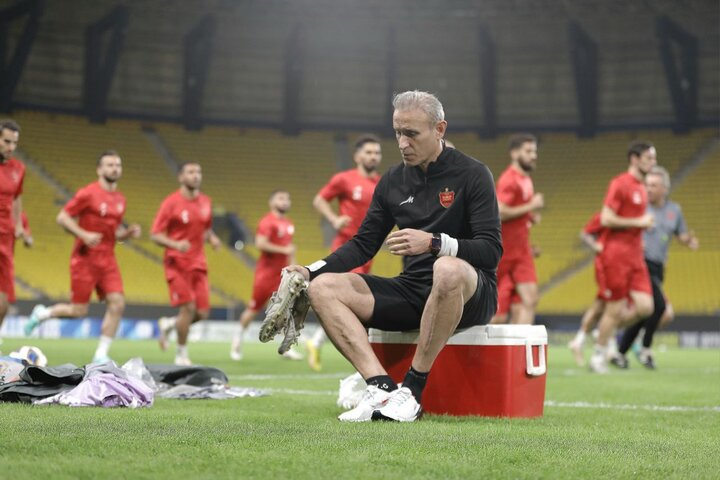
At 51 and after an illustrious football career as Team Melli and Persepolis player, Golmohammadi coached several teams like  Naft Tehran, Zob Ahan, Tractor Sazi, and Padideh before he took over Persepolis in 2020 (for the second time in his career).  Golmohammadi managed to win the league title twice with Persepolis.  While not perfect and has his shortfalls, Golmaohammadi, proved many times that he is a skillful and consistent coach with a winning mentality who can control and lay down the best game plans for his players and could also control rebel players too. Under limited resources and shortages of star players, he lead the team to the title while others clubs with better players and resources failed to do so.  Golmaohammadi therefore must be a leading candidate for Team Melli.

Amir Ghalenoei is consistently ranked near the top of coaches in Iran. The former Head Coach of Team Melli and a record holder of League titles wins as a coach has the attributes and abilities of a successful coach.  His major shortfall has to be the temperament that has put him in all sorts of trouble. This is possibly the only setback with Ghalenoei.

Javad Nekounam is a young and upcoming star in coaching in Iran. His shortage of experience in coaching is covered by his long playing career in Spain under quality coaches. He learned from the best.

In any case, there would be other contenders for the Team Melli head coach job, the important matter is that this federation must give the Iranians the opportunity to manage their own team the way that Morocco, Japan, Australia, and many other teams in the World Cup have done. FFIRI has to put trust in Iranian coaches at some stage, and there is no better time than now. I should be a long-term project too.

Alireza Beiranvand rejoins Persepolis

After an initial agreement with Alireza Beiranvand, Persepolis Club was able to finalize and sign a contract with Team Melli.

Last week, the news of Alireza Beiranvand's definitive return to Persepolis was published, and now this return has been confirmed by signing an official contract. Beiranvand signed with Persepolis for two seasons and thus returns to Tehran after an unsuccessful presence in the Royal Antwerp of Belgium and Boavista of Portugal.  By signing the contract, Yahya Golmohammadi's mind is at ease as far as the goalkeeping post is concerned for next season.

It is possible that Beiranvand is going to oust Hamed Lak although the management has denied such a claim. Accordingly, Biranvand not only can not comment on other Persepolis goalkeepers but also will not have the right to comment on the selection of the team's goalkeeping coach. Also, Payam Niazmand, who was said to be one of Persepolis' options for the team's goal, now has been dropped from Yahya Golmohammadi's shopping list. Beiranvand hopes to secure a starting place in Team Melli for the World Cup by playing regularly, a thing that he could not achieve in Europe, Also, Beiranvand was dropped as a starter by Skocic after some shaky performances for Team Melli and replaced by Amir Abedzadeh. However, Abedzadeh's blunder against South Korea handed the goalkeeping post back to Beiranvand against Lebanon.

The Derby ends in a draw with little to shout about.

The much anticipated Tehran Derby between Esteghlal and Persepolis was played on Thursday in Azadi Stadium and ended in a 1-1 draw. The importance of this derby was due to the fierce rivalry between the two teams at the top of the league table, allowing fans entry into Azadi and the selection of players for Team Melli.

Despite the restriction on the number of fans allowed into the stadium, the effect on the atmosphere and the players of the two teams was quite significant as the match was a thrilling contest from the word go. It is estimated that 20,000 fans were presently divided equally between the two teams’ supporters while thousands waited outside Azadi and in the perimeters.

The pace of the game was fast and furious, which excited the fans, but there were very few tactics and beautiful moves in the game.  From the onset, the game was spoilt by the continuous protests from players and the bench every time the referee whistled for a foul!

There is little to write about the positive side of this game despite its importance. Errors in passing, poor finishing, wild tackles, lack of basics of football was quite vivid in this game. Even allowing for the sensitivity of the match, there were numerous schoolboy errors by what was supposed to be a match between the two top teams in the country. The finishing in front of the goal was truly embarrassing and comical. In general, the match was not a good advertisement for Iran’s football whose national team has just qualified for the FIFA World Cup.

The biggest criticism, however, must be fired towards the two coaches of Persepolis and Esteghlal. Golmohammadi and Majidi. Two ex- Team Melli teammates from the same era, have stepped up to coaching without solid groundwork.  They both have a lot to learn in football management but more significantly in anger management and behavior.

From the start of the match, the bench of both teams was the catalyst in bringing the game into disruptions by their constant protests and violations.  lack of manners, shouting, threatening behavior, and the attempt of Golmohammdi to physically attack the referee resembled a scene from a gangster movie rather than a football pitch.

Golmohammadi was dismissed but it was far too late from a feeble referee who could have acted much firmly early on and could easily award a few cards of different colors earlier in the game.

GolMohammadi’s behavior was not befitting a professional coach and his loss of control in front of the camera watched by millions globally, should give the club an indication that the man is emotionally not fit to lead a big club at big events. Majidi is in a similar boat however, he escaped being sent to the stands for being able to control his temper earlier on after a stern warning from the referee.

The weakness of the FFIRI against the top teams is well documented in Iran. Persepolis and Esteghlal are simply too big for the feeble federation. The disciplinary Committee has historically shown reluctance in awarding heavy fines when Persepolis or Esteghlal are involved. Any final ruling would always end up being either appealed and reduced or dismissed altogether.