Tag: Esteghlal

Ghalenoei: Iran can do something epic

6 May 2026
fifa.com

Team Melli head coach Amir Ghalenoei tells FIFA of his belief that IR Iran can advance to the knockout stage of a World Cup for the first time this summer.

  • IR Iran are set to make their seventh FIFA World Cup appearance
  • Aiming to advance to the knockout stage for the first time
  • Vastly experienced head coach Amir Ghalenoei speaks to FIFA

Thrice continental champions and semi-finalists at the previous two editions of the Asian Cup, IR Iran are a long-established juggernaut on their home patch. Translating that continental success to global impact has though proven a tougher than expected ask.

Regular participants they may be, with the nation having qualified for five of the past six editions of the FIFA World Cup™, but Iran are still surprisingly searching for a maiden appearance in the knockout stage.

Across half a dozen tournament outings, Team Melli has made an early exit on each occasion, with only three wins from their 18 matches to date.

The belief internally is that the current side, blessed with a fine generation of experienced talent, is the one poised to finally end that run of outs, as head coach Amir Ghalenoei explains to FIFA.

IR Iran players line up prior to a FIFA World Cup 2026 qualifier against United Arab Emirates

“We’ve had many problems recently, but the players tried their best and made sacrifices. They worked so hard [through qualification] and sacrificed a lot, so it is my job to thank them.

“They can do something epic in the World Cup. They can do it, they have the technical potential to make this a World Cup to remember.”

Situated in a group containing a trio of continental heavyweights in the form of Belgium, Egypt and New Zealand, the going certainly won’t be easy. Ghalenoei can though take comfort from a qualification campaign that his side made fairly light work of, as well as a string of solid results thereafter.

Outside of the three co-hosts, Iran were the third nation to secure qualification, doing so on 20 March last year, five days after their AFC brethren Japan became the first nation to punch their ticket to North America.

Their only defeat in those 16 AFC preliminaries came at the hands of Qatar, after qualification was already secure. Since then, they’ve reached the final of the CAFA Nations Cup and drawn with fellow World Cup-bound nations Cabo Verde and Uzbekistan at an invitational tournament in the United Arab Emirates last year.

Another invitational event, held in Türkiye last month, saw a narrow loss at the hands of Nigeria, followed by a thumping 5-0 win against Costa Rica.

Set against the backdrop of an ongoing conflict that has shuttered the domestic league, forced the national team to play abroad and created numerous logistical issues, the veteran coach is proud of his team’s resolve.

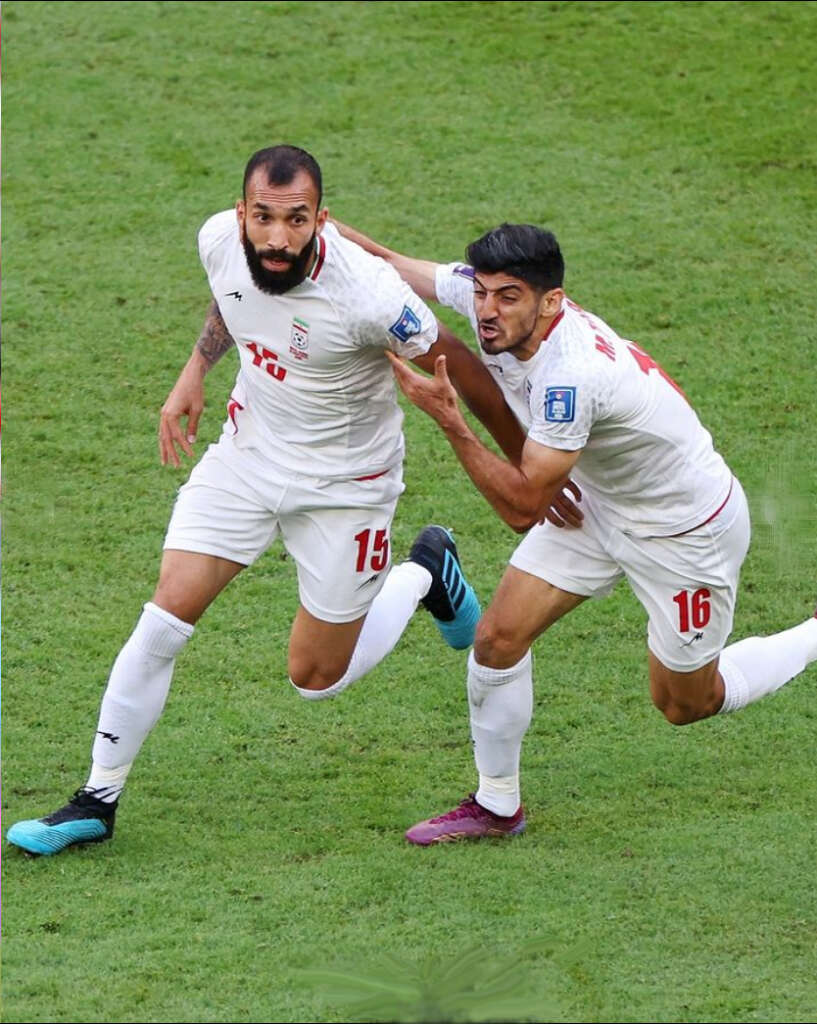
IR Iran players celebrate qualification for the FIFA World Cup 2026

“I am really proud of this team for many reasons, because we’ve faced a difficult situation with all the problems and concerns, one of which was being unable to host games, but we were one of the first teams to qualify for the World Cup.

“Iran has a special talent whereby in tough times we find or create solutions. We managed to get to this level in spite of a difficult situation. Currently, there are two months to go until the World Cup, but we are in very difficult moment.

“My view though is that through football we can bring joy to families and Iranian society, both inside and outside the country. Football is a concept or project that can bring states and nations closer together. That can be national or global, like Argentina or Brazil having fans everywhere.

“Football in Iran is also like that and I hope that through football we can bring about national unity, despite the current problems in our country. We love our people and want to bring them happiness. I hope we can do that through football.

“My goal is for there to be no war anywhere in the world so people can enjoy football and enjoy their lives. This is my message through football to the world and my people.”

Born in Tehran, Ghalenoei has been at the coalface of Iranian football for close to half a century. As a player, he began his youth career at Rah Ahan, just a year after Iran’s debut World Cup outing, at Argentina 1978.

The bulk of his playing days were spent at Tehran giants Esteghlal, where the former midfielder earned more than a dozen national team caps, before transitioning into coaching in 1999, a year after Iran ended a 20-year wait to make a second World Cup appearance.

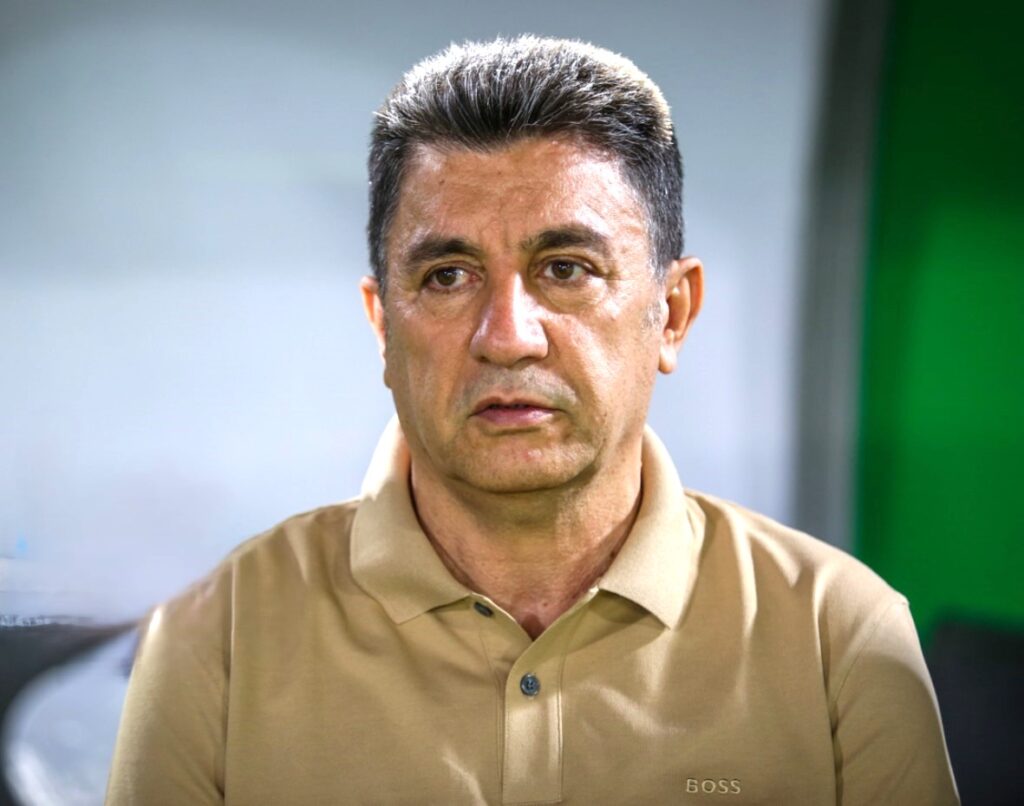
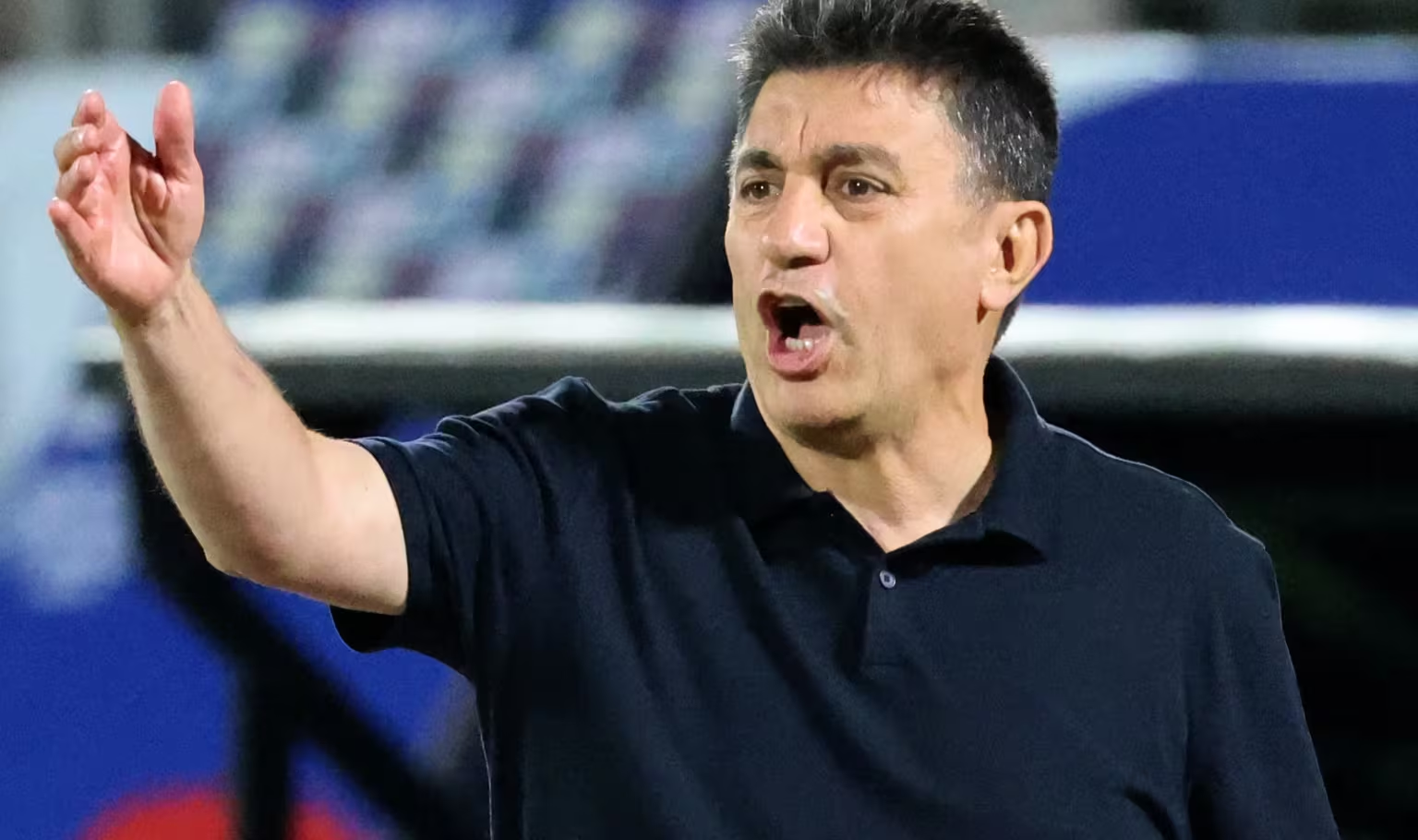
IR Iran coach Amir Ghalenoei gestures during a FIFA World Cup 2026 qualifier with United Arab Emirates

Now 62, there is little that Ghalenoei hasn’t experienced in a career that has risen and fallen with the concurrent highs and lows of Iranian football.

Set against that vast well of experience, it is notable that, in spite of the obstacles the team faces, Ghalenoei is adamant that Iran has the capability to write a new chapter in their footballing history this northern summer.

“We want to create some great memories at this World Cup. We’re ready with the experience that the team has from previous World Cups to make it through to the knock-out round for the first time. We won’t be satisfied with just the group stage but I want us to play good football, not just try to get results.

“I also want to thank our wonderful fans, both inside and outside the country, who have stuck by the national team. They are the reason we managed to qualify. I probably had the least important role of anyone.”

Persepolis leads Persian Gulf Pro League

Esteghlal Tehran squandered a golden opportunity to claim top spot in the Persian Gulf Pro League after being held to a goalless draw by lowly Zob Ahan in Esfahan during Round 17.

Earlier on Friday, Persepolis secured a crucial 2–1 victory over league leaders Sepahan in a top-of-the-table clash at Shahr-e Qods Stadium. After a goalless first half, Persepolis sprang to life in the second period. Their Uzbek winger Oston Oʻrinov broke the deadlock in the 53rd minute, and compatriot Igor Sergeyev doubled the lead in the 72nd. Sepahan managed a consolation deep into added time, with Ricardo Alves converting a penalty in the 90+13th minute.

Following that result, Esteghlal would have leapfrogged into first place on goal difference had they defeated Zob Ahan, but their lackluster performance saw the chance slip away.

On Thursday, Tractor coaches by former Team Melli coach, Dragan Skocic, delivered an impressive 4–1 victory over Mes Rafsanjan at the Yadegar-e Emam Stadium in Tabriz, lifting themselves into second place ahead of Friday’s fixtures. The goals came from Mohammad Hosseinzadeh (13’), an own goal by Milad Mirzazadeh (56’), Mohammad Ebrahimi Esmaeilifar (76’), and Amir Arsalan Motahari Drodzek (84’).

All matches in the Persian Gulf Pro League continue to be played behind closed doors due to security concerns following recent unrest in Iran.


Legendary Croatian Coach Branko Ivanković Announces Retirement

Zagreb, Croatia – According to a report from Croatian sports media outlet Sportklub, Branko Ivanković, one of Croatia’s most successful international coaches, has decided to retire after a storied coaching career spanning more than three decades.

The 71-year-old, who will turn 72 soon, recently gathered a group of close colleagues he worked with during his tenures in Oman and China and announced his decision at a luncheon. After years of dedication to the touchline for both clubs and national teams, Ivanković stated it was time to rest and prioritize his personal life.

“Enough is enough,” Ivanković told tportal. “These years are no longer the time to travel and wander around the world. Now I want to spend more time with my family, friends, and of course, myself.”

A Storied and Peripatetic Career

Ivanković’s managerial journey has been both long and illustrious. His career includes leading clubs such as Varteks (now Varaždin), Rijeka, Dinamo Zagreb, Hannover 96 (Germany), Persepolis (Iran), Shandong Luneng (China), Al Ahli, Al Wahda, and Al Ittifaq (Saudi Arabia).

His success was not limited to the club level. He also managed four different national teams, most notably serving as an assistant coach to Miroslav Blažević when Croatia sensationally won the bronze medal at the 1998 FIFA World Cup in France.

His achievements cemented his reputation as a trophy-winner. He secured league titles with Dinamo Zagreb (Croatia), Shandong Luneng (China), and most notably with Iran’s Persepolis, where he led the team to five consecutive league championships. This historic feat introduced the term “Gelat” (meaning a quintuple of consecutive titles) into the lexicon of Iranian football.

A Gentleman and a Reformer in Iran

Ivanković first arrived in Iran as an assistant to the legendary Croatian coach Miroslav “Ćiro” Blažević. After Blažević’s departure, Ivanković was offered the head coach position of Team Melli, a role that would define his legacy.

During his tenure, he was widely respected for his dignified, gentlemanly demeanor. He navigated the complex politics of Iranian football with skill and stood firmly against corrupt elements with grace and integrity. A testament to his principled stance was his refusal to succumb to pressure for favoritism towards the two traditional Tehran giants, Persepolis and Esteghlal. Ivanković insisted on selecting players for the national team based solely on competence and merit.

He is considered the first coach in Iran’s modern history to break the duopoly of these two clubs on national team selection. In a landmark shift, the 2004 Asian Cup squad featured more players from Foolad Khuzestan than from any other club—a previously unheard-of practice that underscored his commitment to meritocracy.

In his dealings with the media, he was consistently respectful, maintaining his positions without being controversial or forceful, which further earned him the admiration of fans and journalists alike.

A Lasting Legacy in Iranian Football

Ivanković’s connection with Iran is a defining chapter of his career. He was first appointed head coach of the Iranian national team in January 2002, leading the U-23 side to a gold medal at the 2002 Asian Games in Busan later that year.

Despite his popularity, his initial tenure was brief. After being replaced in late 2002, public and media pressure led to his reappointment in October 2003.

Under his leadership, Team Melli flourished:

  • He guided Iran to a third-place finish at the 2004 AFC Asian Cup.
  • He successfully secured Iran’s qualification for the 2006 FIFA World Cup in Germany.

At the 2006 World Cup, Iran faced a tough group. After narrow losses to Mexico and Portugal, they earned a single point in a 1-1 draw with Angola, finishing at the bottom of their group.

Following the tournament, a change in the Iranian Football Federation’s leadership led to his replacement. This move, deemed political interference by FIFA, resulted in a temporary suspension for Iran’s football federation.

Despite the World Cup exit, his record with Iran remains impressive. Over two spells, he managed 56 games, winning 33, drawing 14, and losing only 9, giving him a remarkable winning percentage of 58.93%.

With his retirement, the football world bids farewell to a true globetrotting coach whose tactical acumen, unwavering principles, and gentlemanly conduct left a lasting mark from Europe to Asia.

Iran’s Title Defense: Ghalenoei Bets on Experience for CAFA Nations Cup 2025


Head coach Amir Ghalenoei has named a seasoned 27-man squad for Iran’s upcoming CAFA Nations Cup 2025 title defense, opting for continuity and experience over a significant generational shift. The tournament will be held in Uzbekistan and Tajikistan from August 29th.

Despite the general perception of the CAFA region’s modest competitive level—with Uzbekistan being the clear exception—Ghalenoei has largely stuck with his established core. The squad is a blend of veteran internationals and a select few emerging talents from the Iranian Premier League, signaling a clear intent to retain the trophy won against Uzbekistan in the 2023 final.

The team’s preparations are hampered by significant absences. Key stars such as Sardar Azmoun, Mehdi Ghaedi, and Ali Gholizadeh are all sidelined due to injury, while first-choice goalkeeper Alireza Beiranvand is out through suspension. These omissions have undoubtedly diluted the squad’s overall strength.

Navigating the Group Stage

Team Melli’s campaign begins with a match against Afghanistan, a fixture they will be expected to win comfortably. The following games against India and hosts Tajikistan are anticipated to present progressively tougher challenges. However, the ultimate test is expected to be a potential final rematch against a strong Uzbek side.

Concerns Over Key Figures

The squad list reveals concerns regarding the fitness and form of its leadership. Captain Alireza Jahanbakhsh is currently without a club, having yet to secure a contract for the new European season. With transfer windows beginning to close, his match sharpness remains a major question mark.

Meanwhile, vice-captain and team star Mehdi Taremi finds himself in a difficult situation at Inter Milan. Despite his high-profile move, the striker has been relegated to train with the club’s U23 side and has been excluded from the senior squad as the Italian giants seek a buyer for him.

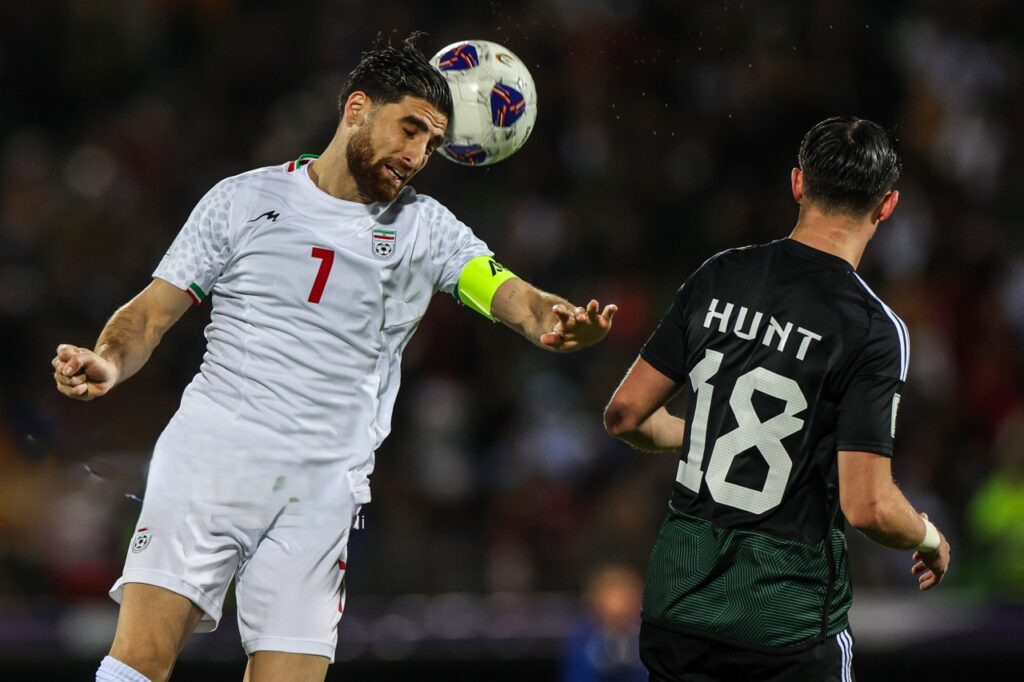
Alireza Jahanbaksh heading against Hunt of UAE

Squad Composition

The selection highlights the dominance of Iran’s domestic league, with the country’s top clubs providing the bulk of the players.

  • Sepahan: 6 players
  • Esteghlal: 5 players
  • Persepolis: 4 players
  • Tractor: 3 players
  • Other Clubs: The remainder of the squad is drawn from other domestic teams and includes three players from UAE’s Etihad Kalba.

The Full 27-Player Squad:


GOALKEEPERS:
1- Payam Niazmand – 30 years -(Persepolis),
2- Nima Mirzad – 28 years – (Mes Rafsanjan),
3- Seyed Hossein Hosseini – 33 years- (Sepahan)

Defenders:

4- Mohammad Hossein Kananizadegan – 31 years- (Persepolis),
5-Mohammad Naderi – 28 years – (Tractor),
6- Aref Aghasi – 28 years – (Esteghlal),
7-Ramin Rezaeian -35 years- (Esteghlal),
8- Ali Nemati -29 years- (Foolad),
9- Omid Noorafkan -28 years- (Sepahan),
10- Amin Hezbavi – 22 years- (Sepahan),
11- Aria Yousefi -23 years- (Sepahan),

Midfielders:

12- Mohammad Mohebi – 26 years- (Rostov, Russia),
13- Mehdi Hasheminejad – 24 years- (Tractor)
14- Saman Ghodoos -31 years- (Etihad Kalba UAE),
15- Mehdi Mohebi -25 years- (Etihad Kalba UAE),
16- Mohammad Khodabandelou -25 years- (Presepolis),
17- Rouzbeh Cheshmi -32 years- (Esteghlal),
18- Alireza Koushki -25 years- (Esteghlal),
19- Mohammad Ghorbani -23 years- (Al-Wahda, UAE),
20- Mehdi Tikdari Nejad – 29 years- (Sepahan),
21- Alireza Jahanbakhsh – 32 years- (No Club),

Forwards:

22-Mehdi Taremi -33 years- (Inter Milan, Italy),
23- Mehran Ahmadi – 27 years- (Esteghlal),
24- AmirHossein Hosseinzadeh – 24 years- (Tractor)
25- Ali Alipour -29 years- (Persepolis),
26- Shahriyar Moghanlou – 30 years- (Ittihad Kalba , UAE),
27- Majid Aliyari -29 years- (Sepahan)

FFIRI Suspension of Alireza Beiranvand includes exclusion from Team Melli selection.

Mashhad, Iran – Mehdi Taj, President of the Iranian Football Federation, confirmed today that goalkeeper Alireza Beiranvand will not join the national team for the foreseeable future due to an ongoing suspension.

The announcement came during a press briefing on the sidelines of the East Azerbaijan Football Board meeting, where Taj also addressed the selection of Mashhad as the host city for the upcoming Tractor vs. Esteghlal match.

Beiranvand’s Suspension: Rules and Next Steps

Regarding Beiranvand’s case, Taj emphasized adherence to regulations while leaving room for further review:

  • The goalkeeper is currently suspended, with half of the penalty still to be served.
  • The Appeals Committee’s detailed 11-page ruling remains open for scrutiny.
  • The option to appeal to the Court of Arbitration for Sport (CAS) is available, per standard statutes.

“While we respect the disciplinary process, the federation is actively working to resolve the situation,” Taj said. “All stakeholders are welcome to present their perspectives formally.”

Commitment to Governance and Future Success

Taj reiterated the federation’s focus on upholding governance standards while supporting teams:
“Our priority is to ensure fair conditions for both the national team and clubs. We remain optimistic about Iranian football’s continued progress.”

The statement concluded with no specified timeline for Beiranvand’s return.

The Controversial Suspension: A Year-Long Saga of Delays

Alireza Beiranvand’s suspension stems from a breach of contract complaint filed by his former club, Persepolis, over a year ago. Despite the straightforward nature of the case, the Football Federation (FFIRI) and its Disciplinary Committee demonstrated puzzling inertia—repeatedly deferring proceedings while Beiranvand completed an entire league season unaffected.

This extraordinary delay in resolving a contractual dispute raises serious concerns:

  • Transparency Issues: Why did a clear-cut case require 12+ months to adjudicate?
  • Selective Enforcement: Was the timing influenced by external pressures or political considerations within Iranian football?
  • Precedent Setting: The federation’s eventual acknowledgment of Beiranvand’s contractual breach—after such protracted deliberations—undermines confidence in its judicial processes.

Critics argue the federation’s sluggishness reflects either institutional incompetence or deliberate stalling to accommodate vested interests. Either way, the handling of this case has become emblematic of systemic governance flaws that demand urgent reform.


Ramin Rezaeian’s Stellar Form and Team Melli’s Dilemma

Ramin Rezaeian’s impressive form in the league and his man-of-the-match performance in the AFC Elite League yesterday against Al-Gharafa, where Esteghlal triumphed over the Qatari side with a comprehensive 3-0 victory, highlight a significant gap in Team Melli’s current lineup. His absence from the national team is increasingly difficult to justify, especially given his recent performances.

Rezaeian has been missing from Team Melli’s roster for some time now. Coach Amir Ghalenoei has not provided a clear explanation for this, aside from his general tendency to introduce younger players—a strategy that is both acceptable and admirable. However, when a player of Rezaeian’s caliber, who excels in providing assists, scoring goals, and defending with true grit, is available, his exclusion raises questions. His powerful shots alone make him a strong candidate for a place in the squad. Team Melli, particularly on the right flank, lacks depth, and Rezaeian’s skills could significantly bolster the team’s performance.

If Ghalenoei’s justification for excluding Rezaeian is based on age, it appears inconsistent. The squad includes Shoja Khalilzadeh, who is older than Rezaeian, and Ghalenoei himself has stated that “age is just a number.” Therefore, age should not be a barrier to Rezaeian’s selection.

If disciplinary issues are the reason for Rezaeian’s exclusion, Ghalenoei should clarify this, as he did with Ahmad Nourollahi, whose unauthorized departure from the squad led to his exclusion from future selections.

The most complex reason could be personal differences. While the coach has the right to select players he deems best, personal feelings should not overshadow the team’s greater needs.

One does not need to be an expert to see that, at 34, Ramin Rezaeian is currently the best right-back in Iran by a considerable margin.

Similarly, Rouzbeh Cheshmi, the defensive midfielder from Esteghlal, is another player who could easily replace the struggling Saeid Ezatollahi in the team. Cheshmi’s agility and quality in both defensive and offensive roles make him a strong candidate for the squad. Team Melli does not have an abundance of defensive midfielders, making Cheshmi’s exclusion puzzling. Notably, both Rezaeian and Cheshmi have scored in the World Cup, further proving their worth.


Cultural and Social Anomalies in Iranian Football

Introduction

Cultural anomalies and social misdemeanor tensions in Iranian football have long posed significant challenges for cultural and social experts and activists. Various committees within the football federation have been tasked with addressing these issues and reducing tensions.

The Role of Committees

  1. Ethical Committee: Responsible for defining regulations related to ethical, and cultural issues, and fair play, as well as overseeing their implementation and addressing non-compliance cases.
  2. Fair Play and Social Responsibility Committee: Focuses on establishing regulations related to cultural issues, fair play, and supervising their implementation within the football federation structure.

Cultural Integration in Clubs

Many Iranian clubs have incorporated cultural aspects alongside sports, often appointing a “Cultural Deputy” to manage cultural and social affairs within the clubs.

Challenges and Questions

Despite the existence of these committees and roles, questions arise regarding the effectiveness of their measures in recent years:

  • What fundamental measures have been taken to address cultural and social issues within Iranian football?
  • How successful have these committees and administrators been in curbing misbehavior and enhancing the image of domestic football?

Recent Incidents

Recent events involving players and coaches in prominent Iranian teams have highlighted ongoing challenges:

  • Danial Esmaili-Far and Javad Nekonam’s incidents raised concerns about player conduct and its impact on fans and the football community.

Impact and Reflection

The behavior of players and coaches on the field often mirrors the conduct of spectators, emphasizing the need for positive role modeling and cultural awareness within football.

Repeat Offenders

There are too many footballers and coaches who misbehave regularly with the fear of being punished, however, two of them have to be singled out as a prime example :

Javad Nekounam, a prominent figure known for his record as the most capped player for Team Melli and a former Captain, has consistently attracted media attention since transitioning to coaching after retiring as a player. His tenure, starting from Foolad Khuzestan, has been marred by frequent involvement in contentious incidents, including instances of unprofessional behavior, indiscretion, and verbal altercations.


Shoja’a Khalilzadeh: A player known for his misconduct both on and off the field. Recently, he has engaged in altercations with the press, hurling insults during interviews and displaying tantrums. His behavior has escalated to the point where he openly challenged the disciplinary committee of the federation to impose a ban on him.

Calls for Action

  1. Behavior Management: Emphasizes the importance of managing emotions and behaviors through expert guidance and club interventions.
  2. Club Responsibility: Urges clubs to take proactive measures in addressing misconduct before federation intervention becomes necessary.

The Need for Transparency

There is a call for greater transparency regarding the cultural initiatives and their impact:

  • Clubs and federations should clarify the measures taken in cultural fields and assess their effectiveness in fostering positive change.

Conclusion

While acknowledging challenges and weaknesses in disciplinary rules, there is an expectation for clubs and federations to prioritize cultural integration and responsibility to set positive examples within the football community.
Ever changing CEO’s of the clubs, financial instabilities, poor administrators and weak management of FFIRI has made the task of improving the culture of football so much more difficult, if not impossible.

Worrying league forms of Team Melli goalkeepers.

In the latest round of the Persian Gulf League, the spotlight fell squarely on the performance of Team Melli’s goalkeepers, with their errors leading to conceding goals that should have been easily avoided.

The Premier League witnessed rare occurrences this week, with individual mistakes and bizarre own goals becoming the talk of the town. Alireza Rezaei of Nasaji Mazandaran was the first to make headlines, allowing a seemingly innocuous ball slip through his legs in the dying moments of the game against Naft Abadan.

However, the most alarming incident unfolded during Sepahan’s clash with Peykan, where Payam Niazmand’s errors drew the ire of head coach Jose Morais, prompting a halftime substitution with Nima Mirzazad taking over goalkeeping duties.

Yet, the most disappointing display of the week came from Persepolis’s Alireza Beiranvand, the stalwart goalkeeper for Team Melli. Despite his status, Beiranvand’s recent form has been under scrutiny since the AFC Asian Cup 2023. His performance against Foolad Khuzestan further fueled doubts, as elementary errors led to both of Foolad’s goals, including a momentary lapse that resulted in a Persepolis own goal.

With Amir Ghalenoei and his coaching staff closely monitoring these league matches, concerns have undoubtedly arisen regarding the reliability of Team Melli’s main goalkeepers. However, amidst these worries, Esteghlal’s Keeper and Team Melli’s third-choice goalkeeper, Hossein Hosseini, emerged as a beacon of hope by maintaining a clean sheet.

As the FIFA World Cup 2026 qualifiers loom on the horizon, all eyes are on Ghalenoei’s next move. Will he adhere to his pledge of rejuvenating the Team Melli squad, or will he opt for continuity with the old guard under the guise of needing more time? The next two matches will undoubtedly provide crucial insights into the direction Ghalenoei chooses for the national team.

Mohebbi joins FC Rostov

Mohammad Mohebbi, is seeking a new adventure in Russia.

The Team Melli forward who played last season on loan from Portugal’s Santa Clara team in Iran’s Esteghlal, has signed a three-year contract with Russian side FC Rostov club. The club is based in Rostov-on-DonRostov Oblast, and is coached by Valery Karpin.

After signing Mohebi’s contract, his agent made a bold statement and claimed that Mohebbi could be the next Cristiano Ronaldo of world football! In this regard, Saadati told the Russian RB Sport website: I can write a book about Mohammad. First, he is the complete professional player and a person with an incredible character.

He added: “Mohebi was one of the best young talents that Iranian football has produced in recent years, and with all his football and physical characteristics, he can play in the top European clubs.”

Saadati emphasized: ” I am sure that if this player is used wisely, Mohebbi can be the next Cristiano Ronaldo! He added: “If the coach gives Mohebbi enough time to adapt to the Russian league, the club can get incredible benefits.”

Notwithstanding the promotion and the hype that the agent is creating, Mohebbi will find life quite tough in the Russian league that is dominated by Zenit St. Petersburg for many years. Of course, Sardar Azmoun also played in Rostov and contributed to the success of the club and his eventual transfer to Zenit.

Rostov was 2nd in the 2022–23 Russian Premier League with 5 games left, but lost 4 out of 5 games and dropped to 4th place at the final table. Russian clubs are suspended from European competitions.

Amir Abedini: Queiroz must go.

Amir Abedini is a former club chairman, former professional footballer, and currently a member of the City Council of Tehran. Abedini’s views on football and politics have always been direct and bold. He has no issues speaking up against corruption, shortfalls, and anything that he deems to be harmful to society. In football, he rarely holds back and is most critical of the football establishment, the nepotism, and the mismanagement of the federation. He does not get much press exposure because his views are deemed to be controversial and since the FFIRI and football, in general, are under direct government control, it will be detrimental to the ruling clan and the political system.

Abedini was recently interviewed by Mehrnews post the Tehran derby that ended in a 2-2 draw. He was critical of the standard of the match, the lack of atmosphere as the match was played behind closed doors in the 100,000-capacity Azadi stadium, and the general lack of quality, and skills by the players of Esteghlal and Persepolis. Abedini then remarked that “after the Excitement of the World Cup and the beautiful games we have witnessed, perhaps our expectation of this derby was far too high.”

Amir Abedini was then asked about team Melli.

The former president of the Football Federation emphasized: “One of the issues that play a role in the quality of the league is the national team, which we do not see in Iran at the moment. Queiroz’s national team means a predetermined package; A certain group of players who, if Queiroz could, would even be taken with him to Colombia! In my opinion, our league is useless and its output is nothing for the national team. This hurts the league, the players, and the clubs in many ways.

Mehdi Taj is losing his bearings.
Abedini also responded to Mehdi Taj’s strange behavior and answers, which caused a lot of controversy on the sports network a few days ago, and added: Taj is losing his integrity due to the intense pressure he is under. One of the admirable merits of Taj was his coolness and his reasonable dealings with the media. Today Taj is tense and nervous and this nervousness plays a role in his behavior and decision-making. The bad failure in the World Cup made him nervous. The expectations of the people and the media are quite high and yet I have not seen any true critique from the media so far.

Team Melli was disappointing in the World Cup.
” We didn’t see anything of worth from Iran in the World Cup,” the former member of the Football Federation stated: “People expected the National Team to show its face and turn up to play football in the World Cup, but we didn’t see such thing. The beating by England hurt badly. In the 2018 World Cup, we defeated Morocco, but what happened to Morocco, who lost to us, four years later? they became among the top four teams in the world and were so good that the people of Asia, Africa, and some of the people of other continents wanted Morrocco to reach the final. . Or, for example, Japan, Saudi Arabia, and South Korea, which performed significantly better than Iran.

Unwanted Queiroz was reborn and became alive with Iran.
Abedini added: We defeated the modest team of Wales. A team that really had nothing to say, but we messed up the national team’s camp and created false expectations. The same package of players that I mentioned earlier, threw that gentleman (Queiroz) up and down 6 times against England. Was it the same case for Korean and Japanese coaches? No one wanted Queiroz anywhere, but we brought him back to life. Taj defends something that has been rejected by the people and the media. People are not thrilled anymore;  Why do they insist that Queiroz remains one of the options for the head coach of the national team? Mr. Taj! People attack you because you are defending something that has been rejected by the people. People enjoy and rave about winners and enjoy success. Failures have no place in society.

Queiroz needs to go.
 “I am against the renewal of Queiroz’s contract. His work is not good enough.” The former president of the Football Federation emphasized that he is against the continuation of Queiroz’s work in the national team and said: “I am expressing my opinion. If Mr. Taj wants to stay in football, he must create a platform for consensus, that is, elites and experts who believe that change is necessary for football. It is good that the league is held, but the important thing is how our matches are held and what quality.

Imaginary enemies
“The media is not the enemy of football.” Abedini said, in response to the criticism of Mehdi Taj’s performance,” Taj should be spoken to and the public is entitled to know what is his plan for football and Team Melli. How does he want to continue his work? The General Assembly members and board of directors need to address that. Fand=s and experts should feel relaxed and be assured that football is being properly run (…) . These are football fanatics. The media is not an enemy, and neither are the people. Mehdi Taj must have a master plan with checkpoints to determine whether it is moving in the right direction or not.

Plans for Team Melli
“I think people like Dadkan and Maeli Kohn can provide good advice to Taj in regard to Team Melli.
Asked about, what advice the former Head of FFIRI  has for the Federation Assembly regarding the national team. He said: “Elites must decide. The football federation is for the people and the football elites become the representatives of the people. Make a decision and accept responsibility for it. People like Dadkan or Maeli Kohn or those who have experienced the ups and downs of football should help Taj as a consultant and support him. This would be a good option. It is not just a matter of having foreign or domestic coaches; whoever takes over in Team Melli, should be a coach who is proud of his appointment and capable, skillful, and competent for the post.