Tag: Zlatko Dalić

Iranian Football at the Crossroads: Stagnation, Regional Rivalry, and the Long Wait for a Savior


Iran's Football Crossroads: A Tale of Two Federations

In a striking contrast that underscores the widening gap between strategic vision and bureaucratic inertia, the Iranian Football Federation finds itself at a critical juncture while regional rivals surge ahead with bold, calculated moves.

The Familiar Path of Stagnation

As the Iranian Football Federation persists in its contentious relationship with the public—marked by ongoing conflicts and mutual recrimination—it has chosen to extend Amir Ghalenoei's contract. This decision comes despite a track record that many consider underwhelming: an expected fourth consecutive major tournament campaign that ended in disappointment, with the team failing to advance past the group stages in the World Cup 2026 while failing to win the title in two Asian Cup tournaments in 2007 and 2023. The contract renewal has been met with widespread criticism from fans and pundits alike, who view it as yet another symptom of a system that prioritizes familiarity over performance.

A Contrast in Ambition

Meanwhile, the Emirati Football Federation—widely regarded as one of the most proactive and opportunistic governing bodies in the region—has executed a coup of considerable magnitude. They have secured the services of Zlatko Dalić, a manager whose credentials include guiding Croatia to a World Cup final appearance and a third‑place finish, establishing himself as one of the most respected tacticians in contemporary football. The appointment signals the UAE's serious intent to elevate its footballing standing on the Asian and global stage.

An Intriguing Reunion

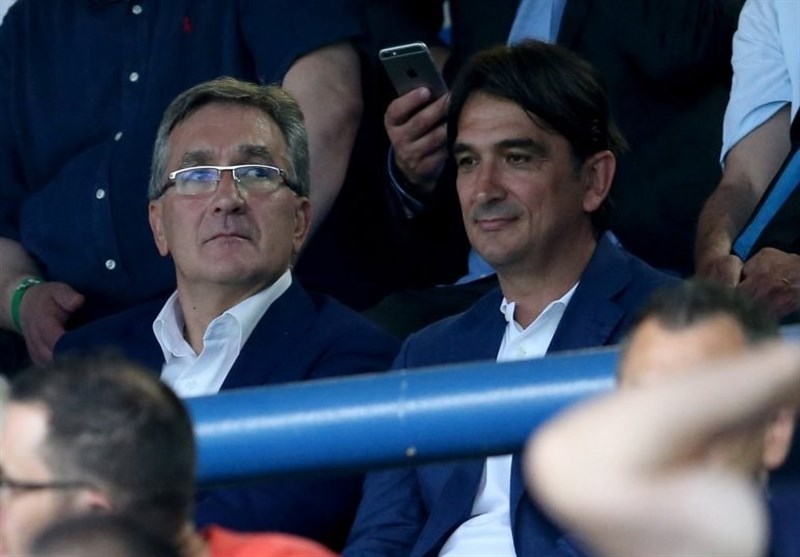
Perhaps even more intriguing for Iranian football enthusiasts is the accompanying appointment of Branko Ivanković as technical advisor alongside Dalić. Ivanković, who had officially announced his retirement from football management not long ago, has been persuaded by his friend and compatriot to return to the game. Dalić, in welcoming Ivanković, referred to him as "the great advisor," emphasizing that his extensive knowledge of the regional football landscape and proven track record of success would be invaluable assets.

This is the same Ivanković who, during his tenure as Team Melli's head coach, guided Iran to a comfortable World Cup qualification and presided over what many consider one of the most successful periods in Iranian football history. His subsequent golden era at Persepolis further cemented his legendary status in Iranian football folklore.
Prophetic Warnings

Ivanković's name has resurfaced in Iranian sports circles recently for reasons beyond his coaching achievements. His famous prediction that Iranian football would regress to "amateur level" now appears increasingly prophetic, as the warning signs he identified have become starkly visible. The manner in which he handled the Ramin Rezaeian situation also continues to generate discussion, with each passing day seemingly validating Ivanković's approach and judgment in that controversial episode.

A Formidable Regional Force

The Dalić‑Ivanković partnership represents a formidable alliance in Middle Eastern football—a combination of world‑class tactical acumen and deep regional expertise that could reshape the competitive landscape. For Iran, this represents yet another threat to its regional standing, particularly at a time when the national team's management structure appears incapable of learning from past failures.

The Erosion of Standards

The current state of Iranian football raises profound questions about institutional priorities. In a system where failures and disappointments go unquestioned—indeed, seem to be rewarded with contract extensions—competence has become a desirable but non‑essential attribute for those leading Team Melli. Surprises and controversies have become so routine that they barely register as cause for concern.

A Generation Disillusioned

Across Iran and throughout the global diaspora, a generation of fans who have witnessed Team Melli's gradual decline watches with growing disillusionment. The team's popularity has reached one of its lowest points in recent memory, with attendance figures and television ratings reflecting a significant erosion of public enthusiasm. While the management and coaching structures bear considerable responsibility for this decline, another factor has emerged as a major source of fan frustration: the astronomical salaries commanded by so‑called professional footballers in Iran, despite decades of collective underachievement. This disparity between compensation and results has become a festering wound, breeding apathy and, increasingly, outright hostility toward the national team.

The Path Forward

As regional rivals invest in world‑class leadership and strategic planning, Iranian football stands at a crossroads. The contrast between the UAE's proactive approach and Iran's reactive stagnation could not be more stark. Without fundamental reform—starting with accountability at the highest levels and a genuine commitment to merit‑based selection—the decline may prove irreversible. The passionate support of Iranian football fans, once the team's greatest asset, now appears to be its most severely tested resource.

The question is not whether the Iranian Football Federation recognizes the urgency of the moment—it has repeatedly demonstrated its inability to learn from its missteps and stubbornly clings to a failing strategy that has already eroded the nation's footballing prestige. The true question is far more pressing: who will emerge as the savior of Iranian football? And perhaps more critically, when and how will the long‑overdue revolution and revival finally begin?
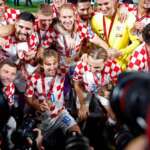
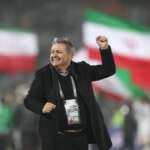
Dragan Skočić feeling of relief and pride after Croatia wins third place.

Croatia ended their World Cup campaign with the pride of claiming third place in a 2-1 win against Morocco, which marked the end of a journey but also promised a bright future, coach Zlatko Dalic said on Saturday.

Croatia, runners-up in 2018, prevailed with goals by Josko Gvardiol and Mislav Orsic to end their World Cup on a high as Luka Modric possibly bid farewell to the soccer extravaganza.

Croatia beat Brazil in the quarter-finals, but for Dalic, Saturday's bronze medal game was the highlight of their tournament.

"It was a difficult, great match. I want to extend my congratulations to Morocco, they put up a great fight until the last minute, despite the fatigue.

"They can be proud, they remind me of us four years ago. We're among the best teams in the world."

Croatia can now look forward to the future with confidence.

"It's the end of a cycle for us, the end of a journey. Tonight's match and the win is the moment of the tournament for us," said Dalic.

"Yes, this is the last World Cup for some of my players today due to their age. But we have young players in the team and it is great for Croatia," he added, referring to  man of the match Josko Gvardiol, but also Lovro Majer and Borna Sosa.

"We have many of the players on the bench, too."

Dalic, however, is still counting on his old guard for the Nations League and the Euro 2024 qualifiers.

"We would not have been that far without our older players. We have a great future, Croatia has nothing to fear. Is it the end of an era for a generation? Well, we still have the Nations League and the Euro qualifiers. All I know is that Croatia has a bright future."

While the proud nation of only 3.8 million people is meager compared to the 9 million living in Tehran only, its football pedigree is something to be proud of. Finalist in the last tournament and third-place winner in the current 2022 edition, the Croats must be feeling elated and proud of their achievements. One person who was robbed of being a happy and proud man is non-other than Dragan Skočić. The Croat former head coach of Team Melli was unceremoniously removed from his post following the return of Mehdi Taj. After taking Iran to the World Cup finals, his reward was dismissal. The win for his country must at least have given Skočić some sense of justice and relief, while Mehdi Taj and his failed team are pondering what to do next, perhaps figure out a trick to reinstate the perpetual failure coach to ruin Iranian football again, this time in Asia Cup 2023.

Skocic: 'I didn't expect the red carpet, but I did expect some respect.'

Dragan Skočić,  in an exclusive interview with the Croatian site Vecerenji List, said that many in Iran tried to devalue him after he managed a near-miraculous qualification to the FIFA World Cup.  Skočić took over when Team Melli was third behind Bahrain and Iraq and had to win all the matches away concentrated in one place in Bahrain losing home advantage with most of the opposition teams.

Skocic: 'I didn't expect the red carpet, but I did expect some respect. And some have tried to devalue everything I've done with the national team'

Hassan Haidar Diab,  Vecerenji List reporter in Tehran spoke to the Iranian coach, Rijeka's Dragan Skokic, who took this Asian country sovereignly to the World Cup

On the streets of Tehran, whoever hears that you are from Croatia, immediately pats you with their hand and says – Skokić. How could he not when Dragan Skočić, the coach of Iran, made a historic success when he took the team to the World Cup in Qatar, a few games before the end of qualifying, winning first place in the group, which few expected. I spoke with Dragan Skočić in the Iranian capital Tehran at the Olympic Hotel.

Although it was an agreement that the interview would last an hour, we talked for more than three hours, and the reason is simple: on each answer, he had to break because he was interrupted by his many fans who asked for an autograph or photo shoot. What sounds amazing, even though women in Iran don't go to stadiums, many of them stopped next to him, verbally praised him, and took selfies.

When Dragan Skočić became Iran's coach in February 2020, the team was in an unenviable position in Qatar's World Cup qualifiers. They managed six points only in their first four games and the previous coach, Belgium's Marc Wilmots, left the helm. Iran had played in the previous two World Cups and in a country where football is extremely popular it was unacceptable not to make it to Qatar. That is why they decided to appoint 53-year-old Dragan Skočić, a former player and Coach of Rijeka who has led four teams in Iran since 2013 – Malavan, Foolad, Khooneh Be Khooneh, and Sanat Naft.

In an exclusive interview with The Sunday Vecernji list, Dragan Skočić talks about life in Iran, and expectations in Qatar, especially with an emphasis on the match with the USA, which already all football fans call the match of all matches due to political tensions and hostility between the two countries.

-There has been a lot of speculation about you leaving the Iranian national team, however, you remain the Head Coach and are about to start preparations.

- Generally, I'm not someone who's burdened with his own importance and someone who expects a red carpet after a job well done, but at the very least I expect respect. Because it's clear that I have credit for qualifying for this World Cup, too. There are people who are trying to devalue everything I've done so far out of different interests. They all have in common that they are resistant to facts. Throughout the qualifiers, they tried to create and multiply conflicts, thus creating problems around the national team. All of them should not ignore the fact that these were the fastest World Cup qualifiers for an Asian team in history, with the most wins and the most points scored. -

'I did it because I'm focused on my job' 

-Where will you have a camp to prepare the national team and with whom will you play friendly preparatory games?

- If there are no changes, the national team camp should be in Vienna and rivals Uruguay and Senegal.

You have made an incredible historic success with the Iranian national team, you have qualified for the World Cup in Qatar already a few games before the end of qualifying. How did you do that? This has not worked for any head coach before you, and it is known that on the Iranian bench sat before the likes of Carlos Queiroz, the former Real Madrid coach, and Marc Wilmots, the former Belgium coach.

- I succeeded because first of all I was focused only on my job, I neglected all other external aspects, and I excluded all that irrelevant that is distracting. It's pretty hard work in Iran, but I learned my lesson a long time ago: either don't heed the comments or take them as motivation. I didn't pay attention to the comments, I think that was crucial. I didn't compromise any guy. I started from never being able to satisfy everyone. I was always myself. I think that quality work was crucial. -

-Iran hired you after Marc Wilmots performed poorly in the first four games of the World Cup qualifiers and in 18 games you scored 15 wins, one draw, and two losses and led the team to first place in the World Cup qualifying group. Given that at that moment almost no one believed that Iran would make it, how much pressure did you feel about this impossible mission?

- It was really difficult at the beginning, the team was under a lot of pressure, because of previous bad results we were not allowed to drop a point in the next qualifiers. A lot of people have already written us off. I think my knowledge of the players, the circumstances, and the mentality of the players helped, and the players showed great stability and character in a stressful situation that was almost lost. In the turbulence, we all showed composure together.

- Given that politics always gets involved in sports, what do you expect from the U.S. game? How are you going to prepare the players for this game, given that there are high political tensions and animosity between the two countries on the political scene?

- We can't ignore the political importance that game will carry with it. I'm sure my players will be highly motivated for that game because it will mean a lot for everyone in Iran. Emotions will certainly run wild, and the key may be precisely how to control these emotions and how to focus players on the game itself.

- Iran has never made it past the first round at the FIFA World Cup. At the World Cup in Qatar starting in November, Iran will be in Group B along with England, the USA and Wales. Do they expect you in Iran to succeed for the first time with the national team, is there already pressure on you?

- Such expectations, of course, exist because, as you said, Iran has not yet had the experience of passing the first round. My expectations also go in this direction, but it is clear that in all this there must be a dose of objectivity and humility. Only in this way can we achieve the highest level possible. After making it to the World Cup, which was our goal, of course we too are to revise our goals. I put pressure on myself because I want us to do something that no one has done before, although I am aware of how difficult it will be.

- In the past almost ten years you have coached four clubs in Iran, obviously, the results were good enough to offer you the position of coach.

- Without false modesty, I think I've done a good job on all the teams. There were people in the Iranian League who recognized it and believed in me. I think I gave them that trust back. Everyone was expecting a big name. It was an aggravating factor for me. When I came to the coach, I was first ignored by a part of the public, and later they started criticizing me, which was an evident improvement. Also, I've been in Iran a long time, and a lot of people have had the opportunity to meet me, I hope a lot of people appreciate me. -

What is your relationship with the media in Iran now?

- I have to say, I've been pretty timid in my relationship with the media lately, which is never good, but only because I thought my team needed peace and stability. Otherwise, I don't like the pathetic endless pandering to the public and the media. It's hard to get myself to say what other people would like to hear. I don't spend much time tempting the environment and communicating my image, and I am aware, of course, of the influence of the media. That may be one of my flaws.

- Is there anything Iran's team is better at than it was at the two previous World Cups when it came close to reaching the second round?

- It's ungrateful to compare the Iranian national team then and now. In big games, most players play at their level, and I have witnessed during these years that Iranian players can go above that level. It is, I'm sure, a common trait for all generations. Some teams seem comfortable when they have the ball and others when they don't have it. I think Iran in this World Cup needs to strive harder for the game, because that's in its genetic code. That doesn't mean we're going to be naïve or we're not going to respect pragmatism. - What else will be important in the preparation for the World Cup? Will yo call Moharrami from Dinamo?

- Of course, we respect all opponents to the maximum, but we believe that our team has sufficient quality to stand up to everyone in the World Cup. It will be of great importance for us that in front of the World Cup as many players as possible play the same standard they play at their clubs, to be in good shape, and for everyone to be healthy in the World Cup itself because the preparations have never been shorter. We have a lot of players out there, it's about their experience and the knowledge they bring and transfer from different backgrounds. Moharrami is a standard member of the team. He has played almost all the qualifiers and I expect a lot from him.

- What do you think of the stars on the teams, I don't mean on your team in Iran, but in general?

- Some players think about what a team needs, and in most cases the so-called stars follow instinct and talent, have the capacity to improvise, they are ahead of what happens on the field. The team needs both control and chaos. You need both the stars and the ones that don't define by that prefix. But sometimes you have a situation where you're aware that an individual player is the best player, but you also understand that the team plays their best without him. All coaches have in common that they like the types of players who give everything they have to make the team good, like our Modric, and less those who take advantage of the team to make them look good. However, as I said, ingenious and creative players are always welcome with me.

- Besides you, which of the other Croatian coaches is on the staff?

- Recently, Krunoslav Rendulić, who used to be my assistant, joined the staff, and in recent years he worked independently, and previously there are assistant Marijo Tot and goalkeeping coach Mladen Žganjer. The small Croatian colony is complemented by Iranian coaches who are in extraordinary synergy with us and together we make a good team.

- While we were talking, we were often interrupted by your fans and wanted to take a picture with you...

- The Iranians love football, and Team Melli is important to the Iranian people, so it is, therefore, normal for them to take pictures with the Iranian coach here.

- You've been in Iran a long time, how do you like living in this country?

- I certainly want to dispel prejudices and myths about Iran as a negative country as suggestively offered by the superficial Western media by scaring the world with Iran and Iranians. I would like as many people as possible to visit and get to know Iran because I can promise them an authentic experience. Iranians love guests, people will win you over at the very first contact, in Iran, you can certainly expect a welcome. This is the country where you will most often be asked if you need help without asking for it. People are the best reason to visit this country.

- How do you like their food?

- I like the food because it is diverse, full of spices, it is a bowl of indispensable rice, kebab, and Iranians love to eat fruits and vegetables. Nevertheless, the Iranians need to know that they have a great competitor in our Mediterranean cuisine.

- Given that the Iranians believe that Croats are originally from Iran, does anyone talk to you on the subject?

- You mean Harahvatia, our likely great-grandfather from old Persia? I was often approached by people and tried to start a conversation on the subject. It seemed to them and me that the thesis was suitable for closer interconnections. I have talked about it several times and with our Ambassador Drago Štambuk, he would certainly be a much more grateful interlocutor than I am for deciphering the Croatian riddle of origin.

- How do you handle the heat, but also the collapse of traffic in Iran? Do you drive a car or do you have your driver?

- After all these years, I'm immune to the heat. As for the traffic, I have a driver, I once tried to drive in Tehran myself, but I quickly realized that it was not for me. Iranian traffic taught me how to find peace in the controlled chaos in which the Iranians are doing remarkably well. It is necessary to have a lot of patience, the Iranians seem much more relaxed than we do. In late afternoon I try to avoid it anyway, if I can't already because of work, I shorten the traffic jams by listening to various podcasts.

- Are you following the Croatian national team?

- Of course, I'm following. I am especially pleased that the experience we have evidently recently has been added to the energy brought by new players within the team. I think it's a date that can only result in a good one. -

Do you communicate with Zlatko Dalic?

- Not really. The last time we spoke was in Doha when there was a draw for the World Cup. I wish him and our national team all the best in the World Cup.

- As a coach, how do you look at the game of Luka Modrić, who has already entered the age of 37 and do you see in which young player his successor?

- It seems an unrealistic level at which Luke plays at that age. It's hard to pronounce the name of his successor given everything he's done throughout his career.

- Do people in Iran remember Stanko Poklepovic, Tomislav Ivic, Miroslav Blazevic and Branko Ivankovic and Cica Kranjcar?

- Croatian coaches are certainly embedded in the identity of Iranian football. With their successes, they opened the doors of this multifaceted football country to each other. I will not be pretentious if I say that for the Iranians, the first association with Croatia is the Croatian coaches.

- How different is it now to coach the national team compared to when you were coaching at the club?

- There's a big difference. In the national team, there is not much time for the preparation itself on the field, in the club, you have players every day, and the impact on them is much greater. The national team doesn't have time. In the national team, good selection and a good selection of the idea of the game are important. We spend a lot of time monitoring players and analyzing rivals. Our goal is to even out a team that's heterogeneous. Each individual player comes from a different context, and we have to create communication for our team, perfect synergy, natural collaborations between players, and a common matrix. It is not necessary for players to receive the same stimulants, but stimulants must go in the same direction, they must be designed for the same model.

- Your coaching max?

- Have no doubts about losing and don't relax in victory. Knowing why you lost and managing your coaching ego when you're on an upward trajectory is of great importance to the coach. It is important not to get stuck twice on the same stone, and to learn from mistakes. It must be clear to you that applause quickly turns to whistle and vice versa, it's just an important presenter.

- 'My Rijeka always has the upper hand'

-What is crucial for you in the game?

- Understand the game from an advantage perspective. Identify where the benefits lie and take advantage of those advantages. It is not important to dominate possession, it is important to dominate the space. Rivals at the match require flexibility.

- What do you think of the policy of our clubs selling young players to survive?

- Someone once said that the paradox is to sell young promising players ahead of time, the moment they start to show authentic value, and then to buy bad players. Young people leave too soon for clubs and agents to meet their needs. Later, the clubs are in an attempt to generate value: buy cheap, and later sell expensively. Few do. It's a tough road to revalue players who have lost value. But when we know that it's hard for us to get the right sponsors and the TV rights revenues are low, there's nothing left for them to do. Surely such a policy is on shaky ground, it is all uncertain incomes, and once talent production falters or there is fallout from European competitions, you are close to a bad scenario.

- In the end, would you return to Croatia if you were invited to coach Dinamo, Hajduk, or Rijeka?

- It is logical that one day I return to Croatian football, I am not thinking about it at the moment. Of these clubs, certainly, my Rijeka would always have the advantage. -