Tag: Riyadh

A Crisis in Riyadh, an Opportunity in Tehran: How the Asian Cup's Possible Postponement Could Save Iran from Its Own Coach

As missiles rain down on King Khalid International Airport and Asian federations scramble to assess the safety of their players, the Football Federation of the Islamic Republic of Iran faces a moment of reckoning—and a potential escape route from a coaching disaster of its own making.

The missile and drone attacks on Riyadh have shattered the assumption that Saudi Arabia can safely host the 2027 AFC Asian Cup. At least 14 people were killed and over 300 wounded in multiple strikes on the capital's international airport over a single weekend, with a second attack striking the terminal just a day later, killing one and injuring eleven more. Airlines Etihad and Qatar Airways have suspended flights to Riyadh, and the airport remains closed until October 17.

The Asian Football Confederation (AFC) now faces an existential question: can it proceed with a tournament scheduled to begin on January 7 in a country where its capital's primary international gateway has been repeatedly targeted by hostile fire?

A Federation of Silence and Selective Security

The AFC's response—or lack thereof—has been telling. While the confederation has yet to issue a formal statement, multiple reports indicate that its executive committee will convene in the coming days to discuss options including postponement, relocation, or outright cancellation. Iranian media, citing Shargh Daily, has reported that FFIRI formally requested clarification from the AFC regarding the security situation and that the possibility of postponement or a change of host is on the table.

Yet the AFC's record on security matters is troublingly inconsistent. As Shahraranews pointedly observed, the confederation moved Iranian clubs' home matches to third countries citing security concerns, even as it has refused to acknowledge the manifest danger in Riyadh. The Saudi Pro League itself cancelled a domestic match between Abha and Al-Faisaly on security grounds, and an AFC Champions League fixture in Riyadh was delayed by an hour due to a Houthi missile alert—yet the AFC still has not formally declared Riyadh unsafe.

This selective application of security standards has not gone unnoticed. As one Iranian outlet put it, "It seems the AFC has changed the concept of insecurity according to its financial and sponsorship interests, putting the lives of footballers in Riyadh at risk".

The Dominoes Are Falling

The ripple effects are already being felt across the continent. South Korea's foreign ministry raised its travel advisory for all of Saudi Arabia to Level 3—"recommending departure"—and urged its citizens to leave unless their business was urgent. The Korea Football Association is in close communication with the AFC and has acknowledged that its planned November friendly in Saudi Arabia is now in doubt, with a federation official stating they are "discussing various possibilities" for the away trip.

Football Australia has similarly signalled its concern. A spokesman said the federation's "experienced security team is actively monitoring developments," adding that "risk assessment is part of our planning for every national team camp, and it will be a key focus of our preparations for January". The players' union, Professional Footballers Australia, emphasised that "the safety of players, fans and staff must be the priority".

The most likely scenario, according to ESPN, is not relocation—which would be logistically prohibitive at short notice—but a twelve-month postponement to January 2028, should the conflict between Saudi Arabia and the Houthi rebels fail to dissipate. Chinese media has echoed this assessment, reporting that if the conflict does not subside in the coming months, the tournament will be pushed back to January 2028.

For Iran, a Postponement Is Not a Setback—It Is Salvation

Herein lies the paradox. For most federations, a postponement would be a logistical nightmare. For Iran, it may be the single best thing that could happen to Team Melli.

The reason is simple: it would give FFIRI the time—and the pretext—to do what it should have done months ago: relieve Amir Ghalenoei of his duties and appoint a competent coach capable of preparing a team that can genuinely compete at the Asian level.

The case against Ghalenoei is overwhelming and growing by the day. Since the World Cup—where Iran failed to win a single match and exited at the group stage despite an expanded 48-team format—the team has suffered two consecutive friendly defeats, to Uzbekistan and Russia, in the October FIFA window. Public polling cited by Iranian media indicates that more than 95 percent of football followers want Ghalenoei removed. As Football360 reported, Ghalenoei "who after the World Cup imagined an easier path to the bench, suddenly faced a bitter reality".

Yet the federation's response has been paralysis. Ghalenoei himself revealed that at a recent board meeting, he spoke for ten minutes and not a single member asked a question. "I swear to God, not a single person asked a question," he said. "I am available to address any concerns, but since no one raised a question, we simply left the meeting". He further stated that he made no promises about winning the Asian Cup and challenged any board member who believed they could take the team to the semi-finals under current conditions to step forward—and no one did.

This is not leadership. This is institutional surrender.
The Candidates Are Already Waiting

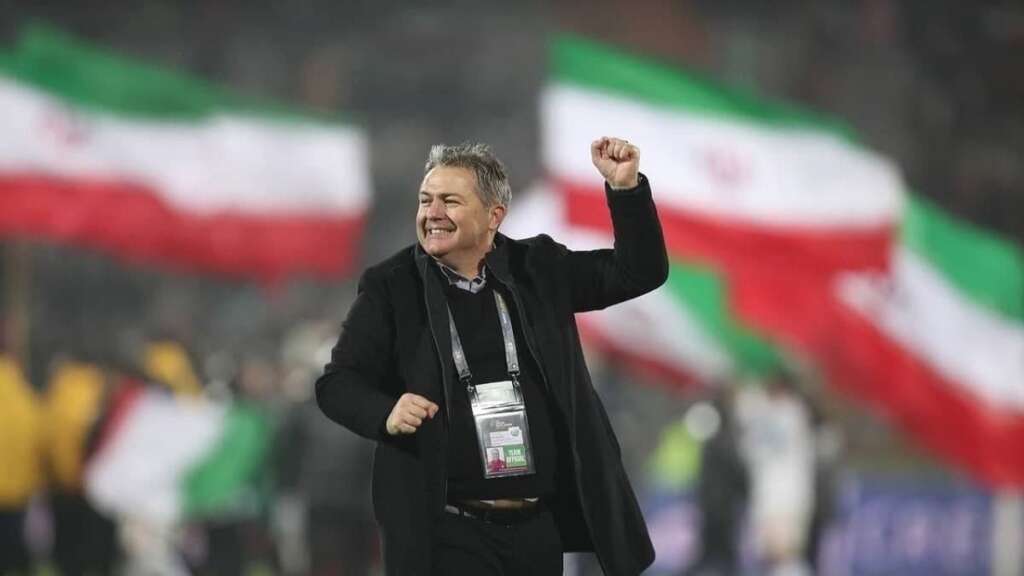
The good news is that viable alternatives exist—and the speculation about Ghalenoei's replacement has already begun in earnest. Iranian media has identified several credible candidates: Yahya Golmohammadi, one of the most decorated domestic coaches with experience managing star players at Persepolis; Farhad Majidi, who led Esteghlal to an unbeaten league title and has expressed a clear desire to coach the national team; and Dragan Skočić, who previously managed Iran and guided the team to World Cup qualification.

Each brings different strengths. Golmohammadi has the pedigree. Majidi has the popularity and the hunger. Skočić has the experience of navigating the unique pressures of Iranian football. What none of them have—and what Ghalenoei has squandered—is a coherent plan for rebuilding a squad that has grown old, stale, and tactically predictable under his watch.

A twelve-month postponement would give a new coach an entire year to implement a fresh vision, integrate younger players, and prepare the team properly for a tournament that Iran has not won since 1976. It would allow FFIRI to negotiate a dignified exit for Ghalenoei—framed not as a firing, but as a strategic reset in light of changed circumstances—and to install a replacement without the pressure of an imminent tournament.
The Window Is Narrow, But It Is Open

Of course, this scenario depends on decisions that have not yet been made. The AFC's executive committee, which will meet with Mehdi Taj participating as an AFC vice president, could opt for a different path: relocation to a neutral venue, which would preserve the January 2027 timeline and deny Iran the breathing room it needs. Or the conflict could escalate further, leading to outright cancellation and a far more chaotic scramble.

But the most probable outcome, as multiple outlets have reported, is postponement. And if that happens, FFIRI will have no excuse. The federation's board members who sat in silence as Ghalenoei delivered his ten-minute monologue will have a full year to find their voices. The question is whether they will use it to ask the questions they should have asked long ago—or whether they will simply allow the cycle of impunity to continue, one postponed tournament at a time.

For the sake of Iranian football, they must choose the former. The missiles in Riyadh are a tragedy for the region. But for Team Melli, they may be the unlikely catalyst for a change that should have happened months ago.
Concerns over the security in Asian Cup 2027

  • Situation is being monitored by the global players’ union Fifpro
  • The tournament is due to kick off in January with five venues in Riyadh

The Guardian
13.Oct.2026

Asia’s elite men’s footballers are on edge as they prepare to travel to conflict-affected Saudi Arabia for January’s Asian Cup.

Multiple missile strikes by the Houthis on Riyadh’s international airport in recent days have killed more than a dozen people and wounded hundreds.

Five of the continental tournament’s eight venues are in Riyadh, and the hosts will meet Palestine in the tournament opener on 7 January. In total, 31 matches will be held in the capital, including the final on 5 February.

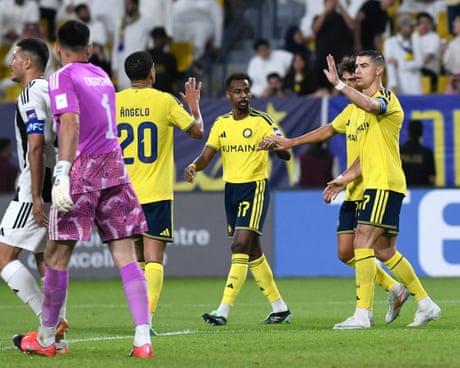
Cristiano Ronaldo celebrates Al-Nassr’s third goal against Neftchi Fergana.

The eastern parts of Saudi Arabia have also been threatened during the Iran-US conflict this year, including the city of Al Khobar in the Persian Gulf which will host seven matches including Australia v Singapore on 9 January.

Consternation is building across Asia about the safety of those traveling to Saudi Arabia. The Japanese Football Association withdrew from the FIFAe video game World Cup due to be held in Saudi Arabia later this month, “following a comprehensive assessment of the current situation in the host country and the available information regarding safety and security”.

A statement from Beau Busch, president of Fifpro Asia/Oceania, said his organization's thoughts are with all people impacted by the conflict in the region, but he acknowledged players’ concerns about the coming tournament.

“The safety of players, fans and staff must be the priority and the central consideration in the planning and delivery of the AFC Asian Cup,” he said.

Ange Postecoglou’s Riyadh-based Al-Nassr, who have Cristiano Ronaldo in their ranks, had an Asian Champions League match delayed by an hour on Monday. A Saudi-led military coalition said it had intercepted a missile fired by the Houthis towards Riyadh.

Busch is also chief executive of Australian players’ union, Professional Footballers Australia. The Socceroos are also due to travel to the region in the November international window for matches against Qatar in Doha and Jordan in Amman.

“Through the PFA and Fifpro, the global players’ union, we have continued to monitor the situation and engage closely with Football Australia and external experts,” he said.

“Risk assessments are conducted before all camps and will continue to be critically important ahead of the Asian Cup with the ever changing security situation in the region,” he said.

“We will continue working with all stakeholders to ensure player safety, wellbeing and welfare remain the priority ahead of January and the upcoming November friendlies in the region.”

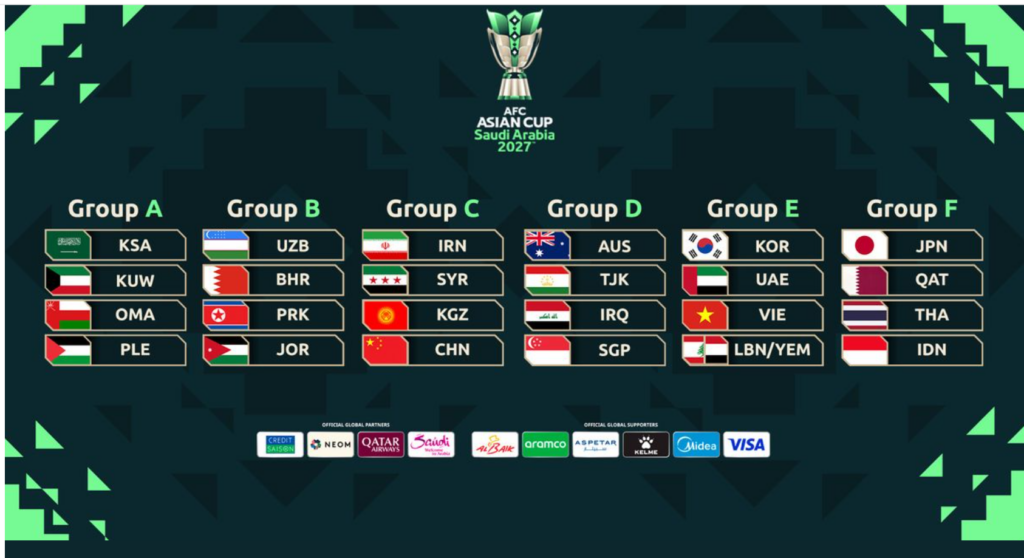
Iran grouped with China, Syria, and the Kyrgyz Rep. in the AFC Asian Cup 2007

The draw ceremony for the AFC Asian Cup 2027 was concluded in Riyadh, Saudi Arabia.

Iran is grouped with China, Syria nd Kyrgyz Republic.

Team Melli will start the campaign on 9th January 2027 by facing its closest rival in the group, China.

Draw Result

Group A: Saudi Arabia, Kuwait, Oman, Palestine
Group B: Uzbekistan, Bahrain, DPR Korea, Jordan
Group C: IR Iran, Syria, Kyrgyz Republic, China PR
Group D: Australia, Tajikistan, Iraq, Singapore
Group E: Korea Republic, UAE, Vietnam, Lebanon/Yemen
Group F: Japan, Qatar, Thailand, Indonesia

GROUP C Match schedule


9 January 2027
Iran vs China
Syria vs Kyrgyz Republic.

13 January 2027
Kygyz Rep. vs Iran
China vs Syria

18 January 2027
Iran vs Syria
Kygyz Rep. vs China

Iran’s Golden Era in Focus as AFC Asian Cup Saudi Arabia 2027™ Draw Approaches

The road to AFC Asian Cup Saudi Arabia 2027™ glory will be paved when the Final Draw is conducted at the historic Salwa Palace in Riyadh on Saturday.

Leading Iran’s delegation will be Amir Ghalenoei, the head coach of Team Melli, accompanied by Mehdi Kharati, the executive director of the national team. Ghalenoei is set to return to Iran on Monday, once Iran’s group-stage opponents are confirmed.

The teams will be divided into six groups, setting the stage for what promises to be another thrilling continental showdown.

This marks Iran’s 16th participation in the AFC Asian Cup—a record shared with Korea Republic. China PR sits third on the all-time list, with Saudi Arabia 2027 being their 14th appearance.

Japan’s Record

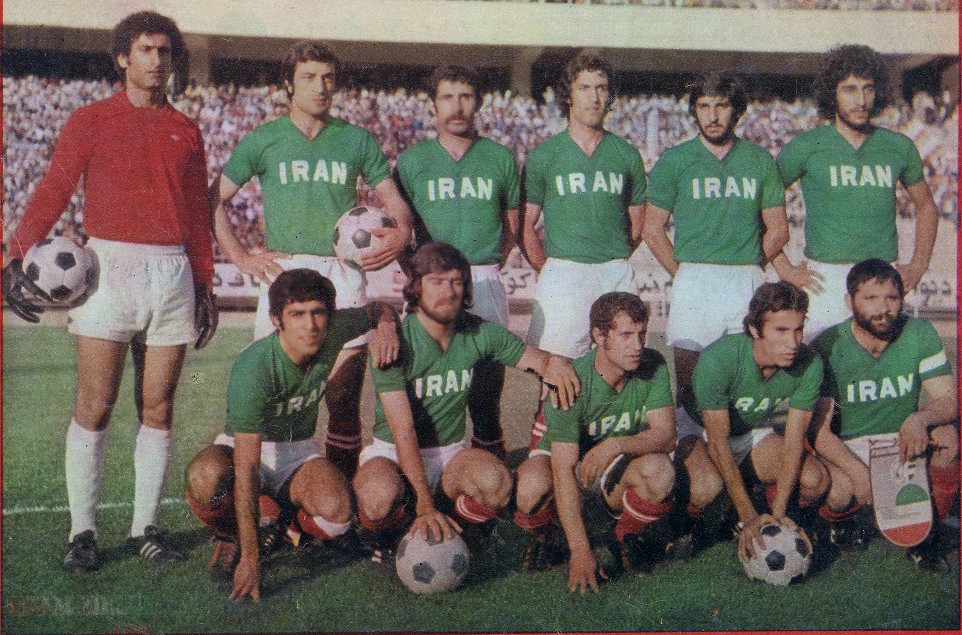
No team has won the AFC Asian Cup more times than Japan, with four titles. Saudi Arabia and Iran follow closely, each having lifted the trophy three times. However, while Japan’s last triumph came in 2011 and Saudi Arabia’s in 1996, Iran’s most recent title was in 1976—the crowning moment of a dynasty unlike any other.

Unbeaten in the Final

Iran (three appearances, three wins) and Qatar (two appearances, two wins) are the only sides to have reached multiple finals and emerged victorious every time. Iraq are the other team with a perfect final record, winning the competition in their sole final appearance (2007).

A Unique Record: Iran’s Unmatched 12-Year Reign (1968–1976)

No team in Asian Cup history has ever dominated like Iran did between 1968 and 1976. In that period, Team Melli achieved three consecutive titles—a feat no other nation has managed in the tournament’s history.

What makes this run even more extraordinary is the sheer perfection of their performance. Across three tournaments, Iran played 13 matches and won all 13—a 100% record that remains untouched. They scored 36 goals while conceding just 6, an average of nearly three goals per game and less than 0.5 conceded.

The 1976 campaign was particularly imperious: Iran did not concede a single goal throughout the entire tournament, capping their triumph with a 1–0 final victory over Kuwait.

This golden era also produced the first two hat-trick heroes in Asian Cup history—Hossein Kalani and Ali Jabbari—while a legend was forged in Parviz Gheleechkhani, who remains the only player to have lifted the Asian Cup trophy three consecutive times, a record that still stands today.

For 12 unforgettable years, Iran were unbeatable, unmatched, and unforgettable.

Ahead in Numbers

Iran (74 matches) and Korea Republic (73) are the only two teams to have played more than 70 games in AFC Asian Cup history. Iran also lead the charts for most wins excluding penalty shootouts (45), while China PR (21) hold the unfortunate record of most losses excluding penalties.

Omid Team Holds Mighty South Korea to a Stalemate in Tense AFC U23 Opener


- First points of Iran U23

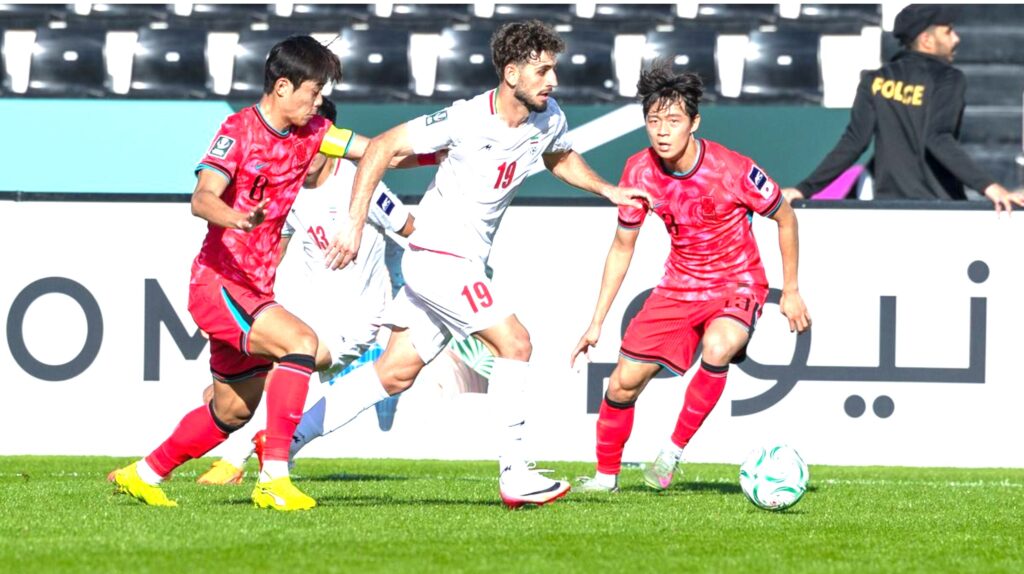
Iran’s U-23 national team, the Omid Team, began their challenging AFC U23 Asian Cup 2026 campaign with a disciplined and resilient performance, holding tournament favorites South Korea to a 0-0 draw in a tense, tactical affair.

While the match will not be remembered for attacking flair or goalmouth drama, it will be noted for Iran’s impressive defensive organization and control of the game’s tempo. Contrary to pre-match predictions, it was Iran who looked the more composed side for large periods, effectively neutralizing the traditional high-energy, offensive threat of their East Asian rivals.

A Match of Tactical Chess, Not Fireworks

From the outset, the Omid Team, under coach Reza Ravankhah, executed a clear game plan: maintain defensive concentration, control the midfield, and patiently probe the notoriously solid Korean backline. The strategy succeeded in limiting South Korea to half-chances, with the Iranian defense, marshaled superbly, showing little vulnerability.

The Koreans, unusually subdued, appeared wary of Iran’s counter-attacking potential. Their typically relentless pressing and quick transitions were replaced by a more cautious, possession-based approach, which played into Iran’s organized defensive structure.

Iran’s lone moment of true attacking quality in the first half came from their standout player, Javan Hosseinnezhad. The elegant midfielder delivered a perfectly weighted diagonal ball from the right, finding Ali Rostami in stride. Rostami’s powerful first-time volley whistled just past the upright, a near-miss that served as the half’s most serious threat.

A Dull Game Sparks to Life at the Death

The second half followed a similar pattern—a slow-paced, midfield battle with few clear-cut chances. Iran continued to prefer intricate ground passes in an attempt to unlock the defense, often opting for safe diagonal switches of play rather than risky penetrating runs.

Just as the match seemed destined to peter out into a forgettable draw, it erupted in a thrilling finale during injury time. First, Iranian substitute Mehdi Jafari unleashed a powerful, low drive from distance, forcing Korean goalkeeper Hong Seong-Min into a spectacular, full-stretch save to his right.

Almost immediately, the action raced to the other end. A desperate scramble in Iran’s penalty area presented South Korea with a golden chance to steal a late winner. However, goalkeeper Mohammad Khalifa emerged as the hero, making a crucial intervention amidst the chaos, allowing his defenders to clear the danger to safety and preserve the hard-earned point.

Analysis: A Solid Foundation, But Room for Growth

The final whistle confirmed a valuable point for Iran in the tournament’s “Group of Death,” a creditable result against one of Asia’s youth football powerhouses. The performance demonstrated significant improvement in tactical discipline and defensive solidity, the foundations upon which campaigns are built.

However, the match also highlighted a clear area for improvement. Iran’s lack of attacking ambition and variety ultimately cost them a chance at a historic victory. Despite showing clear aerial superiority, the team persistently relied on ground strokes against a compact defense. The reluctance to deliver early crosses or utilize long balls to test the Korean backline made their offensive efforts largely predictable.

For Coach Ravankhah, the takeaway is twofold: pride in a well-earned clean sheet against a top opponent, and a clear cue to inject more offensive daring and tactical variety into their next crucial fixture. This draw proves the Omid Team belongs on this stage; their upcoming match will show if they have the tools to advance from it.

MATCH DETAILS

Korea Republic
21 Hong Seong-Min GK
2 Kang Min-Jun DF
3 Bae Hyun-Seo  DF YC 53‎'‎
5 Lee Hyun-Yong DF  YC 33‎'‎
23 Shin Min-Ha DF
6 Lee Chan-Ouk MF [73' Jung Ji-Hun]
8 Kim Dong-Jin MF
9 Kim Tae-Won FW [80' Jeong Jae-Sang ]
10 Kang Sang-Yoon FW [28‎'‎ Jung Seung-Ba]
13 Kim Do-Hyun MF [73' Kim Han-Seo]
17 Kim Yong-Hak MF [46‎' Kang Seong-Jin]
‎

Substitutes
1Moon Hyun-Ho
4Jo Hyun-Tae
7Kang Seong-Jin 46‎'‎
11Jung Ji-Hun
12Hwang Jae-Yun
14Jung Seung-Bae 28‎'‎
15Baek Ga-On
16Kim Han-Seo
18Jeong Jae-Sang
19Lee Geon-Hee
20Park Jun-Seo
Manager-Min-Sung Lee
Iran
1 Mohammad Khalifeh GK
3 Arsha Vosoughifard DF
13 Mahdi Mahdavi DF
15 M. Mohebi DF [83' Danial Iri YC 89']
16 Farzin Moamelehgari DF
8 Pouria Latififar MF
9 Yadegar Rostami MF
10 Javad Hosseinnejad MF [62 'A. M. Sadeghi]
19 Mahdi Goudarzi MF [71' M.Askari]
20 Abbas Habibi MF [72' Razzaghinia YC 69']
7 Reza Ghandipour FW [71' M. Jaffari]


Substitutes
2 B. Goudarzi
4 D. IriSub5M. Zare
6 A. Razzaghinia
11 M. Askari
12 P. Rafiei
14 F. Jafari
17 E. Jamshidi
18 A. Sheikhi Rad
21 H. Zaruni
22 A. Maghsoudi
23 M. Sadeghi
Manager-Omid Reza Ravankhah

Bahrain hammers Saudi Arabia 4-1 in a friendly

Bahrain National football team hammered its Saudi Arabian counterpart 4-1 in a friendly match played on the Australian soil.

Bahrain is in Group C of the AFC Asian Cup 2015 along with Iran , Qatar and the UAE. The result was a severe setback for the Romanian Cosmin Olăroiu who has recently stated that his team is in Australia to challenge for the title.  Saudi Arabia failed to win the Gulf Trophy at home losing the final to Qatar. Bahrain , on the other hand , suffered a heavy defeat only a month ago in the Gulf Cup against the same Saudi Team 3-0 , a result that lead to the sacking of the coach.

Meanwhile , the Saudi  striker Nassir Al Shamrani, who is the AFC Player of the Year  2014, created yet another controversy when he physically assaulted a Saudi fan before the match with Bahrain. Al Shamrani , who plays for Al Hilal club in Riyadh , was offended by the the fan carrying a rival team flag. The player did not take kindly to the fan and decided to teach him a lesson. Nassir Al Shamrani, a volatile and undisciplined player is already suspended by AFC disciplinary committee for 8 matches for attacking an Australian player in the final of this years AFC Champions League.

Kudos to AFC for ignoring sportsmanship and fair play by selecting this violent player as the best player in Asia !!

Bahrain is currently being coach by a replacement coach Marjan Eid who took over in Riyadh after the sacking of the Iraqi coach Adnan Hamad.

Bahrain plays Iran January  11th in the first appearance for both teams in the AFC Asian Cup 2015 at Melbourne Rectangular Stadium.