Tag: Kasra Taheri

Age of Stagnation: Why Ghalenoei’s Conservative Selections Have Made Iran the Second-Oldest Team at the 2026 World Cup

PERSIAN VERSION
  • پیریِ مرگبار: چرا انتخاب‌های محافظه‌کارانهٔ قلعه‌نویی، ایران را دومین تیم پیر جهان در جام جهانی ۲۰۲۶ کرده است
    با نزدیک شدن به جام جهانی ۲۰۲۶، تمام تیم‌ها لیست نهایی بازیکنان خود را به کمیته برگزاری تحویل داده‌اند. طبق آمار منتشرشده از میانگین سنی هر تیم، تصویری روشن و برای برخی، هشداردهنده به دست آمده است:

Continue reading “Age of Stagnation: Why Ghalenoei’s Conservative Selections Have Made Iran the Second-Oldest Team at the 2026 World Cup”

With the 2026 World Cup rapidly approaching, all participating nations have submitted their official player lists to the organizing committee. Recent data released on the average age of each squad has painted a telling, and for some, alarming picture. According to the records:

  • Panama (30.4 years)
  • Iran (30.3 years)
  • Colombia (30.1 years)

These three nations stand as the oldest teams in the competition. At the opposite end of the spectrum, the Ivory Coast boasts the youngest squad with an average age of just 25.8 years—a full 4.5 years younger than Team Melli.

Iran’s Aging Roster: A Symptom, Not a Coincidence

For Iranian fans and analysts, seeing their national team ranked as the second-oldest in the world is not merely a statistical curiosity. It is a glaring indictment of head coach Amir Ghalenoei’s philosophy, risk aversion, and failure to regenerate the squad since he took over in March 2023, barely three months after the 2022 World Cup in Qatar.

On the surface, relying on experienced players might seem prudent for a team facing the likes of England and European powerhouses. Veterans bring composure, tactical discipline, and big-match know-how. However, the deeper problem is that under Ghalenoei, experience has become an excuse for exclusion, specifically, the systematic exclusion of young, dynamic, and technically gifted emerging talents.

Ghalenoei’s Core Failure: A Closed Door to Youth

The most damning charge against Ghalenoei is his inability, or outright refusal, to introduce a single player of lasting value to the national squad during his entire tenure. In nearly four years at the helm, spanning the AFC Asian Cup 2023, World Cup qualifiers and friendly matches, he has not blooded a promising young star who could credibly claim a starting spot in 2026.

Unlike predecessors who at least attempted transitions (e.g., Queiroz introducing Sardar Azmoun and Saman Ghoddos as youngsters, or even Branko Ivanković giving early caps to Ehsan Hajsafi), Ghalenoei has fallen back on the same core of aging, often injury-prone players. Names like Shoja Khalilzadeh (37), Ramin Rezaeian (36), and Ehsan Hajsafy (36) continue to receive call-ups, while talents such as:

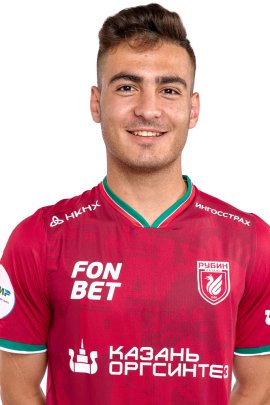
  • Kasra Taheri
  • Mohammad Amin Hazbavi (defensive prodigy)
  • Saeid Saharkhizan (prolific young striker)
  • Javad Hosseinnejad

Are given token minutes that amount to little more than window dressing.

A Culture of Distrust and Fear

Ghalenoei’s selection patterns reveal a deep-seated distrust of youth, often rationalized in press conferences with vague phrases like “they are not ready” or “the pressure is too high.” But this is a smokescreen. The reality is a conservative, fear-driven approach: the coach prioritizes short-term results (avoiding a humiliating loss in a qualifier) over long-term development (giving a 21-year-old 45 minutes against a weaker Asian side).

This fear has paralyzed Iran’s natural footballing cycle. While Japan, Australia, and even Saudi Arabia have lowered their average age and injected pace and energy, Iran has remained static. The result is a squad that, by 2026, will rely on several players past their physical prime, easily exploited by faster, younger opponents in a condensed tournament schedule.

Impunity and Institutional Failure: The Role of Mehdi Taj and FFIRI

Yet, Ghalenoei alone is not the culprit. His job security, despite underwhelming performances and a visible lack of tactical evolution, is underwritten by the blind trust of Mehdi Taj, the president of the Football Federation Islamic Republic of Iran (FFIRI), and a notoriously silent, ineffective board.

The FFIRI has historically oscillated between micromanagement and neglect. Under Taj, the federation has abdicated its responsibility to challenge the head coach. No public questioning of Ghalenoei’s squad selection. No pressure to integrate U-23 players. No performance reviews with clear KPIs regarding player development. Instead, Ghalenoei operates with impunity, knowing that as long as Iran scrapes past Hong Kong or Turkmenistan, his position is secure.

This institutional complacency is catastrophic. It sends a message to every young player in the Persian Gulf Pro League: no matter how well you perform, you will not be trusted until you are nearly 30. That kills ambition, depresses the league’s competitive intensity, and accelerates the exodus of promising talent to Qatar or the UAE merely for playing time.

The Cost of Impunity

The shadow of doubt cast by Ghalenoei’s tenure extends far beyond the 2026 World Cup. Even if Iran manages a respectable performance (e.g., a single win or a draw against top-tier opposition), the underlying structural damage remains. By refusing to build for the future, Ghalenoei and the FFIRI are setting up Iranian football for a hard landing after the tournament.

When the current crop of 30-somethings retires en masse post-2026, there will be no experienced replacements—only a generation of 24-to-27-year-olds with fewer than ten caps and zero big-tournament experience. That is the hallmark of managerial negligence.

Conclusion: A Lost Cycle

The statistic that Iran is the second-oldest team at the 2026 World Cup is not a badge of honor. It is a funeral bell for a lost development cycle. Amir Ghalenoei’s distrust of young players, rooted in a conservative and fearful mindset, has denied a generation the chance to grow. And with Mehdi Taj’s FFIRI offering no oversight, there is no incentive to change.

Iranian football deserves a coach who sees youth as an asset, not a liability. Until Ghalenoei is held accountable, or replaced by someone willing to take calculated risks, Team Melli will remain old, slow, and predictable. And that is a far more dangerous opponent for Iran than any European powerhouse.

Ivory Coast, with an average age of 25.8 years, is known as the youngest team in the competition.

Ranking of the top 10 teams (oldest and youngest) The oldest teams in the 2026 World Cup:

1 – Panama 30.4 years
2 – Iran 30.3 years
3 – Colombia 30.1 years
4 – Cape Verde 29.7 years
5 – Qatar 29.4 years
6 – Brazil 29.2 years
7 – Scotland 29.2 years
8 – Argentina 29.1 years
9 – Congo 29.1 years
10 – Paraguay 29.0 years

The youngest teams in the 2026 World Cup:
1 – Ivory Coast 25.8 years
2 – Bosnia 26.0 years
3 – Ecuador 26.1 years
4 – Morocco 26.4 years
5 – Tunisia 26.6 years
6 – Spain 26.7 years
7 – South Africa 26.8 years
8 – Norway 26.8 years
9 – Algeria 26.9 years
10 – USA 26.9 years

PERSIAN VERSION
  • پیریِ مرگبار: چرا انتخاب‌های محافظه‌کارانهٔ قلعه‌نویی، ایران را دومین تیم پیر جهان در جام جهانی ۲۰۲۶ کرده است
    با نزدیک شدن به جام جهانی ۲۰۲۶، تمام تیم‌ها لیست نهایی بازیکنان خود را به کمیته برگزاری تحویل داده‌اند. طبق آمار منتشرشده از میانگین سنی هر تیم، تصویری روشن و برای برخی، هشداردهنده به دست آمده است:

Continue reading “Age of Stagnation: Why Ghalenoei’s Conservative Selections Have Made Iran the Second-Oldest Team at the 2026 World Cup”

Iran Secures 2-0 Victory Over Tanzania in Dubai Friendly

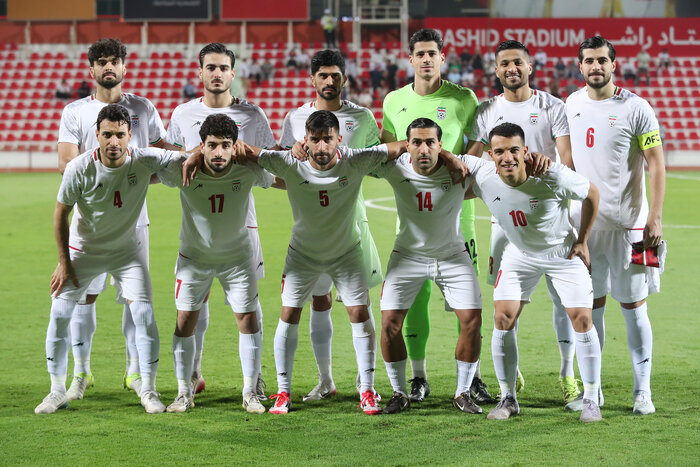
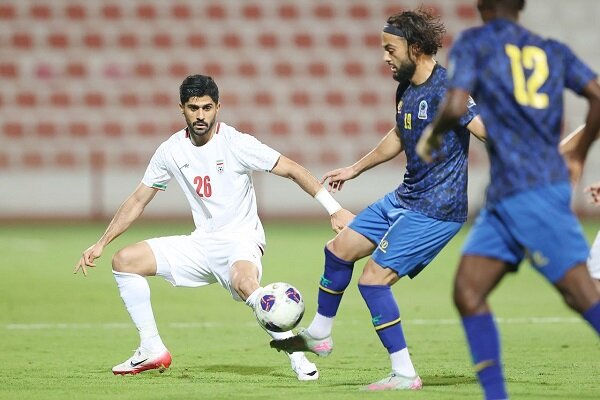
The Iranian national football team, under coach Amir Ghalenoei, secured a 2-0 victory against Tanzania in an international friendly on Tuesday evening. The match, held at Al Rashid Stadium in Dubai, UAE, saw both goals scored in a dominant first-half performance by Team Melli.

Amir Hossein Hosseinzadeh opened the scoring from the penalty spot in the 14th minute, following a foul on Mohammad Mohebbi, adding to the goal he scored in Iran’s previous match against Russia. Mohammad Mohebi then doubled the lead in the 25th minute with a shot that took a slight deflection off a defender.

First-Half Dominance

Iran started aggressively and created an early chance in the 2nd minute, with Mohammad Mohebi unable to convert. Tanzania responded with a significant opportunity of their own in the 8th minute; a defensive error by Shoja Khalilzadeh left Charles M. Mumba one-on-one with goalkeeper Payam Niazmand, but his shot was parried away for a corner.

The breakthrough came when Kasra Taheri played Mohebi into the box, resulting in a foul from Tanzania’s Ibrahim Abdullah. Hosseinzadeh calmly converted the ensuing penalty. Shortly after, Taheri was again the provider, setting up Mohebi, whose shot deflected past the goalkeeper to make it 2-0.

The first half was marred by an injury to the promising Kasra Taheri, who was forced off in the 39th minute after a heavy challenge and replaced by Mohammad Javad Hosseinnejad.

Second-Half Adjustments

Tanzania began the second half with more purpose, pressuring the Iranian defense. A long-range effort from Yahya Zayed sailed just over the bar in the 47th minute, followed by another chance that required a last-ditch clearance from Danieal Esmailifar.

Iran suffered a second injury setback in the 54th minute when Mohammad Amin Hezbavi went down with a groin issue, making way for Ali Nemati.

The most notable incident of the second half saw Alireza Jahanbakhsh’s long-range shot from outside the box deflect off teammate Milad Mohammadi’s hand and into the net. The referee initially awarded the goal but, after consulting with his assistant, correctly disallowed it for handball.

Tanzania threatened once more in the 73rd minute with a long-range effort that flew wide, but Iran managed the game effectively to see out the 2-0 win.

Lineups:

  • Iran: Niazmand; Esmailifar, Hezbavi (54′ Nemati), Khalilzadeh, M. Mohammadi; Ezzatollahi, Ghoddos (64′ Ghorbani); Mohebi (45′ Jahanbakhsh), Hosseinzadeh (64′ Alipour), Hashemnejad (64′ Sayadmanesh); Taheri (39′ Hosseinnejad).
  • Tanzania: Soliman; Masindo, Munda (45′ Mwaikenda), Mwamenyetu, Abdullah; Zayed, Dismas, Mumba (45′ A. Soliman), Salem (45′ Abraham); Peter (64′ Chikola), Al-Arikhya.

Ezzatollahi Set to Lead Team Melli in Tanzania Friendly


As Team Melli prepares for its second and final fixture of the October FIFA window against Tanzania, the squad is poised to take the pitch with a new face wearing the captain’s armband. With the anticipated absence of senior figures Mehdi Taremi and the under-fire Alireza Jahanbakhsh, the leadership duty is expected to fall upon the experienced shoulders of defensive midfielder Saeed Ezzatollahi.

Ezzatollahi, a fixture in the national team since his debut as a 19-year-old in 2015, brings nearly a decade of international experience to the role. With 78 caps to his name, the 29-year-old has been a constant presence through the tenures of coaches from Carlos Queiroz to Dragan Skocic, establishing himself as a central pillar in Amir Ghalenoei’s current setup. The occasion holds a special significance for Ezzatollahi, as he will be representing Iran at the home stadium of his club, Shabab Al-Ahli, in what promises to be a source of double motivation.

He will not be alone in providing leadership. Saman Ghoddos, another key legionnaire based in the UAE Pro League, is also part of the team’s leadership group. Fresh off a spectacular assist in the recent match against Russia, Ghoddos will be looking to build on that form in Dubai and cement a more prominent role in Iran’s offensive machinery.

This friendly presents a critical opportunity for Ghalenoei to experiment with a new on-field hierarchy and test different tactical combinations as the long-term preparation for the 2026 World Cup continues.

Anticipated Lineup Changes and Tactical Puzzles

The match is expected to feature several changes to the starting eleven that faced Russia:

  • Defensive Reshuffle: Milad Mohammadi, newly recalled to the squad, is likely to start at left-back, replacing the out-of-position central defender Ali Nemati. This move aims to add genuine width and defensive stability to the flank.
  • Attacking Options: In the absence of Taremi, Ghalenoei could choose to start either Kasra Taheri or Allahyar Sayyadmanesh, or even utilize both in a dynamic attacking setup.
  • Midfield Creativity: To address the lack of creative impetus, there is a strong possibility that Javad Hosseinnejad could be handed a start to inject inventiveness into the midfield.
  • Defensive Concerns: The central defensive partnership of Aberghouei and Khalilzadeh, who were at fault for both goals conceded against Russia, is also under review. However, Ghalenoei’s options are limited. The lack of pace in the heart of the defense remains a significant vulnerability, one that the speedy Tanzanian attackers will be eager to exploit.

The friendly against Tanzania is more than just a fixture; it is a laboratory for Ghalenoei. It is a chance to assess new leaders, rectify visible weaknesses, and build momentum before the crucial World Cup campaign resumes.

Match Details:

  • Teams: Iran vs. Tanzania
  • Venue: Rashid Stadium, Dubai
  • Date & Time: October 14, 2025; 19:00 Local Time (18:30 Iran Time)

Team Melli Faces Russia Amidst Questions of Form.

Team Melli is set to play against Russia this evening in Volgograd, in another attempt by head coach Amir Ghalenoei to restore the waning confidence of the Iranian fans.

For Ghalenoei, the approach remains largely unchanged, with only minor squad rotations. The one bright spot is the inclusion of Kasra Taheri, the promising U23 star, though whether he will see any playing time remains to be seen.

This match against Russia—a nation banned from the international arena by what many see as a hypocritical FIFA—presents an opportunity for Iran to test itself against tough opposition. Unlike the weak standard of Iran’s domestic league, the Russian Premier League remains strong and competitive despite its European ban, which has sidelined clubs like Zenit and Spartak. In stark contrast, Iranian clubs are arguably at their lowest level in decades. Esteghlal’s recent 7-0 defeat to Al Wasl of the UAE in a secondary Asian competition highlights how far Iran’s best clubs have fallen.

This domestic decline is directly reflected in the quality of players and the game plans of Team Melli. For years, the national team could depend on its legionnaires (players based abroad) to cover for these shortcomings, but that is no longer the case. With Sardar Azmoun sidelined for an extended period following surgery, the forward line is overly dependent on Mehdi Taremi. While Taremi started brilliantly at Olympiacos after his move, he now struggles to secure a starting spot for the Greek club.

The situation is even more concerning for Team Captain Alireza Jahanbakhsh, who currently does not have a club to train with, let alone play competitive matches—a basic requirement for international duty. In Ghalenoei’s book, however, this does not seem to matter.

Other legionnaires are not in better shape. Allahyar Sayyadmanesh, a player of great promise, has been underperforming in the Belgian league with KVC Westerlo. Since his transfer, he has played six matches, scoring no goals and providing only a single assist. Ghalenoei’s selection criteria remain a point of contention.

Adding to the controversy is the recall of 37-year-old Shoja’a Khalilzadeh to the defense—a unit in dire need of fresh energy after consistently conceding goals. The central midfield is another area of concern, as a chronic lack of service to the forwards has hampered the team’s attacking potential. Saman Ghoddos, the team’s creative maestro, is suffering a dip in form and has been uninspiring lately, requiring courage from Ghalenoei to revitalize this critical line.

The goalkeeping position also raises questions. None of the options have been shining for their clubs. Payam Niazmand, who replaced the suspended Alireza Beiranvand, was far from solid and has not proven himself a capable replacement. Beiranvand is most likely to start, but his form is not at its peak either.

Historically, Iran and Russia have met three times, with Team Melli winning once and drawing the other two. Russia comes into the match undefeated in its last five outings, including an impressive 4-1 win against Qatar in September, though they have largely faced Asian and African opposition rather than European teams.

Team Melli is playing its first match since a narrow defeat to Uzbekistan, prior to which it had three wins and a draw. The match in Volgograd should be a balanced affair, with current form and home-ground advantage favoring the Russians under coach Valery Karpin. Kickoff is at 20:00 local time at the sold-out Volgograd Arena.

Kasra Taheri stars in Omid Team win vs. Guam

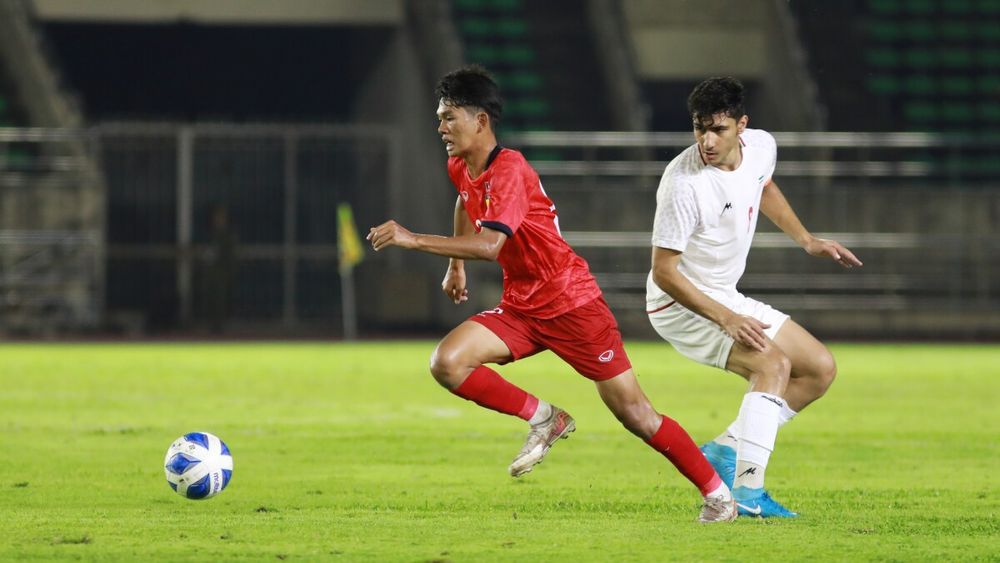
Abu Dhabi: Five second-half goals steered Iran to a comfortable 6-0 win over Guam in their penultimate Group I clash in the AFC U23 Asian Cup™ Saudi Arabia 2026 Qualifiers at the Al Nahyan Stadium on Saturday.

Iran beat Hong Kong, China 4-0 in their opener and will play the United Arab Emirates on Tuesday in what will be a top-of-the-table clash.

Guam 0-6 IR Iran

image content

Despite dominating ball possession from the start, the Central Asian side only opened accounts in the 42nd minute through Alireza Safari.

Guam, who had no shots on target in the first half, conceded a second goal a minute after the restart when Kasra Taheri put the ball past keeper Josiah Jones.

image content

Taheri, who came on at the start of the second half, fired home IR Iran’s third in the 74th minute and completed his hat-trick five minutes later.

Saeid Saharkhizan put his name on the scoresheet in the 84th minute, with captain Mohammad Javad Hosseinnezhad completing the scoring in the 90th minute.

Iran’s Omid Team Opens AFC U23 Qualifiers with Commanding 4-0 Win Over Hong Kong

In their opening match of Group I in the AFC U23 Asian Cup qualifiers, Iran’s Omid Team secured a comprehensive 4-0 victory against Hong Kong.

The goals for Iran were scored by Mahdi Jaafari, Amir Mohammad Razzaghnia, and a brace from Kasra Taheri.

Iran U23 has been drawn into Group I of the qualifying tournament alongside the UAE, Guam, and Hong Kong. Head coach Omid Ravankhah selected a starting lineup consisting of Mohammad Khalifa, Masoud Mohebbi, Farzin Maqsadagari, Arshia Vosoughifard, Seyed Mehdi Mahdavi, Amir Mohammad Razzaghinia, Pouria Latififar, Abbas Habibi, Erfan Jamshidi, Yadgar Rostami, and Saeed Saharkhizan.

The two teams had previously met in a warm-up match prior to the tournament, which ended in a 5-1 victory for Iran. This competitive encounter, however, proved more challenging initially.

Iran began the match with dominance, controlling possession and the flow of play. Despite their advantage, Hong Kong’s organized and tight defense limited Iran’s opportunities to create clear-cut chances. The first half concluded with the scoreline locked at 0-0.

Hong Kong’s resilient defense continued into the second half, frustrating the Iranian attackers, who were also hampered by wayward finishing. Midway through the half, Coach Ravankhah made several crucial substitutions, introducing captain Mohammad Javad Hosseinnejad and Kasra Taheri to reinforce the forward line, replacing Saeid Saharkhizan.

The changes invigorated Iran’s attack. The breakthrough finally came in the 69th minute from a free kick on the edge of the penalty area, awarded by the Korean referee. Mahdi Jaafari stepped up and executed a clever shot that left the Hong Kong goalkeeper stranded, putting Iran ahead 1-0 and relieving the growing pressure on the team.

The floodgates opened just three minutes later. A swift run down the left flank breached Hong Kong’s tiring defense, and the resulting cross found Amir Mohammad Razzaghnia, who calmly finished from close range to double Iran’s lead.

Substitute Kasra Taheri then took center stage, sealing the victory with two well-taken goals. His first came in the 83rd minute, and he added another in the second minute of stoppage time (90+2) to complete the 4-0 rout.

The match was played in intense heat, which challenged both sides. For much of the game, it seemed Iran’s superiority might not translate into goals. However, the impactful substitutions by Ravankhah, combined with Hong Kong’s fatigue in the latter stages and a confident finish from the Omid Team, ultimately made the difference.

Iran’s next match will be against Guam.

Iran youth wins big.

Iran’s U20 team under Hossein Abdi began the qualification with a resounding win against Host Laos in Vientiane with an 8-0 win in the AFC U20 Asian Cup™ China 2025 Group G tie on Wednesday.

Iran took the lead after eight minutes with Farhan Bozorgianasl nodding at the far post from a deep outswinging corner kick delivery.

The four-time champions continued to be on the attack and doubled their advantage four minutes later from another set-piece, this time from a free-kick that Amirmohammad Razaghinia powered into the net.

image content

Defender Yaghoob Barajeh increased their lead in the 31st minute with a Laos mistake five minutes later allowing Esmaeil Gholizadeh to get on the scoresheet with Kasra Taheri capping an impressive first half for Iran with the fifth goal in the 41st minute.

image content

Despite showing improved defending at the start of the second half, Laos were undone again by Iran in the 63rd minute, Abbas Kahrizi producing a clever turn inside the box before slamming past Kop Lokphathip.

Iran were awarded a penalty with two minutes left to play, Barajeh sending his spot-kick into the bottom corner for his second of the game before another penalty in stoppage time was tucked away by Taheri to seal the resounding win.

Iran U20 will meet India who defeated Mongolia 4-1 in the earlier game, on Friday 27th September.

GOAL SCORERS

FIRST HALF.

Farhan Bozorgianasl 1-0 (8′)
Amirmohammad Razaghinia 2-0 (12′)
Yaghoob BarajeH 3-0 (31′)
Esmaeil Gholizadeh 4-0 (36′)
Kasra Taheri 5-0 (41′)

SECOND HALF
Abbas Kahrizi 6-0 (61′)
Yaghoob BarajeH 7-0 (p 88′)
Kasra Taheri 8-0 (91′)

Iran U20 goals

Iran advances after routine New Caledonia win

Iran booked their spot in the FIFA U-17 World Cup knockout phase for a fourth time following a 5-0 win over New Caledonia.

FIFA

IR Iran 5-0 New Caledonia | Group C

Goals: Amir Mohammad Razaghinia (17, 34), Reza Ghandipour (76), Mohammad Askari (90+6), Kasra Taheri (90+8)

Player of the Match: Amir Mohammad Razaghinia (IRN)

Iran ensured their progress to the FIFA U-17 World Cup Indonesia 2023™ knockout phase after a routine 5-0 win over New Caledonia.

The Iranians laid siege on the New Caledonia goal from the off but it took them 17 minutes to open the scoring, as Mahan Sadeghi crossed for Amirmohammad Razaghinia to head home. The midfielder doubled his tally in the 34th minute after reacting quickest to a loose ball inside the area, but only after Esmaeil Gholizadeh had struck the post from the penalty spot.

New Caledonia, to their credit, held firm after the restart and were not breached again until the 76th minute, when Reza Ghandipour found the net with a powerful header.

A fourth goal – which took New Caledonia to a record-breaking 23 goals conceded at the tournament – followed in added time, when Mohammad Askari lashed home. Number five came just two minutes later, as Kasra Taheri slotted beyond Nicolas Kutran after breaking through on goal with a cleaver dribble of his marker.

FINAL STANDING
GROUP C

TEAMPWDLGFGAGDPTS
1 England3201133106
2 Brazil320113496
3 Iran32019456
4 New Caledonia3003024-240

The amazing win – Brazil 2-3 Iran

fifa.com
11.Nov.2023

Goals: Rayan (7), Abolfazl Zamani own goal (42+2), Yaghoob Barajeh (54), Kasra Taheri (69), Esmaeil Gholizadeh (73)

IR Iran completed one of the most extraordinary comebacks in FIFA U-17 World Cup™ history on Saturday – coming from two goals down to beat Brazil on a night of high drama in Jakarta.

The reigning champions looked to be cruising after opening up a commanding lead during a first half where they played some wonderful football.

Rayan’s opening goal combined imagination, cunning and exquisite technique in equal measure. While a horde of players were waiting in the box for Luca Camilo’s corner delivery, he instead played low pass towards Lorran. He dummied to let the ball roll to Rayan, who curled a sweet left-foot strike beyond Iranian goalkeeper Arsha Shakouri.

Brazil doubled their advantage shortly before the half-time whistle. After another slick team move, Rayan shot at goal ten yards out and the ball cannoned off Abolfazl Zamani and into the net.

Far from being disheartened, Iran came out for the second half with renewed vigour and purpose.

They looked a threat whenever they advanced into the final third – and made good on that attacking promise on 51 minutes when Yaghoob Barajeh’s shot deflected in off Da Mata.

They then levelled on 69 minutes, with half-time substitute Kasra Taheri nutmegging Brazil stopper Phillipe Gabriel with a fizzing low drive.

And they completed an extraordinary turnaround when Esmaeil Gholizadeh applied the finishing touch after a fast breakaway.

Brazil piled on pressure in search of an equaliser but to no avail, with the final whistle sparking wild celebrations among the Iran players and staff.

Stunning victory for Iran boys against defending champions, Brazil

Iran’s U-17 national team defeated defending champions Brazil 3-2 in Jakarta, Indonesia in the Group C game on Saturday.

Brazil took the lead in the 28th minute from Rayan, while Abolfazl Zamani’s own goal made it 2-0 for the champions just before the halftime whistle.

In the second with two changes in the lineup, Hossein Abdi’boys started strongly and matched the Brazilians every step of the way. Yaghoob Barajeh scored Iran’s first goal from a quick long ball counterattack in the 54th minute. While Brazil were pressing to score their third goal, substitute Kasra Taheri took advantage of a poor ball in the Brazilian box to cleverly score the equalizer.

The winner came from yet another substitute, Esmaeil Gholizadeh, again from a quick counterattack to seal the win for Iran. 10 minutes of injury time was played for the Brazilians to score the equalizer to no avail.

This is arguably Iran’s most glorious win at any world championship. Beating the defending champions and four times winner of the U17 World Cup will be considered a historic achievement that will remain in memory for a long time,

It is also the first shock of the tournament.

In the other group match England, Iran’s next opponent beat New Caledonia 10-0