Tag: Mehdi Taj

remature Coronation: Why Taj’s World Cup Guarantee for Ghalenoei Undermines Team Melli’s Ambition

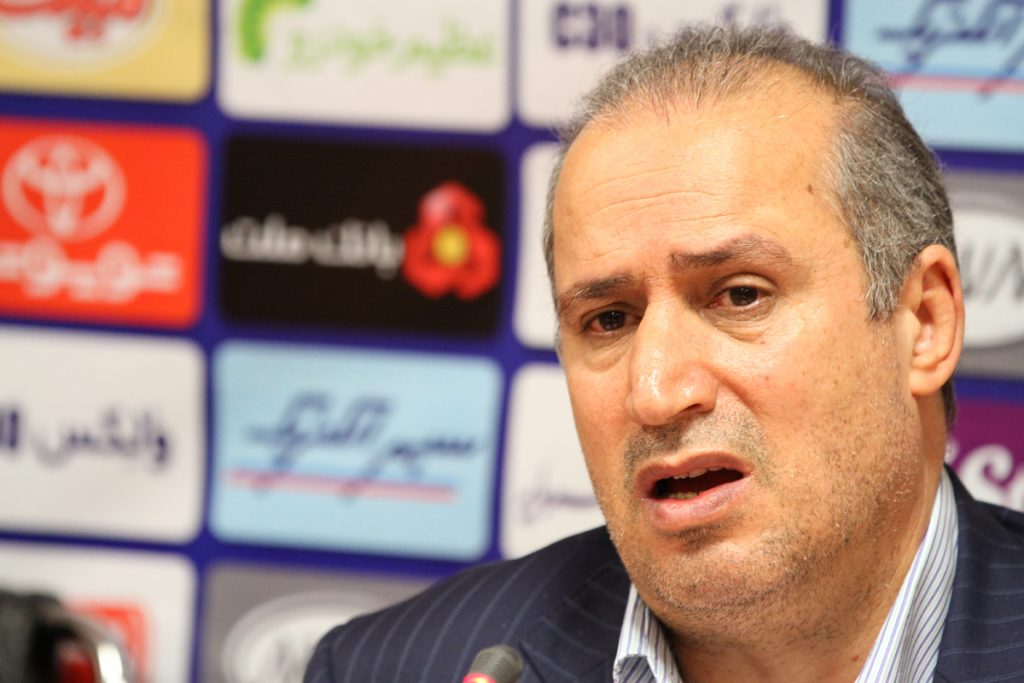
In a move that has raised more eyebrows than confidence within Iranian football circles, Football Federation President Mehdi Taj has effectively removed any suspense or accountability from Team Melli’s impending 2026 World Cup campaign. By publicly assuring that Amir Ghalenoei will remain at the helm regardless of results in North America, Taj has traded the hard edge of professional sport for the comfort of administrative inertia.

Speaking in response to comments made by Ghalenoei, who suggested that after the World Cup, Team Melli would be at the "disposal of the next head coach", Taj interpreted this as a selfless concession rather than a standard procedural reality. "Ghalenoei has made a concession; he will be the head coach of the national team after the World Cup," Taj stated.

He doubled down on this assurance, adding: "There is no problem with Ghalenoei's presence in the national team, and we are very satisfied with him. Ghalenoei is trying to say that he is leaving the federation's hands open, but he is managing the national team very well."
While stability is a cherished commodity in the volatile world of international football management, stability without scrutiny is merely stagnation. To confirm a coach's future without conducting a post-World Cup performance appraisal is not just a vote of confidence; it is an abdication of professional responsibility.

The Illusion of the "Open Hand"

The federation’s framing of this announcement centers on the idea that Ghalenoei is "leaving the federation's hands open." In reality, this premature assurance closes the federation's hands entirely. By locking in the current leadership before a ball is kicked against the world’s elite, the Federation has sent a clear message to the squad and the public: The process in the United States, Canada, and Mexico is an exhibition, not an examination.

What happens if Team Melli suffers a historic defeat? What if the tactical approach that worked in the later stages of Asian qualification proves utterly inadequate against the pace and power of a World Cup group stage? Under this new decree, the answer is apparently nothing. Ghalenoei returns to the bench for the next AFC Asian Cup qualification cycle, safe in the knowledge that the federation’s "satisfaction" predates any actual evidence from the sport's biggest stage.

This approach stands in stark contrast to the principles of high-performance sport. In any serious footballing nation, or any professional organization, a major project like a World Cup is a natural inflection point. It is a moment for review, for recalibration, and, if necessary, for a fresh voice. By skipping the appraisal step entirely, Taj is demonstrating a lack of desire for improvement and a troubling contentment with the status quo.
A Haunting Precedent

The irony of this situation is not lost on observers. Just over three years ago, the Iranian Football Federation dismissed Dragan Skocic, a coach who had secured qualification for the 2022 World Cup, mere months before the tournament began, citing a lack of confidence in his ability to perform on the world stage. The decision threw the team into a tailspin of instability from which they never recovered in Qatar.

Now, the pendulum has swung to the opposite extreme. Where once the federation acted with rash, destabilizing haste, it now clings to a premature, unearned loyalty. Both extremes stem from the same root: an institutional failure to manage coaching transitions with data-driven professionalism rather than reactive, behind-closed-doors politics.

The Risk of Complacency

The most damaging aspect of this announcement is the potential impact on the dressing room and the coaching staff's mentality. The World Cup demands every ounce of a team's focus and fear of consequence. That fear, the knowledge that jobs and legacies are on the line, drives performance. By erecting a safety net in April 2026, two months before the tournament, Taj has softened the ground beneath Ghalenoei’s feet.

While the federation views this as a gesture of unity and support, it is equally plausible that it masks deeper, unaddressed fissures within the national team setup. Maintaining the coach's position unconditionally is an easy way to avoid confronting internal issues that might otherwise surface during a rigorous post-tournament review.

Conclusion

Mehdi Taj is right to praise the work Amir Ghalenoei has done to steady the ship and navigate Asian qualification. But international football is not an industry of lifetime appointments or performance-blind loyalty. The World Cup is the ultimate litmus test.

By removing the stakes for the man in the technical area, the Federation President has undercut the very essence of competition. It is an unprofessional statement that comforts the coach but shortchanges the 90 million Iranians who expect their national team to be held to the highest possible standard—not just during the World Cup, but in the honest, critical moments that follow it.

Azmoun kicked off national team for disloyalty, say reports!

March 20 (Reuters) - Sardar Azmoun, one of Iran's top soccer players, has been expelled from the national team for a perceived act of disloyalty to the government, Iranian media has reported, making it unlikely he will play any part in the World Cup.

Iran's participation in the World Cup as a whole is under a cloud because of the ongoing conflict with the United States, which is co-hosting the June 11-July 19 tournament with Mexico and Canada.

If Team Melli do turn up for their opening-round group matches, they will undoubtedly be weakened by the absence of striker Azmoun, who has scored 57 goals in 91 internationals since making his debut as a teenager in 2014.

Azmoun, who plays his club football in the United Arab Emirates for Shabab Al-Ahli, upset the Iranian authorities this week by posting a picture on his Instagram feed of a meeting with Dubai's ruler, Mohammed bin Rashid Al Maktoum.

Iran has launched rocket and drone attacks on the UAE following air strikes by the United States and Israel, which killed the country's Supreme Leader, Ayatollah Ali Khamenei.

A report on the Fars News Agency, which has links to the hardline Islamic Revolutionary Guard Corps, cited "an informed source within the national team" as saying Azmoun had been expelled from the squad.

PICTURES REMOVED

Azmoun later removed the pictures but was still lambasted on state TV on Thursday, with football pundit Mohammad Misaghi saying the striker's actions had been an act of disloyalty.

"It's unfortunate that you don't have enough sense to understand what kind of behaviour is appropriate at a given time," Misaghi said.

"We should not mince words with such people. They should be told that they are not worthy of wearing the national team jersey.

"We have no patience for this sulking and childish behaviour. National team players should be people who proudly belt out the national anthem and deserve to wear the Iran jersey."

There was no immediate response to a request for comment on the matter from the Football Federation of the Islamic Republic of Iran (FFIRI).

Azmoun, 31, is one of the best-known footballers in Iran, where the game is a national obsession.

He has played his entire club career abroad with stints at Zenit Saint Petersburg, Bayer Leverkusen and Roma, as well as featuring for Iran in the 2018 and 2022 World Cups.

An unsourced report on the Navad News channel said on Thursday that an order had been issued for the seizure of the assets of Azmoun, another UAE-based national team forward Mehdi Ghayedi, and former international Soroush Rafiei.

Misaghi was speaking against the backdrop of pictures of a ceremony welcoming the Iranian women's national team back to Tehran on their return from Australia.

Seven of the delegation accepted asylum in Australia after the team was branded "wartime traitors" on Iranian state TV for not singing the national anthem before a Women's Asian Cup match. Five later decided to return to Iran.

Iran's men are scheduled to play friendly internationals in Antalya, Turkey, against Nigeria on March 27 and Costa Rica four days later as part of their World Cup preparations.

Iran could face sanctions if it withdraws from the World Cup.

Iran could face disciplinary action from FIFA, including a possible ban from future tournaments, if they unilaterally withdraw from the World Cup.

Donald Trump told Politico last week that he “really doesn’t care” if Iran fail to take part in this summer’s tournament, but FIFA remains committed to the World Cup going ahead with all qualified teams participating.

The president of the country’s football federation, Mehdi Taj, cast doubt on Iran’s involvement last week by saying “we cannot be expected to look forward to the World Cup with hope”, but pulling out may not be straightforward.

Under FIFA statutes, member associations are not permitted to withdraw from competitions, and declining to take part in a World Cup would be unprecedented in the modern era. No country has pulled out of the tournament after the draw since France and India did not take part in 1950, citing travel costs.

FIFA has protections in its tournament rules, which sources have indicated would be upheld. The regulations state that withdrawing before the tournament incurs a fine of between €275,000 (£238,000) and €555,000, depending on the date of the withdrawal, and triggers a referral to FIFA’s disciplinary committee, which could impose sporting sanctions.

“Participating associations that withdraw at any stage of the Fifa World Cup 2026 shall be required to reimburse all funds received from Fifa for the preparation of their national team, as well as any competition-related contributions received from Fifa,” the regulations state.

“The Fifa disciplinary committee may impose additional disciplinary measures, taking into account in particular the timing of the withdrawal or exclusion, the seriousness of the infringement that led to the inadmission or exclusion, possible mitigating factors, and any other relevant circumstances.

“These disciplinary sanctions may include the exclusion of the association concerned from a future Fifa competition or the replacement of that association by another.”

Iran have played at six World Cups, including the past three, in Brazil, Russia and Qatar. Their Group G opponents this summer are New Zealand, Belgium and Egypt, and they would face the United States in the knockout stage if both sides qualify as group runners-up.

Iranians are barred from entering the US under a travel ban introduced by the Trump administration last June, although it permits exemptions for athletes involved in the World Cup or 2028 Olympics in Los Angeles.

FIFA was contacted for comment.

Internal Strife Threatens Iran's World Cup Hopes


As the 2026 World Cup approaches, with just five months until the tournament kicks off, the Iranian national football team finds itself grappling not only with technical deficiencies but with a deeply concerning lack of unity—a stark contrast to the harmonious picture painted by head coach Amir Ghalenoei.

Despite repeated warnings from experts about persistent performance and management issues, Football Federation head Mehdi Taj has opted for stability, deciding to retain Ghalenoei. This move signals a clear departure from the federation's previous approach, which saw the sudden dismissal of a successful Dragan Skocic, who led the team to qualification just before the final of the competition in Qatar in the 2022 World Cup. The message is clear: change is off the agenda, and Ghalenoei will remain at the helm regardless of the team's precarious state.

The coach has consistently lauded the squad’s exceptional unity over the past three years. Recent events, however, reveal a troubling reality. Growing evidence suggests Ghalenoei may be papering over significant rifts within the Team Melli camp, with claims of solidarity appearing to exist only on paper.

A Public Feud Between Defensive Pillars

The simmering tensions erupted into public view following the Persepolis-Tractor match. Key defenders Shoja Khalilzadeh and Mohammad Hossein Kanaanizadegan, once close enough to call each other “brother”, have engaged in a bitter, public exchange of verbal abuses over minor on-field incidents. This discord is not isolated; similar altercations occurred during the match against Mes Rafsanjan. The rift has grown so severe that videos of the two players “unfollowing” each other on social media have circulated online, fanning flames among supporters and poisoning the team atmosphere.

Beyond the Pitch: Players in the Political Fray

The issue extends beyond a personal feud. These experienced players have entangled themselves in the federation's political battles, notably the ongoing dispute between businessman Mohammad Reza Zenozi and Mehdi Taj. Instead of focusing on defensive coordination, they have each seemingly aligned with opposing factions, a glaring misstep that highlights a severe lack of managerial control and player discretion.

Their conduct is, unfortunately, characteristic. Both Khalilzadeh and Kanaanizadegan have histories of controversy, abusive, and unprofessional behavior, marked by petulance and unpredictability. At the national team level, Ghalenoei has proven to be a poor disciplinarian, a fact underscored after the Uzbekistan match when star forward Mehdi Taremi bluntly walked away from the coach who was attempting to speak with him. This culture of impunity is pervasive, with disciplinary committees at both club and federation levels often acting as mere formalities rather than enforcing regulations strictly.

A Dire Warning with the World Cup Looming

Drawn into a challenging Group G alongside Belgium, Egypt, and New Zealand, Iran faces an uphill battle. The internal disputes, managerial indecisiveness, and the divisive behavior of key players present a serious threat to the team's World Cup campaign.

Retaining Ghalenoei without addressing these foundational issues—particularly the breakdown of locker room discipline and the dangerous blurring of lines between playing and political roles—risks catastrophic consequences. It threatens not only Iran’s performance on the world’s biggest stage but also the credibility and honor of Iranian football itself.

Mehdi Taremi faces possible World Cup ban over Iranian military service

The Daily Mirror, UK.
Story by Nathan Ridley
 

Mehdi Taremi of Iran is celebrating after scoring a goal during the AFC Asian Cup 2023 match between Iran and the United Arab Emirates at Education City Stadium in Al Rayyan, Qatar, on January 23, 2023. (Photo by Noushad Thekkayil/NurPhoto via Getty Images)

Mehdi Taremi of Iran is celebrating after scoring a goal during the AFC Asian Cup 2023 match between Iran and the United Arab Emirates at Education City Stadium in Al Rayyan, Qatar, on January 23, 2023. (Photo by Noushad Thekkayil/NurPhoto via Getty Images)© Noushad Thekkayil/NurPhoto via Getty Images

Iran striker Mehdi Taremi faces being denied entry to the 2026 World Cup over his mandatory military service. Taremi, 33, was prolific during qualification, scoring 10 goals in 15 games as Iran topped both of their groups.

Amir Ghalenoei's side have been placed in Group G alongside Belgium, Egypt and New Zealand. They'll play their fixtures in the US cities of Los Angeles and Seattle.

But Taremi might not be involved. It comes after the president of the Football Federation Islamic Republic of Iran, Mehdi Taj, revealed that some players are at risk of not receiving visas.

"The United States might not issue visas to some players due to their military service location," Taj warned. "That's why we've started now and have selected replacements for players who might not receive visas."

It quickly emerged from various Iranian media outlets that Taremi was among those who the federation chief was referencing. All Iranian men must serve time in a military once they turn 19.

Taremi's situation, however, is markedly different from most of his team-mates. Between 2010 and 2012, the Olympiacos star served in the Navy of the Islamic Revolutionary Guard Corps (IRGC) in the city of Bushehr near his home.

"My service was right there in Bushehr," Taremi explained in a 2015 interview. "Close to our own home, at the IRGC Navy base. It wasn't hard at all."

The US State Department has firm restrictions for individuals with ties to organisations which it deems as foreign terrorist entities. Their list includes the IRGC.

In a statement provided to Pro Soccer Wire, a US State Department spokesperson didn't rule out the possibility that some of Iran's players could see their visa applications denied. "The Trump Administration is committed to doing everything we can to support a successful World Cup," they said.

Iran's forward #09 Mehdi Taremi celebrates scoring his team's second goal during the FIFA World Cup 2026 Asia zone qualifiers group A football match between Iran and the North Korea at the Azadi Sports Complex in Tehran on June 10, 2025. (Photo by ATTA KENARE / AFP) (Photo by ATTA KENARE/AFP via Getty Images)

Iran's forward #09 Mehdi Taremi celebrates scoring his team's second goal during the FIFA World Cup 2026 Asia zone qualifiers group A football match between Iran and the North Korea at the Azadi Sports Complex in Tehran on June 10, 2025. (Photo by ATTA KENARE / AFP) (Photo by ATTA KENARE/AFP via Getty Images)© ATTA KENARE/AFP via Getty Images

"At the same time, the administration will not waver in upholding US law and the highest standards of national security and public safety in the conduct of our visa process.

"We adjudicate each visa application on a case-by-case basis after rigorous review and thorough vetting to determine whether the individual is eligible under US law."

The ex-Inter Milan and Porto star could therefore miss out on the chance to play at back-to-back World Cups. In 2022, Iran came third in a group alongside England, Wales and the United States, finishing third on three points.

FFIRI President Details World Cup Preparations Amid Challenges.


In a comprehensive update on Iran’s preparations for the 2026 FIFA World Cup, Football Federation President Mehdi Taj addressed critical issues, including friendly match negotiations, visa denials for staff, and logistical planning for the team’s camp in the United States.

Friendly Matches: Portugal and Spain in Sight

Taj confirmed that efforts to secure high-profile friendly matches are advancing. “We aimed to arrange matches for March and June [early spring],” he stated. “For June, we targeted European opponents and have held significant talks with Portugal. This has progressed considerably, and within the next two to three days, we should sign a memorandum of understanding.”

He indicated that Portugal’s second friendly match in that window could be against Iran. Furthermore, Taj revealed ongoing coordination with Qatar for the earlier March window, where Spain and Egypt are scheduled to play. “Spain will come to Qatar and likely play them first, then potentially face us,” he added.

While talks have also been held with Scotland and Iceland, Taj emphasized that no agreements are yet final. “None are definitive at the moment. We must have replacement plans and alternative options ready.”

Visa Denials and Contingency Planning

Addressing the sensitive issue of U.S. visa refusals for some national team members, Taj outlined the federation’s proactive stance. “After consultations, we decided to send three representatives to the draw. We have started identifying replacement options for the World Cup squad,” he explained. “If, for any reason, a player is told he cannot come, we must have an alternative ready.”

He cited the case of team official Saeed Al-Hawie, who was denied a visa, possibly due to his professional history. “Those who may have served in certain capacities could face problems,” Taj noted. He confirmed that Iran has protested the matter to FIFA, suggesting the global body “could have stood up to the United States more firmly.”

Taj also mentioned a joint protest with Egypt regarding the official naming of their World Cup group stage match, which he labeled “unreasonable and supportive of a specific political group,” vowing to pursue the issue.

U.S. Training Camp and Ticket Sales

Regarding Team Melli’s base camp in the United States, Taj identified a preferred location. “We visited a camp approximately 56 kilometers from Los Angeles. The team can reach the city in under an hour, and it is only 12 minutes from the airport,” he said, highlighting its logistical advantage for Iran’s third group match in Seattle. “We hope no complications arise and this camp is secured for us.”

On ticketing, Taj stated that the average ticket price is around $500. While fans inside Iran will not be granted visas for the tournament, the federation plans to facilitate sales for the diaspora. “We must prepare to sell approximately eight thousand tickets per match for our supporters. Iranians living abroad will be able to purchase them through the federation’s website.”


FIFA Days
23–31 March 2026
1–9 June 2026

FIFA World Cup 2026
11 June – 19 July 2026

Group G

June 15, 2026 Belgium Match 16 EgyptLumen Field, Seattle
June 15, 2026Iran Match 15 New ZealandSoFi Stadium, Inglewood
June 21, 2026Belgium Match 39 IranSoFi Stadium, Inglewood
June 21, 2026New Zealand Match 40 EgyptBC Place, Vancouver
June 26, 2026Egypt Match 63 IranLumen Field, Seattle
June 26, 2026New Zealand Match 64 BelgiumBC Place, Vancouver

FFIRI Suspension of Alireza Beiranvand includes exclusion from Team Melli selection.

Mashhad, Iran – Mehdi Taj, President of the Iranian Football Federation, confirmed today that goalkeeper Alireza Beiranvand will not join the national team for the foreseeable future due to an ongoing suspension.

The announcement came during a press briefing on the sidelines of the East Azerbaijan Football Board meeting, where Taj also addressed the selection of Mashhad as the host city for the upcoming Tractor vs. Esteghlal match.

Beiranvand’s Suspension: Rules and Next Steps

Regarding Beiranvand’s case, Taj emphasized adherence to regulations while leaving room for further review:

  • The goalkeeper is currently suspended, with half of the penalty still to be served.
  • The Appeals Committee’s detailed 11-page ruling remains open for scrutiny.
  • The option to appeal to the Court of Arbitration for Sport (CAS) is available, per standard statutes.

"While we respect the disciplinary process, the federation is actively working to resolve the situation," Taj said. "All stakeholders are welcome to present their perspectives formally."

Commitment to Governance and Future Success

Taj reiterated the federation’s focus on upholding governance standards while supporting teams:
"Our priority is to ensure fair conditions for both the national team and clubs. We remain optimistic about Iranian football’s continued progress."

The statement concluded with no specified timeline for Beiranvand’s return.

The Controversial Suspension: A Year-Long Saga of Delays

Alireza Beiranvand's suspension stems from a breach of contract complaint filed by his former club, Persepolis, over a year ago. Despite the straightforward nature of the case, the Football Federation (FFIRI) and its Disciplinary Committee demonstrated puzzling inertia—repeatedly deferring proceedings while Beiranvand completed an entire league season unaffected.

This extraordinary delay in resolving a contractual dispute raises serious concerns:

  • Transparency Issues: Why did a clear-cut case require 12+ months to adjudicate?
  • Selective Enforcement: Was the timing influenced by external pressures or political considerations within Iranian football?
  • Precedent Setting: The federation’s eventual acknowledgment of Beiranvand’s contractual breach—after such protracted deliberations—undermines confidence in its judicial processes.

Critics argue the federation’s sluggishness reflects either institutional incompetence or deliberate stalling to accommodate vested interests. Either way, the handling of this case has become emblematic of systemic governance flaws that demand urgent reform.


Tabnak Exposes New Financial Violations in Iranian Football

T

A 10‑page report from the General Accounting & Audit of Iran—published by Tabnak News Agency—has revealed new dimensions of financial misconduct by senior officials within the Iranian Football Federation and the League Organization.

According to the report, the General Inspectorate is set to launch an investigation in the summer of 2024 into the financial documents and statements of both the League Organization and the Football Federation. This probe, described as an examination of the status, resources, and financial expenditures of the Iranian Football League Organization, is expected to scrutinize irregularities that have long been suspected.

The investigation has uncovered that top executives from both the Football Federation and the League Organization have registered a private company—also named the “Iranian Football League Organization”—into which a substantial portion of the federation’s domestic revenues is being funneled.

In recent months, headlines have been dominated by reports of staggering fines imposed by the federation’s disciplinary committee on clubs, players, and coaches. For instance, on January 7, 1403, the “Javan” newspaper—the media outlet of the Revolutionary Guards—reported that fines levied on Iranian football players and clubs between September and the end of December 2024 had generated a staggering figure of at least 54 billion tomans (US$ 1.3 million) in revenue for the federation.

Now, newly released documents from the Inspection Organization indicate that these funds were deposited into a private company managed by Mehdi Taj.

Mehdi Taj, who originally led the FFIRI from 2016 until 2019, resigned abruptly—citing ill-health—amidst allegations of financial misappropriation, corruption, secret contracts, and excessive payments to the Belgian coach of Team Melli, Marc Wilmott. Despite these serious concerns raised by both observers and government entities, Taj emerged unscathed and was re-elected as the federation’s president in 2022 under questionable circumstances. This election saw all the candidates drop one by one leaving Taj as the major candidate.

Even after several audits and investigations, including the largest corruption scandal in Iranian football history —during which referees were caught accepting bribes and the head of the referees committee was imprisoned—Mehdi Taj continues to deny any wrongdoing. His resilience, bolstered by strong support from influential figures within the Revolutionary Guards, has allowed him to remain in power.

This latest round of accusations, one among many leveled against the powerful IRGC operative who appears to be backed by top regime figures, could prove to be the final blow in Taj’s career. The question now remains: will he once again perform a Houdini act and escape accountability?

Editorial: Ghaleneoi's narrative.

Although far from a perfect coach for Team Melli, Amir Ghalenoei has delivered results that cannot be ignored. His record speaks volumes about his ability to achieve success even when the team struggles to perform at its best. However, his tenure has not been without controversy, particularly regarding his interactions with the media and his press conferences.

Why TeamMelli.com Limits Press Conference Coverage

Some of our followers have questioned the limited coverage of Ghalenoei’s press conferences during official matches. We believe it is important to clarify our stance. At TeamMelli.com, our focus has always been on Team Melli itself—the players, performance, and results—not on political narratives or personal agendas.

While we strongly advocate for free speech, open dialogue, and constructive criticism, we also value impartiality and balanced reporting. Unfortunately, Ghalenoei’s press conferences often deviate from these principles, turning into platforms for personal promotion, political rhetoric, or unwarranted attacks on journalists and critics.

The Nature of Ghalenoei’s Press Conferences

Ghalenoei’s press conferences typically follow a predictable pattern. They begin with a series of formalities: thanking various individuals, praising the Team Melli staff, and expressing gratitude to his boss, Mehdi Taj, the head of FFIRI, for performing his duties. While courteous, this repetitive routine often feels more like unnecessary theatrics than substantive dialogue.

The tone then shifts to a more combative narrative. Ghalenoei frequently criticizes media personnel who dare to question the team's performance, sometimes implying that such critiques are unpatriotic. He also references alleged personal rivalries, claiming there are "jealous" individuals working against him, though he rarely elaborates. Fans, however, care less about these personal grievances and more about the team’s performance, strategy, and results.

Why We Choose to Focus Elsewhere

In the modern world of football, where data-driven analysis, tactical insights, and performance reviews dominate discussions, Ghalenoei’s narrative feels outdated. At TeamMelli.com, we prioritize content that adds value to our readers: match reports, player statistics, historical perspectives, and tactical breakdowns. Covering Ghalenoei’s press conferences, which often lack substance, does not align with this mission.

That said, we do not completely dismiss Ghalenoei’s comments. Occasionally, he offers valuable insights or observations that are worth sharing. However, we choose to filter out the rhetoric and focus on content that genuinely matters to Team Melli fans.

A Commitment to Constructive Dialogue

Our decision is not a rejection of Ghalenoei as a coach but rather a reflection of our commitment to meaningful and objective coverage. Team Melli deserves reporting that highlights its achievements, analyzes its challenges, and celebrates its history. By staying true to this mission, we ensure that our readers receive the most relevant and impactful content.

The match versus Capo Verde is OFF !!

As usual yet another friendly match arranged by FFIRI is canceled only days after it is announced!!

Mehdi Taj, head of FFIRI, has earlier announced that a match against Capo Verde has been agreed upon, with the venue still to be confirmed but most probably it will be in Tehran.

Today, the director of Team Melli had something else to say about the international friendly matches on FIFA Day.

According to Mehdi Mohammad Nabi; the contract for the first friendly match, which is scheduled to be held on September 07, against the Bulgarian national team, has been approved by both federations, the relevant confederations, and FIFA. He added: Regarding the second friendly match which is scheduled to be held on September 12, considering that the Cape Verde national team has an official match against the Togo national team on September 10, and based on the statements of the representative of the mentioned federation, they have not succeeded in changing the time of the official game!!!. Accordingly, Cape Verde will not be able to play the friendly match in Tehran. (...)

He added: "We are trying to take the necessary measures after consulting with the head coach of Team Melli for finding other options for the second friendly game."

Yet again, it is another messy, amateurish act by this federation whose intellect and professionalism are on par with that of primary school pupils, with the utmost respect for the kids. How on earth, they even think of arranging a friendly match with a National Team that plays in Africa, and expect the squad to be in Tehran two days later for a match against Team Melli, is beyond comprehension!!!

Iranian football has for the last four decades severely suffered from mismanagement, failures, screw-ups, and a lack of common sense in the most basics of administration and management. We are not even approaching corruption, political interference, nepotism, and bias.

The standard of management personnel, mostly inept former or current civil servants, Basij, revolutionary guards, and regime loyalists, have left Iran's football handicapped and absent from crowing and championships for nearly half a century.

And there is NO hope of any improvement in sight.