Tag: Amir Ghalehnoei

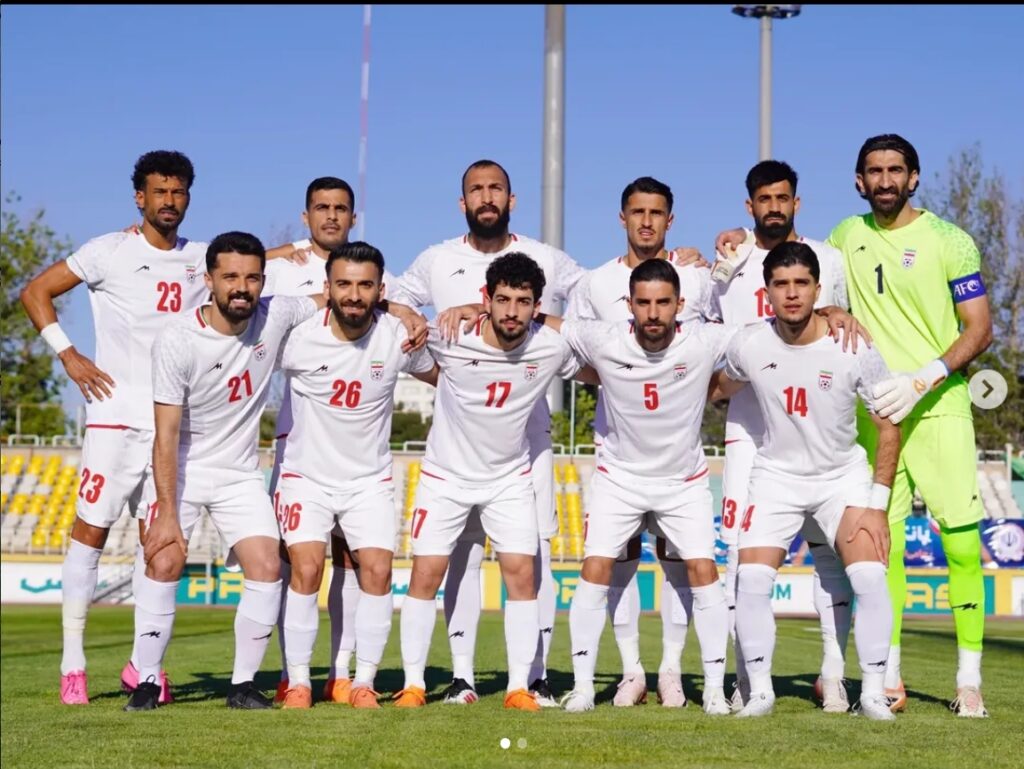
Team Melli plays a competitive Intra-Squad Match.

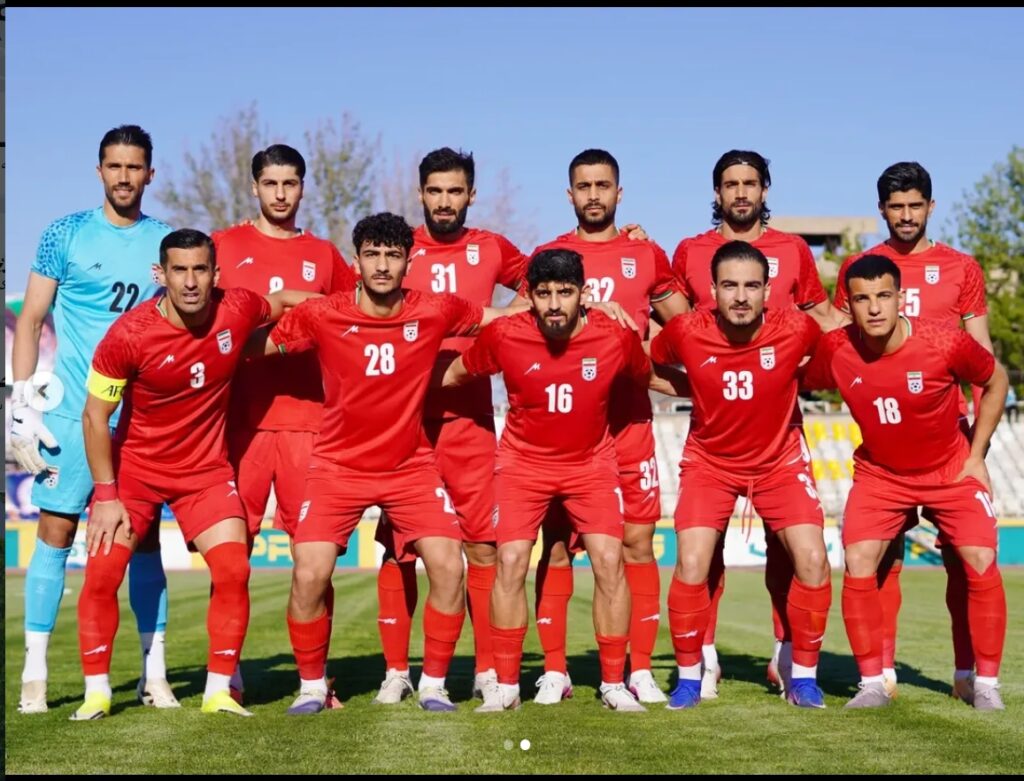
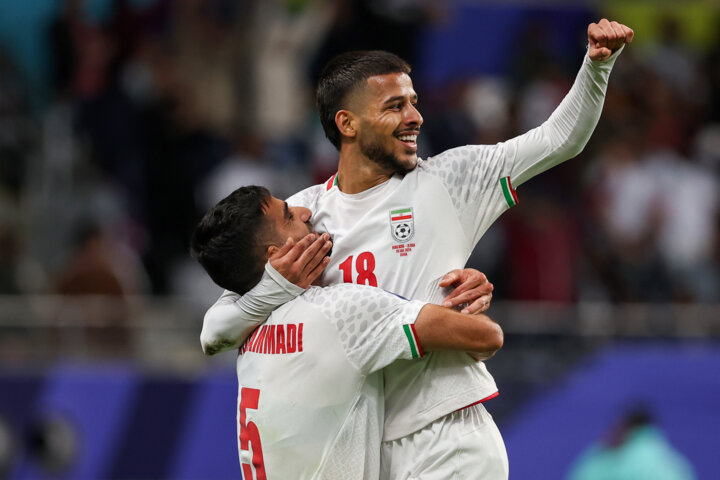
TEHRAN The Iranian national football team continued its training camp for the FIFA World Cup 2026 with a second intra-squad friendly match on Wednesday, May 6, held at Tehran’s Dastgerdi Stadium. The Red team emerged as the clear victor, defeating the White team 3-1 in a competitive and revealing encounter.

The training match saw the squad divided into two sides, Red and White, as head coach Amir Ghalenoei seeks to assess player readiness and tactical combinations ahead of upcoming international commitments.

The Red team broke the deadlock in the 52nd minute with a moment of individual brilliance. Saleh Hardani connected cleanly on a superb volley that left the White goalkeeper with no chance, putting the Reds ahead 1-0.

Just one minute later, in the 53rd minute, the Reds doubled their lead. Payam Nezamd, the White team’s goalkeeper, attempted to intercept a dangerous advance by Hadi Habibinejad but misjudged the situation. Habibinejad capitalized on the error to slot home the second goal for the Red team.

The Reds continued to dominate possession and chances, and in the 73rd minute, they added a third. Following a corner kick, defender Roozbeh Cheshmi rose highest to direct a powerful header into the net. The goal was facilitated by another mistake from White goalkeeper Payam Nezamd, whose poorly timed exit from his goal line left Cheshmi with a relatively easy finish.

The White team refused to bow out quietly, however, and managed a late consolation. In the 89th minute, Amirhossein Mahmoudi fired a well-placed shot past Alireza Beiranvand—the Red team’s goalkeeper—to make the final score 3-1..

Lineups

White Team: Seyed Payam Nezamd (GK), Shoja Khalilzadeh, Aref Aghasi, Daniyal Esmailifar, Ehsan Hajsafi, Aref Hajieidi, Amir Mohammad Razaghinia, Amir Hossein Mahmoudi, Mehdi Torabi, Amir Hossein Hosseinzadeh, Kasra Taheri.

Red Team: Alireza Beiranvand (GK), Mohammad Hossein Kanaanizadegan, Ali Nemati, Saleh Hardani, Milad Mohammadi, Roozbeh Cheshmi, Omid Noorafkan, Aria Yousefi, Mehdi Hashemnejad, Hadi Habibinejad, Ali Alipour.

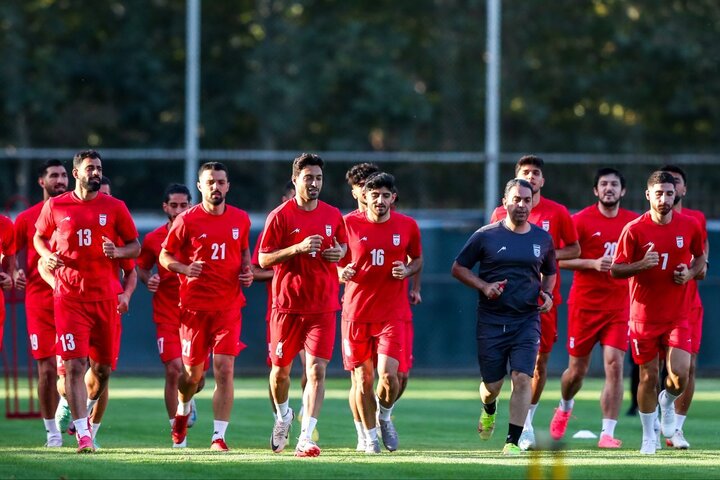
The intra-squad match served as the second such exercise under the watchful eye of Amir Ghalenoei and his technical staff, who are carefully evaluating players fitness and form while collecting performance metrics. The team will continue its preparatory program with a training camp in Turkey, with the squad scheduled to depart on May 15 for further drills and potential friendly matches before their next official fixtures.

Amir Ghalenoei

Ghalenoei Details Iran’s Grueling Path to World Cup Readiness Amid Domestic League Suspension


Tehran, Iran – Amir Ghalenoei, the head coach of the Iranian national football team (Team Melli), has offered a candid assessment of his squad’s preparations for the upcoming World Cup, revealing the significant challenges posed by the suspension of the domestic Premier League.

Speaking at the conclusion of an intra-team friendly match, Ghalenoei did not shy away from the difficulties his players have faced. “The national team’s training camp began under the most demanding of circumstances,” he stated. “The Premier League was suspended, and as a result, the players were far from their ideal physical condition.”

The coach went on to highlight specific shortcomings that have emerged during the early stages of training. “We have identified several weaknesses in our performance data,” Ghalenoei explained. “Most notably, we are falling short of global benchmarks when it comes to physical fitness and conditioning.” This admission underscores the uphill battle the coaching staff faces in bridging the gap with top-tier international opponents.

To combat this, Ghalenoei revealed that the team’s current training regimen is deliberately intense. “We have designed the exercises to maintain a high level of pressure on the players,” he said. “The goal is to ensure they reach full physical fitness precisely by the time we begin our next training camp in Turkey.” Despite the grueling schedule, the head coach praised his squad’s mentality. “The players are highly motivated and putting in tremendous effort. Looking ahead, conditions will improve once our legionnaire [overseas-based] players join the national team. With their addition, we hope to conduct training even more efficiently.”

Ghalenoei also provided a detailed roadmap of Team Melli’s travel and preparation plans. “We will depart for Turkey on May 12 and remain there for approximately twenty days,” he confirmed. During their stay in Turkey, the team is exploring options for a high-profile warm-up match. “If possible, we will arrange a training match in the United States,” Ghalenoei said, outlining two potential timelines. “We will travel to the United States about 14 to 15 days before the start of the World Cup. However, if a training match there, is not feasible, we will still head to the U.S. ten days prior to the tournament.”

These comments reveal a logistical balancing act for the Iranian federation, as they seek to secure crucial friendly matches while managing player fatigue and travel demands. With domestic football on hold, Ghalenoei’s focus remains squarely on sharpening his team’s physical edge and integrating his European-based stars in time for the world’s biggest stage.


Ghalenoei Takes Responsibility: Iran Coach Admits Preparation “Mistake” Despite Victory

DUSHANBE, Tajikistan – In a display of candid self-reflection, Iran national team head coach Amir Ghalenoei shouldered the blame for his team’s lackluster preparation following a hard-fought 3-0 victory over India in the CAFA Nations Cup 2025. While the scoreline suggested comfort, the post-match press conference revealed a coach deeply critical of his own planning.

A Frank Admission of Fault

Speaking to journalists on Monday evening, Ghalenoei began his remarks not with celebration, but with a surprising mea culpa. “Before talking about the game, I must admit to the mistake I made,” he stated unequivocally. “We should have entered this tournament with a better plan, and we needed to spend a few more training sessions in Tehran before coming here.”

Ghalenoei elaborated on the specific challenges that hampered his squad, pointing to extreme player turnover and fatigue. “We have a player who has played three games in 10 days. We had 18 changes to the squad, and we entered the CAFA Nations Cup with these conditions. With these conditions, we needed to spend at least five training sessions in Tehran and then enter the tournament. This is my fault, and I must admit it.”

This admission highlights the logistical difficulties often faced by national teams, particularly outside of FIFA-sanctioned windows, where coordinating player availability is a significant challenge.

Praising the Opposition and His Players

Turning to the match itself, the coach analyzed the tactical battle. He credited India’s disciplined defensive structure, which frustrated Iran for the entirety of the first half. “India defended with a multi-layered defense that it had created with 9 to 10 players and was looking for counterattacks,” Ghalenoei explained. “We had a good plan at the back of the field and did not give the opponent any chances.”

He noted that the breakthrough only came after his team adapted. “In the second half, we got to know them better and scored a goal. Usually, such games are more difficult because the opponent is more motivated and tries to not concede a goal by running.”

Despite his criticism of the preparation, Ghalenoei was quick to praise his players’ effort and resilience. “I thank all my players. Although they were tired, they played much better in the second half and found the solutions we needed.”

Acknowledging the New Era of Asian Football

In response to a question about Iran’s inability to break down India’s defense earlier, Ghalenoei offered a pointed commentary on the evolution of football across the continent. “Football has developed, and the era of playing with Maldives is over,” he said, referring to the once-large scorelines against lesser-ranked teams.

“You saw the Indian game; they have also improved, and everything is different. In the league, teams spend 6 weeks training and then play games to establish coordination, and yet they do not have the necessary freshness in the early weeks. We made a mistake by entering this competition with 18 changes without training, and this makes it difficult.”

His comments serve as a stark reminder that traditional Asian powerhouses can no longer expect easy matches, as formerly lower-ranked nations have significantly closed the technical and tactical gap.

Addressing the Military Salute

The press conference also touched on a moment before kickoff, where Iranian players were seen giving a military salute during the national anthem. Ghalenoei addressed the gesture with a measured response, first diverting praise to another national team.

“First of all, I would like to congratulate Iran’s U21 volleyball team on winning the World Championship title,” he began. Connecting the actions, he stated, “This is also our duty, and it is the least we athletes and footballers can do. That is it.”

The brief reply framed the gesture as one of national duty and solidarity with other Iranian athletes, deftly acknowledging the moment without delving into deeper political implications.

Ghalenoei’s frankness underscores the high expectations surrounding Team Melli. For a team with aspirations of competing with the world’s best, a struggling victory over India, despite the admitted preparation issues, is itself a cause for concern that the coach is clearly taking seriously.

Team Melli Regroups with Focus on India After Opening WinTeam Melli News in CAFA 2025

Following a positive start to their campaign, Team Melli resumed training on Saturday with light recovery exercises and warm-up maneuvers. The session’s focal point was an extensive tactical briefing led by head coach Amir Ghalenoei and his staff, meticulously preparing the squad for their crucial September 1st encounter against India.

Despite fielding a new-look lineup in the 3-1 win over Afghanistan—a match where the team was well-organized and displayed neat, passing football—Coach Ghalenoei was quick to highlight lingering gaps in their performance. The solitary goal conceded came against the run of play but once again exposed a concerning lack of concentration in defense and Team Melli’s continued vulnerability to counterattacks.

The upcoming opponent signaled their strong intentions in Group B by securing a hard-fought 2-1 victory over hosts Tajikistan. This result firmly establishes India as a formidable contender and likely presents Iran’s most significant challenge in the group stage.

In squad news, Mehdi Taremi, who made a brief cameo appearance against Afghanistan, has been granted permission to travel to Athens to finalize his transfer to Greek club Olympiacos. He is scheduled to return to Dushanbe via private jet in time to rejoin the team following the signing ceremony.

Meanwhile, defender Mohammad Khodabandehloo, who was substituted during the Afghanistan match, has suffered an injury and will depart the camp for Tehran to undergo further assessment. His replacement, Abolfazl Jalali, has been called up and is en route directly from Tehran to bolster the defensive line.

Indian Head to Head results

H / A / NMatchesWDLGoals+ / –
H22007 – 0+7
A640212 – 6+6
N32106 – 1+5
Total1181225 – 7+18
DateCompetitionH / A / NFinal scoreStadiumAttendance
24.03.2016World Cup QualifierH4 – 0Azadi Stadium – Tehran29,900
08.09.2015World Cup Qualifier / Round 2 – GROUP DA3 – 0Sree Kanteerawa, Bangalore14,500
13.05.1992Asian Cup Qualifier /A3 – 0Calcutta2,0000
07.12.1984Asian Cup / Group BN0 – 0National Stadium, Singapore10,000
07.03.1980Olympics Qualifier /N2 – 0National Stadium, Singapore11,000
13.12.1966Asian GamesN4 – 1Chulalongkorn University Stadium, Bangkok10,000
19.06.1964Olympics QualifierA3 – 1Rapindra Soria , Calcutta25,000
06.06.1964Olympics QualifierH3 – 0Amjadiah , Tehran30,000
18.12.1959Asian Cup QualifierA2 – 1Maharaja’s College : Ernakulam, India
08.12.1959Asian Cup QualifierA1 – 3Ernakulam, Kerela, India20,000
10.03.1951Asian Games / FinalA0 – 1Major Dhyan Chand National Stadium, New Delhi40,000

Editorial: Ghaleneoi’s narrative.

Although far from a perfect coach for Team Melli, Amir Ghalenoei has delivered results that cannot be ignored. His record speaks volumes about his ability to achieve success even when the team struggles to perform at its best. However, his tenure has not been without controversy, particularly regarding his interactions with the media and his press conferences.

Why TeamMelli.com Limits Press Conference Coverage

Some of our followers have questioned the limited coverage of Ghalenoei’s press conferences during official matches. We believe it is important to clarify our stance. At TeamMelli.com, our focus has always been on Team Melli itself—the players, performance, and results—not on political narratives or personal agendas.

While we strongly advocate for free speech, open dialogue, and constructive criticism, we also value impartiality and balanced reporting. Unfortunately, Ghalenoei’s press conferences often deviate from these principles, turning into platforms for personal promotion, political rhetoric, or unwarranted attacks on journalists and critics.

The Nature of Ghalenoei’s Press Conferences

Ghalenoei’s press conferences typically follow a predictable pattern. They begin with a series of formalities: thanking various individuals, praising the Team Melli staff, and expressing gratitude to his boss, Mehdi Taj, the head of FFIRI, for performing his duties. While courteous, this repetitive routine often feels more like unnecessary theatrics than substantive dialogue.

The tone then shifts to a more combative narrative. Ghalenoei frequently criticizes media personnel who dare to question the team’s performance, sometimes implying that such critiques are unpatriotic. He also references alleged personal rivalries, claiming there are “jealous” individuals working against him, though he rarely elaborates. Fans, however, care less about these personal grievances and more about the team’s performance, strategy, and results.

Why We Choose to Focus Elsewhere

In the modern world of football, where data-driven analysis, tactical insights, and performance reviews dominate discussions, Ghalenoei’s narrative feels outdated. At TeamMelli.com, we prioritize content that adds value to our readers: match reports, player statistics, historical perspectives, and tactical breakdowns. Covering Ghalenoei’s press conferences, which often lack substance, does not align with this mission.

That said, we do not completely dismiss Ghalenoei’s comments. Occasionally, he offers valuable insights or observations that are worth sharing. However, we choose to filter out the rhetoric and focus on content that genuinely matters to Team Melli fans.

A Commitment to Constructive Dialogue

Our decision is not a rejection of Ghalenoei as a coach but rather a reflection of our commitment to meaningful and objective coverage. Team Melli deserves reporting that highlights its achievements, analyzes its challenges, and celebrates its history. By staying true to this mission, we ensure that our readers receive the most relevant and impactful content.

Ghalenoei Criticizes Lack of Suitable Stadiums for International Matches


Amir Ghalenoei, the head coach of Iran’s national football team, expressed his frustration over the inadequate stadium facilities available for international matches in the country. Speaking at a pre-match press conference ahead of Iran’s game against Kyrgyzstan, Ghalenoei did not hold back in addressing the shortcomings.

“There has been a clear lack of effort and attention to this issue, which has resulted in this unfortunate situation,” Ghalenoei stated. “However, I appreciate the efforts of Zob Ahan Club and its management for preparing Fooladshahr Stadium for this match. Their work has saved us from potential embarrassment.”

Ghalenoei further mentioned that other provinces, despite having larger and more suitable stadiums, refused to cooperate with Team Melli, leaving them with limited options. “Fooladshahr has a decent pitch, but it requires proper maintenance. The turf has an expiration date and should be regularly cared for to remain usable,” he urged.

Analyzing the Opposition

Turning his focus to the upcoming game, Ghalenoei praised Kyrgyzstan’s new head coach for his deep understanding of the nation’s football system, having coached at both grassroots and youth levels. “They are a hardworking team, especially strong defensively,” Ghalenoei remarked, noting that the match would be challenging.

The coach also commended the preparation of his own team, highlighting the success of their training camp. “The conditions have been excellent, and this has been one of the best camps we’ve held. The players are motivated and training with high intensity.”

Balancing Youth and Experience

Ghalenoei acknowledged the ongoing criticism surrounding squad selection, especially regarding the balance between experienced players and younger talents. “Every time we announce a squad, we face criticism. We are working to lower the average age and bring in younger players to support the national team in the future. But these changes must be gradual and measured, ensuring we still get results while protecting the young players’ development.”

He emphasized the importance of careful selection: “Our choices are based on thorough analysis. We’ve been watching the players throughout the league, and while mistakes can happen, our process is transparent. The national team is open to everyone.”

For Ghalenoei, age is just a number. “It’s about quality and readiness. Our goal is to field a team that can combine youthfulness with strong performances. If we don’t get results, the same people who ask for rejuvenation will criticize us for not winning. So, we remain focused on our work and welcome constructive criticism, which helps us improve. Some of our critics are our own advisors.”

An Offensive Football Philosophy

Ghalenoei reaffirmed his commitment to an aggressive, offensive style of play. “Systems don’t win matches; players do. My approach is to play attacking football. My teams have a strong scoring record, and we will maintain this style, even if it costs us a result tomorrow. I can’t change my philosophy because it’s what the fans want to see. I’m here to serve the national team, and the players understand that we have to play a dynamic, spectator-friendly game.”

He also spoke highly of Mehdi Taremi, stating, “We’ve given Taremi the freedom to move across the field, supported by another striker. The players know exactly what’s expected of them.”

He also spoke about the leadership role that experienced players like Taremi play on the field, describing them as the “arm of the coaching staff” who help manage the team during matches. “We don’t expect anything extraordinary from Taremi. We just want him to be himself.”

Reflecting on Challenges

Ghalenoei touched on the challenges faced by the national team, including the strength of teams from the CAFFA region and the high expectations of Iranian fans. “If the players don’t give their best, I will hold them accountable. We’re here to bring joy to the people.”

He recalled a past experience to illustrate the dedication he expects from his players: “I remember when Ali Daei got injured during a match against Bahrain. I was the first person by his side, and he played 70 minutes with that injury. That’s the level of commitment I expect.”

Venue and Federation Challenges

Regarding the choice of venues, Ghalenoei admitted that some of the options for hosting matches were less than ideal, while there were better options “We could have played in better stadiums, but we had to make do with what was available from the people who welcomed Team Melli.”

Despite the difficulties faced, including the fact that the coaching staff have not been paid for months, Ghalenoei remained optimistic. “Our priority is the people. When they’re facing hardships, it’s not right for us to worry about our own financial issues. The Federation and management are doing their best, and so are we. The people’s happiness is what truly matters.”


Team Melli Aims for Top Spot in Group E Clash Against Uzbekistan

In tonight’s crucial match at Azadi Stadium, Team Melli faces Uzbekistan, both teams having already secured their place in the third round of FIFA World Cup 2026 qualifiers. The stakes are high as they battle for supremacy in Group E.

Key Points:

  1. Uzbekistan’s Confidence:
    • In the pre-match press conference, Uzbekistan Coach Srečko Katanec emphasized that his team feels no pressure after qualifying. They intend to take the game to Iran and aim for victory.
    • Two Uzbek players, Auston Aronov and Jalaluddin Masharipov, who play in Iran for Esteghlal and Persepolis, could pose a challenge for Team Melli.
  2. Head-to-Head History:
    • Team Melli and Uzbekistan have faced each other 13 times, with Iran holding the upper hand, having secured 10 wins against a lone defeat.
    • The previous encounter between the two teams ended in a 2-2 draw.
  3. Unbeaten Streaks:
    • Both teams have lost only to Qatar in their last 10 games, specifically during the AFC Asian Cup 2023.
    • Their overall form remains strong, with no defeats in other matches.
  4. Defensive Concerns for Team Melli:
    • Critics have raised concerns about Team Melli’s defensive system. Despite aging center-back Shoja Khalilzadeh’s inclusion, cohesion remains an issue.
    • Coach Amir Ghaleneoi has introduced young talent into the defense, but better coordination is needed.
    • Defending as a unit has not been very well executed, a job the Team Melli defensive coordinators like Rahman Rezaei, need to focus on.
  5. Midfield and Attack:
    • Defensive midfielder Mohammed Ghorbani has performed well in recent matches, while Saman Ghoddos orchestrates offensive moves.
    • Strikers Mehdi Taremi and Sardar Azmoun are poised to strike if provided with quality service.
  6. Referee and Match Details:
    • The match will be officiated by Kim Jong Hyuk from South Korea.
    • Kickoff time: 20:30 local Iran time.

In summary, Team Melli faces a critical test against Uzbekistan, and fans eagerly await an exciting clash between these two talented sides. 🌟🇮🇷⚽️


Team Melli puts five past Turkmenistan

Team Melli, showcased an exceptional performance as they triumphed 5-0 over Turkmenistan in the thrilling encounter at Azadi Stadium in Tehran, marking the third round of the 2026 FIFA World Cup Qualifiers within Group E.

Led by the proficient officiating of Japan’s Yusuke Araki, the match unfolded with Iran’s dominance evident from the onset. Ranked 20th globally, Iran swiftly asserted their superiority over Turkmenistan, solidifying their leading position in the group.

The scoring spree commenced in the 10th minute, orchestrated by Mohammad Hossein Kananizadegan, who soared high to connect with Saleh Hardani’s precise cross, netting Iran’s opening goal. Sardar Azmoun, demonstrating exceptional composure, extended the lead merely three minutes later, capitalizing on Taremi’s adept pass to find the back of the net past Turkmenistan’s custodian, Rustem Ahallyýew.

Although Iran maintained control throughout the match, the intensity of their attacks waned as the first half progressed, with the scoreline freezing at 2-0 in favor of Iran by halftime. The departure of Sardar Azmoun due to injury at the cusp of halftime saw Omid Nourafkan take the field in the second half, bringing fresh energy to Iran’s offensive maneuvers.

Resuming the onslaught in the second half, Hossein Kananizadegan showcased his prowess once more, securing his brace and Iran’s third goal with a determined finish amidst the chaos in Turkmenistan’s penalty area. The relentless pressure continued as Taremi assisted Mohebbi in the 56th minute, further widening the goal margin to 4-0 in Iran’s favor.

In the dying embers of the match, substitute Omid Nourafkan seized the moment, unleashing a stunning strike from outside the box, clinching Iran’s fifth goal. Despite Nourafkan’s earlier attempts being thwarted by Turkmenistan’s resilient goalkeeper, Rustem Ahallyýew, his perseverance ultimately paid off in a spectacular fashion.

Moreover, the match witnessed the promising debut of two young talents, Amin Hizbavi, who featured in the starting lineup, and Mohammad Reza Azadi, who made a notable impact coming off the bench. Additionally, the return of Sayyadmanesh and Saleh Hardani added depth and energy to Iran’s squad, further enhancing their formidable stature on the international stage.

Iran now leads the group and will play Turkmenistan away next.

Squad announced for Turkmenistan matches.

Iran’s national football team will face Turkmenistan in the preliminary stage of the World Cup on 21st March in Tehran’s Azadi Stadium. This match will be held at 19:30. Iran’s national football team will play the first leg against Turkmenistan on the 21st and then will travel to play away in Turkmenistan on March 26th

Iran is in Group E of the 2026 FIFA World Cup qualifiers along with Uzbekistan, Hong Kong, and Turkmenistan. The names of the players invited to the squad for this match were announced by head coach Amir Ghalenoei as follows:

Goalkeepers:

Alireza Beiranvand, Payam Niazmand, Seyed Hossein Hosseini, Aria Shakouri

Defenders:

Shoja Khalilzadeh, Hossein Kanaanizadegan, Amin Hizbavi, Saman Fallah, Ramin Rezaeian, Saleh Hardani, Milad Mohammadi, Abolfazl Jalali, Hossein Goudarzi

Midfielders:

Omid Nourafkan, Saman Ghoddos Saeed Ezzatollahi, Mohammad Ghorbani, Ali Gholizadeh, Allhayar Sayyadmanesh, Mehdi Limuchi, Mehdi Torabi, Alireza Jahanbakhsh

Forwards:

Mehdi Taremi, Javad Aghaeipour, Sardar Azmoun, Mohammad Reza Azadi , Saeed Saharkhizan , Mohammad Mohebi, Mehdi Ghaeydi,

Team Melli sweats it to narrowly defeat Hong Kong!

Team Melli beat Hong Kong 1-0 in its second match of Group C of the AFC Asian Cup Qatar 2023 at Khalifa International Stadium in Doha.

The only goal of the match was scored by Mehdi Ghayedi in the 24th minute. With this win, Iran has 6 points and is leading the group ahead of UAE with 4 points. The group decider will be against the UAE where Team Mlli needs one point to maintain the top position in the group while the UAE has to win to lead Group C.

In one of the worst performances by Team Melli in recent times, the Ghalenoei team was weak in every aspect of the professional game. Be it the passing, mental agility, tactical discipline, tackling, man marking and agility.

Since Ghalenoei is the responsible person for selecting the players to start the match and for the game plan, it was a bad mark for the Head Coach who has yet to taste defeat since he took over more than a year ago. These days have an eerily remanence of his last time at the helm of Team Melli in 2006 to 2007 ., where the team was performing near perfection until he fell in the last hurdle against South Korea in the Penalty kicks at the quarter-final of the Asian Cup 2007. Most of the criticism back then was targeted at Ghalenoei as he was accused of failing to instill discipline in his team with players acting up in the penalty kicks amongst other shortfalls in the Asian Cup 2007.

In this match, the fans were expecting a bonanza of goals, or at least as many as the team scored against Palestine last time out. But instead, and from kick-off, it seemed that the engines of Team Melli lacked oiling, perhaps needing a major overhaul.

One positive aspect of Ghalenoei’s selection is the replacement of Ezatollahi with the much more versatile Cheshmi, despite a few initial errors at the beginning of the game by the Esteghlal holding midfielder. But most of the problems were in Saman Ghoddos who was the MVP of the last game, but in this one, he decided to have a day off! His passing, vision, and dynamism were truly lacking. There was no help from Jahanbakhsh either, Ghaedi was perhaps the only bright star of the whole team and his goal was a testament to his enterprise and energy.

Mehdi Taremi has not done anything to mitigate the fears of the fans who believe that he is not a man for big occasions. Taremi, regrettably, is looking like an amateur league player in Team Melli Jersey. He has yet to score or provide an assist in the last two matches. He seemed to be unaware of Shahriyar Moghanlou’s existence in the same team or maybe they were not on speaking terms. There was little passing and understanding between the two forwards. That in itself brings on the question of why Moghanlou if Azmoun is fit and ready.? Nothing of worth came from Jahanbakhsh either.

If that was bad, the worst line of the team was undoubtedly the defense line. How lucky Team Melli was in facing a team that could not shoot straight in Hong Kong? From the shakey Beiranvand to the clumsy Kanani, and wayward Mohammadi, to the disorganization and lack of understanding between the players in a systematic defense, all those were a recipe for disaster. Hong Kong, despite the gallant attempts, just lacked the quality to take advantage of all the gifts awarded to them by the benevolent Team Melli defense.

Iran’s defense is truly on shaky ground. They were supposed to have an easy day out supplementing the offensive line, but the reality is that they were quite lucky not to concede goals. That might not be the case next time or in the knockout stages where it is quite likely that defensive blunders will cost Team Melli dearly.

Ghalneoei himself did not fare well either. He was visibly angry on the bench and at times covering his face in embarrassment. If we have to go by the cliche about ‘Second Halves’ being the coach’s half, then the Norwegian Jorn Andersen beat Ghalenoei hands down. He skillfully reorganized his team in the second half, found the weakness of the Iran team, and tightened his central defense while exerting pressure on the flanks to prevent danger from Iranian wingers and half-backs., The only thing that he fell short of, as mentioned before, was the lack of finishers in his team in front of the Iran goal.

Hong Kong has to be credited for this performance.