Tag: Iran

Dragan Skocic reigns from Tractor

Dragan Skočić, the Croatian head coach of Tabriz’s “Tractor” club, has resigned.

The club’s press service released information on this matter.

The 57-year-old specialist left his position at his own request.

D. Skočić had been coaching the “Tractor” club since 2024. The team won the Iranian Pro League under his leadership in the 204/2025 season.

According to the information, Mohammad Rabiei has been temporarily appointed to lead the Tabriz club. A contract with him, valid until the end of the season, has been signed.

Currently, “Tractor” is in 2nd place in the Persian Gulf League with 35 points and has qualified for the Knock out round of the AFC Champions League Elite currently sitting in the third place.
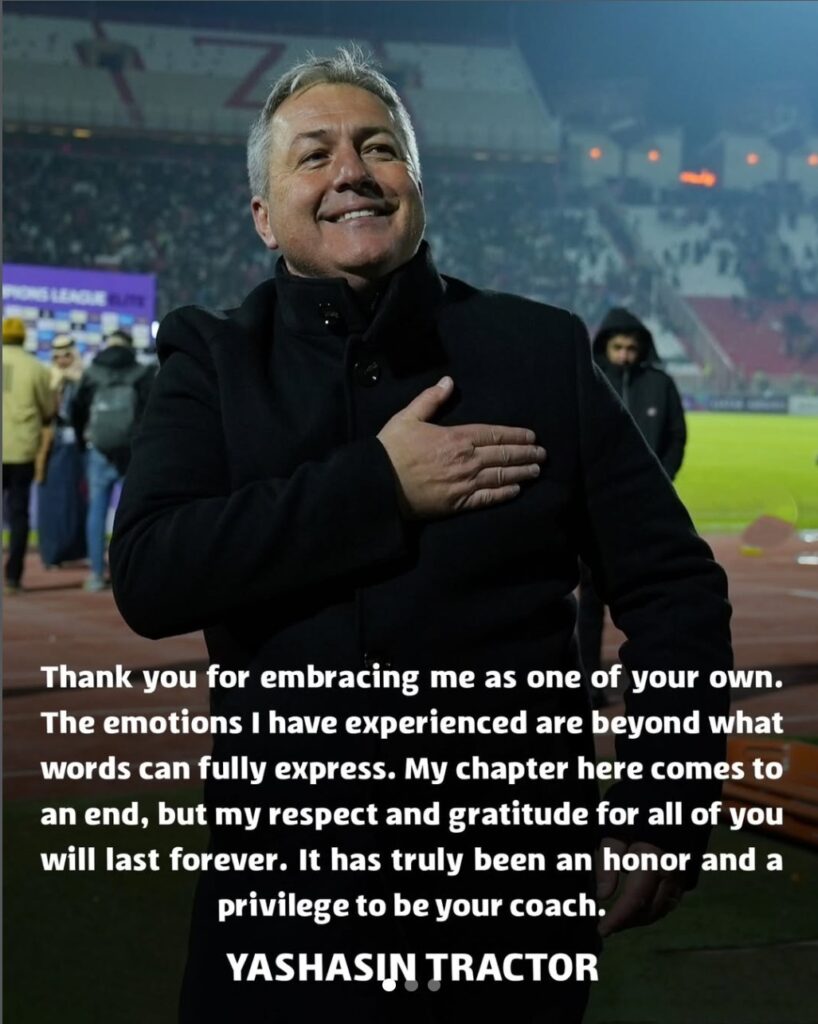
According to inside reports, the dispute erupted between Skocic and veteran defender Shojae Khalilzadeh. Described by insiders as a perennially controversial figure rarely far from discord, Khalilzadeh’s conduct during and after the match is understood to have crossed a line for the Croatian tactician. It is believed that Skocic subsequently issued an ultimatum to the club’s owner: either he remains as coach, or Khalilzadeh stays in the squad, but the two could not co-exist.

While the player in question reportedly issued an apology for his behavior in an attempt to mend fences, the olive branch was not enough. Skocic ultimately decided against continuing in his role, holding firm to his principles despite the club’s efforts to resolve the internal rift.

A Legacy Forged Against the Odds

While his departure from Tractor is mired in conflict, Skocic’s broader legacy in Iranian football tells a story of remarkable resilience and achievement. He leaves behind a narrative defined by an extraordinary rise through the ranks.

Skocic’s journey in Iran began in the lower divisions, where he quietly honed his craft far from the glitz of the Persian Gulf Pro League. His systematic approach and tactical acumen eventually propelled him to the pinnacle of Iranian football: the helm of Team Melli (the Iranian national team).

It was in the national dugout that Skocic achieved the near-impossible. Taking charge under a cloud of administrative chaos and amidst the most difficult of circumstances, he successfully navigated Iran through a treacherous qualification campaign. He ultimately secured the team’s place in the FIFA World Cup 2022, a feat that cemented his name in the memories of Iranian fans and solidified his reputation as a coach who could deliver results when it mattered most.

His time at Tractor may have been brief and ended in discord, but Skocic’s impact on Iranian football—particularly his guiding hand in taking Team Melli to the world stage—will remain a significant chapter in the sport’s history.
FFIRI President Details World Cup Preparations Amid Challenges.


In a comprehensive update on Iran’s preparations for the 2026 FIFA World Cup, Football Federation President Mehdi Taj addressed critical issues, including friendly match negotiations, visa denials for staff, and logistical planning for the team’s camp in the United States.

Friendly Matches: Portugal and Spain in Sight

Taj confirmed that efforts to secure high-profile friendly matches are advancing. “We aimed to arrange matches for March and June [early spring],” he stated. “For June, we targeted European opponents and have held significant talks with Portugal. This has progressed considerably, and within the next two to three days, we should sign a memorandum of understanding.”

He indicated that Portugal’s second friendly match in that window could be against Iran. Furthermore, Taj revealed ongoing coordination with Qatar for the earlier March window, where Spain and Egypt are scheduled to play. “Spain will come to Qatar and likely play them first, then potentially face us,” he added.

While talks have also been held with Scotland and Iceland, Taj emphasized that no agreements are yet final. “None are definitive at the moment. We must have replacement plans and alternative options ready.”

Visa Denials and Contingency Planning

Addressing the sensitive issue of U.S. visa refusals for some national team members, Taj outlined the federation’s proactive stance. “After consultations, we decided to send three representatives to the draw. We have started identifying replacement options for the World Cup squad,” he explained. “If, for any reason, a player is told he cannot come, we must have an alternative ready.”

He cited the case of team official Saeed Al-Hawie, who was denied a visa, possibly due to his professional history. “Those who may have served in certain capacities could face problems,” Taj noted. He confirmed that Iran has protested the matter to FIFA, suggesting the global body “could have stood up to the United States more firmly.”

Taj also mentioned a joint protest with Egypt regarding the official naming of their World Cup group stage match, which he labeled “unreasonable and supportive of a specific political group,” vowing to pursue the issue.

U.S. Training Camp and Ticket Sales

Regarding Team Melli’s base camp in the United States, Taj identified a preferred location. “We visited a camp approximately 56 kilometers from Los Angeles. The team can reach the city in under an hour, and it is only 12 minutes from the airport,” he said, highlighting its logistical advantage for Iran’s third group match in Seattle. “We hope no complications arise and this camp is secured for us.”

On ticketing, Taj stated that the average ticket price is around $500. While fans inside Iran will not be granted visas for the tournament, the federation plans to facilitate sales for the diaspora. “We must prepare to sell approximately eight thousand tickets per match for our supporters. Iranians living abroad will be able to purchase them through the federation’s website.”


FIFA Days
23–31 March 2026
1–9 June 2026

FIFA World Cup 2026
11 June – 19 July 2026

Group G

June 15, 2026 Belgium Match 16 EgyptLumen FieldSeattle
June 15, 2026Iran Match 15 New ZealandSoFi StadiumInglewood
June 21, 2026Belgium Match 39 IranSoFi StadiumInglewood
June 21, 2026New Zealand Match 40 EgyptBC PlaceVancouver
June 26, 2026Egypt Match 63 IranLumen FieldSeattle
June 26, 2026New Zealand Match 64 BelgiumBC PlaceVancouver

Guide to Group G at World Cup 2026

Guide to Group G at World Cup 2026

Dan Goldfarb/The Athletic By The Athletic UK Staff

Dec. 5, 2025Updated Dec. 6, 2025 9:41 pm GMT+3

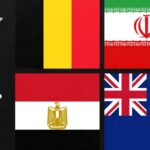
The World Cup draw is complete and Belgium, Egypt, Iran and New Zealand have been drawn together in Group G.

How did the teams qualify? How do the different countries play? And who are the key protagonists in the group?

Group G

Games in: Los Angeles, Seattle, Vancouver, Canada

See full draw results


The schedule: Games, venues, dates and kick-off times

Matchday 1

  • Monday, June 15: Iran vs New Zealand (9pm ET, 6pm PT, 2am BST+1) — SoFi Stadium, Los Angeles
  • Monday, June 15: Belgium vs Egypt (3pm ET, 12pm PT, 8pm BST) — Lumen Field, Seattle

Matchday 2

  • Sunday, June 21: Belgium vs Iran (3pm ET, 12pm PT, 8pm BST) — SoFi Stadium, Los Angeles
  • Sunday, June 21: New Zealand vs Egypt (9pm ET, 6pm PT, 2am BST+1) — BC Place, Vancouver

Matchday 3

  • Friday, June 26: Egypt vs Iran (11pm ET, 8pm PT, 4am BST+1) — Lumen Field, Seattle
  • Friday, June 26: New Zealand vs Belgium (11pm ET, 8pm PT, 4am BST+1) — BC Place, Vancouver

Belgium

Dan Mullan/Getty Images

How did they qualify?

With relative ease. Despite two draws against North Macedonia and another with Kazakhstan delaying the inevitable, Belgium still went unbeaten across their eight games.

It was never going to be a tough group for Belgium, given it’s been a decade since they last lost a World Cup or European Championship qualifying game. That defeat came against Wales, but the Belgians paid them back in this qualification competition. The Welsh were their closest challengers for top spot, and will be in the UEFA playoffs in March, but got beaten 4-3 and then 4-2 in the two meetings.

What is their World Cup pedigree?

Belgium first made a dent in a World Cup in 1986, finishing fourth. Argentina’s Diego Maradona prevented them reaching the final but Enzo Scifo was named the young player of the tournament, before helping them get out of the group stage again four years later.

It was not until the 2014 World Cup that Belgium were considered a powerful nation once more but they lost to Argentina again in the quarter-finals that year and then at Russia 2018, when they were among the favourites, they lost to eventual champions France beat them in the semi-finals. Both 1-0 defeats were seen as missed opportunities for a team of such quality. Belgium’s failure to make it out of the group in 2022 was widely regarded as the end of that chapter for a golden generation of players who had grown old together.

Who is the coach?

Rudi Garcia. The Frenchman took over in January from Domenico Tedesco, who failed to build on Roberto Martinez’s six-year tenure, half of which they spent in first place in the FIFA world rankings.

Garcia, who oversaw a 4-3 aggregate play-off victory against Ukraine in March to keep Belgium in the top tier of the UEFA Nations League, made his name in club management by winning the French title with Lille in 2011 and finishing second in Italy’s Serie A twice with Roma in 2014 and 2015. Known for his attractive style of play, he also took Lyon to the Champions League semi-finals in 2020 by beating Manchester City but his star has faded in recent years after Napoli’s form dropped off after he was appointed in summer 2023.

The 61-year-old Frenchman’s previous role had been at Saudi Pro League club Al Nassr, but the two parties mutually parted ways after 10 months with the team trailing Al Ittihad in the table and reports of an uneasy relationship between Garcia and star player Cristiano Ronaldo.

How do they play?

Garcia has stuck with a 4-3-3 shape so far, in contrast with Tedesco’s regular switches of formation. Right-back Thomas Meunier has praised how he has breathed fresh optimism into the group with a major focus on possession and counter-pressing. Garcia has been bold in giving opportunities to several new faces, including Rangers midfielder Nicolas Raskin and Club Brugge full-back Joaquin Seys.

Other defenders, such as Sporting CP’s Zeno Debast, Koni De Winter of Milan and Brighton & Hove Albion’s Maxim De Cuyper are taking on the mantle left by the ‘golden generation’ back line featuring Vincent Kompany, Toby Alderweireld, Jan Vertonghen and Thomas Vermaelen. Garcia is blessed in terms of his wide options. Jeremy Doku, Leandro Trossard, Charles De Ketelaere, Alexis Saelemaekers and Malick Fofana have all been utilised, but it is Doku who is emerging as the key threat.

Who is their key player?

Doku. The 23-year-old Manchester City winger has taken a step up at club level this season and looks to be taking on more responsibility with Belgium, too. He started all eight games during qualification, scoring five goals and assisting three, as he switched between the left and right flanks. Napoli midfielder Kevin De Bruyne, once he returns from the serious hamstring injury suffered in late October, could still be their talisman with his vision as a passer but is slowing down at age 34 (he’ll turn 35 during the World Cup). Doku is the player Belgium look to feed most often now, because of his unrivalled one-v-one ability.

What else should we know about them?

They have Thibaut Courtois back in goal after his controversial refusal to play under Tedesco. The Real Madrid goalkeeper fell out with their previous manager and said in August 2024 that he would not add to his then total of 102 caps as long as he remained in the job. Fortunately for Courtois, he only had to wait just over six months and was brought back into the fold post-Euros after talks with new coach Garcia. However, Belgium have had internal problems previously, with big-name players such as De Bruyne and Vertonghen clashing at the last World Cup over the midfielder’s comments about their aging defence.

Jordan Campbell


Egypt

NurPhoto via Getty Images

How did they qualify?

Egypt did not lose a single game in Group A in the African qualifiers, winning eight and drawing twice.

However, they only confirmed their qualification in October, by topping the group after beating Djibouti 3-0 with two goals from Mohamed Salah.

Burkina Faso were tailing them throughout the qualifiers, but the 0-0 draw between the sides in Ouagadougou in September maintained Egypt’s five-point gap and solidified their status at the top of the group.

FIFA MEN'S WORLD CUPTop FIFA MEN’S WORLD CUP Stories
2026 World Cup final set for 3pm ET kick-off: Full tournament schedule

Determining hardest, easiest groups, best games and Golden Boot winner at the 2026 World Cup

This was a World Cup draw to whet the appetite for a tournament full of stars and intrigue

What is their World Cup pedigree?

Despite being the first Arab and African nation to participate in the World Cup, in 1934, Egypt has never won a match at the tournament.

Granted, they only qualified two times after that, in 1990 and 2018, with World Cup qualification being a hoodoo in the period in between. Egypt were pitted in the group of death in the 2002 and 2006 qualifiers, lost a tie-breaker against Algeria in 2009, and broke down against Ghana in the play-off round of the 2014 qualifiers.

The 2018 edition was a disappointment, with Salah entering the tournament injured and the team losing their three matches in the group stage.

Who is the coach?

The legendary striker, Hossam Hassan.

The three-time AFCON winner is one of the best centre-forwards in Egypt’s history. He holds the record for the most goals scored for the national team (69) and is only bettered by Ahmed Hassan (no relation) in terms of the number of appearances.

Hassan, who played in the 1990 World Cup, won numerous domestic trophies alongside the CAF Champions League in 2002 with Zamalek.

However, he had to cross the biggest divide in Egyptian football to join Zamalek. As a young player, Hassan was brought up through Al Ahly’s youth ranks, and went on to become one of the best players in the club’s history.

His managerial career has mainly been inside Egypt, apart from a brief spell with Jordan’s national team in 2013-14.

How do they play?

In their 4-3-3, Salah and Manchester City’s Omar Marmoush flank the front line. It is therefore understandable why Egypt focus on attacking the wide areas, with Salah having the freedom to drop and roam.

Zizo operates as the right-sided midfielder, and his attacking profile complements Salah’s tendency to drop and create from midfield.

The left No 8 role has recently been occupied by Trezeguet, but Emam Ashour’s return from injury might alter the team’s starting line-up.

Ashour’s profile is more suited to the midfield role, and he offers something different than the ex-Aston Villa winger.

Who is their key player?

The man needs no introduction.

Salah has been the key player in Egypt’s national team for many years now, and unlike other Egyptian legends, he has not played with the strongest of squads.

Despite that, he managed to guide Egypt to the 2018 World Cup, ending the country’s 28-year wait to appear at the finals. However, the Liverpool forward’s shoulder injury in the 2018 Champions League final against Real Madrid affected the national team going into the tournament.

Then, his penalty miss in the shootout in the play-off round against Senegal in 2022 harmed Egypt’s chance of reaching the 2022 World Cup.

In 2026, he will be hoping to help open a new page in his country’s World Cup history.

What else should we know about them?

By the World Cup, Salah might be in position to surpass his head coach as the top goalscorer in Egypt’s history.

Currently, Salah is on 63 goals – six away from Hassan – and can increase his tally in the upcoming AFCON.

Yet, it would be a greater achievement if Salah can couple that with winning AFCON and helping Egypt reach the knockout stage of the World Cup for the first time in their history.

Ahmed Walid


Iran

Markus Gillar/Getty Images

How did they qualify?

There were a few bumps along the way and some unconvincing performances, but ultimately Iran made it through without too many alarms and with two games to spare — their only defeat of the entire 16-match, two-round qualifying campaign came against Qatar, after safe passage had already been sealed.

What is their World Cup pedigree?

This will be their fourth World Cup in a row, meaning they will have now participated in more tournaments since 2014 than in their entire history before that. Iran are yet to make it past the group stage, though, with their best performance coming in 2018, when they dramatically beat Morocco and drew with Portugal but a narrow defeat by Spain kept them from the knockouts. Last time, they were comfortably beaten by England and the United States, their only success coming thanks to goals in the 98th and 101st minutes against a Wales side down to 10 men by that stage.

Who is the coach?

This will be their first World Cup since 2006 without Carlos Queiroz in the dugout, his successor Amir Ghalenoei having taken over for a second spell in charge following that 2022 World Cup. On paper, Ghalenoei’s record is pretty good: qualification was relatively straightforward and his win percentage is up in the 70s. But there is plenty of dissatisfaction with his approach, not least that he still relies on the old guard — players in their thirties such as Alireza Jahanbakhsh and former Brentford midfielder Saman Ghoddos.

How do they play?

Do not expect attractive, expansive football. Under Queiroz, they were very solid: no frills, two banks of four with a couple of forwards, usually Mehdi Taremi and Sardar Azmoun. It largely worked, and it continues to work in terms of results, but there has been a desire to offer something slightly more interesting and attacking, which in theory should have come with a younger generation of players emerging, but neither has really materialised.

Who is their key player?

It is still probably Taremi, now scoring goals for Greek champions Olympiacos after a season in Italy with Inter. It will be fascinating to see how they deal with Jahanbakhsh if he does not find a club before the tournament starts. On talent, he would still probably be in their strongest team, but surely they cannot pick someone who, by the time Iran’s first group game kicks off in June, will not have played club football for over a year. In terms of young talent, watch out for midfielder Mohammad Hosseinnejad and striker Kasra Taheri.

What else should we know about them?

Of all the teams at the tournament who will have to deal with outside distractions, Iran surely have the most. The issue of how many of their fans will even be allowed into the United States to watch their games is something that will run and run from now until the whole thing starts in June. And also remember that at the previous World Cup three years ago, Iran’s players protested against the repression of protests back home. Will all of that be too much for them to actually perform as they can?

Nick Miller


New Zealand

Sebastian Frej/Getty Images

How did they qualify?

Since Australia became Asian for footballing purposes ahead of South Africa 2010, New Zealand are the game’s big hitters in Oceania. A bye into the second stage of that confederation’s qualifying competition for the side ranked 86th in the world by FIFA, was followed by three wins from three, 19 goals scored and one conceded as New Zealand breezed past Tahiti, Vanuatu and Samoa. A 7-0 thrashing of Fiji in a third-phase semi-final and then a 3-0 defeat of New Caledonia sealed their World Cup place at a canter.

What is their World Cup pedigree?

Modest. This will be New Zealand’s third appearance at the finals, though each has represented progress of various kinds. Their debut came in 1982, the first edition that was expanded from 16 teams to 24. It started with New Zealand’s first World Cup goals, coming in a 5-2 opening defeat by Scotland. Their group-stage exit was sealed by defeats to the Soviet Union (3-0) and Brazil (4-0). Then in 2010, Winston Reid’s stoppage-time equaliser against Slovakia gave them their first World Cup point. They also led a match in the finals for the first time, during a 1-1 draw against Italy, before finishing third in their four-team group after a goalless draw with Paraguay. New Zealand were the only team to finish that South Africa World Cup unbeaten (eventual winners Spain ost their opening group match against Switzerland).

Who is the coach?

Darren Bazeley will be familiar to some Watford fans. The English-born full-back made almost 300 appearances for that club to begin a senior playing career during which he eventually swapped EFL side Walsall for the Auckland-based New Zealand Knights in the Australian A-League 20 years ago. His subsequent coaching career led him to joining the New Zealand setup as under-17s assistant in 2009 — his only break from the national team since being a stint in MLS with Colorado Rapids and A-League at Newcastle Jets. Come July 2023, Bazeley was appointed New Zealand’s head coach for this World Cup cycle, while simultaneously leading the under-23s at the 2024 Olympics. Bazeley’s side were knocked out in the group stage there, finishing behind the United States and hosts France, who went on to win silver medals.

How do they play?

Despite New Zealand’s limited resources and lowly FIFA ranking, Bazeley has his side trying to play possession football. They use a 4-2-3-1 formation and look to build up without the default option of whacking long balls up to the obvious focal point of Nottingham Forest striker Chris Wood. A 1-0 defeat in Poland and 1-1 draw in Norway — albeit the latter was against a team without Erling Haaland — during their two October friendlies showed this team can make that plan work to a point. The greater difficulty was taking the chances they did create, especially when falling to someone other than their No 9. Wood’s involvement in those two friendlies was limited to 68 minutes.

Who is their key player?

A very simple answer to this. Shall we say it all together? Yes, it’s Wood. The 33-year-old, long-time Premier League striker with West Brom, Leicester, Burnley, Newcastle and now Forest is New Zealand’s highest-profile player, the country’s all-time leading scorer with 45 goals and the joint highest appearance-maker alongside former Eredivisie defender Ivan Vicelich, with 88. The tall, rangy, dangerous finisher is also their captain. Wood has already been prolific in the English top flight, and has scored at European level this season. Come the summer, he will aim to get his first goal at a World Cup.

What else should we know about them?

New Zealand’s All Whites nickname came about when the team appeared in a — no prizes here — all-white kit for the first time in the lead-up to that World Cup debut in Spain. No surprises either that it is a soccer counterpoint to the continuing legend of New Zealand’s rather more successful All Blacks rugby union squad. However, in recent years there have been discussions over cultural diversity and representation, and whether the name should continue to be used. More colourful kits for match officials in modern football at least ensure New Zealand can have an all-black change strip these days.

AFC U23 Asian Cup 2026 Draw.

Kuala Lumpur: The teams aiming for glory at the AFC U23 Asian Cup™ Saudi Arabia 2026 learnt their challengers following the Official Draw at the AFC House in Kuala Lumpur on Thursday.

The 16-strong cast was divided into four groups for the seventh edition of the tournament that will kick off on January 6, 2026.

Hosts and 2022 champions Saudi Arabia will have 2018 runners-up Vietnam, Jordan, and debutants Kyrgyz Republic for company in Group A.

Two-time and defending champions Japan will have to contend with 2024 hosts Qatar, United Arab Emirates, and Syria in Group B.

Hoping to deny Uzbekistan, who lifted the trophy in 2018, progress from Group C will be 2020 champions Korea Republic, Iran, and Lebanon, who will be making their first appearance at the Finals.

Group D top seeds and 2013 champions Iraq will have to overcome the challenge of Australia, Thailand, and China.

The top two finishers of each group will progress to the Knockout Stage, with the Final showdown to be contested on January 24, 2026.


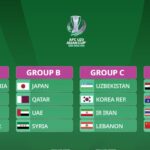
Draw Result 
Group A: Saudi Arabia, Vietnam, Jordan, Kyrgyz Republic
Group B: Japan, Qatar, United Arab Emirates, Syria
Group C: Uzbekistan, Korea Republic, Iran, Lebanon
Group D: Iraq, Australia, Thailand, China

Ghalenoei Takes Responsibility: Iran Coach Admits Preparation “Mistake” Despite Victory

DUSHANBE, Tajikistan – In a display of candid self-reflection, Iran national team head coach Amir Ghalenoei shouldered the blame for his team’s lackluster preparation following a hard-fought 3-0 victory over India in the CAFA Nations Cup 2025. While the scoreline suggested comfort, the post-match press conference revealed a coach deeply critical of his own planning.

A Frank Admission of Fault

Speaking to journalists on Monday evening, Ghalenoei began his remarks not with celebration, but with a surprising mea culpa. “Before talking about the game, I must admit to the mistake I made,” he stated unequivocally. “We should have entered this tournament with a better plan, and we needed to spend a few more training sessions in Tehran before coming here.”

Ghalenoei elaborated on the specific challenges that hampered his squad, pointing to extreme player turnover and fatigue. “We have a player who has played three games in 10 days. We had 18 changes to the squad, and we entered the CAFA Nations Cup with these conditions. With these conditions, we needed to spend at least five training sessions in Tehran and then enter the tournament. This is my fault, and I must admit it.”

This admission highlights the logistical difficulties often faced by national teams, particularly outside of FIFA-sanctioned windows, where coordinating player availability is a significant challenge.

Praising the Opposition and His Players

Turning to the match itself, the coach analyzed the tactical battle. He credited India’s disciplined defensive structure, which frustrated Iran for the entirety of the first half. “India defended with a multi-layered defense that it had created with 9 to 10 players and was looking for counterattacks,” Ghalenoei explained. “We had a good plan at the back of the field and did not give the opponent any chances.”

He noted that the breakthrough only came after his team adapted. “In the second half, we got to know them better and scored a goal. Usually, such games are more difficult because the opponent is more motivated and tries to not concede a goal by running.”

Despite his criticism of the preparation, Ghalenoei was quick to praise his players’ effort and resilience. “I thank all my players. Although they were tired, they played much better in the second half and found the solutions we needed.”

Acknowledging the New Era of Asian Football

In response to a question about Iran’s inability to break down India’s defense earlier, Ghalenoei offered a pointed commentary on the evolution of football across the continent. “Football has developed, and the era of playing with Maldives is over,” he said, referring to the once-large scorelines against lesser-ranked teams.

“You saw the Indian game; they have also improved, and everything is different. In the league, teams spend 6 weeks training and then play games to establish coordination, and yet they do not have the necessary freshness in the early weeks. We made a mistake by entering this competition with 18 changes without training, and this makes it difficult.”

His comments serve as a stark reminder that traditional Asian powerhouses can no longer expect easy matches, as formerly lower-ranked nations have significantly closed the technical and tactical gap.

Addressing the Military Salute

The press conference also touched on a moment before kickoff, where Iranian players were seen giving a military salute during the national anthem. Ghalenoei addressed the gesture with a measured response, first diverting praise to another national team.

“First of all, I would like to congratulate Iran’s U21 volleyball team on winning the World Championship title,” he began. Connecting the actions, he stated, “This is also our duty, and it is the least we athletes and footballers can do. That is it.”

The brief reply framed the gesture as one of national duty and solidarity with other Iranian athletes, deftly acknowledging the moment without delving into deeper political implications.

Ghalenoei’s frankness underscores the high expectations surrounding Team Melli. For a team with aspirations of competing with the world’s best, a struggling victory over India, despite the admitted preparation issues, is itself a cause for concern that the coach is clearly taking seriously.

Malaysia’s withdrawal from Cafa Nations Cup disrupts tournament plans


The Central Asian Football Association (CAFA) has expressed strong disapproval over the Football Association of Malaysia’s (FAM) last-minute decision to pull out of next month’s CAFA Nations Cup, disrupting well-advanced tournament preparations.

In a strongly worded statement, CAFA clarified that Malaysia’s participation in the August 29–September 8 tournament in Tajikistan had been confirmed long in advance, with FAM fully aware of the schedule from the outset. “Those dates have never been changed from the beginning,” CAFA emphasized, dismissing FAM’s justification for withdrawal as unconvincing.

While FAM cited concerns over player availability—since the tournament slightly overlaps with non-FIFA windows—CAFA pointed out that the competition allows flexible squad registration, enabling teams to call up players on a match-by-match basis. “This system was designed to maximize participation, even allowing key players to join later if initially withheld by clubs,” the statement read.

FAM, however, claimed that the adjusted dates—which now fall partly outside the FIFA window—created “significant challenges” for assembling a full-strength squad, particularly with Malaysia’s overseas-based players in Spain, Argentina, Colombia, and Japan.

A Questionable Reversal of Commitment

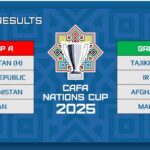
Malaysia’s sudden withdrawal raises serious questions about FAM’s professionalism and foresight. The draw had already placed Harimau Malaya in Group B alongside Tajikistan, Iran, and Afghanistan, with head coach Peter Cklamovski initially expressing enthusiasm about facing strong opponents like Iran.

Yet, just weeks before the tournament, FAM and Cklamovski performed an abrupt about-face, citing logistical and player-release issues that should have been foreseeable from the start. If player availability was truly a dealbreaker, why commit to the tournament in the first place? Either FAM failed to properly assess the calendar constraints—demonstrating poor planning—or it is using the FIFA window as a convenient excuse for deeper internal shortcomings.

Cklamovski’s remarks further strain credibility. After previously welcoming the challenge, he now claims that assembling foreign-based players was “not realistic,” blaming travel, recovery time, and budget constraints. Yet, other participating nations—many with players also based abroad—have managed to adapt.

A Pattern of Unreliability?

Malaysia’s late exit not only disrupts the competition but also damages its own reputation. CAFA had structured the tournament expecting Malaysia’s presence, and its withdrawal forces unnecessary adjustments. This is not the first time FAM has backed out of commitments—raising concerns over whether it takes international football obligations seriously.

While FAM frames its decision as protecting player welfare, the timing suggests a lack of due diligence. If the FIFA calendar was indeed the primary concern, why wait until after the draw to withdraw? The move reeks of indecisiveness or, worse, a federation that fails to honor its commitments.

Ultimately, Malaysia’s absence may not diminish the tournament’s quality—but it certainly highlights FAM’s unreliability. If Malaysian football aspires to greater regional and global relevance, such erratic behavior must be addressed. Last-minute withdrawals harm not only organizers but also the nation’s standing in the football community.

‘It’s offensive’: voices from Iran as fans face 2026 World Cup travel ban


The Guardian
London.

After Donald Trump banned Iranians from entering the US, one of the co-hosts, there are different views on what should be done

“It’s offensive for any football fan to be prevented from participating in the World Cup, not just Iranians,” Ali Rezaei of Tehran’s Borna news agency says. In March, the national team became the second to qualify for the 2026 World Cup that will be hosted by Canada, Mexico and the United States. In June, Donald Trump authorised the dropping of bombs on Iran and hit the country with a travel ban. As things stand, while the national team will be able to enter the US next summer, fans – and perhaps media – will not.

Residents of Tehran and other cities may have had enough to deal with of late, but still, being barred from entry stings, even if Iranians have long found it difficult to get into the US. “If the US government has issues with the Iranian regime for any reason, it should not result in discrimination against Iranian citizens,” Behnam Jafarzadeh, a writer for the leading sports site Varzesh3, says. “If someone hasn’t committed any illegal activity, why should they be punished? It’s not just about the World Cup – the policy needs to change in general.”

What can Iran do? “Boycotting the World Cup is not a solution,” Siavash Pakdaman, a Tehran-based fan, says. “Refusing to play on US soil would be a dangerous precedent – any host country could start excluding teams it has issues with. Just as the Iranian delegation can and should be present at the United Nations in the US, the Iranian team should also play on American soil if the draw requires it – without relocation.”

There is a feeling that staying away would not make much difference anyway. “It would only deprive the national team of the opportunity to participate in a major tournament and would ultimately hurt Iran more,” Jafarzadeh says. “It might even be welcomed by some American officials. It could make headlines briefly, but once the tournament starts, it will be forgotten and will have achieved nothing.”

Questions have been asked – including in Iran, whose supreme leader, Ayatollah Ali Khamenei, has long banned competing against Israeli athletes – about what the international reaction would have been if Qatar had banned citizens from certain nations from attending the 2022 World Cup.

“If the USA makes it difficult for football fans to attend, then changing the host country is necessary,” Rezaei says. “Doing so would harm the USA’s reputation, not the World Cup’s. If strict entry rules remain, we should focus on protecting football. This is supposed to be a celebration of sport.”

Jafarzadeh is not confident that the competition could be taken away from the busiest of the three hosts. “It is not a challenge Fifa and [its president Gianni] Infantino would want to take on.” Perhaps there is another way. “Fifa should use all of its influence to push for a suspension of this policy at least during the World Cup.”

Fifa may find it easier to place Iran in Canada or Mexico and hope that Iran don’t make it to the latter stages, when there would have to be a game in the US. “Playing in Mexico or Canada is not a real solution – it just ignores the actual problem,” Rezaei says.

Many expect it to happen anyway. “Canada has a large Iranian immigrant population, although some of them are opponents of the Iranian regime and the national team can’t count on their support,” Jafarzadeh says. “Mexico is probably a more attractive and less controversial destination for the team.”

That is another question. The Iranian-American community is more than a million strong yet many of these headed west before, or in response to, the Islamic Revolution of 1979.

“It seems that many Iranians who oppose the government consider the national team to be a representation of the regime – which I believe is wrong,” Pakdaman says. “And since a larger number of these opponents live in the US, the team may face pressure from the audience during the matches. Of course, I hope my analysis is wrong.”

Jafarzadeh, who went to the World Cups in Russia and Qatar and would love to go to the United States, says: “Some see the team as one that represents the regime, and this sentiment is even stronger among Iranians living abroad. Of course, the war with Israel has stirred feelings of patriotism among many Iranians, but I’m not sure if this will translate into support for the national team. We’ll have to wait and see how things unfold in the coming months.”

That there is time is perhaps a small reason for optimism that things could change. Iran is one of 19 countries subject to a full or partial US entry ban. Several of the others retain hope of qualifying for the first 48-team World Cup, including Sudan, Sierra Leone, Venezuela and Haiti.

“Considering that there is almost a year left until the 2026 World Cup, there is a possibility that the situation may stabilise,” says Isa Azimi, a columnist and translator, regarding Iran’s situation, though he is not confident. “Despite claims of separating politics from football, Fifa has shown that it is not particularly independent when facing major political powers.”

Especially when Infantino appears to prize his close relationship with President Trump. “If Fifa considers itself a global body independent of governments, it must stand up to such laws and not allow politics to contaminate the world of sports,” Pakdaman says. “Of course, we all know that, unfortunately, such contamination exists – especially when one side of the issue is a superpower that answers to no one. It is Fifa’s duty to treat all member countries equally, but will that actually happen?”


CAFA Nations Cup to be held in August to September 2025

The second bi-annual CAFA Nations Cup 2025 will be hosted by Uzbekistan and Tajikistan starting from August 29th until September 8th.

According to the official statement of the CAFA press service, in 2025 football fans will witness another continental tournament – the “CAFA Nations Cup-2025”. Not only Central Asian countries, but also new guest national teams will participate in this prestigious tournament. It has been officially confirmed that the national teams of Uzbekistan, Iran, Kyrgyzstan, Tajikistan, Afghanistan, and Turkmenistan, as well as invited teams Malaysia and Oman, will take part.

Such a wide format of the tournament is being held for the first time, making it even more interesting. The participation of invited Malaysia and Oman, who are serious opponents in their regions, will undoubtedly increase the level of competition. There will be special attention paid to how these teams perform on the CAFA field.

The draw ceremony will be held on July 3 in the capital of Tajikistan – Dushanbe. According to the unique format of the tournament, participants will be divided into two groups: all matches of Group “A” will take place in Uzbekistan, and Group “B” matches will be held in Tajikistan. This will give football fans in both countries the opportunity to experience the live tournament atmosphere.

The tournament is set to start on August 29. Exciting matches will continue until September 8, and the continent’s best team will be determined in the final. Through this tournament, the potential and development of Central Asian football will once again be showcased.

Every match in the CAFA Nations Cup-2025 is a new intrigue, new talent, and a new dream of the championship. Fans are ready to witness history. From the very first matches, all eyes will be on these stadiums!

Taremi stuck in Tehran, left out from Inter squad for Clubs World Cup.

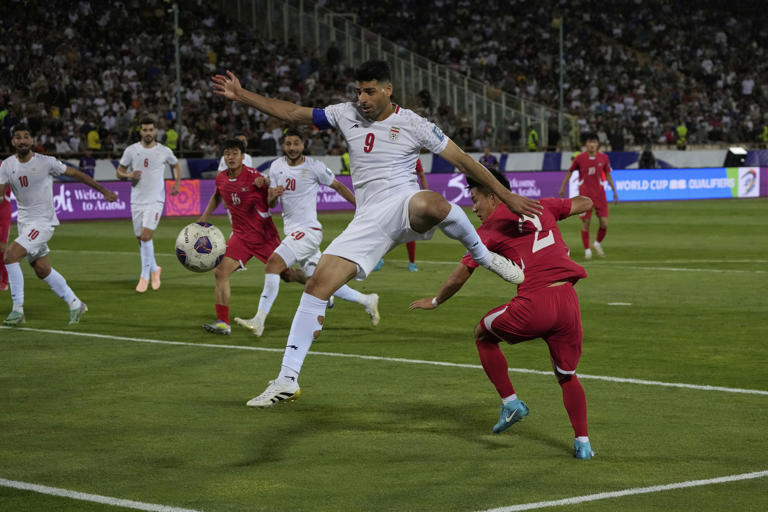
Iran's Mehdi Taremi shoots the ball during the 2026 World Cup Asian qualifier group A soccer match between Iran and North Korea, at Azadi Stadium in Tehran, Iran, Tuesday, June 10, 2025. (AP Photo/Vahid Salemi)

Iran’s Mehdi Taremi shoots the ball during the 2026 World Cup Asian qualifier group A soccer match between Iran and North Korea, at Azadi Stadium in Tehran, Iran, Tuesday, June 10, 2025. (AP Photo/Vahid Salemi)

MILAN (AP) — Inter Milan forward Mehdi Taremi will not be able to join his teammates at the Club World Cup in the United States as he is stuck in Tehran amid the escalating conflict between Iran and Israel.Iran's Mehdi Taremi, left, attempts a shot on North Korea's goal during their Asian qualifier group A soccer match for the 2026 World Cup, Tuesday, June 10, 2025, at Azadi Stadium in Tehran, Iran. (AP Photo/Vahid Salemi)

Iran’s Mehdi Taremi, left, attempts a shot on North Korea’s goal during their Asian qualifier group A soccer match for the 2026 World Cup, Tuesday, June 10, 2025, at Azadi Stadium in Tehran, Iran. (AP Photo/Vahid Salemi)

Flights from all Iranian airports have been grounded following an exchange of military strikes between Iran and Israel over the last two days.

That meant the Iran international was unable to take his scheduled flight on Saturday to join his Inter teammates in Los Angeles.

Taremi will miss Inter’s opening match against Monterrey on Wednesday and Italian media reports the 32-year-old will not feature in the other matches either regardless of whether Iranian airspace reopens.Inter Milan's Mehdi Taremi and Inter Milan's Hakan Calhanoglu pause during a training session ahead of the Champions League final soccer match between Paris Saint-Germain and Inter Milan at the Allianz Arena in Munich, Germany, Friday, May 30, 2025. (AP Photo/Matthias Schrader)

Inter Milan’s Mehdi Taremi and Inter Milan’s Hakan Calhanoglu pause during a training session ahead of the Champions League final soccer match between Paris Saint-Germain and Inter Milan at the Allianz Arena in Munich, Germany, Friday, May 30, 2025. (AP Photo/Matthias Schrader)

Taremi joined Inter from Porto last year.

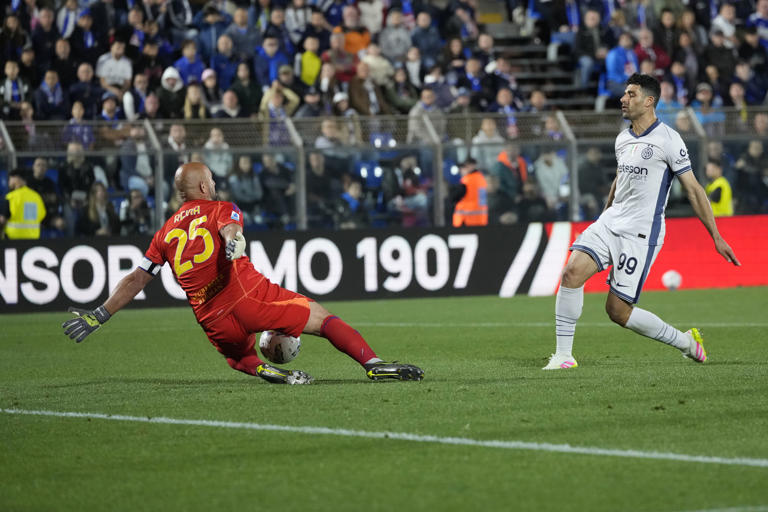
___Como's goalkeeper Pepe Reina, left, saves a shot by Inter Milan's Mehdi Taremi during the Serie A soccer match between Como and Inter Milan at the Sinigaglia stadium in Como, Italy, Friday, May 23, 2025. (AP Photo/Luca Bruno)

Como’s goalkeeper Pepe Reina, left, saves a shot by Inter Milan’s Mehdi Taremi during the Serie A soccer match between Como and Inter Milan at the Sinigaglia stadium in Como, Italy, Friday, May 23, 2025. (AP Photo/Luca Bruno)

2026 FIFA World Cup Asian Qualifying Draw Mechanism

The road to the 2026 FIFA World Cup in the Asian region is an exciting journey, with teams vying for a chance to compete on the global stage. Here’s how the draw mechanism works for the third qualifying round:

Key Details:

  • Date and Location: The draw for the third qualifying round will take place on Thursday, July 7, at 10:30 a.m. in Kuala Lumpur, Malaysia.
  • Teams Involved: The teams participating in this round will discover their opponents during the draw.

Group Allocation Process:

  1. Seeding: Teams are divided into six seeds based on their FIFA rankings and historical performance.
    • 1st Seed: Japan, Iran, and South Korea
    • 2nd Seed: Australia, Qatar, and Iraq
    • 3rd Seed: Saudi Arabia, Uzbekistan, and Jordan
    • 4th Seed: UAE, Oman, and Bahrain
    • 5th Seed: China, Palestine, and Kyrgyzstan
    • 6th Seed: North Korea, Indonesia, and Kuwait
  2. Group Formation:
    • The process begins by drawing the ball of the sixth-seeded teams from the pot first.
    • The first team drawn from this pot is placed in Group A, the second in Group B, and the third in Group C.
    • The process continues for the 5th, 4th, 3rd, and 2nd seeds.
    • Finally, the draw concludes with the first-seeded teams being allocated to their respective groups.
  3. Group of Death:
    • The group of death refers to a challenging group with strong teams.
    • In this case, Team Melli finds itself as the first seed alongside Japan and South Korea.
    • While football progress in Asia has been remarkable, the team names and prestige still matter.
    • The presence of Australia and Qatar in the second seed, Saudi Arabia in the third seed, and the UAE in the 4th seed adds intrigue.
    • Placing the UAE in the 4th seed, Saudi Arabia in the 3rd seed, and one of Australia’s teams and Qatar in the 2nd seed next to a first-seeded team could create a formidable group.
  4. Qualification Path:
    • The top two teams from each group (3 groups of 6 teams) will qualify directly for the World Cup.
    • The third and fourth teams in each group will compete in two groups of 3 teams.
    • The winners of these smaller groups will secure the seventh and eighth quotas for Asia.
    • The remaining half of the quotas will be determined through playoff matches against teams from other continents.
  5. Ideal Group for Iran
    • IRAN – IRAQ – JORDAN -BAHRAIN -KYRGYSZTAN- KUWAIT.
  6. Worst case scenario
    • IRAN – AUSTRALIA – SAUDI ARABIA-UAE-CHINA- NORTH KOREA.

In summary, the 2026 World Cup Asian qualifying draw promises thrilling matchups, surprises, and intense battles as teams vie for their spot in the prestigious tournament. Let the journey continue!