Category: News

Team Melli changes the American-based camp to Mexico.

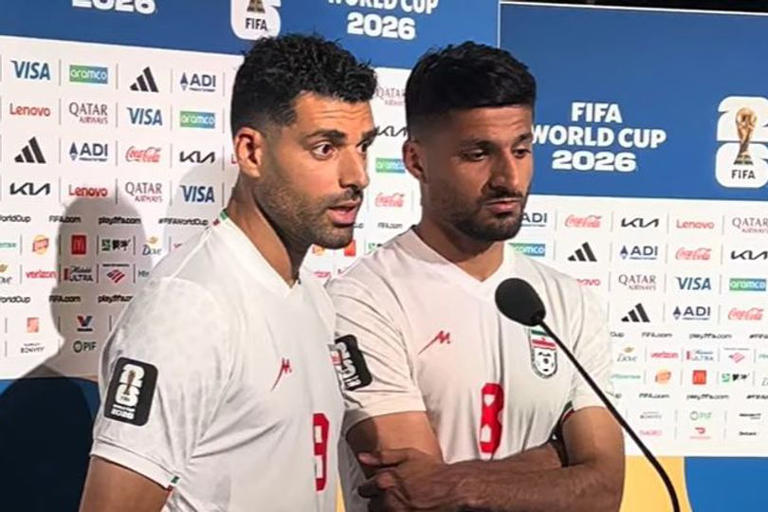
The Iranian national team will move its World Cup base camp to Mexico, according to a statement from Iran’s soccer federation president, Medhi Taj. The shift in location comes amid the ongoing war with the U.S. and related security concerns.

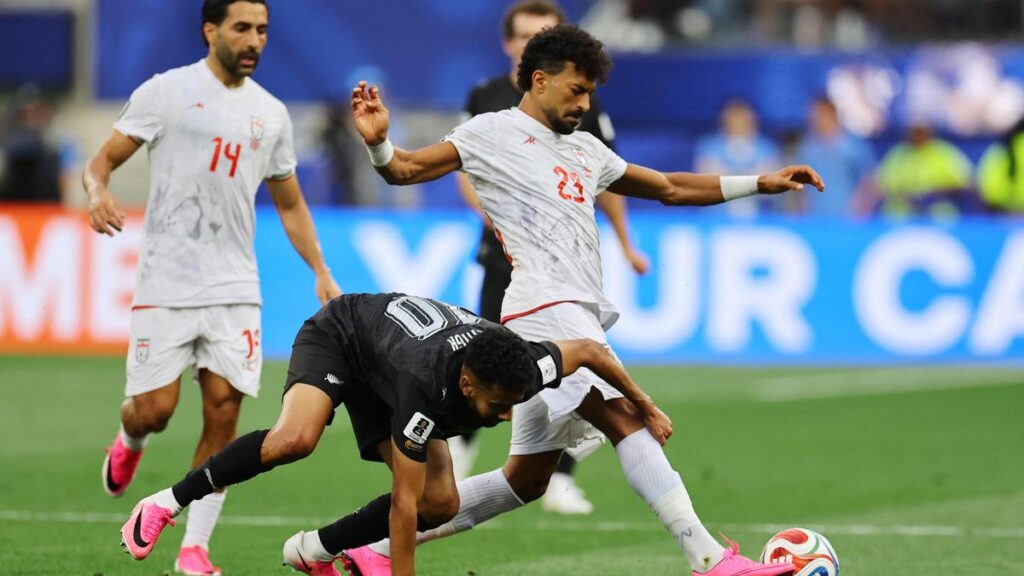
Iran was slated to train at the Kino Sports Complex in Tucson, Ariz., a location they decided on in mid-February before the regional conflict began; however, the country will now train out of Tijuana, a Mexican border city that is less than an hour flight to Los Angeles, where Iran will play its first Group G matches against New Zealand on June 15 and Belgium on June 21.

Tijuana is of similar distance to Seattle as Tucson would have been, with Seattle Stadium the final site of group play for Iran, facing off against Egypt on June 26.

“All team base camps for the countries participating in the World Cup must be approved by FIFA," Taj said.

“Fortunately, following the requests we submitted and the meetings we held with FIFA and World Cup officials in Istanbul, as well as the webinar meeting we had on Friday in Tehran with the respected FIFA secretary general [Mattias Grafström], our request to change the team’s base from the United States to Mexico was approved,” he added, although FIFA has yet to confirm the move publicly.

“We will be based in the Tijuana camp, which is near the Pacific Ocean and on the border between Mexico and the United States, but within Mexican territory. The contract will be finalized, and there are no issues, as it has already been approved by FIFA.”

The question and capacity of Iran’s participation in the World Cup has loomed since late February, when World Cup co-host U.S. first launched its aggression, killing over 100 students in a girls' school in Minab.

Directly after the initial airstrikes, Iran put their World Cup participation in question. “What is certain is that after this attack, we cannot be expected to look forward to the World Cup with hope,” Taj told the Iranian sports outlet Varzesh3.

Iran was then the only country not present the following week for FIFA’s three-day event in Atlanta to review the logistics of the tournament, an absence which saw U.S. President Donald Trump fuel the fire, stating: “I really don’t care [if Iran participates]. I think Iran is a very badly defeated country. They’re running on fumes.”

While Iran backtracked on some statements regarding the World Cup boycot and with much convincing by FIFA and Gianni Infantino in person, it was finally confirmed that Iran will compete at the 2026 edition. Nevertheless, Iran did try to move its World Cup matches to Mexico following what many interpreted as a veiled threat from Donald Trump to the Iranian delegation. In a pointed remark, the U.S. president declared that while Iran "is welcome to the World Cup, [he] doesn’t really believe it is appropriate that they be there, for their own life and safety", a statement in which he made clear that the U.S. government cannot guarantee the safety of Iran's squad on American soil.

Iran’s request to move its games to Mexico was a logistical undertaking that FIFA President Gianni Infantino outright denied; however, it seems the country and global organization reached some sort of compromise by having the Mexican training base, enabling Iran to fly to and from the U.S. only for matches.

Parviz Ghelichkhani: The Undisputed King of Asian Football Passes Away at 81

Paris, France – Parviz Ghelichkhani, widely regarded as the greatest and most decorated footballer in Iranian history, has passed away at the age of 81 following a long and courageous battle with illness. He died peacefully in Paris, where he had lived in exile for over four decades.

Ghelichkhani’s life was one of dramatic contrasts: on the pitch, he was a genius of effortless grace and tactical intelligence; off it, he was a defiant political activist, a vocal critic of the Islamic Republic, and a man who paid dearly for his convictions.

A Life in Exile and Activism

Following the Iranian Revolution in 1979, Ghelichkhani chose a path of dissent over silence. He went into self-imposed exile in France, never to return to his homeland. Unlike many of his sporting peers who accommodated the new regime, Ghelichkhani became a sharp and relentless critic of the clergy-led government. For most of his adult life, he published a left-wing Persian-language publication that fearlessly condemned human rights abuses, political corruption, and the suppression of dissent in Iran. His writing made him a target of the regime’s ire, but he remained undeterred, seeing his political voice as a natural extension of his lifelong fight against injustice—a fight he began long before his boots were hung up.

A Footballing Genius Without Equal

On the football front, Ghelichkhani’s legacy is staggering. A remarkably versatile player, he could operate seamlessly in any outfield position—starting as a forward, later dominating as a midfielder, and even excelling as a libero (sweeper) in the twilight of his career. His technical skill, vision, and unmatched dribbling ability earned him the nickname "The Wizard of Tehran."

His list of records remains the stuff of legend:

  • Three Consecutive Asian Cups (1968, 1972, 1976): Ghelichkhani remains the only player in the history of Asian football to lift the AFC Asian Cup on three successive occasions. Even more astonishing, he never lost a single match in the tournament across those three campaigns—a record of invincibility that still stands today.
  • Club Dominance: With Taj SC (now Esteghlal Tehran), he won multiple Iranian league titles and the prestigious Asian Club Championship (now the AFC Champions League) in 1970.
  • Individual Honors: He was named Iran’s Footballer of the Year multiple times and was a permanent fixture in the Asian All-Star team throughout the 1970s.
  • Three Olympic Games appearances, the first one when he was 16 years old in Tokyo, then in the Munich Olympic Games 1972, and finally in 1976 in the Montreal Olympic Games.

The Cruelest Cut: The 1978 World Cup

Perhaps the most painful chapter of his career came in 1978, on the eve of Iran’s historic first-ever World Cup appearance in Argentina. Ghelichkhani, then at the peak of his intellectual and physical powers, was brutally expelled from the national team. The official reason cited “indiscipline,” but it was an open secret that his leftist political leanings and outspoken nature had made him persona non grata to the regime of the Shah (which, ironically, he also opposed). The Iranian football federation, pressured by SAVAK (the Shah’s secret police), dropped him from the squad. To this day, many historians and fans call it one of the greatest injustices in football history—denying the world a chance to see Iran’s finest player on its grandest stage.

Historical Context and Legacy

Ghelichkhani was born in 1945 in Tehran during a period of Allied occupation. He came of age during the nationalist oil nationalization movement of Mohammad Mossadegh and later lived through the authoritarian rule of the Shah. His political awakening occurred on university campuses, long before his exile, making him a rare figure: a world-class athlete who was also an intellectual and revolutionary thinker.

His decision to remain in France after 1979, rather than reconcile with Ayatollah Khomeini’s government, cost him his property, his pension, and a hero’s welcome in Iran. For decades, his name was erased from state media and football history books. Only in recent years, with the rise of social media and a younger generation curious about pre-revolutionary Iran, has his legacy been publicly reclaimed.

Final Whistle

Parviz Ghelichkhani is survived by his children and grandchildren in Europe. His passing closes the final chapter of a golden era of Iranian football—a time when artistry and bravery defined the game.

Though he died far from the land of his birth, his spirit never left. He once said in an interview from his Paris apartment, “I played for the people of Iran, not for any flag or regime. They are my only medals.”

May God bless his soul. May his name no longer be erased, but celebrated as the true legend it always was.

Rest in peace, Parviz Ghelichkhani (1945–2026).

Team Melli camp news.

  • Team Melli’s legionnaire players are expected to join the training camp by the end of the week, with travel arrangements already completed.
  • Team officials will travel to Ankara for visa appointments at the U.S. and Canadian embassies.
  • Around half of the World Cup teams are still dealing with visa procedures, and Iranian officials expect the visas to be issued within the next 10 days.
  • The federation has contingency plans in place in case any player’s visa is delayed or denied.
  • Sardar has turned up in the Team Melli camp. It was not the original Azmoun but Serdar Dursun, the German-Turkish player who played for Persepolis in 2025/26 season. He was a guest in the camp and closely watched some of his teammates in action.
  • Dennis Dargahi’s documents have been submitted to FIFA, and he has been invited to join the national team’s 30-man training camp. No confirmation yet to wheter FIFA has cleared the German-born player to play for Iran.
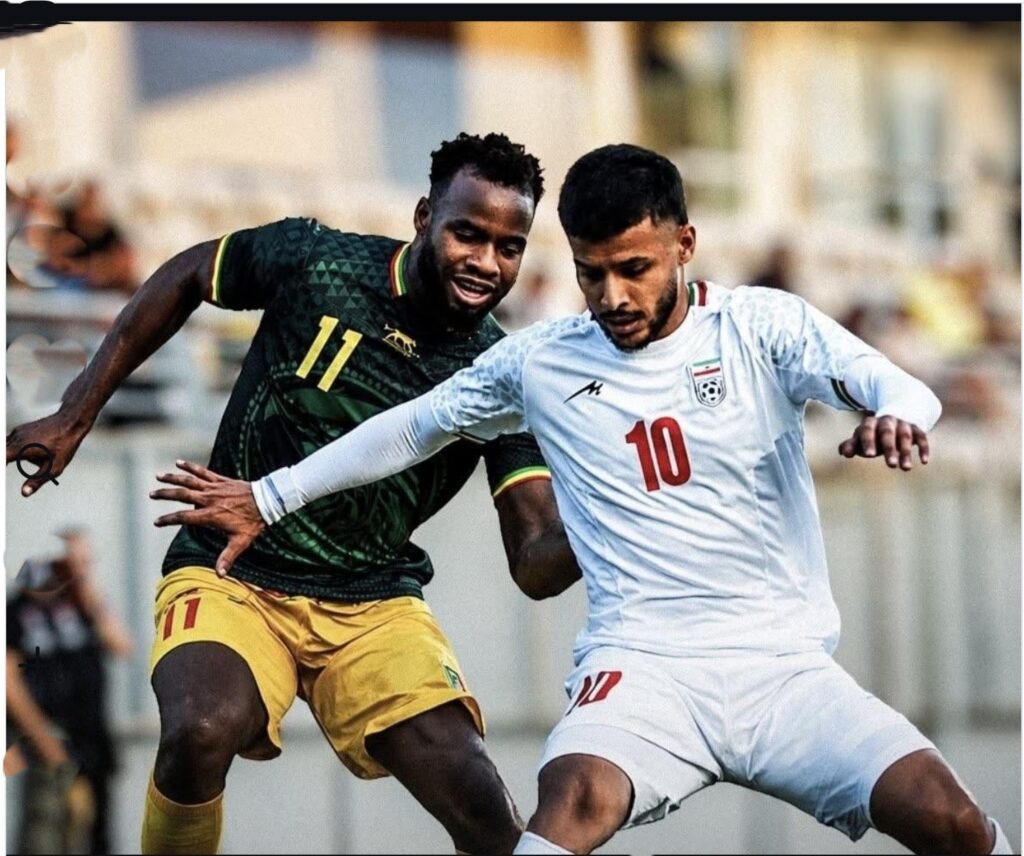
  • Iran has finalized a friendly match against Gambia during the Turkey training camp and is also meeting Mali, another African opponent. before the conclusion of the training camp in Antalya
  • Milad Mohammadi’s recovery is progressing well, and he is expected to return to training within days. Mohammadi was injured during training.
  • Amir Ghalenoei has decided to add Shariyar Moghanlou to the Team Melli camp.
  • Team Melli as technically strong and highly motivated, according to Mohammad Nabi.

. Rouzbeh Cheshmi has been undergoing treatment at the camp. What was initially thought to be a slight knoch is now turned into a concern that the medical staff is handling. His hamstring injury forced the medical staff to refer him to a special clinic in Turkeu. Chasmis is fighting against time for full recovery before the final roster is announced.

A Few Words from the Heart: Message from Sardar Azmoun.


Salam

I want to say a few words—truly from the bottom of my heart—about things that many people may not fully know, or about which they may have rushed to judge me because of misunderstandings and distance from the truth.

I still remember it like yesterday. Years ago, when I was only 17 years old—before I was even invited to Team Melli by Mr. Queiroz—I received a massive financial offer from another country. But my answer never changed. I said, "I am a son of Iran, and I will only play for the people of my homeland. I want to make them happy." The very first time I pulled that white shirt over my chest, I made a silent promise to myself: every single time I play for Iran, I will run, fight, and give everything I have to bring joy to the people who love football with pure hearts—especially the children growing up in the remotest villages and the most forgotten corners of our land. I want their smiles to come from our victories.

I never once stepped onto that pitch without pride. When we won together, I felt like the luckiest man alive, proud of every one of my teammates. And when we lost? I was the saddest person in the world—just like every single fan who cried with us. Because I love this game, yes, but more than that, I love the good, loyal, and beautiful people of Iran. They have always given me energy. Their love and unwavering support have carried me through my darkest days.

Many of you already know some of the small things I have tried to do over the years—reserving every hotel in Gonbad to keep our people safe during those twelve terrible days of conflict, bringing clean drinking water to remote villages in Golestan, and supporting the women athletes of our country in volleyball, basketball, and cycling. These are not favors. These are drops from an ocean of love I hold inside me for Iran and every Iranian. And to this day, I have never—not once—held back any effort to help my fellow countrymen.

Wherever I go in this world, wherever I play football, my identity does not change. My heart beats only for Iran. My pride belongs to Iran. I am a footballer, yes. I love football with every fiber of my being. But everything I have ever achieved, everything, comes first from the grace of God, and then from the sweat, the sacrifice, and the endless love of my dear people. For that love, I will remain grateful until my last breath.

I wish success, glory, and pride to my national team, to every player, every coach, and especially to Amir Khan in the World Cup. God willing, my brothers, you will go out there and fight. You will make the hearts of the Iranian people swell with joy. I will be watching, and I will be cheering louder than anyone.

With all my soul,
— Sardar Azmoun


Iran to face Mali in Antaliya

Reports from Mali’s football federation confirm that the Mali national football team is set to face Iran’s Team Melli on 4th June in a friendly match hosted in Antalya, Turkey. The fixture is part of both teams’ preparations for upcoming international competitions, with Iran focusing intently on building momentum ahead of the FIFA World Cup 2026.

Team Melli has already established a training camp in Antalya, where a squad of 30 players is currently undergoing intensive drills, tactical sessions, and fitness assessments. The camp reflects the coaching staff’s commitment to evaluating a broader pool of talent while fostering team cohesion. As part of their warm-up schedule, Iran is also scheduled to play the Gambia national football team in another friendly encounter, offering a valuable opportunity to test strategies against varied styles of African football.

The Iranian Football Federation has hinted that a second friendly match, also against an unnamed African opponent, is expected to be finalized shortly. While officials have remained tight-lipped about the potential rival, sources suggest the move is aimed at exposing Team Melli to physical, agile opposition similar to what they may encounter in the World Cup group stage. These back-to-back fixtures against African nations underline Iran’s strategic approach to diversifying their preparatory matches and sharpening their competitive edge on the road to 2026.

Iran will be facing Egypt in the World Cup.

Review of Iran's training camp in Arizona.

Team Melli's camp in the United States will be based in Tuscon , Arizona. While the reasons behind the selection of this site is unclear, it is nevertheless a fully equipped training center with a football stadium, a baseball field, and many training facilities.

Kino Sports Complex is the largest sports and entertainment venue in Southern Arizona.

The complex plays host to numerous sports, entertainment, cultural and business events every year. Professional sports teams like FC Tucson Soccer Club call Kino Sports Complex home. Major League Soccer has made the Complex its preseason training home as well as the site of the annual Desert Diamond Cup tournament.

Visiting international sports teams from Mexico, Korea, and now, Iran , also use the Kino Sports Complex for off-season training and preseason games. Cultural and entertainment events like the annual Gem and Mineral Show and KFMA Day concert all call Kino Sports Complex home. Numerous youth and amateur sports leagues also use the facility throughout the year.

Originally built as a home for Major League Baseball Spring Training, Pima County has invested millions of dollars since to 2012 to transform Kino Sports Complex into a premier multi-use complex suitable for a variety of professional and amateur sports and cultural events.

Team Melli departs to Turkey.

TEHRAN – Team Melli, the Iranian national football team, departed for Antalya, Turkey, this morning (Monday, May 18, 2026) to commence a crucial training camp and a friendly match against Gambia. The provisional squad consists of 30 players, 22 domestic-based and eight legionnaires. However, with FIFA mandating a final roster of just 26 players, four will be cut following the camp.

Upon concluding their Turkish preparations, the squad is scheduled to move to their U.S. base at the Kino Sports Complex in Tucson, Arizona, in early June, before heading to California for their first two World Cup matches. Team Melli manager Mohammad Nabi has indicated the possibility of facing another African side after Gambia, while expressing hope that the previously canceled friendly against Puerto Rico, originally planned on U.S. soil, might be revived.

Visa Hurdles Loom Large

Yet overshadowing these plans is a growing concern over entry to the United States. As of now, no member of the Iranian delegation, players or staff, has been granted permission to enter the country. The possibility that some staff members or players could be denied a U.S. visa remains very real, casting a pall over the team’s logistical preparations.

When asked whether FIFA had secured any assurances regarding entry and visa arrangements for Iran’s players, FIFA Secretary-General Mattias Grafstrom declined to elaborate. His reticence signaled that the world football governing body may have little to no influence on such matters, despite public assurances previously given by FIFA President Gianni Infantino.

A Troubling Precedent

Compounding these anxieties is the recent experience of Mehdi Taj, the head of Iran’s football federation, who encountered significant difficulties entering Canada for a FIFA conference. Although Canada is only fractionally less hostile to Iran than the United States, the incident serves as a stark warning of the type of challenges the Iranian delegation will likely face when attempting to enter North America.

For a squad already grappling with a plethora of issues, ranging from finalizing the roster to managing political pressures and logistical hurdles, the threat of visa denials represents an added burden before a single ball is even kicked in the World Cup.

The Cost of Exclusion: Why Omitting Azmoun Weakens Iran’s World Cup Dream


The Iranian striker of Shabab Al-Ahli has broken his silence—indirectly—over his controversial omission from the national team squad.

After being unexpectedly left out of Team Melli’s FIFA World Cup 2026 roster and missing two preparatory friendlies against Nigeria and Costa Rica, Sardar Azmoun had hoped for a recall under head coach Ghalenoei. His goal was clear: to earn a place in the 30-man preliminary list for the FIFA World Cup 2026. That call, however, never came.

Iran’s third-highest goalscorer of all time has now taken an indirect but telling stance on the matter. Azmoun, who faced sharp criticism early in the third imposed war against Iran for posting (and quickly deleting) a photo with the ruler of Dubai on his Instagram page, and who previously missed a national team training camp, will now be absent from the United States. In a bid to rebuild bridges, he recently posted a picture of himself in the national team jersey on his Instagram profile—an apparent gesture of regret and a signal of his readiness to return. But it was not enough. The door remained closed, and Azmoun was ultimately left out of the 2026 World Cup.

The exclusion of Sardar Azmoun, arguably the finest Iranian striker of his generation alongside Mehdi Taremi, is a glaring injustice and a stark example of how political influence continues to plague Iranian football. This is not the first time Team Melli has been deprived of its best talents. The pattern dates back to the 1978 FIFA World Cup, when Parviz Ghelichkhani, the most decorated player in Iranian football history, was expelled from the squad by the Shah’s regime due to his anti-establishment political activities.


In a political sense, Azmoun is no Ghelichkhani. He can hardly be labeled a political opposition figure in any meaningful sense. Ghleechkhani was arrested and paraded in front of the national Television with a forced reading of his guilt. He was incarcerated and then pleaded for clemency. Nothing like that has happened in Azmoun's case. However, a combination of poor timing, a lack of shrewdness, and occasional petulance has landed him in hot water. Yet, he is far from the only senior member of the current squad guilty of indiscipline or indiscretion. Many players on this roster have committed similar, if not worse, lapses in judgment. The difference with Azmoun lies not in the nature of his actions, but in the timing.

The consequences of this wrong decision are clear: Team Melli, which desperately needs Azmoun’s clinical finishing, movement, and big-game experience, will enter the 2026 World Cup without one of its most potent offensive weapons. His absence weakens Iran’s attacking depth and removes a player capable of changing a match against elite opposition. In tight group-stage encounters, where goals are at a premium, the lack of a striker of Azmoun’s caliber could prove catastrophic.

According to insiders and unconfirmed reports, FFIRI was allegedly helpless, as the final decision lay beyond their control, suggesting higher authorities ruled on Azmoun's exclusion. Whether true or not, the outcome remains the same.

In the end, it is not the officials, not the coaches, and not even Azmoun himself who will suffer most. It will be the millions of Team Melli fans across the globe, passionate, long-suffering, and loyal, who will feel the sting of his absence deepest.

Once again, politics has triumphed over football, and the beautiful game has lost.

Iran announces preliminary 30 players list for the World Cup.

Agence France-Presse

Iran’s World Cup squad will travel to Turkey on Monday for a training camp, friendlies and to complete visa applications before heading to the United States.

Team Melli will be returning to Antalya, where they trained and played friendlies in March.

They are taking a squad of 30 players, which will have to be trimmed to the World Cup maximum of 26. Perhaps the best known is 33-year-old former Porto striker Mehdi Taremi, now with Olympiacos.

“Selecting 30 players for this final training camp ahead of the World Cup was the most difficult technical decision of my coaching career,” head coach Amir Ghalenoei told the Iranian football federation website, adding he had selected players solely on “technical criteria”.

Iran hope to play two friendlies in Antalya. They have already confirmed one match, against Gambia, on May 29, said Sam Mehdizadeh, an Iranian-Canadian who heads a company that sets up friendlies for the team.

Iran and the US cut diplomatic ties in 1980 and the players are expected to use their time in Turkey to complete the necessary procedures for obtaining visas.

“No visas have been issued yet,” Mehdi Taj, the Iranian football federation head, told Iranian media.

Taj said players were expected to undergo fingerprinting in Turkey as part of the visa process but wished to avoid a trip of more than 280 miles (450km) from Antalya to Ankara.

Taj is expected to hold talks with Fifa president Gianni Infantino as Tehran seeks assurances for its squad amid tensions increased by the ongoing war.

He and the Iranian delegation met with Turkish football federation (TFF) president Ibrahim Ethem Haciosmanoglu and Mattias Grafstrom, the Fifa secretary general, on Saturday in Istanbul.

Dennis Dargahi , the German Iranian player, was recently added to Team Mell

“During this meeting, assessments were made regarding the training camp and preparations planned by the Iranian national team in Turkey ahead of the World Cup,” the TFF said on social media.

When the squad reaches the US, Iran will set up their base camp in Tucson, Arizona.
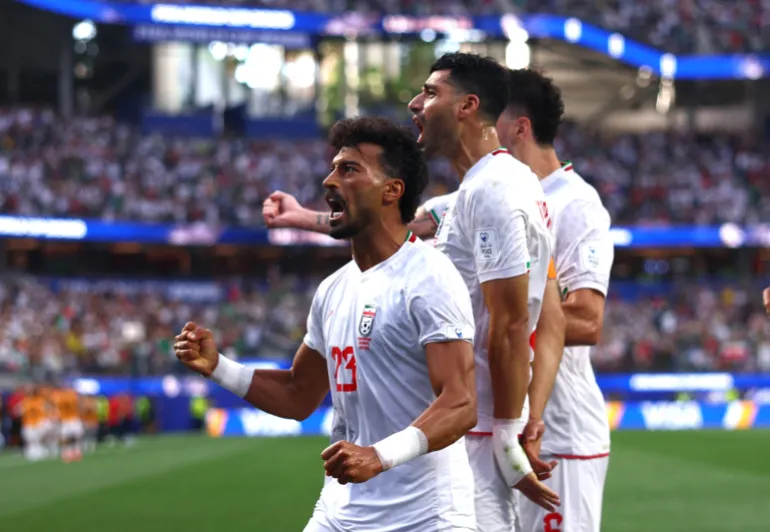
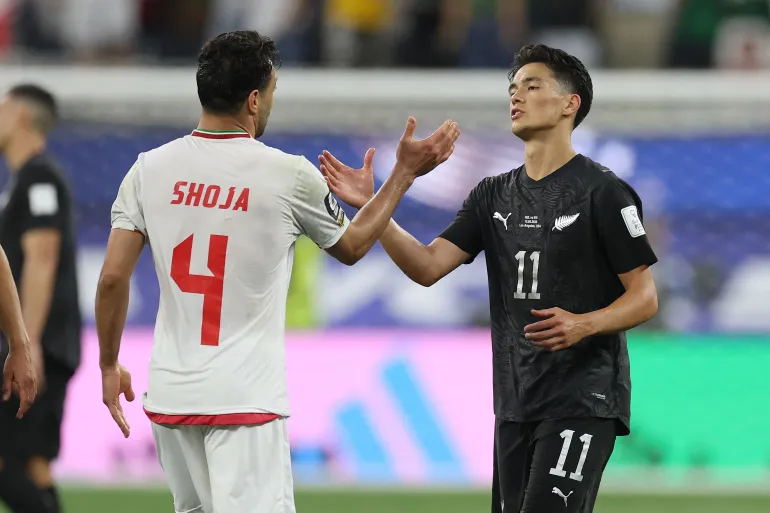
They are expected to kick off their World Cup campaign against New Zealand in Los Angeles on 15 June, before facing Belgium in the same city and then Egypt in Seattle, in Group G.

INITIAL 30 MAN ROSTER.

Goalkeepers: Alireza Beiranvand, Seyed Hossein Hosseini, Mohammad Khalifa, Payam Niazmand

Defenders: Daniyal Iri, Ehsan Hajsafi, Saleh Hardani, Hossein Kananizadegan, Shoja Khalilzadeh, Milad Mohammadi, Ali Nemati, Omid Noorafkan, Ramin Rezaian, Aria Yousefi

Midfielders: Roozbeh Cheshmi, Saeed Ezzatollahi, Mehdi Ghaedi, Saman Ghoddos, Mohammad Ghorbani, Alireza Jahanbakhsh, Mohammad Mohebi, Amir Mohammad Razaghinia, Mehdi Torabi.

Forwards: Ali Alipour, Dennis Dargahi (AKA Dennis Eckert), Hadi Habibinejad, Amir Hossein Hosseinzadeh, Amir Hossein Mahmoudi, Kasra Taheri, and Mehdi Taremi

MAJOR ABSENTEES:

There is no place on this list for Sardar Azmoun (the third-highest scorer in Iranian history) due to non-sporting reasons. Also, Allahyar Sayyadmanesh (winger for Belgian team Westerlo) has been excluded, while the rising star Mohammad Javad Hosseinnejad (a young midfielder playing in Russia).
Other absentees include Ali Gholizadeh, Lech Poznan winger, who suffered a serious injury in the Polish League.

FIFA says it held positive talks with Mehdi Taj ahead of World Cup

By Ali Kucukgocmen

ISTANBUL, May 16 (Reuters) - FIFA Secretary-General Mattias Grafstrom held a constructive and positive meeting with Iran's FA (FFIRI) President Mehdi Taj on Saturday, he told Reuters, expressing confidence about the country's participation at this year's World Cup.

Iran are scheduled to play all three of their group matches in the United States but the team's participation in the June 11 to July 19 tournament has been in question since the U.S. and Israel attacked Iran in late February.

Soccer Football - Iran Football Association president Mehdi Taj meets FIFA secretary general Mattias Grafstrom - Istanbul, Turkey - May 16, 2026 Iranian FA President Mehdi Taj, FIFA Secretary-General Mattias Grafstrom, Turkish Football Federation president Ibrahim Haciosmanoglu and Secretary General Hedayat Mombeni. REUTERS/Murad Sezer

Iran Football Association president Mehdi Taj meets FIFA secretary general Mattias Grafstrom - Istanbul, Turkey - May 16, 2026 Iranian FA President Mehdi Taj, FIFA Secretary-General Mattias Grafstrom, Turkish Football Federation president Ibrahim Haciosmanoglu and Secretary General Hedayat Mombeni. REUTERS/Murad Sezer© Thomson Reuters

"We've had an excellent and constructive meeting together with the Iran FA," Grafstrom said during a visit to Istanbul. "We're working closely together and looking very much forward to welcoming them in the FIFA World Cup."

More questions have arisen after FFIRI's Taj was refused entry to Canada for the FIFA Congress in Vancouver earlier this month because of his links to the Islamic Revolutionary Guard Corps (IRGC).

Soccer Football - Iran Football Association president Mehdi Taj meets FIFA secretary general Mattias Grafstrom - Istanbul, Turkey - May 16, 2026 Iranian FA President Mehdi Taj and Secretary General Hedayat Mombeni with FIFA Secretary General Mattias Grafstrom. REUTERS/Murad Sezer

Iran Football Association president Mehdi Taj meets FIFA secretary general Mattias Grafstrom - Istanbul, Turkey - May 16, 2026 Iranian FA President Mehdi Taj and Secretary General Hedayat Mombeni with FIFA Secretary General Mattias Grafstrom. REUTERS/Murad Sezer© Thomson Reuters

The U.S. and Canada, who are co-hosting the World Cup with Mexico, classify the IRGC as a "terrorist entity" and have made it clear they will not admit people with links to the elite military force.

Grafstrom declined to provide details on the visa situation for Iran's players, but said the two sides had the opportunity to discuss some of the operational matters and had a positive exchange.

Taj told Reuters that FFIRI had a very good meeting with Grafstrom and other FIFA officials.

"I am pleased that they listened to Iran’s points, all 10 points that we had raised, and they offered solutions for each of them. I hope, God willing, that our national team can go to the World Cup without any problems and achieve very good results there," he said.Soccer Football - Iran Football Association president Mehdi Taj meets FIFA secretary general Mattias Grafstrom - Istanbul, Turkey - May 16, 2026 Iranian FA President Mehdi Taj and FIFA Secretary General Mattias Grafstrom speak with Reuters after their meeting. REUTERS/Murad Sezer

Iran Football Association president Mehdi Taj meets FIFA secretary general Mattias Grafstrom - Istanbul, Turkey - May 16, 2026 Iranian FA President Mehdi Taj and FIFA Secretary General Mattias Grafstrom speak with Reuters after their meeting. REUTERS/Murad Sezer© Thomson Reuters

Asked if FIFA had secured assurances on entry and visa arrangements for Iran's players, Grafstrom declined to elaborate.

"We've discussed all relevant matters, but I think it's not the place to discuss the details," he said. “Overall, a very positive meeting and we’re looking forward to continuing the dialogue.”

Iran had asked for their World Cup matches to be switched to Mexico but FIFA President Gianni Infantino insists that all games must be played at the grounds originally scheduled.

Iran's squad will leave Tehran for a training camp in Turkey on Monday before moving on to their U.S. base at the Kino Sports Complex in Tucson, Arizona in early June.

Iran are scheduled to get their World Cup campaign under way against New Zealand in Los Angeles on June 15. They are also due to play Belgium and Egypt in Group G.

(Reporting by Ali Kucukgocmen: Writing by Daren Butler; Editing by Ken Ferris