Tag: FIFA World Cup 2026

Mehdi Taj Addresses Team Melli's World Cup Preparations and AFC Club Competitions


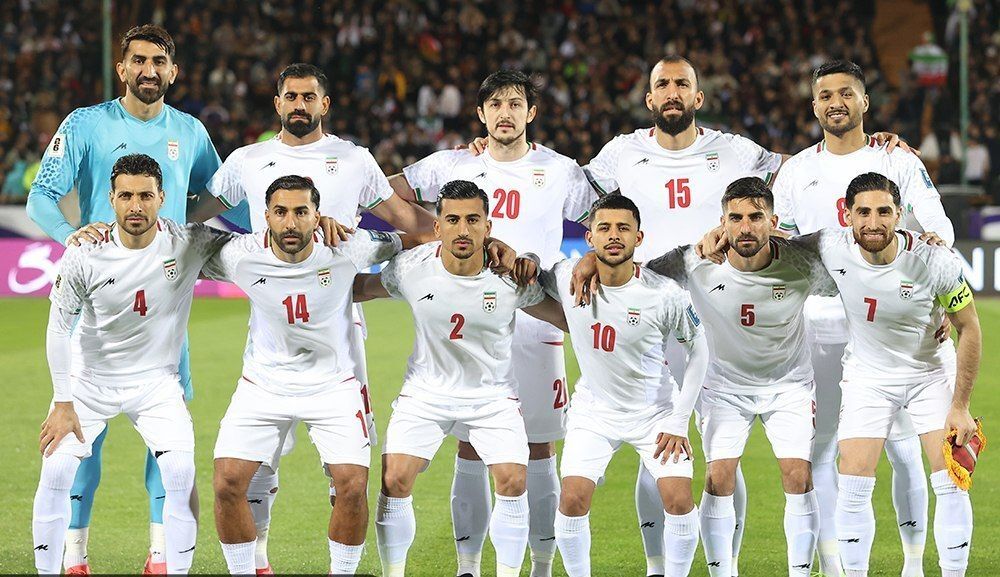
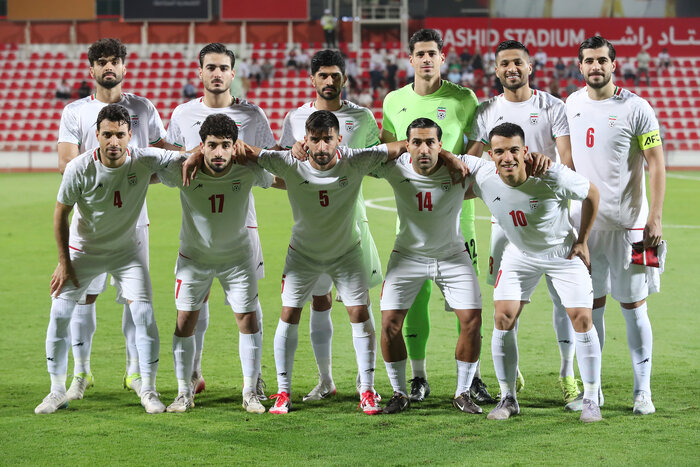
Mehdi Taj, the head of the Football Federation of Iran, has spoken publicly about the current state of Team Melli, the challenges facing the national team ahead of the 2026 FIFA World Cup, now less than 80 days away, and the ongoing complexities surrounding Iran's participation in Asian club competitions.

World Cup Venue Uncertainty

Addressing FIFA's apparent reluctance to approve the relocation of Iran's 2026 World Cup matches to Mexico, Taj acknowledged the logistical difficulties involved. "Everything requires its own preparations, and delays are inevitable," he said. "Moving matches to another country brings its own set of complications." He confirmed that the national team will play two friendlies in Turkey during March, with the players to be announced in due course.

A Call for Passion and Resilience

Taj emphasized that the national team must reflect the spirit and enthusiasm of the Iranian people, particularly given the extraordinary circumstances the nation is enduring. "The passion that the people have must also be visible in the national team," he stated. "The people who proudly remain present in their fields under bombardment will not accept the Football Federation allowing lethargy or complacency to creep into the national teams."

On Sardar Azmoun's Status

Regarding the situation of star striker Sardar Azmoun, following rumors that he had been dismissed from the national team setup, Taj declined to comment on individual cases but stressed the collective identity of the squad. "I will not speak about individuals," he said. "The national team must represent these people. Ninety percent of the team is already aligned with this principle, particularly our legionnaires and the head coach. This approach will continue to be reinforced."

(NOTE: Azmoun was excluded from the latest list announced today.)

AFC Club Competition Representatives

Turning to domestic matters, Taj provided an update on Iran's representatives for next season's Asian club competitions. "The AFC sent us a letter today requesting that we announce Iran's representatives for the upcoming Asian Elite League and AFC Champions League 2," he explained. "We informed them that the Iranian champion has not yet been determined. The league organization has made a decision, which we will announce once it has been approved by the Football Federation."
Will Iran withdarw from the World Cup?

Donald Trump has said that it would not be “appropriate” for Iran to play in this summer’s World Cup following the US and Israeli strikes on the country.

Iran’s sports minister Ahmad Donyamali had previously appeared to rule out the possibility of the country playing at the tournament, saying that “the conditions for participation do not exist”, before Trump’s latest intervention struck a similar tone.
The US president posted on Truth Social: “The Iran National Soccer Team is welcome to The World Cup, but I really don’t believe it is appropriate that they be there, for their own life and safety. Thank you for your attention to this matter!”

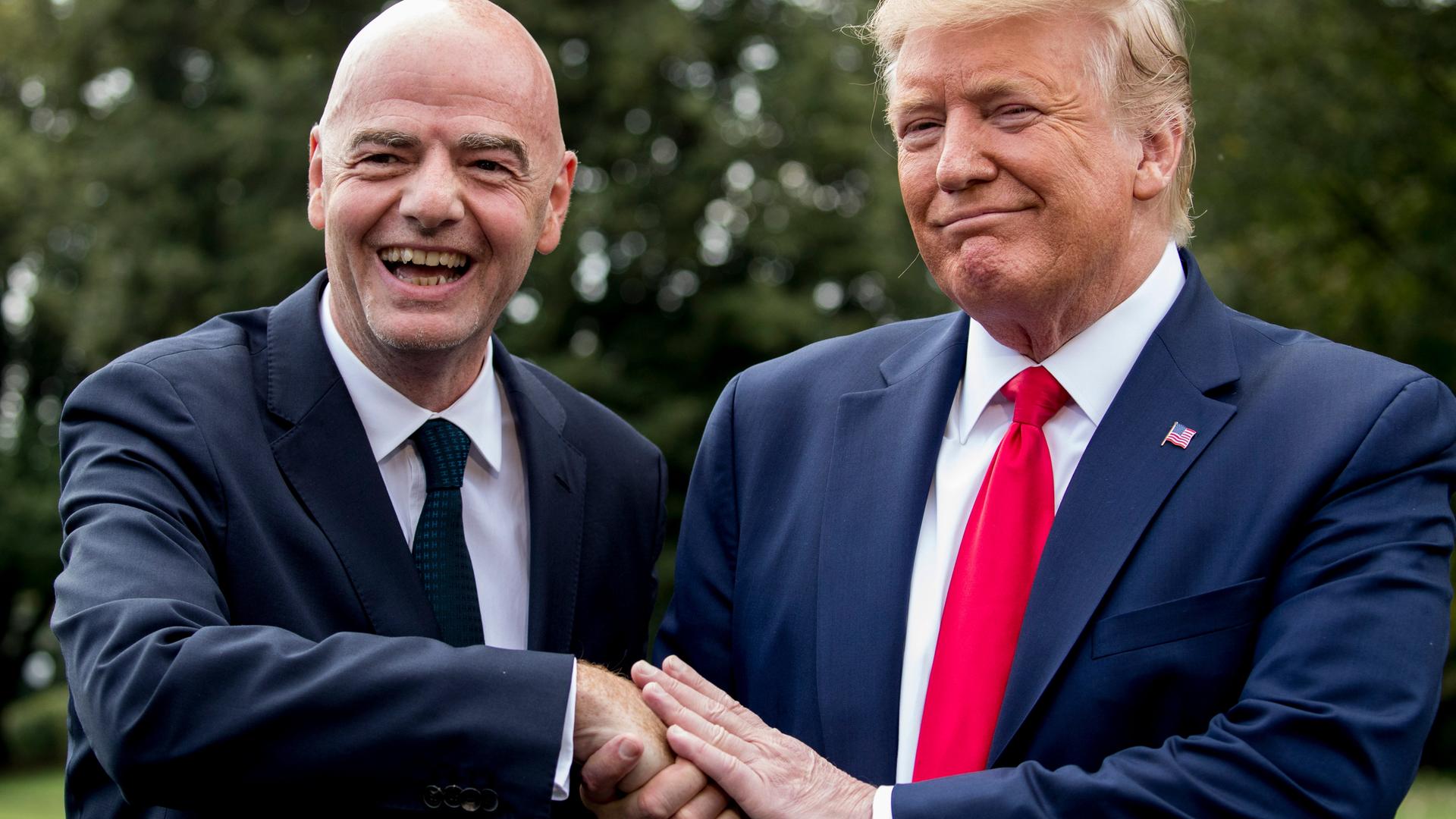
Fifa president Gianni Infantino insisted at one point that he had received assurances from Trump that Iran would be welcome at the tournament. However, the organisation is yet to respond to requests for comment regarding Iran’s participation in the finals in the light of Donyamali’s comments or Trump’s remarks.

The tournament takes place across multiple cities in the United States, Mexico and Canada this summer. Iran’s group games are scheduled to be played in the US, between Los Angeles and Seattle.

Iran were the only nation to be missing from a World Cup planning event that included participating teams, held earlier this month in Atlanta.

Could Iran boycott the World Cup?
Iran are scheduled to play two World Cup games in Los Angeles and another in Seattle. They will face New Zealand and Belgium in LA on June 15 and June 21, followed by the match against Egypt in Seattle on June 26.

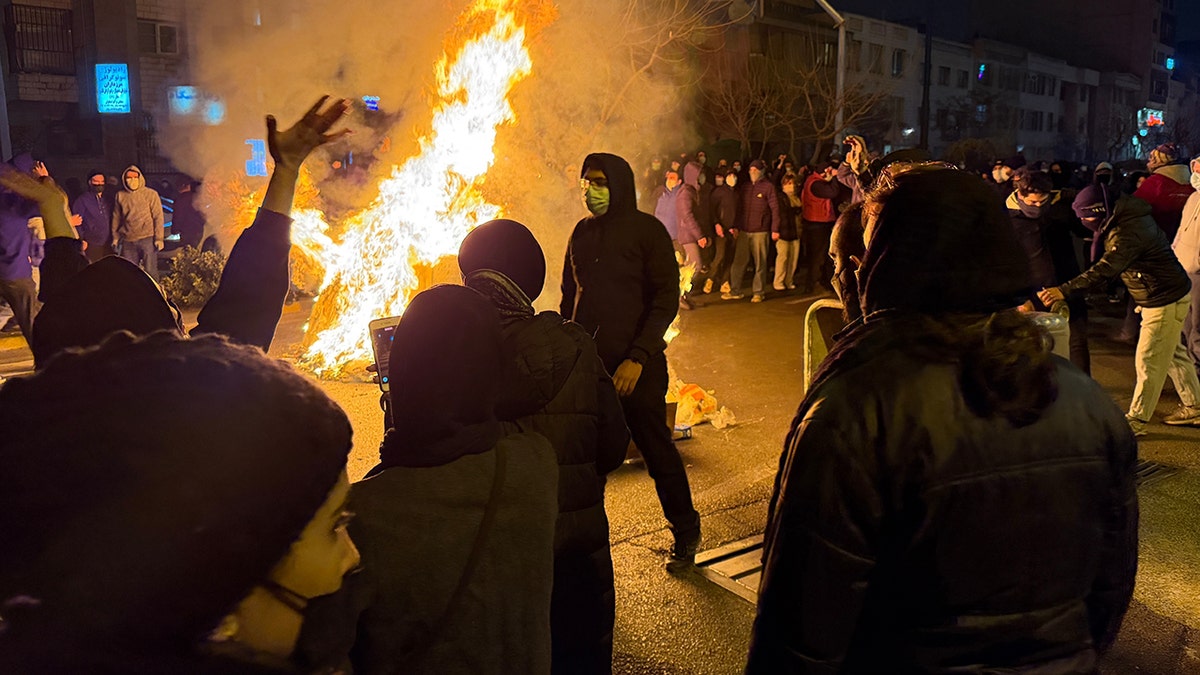
But little is known about how Iran could respond to the US and Israeli strikes in a sporting context. Iran’s supreme leader Ayatollah Khamenei has been killed, with his son Mojtaba Khamenei replacing him.

There has never been a boycott of the World Cup on political grounds and the last World Cup boycott was 60 years ago, when African teams refused to play in protest of receiving just one-third of a qualifying berth.

There has never before been a situation where a World Cup host has attacked a qualified team so close to the start of the tournament, with just four months to go before the opening game.

As the Independent’s Miguel Delaney highlighted, several European countries discussed a World Cup boycott when the United States threatened to annex Greenland in January.

Even before the strikes, there was political tension over Iran’s involvement in the tournament due to visa restrictions. The country’s football federation followed through on a threat to boycott Novembers’s World Cup draw in Washington DC.

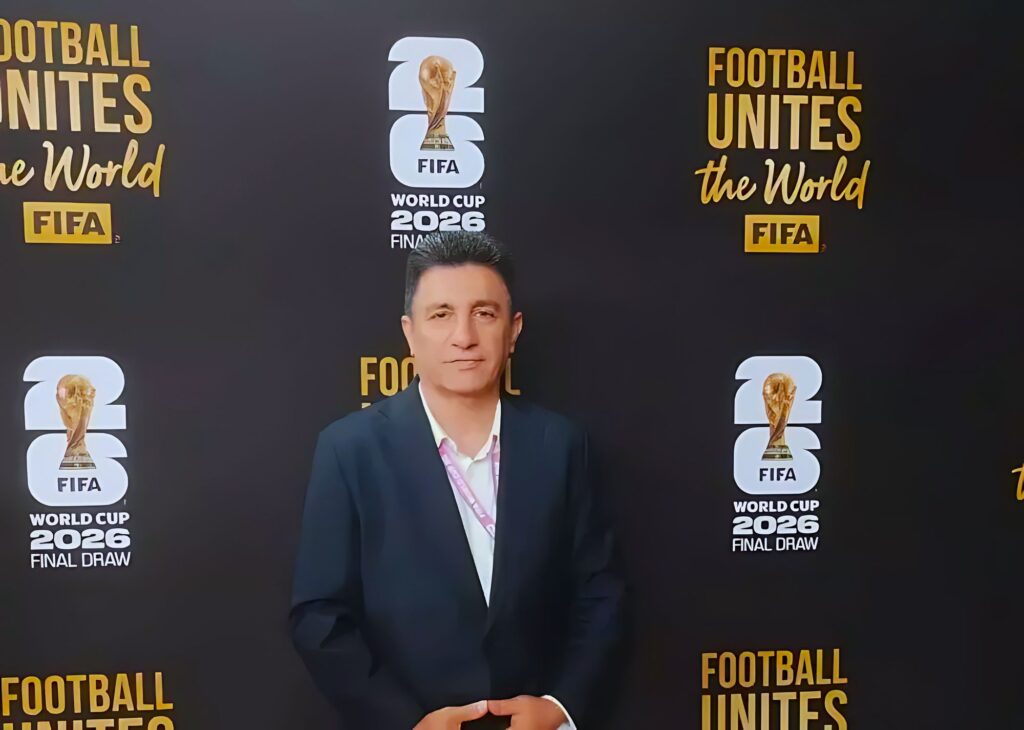
At the time, Iranian Football Federation spokesman Amir Mehdi Alavi said the US had granted visas to four members of the Iranian delegation, including head coach Amir Ghalenoei, but had not issued one to its football president Mehdi Taj.

The boycott of the World Cup draw, Alavi said, followed “unsportsmanlike actions” by one of the host countries.

And the situation has only escalated since then. Athletes, teams members and family members were previously excluded from Trump’s travel ban but the US government could also decide to restrict Iran from competing at all if they cited security risks.

What could happen if Iran don’t play?
In Fifa’s World Cup regulations, published last year and before the qualifying stage of the tournament was complete, it states: “If any Participating Member Association withdraws and/or is excluded from the Fifa World Cup 26, Fifa shall decide on the matter at its sole discretion and take whatever action is deemed necessary. Fifa may decide to replace the Participating Member Association in question with another association.”

Iran qualified automatically for the World Cup, with the United Arab Emirates losing out on an automatic qualification spot and subsequently going out in the play-off rounds. In the event of Iran not playing in the World Cup, they would be the closest replacement. Iraq could only be an option, if they do not come through their intercontinental play-off against either Bolivia or Suriname in Mexico later this month.

But the uncertainty in the Persian Gulf as a result of the US strikes means that replacing Iran with either the UAE or Iraq could be far from straight-forward, and Fifa’s regulations indicate that they could do whatever they would like, anyway.

There is some precedent from last summer when Mexican side Club Leon were kicked out of the Club World Cup due to multi-club ownership rules. Fifa then announced a play-off between Los Angeles Football Club (LAFC) and Mexican team Club America which was won by LAFC, granting them access to the tournament.

Fifa’s World Cup regulations also state: “Fifa has the right to cancel, reschedule or relocate one or more matches (or the entire FIFA World Cup 26) for any reason at its sole discretion, including as a result of force majeure or due to health, safety or security concerns.”

Seemingly, there is therefore the possibility that Iran’s games could be moved from the US; but there is also the possibility that the US and Iran could play each other at the tournament. This would happen if both teams were runners-up in Group D and Group G respectively, with that fixture scheduled to be played in Arlington, Texas.

Iran could face sanctions if it withdraws from the World Cup.

Iran could face disciplinary action from FIFA, including a possible ban from future tournaments, if they unilaterally withdraw from the World Cup.

Donald Trump told Politico last week that he “really doesn’t care” if Iran fail to take part in this summer’s tournament, but FIFA remains committed to the World Cup going ahead with all qualified teams participating.

The president of the country’s football federation, Mehdi Taj, cast doubt on Iran’s involvement last week by saying “we cannot be expected to look forward to the World Cup with hope”, but pulling out may not be straightforward.

Under FIFA statutes, member associations are not permitted to withdraw from competitions, and declining to take part in a World Cup would be unprecedented in the modern era. No country has pulled out of the tournament after the draw since France and India did not take part in 1950, citing travel costs.

FIFA has protections in its tournament rules, which sources have indicated would be upheld. The regulations state that withdrawing before the tournament incurs a fine of between €275,000 (£238,000) and €555,000, depending on the date of the withdrawal, and triggers a referral to FIFA’s disciplinary committee, which could impose sporting sanctions.

“Participating associations that withdraw at any stage of the Fifa World Cup 2026 shall be required to reimburse all funds received from Fifa for the preparation of their national team, as well as any competition-related contributions received from Fifa,” the regulations state.

“The Fifa disciplinary committee may impose additional disciplinary measures, taking into account in particular the timing of the withdrawal or exclusion, the seriousness of the infringement that led to the inadmission or exclusion, possible mitigating factors, and any other relevant circumstances.

“These disciplinary sanctions may include the exclusion of the association concerned from a future Fifa competition or the replacement of that association by another.”

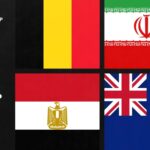
Iran have played at six World Cups, including the past three, in Brazil, Russia and Qatar. Their Group G opponents this summer are New Zealand, Belgium and Egypt, and they would face the United States in the knockout stage if both sides qualify as group runners-up.

Iranians are barred from entering the US under a travel ban introduced by the Trump administration last June, although it permits exemptions for athletes involved in the World Cup or 2028 Olympics in Los Angeles.

FIFA was contacted for comment.

Infantino’s idolisation of Trump has left football with blood on its hands

Story by Barney Ronay
 The Guardian

Mr President. Fellow exco members. We’re going to need a bigger Board of Peace. How many mini‑pitches are we up to now? Gaza got 50 of them last month. What will it take to football-fix the global conflict being set in train by Fifa’s own Peace Prize Boy? A hundred mini-pitches? Four billion mini-pitches? All the mini‑pitches in the universe?

In a more sane version of what we must, out of habit, call the real world, it would seem absurd to talk about sports administration in the context of the US, Iran and the airborne conflict being played out across the borders of their allies.

Sport is the most important of all the unimportant things. Sport is a part of a culture you fight for, but not a part of the battle. Sport is also prone to insisting on its own importance, shoving itself to the front of every photo like a particularly deluded family Labrador.

When news emerged on Monday that Iran had launched a drone attack on the Ras Tanura oil refinery in Saudi Arabia, there was an urge to point out this is a mere 250 miles from Cristiano Ronaldo’s house. Do we need a footballers‑and-their-war-menaced-mansions gallery? Meanwhile the UK government has advised British nationals in Saudi to stay inside and take cover. So … you’re saying this is an Ivan Toney story?

There are two reasons why this dynamic has now shifted, why football is not just an observer but an active participant in this picture; reasons that should in any sane version of reality be hugely damaging for Fifa and its executive.

The basic premise is jaw‑dropping enough. The co‑host of the Fifa World Cup finals this summer is currently bombing one of its participating nations. The co‑host of the tournament has murdered the head of state of the third‑ranked team in Group G.

Nothing quite like this has happened before. Britain was involved in bloody conflicts in Borneo and Aden while it hosted the 1966 World Cup. Russia has been banned from international sport as a consequence of invading the borders of a sovereign state, although this was still deemed unproblematic in 2018.

Clearly, nobody out there will have the will or the courage to apply a similar logic to the US. The issue is the extent of Fifa and Gianni Infantino’s willingness to act as a fluffer, ally and de facto propaganda mouthpiece for Donald Trump’s regime.

Never mind how gravely Infantino might frown, while pretending this has all been necessary realpolitik. The fact is, Fifa has tied itself with unquestioning zeal to a US president who has initiated eight acts of overseas aggression in his second term. And football has blood on its hands now, too.

This might seem like a stretch, or an overly dramatic take on the necessary exercise of Fifa’s global remit. But this has also been a choice. Infantino has, in full view of the consequences, repeatedly put Fifa in the same room as Trump’s autocratic exercise of power. Not as a guest or a bystander, but as an enabler, an active participant in the publicity machine.

Under its own statutes Fifa is supposed to be politically neutral. And yet this has still happened, to a degree that it has by now moved past cartoonish to grotesque. It was a choice to trail after the president like a goggle-eyed teenager offering gifts, a bauble here, a peace prize there, a strange and frightening Club World Cup trophy replica that looks like it contains a tiny drawer full of crow’s heads.

It was a choice not just to award Trump a peace prize, but to invent a peace prize from scratch so he could win it, that fittingly gruesome drag‑me‑to‑hell golden bauble with its nest of clawing hands.

As was the related announcement of the weird and pointless Gaza mini-pitch construction project, with its manipulative background imagery of rubble and displaced people casually tossed into the mix, a gruesome form of public conscience washing.

All of this is doubly absurd given the continued participation in the Fifa-verse of Israel, the same nation that is levelling Gaza’s existing infrastructure. Almost as an afterthought, it goes without saying that the weapons being used to reduce these people’s homes to rubble are being part-funded by the hosts of this summer’s tournament and Infantino’s own daddy‑regime. But never mind. The president has a golden peace ball. Keep looking at the peace ball.

In the end this will catch up with you. The open doors, the hours at the buffet table, the ballroom passes, all come at a cost. Fifa may not be directly responsible for all this. But it is now decisively part of the image-making that has empowered Trump to take his extreme executive actions.

There is of course a hugely complex set of demands in play here. The idea of a right and wrong side of history is never really clear. Sometimes you might straddle many of them all at once. But Fifa is so clearly drawn to the nearest power source, the biggest stick, the grandest stage, all the while presenting itself as grave and stately ambassador of hope, led by a man who increasingly resembles essence of pure inauthenticity, reconstituted into human form, packed into a blue suit and pushed out on stage to talk about peace, in the voice of a man addressing you from the bridge of his own golden ship of hope.

What happens next is entirely uncertain. As news broke of the US bombardment of Tehran, Fifa executives were at Hensol Castle in Wales overseeing the 140th annual general meeting of the International Football Association Board, which is at least a suitably scaled occupation for a bunch of sports administrators.

It seems impossible that Iran can now compete at the World Cup this summer, or indeed that it should have been present in any case given the regime is accused of killing tens of thousands of civilian protesters. The Iranian FA has stated it “cannot be expected to look forward to the World Cup with hope”. Its fans were already banned from entering the US.

Under Fifa’s statutes, there is no direct remedy should Iran drop out, although there is pretty much a free hand under force majeure for the executive committee to act as it sees fit. The United Arab Emirates and Qatar, struck by Iranian bombs in the past few days, were in the same qualifying group. As were North Korea. Perhaps Infantino has a route here to usher in another dear leader.

Some kind of fudge will be offered. A World Cup will take place if there is still a world left to contest it. The US needs this to happen. The show must continue. And this is an incidental aspect of the extraordinary story of Trump and Infantino. Football is always telling you things about the world, always running ahead to the tide.

Amir Ghalenoei

In this case it is providing the ideal, textbook, read-it-and-take-notes lesson in how dictatorships and propaganda work, how power glosses its actions with noise. How spectacle is used to flood the zone, and how nothing floods the zone like football.

In any sane version of sports governance Infantino should, at the end of all this, be forced to explain his actions, to justify taking global football into this space. It won’t happen. His own executive power is absolute.

The money continues to flow to his sub-partners. But history will still judge him, and judge his version of Fifa. There is no way of escaping that lens. And from here it already looks like the most grotesque, post-truth, fawningly complicit version of big sport ever devised.

Team Melli to Face Puerto Rico in Friendly Match Ahead of 2026 World Cup

According to Mehr News Agency, the Iranian national football team is planning to hold a friendly match against Puerto Rico as part of their preparation program for the 2026 FIFA World Cup.

Mehdi Mohammadnabi, Vice President of the Football Federation and manager of the national team, stated that a low-intensity friendly has been scheduled for the period leading up to Iran's opening World Cup match against New Zealand.

"This match will be held behind closed doors," Mohammadnabi explained. "As is common practice in past World Cups, matches close to the start of the tournament are usually arranged with teams that are at a similar or even lower technical level than the national team to provide more suitable preparation conditions."

The behind-closed-doors encounter is designed to fine-tune the team's tactics and fitness without revealing strategies to future opponents. Iran is set to begin their World Cup campaign against New Zealand, making this friendly an important final step in their preparations.

Puerto Rico is ranked 160th in the FIFA World Rankings. The two teams have never met at an international level at any competition.

Iran to Face Nigeria and Costa Rica in March Friendlies

Amir Mehdi Alavi, spokesman for the Football Federation of Iran, has announced that Team Melli will play a friendly match against Nigeria on March 27th in Amman, Jordan. This will be Iran's first friendly following the 2026 World Cup draw.

Although Nigeria failed to qualify for the 2026 World Cup, they remain one of African football's traditional powerhouses. The match represents a serious test for Amir Ghalenoei's squad and fulfills the head coach's wish for meaningful preparation following Spain's withdrawal from a scheduled friendly in recent months.

Change of Plans

Ghalenoei had long insisted on holding the Nowruz camp in Europe, with initial plans for a training camp in Austria and preparatory matches against Scotland and Portugal. However, logistical challenges and the lack of suitable platforms for these matches led the federation to pursue alternative options. Instead, Iran will participate in a tournament in Jordan, facing Nigeria followed by Costa Rica.

The Opponents

Nigeria – Ranked 26th in FIFA rankings and third in Africa, the Super Eagles present a formidable challenge with their attacking style of play and physical approach. Despite missing the 2022 World Cup and failing to qualify for 2026, they remain one of Africa's strongest teams.

Under the leadership of Eric Chelle, who has secured 14 wins in 21 matches, Nigeria boasts an impressive lineup featuring stars like Victor Osimhen, Ademola Lookman, Wilfred Ndidi, and Alex Iwobi. For Iran's coaching staff, this match serves as valuable preparation for their World Cup group stage encounter with Egypt, simulating the style of play they can expect from their African opponents.

Costa Rica – The Central Americans, who have appeared in six World Cups, will provide a different test with their fast, technical football. The match against Costa Rica is scheduled for March 31st, 2026. Costa Rica has reportedly reached an agreement with former Spanish national team coach Robert Moreno, who will bring new tactical ideas to face Iran in the Jordan tournament.

Historical Context

Iran and Nigeria have met twice previously:

  • A 1-0 defeat in the 1998 Hong Kong tournament
  • A goalless draw in the 2014 World Cup in Brazil

The upcoming third encounter carries more technical and tactical significance than prestige, as Ghalenoei seeks to simulate conditions similar to the match against Egypt in World Cup Group G.

Strategic Preparation

While the inability to coordinate friendlies with major European teams has limited the coaching staff's options, the selection of two opponents with contrasting styles demonstrates a shift from reactive planning to purposeful goal-setting. Nigeria will test Iran against physical, African-style football, while Costa Rica offers experience against fast, technical Central American play.

Though the European camp and match against Scotland were ultimately canceled, Ghalenoei has achieved his primary objective: measuring his team against opponents capable of revealing the true caliber of his players. Nigeria, in particular, represents exactly the kind of challenge that will prepare Iran for the World Cup.


Cheering Under Caution: The Physical Peril and Emotional Toll on Team Melli Fans in America

In its official press release, FIFA confirmed that fans from all 211 of its member nations submitted ticket requests during the Random Selection Draw phase between December 11 and January 13.

The organization said it received an average of 15 million requests per day – a figure it described as a new record for global football demand.

The 2026 tournament will feature 104 matches across 16 cities in the United States, Canada, and Mexico.

However, FIFA noted that a valid match ticket does not automatically grant entry into any of the three host nations.

Each fan must still meet national immigration criteria and obtain the appropriate visa before travelling to attend games.

Donald Trump’s visa rules add new uncertainty for travelling fans

The reminder follows recent US visa changes introduced under Donald Trump, which have created additional requirements for several countries, including Iran, and some with national teams qualified for the World Cup.

While players and officials are unaffected, fans from certain regions may face longer processing times or extra screening.

While FIFA emphasizes collaboration with local authorities to assist international fans with travel, this assurance rings hollow against the backdrop of the United States' complex and often stringent immigration enforcement regime. FIFA’s influence over federal law enforcement policy is negligible to nil. Consequently, fans planning to attend matches in the U.S. must prepare for more than just logistical hurdles; they must navigate a security environment where the lines between crowd control and aggressive immigration enforcement may dangerously blur.

The primary challenges are multi-layered:

1. The Visa and Entry Hurdle: Despite valid tourist visas, the sheer volume of applicants from 48 qualifying nations, combined with ever-shifting U.S. travel policies and heightened security screenings, will inevitably lead to delays, complications, and denied entries for some legitimate fans. The process will be stressful and unpredictable.

2. The Unprecedented On-the-Ground Risk: ICE and Policing at Mass Events: This constitutes the most severe and unique danger. Assuming fans secure both tickets and visas, they will have no special protection from U.S. Immigration and Customs Enforcement (ICE) or other law enforcement agencies. Historically, these forces have operated with broad discretion, and their actions have frequently been criticized for racial profiling and excessive force.

  • A Pattern of Targeting: Documented incidents show a disturbing focus on individuals perceived as foreign, particularly those of Hispanic, Middle Eastern, South Asian, and African descent. The pervasive fear is that in the frenetic, crowded environments surrounding World Cup venues, individuals speaking foreign languages or fitting certain racial profiles will be disproportionately subjected to stops, questioning, and detention.
  • Arbitrary Violence and Lethal Force: As highlighted by the tragic shooting of a mother of three by ICE agents, an American citizen, the potential for escalation to lethal force, while statistically low, exists and is a terrifying prospect. For visiting fans, unfamiliar with their rights in U.S. jurisdictions, a tense interaction could escalate rapidly.
  • A Heightened, Active Presence: It is a near certainty that ICE and Homeland Security units will be significantly bolstered around stadiums, fan zones, and transportation hubs under the banner of "event security." Their mandate, however, will dualistically cover both public safety and immigration enforcement, creating a climate of anxiety for international attendees.

3. A Stark Tri-Nation Contrast: This paints a starkly different picture for the 2026 tournament’s three hosts. Canada and Mexico, while certainly implementing strong security, are generally perceived as having policing models more oriented toward facilitation and welcoming international guests at mass events. The U.S. approach, colored by its domestic politics and immigration debates, is projected to be more confrontational and enforcement-heavy.

Team Melli's Diaspora: A Home Support in Exile, Shadowed by Risk
For Iran's national team, Team Melli, the 2026 World Cup group stage in the United States presents a poignant and paradoxical scenario. Given the severely strained diplomatic relations and stringent U.S. visa policies, it is safe to assume that virtually no Iranian passport holder residing in Iran will successfully secure entry to attend matches in Los Angeles or Seattle. Consequently, Team Melli's visible support in the stadiums will be almost entirely composed of the Iranian diaspora.

This diaspora, however, represents a formidable and passionate force. The bulk of the support will emanate from the vast and established Iranian communities in California and Washington state—cities like Los Angeles itself and Vancouver, BC, are home to some of the largest populations of the Iranian diaspora outside of Iran. Thousands of expatriates and second-generation Iranian-Americans and Iranian-Canadians will turn the stands into a sea of green, red, and white, creating a powerful "home-away-from-home" atmosphere. To a lesser extent, fans residing in Europe and other parts of the Middle East will also contribute to the numbers, forming a global patchwork of support united in national pride.

Yet, this unifying celebration will unfold under a cloud of palpable anxiety. The very identity that brings these fans together, their Iranian heritage, could make them specific targets in the heightened security environment. The political situation between the U.S. and Iran ensures that Iranian diaspora fans, regardless of their citizenship status, will be under increased scrutiny.

The Peril of Profiling and Intimidation

Even foreign-born fans holding U.S., Canadian, or European passports are not immune to risk. In the tense, crowded zones around stadiums, where ICE and federal agencies operate with broad mandates, the potential for profiling is acute. Fans speaking Farsi, wearing Team Melli regalia, or simply possessing features associated with the Middle East may face disproportionate stops, aggressive questioning, searches, and intimidation. The documented tactics of these forces, which critics describe as heavy-handed and uncivilized, could transform a day of festivity into an ordeal of confrontation.

The prediction, therefore, is bittersweet: While tens of thousands of Team Melli fans will passionately enjoy the historic opportunity to support their team on the world's biggest stage in their adopted homes, their experience will be uniquely marred by an undercurrent of political tension and personal vulnerability. Their cheers will be a testament to enduring cultural pride, but their presence will be a navigation of a landscape where national heritage inadvertently becomes a security liability. The matches in the U.S. will be less a simple sporting getaway and more a complex act of visible, defiant celebration within a charged geopolitical context.

Conclusion: An Unprecedented Safety Calculus
Never in the history of the FIFA World Cup has the spectator safety calculus been so complex. The traditional concerns of pickpocketing or crowd crushes are now compounded by a genuine, if difficult-to-quantify, risk of adversarial encounters with federal enforcement agencies. Fans must be vigilant, thoroughly informed of their rights, and prepared for an atmosphere where the celebration of football intersects with the tense realities of American border politics. For many, the promise of the beautiful game will be shadowed by an unavoidable apprehension, making the U.S. host cities the most challenging and potentially perilous destinations of the 2026 tournament.

Mehdi Taremi faces possible World Cup ban over Iranian military service

The Daily Mirror, UK.
Story by Nathan Ridley
 

Mehdi Taremi of Iran is celebrating after scoring a goal during the AFC Asian Cup 2023 match between Iran and the United Arab Emirates at Education City Stadium in Al Rayyan, Qatar, on January 23, 2023. (Photo by Noushad Thekkayil/NurPhoto via Getty Images)

Mehdi Taremi of Iran is celebrating after scoring a goal during the AFC Asian Cup 2023 match between Iran and the United Arab Emirates at Education City Stadium in Al Rayyan, Qatar, on January 23, 2023. (Photo by Noushad Thekkayil/NurPhoto via Getty Images)© Noushad Thekkayil/NurPhoto via Getty Images

Iran striker Mehdi Taremi faces being denied entry to the 2026 World Cup over his mandatory military service. Taremi, 33, was prolific during qualification, scoring 10 goals in 15 games as Iran topped both of their groups.

Amir Ghalenoei's side have been placed in Group G alongside Belgium, Egypt and New Zealand. They'll play their fixtures in the US cities of Los Angeles and Seattle.

But Taremi might not be involved. It comes after the president of the Football Federation Islamic Republic of Iran, Mehdi Taj, revealed that some players are at risk of not receiving visas.

"The United States might not issue visas to some players due to their military service location," Taj warned. "That's why we've started now and have selected replacements for players who might not receive visas."

It quickly emerged from various Iranian media outlets that Taremi was among those who the federation chief was referencing. All Iranian men must serve time in a military once they turn 19.

Taremi's situation, however, is markedly different from most of his team-mates. Between 2010 and 2012, the Olympiacos star served in the Navy of the Islamic Revolutionary Guard Corps (IRGC) in the city of Bushehr near his home.

"My service was right there in Bushehr," Taremi explained in a 2015 interview. "Close to our own home, at the IRGC Navy base. It wasn't hard at all."

The US State Department has firm restrictions for individuals with ties to organisations which it deems as foreign terrorist entities. Their list includes the IRGC.

In a statement provided to Pro Soccer Wire, a US State Department spokesperson didn't rule out the possibility that some of Iran's players could see their visa applications denied. "The Trump Administration is committed to doing everything we can to support a successful World Cup," they said.

Iran's forward #09 Mehdi Taremi celebrates scoring his team's second goal during the FIFA World Cup 2026 Asia zone qualifiers group A football match between Iran and the North Korea at the Azadi Sports Complex in Tehran on June 10, 2025. (Photo by ATTA KENARE / AFP) (Photo by ATTA KENARE/AFP via Getty Images)

Iran's forward #09 Mehdi Taremi celebrates scoring his team's second goal during the FIFA World Cup 2026 Asia zone qualifiers group A football match between Iran and the North Korea at the Azadi Sports Complex in Tehran on June 10, 2025. (Photo by ATTA KENARE / AFP) (Photo by ATTA KENARE/AFP via Getty Images)© ATTA KENARE/AFP via Getty Images

"At the same time, the administration will not waver in upholding US law and the highest standards of national security and public safety in the conduct of our visa process.

"We adjudicate each visa application on a case-by-case basis after rigorous review and thorough vetting to determine whether the individual is eligible under US law."

The ex-Inter Milan and Porto star could therefore miss out on the chance to play at back-to-back World Cups. In 2022, Iran came third in a group alongside England, Wales and the United States, finishing third on three points.

The Friendly Match Fallacy: Why Iran's Football Problems Run Deeper Than a High-Profile Game


A persistent narrative among some Iranian football pundits suggests that the key to elevating Team Melli’s standards lies in securing a handful of high-profile friendly matches against European or South American opponents. This notion, while appealing, is a superficial solution that mistakes exposure for evolution. The belief that sharing a pitch with world-class talent can magically transform a national team is not only naive but diverts attention from the deep-rooted, systemic issues that truly dictate success on the global stage.

The genuine criteria for improving Iran’s World Cup prospects are foundational, not ceremonial. They include:

  • Domestic Football Health: The quality of the Persian Gulf Pro League, its infrastructure, training facilities, and talent development pipelines.
  • Player Development & Professionalism: The standard of Iran’s legionnaires abroad, coupled with the technical discipline, personal conduct, and professional attitude of all players.
  • Governance & Leadership: The competence, experience, and integrity of the Football Federation (FFIRI) and its administration.
  • Technical Direction: The quality of coaching, tactical vision, and strategic planning within the national team setup.

With approximately six months until the 2026 World Cup begins, the prospect of meaningful improvement in these areas appears bleak. The domestic league struggles with quality and fan engagement, failing to consistently produce elite talent. Most of Iran’s foreign-based players have yet to set their leagues alight, often occupying modest roles. The nation’s training facilities and stadiums—epitomized by the long-term closure of Azadi, which has left giants like Persepolis and Esteghlal looking like displaced refugees—remain a profound embarrassment.

The FFIRI itself is widely viewed as ineffective, lacking the strategic foresight and operational skill required for modern football governance, with persistent whispers of corruption further eroding trust. This institutional failure directly impacts the pitch.

Coach Amir Ghalenoei, despite his dedication, operates with significant handicaps. Questions surrounding his tactical acumen have grown louder, and his authority within the squad appears weakened. His public communications, often sounding more like political rhetoric than technical analysis, have done little to reassure a frustrated fanbase. The persistent sugar-coating of subpar performances is testing the patience of even the most loyal supporters.

These are not deficits cured by 90 minutes against a top-tier nation. While such friendlies offer valuable exposure and test player cohesion, they are diagnostic tools, not cures. The core pathology remains untreated. Furthermore, the logistical fantasy of such matches collides with reality: serious football nations plan years in advance, while the FFIRI is notorious for last-minute planning and citing prohibitive costs.

With only two FIFA windows remaining before the World Cup, comprising a potential four matches, the pursuit of "realistic" opposition is a more prudent strategy than chasing glamorous, expensive fixtures that may only highlight existing flaws without fixing them.

In conclusion, while fans may dream of seeing Iran face France or Spain, the administration must wake up to a harder truth. Friendly matches can refine a team, but they cannot rebuild a system. Without confronting the profound shortcomings in infrastructure, governance, and domestic football culture, no amount of high-profile friendlies will significantly alter Team Melli’s chances of advancing in the 2026 World Cup. The quest for improvement must look inward, long before it looks for prestigious opponents.

FFIRI President Details World Cup Preparations Amid Challenges.


In a comprehensive update on Iran’s preparations for the 2026 FIFA World Cup, Football Federation President Mehdi Taj addressed critical issues, including friendly match negotiations, visa denials for staff, and logistical planning for the team’s camp in the United States.

Friendly Matches: Portugal and Spain in Sight

Taj confirmed that efforts to secure high-profile friendly matches are advancing. “We aimed to arrange matches for March and June [early spring],” he stated. “For June, we targeted European opponents and have held significant talks with Portugal. This has progressed considerably, and within the next two to three days, we should sign a memorandum of understanding.”

He indicated that Portugal’s second friendly match in that window could be against Iran. Furthermore, Taj revealed ongoing coordination with Qatar for the earlier March window, where Spain and Egypt are scheduled to play. “Spain will come to Qatar and likely play them first, then potentially face us,” he added.

While talks have also been held with Scotland and Iceland, Taj emphasized that no agreements are yet final. “None are definitive at the moment. We must have replacement plans and alternative options ready.”

Visa Denials and Contingency Planning

Addressing the sensitive issue of U.S. visa refusals for some national team members, Taj outlined the federation’s proactive stance. “After consultations, we decided to send three representatives to the draw. We have started identifying replacement options for the World Cup squad,” he explained. “If, for any reason, a player is told he cannot come, we must have an alternative ready.”

He cited the case of team official Saeed Al-Hawie, who was denied a visa, possibly due to his professional history. “Those who may have served in certain capacities could face problems,” Taj noted. He confirmed that Iran has protested the matter to FIFA, suggesting the global body “could have stood up to the United States more firmly.”

Taj also mentioned a joint protest with Egypt regarding the official naming of their World Cup group stage match, which he labeled “unreasonable and supportive of a specific political group,” vowing to pursue the issue.

U.S. Training Camp and Ticket Sales

Regarding Team Melli’s base camp in the United States, Taj identified a preferred location. “We visited a camp approximately 56 kilometers from Los Angeles. The team can reach the city in under an hour, and it is only 12 minutes from the airport,” he said, highlighting its logistical advantage for Iran’s third group match in Seattle. “We hope no complications arise and this camp is secured for us.”

On ticketing, Taj stated that the average ticket price is around $500. While fans inside Iran will not be granted visas for the tournament, the federation plans to facilitate sales for the diaspora. “We must prepare to sell approximately eight thousand tickets per match for our supporters. Iranians living abroad will be able to purchase them through the federation’s website.”


FIFA Days
23–31 March 2026
1–9 June 2026

FIFA World Cup 2026
11 June – 19 July 2026

Group G

June 15, 2026 Belgium Match 16 EgyptLumen Field, Seattle
June 15, 2026Iran Match 15 New ZealandSoFi Stadium, Inglewood
June 21, 2026Belgium Match 39 IranSoFi Stadium, Inglewood
June 21, 2026New Zealand Match 40 EgyptBC Place, Vancouver
June 26, 2026Egypt Match 63 IranLumen Field, Seattle
June 26, 2026New Zealand Match 64 BelgiumBC Place, Vancouver