Tag: Amir Ghalenoei

Iran’s Golden Era in Focus as AFC Asian Cup Saudi Arabia 2027™ Draw Approaches

The road to AFC Asian Cup Saudi Arabia 2027™ glory will be paved when the Final Draw is conducted at the historic Salwa Palace in Riyadh on Saturday.

Leading Iran’s delegation will be Amir Ghalenoei, the head coach of Team Melli, accompanied by Mehdi Kharati, the executive director of the national team. Ghalenoei is set to return to Iran on Monday, once Iran’s group-stage opponents are confirmed.

The teams will be divided into six groups, setting the stage for what promises to be another thrilling continental showdown.

This marks Iran’s 16th participation in the AFC Asian Cup—a record shared with Korea Republic. China PR sits third on the all-time list, with Saudi Arabia 2027 being their 14th appearance.

Japan’s Record

No team has won the AFC Asian Cup more times than Japan, with four titles. Saudi Arabia and Iran follow closely, each having lifted the trophy three times. However, while Japan’s last triumph came in 2011 and Saudi Arabia’s in 1996, Iran’s most recent title was in 1976—the crowning moment of a dynasty unlike any other.

Unbeaten in the Final

Iran (three appearances, three wins) and Qatar (two appearances, two wins) are the only sides to have reached multiple finals and emerged victorious every time. Iraq are the other team with a perfect final record, winning the competition in their sole final appearance (2007).

A Unique Record: Iran’s Unmatched 12-Year Reign (1968–1976)
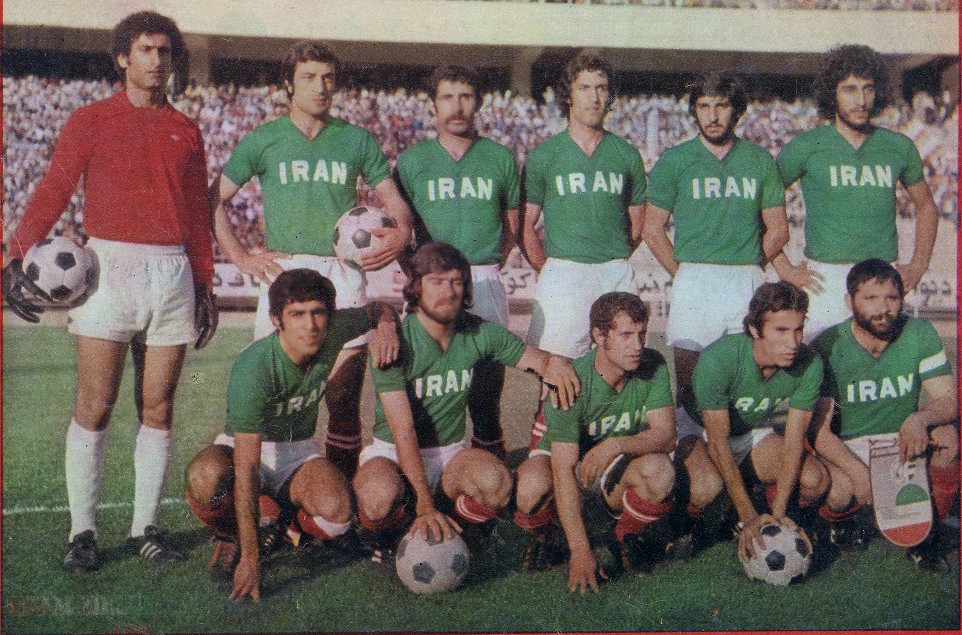
No team in Asian Cup history has ever dominated like Iran did between 1968 and 1976. In that period, Team Melli achieved three consecutive titles—a feat no other nation has managed in the tournament’s history.

What makes this run even more extraordinary is the sheer perfection of their performance. Across three tournaments, Iran played 13 matches and won all 13—a 100% record that remains untouched. They scored 36 goals while conceding just 6, an average of nearly three goals per game and less than 0.5 conceded.

The 1976 campaign was particularly imperious: Iran did not concede a single goal throughout the entire tournament, capping their triumph with a 1–0 final victory over Kuwait.
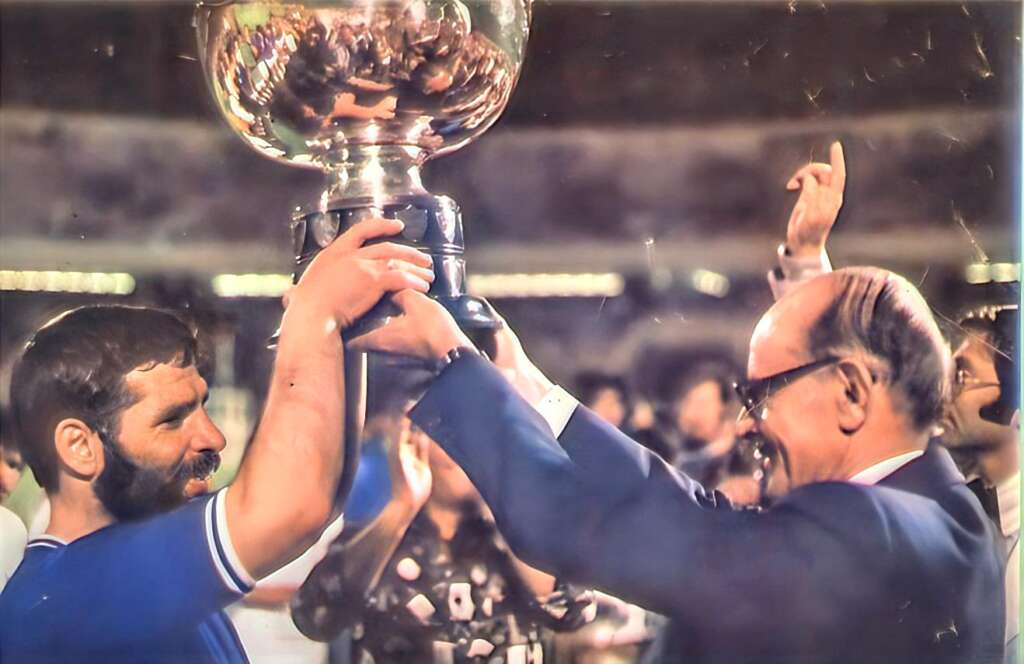
This golden era also produced the first two hat-trick heroes in Asian Cup history—Hossein Kalani and Ali Jabbari—while a legend was forged in Parviz Gheleechkhani, who remains the only player to have lifted the Asian Cup trophy three consecutive times, a record that still stands today.

For 12 unforgettable years, Iran were unbeatable, unmatched, and unforgettable.

Ahead in Numbers

Iran (74 matches) and Korea Republic (73) are the only two teams to have played more than 70 games in AFC Asian Cup history. Iran also lead the charts for most wins excluding penalty shootouts (45), while China PR (21) hold the unfortunate record of most losses excluding penalties.
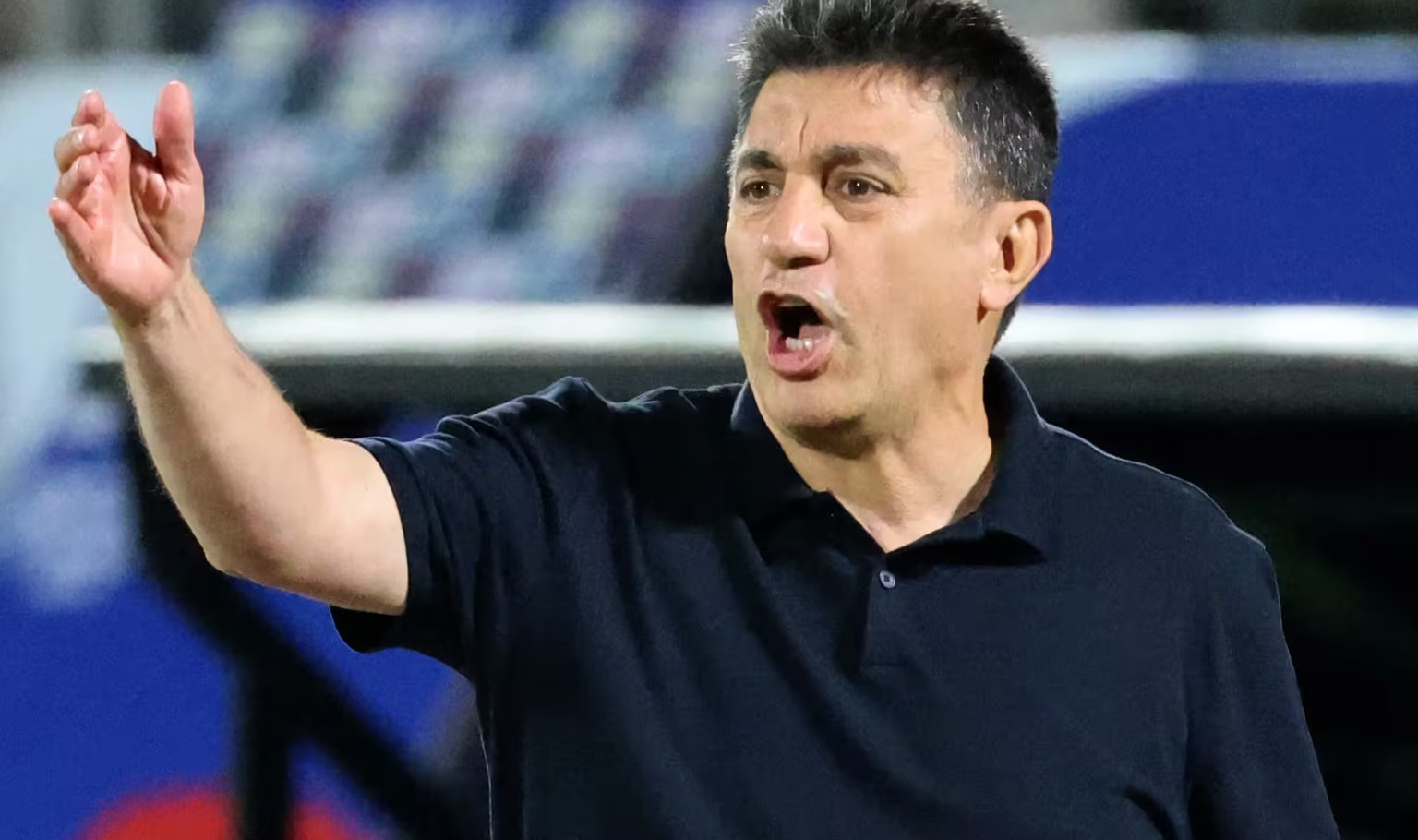
Ghalenoei: Iran can do something epic

6 May 2026
fifa.com

Team Melli head coach Amir Ghalenoei tells FIFA of his belief that IR Iran can advance to the knockout stage of a World Cup for the first time this summer.

  • IR Iran are set to make their seventh FIFA World Cup appearance
  • Aiming to advance to the knockout stage for the first time
  • Vastly experienced head coach Amir Ghalenoei speaks to FIFA

Thrice continental champions and semi-finalists at the previous two editions of the Asian Cup, IR Iran are a long-established juggernaut on their home patch. Translating that continental success to global impact has though proven a tougher than expected ask.

Regular participants they may be, with the nation having qualified for five of the past six editions of the FIFA World Cup™, but Iran are still surprisingly searching for a maiden appearance in the knockout stage.

Across half a dozen tournament outings, Team Melli has made an early exit on each occasion, with only three wins from their 18 matches to date.

The belief internally is that the current side, blessed with a fine generation of experienced talent, is the one poised to finally end that run of outs, as head coach Amir Ghalenoei explains to FIFA.

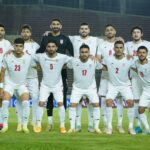
IR Iran players line up prior to a FIFA World Cup 2026 qualifier against United Arab Emirates

“We've had many problems recently, but the players tried their best and made sacrifices. They worked so hard [through qualification] and sacrificed a lot, so it is my job to thank them.

“They can do something epic in the World Cup. They can do it, they have the technical potential to make this a World Cup to remember.”

Situated in a group containing a trio of continental heavyweights in the form of Belgium, Egypt and New Zealand, the going certainly won’t be easy. Ghalenoei can though take comfort from a qualification campaign that his side made fairly light work of, as well as a string of solid results thereafter.

Outside of the three co-hosts, Iran were the third nation to secure qualification, doing so on 20 March last year, five days after their AFC brethren Japan became the first nation to punch their ticket to North America.

Their only defeat in those 16 AFC preliminaries came at the hands of Qatar, after qualification was already secure. Since then, they’ve reached the final of the CAFA Nations Cup and drawn with fellow World Cup-bound nations Cabo Verde and Uzbekistan at an invitational tournament in the United Arab Emirates last year.

Another invitational event, held in Türkiye last month, saw a narrow loss at the hands of Nigeria, followed by a thumping 5-0 win against Costa Rica.

Set against the backdrop of an ongoing conflict that has shuttered the domestic league, forced the national team to play abroad and created numerous logistical issues, the veteran coach is proud of his team’s resolve.

IR Iran players celebrate qualification for the FIFA World Cup 2026

“I am really proud of this team for many reasons, because we've faced a difficult situation with all the problems and concerns, one of which was being unable to host games, but we were one of the first teams to qualify for the World Cup.

“Iran has a special talent whereby in tough times we find or create solutions. We managed to get to this level in spite of a difficult situation. Currently, there are two months to go until the World Cup, but we are in very difficult moment.

“My view though is that through football we can bring joy to families and Iranian society, both inside and outside the country. Football is a concept or project that can bring states and nations closer together. That can be national or global, like Argentina or Brazil having fans everywhere.

“Football in Iran is also like that and I hope that through football we can bring about national unity, despite the current problems in our country. We love our people and want to bring them happiness. I hope we can do that through football.

“My goal is for there to be no war anywhere in the world so people can enjoy football and enjoy their lives. This is my message through football to the world and my people.”

Born in Tehran, Ghalenoei has been at the coalface of Iranian football for close to half a century. As a player, he began his youth career at Rah Ahan, just a year after Iran’s debut World Cup outing, at Argentina 1978.

The bulk of his playing days were spent at Tehran giants Esteghlal, where the former midfielder earned more than a dozen national team caps, before transitioning into coaching in 1999, a year after Iran ended a 20-year wait to make a second World Cup appearance.

IR Iran coach Amir Ghalenoei gestures during a FIFA World Cup 2026 qualifier with United Arab Emirates

Now 62, there is little that Ghalenoei hasn’t experienced in a career that has risen and fallen with the concurrent highs and lows of Iranian football.

Set against that vast well of experience, it is notable that, in spite of the obstacles the team faces, Ghalenoei is adamant that Iran has the capability to write a new chapter in their footballing history this northern summer.

“We want to create some great memories at this World Cup. We're ready with the experience that the team has from previous World Cups to make it through to the knock-out round for the first time. We won't be satisfied with just the group stage but I want us to play good football, not just try to get results.

“I also want to thank our wonderful fans, both inside and outside the country, who have stuck by the national team. They are the reason we managed to qualify. I probably had the least important role of anyone.”

Mahroughi still hopeful to join Team Melli camp

Ehsan Mahroughi, a striker playing for Foolad Khuzestan club, says he was unable to attend the Team Melli training camp due to a respiratory illness.

The 27-year-old striker Mahroughi was one of the excellent players in the Foolad Khuzestan coached by former Team Melli player, Yaha Golmohammadi. The player was invited to the Team Melli camp by Amir Ghalenoeif, but had to withdraw due to a respiratory illness.
He was replaced by Pouria Shahrabadi, a player from Golgohar Sirjan.

Mahrooghi told Tasnim: "I contracted a viral illness and had trouble breathing, so I was unable to participate in the national team's training. This was bad luck for me, and I would have liked to be in the camp. I am in a much better condition now, and I hope to be added to the national team camp soon after I fully recover."

The camp is active in Tehran, with all the invited players on the roster taking part in training.

Mehdi Taj "Iran Ready for World Cup, despite US government hostalities"


The head of the Football Federation Islamic Republic of Iran (FFIRI) has addressed the situation of the national football team regarding the 2026 FIFA World Cup in the United States, expressing deep concern over American hostility while reaffirming Iran's determination to prepare vigorously for the tournament.

"Given the evils of the American authorities, we do not see a favorable prospect for holding the World Cup under current conditions," the FFIRI chief stated. "Nevertheless, we are preparing ourselves for a strong and honorable presence in these competitions."

He confirmed that the list of national team players for the upcoming camp has been announced, with training set to begin Monday at the national teams' camp in Tehran. "Our effort is to ensure that there is no disruption to the national team's preparation process," he added.

Common Goal: World Cup Qualification and Honor

Referring to Team Melli's objectives, the FFIRI head emphasized national unity: "All our efforts are to prepare the national team for a strong presence on the path to qualifying for the World Cup. The federation, the country's sports complex, and the people all support the national team. Our common goal is to advance and participate honorably in the World Cup."

Request to Move Matches to Mexico. No Final Decision Yet

Regarding the FFIRI's formal request to change the venue for Iran's matches from the United States to Mexico, the official provided an update: "Requests have been made, and follow-ups are ongoing regarding moving the venue of the games to Mexico. However, FIFA has already carried out processes such as ticket sales, the lottery, and stadium determinations. Any change requires extensive coordination. We are following up so that this important step can be taken if possible."

He clarified that no final decision has been made, and the outcome depends on FIFA's cooperation and security assurances from host authorities.
The FIFA President has already confirmed that there is no chance of Iran's matches being moved to Mexico.

Warm-up Match with Spain Still Under Review

On the possibility of a friendly match with Spain, the FFIRI head said: "The match with Spain has not yet been finalized for cancellation. We are still discussing whether the conditions for holding this warm-up match will be met. This issue is being followed up, and an announcement will be made if it is finalized."

No Interference in Player Selection – Denis Eckert Addition Planned

Addressing rumors about Sardar Azmoun's invitation to the national team camp, the FFIRI chief stressed: "The head of the federation does not interfere in the selection or invitation of any player. The selection of players, determining the main squad, and selecting warm-up opponents are within the authority of the national team head coach. The federation does not interfere in which player must be in the permanent squad or in technical decisions. We provide the frameworks and facilities; the technical decisions are the responsibility of the head coach."
The exclusion of Sardar Azmoun from Iran's last two friendlies against Nigeria and Costa Rica, allegedly over a social media post showing him with the Ruler of Dubai, has become the catalyst for what many view as a politically motivated decision. To date, no official explanation has been provided for his absence. Neither the FFIRI, head coach Amir Ghalenoei, nor any other authoritative source has offered a reason for sidelining Team Melli's second-highest all-time scorer.

The lack of transparency has fueled speculation, especially given that Azmoun is now fully fit and is set to play in the AFC Champions League Elite semi-final on Monday.

Mehdi Taj also confirmed a new addition: "We have planned to add a striker from Belgium, Denis Eckert, to the national team."


Amir Ghalenoei

Iran’s Parliament Pushes for World Cup Participation, but Final Decision Hinges on U.S. Security Assurances

Tehran – Amid widespread popular enthusiasm and a clear political will to compete on the global stage, Iran’s Parliamentary Cultural Commission has confirmed that a specialized committee is actively reviewing the conditions for Team Melli’s potential participation in the FIFA World Cup 2026 in the United States. However, officials stress that no final decision has been reached, and any move forward is contingent on binding security guarantees from hostile U.S. authorities.

Strong Domestic Desire to Compete

Speaking to reporters, Ahmad Rastineh, spokesman for the Islamic Consultative Assembly’s Cultural Commission, underscored that both the Iranian public and political establishment are keenly determined to see Iran’s national team at the World Cup. Following a recent meeting with Ahmad Donyamali, Minister of Sports and Youth, and his deputies, Rastineh noted that participation in the 2026 World Cup is viewed as a matter of national pride and sporting excellence.

“The meeting extensively discussed the need for better planning to prepare national teams for Asian and world competitions, as well as securing future Olympic quotas,” Rastineh said. “Given the immense importance of the World Cup, detailed discussions were held with the minister and commission members. The popular demand and political inclination to participate are very strong, and we are exploring every avenue to make this happen.”

No Final Decision: Awaiting U.S. Assurances

Despite the widespread desire to attend the tournament, Rastineh made it clear that a final decision has not yet been made. The primary obstacle remains the absence of reliable security guarantees from U.S. authorities, whom Iranian officials characterize as a hostile government.

“In light of the multifaceted nature of these competitions and the conditions that occurred during past tensions—specifically the hostile atmosphere created by U.S. authorities—the need to form a specialized working group was emphasized,” Rastineh explained. “It was decided that a final decision will be made soon, but only after receiving concrete assurances from American officials regarding the safety and dignity of Iran’s national team delegation, including players, coaches, and accompanying personnel.”

He added that until such guarantees are provided and thoroughly vetted, the Islamic Republic will not commit to sending Team Melli to the United States, regardless of the strong popular and political inclination to participate.

Looking Ahead

The specialized committee will continue its review, weighing the passionate demands of Iranian football fans against the necessity of securing firm commitments from U.S. authorities. For now, Iran’s World Cup hopes remain alive, but officially on hold.

Meanwhile, Team Melli held its first training session under Amir Ghalenoei in preparation for the World Cup. 30 domestic league players are involved in the training camp. Iran matches are to be held in Los Angeles and Seattle.

Team Melli Finalizes June Friendly Schedule; Spain Talks Ongoing as Panama Emerges as Backup Plan

The Iranian national football team, currently finalizing preparations for the 2026 FIFA World Cup, is set to play two official international friendly matches during the June FIFA window. As part of the buildup, Amir Ghalenoei's squad will first travel to Turkey in May for a preparatory training camp, which will include several matches against club sides in addition to the scheduled national team fixtures.

The Football Federation of the Islamic Republic of Iran (FFIRI) is currently evaluating a shortlist of potential opponents. CONCACAF nations, the Dominican Republic, Nicaragua, and El Salvador, are under serious consideration, alongside two or three European countries. Negotiations with Spain remain active, though a final agreement has yet to be reached.

Additionally, Team Melli is expected to play a friendly match on American soil as part of its acclimatization for the tournament co-hosted by the United States.

The federation's plans have, however, encountered a hiccup regarding the previously proposed match against Puerto Rico. Federation requests have reportedly pushed that fixture to the verge of cancellation. As a contingency, the FFIRI has opened talks with the Panamanian Football Federation. Should the Puerto Rico match fall through officially, Panama will step in as the replacement opponent.

Team Melli will start a local training camp in Tehran on Monday, 20th April, utilizing the suspension of the domestic league.


Team Melli stats training with 30 local players.

With the postponement of the Premier League competitions, and to facilitate the Team Melli preparation program for the FIFA World Cup 2026, the squad will commence it training sessions with immidiate effect.

Accordingly, Amir Ghalenoei , head coach of the Iranian national team, invited 30 players to this stage of training. The names of the invited players are as follows:

The invited players must introduce themselves to the technical staff at the national team camp at 2:00 PM tomorrow, Monday, April 20, according to the federation website.

#Name POSTCLUBage
GOALKEEPERS
1BEIRANVAND, Alireza #1GKTractor33
2KHALIFA, MohammadGKAluminium Arak21
3HOSSEINI, Seyed HosseinGKSepahan33
4NIAZMAND, Payam #12GKPersepolis31
DEFENDERS
5ABARGHOUEI, Hossein #3DFPersepolis29
6AGHASI, Aref #20DFEsteghlal29
7YOUSEFI, Arya #18DFSepahan23
8ESMAELIFAR, DanialDFTractoe33
9EIRI, DanialDFMalavan22
10HAJSAFI, Ehsan #23DFSepahan36
11KANANI-ZADEGAN, Hossein #13DFPersepolis32
12KHALILZADEH, Shojaa #4DFTractor36
13MOHAMMADI, Milad #5DFPersepolis32
14REZAEIAN, Ramin #23DFEsteghlal36
15HARDANI, SalehDFEsteghlal27
16NEMATI, Ali #3DFFoolad Khuzestan30
17NOORAFKAN, Omid #21DFSepahan29
MIDFILED
18MOHEBBI, MasoudMFKhybar Khorramabad21
19TORABI, MehdiMFTractor30
20HAJI EYDI, ArefMFSepahan27
21MOHEBI, MehdiMFSepahan26
22RAZZAGHINIA, AmirmohammadMFEsteghlal20
23CHESHMI, RouzbehMFEsteghlal32
FORWARDS
24ALIPOUR, AliFWPersepolis31
25HASHEMNEJAD, Mehdi #17FWTractor24
26HOSSEINZADEH, Amir Hossein #10FWTractor25
27MAHMOUDI, AmirHosseinFWPersepolis19
28HABIBINEJAD , HadiFWCadormalo Ardakan30
29TAHERI, Kasra #27FWPeykan19
30MAHROUGHI, EhsanFWShams Azar28

Team Melli Thrash Costa Rica 5-0 in Antalya Friendly

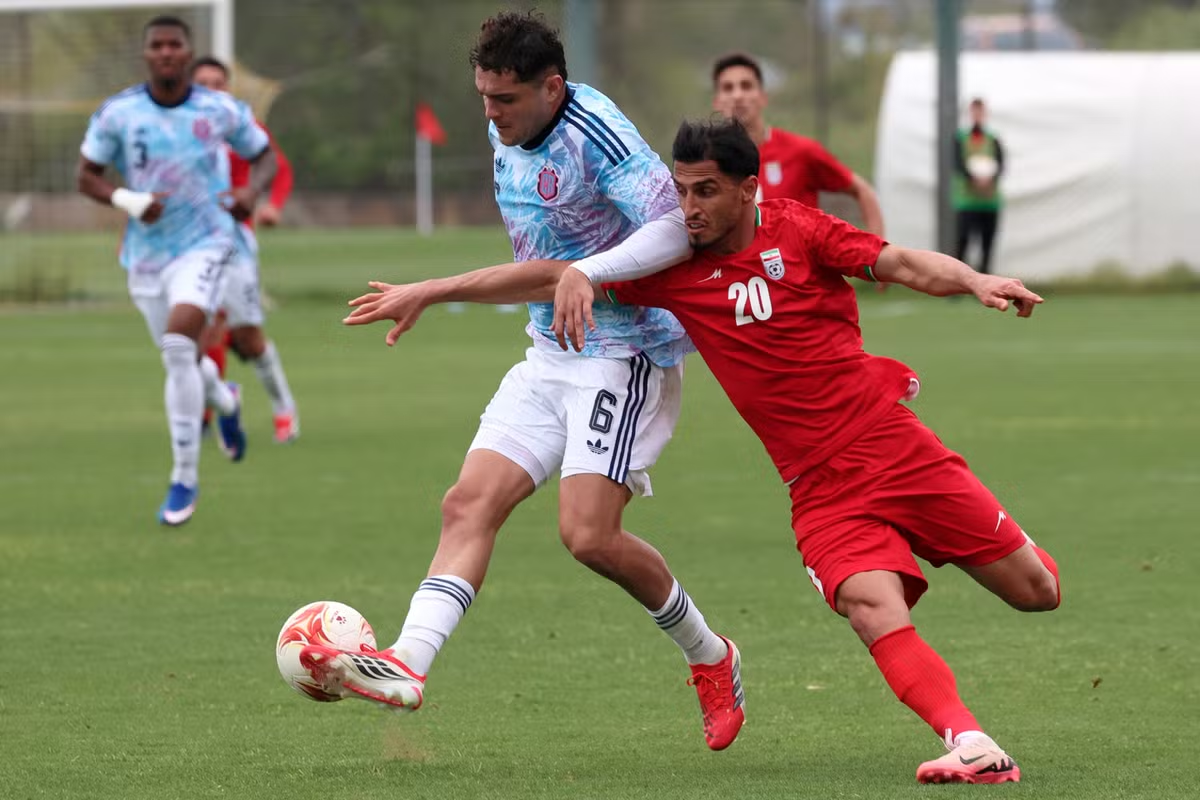
Team Melli delivered a commanding performance in their second friendly international, routing a physical Costa Rica side 5-0 at the Mardan Titanic Sports Complex in Antalya.

After the disappointment of a narrow defeat to Nigeria on Friday, head coach Amir Ghalenoei abandoned the experimental 3-5-1-1 formation in favor of the more familiar 4-3-3. The tactical switch yielded immediate dividends.

Iran were on the scoresheet inside ten minutes. Mehdi Taremi, who would go on to have a starring role, produced excellent work down the flank before setting up Ali Gholizadeh, who finished immaculately past the Costa Rican goalkeeper.

The lead was doubled nine minutes later when Hosseinzadeh was fouled in the box. Captain Taremi stepped up and converted the resulting penalty with ease to make it 2-0.

Taremi then turned provider once more, delivering a pinpoint assist for Mohammad Mohebi, who netted Iran's third goal in the 31st minute. Shortly after, another foul on Mohebi resulted in a second penalty, which Taremi again dispatched to give Iran a 4-0 advantage at the break.

Early in the second half, substitute Mehdi Ghayedi produced the goal of the game, lashing home from the edge of the box after a rebound from a corner to complete the 5-0 rout.

Ghalenoei utilized the friendly to its full extent, making nine substitutions throughout the match. There were notable debuts for young talents, including 19-year-old Persepolis forward Amirhossein Mahmoudi. Amirmohammad Razzaghinia, another promising youngster, started the contest and played the full 90 minutes.

While Iran had suffered from wasteful finishing in the defeat to Nigeria, there were no such issues against a Costa Rican side that had drawn 2-2 with Jordan on Friday.

The performance was marked by a fluid passing game, with Iran showing composure even in congested areas. Diagonal balls and well-worked combinations produced another pleasing display, achieved despite the emotional stresses facing the squad.

Defensively, Iran were resolute. The central partnership of Nemati and Khalilzadeh provided stability, while Danial Esmaeilifar and Milad Mohammadi controlled the flanks. Goalkeeper Hossein Hosseini, who replaced Beiranvand, enjoyed a quiet first half with little to do.

Ali Gholizadeh continued his impressive form, capping his performance with the opening goal. Taremi, who had been disappointing against Nigeria, delivered a man-of-the-match display with two goals and two assists.

Costa Rica offered little attacking threat, but the match served as a valuable exercise for a Team Melli side that continues to grow in both stature and confidence. The integration of two young debutants also provided a refreshing boost for Ghalenoei's squad.

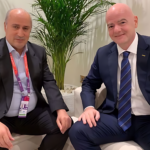
In a surprise appearance, FIFA President Gianni Infantino attended the match at the Mardan Stadium practice field. Cameras frequently focused on Infantino throughout the first half. It is believed that the FIFA chief was present to meet with the Team Melli squad and management, offering support and reassurance ahead of the World Cup.

However, Infantino's words may carry limited weight given the context of the host nation. Its president has publicly stated that he cannot guarantee the safety of the Iranian delegation, casting a shadow over what was otherwise a triumphant day on the pitch.


Iran to Face Nigeria and Costa Rica in March Friendlies

Amir Mehdi Alavi, spokesman for the Football Federation of Iran, has announced that Team Melli will play a friendly match against Nigeria on March 27th in Amman, Jordan. This will be Iran's first friendly following the 2026 World Cup draw.

Although Nigeria failed to qualify for the 2026 World Cup, they remain one of African football's traditional powerhouses. The match represents a serious test for Amir Ghalenoei's squad and fulfills the head coach's wish for meaningful preparation following Spain's withdrawal from a scheduled friendly in recent months.

Change of Plans

Ghalenoei had long insisted on holding the Nowruz camp in Europe, with initial plans for a training camp in Austria and preparatory matches against Scotland and Portugal. However, logistical challenges and the lack of suitable platforms for these matches led the federation to pursue alternative options. Instead, Iran will participate in a tournament in Jordan, facing Nigeria followed by Costa Rica.

The Opponents

Nigeria – Ranked 26th in FIFA rankings and third in Africa, the Super Eagles present a formidable challenge with their attacking style of play and physical approach. Despite missing the 2022 World Cup and failing to qualify for 2026, they remain one of Africa's strongest teams.

Under the leadership of Eric Chelle, who has secured 14 wins in 21 matches, Nigeria boasts an impressive lineup featuring stars like Victor Osimhen, Ademola Lookman, Wilfred Ndidi, and Alex Iwobi. For Iran's coaching staff, this match serves as valuable preparation for their World Cup group stage encounter with Egypt, simulating the style of play they can expect from their African opponents.

Costa Rica – The Central Americans, who have appeared in six World Cups, will provide a different test with their fast, technical football. The match against Costa Rica is scheduled for March 31st, 2026. Costa Rica has reportedly reached an agreement with former Spanish national team coach Robert Moreno, who will bring new tactical ideas to face Iran in the Jordan tournament.

Historical Context

Iran and Nigeria have met twice previously:

  • A 1-0 defeat in the 1998 Hong Kong tournament
  • A goalless draw in the 2014 World Cup in Brazil

The upcoming third encounter carries more technical and tactical significance than prestige, as Ghalenoei seeks to simulate conditions similar to the match against Egypt in World Cup Group G.

Strategic Preparation

While the inability to coordinate friendlies with major European teams has limited the coaching staff's options, the selection of two opponents with contrasting styles demonstrates a shift from reactive planning to purposeful goal-setting. Nigeria will test Iran against physical, African-style football, while Costa Rica offers experience against fast, technical Central American play.

Though the European camp and match against Scotland were ultimately canceled, Ghalenoei has achieved his primary objective: measuring his team against opponents capable of revealing the true caliber of his players. Nigeria, in particular, represents exactly the kind of challenge that will prepare Iran for the World Cup.


The Friendly Match Fallacy: Why Iran's Football Problems Run Deeper Than a High-Profile Game


A persistent narrative among some Iranian football pundits suggests that the key to elevating Team Melli’s standards lies in securing a handful of high-profile friendly matches against European or South American opponents. This notion, while appealing, is a superficial solution that mistakes exposure for evolution. The belief that sharing a pitch with world-class talent can magically transform a national team is not only naive but diverts attention from the deep-rooted, systemic issues that truly dictate success on the global stage.

The genuine criteria for improving Iran’s World Cup prospects are foundational, not ceremonial. They include:

  • Domestic Football Health: The quality of the Persian Gulf Pro League, its infrastructure, training facilities, and talent development pipelines.
  • Player Development & Professionalism: The standard of Iran’s legionnaires abroad, coupled with the technical discipline, personal conduct, and professional attitude of all players.
  • Governance & Leadership: The competence, experience, and integrity of the Football Federation (FFIRI) and its administration.
  • Technical Direction: The quality of coaching, tactical vision, and strategic planning within the national team setup.

With approximately six months until the 2026 World Cup begins, the prospect of meaningful improvement in these areas appears bleak. The domestic league struggles with quality and fan engagement, failing to consistently produce elite talent. Most of Iran’s foreign-based players have yet to set their leagues alight, often occupying modest roles. The nation’s training facilities and stadiums—epitomized by the long-term closure of Azadi, which has left giants like Persepolis and Esteghlal looking like displaced refugees—remain a profound embarrassment.

The FFIRI itself is widely viewed as ineffective, lacking the strategic foresight and operational skill required for modern football governance, with persistent whispers of corruption further eroding trust. This institutional failure directly impacts the pitch.

Coach Amir Ghalenoei, despite his dedication, operates with significant handicaps. Questions surrounding his tactical acumen have grown louder, and his authority within the squad appears weakened. His public communications, often sounding more like political rhetoric than technical analysis, have done little to reassure a frustrated fanbase. The persistent sugar-coating of subpar performances is testing the patience of even the most loyal supporters.

These are not deficits cured by 90 minutes against a top-tier nation. While such friendlies offer valuable exposure and test player cohesion, they are diagnostic tools, not cures. The core pathology remains untreated. Furthermore, the logistical fantasy of such matches collides with reality: serious football nations plan years in advance, while the FFIRI is notorious for last-minute planning and citing prohibitive costs.

With only two FIFA windows remaining before the World Cup, comprising a potential four matches, the pursuit of "realistic" opposition is a more prudent strategy than chasing glamorous, expensive fixtures that may only highlight existing flaws without fixing them.

In conclusion, while fans may dream of seeing Iran face France or Spain, the administration must wake up to a harder truth. Friendly matches can refine a team, but they cannot rebuild a system. Without confronting the profound shortcomings in infrastructure, governance, and domestic football culture, no amount of high-profile friendlies will significantly alter Team Melli’s chances of advancing in the 2026 World Cup. The quest for improvement must look inward, long before it looks for prestigious opponents.