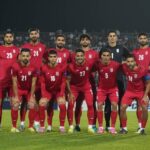
Tag: Amir Ghalenoei

Iran to Face Nigeria and Costa Rica in March Friendlies

Amir Mehdi Alavi, spokesman for the Football Federation of Iran, has announced that Team Melli will play a friendly match against Nigeria on March 27th in Amman, Jordan. This will be Iran’s first friendly following the 2026 World Cup draw.

Although Nigeria failed to qualify for the 2026 World Cup, they remain one of African football’s traditional powerhouses. The match represents a serious test for Amir Ghalenoei’s squad and fulfills the head coach’s wish for meaningful preparation following Spain’s withdrawal from a scheduled friendly in recent months.

Change of Plans

Ghalenoei had long insisted on holding the Nowruz camp in Europe, with initial plans for a training camp in Austria and preparatory matches against Scotland and Portugal. However, logistical challenges and the lack of suitable platforms for these matches led the federation to pursue alternative options. Instead, Iran will participate in a tournament in Jordan, facing Nigeria followed by Costa Rica.

The Opponents

Nigeria – Ranked 26th in FIFA rankings and third in Africa, the Super Eagles present a formidable challenge with their attacking style of play and physical approach. Despite missing the 2022 World Cup and failing to qualify for 2026, they remain one of Africa’s strongest teams.

Under the leadership of Eric Chelle, who has secured 14 wins in 21 matches, Nigeria boasts an impressive lineup featuring stars like Victor Osimhen, Ademola Lookman, Wilfred Ndidi, and Alex Iwobi. For Iran’s coaching staff, this match serves as valuable preparation for their World Cup group stage encounter with Egypt, simulating the style of play they can expect from their African opponents.

Costa Rica – The Central Americans, who have appeared in six World Cups, will provide a different test with their fast, technical football. The match against Costa Rica is scheduled for March 31st, 2026. Costa Rica has reportedly reached an agreement with former Spanish national team coach Robert Moreno, who will bring new tactical ideas to face Iran in the Jordan tournament.

Historical Context

Iran and Nigeria have met twice previously:

  • A 1-0 defeat in the 1998 Hong Kong tournament
  • A goalless draw in the 2014 World Cup in Brazil

The upcoming third encounter carries more technical and tactical significance than prestige, as Ghalenoei seeks to simulate conditions similar to the match against Egypt in World Cup Group G.

Strategic Preparation

While the inability to coordinate friendlies with major European teams has limited the coaching staff’s options, the selection of two opponents with contrasting styles demonstrates a shift from reactive planning to purposeful goal-setting. Nigeria will test Iran against physical, African-style football, while Costa Rica offers experience against fast, technical Central American play.

Though the European camp and match against Scotland were ultimately canceled, Ghalenoei has achieved his primary objective: measuring his team against opponents capable of revealing the true caliber of his players. Nigeria, in particular, represents exactly the kind of challenge that will prepare Iran for the World Cup.


The Friendly Match Fallacy: Why Iran’s Football Problems Run Deeper Than a High-Profile Game


A persistent narrative among some Iranian football pundits suggests that the key to elevating Team Melli’s standards lies in securing a handful of high-profile friendly matches against European or South American opponents. This notion, while appealing, is a superficial solution that mistakes exposure for evolution. The belief that sharing a pitch with world-class talent can magically transform a national team is not only naive but diverts attention from the deep-rooted, systemic issues that truly dictate success on the global stage.

The genuine criteria for improving Iran’s World Cup prospects are foundational, not ceremonial. They include:

  • Domestic Football Health: The quality of the Persian Gulf Pro League, its infrastructure, training facilities, and talent development pipelines.
  • Player Development & Professionalism: The standard of Iran’s legionnaires abroad, coupled with the technical discipline, personal conduct, and professional attitude of all players.
  • Governance & Leadership: The competence, experience, and integrity of the Football Federation (FFIRI) and its administration.
  • Technical Direction: The quality of coaching, tactical vision, and strategic planning within the national team setup.

With approximately six months until the 2026 World Cup begins, the prospect of meaningful improvement in these areas appears bleak. The domestic league struggles with quality and fan engagement, failing to consistently produce elite talent. Most of Iran’s foreign-based players have yet to set their leagues alight, often occupying modest roles. The nation’s training facilities and stadiums—epitomized by the long-term closure of Azadi, which has left giants like Persepolis and Esteghlal looking like displaced refugees—remain a profound embarrassment.

The FFIRI itself is widely viewed as ineffective, lacking the strategic foresight and operational skill required for modern football governance, with persistent whispers of corruption further eroding trust. This institutional failure directly impacts the pitch.

Coach Amir Ghalenoei, despite his dedication, operates with significant handicaps. Questions surrounding his tactical acumen have grown louder, and his authority within the squad appears weakened. His public communications, often sounding more like political rhetoric than technical analysis, have done little to reassure a frustrated fanbase. The persistent sugar-coating of subpar performances is testing the patience of even the most loyal supporters.

These are not deficits cured by 90 minutes against a top-tier nation. While such friendlies offer valuable exposure and test player cohesion, they are diagnostic tools, not cures. The core pathology remains untreated. Furthermore, the logistical fantasy of such matches collides with reality: serious football nations plan years in advance, while the FFIRI is notorious for last-minute planning and citing prohibitive costs.

With only two FIFA windows remaining before the World Cup, comprising a potential four matches, the pursuit of “realistic” opposition is a more prudent strategy than chasing glamorous, expensive fixtures that may only highlight existing flaws without fixing them.

In conclusion, while fans may dream of seeing Iran face France or Spain, the administration must wake up to a harder truth. Friendly matches can refine a team, but they cannot rebuild a system. Without confronting the profound shortcomings in infrastructure, governance, and domestic football culture, no amount of high-profile friendlies will significantly alter Team Melli’s chances of advancing in the 2026 World Cup. The quest for improvement must look inward, long before it looks for prestigious opponents.

Amir Ghalenoei

WORLD CUP 2026: NO MORE EXCUSES. GHALENOEI’S “GOLDEN DRAW” DEMANDS HISTORY.

The lot is cast. The path is clear. For Iran’s Team Melli, the 2026 FIFA World Cup draw wasn’t just favorable—it was a screaming mandate from destiny itself.

Group G: Belgium. Egypt. New Zealand.

This is the draw Head Coach Amir Ghalenoei practically conjured in his sleep. Now, his grand, repeated promise—to finally smash the 48-year curse and reach the knockout stages—isn’t just a coach’s hopeful chatter. It’s a blood contract with 85 million expectant souls. There are no more shadows to hide in. The spotlight is white-hot and fixed squarely on him and his squad.

The Equation is Brutally Simple:
Belgium is the Goliath. New Zealand is the appetizer. Egypt is the DOOR. That single, 90-minute battle against the Pharaohs is the gate to history. Win that, and the promised land is in sight. Stumble, and the “golden generation” becomes another footnote in a chronicle of heartbreak.

Forget “What If.” This is “What Must Be.”

Ghalenoei wanted this. He called it. Now he must own it. The excuses of “groups of death” are gone. The lament of impossible odds is silenced. This group is a corridor, not a cage. Belgium’s glittering stars—Doku, Trossard, Lukaku—are a test, not a death sentence. Egypt’s Mohamed Salah is a challenge to be neutralized, not a myth to be feared.

The Pathways to Glory (or Infamy):

  • Finish Second. Slay the Dragon. Do the job. Beat Egypt, handle New Zealand, and you’ll likely face the USA in a Round of 16 firestorm dripping with a quarter-century of geopolitical tension. It’s the blockbuster the world wants and the trial by fire Iran needs to prove it belongs.
  • Win the Group. Seize the Throne. Shock Belgium, and the tournament cracks wide open. A smoother path emerges, daring the nation to dream not of one win, but of a quarter-final run.
  • Squeak Through Third. Walk Through Hell. The coward’s path. It likely means France in the last 16, then Germany. A brutal, glorious slaughterhouse.

The calculus is clear. Second place is the only acceptable answer. Third is a nervous disgrace. First is a statement that would echo for decades.

This is it. The perfect storm of opportunity, talent, and timing. The draw has handed Iran a blade sharp enough to cut through its own history of anguish. The question is no longer about possibility. It’s about nerve. Does Team Melli have the cold-blooded fortitude to grip that blade, look Egypt—and its own haunted past—in the eye, and finally, finally, carve its name into the next round?

Ghalenoei made the promise. The football gods have delivered the stage. Now, Iran must deliver the blood, sweat, and glory. No more excuses. No more “next time.” The clock starts now.

Cape Verde: From Independence Jubilee to World Cup Debut

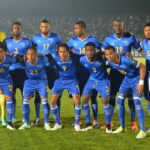
Cape Verde – A nation of fewer than 525,000 people is celebrating a historic milestone—50 years of independence and its first-ever qualification for the FIFA World Cup. Last month, scenes of unrestrained joy erupted at the Estadio Nacional as more than 15,000 fans, draped in Cape Verdean blue, witnessed their national team secure a place in football’s greatest tournament.

Players from across the globe—Ireland, North America, and Cape Verde itself—embraced, danced, and celebrated together on the pitch, embodying the pride of a nation that has become the second-smallest by population to qualify for the World Cup, trailing only Iceland.

A Footballing Rise Rooted in History

Since gaining independence from Portugal in 1975, Cape Verde has steadily built its footballing identity. The national football federation was established in 1982, and by 1986, the country became a FIFA member. For over two decades, Cape Verde has competed in World Cup qualifiers, gradually emerging as a rising force in African football.

The team first announced its arrival on the continental stage by qualifying for the 2013 Africa Cup of Nations, where it reached the quarterfinals. A decade later, Cape Verde repeated the feat, bowing out in the top eight after a hard-fought penalty shootout loss to South Africa.

Recent Form and Key Players

Cape Verde enters the World Cup on a strong run of form, with recent results including:

  • Cape Verde 1–0 Mauritius
  • Angola 1–2 Cape Verde
  • Cape Verde 1–0 Cameroon
  • Libya 3–3 Cape Verde
  • Cape Verde 3–0 Eswatini

Leading the attack is Ryan Mendes, the national team’s all-time top scorer with 22 goals. A teammate of Sardar Dursun at Turkey’s Kocaelispor, Mendes embodies the global reach of this squad.

While Cape Verde has no players in Europe’s top five leagues, the team relies on a diaspora of talent competing across Slovakia, Portugal, Belgium, Hungary, Ireland, Morocco, Bulgaria, USA, Azerbaijan, Russia, UAE, Greece, Poland, Saudi Arabia, Spain, Switzerland, and Scotland.

Among the standout performers is Ricardo Santos, a commanding defender for Swansea City in the English Championship.

Looking Ahead: Iran vs. Cape Verde

Cape Verde will continue its World Cup preparations in a quadrangle tournament in the UAE, where it is set to face Iran on November 12 in Al Ain. The match offers a valuable test for both sides ahead of next year’s global showdown.

For Cape Verde, it’s another opportunity to showcase how far this island nation has come—on and off the pitch.
Mounting Pressure on Team Melli

While Cape Verde enters their upcoming match with nothing to lose and everything to gain, the stakes are considerably higher for Iran. Despite securing early qualification for the 2026 FIFA World Cup, Team Melli under coach Amir Ghalenoei faces intense scrutiny and growing disillusionment among its fanbase.

Three disappointing losses this year—to Qatar, Russia, and Uzbekistan—coupled with unconvincing game plans, poor finishing, and disorganized defending have fueled widespread criticism. A palpable disconnect has emerged between the team and its supporters, exacerbated by Ghalenoei’s perceived reluctance to address recurring tactical shortcomings.

The decline in public support was starkly evident during Iran’s recent 2–0 victory over Tanzania in Dubai. The match attracted only 1,340 spectators—the lowest attendance in Team Melli’s history—with most present supporting the opposition. This is particularly telling in a city home to one of the largest and most passionate Iranian diasporas, signaling a rapid erosion of faith in the national squad.

Looking Ahead: Iran vs. Cape Verde

As the two sides prepare to meet on November 12 in Al Ain, expectations for a tactical revival from Iran remain low. Ghalenoei is expected to field a familiar lineup and stick to his established approach—a strategy that may offer coaching staff a sense of continuity, but one that could prove costly.

For Cape Verde, the match is another opportunity to build momentum ahead of their World Cup debut. For Iran, it is a critical test of morale and direction. A loss against the African newcomers could sound alarm bells within the Football Federation of the Islamic Republic of Iran (FFIRI), potentially forcing a long-overdue reckoning with the team’s direction under its current leadership.


Alireza Jahanbakhsh Seeks Revival with Surprise Move to Belgian Strugglers Dender

In a move that underscores a pivotal juncture in his career, Iranian international winger Alireza Jahanbakhsh has signed a one-year contract with Belgian Pro League club FC Dender, with an option for a further year. The signing concludes a period of unemployment for the 32-year-old after his departure from Eredivisie side Heerenveen.

A Career of Highs and Lows

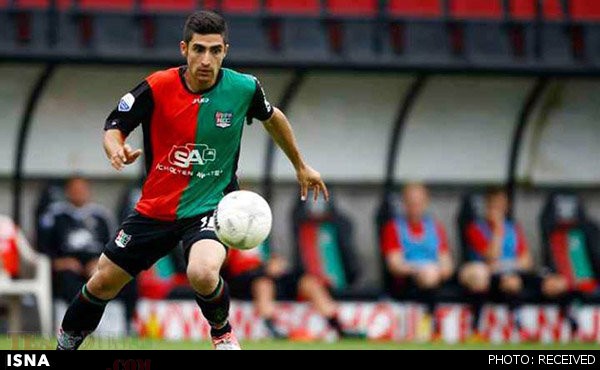
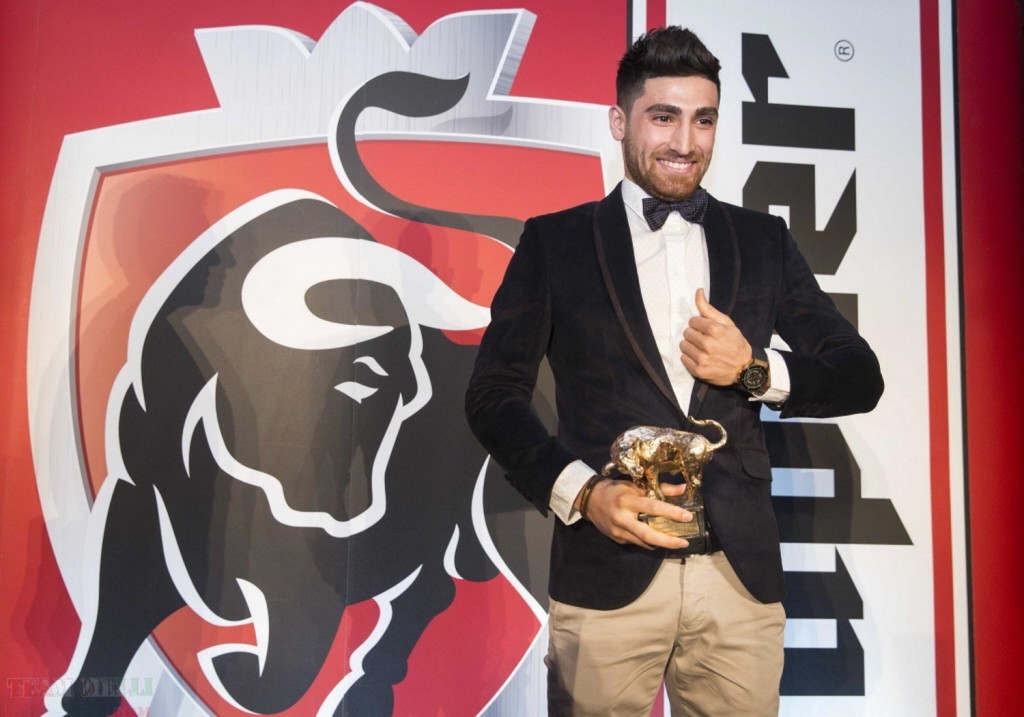
The official announcement from Dender highlighted the “wealth of experience” Jahanbakhsh brings to the squad. Indeed, his career trajectory has been a rollercoaster. After making his name in the Netherlands with NEC Nijmegen, his prolific spell at AZ Alkmaar culminated in a historic achievement: becoming the first Asian player to finish as the Eredivisie’s top scorer in the 2017-18 season, netting 21 goals for AZ.

This golden boot win earned him a high-profile, multi-million euro transfer to the English Premier League’s Brighton & Hove Albion. However, his time in England was largely underwhelming, as he struggled to adapt to the pace and physicality of the league. Seeking to rediscover his form, he returned to the Netherlands, first with Feyenoord and later with Heerenveen, but was unable to consistently replicate the goal-scoring prowess of his peak years.

On the international stage, Jahanbakhsh has been a fixture for Team Melli, earning 95 caps and scoring 17 goals. He has represented Iran at two FIFA World Cups (2018 and 2022) and multiple AFC Asian Cups, often playing a key role in the team’s attacking line.

A Move Born of Necessity

The sporting context of this transfer is stark. FC Dender is currently in a dire situation, sitting at the very bottom of the Belgian Pro League table without a single win after 13 matches, having secured only four points from four draws. For a player of Jahanbakhsh’s former stature, a move to a club fighting relegation is a clear step down.

This decision is widely seen as a direct consequence of the intense scrutiny over his recent standing with the Iranian national team. For months, Jahanbakhsh had been selected for Team Melli by head coach Amir Ghalenoei despite being a free agent and visibly lacking match fitness and sharpness.

The Team Melli Controversy: A Note on Recent Poor Form and Selection Debate

Jahanbakhsh’s inclusion in recent national team squads has been one of the most contentious issues of Amir Ghalenoei’s tenure. While other Iranian attackers were performing regularly for their clubs, Jahanbakhsh, without a team, was consistently named to the squad and often granted significant playing time.

This policy sparked significant backlash. Reports from the Team Melli camp suggested growing discontent among players and staff, with accusations of favoritism and nepotism leveled at Ghalenoei. Critics argued that it was demoralizing for in-form players to be benched in favor of one who was effectively on an extended leave.

The pressure from the media and, reportedly, from within the squad, reached a boiling point. It is believed that Ghalenoei was forced to issue an ultimatum to Jahanbakhsh: find a club or be left out of future national team selections. The move to Dender, therefore, appears to be a direct response to this pressure. For Jahanbakhsh, the priority was not the prestige of the club, but simply being registered as a professional player to maintain his international eligibility.

An Uncertain Future

For FC Dender, the signing is a low-risk gamble on a player hoping to rediscover his form and leadership. For Alireza Jahanbakhsh, it is a desperate attempt to rescue his place in the national team and prove he can still compete at a professional level. Whether this move to the bottom of the Belgian league will be the launchpad for a career renaissance or simply a last resort before an inevitable decline remains to be seen. All eyes will now be on whether this move is enough to secure his spot in Team Melli for the upcoming World Cup qualifiers.

Jahanbakhsh’s Embarrassing Foul Highlights Ghalenoei’s Failing Strategy


The recent international friendly against Russia not only ended in a 2-1 loss for Iran but also exposed a deepening crisis within Team Melli, one rooted in the repeated poor judgment of head coach Amir Ghalenoei. The central emblem of this failure was the embarrassing and dangerous performance of Captain Alireza Jahanbakhsh.

Jahanbakhsh, who has been without a club since his contract with SC Heerenveen was terminated after a single, unremarkable season, was a liability from the moment he stepped onto the pitch as a substitute. His 20-minute cameo was widely described on social media as “confused,” “ineffective,” and “agitated,” culminating in one of the ugliest scenes in recent Team Melli history.

The Incident: A Moment of Shocking Ill-Discipline

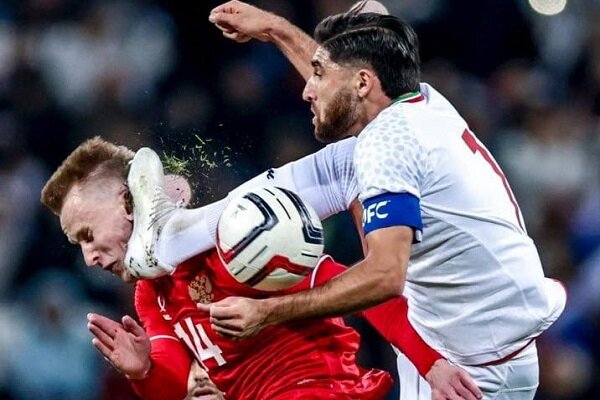
During the second half, Jahanbakhsh recklessly raised his foot high, making direct and dangerous contact with the head of Russian defender Lechi Sadulayev. The foul was so egregious that a straight red card was the only appropriate outcome by any standard of the game. To the shock of fans and the Russian team alike, the referee only produced a yellow.

The result was stark: Sadulayev lay in clear agony, the stud marks from Iran’s captain visibly etched on his face and neck as he received treatment. This moment was not merely a lapse from a veteran player; it was a symptom of a deeper sickness within the squad—a lack of discipline and professionalism that falls directly at the feet of the manager.

Ghalenoei’s Culpability in a Deepening Crisis

This incident is not an isolated one. Under Ghalenoei’s tenure, the Iranian national team has been plagued by discipline issues, amassing a concerning seven red cards. Jahanbakhsh’s foul should have been the eighth, and it underscores a pattern of tactical and selection weakness.

The core of the problem is Ghalenoei’s baffling persistence with Jahanbakhsh. The captain has been in a spiral of declining form for at least two seasons and, critically, has been without a club for nearly six months. A fundamental principle of international football is that players must be fit, in form, and actively competing. By selecting a rusty, unattached player, Ghalenoei not only set Jahanbakhsh up to fail but also knowingly introduced a liability into the team.

The foul itself, while lacking obvious ill intent, was a direct product of this rustiness and a complete lack of match sharpness—a flaw for which the coach is entirely culpable. This repeated poor judgment in player selection points to a tactical weakness that extends beyond a single game; it reflects a stubborn refusal to build a squad based on merit and current ability.

Unsurprisingly, this episode has intensified calls from fans and experts for the 35-year-old Jahanbakhsh to retire from international duty. However, the larger demand is for accountability from the dugout. Until Ghalenoei is held responsible for his failing strategy and misguided loyalty to underperforming veterans, Team Melli’s progress will remain stalled.

Team Melli Faces Russia Amidst Questions of Form.

Team Melli is set to play against Russia this evening in Volgograd, in another attempt by head coach Amir Ghalenoei to restore the waning confidence of the Iranian fans.

For Ghalenoei, the approach remains largely unchanged, with only minor squad rotations. The one bright spot is the inclusion of Kasra Taheri, the promising U23 star, though whether he will see any playing time remains to be seen.

This match against Russia—a nation banned from the international arena by what many see as a hypocritical FIFA—presents an opportunity for Iran to test itself against tough opposition. Unlike the weak standard of Iran’s domestic league, the Russian Premier League remains strong and competitive despite its European ban, which has sidelined clubs like Zenit and Spartak. In stark contrast, Iranian clubs are arguably at their lowest level in decades. Esteghlal’s recent 7-0 defeat to Al Wasl of the UAE in a secondary Asian competition highlights how far Iran’s best clubs have fallen.

This domestic decline is directly reflected in the quality of players and the game plans of Team Melli. For years, the national team could depend on its legionnaires (players based abroad) to cover for these shortcomings, but that is no longer the case. With Sardar Azmoun sidelined for an extended period following surgery, the forward line is overly dependent on Mehdi Taremi. While Taremi started brilliantly at Olympiacos after his move, he now struggles to secure a starting spot for the Greek club.

The situation is even more concerning for Team Captain Alireza Jahanbakhsh, who currently does not have a club to train with, let alone play competitive matches—a basic requirement for international duty. In Ghalenoei’s book, however, this does not seem to matter.

Other legionnaires are not in better shape. Allahyar Sayyadmanesh, a player of great promise, has been underperforming in the Belgian league with KVC Westerlo. Since his transfer, he has played six matches, scoring no goals and providing only a single assist. Ghalenoei’s selection criteria remain a point of contention.

Adding to the controversy is the recall of 37-year-old Shoja’a Khalilzadeh to the defense—a unit in dire need of fresh energy after consistently conceding goals. The central midfield is another area of concern, as a chronic lack of service to the forwards has hampered the team’s attacking potential. Saman Ghoddos, the team’s creative maestro, is suffering a dip in form and has been uninspiring lately, requiring courage from Ghalenoei to revitalize this critical line.

The goalkeeping position also raises questions. None of the options have been shining for their clubs. Payam Niazmand, who replaced the suspended Alireza Beiranvand, was far from solid and has not proven himself a capable replacement. Beiranvand is most likely to start, but his form is not at its peak either.

Historically, Iran and Russia have met three times, with Team Melli winning once and drawing the other two. Russia comes into the match undefeated in its last five outings, including an impressive 4-1 win against Qatar in September, though they have largely faced Asian and African opposition rather than European teams.

Team Melli is playing its first match since a narrow defeat to Uzbekistan, prior to which it had three wins and a draw. The match in Volgograd should be a balanced affair, with current form and home-ground advantage favoring the Russians under coach Valery Karpin. Kickoff is at 20:00 local time at the sold-out Volgograd Arena.

Beyond the Final: A Test of Character for a Struggling Team Melli


As Iran faces Uzbekistan, deep-rooted systemic issues loom larger than the CAFA trophy itself.

While Uzbek coach Timur Kapadze’s pre-match comment that “Iran has weaknesses” is a blunt assessment, for those following Iranian football, it is a painful and long-acknowledged truth.

The upcoming final against Uzbekistan is about more than a regional trophy; it is a profound test of character for a team seemingly at odds with itself. The result, while desirable, is secondary to the urgent need for a coherent identity, tactical intelligence, and a clear path forward.

It is often too easy to place the blame solely on the head coach, and while Amir Ghalenoei is certainly responsible, he is merely the most visible symptom of a deeper malaise within Team Melli. The problems are systemic:

  • Senior Players Underperforming: When veteran leaders and captains are defined more by frustration than by skill and experience, the team’s foundation crumbles.
  • Persistent Defensive Flaws: Long-known defensive vulnerabilities remain unaddressed, match after match.
  • A Misfiring Midfield: The heart of the team, the engine room, is consistently underperforming, failing to control games or link play effectively.

Coach Ghalenoei has his qualities, but his shortcomings are currently defining the team’s style. His unwavering loyalty to a core of senior players—a page taken from the Carlos Queiroz era—is backfiring, as these players increasingly lack both form and motivation. Despite being supported by a large contingent of recently retired ex-players as assistants, this staff has yet to prove they can provide the tactical support and fresh ideas the team desperately needs.

The tactical approach has often been naive. Against weaker teams that employ a deep defensive block, Ghalenoei’s side appears short of ideas. His substitutions are frequently ineffective and poorly timed, often resorting to last-minute changes in a desperate hope for a miracle rather than a strategic shift.

On the pitch, the lack of inspiring figures is glaring. While promising talents like Mehdi Hashemnejad, Amirhossein Hosseinzadeh, and Majid Aliyari have shown flashes of brilliance, they remain fringe players in Ghalenoei’s plans, consistently overlooked.

Instead, the team relies on established names regardless of form. The selection of captain Alireza Jahanbakhsh, currently without a club and match sharpness, raises serious questions about selection criteria being based on reputation rather than merit. The CAFA tournament presented a golden opportunity to integrate his successor; that opportunity seems wasted.

Similarly, much is expected of Mehdi Taremi, but his two appearances so far have provided more cause for concern than confidence.

Tonight’s match is a mirror. It will reflect the team’s true state: its fight, its plan, and its desire. Lifting the CAFA trophy would be a welcome moment of joy, but without addressing these fundamental issues, any celebration will be fleeting. For Team Melli, the real opponent is not just Uzbekistan—it is itself.


Team Melli Survives Tajikistan Scare to Book Place in CAFA Final

DUSHANBE – Iran’s national football team secured its place in the final of the 2025 CAFA Nations Cup, but not before surviving a monumental scare from a determined Tajikistan side in a thrilling 2-2 draw on Thursday evening. The result, which felt more like a defeat for the Iranians, was enough to see Team Melli top Group B and advance to the championship final match.

The match began according to script for Amir Ghalenoei’s side. Mohammad Mehdi Mohebi broke the deadlock in the first half, capitalizing on an uncharacteristic error by Rustam Yatimov in the Tajikistan goal, who failed to catch a cross and present Mohebi with the chance to put Iran ahead. After the break, his namesake, Mohammad Mohebi, doubled the lead, seemingly putting the game beyond the hosts and setting Iran on a comfortable path to the final.

However, the script was abruptly torn up as Tajikistan, fueled by immense pride and the roaring support of a passionate home crowd, launched a stunning comeback. Their first goal arrived under controversial circumstances. A goal-line scramble resulted in a VAR review, which awarded a goal despite Iranian goalkeeper Payam Niazmand appearing to have clawed the ball to safety. Television replays suggested the decision was fortuitous, handing the hosts a crucial lifeline.

There was nothing fortunate about the equalizer. In the 76th minute, Zoir Dzhuraboev produced a moment of pure quality, finding space between two Iranian defenders to unleash a powerful volley that flew past Niazmand, sending the Dushanbe stadium into a frenzy.

The final minutes were a nervy, frantic affair. Coach Ghalenoei, visibly anxious that a third Tajik goal would eliminate Iran from the tournament, made defensive substitutions, bringing on Hossein Kananizadegan to shore up a suddenly shaky backline and withdrawing Mohammad Mohebi. Tajikistan’s late flurry of attacks tested Iranian resolve, but Team Melli ultimately held on for the point they needed.

Tactical Takeaways and Performance Analysis

Ghalenoei continued his experimental approach, fielding a third different starting lineup in as many games. While this strategy achieved his objective of granting playing time to all squad members, it came at the cost of fluidity and understanding on the pitch.

The introduction of star forwards Mehdi Taremi and Alireza Jahanbakhsh in the second half initially paid dividends, with their experience contributing to Iran’s second goal and a period of controlled play. Yet, this proved to be a false dawn. The most glaring issue was Iran’s complete loss of control in midfield. Even with Saman Ghoddos playing the full 90 minutes, his influence was muted, and the unit failed to provide a platform for attack or a shield for the defense. Jahanbakhsh, operating in a creative role, was ineffective in supplying the forwards.

Despite the progression to the final, the performance raised significant concerns. The team displayed a worrying lack of game management, allowing initiative to slip away against determined opposition. Neither the new faces nor the established stars managed to deliver a convincing display, leaving Ghalenoei with much to ponder.

The Road Ahead

Iran will now face the winner of the other group, either Oman or Uzbekistan, in the final. While the objective of reaching the title match was achieved, this performance serves as a stark warning. If Team Melli is to lift the CAFA trophy, significant improvements in midfield solidity, defensive concentration, and overall tactical cohesion will be required. For now, it is very much back to the drawing board for Amir Ghalenoei.

Taremi Seals the Deal: Iran Overcomes Stubborn India to Secure Vital CAFA Victory


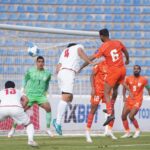
DUSHANBE, Tajikistan – Team Melli secured a commanding 3-0 victory over a resilient Indian side in their second Group B match of the 2025 CAFA Nations Cup at Hisar Stadium on Monday. However, the scoreline belied a tale of two halves, as Iran was frustrated for long periods before a flurry of late goals, including one from new Olympiacos signing Mehdi Taremi, sealed the crucial win.

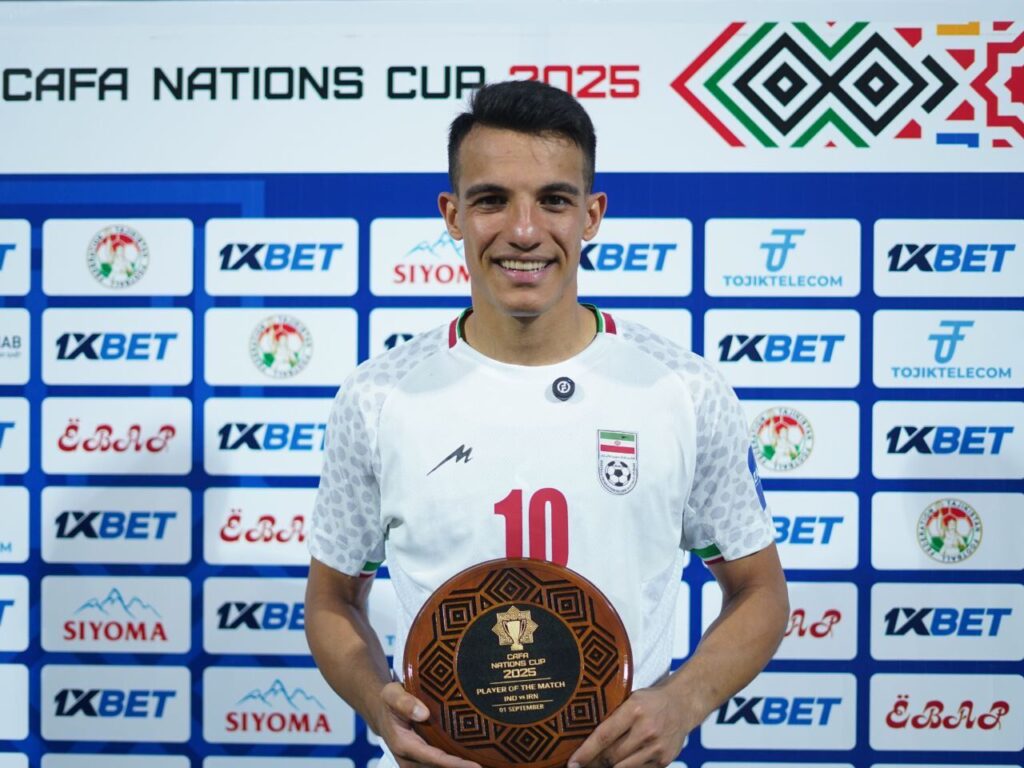
After a goalless and often scruffy first half, the breakthrough finally came in the 59th minute through Amirhossein Hosseinzadeh. Iran then put the result beyond doubt with two goals in the final moments, courtesy of substitutes Ali Alipour (89′) and Mehdi Taremi (90+6′).

A Tale of Two Halves

Head coach Amir Ghalenoei rang the changes from Iran’s previous outing, fielding a new-look defensive pairing of Hossein Kanaani and Amin Hizbavi, while handing the captain’s armband for the first time to experienced right-back Ramin Rezaeian.

The first half was a story of Iranian dominance met with resolute Indian defending. The Blue Tigers, led by an inspirational performance from captain Sandesh Jhingan and goalkeeper Gurpreet Singh Sandhu, organized a formidable low block. While Iran controlled possession and probed for openings, their final pass and finishing were consistently lacking, allowing India to reach halftime with a clean sheet intact.

The second half saw a more energized and determined Iranian side emerge. The pressure intensified, and the deadlock was finally broken just before the hour mark. A cross from the right flank by Kanaizadegan, caused chaos in the Indian box; after a goalmouth scramble, Amirhossein Hosseinzadeh was quickest to react, poking the ball home from close range.

Super-Subs Make the Difference

Seeking to kill the game, Ghalenoei unleashed his bench, introducing a wave of quality including Alireza Jahanbakhsh, Mehdi Taremi, and Ali Alipour. The move paid immediate dividends as the fresh legs overwhelmed a tiring Indian defense.

With just a minute of regular time remaining, a mild shot from Taremi cannoned off the post, and Ali Alipour was perfectly positioned to tap in the rebound and double Iran’s lead.

The victory was capped off in style deep into stoppage time. Alireza Jahanbakhsh delivered an immaculate cross from the right flank that found Mehdi Taremi striding into the box. The newly-signed Olympiacos striker displayed his class with a composed, first-time finish past the advancing Sandhu, providing a fittingly high-quality end to the match.

The Road Ahead

The defeat severely dents India’s hopes of reaching the final. Their tournament fate now hinges on their final group match against Afghanistan, where a positive result could still see them advance to the third-place playoff.

For Iran, the win all but guarantees a place in the tournament final. They need only a draw against host nation Tajikistan on Thursday to finish top of Group B. While the three points will be welcomed, the performance—particularly in the first half—will give coach Ghalenoei pause for thought. The team’s ability to find a solution and the impact of its world-class substitutes ultimately proved decisive, papering over what was, for long stretches, another unconvincing display.