Category: News

Alireza Jahanbakhsh Seeks Revival with Surprise Move to Belgian Strugglers Dender

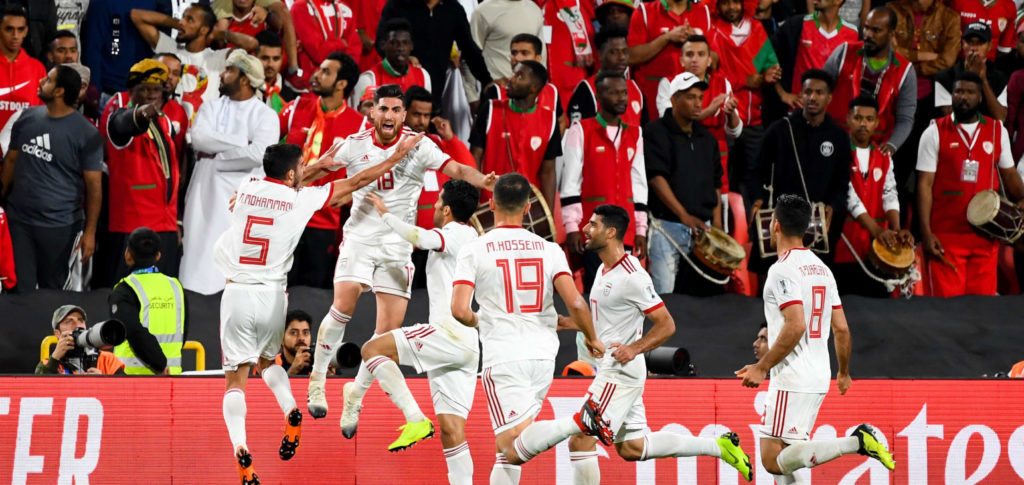
In a move that underscores a pivotal juncture in his career, Iranian international winger Alireza Jahanbakhsh has signed a one-year contract with Belgian Pro League club FC Dender, with an option for a further year. The signing concludes a period of unemployment for the 32-year-old after his departure from Eredivisie side Heerenveen.

A Career of Highs and Lows

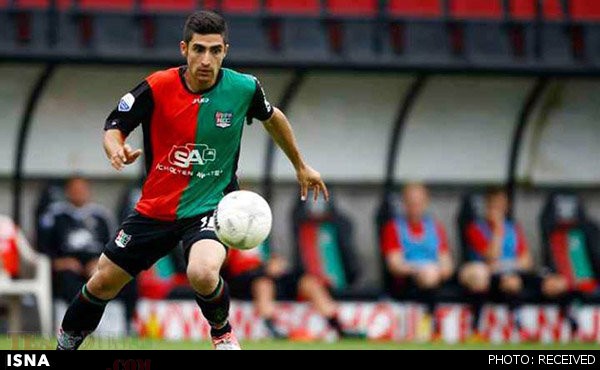
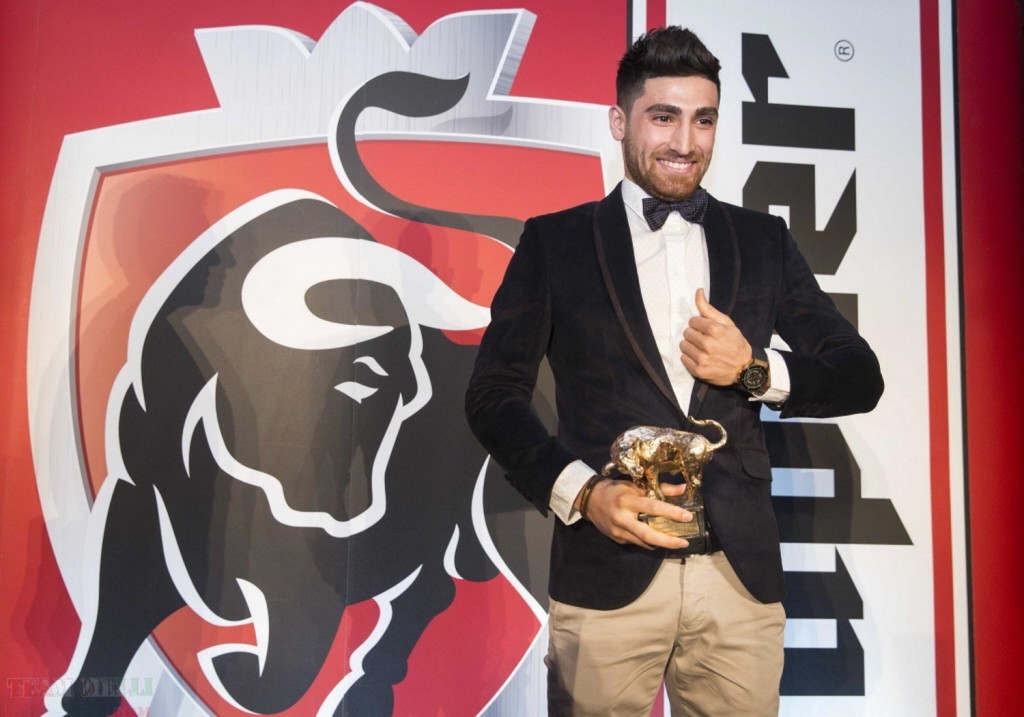
The official announcement from Dender highlighted the “wealth of experience” Jahanbakhsh brings to the squad. Indeed, his career trajectory has been a rollercoaster. After making his name in the Netherlands with NEC Nijmegen, his prolific spell at AZ Alkmaar culminated in a historic achievement: becoming the first Asian player to finish as the Eredivisie’s top scorer in the 2017-18 season, netting 21 goals for AZ.

This golden boot win earned him a high-profile, multi-million euro transfer to the English Premier League’s Brighton & Hove Albion. However, his time in England was largely underwhelming, as he struggled to adapt to the pace and physicality of the league. Seeking to rediscover his form, he returned to the Netherlands, first with Feyenoord and later with Heerenveen, but was unable to consistently replicate the goal-scoring prowess of his peak years.

On the international stage, Jahanbakhsh has been a fixture for Team Melli, earning 95 caps and scoring 17 goals. He has represented Iran at two FIFA World Cups (2018 and 2022) and multiple AFC Asian Cups, often playing a key role in the team’s attacking line.
A Move Born of Necessity

The sporting context of this transfer is stark. FC Dender is currently in a dire situation, sitting at the very bottom of the Belgian Pro League table without a single win after 13 matches, having secured only four points from four draws. For a player of Jahanbakhsh’s former stature, a move to a club fighting relegation is a clear step down.

This decision is widely seen as a direct consequence of the intense scrutiny over his recent standing with the Iranian national team. For months, Jahanbakhsh had been selected for Team Melli by head coach Amir Ghalenoei despite being a free agent and visibly lacking match fitness and sharpness.

The Team Melli Controversy: A Note on Recent Poor Form and Selection Debate

Jahanbakhsh’s inclusion in recent national team squads has been one of the most contentious issues of Amir Ghalenoei’s tenure. While other Iranian attackers were performing regularly for their clubs, Jahanbakhsh, without a team, was consistently named to the squad and often granted significant playing time.

This policy sparked significant backlash. Reports from the Team Melli camp suggested growing discontent among players and staff, with accusations of favoritism and nepotism leveled at Ghalenoei. Critics argued that it was demoralizing for in-form players to be benched in favor of one who was effectively on an extended leave.

The pressure from the media and, reportedly, from within the squad, reached a boiling point. It is believed that Ghalenoei was forced to issue an ultimatum to Jahanbakhsh: find a club or be left out of future national team selections. The move to Dender, therefore, appears to be a direct response to this pressure. For Jahanbakhsh, the priority was not the prestige of the club, but simply being registered as a professional player to maintain his international eligibility.

An Uncertain Future

For FC Dender, the signing is a low-risk gamble on a player hoping to rediscover his form and leadership. For Alireza Jahanbakhsh, it is a desperate attempt to rescue his place in the national team and prove he can still compete at a professional level. Whether this move to the bottom of the Belgian league will be the launchpad for a career renaissance or simply a last resort before an inevitable decline remains to be seen. All eyes will now be on whether this move is enough to secure his spot in Team Melli for the upcoming World Cup qualifiers.

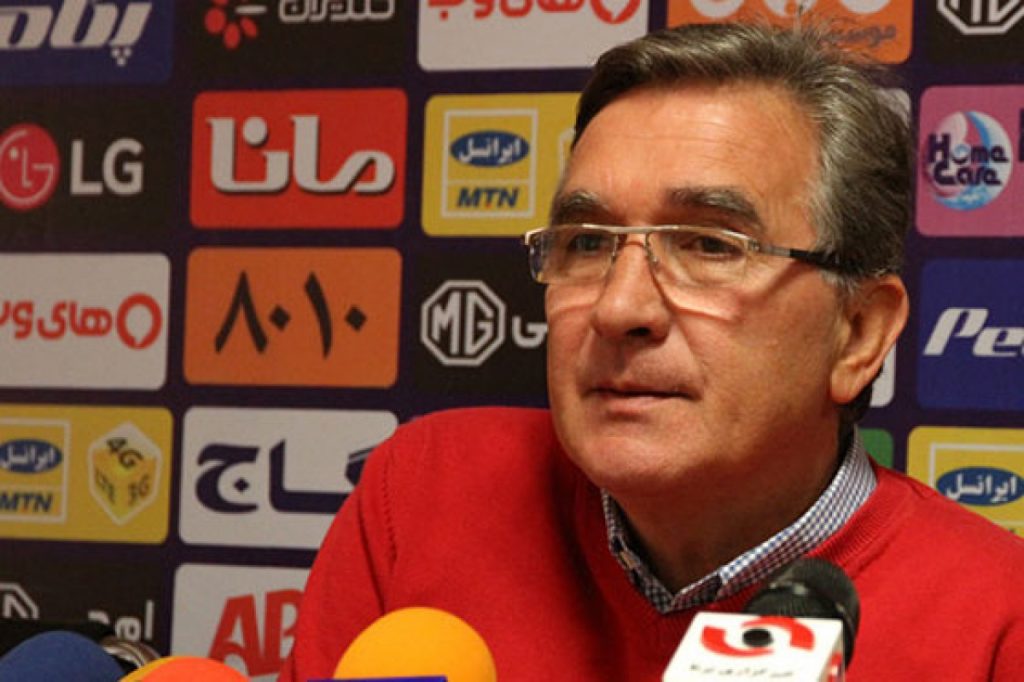
Legendary Croatian Coach Branko Ivanković Announces Retirement

Zagreb, Croatia – According to a report from Croatian sports media outlet Sportklub, Branko Ivanković, one of Croatia’s most successful international coaches, has decided to retire after a storied coaching career spanning more than three decades.

The 71-year-old, who will turn 72 soon, recently gathered a group of close colleagues he worked with during his tenures in Oman and China and announced his decision at a luncheon. After years of dedication to the touchline for both clubs and national teams, Ivanković stated it was time to rest and prioritize his personal life.

“Enough is enough,” Ivanković told tportal. “These years are no longer the time to travel and wander around the world. Now I want to spend more time with my family, friends, and of course, myself.”

A Storied and Peripatetic Career

Ivanković’s managerial journey has been both long and illustrious. His career includes leading clubs such as Varteks (now Varaždin), Rijeka, Dinamo Zagreb, Hannover 96 (Germany), Persepolis (Iran), Shandong Luneng (China), Al Ahli, Al Wahda, and Al Ittifaq (Saudi Arabia).

His success was not limited to the club level. He also managed four different national teams, most notably serving as an assistant coach to Miroslav Blažević when Croatia sensationally won the bronze medal at the 1998 FIFA World Cup in France.

His achievements cemented his reputation as a trophy-winner. He secured league titles with Dinamo Zagreb (Croatia), Shandong Luneng (China), and most notably with Iran’s Persepolis, where he led the team to five consecutive league championships. This historic feat introduced the term “Gelat” (meaning a quintuple of consecutive titles) into the lexicon of Iranian football.

A Gentleman and a Reformer in Iran

Ivanković first arrived in Iran as an assistant to the legendary Croatian coach Miroslav “Ćiro” Blažević. After Blažević’s departure, Ivanković was offered the head coach position of Team Melli, a role that would define his legacy.

During his tenure, he was widely respected for his dignified, gentlemanly demeanor. He navigated the complex politics of Iranian football with skill and stood firmly against corrupt elements with grace and integrity. A testament to his principled stance was his refusal to succumb to pressure for favoritism towards the two traditional Tehran giants, Persepolis and Esteghlal. Ivanković insisted on selecting players for the national team based solely on competence and merit.

He is considered the first coach in Iran’s modern history to break the duopoly of these two clubs on national team selection. In a landmark shift, the 2004 Asian Cup squad featured more players from Foolad Khuzestan than from any other club—a previously unheard-of practice that underscored his commitment to meritocracy.

In his dealings with the media, he was consistently respectful, maintaining his positions without being controversial or forceful, which further earned him the admiration of fans and journalists alike.

A Lasting Legacy in Iranian Football

Ivanković’s connection with Iran is a defining chapter of his career. He was first appointed head coach of the Iranian national team in January 2002, leading the U-23 side to a gold medal at the 2002 Asian Games in Busan later that year.

Despite his popularity, his initial tenure was brief. After being replaced in late 2002, public and media pressure led to his reappointment in October 2003.

Under his leadership, Team Melli flourished:

  • He guided Iran to a third-place finish at the 2004 AFC Asian Cup.
  • He successfully secured Iran’s qualification for the 2006 FIFA World Cup in Germany.

At the 2006 World Cup, Iran faced a tough group. After narrow losses to Mexico and Portugal, they earned a single point in a 1-1 draw with Angola, finishing at the bottom of their group.

Following the tournament, a change in the Iranian Football Federation’s leadership led to his replacement. This move, deemed political interference by FIFA, resulted in a temporary suspension for Iran’s football federation.

Despite the World Cup exit, his record with Iran remains impressive. Over two spells, he managed 56 games, winning 33, drawing 14, and losing only 9, giving him a remarkable winning percentage of 58.93%.

With his retirement, the football world bids farewell to a true globetrotting coach whose tactical acumen, unwavering principles, and gentlemanly conduct left a lasting mark from Europe to Asia.

Iranian Football Legend Akbar Kargarjam Passes Away at 81


The world of Iranian football is in mourning today with the passing of Akbar Kargarjam, a legendary figure from the nation’s golden era. After a long and courageous battle with cancer, Kargarjam passed away at Jam Hospital in Tehran. He was 81 years old.

Kargarjam was not just a player; he was an artist on the pitch, a key architect of Iran’s most triumphant years in the 1970s. His name is eternally woven into the fabric of Iranian football history, synonymous with elegance, technical mastery, and success.

A Stellar Career with Taj and Team Melli

As a mainstay for Taj Tehran (now known as Esteghlal FC), Kargarjam was instrumental in one of the club’s greatest achievements: winning the Asian Club Championship in 1971. This victory cemented Taj’s place as a powerhouse in Asian football.

His brilliance at the club level seamlessly translated to the international stage. Kargarjam was a vital component of the legendary Iranian national team that dominated Asian football during that period. He was a key member of the squad that lifted the Asian Cup in 1972, a tournament where Iran’s attacking football captivated the continent. His talents were also recognized on the global stage when he represented Iran as part of the Olympic team at the 1972 Munich Games.

The Elegant Maestro of the Flank

To remember Kargarjam is to recall a specific style of play that has become rare. Deployed as a half-back, he was an elegant and technically gifted half-back, renowned for his intelligent runs and pinpoint deliveries from the flank. He was the quintessential playmaker, whose vision and precision created a wealth of scoring opportunities.

The prolific strikers of that golden generation, including greats like Gholamhossein Mazloomi, Homayoun Behzadi, and Hossein Kalani, were the prime beneficiaries of his exceptional service. Many of their celebrated goals were born from the chances crafted by Kargarjam’s genius.

A Legacy Among the Greats

In the annals of Iranian football, the debate for the greatest half-back often features two iconic names: Persepolis’s Ebrahim Ashtiani and Taj’s Akbar Kargarjam. This rivalry was not one of animosity but of mutual excellence, pushing each other and their teams to greater heights. Together, they are widely regarded as the finest players to ever grace that position in Iran.

His contributions were officially recognized when he was elected as the Iranian Football Man of the Year in the 1970s, a testament to his standing as the nation’s premier footballer.

Kargarjam’s international career began on September 10, 1971, in a match against South Korea. From that debut, he went on to earn 30 caps for Team Melli, contributing one goal while providing countless assists and dictating the tempo of play from midfield.

Akbar Kargarjam’s passing marks the end of an era, but his legacy will endure. He leaves behind a treasure trove of memories for football fans and a standard of excellence for future generations. He was a true symbol of Iran’s footballing golden age, and he will be deeply missed. Our thoughts are with his family, friends, and countless admirers.

Japan considering AFC exit.


Rumors Swirl: Japan Football Association Reportedly Considers AFC Exit to Form New East Asian Federation

Recent reports from various East Asian media outlets have sparked significant discussion within the football community. According to these sources, officials from the Japan Football Association (JFA) are reportedly exploring the possibility of withdrawing from the Asian Football Confederation (AFC). This news follows the Japanese national team’s consistent and remarkable performances on the global stage, where they have established themselves as Asia’s top-ranked team, currently sitting at 19th in the FIFA World Rankings.

The speculation gained traction after reports from outlets like India’s “IFTWC” (Indian Football Team For World Cup) and Iran’s Mehr News Agency. These reports suggest that the JFA is not only considering an exit but is also spearheading an initiative to form a new, FIFA-recognized confederation tentatively named the “East Asian Football Federation” (EAFF).

Alleged Motivations Behind the Move

The reported motivations for this drastic step are rooted in long-standing grievances within the AFC. The primary reasons cited include:

  • Governance and Integrity Concerns: Significant dissatisfaction with allegations of manipulation and corruption within the AFC’s governance structure. These concerns suggest that certain decisions, from refereeing appointments to competition scheduling, have been unfair and unjust, undermining the sport’s integrity.
  • Geopolitical and Financial Influence: A perceived disproportionate influence of West Asian nations, particularly Saudi Arabia, the United Arab Emirates (UAE), and Qatar, within the AFC. Their substantial financial investments in football are believed by some critics to translate into undue influence over competition outcomes, hosting rights, and confederation policies, often to the detriment of East Asian member associations.

Proposed New Confederation and Potential Members

The proposed “East Asian Football Confederation” aims to create a more cohesive and geographically concentrated footballing body. The idea has reportedly attracted global attention and preliminary interest from several regional nations, including:

  • East Asian Football Federation (EAFF) Members: Japan, South Korea, China, North Korea, Hong Kong (China), Macau (China), Chinese Taipei, and Mongolia.
  • ASEAN Region Interest: Several Southeast Asian nations have also been mentioned as potential members, including Malaysia, Singapore, Thailand, Vietnam, and Indonesia. Their inclusion would significantly expand the new confederation’s footprint and competitive diversity.

Important Context and Official Stance

It is crucial to note that these reports remain speculative and have not been officially confirmed by the Japan Football Association. As of the current date, no formal announcement or application to leave the AFC has been made.

While these rumors underscore genuine regional tensions and frustrations, the path to forming a new confederation is fraught with monumental logistical and political hurdles. Any such move would require formal approval from FIFA, necessitating the navigation of complex diplomatic relationships, particularly concerning the inclusion of all proposed member nations.

Furthermore, the geopolitical landscape of global football presents a significant obstacle. The influence of oil-rich Persian Gulf states extends deeply into the very fabric of FIFA’s governance and financial structure. Given their vested interest in maintaining a unified AFC, these nations would likely oppose the formation of a breakaway federation. In such a scenario, FIFA, an organization itself no stranger to allegations of corruption, political horse-trading, and profit-driven decision-making, would be unlikely to endorse a move that threatens its most lucrative continental body and internal power balances. The close relationships between FIFA President Gianni Infantino and various world leaders, including those in the Persian Gulf and beyond, further complicate the political calculus, making any such realignment a profoundly geopolitical affair.

Consequently, while the football world will monitor any official statements from the JFA or AFC with keen interest, the current proposition remains a highly speculative, though revealing, indicator of deep-seated issues within Asian football. Should these plans ever materialize against the odds, they would undoubtedly represent the most significant realignment in Asian football history, fundamentally reshaping the continental competitive landscape for generations to come.

AFC Coach of the Year (Women) 2025: Marziyeh Jafari

Thu, 16 October, 2025

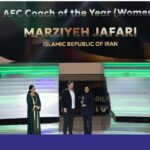
Riyadh: History was made at the AFC Awards Riyadh 2025 presented by NEOM on Thursday as Marziyeh Jafari became the first-ever AFC Coach of the Year (Women) winner from Iran.

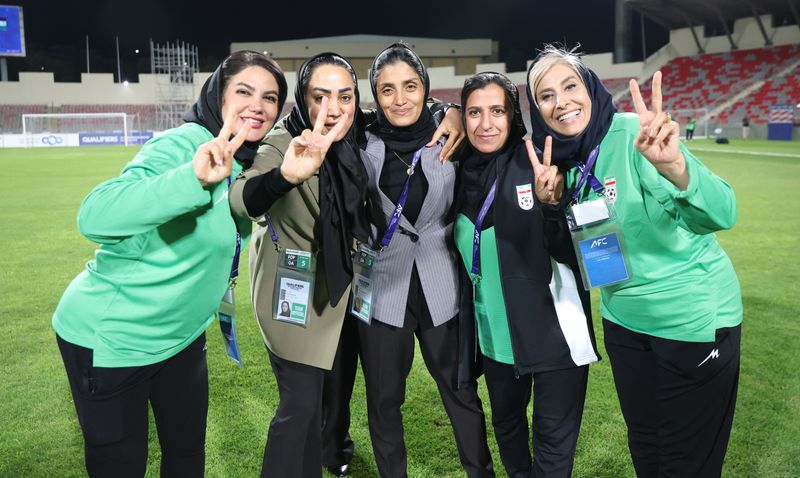
An esteemed name in the Asian coaching landscape, Jafari was honoured for successfully leading IR Iran through the AFC Women’s Asian Cup Australia 2026™ Qualifiers, sealing a second consecutive appearance at the Continental showpiece after their debut in 2022.

Requiring nothing less than victory in their final Group Stage showdown against Jordan, Jafari masterminded a vital 2-1 win to seal qualification—a feat made more remarkable by the fact that she had only taken charge around three months prior.

The 43-year-old, only the third nominee from Iran after Shahrzad Mozafar (2010) and Katayoun Khosrowyar (2019), is now the 15th winner of this accolade, which also recognised her achievements at club level with Bam Khatoon Women’s FC.

image content

Before helming the Iran women’s national team, Jafari had led Bam Khatoon from the Preliminary Stage of the AFC Women’s Champions League™ 2024/25 all the way to the Quarter-finals.

That was the latest feather in the cap for the Bam native, who started her coaching path at just 17 and has been the guiding force behind Bam Khatoon’s success after joining in 2008. Promotion to the top flight followed in 2009, before Jafari went on to win the first of 11 league titles in 2011, with the most recent crown coming in March 2025.

AFC Futsal Player of the Year 2025: Salar Aghapour

Riyadh: Iran futsal star Salar Aghapour took home the AFC Futsal Player of the Year trophy on Thursday evening at the AFC Awards Riyadh 2025 presented by NEOM.

Aghapour’s eye-catching displays at the FIFA Futsal World Cup Uzbekistan 2024 saw him get the nod ahead of team-mate Moslem Oladghobad, the 2022 winner, and fellow first-time nominee Muhammad Osamanmusa, as he became the seventh IR Iran player and the 16th overall to win the prize.

The 25-year-old, renowned for his mercurial skills and spectacular goal catalogue, recorded goal contributions in every match for IR Iran as they reached the Round of 16, by tallying six goals and three assists.

YearPlayerCountry
2025Salar AghapourIran
2022Moslem OladghobadIran
2016Ali Asghar HasanzadehIran
2015Ali Asghar HasanzadehIran
2014Ali Asghar HasanzadehIran
2013Mohammad KeshavarzIran
2012Rafael HenmiJapan
2011Mohammad TaheriIran
2010Kenichiro KogureJapan
2009Vahid ShamsaeiIran
2008Vahid ShamsaeiIran
2007Vahid ShamsaeiIran

📝 Note: The award was officially introduced in 2007, and Iran has dominated the category with 7 different winners and multiple repeat titles.

Iran Secures 2-0 Victory Over Tanzania in Dubai Friendly

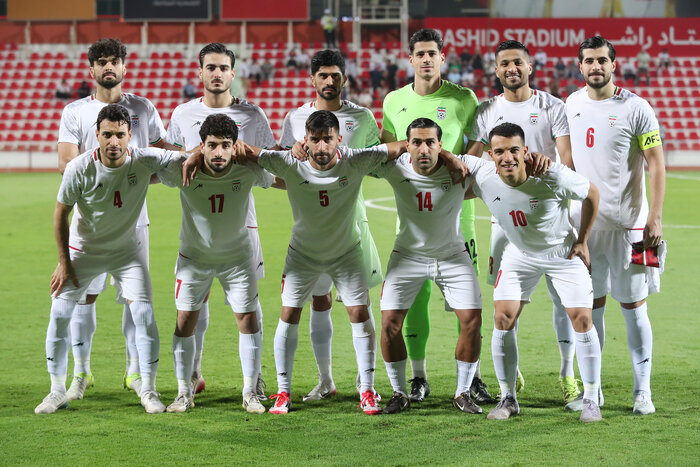
The Iranian national football team, under coach Amir Ghalenoei, secured a 2-0 victory against Tanzania in an international friendly on Tuesday evening. The match, held at Al Rashid Stadium in Dubai, UAE, saw both goals scored in a dominant first-half performance by Team Melli.

Amir Hossein Hosseinzadeh opened the scoring from the penalty spot in the 14th minute, following a foul on Mohammad Mohebbi, adding to the goal he scored in Iran’s previous match against Russia. Mohammad Mohebi then doubled the lead in the 25th minute with a shot that took a slight deflection off a defender.

First-Half Dominance

Iran started aggressively and created an early chance in the 2nd minute, with Mohammad Mohebi unable to convert. Tanzania responded with a significant opportunity of their own in the 8th minute; a defensive error by Shoja Khalilzadeh left Charles M. Mumba one-on-one with goalkeeper Payam Niazmand, but his shot was parried away for a corner.

The breakthrough came when Kasra Taheri played Mohebi into the box, resulting in a foul from Tanzania’s Ibrahim Abdullah. Hosseinzadeh calmly converted the ensuing penalty. Shortly after, Taheri was again the provider, setting up Mohebi, whose shot deflected past the goalkeeper to make it 2-0.

The first half was marred by an injury to the promising Kasra Taheri, who was forced off in the 39th minute after a heavy challenge and replaced by Mohammad Javad Hosseinnejad.

Second-Half Adjustments

Tanzania began the second half with more purpose, pressuring the Iranian defense. A long-range effort from Yahya Zayed sailed just over the bar in the 47th minute, followed by another chance that required a last-ditch clearance from Danieal Esmailifar.

Iran suffered a second injury setback in the 54th minute when Mohammad Amin Hezbavi went down with a groin issue, making way for Ali Nemati.

The most notable incident of the second half saw Alireza Jahanbakhsh’s long-range shot from outside the box deflect off teammate Milad Mohammadi’s hand and into the net. The referee initially awarded the goal but, after consulting with his assistant, correctly disallowed it for handball.

Tanzania threatened once more in the 73rd minute with a long-range effort that flew wide, but Iran managed the game effectively to see out the 2-0 win.

Lineups:

  • Iran: Niazmand; Esmailifar, Hezbavi (54′ Nemati), Khalilzadeh, M. Mohammadi; Ezzatollahi, Ghoddos (64′ Ghorbani); Mohebi (45′ Jahanbakhsh), Hosseinzadeh (64′ Alipour), Hashemnejad (64′ Sayadmanesh); Taheri (39′ Hosseinnejad).
  • Tanzania: Soliman; Masindo, Munda (45′ Mwaikenda), Mwamenyetu, Abdullah; Zayed, Dismas, Mumba (45′ A. Soliman), Salem (45′ Abraham); Peter (64′ Chikola), Al-Arikhya.

Ezzatollahi Set to Lead Team Melli in Tanzania Friendly


As Team Melli prepares for its second and final fixture of the October FIFA window against Tanzania, the squad is poised to take the pitch with a new face wearing the captain’s armband. With the anticipated absence of senior figures Mehdi Taremi and the under-fire Alireza Jahanbakhsh, the leadership duty is expected to fall upon the experienced shoulders of defensive midfielder Saeed Ezzatollahi.

Ezzatollahi, a fixture in the national team since his debut as a 19-year-old in 2015, brings nearly a decade of international experience to the role. With 78 caps to his name, the 29-year-old has been a constant presence through the tenures of coaches from Carlos Queiroz to Dragan Skocic, establishing himself as a central pillar in Amir Ghalenoei’s current setup. The occasion holds a special significance for Ezzatollahi, as he will be representing Iran at the home stadium of his club, Shabab Al-Ahli, in what promises to be a source of double motivation.

He will not be alone in providing leadership. Saman Ghoddos, another key legionnaire based in the UAE Pro League, is also part of the team’s leadership group. Fresh off a spectacular assist in the recent match against Russia, Ghoddos will be looking to build on that form in Dubai and cement a more prominent role in Iran’s offensive machinery.

This friendly presents a critical opportunity for Ghalenoei to experiment with a new on-field hierarchy and test different tactical combinations as the long-term preparation for the 2026 World Cup continues.

Anticipated Lineup Changes and Tactical Puzzles

The match is expected to feature several changes to the starting eleven that faced Russia:

  • Defensive Reshuffle: Milad Mohammadi, newly recalled to the squad, is likely to start at left-back, replacing the out-of-position central defender Ali Nemati. This move aims to add genuine width and defensive stability to the flank.
  • Attacking Options: In the absence of Taremi, Ghalenoei could choose to start either Kasra Taheri or Allahyar Sayyadmanesh, or even utilize both in a dynamic attacking setup.
  • Midfield Creativity: To address the lack of creative impetus, there is a strong possibility that Javad Hosseinnejad could be handed a start to inject inventiveness into the midfield.
  • Defensive Concerns: The central defensive partnership of Aberghouei and Khalilzadeh, who were at fault for both goals conceded against Russia, is also under review. However, Ghalenoei’s options are limited. The lack of pace in the heart of the defense remains a significant vulnerability, one that the speedy Tanzanian attackers will be eager to exploit.

The friendly against Tanzania is more than just a fixture; it is a laboratory for Ghalenoei. It is a chance to assess new leaders, rectify visible weaknesses, and build momentum before the crucial World Cup campaign resumes.

Match Details:

  • Teams: Iran vs. Tanzania
  • Venue: Rashid Stadium, Dubai
  • Date & Time: October 14, 2025; 19:00 Local Time (18:30 Iran Time)

Team Melli Set for Quadrangular Tournament in November FIFA Window


The Iranian national football team is set for a busy and competitive schedule during the next FIFA international break in November. Following warm-up matches against Russia and Tanzania in October, the Football Federation (FFIRI) has secured Team Melli’s participation in a four-nation tournament hosted by the United Arab Emirates.

The tournament, which promises a high level of competition, will feature Iran, Egypt, Uzbekistan, and Cape Verde. This provides crucial preparation for the teams that have already qualified for the 2026 FIFA World Cup, offering a stern test against diverse playing styles.

Tournament Schedule and Potential Showdowns

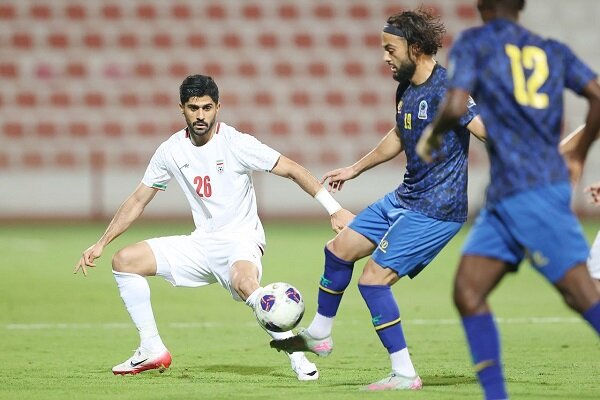
According to the tournament format, the semi-finals are scheduled for November 7. Iran will face the Cape Verde national team, currently ranked 70th in the FIFA World Rankings. A victory would see Team Melli advance to the final on November 17, where they would face the winner of the other semi-final between Uzbekistan and Egypt.

The prospect of a final between Iran and Egypt, featuring Mohamed Salah, is a tantalizing one for football fans in West Asia and North Africa, promising an exciting clash of styles and star power. Both Egypt and Uzbekistan, like Iran, have already secured their passage to the 2026 World Cup.

If Iran loses its semi-final against Cape Verde, the team will not be idle, facing the loser of the Uzbekistan-Egypt match in a third-place playoff on November 12.

A Closer Look at Iran’s Opponent: Cape Verde

The upcoming match will be the first-ever international meeting between Iran and Cape Verde, adding an element of the unknown to the fixture.

Cape Verde, known as the “Blue Sharks,” are far from a minor opponent. They are one of Africa’s most respected and formidable teams, consistently punching above their weight. Their recent performance in the 2023 Africa Cup of Nations (AFCON), where they topped a group containing Egypt and Ghana before reaching the quarter-finals, announced them as a serious force.

Despite a recent 2-1 loss to Libya—a match where they were reportedly hampered by a refereeing error that cost them a direct path to World Cup qualification—they remain a dangerous and organized side. Coached by Bubista, their team is built on a foundation of tactical discipline, physical strength, and explosive counter-attacks. They boast talented players such as Jovane Cabral (Sampdoria), Ryan Mendes (Fatih Karagümrük), and captain Stopira, many of whom ply their trade in top European leagues.

For Amir Ghalenoei’s Iranian squad, this match against a motivated and athletic African opponent will be a vital test, particularly in assessing the team’s tactical flexibility and discipline—areas that have recently come under scrutiny.

This quadrangular tournament represents a significant step in Iran’s preparations for the 2026 World Cup, offering two high-stakes matches against quality opposition that will challenge the team and its management.

Jahanbakhsh’s Embarrassing Foul Highlights Ghalenoei’s Failing Strategy


The recent international friendly against Russia not only ended in a 2-1 loss for Iran but also exposed a deepening crisis within Team Melli, one rooted in the repeated poor judgment of head coach Amir Ghalenoei. The central emblem of this failure was the embarrassing and dangerous performance of Captain Alireza Jahanbakhsh.

Jahanbakhsh, who has been without a club since his contract with SC Heerenveen was terminated after a single, unremarkable season, was a liability from the moment he stepped onto the pitch as a substitute. His 20-minute cameo was widely described on social media as “confused,” “ineffective,” and “agitated,” culminating in one of the ugliest scenes in recent Team Melli history.

The Incident: A Moment of Shocking Ill-Discipline

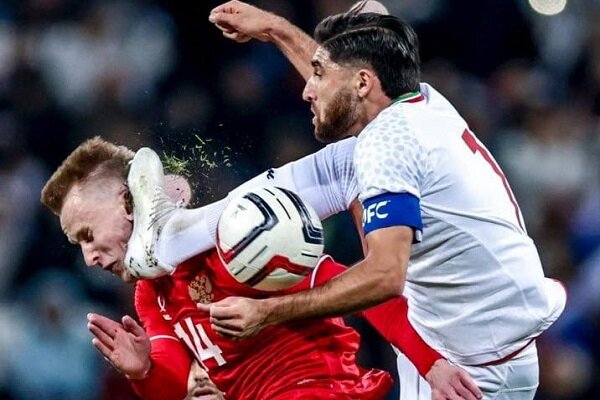
During the second half, Jahanbakhsh recklessly raised his foot high, making direct and dangerous contact with the head of Russian defender Lechi Sadulayev. The foul was so egregious that a straight red card was the only appropriate outcome by any standard of the game. To the shock of fans and the Russian team alike, the referee only produced a yellow.

The result was stark: Sadulayev lay in clear agony, the stud marks from Iran’s captain visibly etched on his face and neck as he received treatment. This moment was not merely a lapse from a veteran player; it was a symptom of a deeper sickness within the squad—a lack of discipline and professionalism that falls directly at the feet of the manager.

Ghalenoei’s Culpability in a Deepening Crisis

This incident is not an isolated one. Under Ghalenoei’s tenure, the Iranian national team has been plagued by discipline issues, amassing a concerning seven red cards. Jahanbakhsh’s foul should have been the eighth, and it underscores a pattern of tactical and selection weakness.

The core of the problem is Ghalenoei’s baffling persistence with Jahanbakhsh. The captain has been in a spiral of declining form for at least two seasons and, critically, has been without a club for nearly six months. A fundamental principle of international football is that players must be fit, in form, and actively competing. By selecting a rusty, unattached player, Ghalenoei not only set Jahanbakhsh up to fail but also knowingly introduced a liability into the team.

The foul itself, while lacking obvious ill intent, was a direct product of this rustiness and a complete lack of match sharpness—a flaw for which the coach is entirely culpable. This repeated poor judgment in player selection points to a tactical weakness that extends beyond a single game; it reflects a stubborn refusal to build a squad based on merit and current ability.

Unsurprisingly, this episode has intensified calls from fans and experts for the 35-year-old Jahanbakhsh to retire from international duty. However, the larger demand is for accountability from the dugout. Until Ghalenoei is held responsible for his failing strategy and misguided loyalty to underperforming veterans, Team Melli’s progress will remain stalled.