Author: admin

Omid Team Holds Mighty South Korea to a Stalemate in Tense AFC U23 Opener


– First points of Iran U23

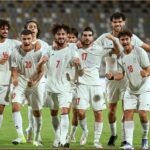
Iran’s U-23 national team, the Omid Team, began their challenging AFC U23 Asian Cup 2026 campaign with a disciplined and resilient performance, holding tournament favorites South Korea to a 0-0 draw in a tense, tactical affair.

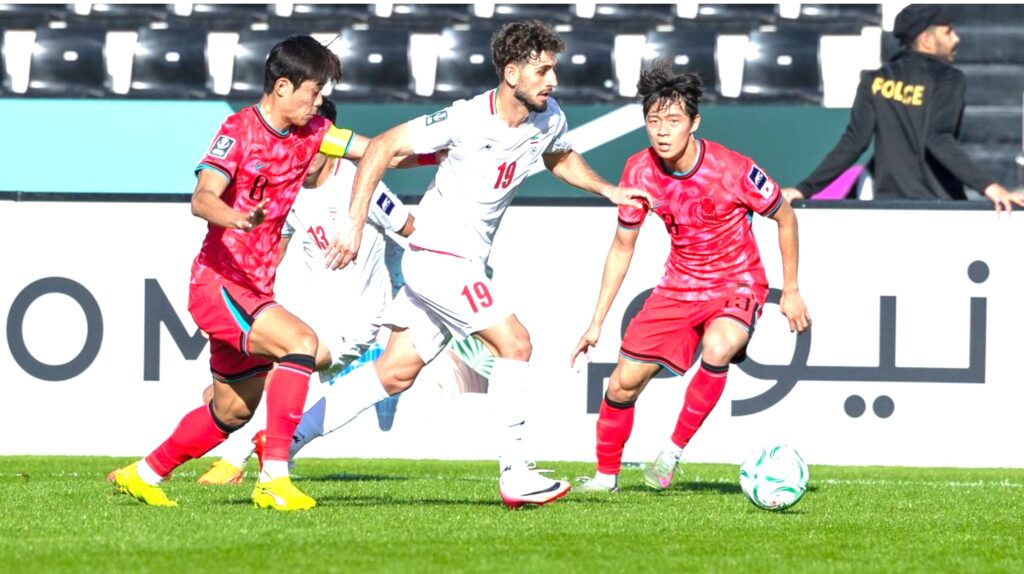
While the match will not be remembered for attacking flair or goalmouth drama, it will be noted for Iran’s impressive defensive organization and control of the game’s tempo. Contrary to pre-match predictions, it was Iran who looked the more composed side for large periods, effectively neutralizing the traditional high-energy, offensive threat of their East Asian rivals.
A Match of Tactical Chess, Not Fireworks

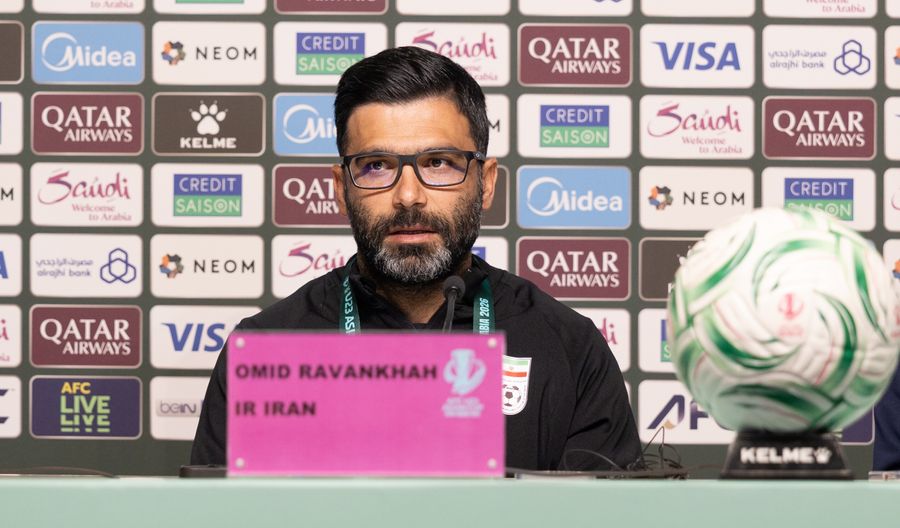
From the outset, the Omid Team, under coach Reza Ravankhah, executed a clear game plan: maintain defensive concentration, control the midfield, and patiently probe the notoriously solid Korean backline. The strategy succeeded in limiting South Korea to half-chances, with the Iranian defense, marshaled superbly, showing little vulnerability.

The Koreans, unusually subdued, appeared wary of Iran’s counter-attacking potential. Their typically relentless pressing and quick transitions were replaced by a more cautious, possession-based approach, which played into Iran’s organized defensive structure.

Iran’s lone moment of true attacking quality in the first half came from their standout player, Javan Hosseinnezhad. The elegant midfielder delivered a perfectly weighted diagonal ball from the right, finding Ali Rostami in stride. Rostami’s powerful first-time volley whistled just past the upright, a near-miss that served as the half’s most serious threat.

A Dull Game Sparks to Life at the Death

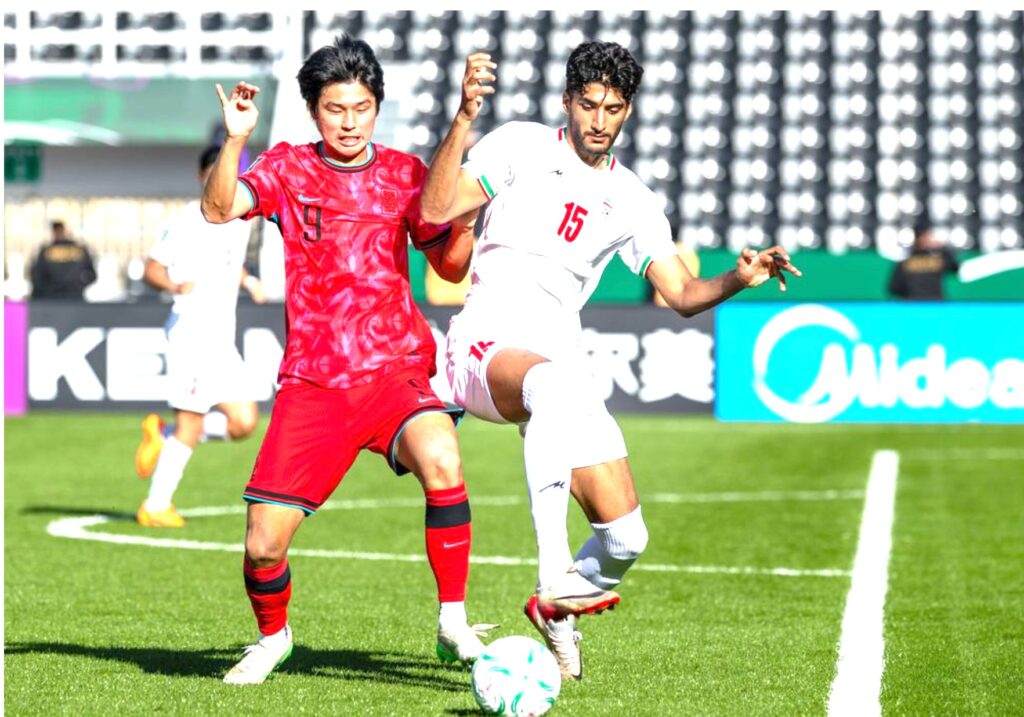
The second half followed a similar pattern—a slow-paced, midfield battle with few clear-cut chances. Iran continued to prefer intricate ground passes in an attempt to unlock the defense, often opting for safe diagonal switches of play rather than risky penetrating runs.

Just as the match seemed destined to peter out into a forgettable draw, it erupted in a thrilling finale during injury time. First, Iranian substitute Mehdi Jafari unleashed a powerful, low drive from distance, forcing Korean goalkeeper Hong Seong-Min into a spectacular, full-stretch save to his right.

Almost immediately, the action raced to the other end. A desperate scramble in Iran’s penalty area presented South Korea with a golden chance to steal a late winner. However, goalkeeper Mohammad Khalifa emerged as the hero, making a crucial intervention amidst the chaos, allowing his defenders to clear the danger to safety and preserve the hard-earned point.
Analysis: A Solid Foundation, But Room for Growth

The final whistle confirmed a valuable point for Iran in the tournament’s “Group of Death,” a creditable result against one of Asia’s youth football powerhouses. The performance demonstrated significant improvement in tactical discipline and defensive solidity, the foundations upon which campaigns are built.

However, the match also highlighted a clear area for improvement. Iran’s lack of attacking ambition and variety ultimately cost them a chance at a historic victory. Despite showing clear aerial superiority, the team persistently relied on ground strokes against a compact defense. The reluctance to deliver early crosses or utilize long balls to test the Korean backline made their offensive efforts largely predictable.

For Coach Ravankhah, the takeaway is twofold: pride in a well-earned clean sheet against a top opponent, and a clear cue to inject more offensive daring and tactical variety into their next crucial fixture. This draw proves the Omid Team belongs on this stage; their upcoming match will show if they have the tools to advance from it.

MATCH DETAILS

Korea Republic
21 Hong Seong-Min GK
2 Kang Min-Jun DF
3 Bae Hyun-Seo  DF YC 53‎’‎
5 Lee Hyun-Yong DF  YC 33‎’‎
23 Shin Min-Ha DF
6 Lee Chan-Ouk MF [73′ Jung Ji-Hun]
8 Kim Dong-Jin MF
9 Kim Tae-Won FW [80′ Jeong Jae-Sang ]
10 Kang Sang-Yoon FW [28‎’‎ Jung Seung-Ba]
13 Kim Do-Hyun MF [73′ Kim Han-Seo]
17 Kim Yong-Hak MF [46‎’ Kang Seong-Jin]


Substitutes
1Moon Hyun-Ho
4Jo Hyun-Tae
7Kang Seong-Jin 46‎’‎
11Jung Ji-Hun
12Hwang Jae-Yun
14Jung Seung-Bae 28‎’‎
15Baek Ga-On
16Kim Han-Seo
18Jeong Jae-Sang
19Lee Geon-Hee
20Park Jun-Seo
Manager-Min-Sung Lee
Iran
1 Mohammad Khalifeh GK
3 Arsha Vosoughifard DF
13 Mahdi Mahdavi DF
15 M. Mohebi DF [83′ Danial Iri YC 89′]
16 Farzin Moamelehgari DF
8 Pouria Latififar MF
9 Yadegar Rostami MF
10 Javad Hosseinnejad MF [62 ‘A. M. Sadeghi]
19 Mahdi Goudarzi MF [71′ M.Askari]
20 Abbas Habibi MF [72′ Razzaghinia YC 69′]
7 Reza Ghandipour FW [71′ M. Jaffari]


Substitutes
2 B. Goudarzi
4 D. IriSub5M. Zare
6 A. Razzaghinia
11 M. Askari
12 P. Rafiei
14 F. Jafari
17 E. Jamshidi
18 A. Sheikhi Rad
21 H. Zaruni
22 A. Maghsoudi
23 M. Sadeghi
Manager-Omid Reza Ravankhah
Omid Team 2025

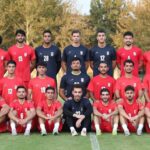
Omid Team Line up vs Korea Rep.

With a few hours to go for the start of Iran’s U23 team in the AFC U23 Asian Cup Saudi Arabia 2026, the lineup has been announced:
The Match in Group C against South Korea will start at 14:30 local time (Iran time: 3:00 PM Wednesday, January 7).

The following players are in the starting lineup :
Mohammad Khalifa,
Masoud Mohebbi,
Mehdi Mahdavi,
Arshia Vosoughifard,
Farzin Moghadgari,
Pouria Latififar,
Mohammad Javad Hosseinnejad,
Mehdi Goodarzi,
Abbas Habibi,
Yadgar Rostami,
Reza Ghandipour.

Head Coach: Omidreza Ravankhah,

Omid Team 2026 prospects: A Phoenix Rising from Decades of Ashes?


For over four decades, Iran’s U-23 national team, known as the “Omid Team” (Team Hope), has embodied a painful irony in Iranian football. Its name promises a future that has consistently failed to materialize, making it a perennial source of frustration and, at times, the laughingstock of a success-starved fanbase. The statistics tell a grim tale: the team has not qualified for the Olympic Games since the 1980 Moscow edition—a tournament Iran itself boycotted, meaning the Omid Team has never truly appeared on football’s biggest global stage. This long-term failure has been compounded by repeated disappointments at the continental level, including the AFC U-23 Asian Cup and the Asian Games.

The consequence has been a profound and pervasive apathy. Long ago, the fans turned their attention elsewhere, their hopes reserved for the senior Team Melli. This wave of disinterest eventually washed over the press and media, who largely ceased in-depth analysis or consistent coverage of the team’s fortunes. The Omid Team became a forgotten project, its failures met with a resigned shrug rather than outrage.

A Mission No Wanted Coach Would Touch

This context is crucial to understanding the Iranian Football Federation’s (FFIRI) startling decision ahead of the AFC U-23 Asian Cup 2026 qualifiers. With the Omid Team seen as a career graveyard, no respected, established Iranian coach was willing to stake their reputation on it. The core reason is a structural crisis within Iranian football: the relentless club-versus-country conflict.

Without stringent legal frameworks to force compliance, Iranian clubs routinely—and understandably, from their perspective—prioritize their own domestic and continental commitments. The standard practice is to withhold Omid-eligible players, especially if they are on the fringes of the first team, from national team duty. Any coach taking the job would be guaranteed a fractured preparation camp and a weakened squad, setting them up for almost certain failure.

Into this void stepped Reza Ravankhah, a coach with minimal top-flight experience and, consequently, very little to lose. His appointment was less a strategic choice and more a testament to the role’s undesirability. He accepted a challenge defined by institutional neglect and systemic obstacles.

A Glimmer of Unseen Talent

Against all expectations, the qualifying round provided a startling and welcome narrative shift. In their three matches, Ravankhah’s Omid presented itself as a well-organized, disciplined, and technically gifted unit. At the heart of this revival was the elegant midfielder, Javad Hosseinnezhad, whose intelligent movement, crisp passing, and orchestration of the tempo were a delight to watch. Around him, a cohort of lesser-known players rose to the occasion, demonstrating that a deep well of talent exists, often obscured by the domestic game’s logistical chaos.

However, a significant caveat tempers this optimism. Apart from a strong opponent in hosts UAE, Iran’s qualification path was not the most arduous. The true litmus test was always going to be the main tournament.

The Crucible of Saudi Arabia: A Group of Death

That test has arrived, and it is formidable. Drawn in what is arguably the tournament’s “Group of Death” in Saudi Arabia, Iran’s Omid finds itself alongside continental giants. They face South Korea, a perennial powerhouse and a favorite to lift the trophy, renowned for its athleticism and structured play. Equally daunting is the challenge of Uzbekistan, a nation that has meticulously built a footballing renaissance, becoming a consistent force and frequent champion at every youth level in Asia.

The opening match against South Korea will be revelatory, offering a clear measure of the gap this Omid team must bridge. While the positive football shown in qualifiers provides a foundation of hope, advancement from this group remains a distant and difficult prospect. Korea and Uzbekistan rightly enter as the overwhelming favorites to progress.

A Test of Will and Wit

The task for Coach Ravankhah and his young squad is now one of transcendent defiance. Success will depend on more than talent; it will require exceptional leadership, ironclad discipline, and tactical acumen. They must play with the unity and strategic clarity of a team with nothing to lose and everything to prove.

For the first time in a generation, the Omid Team carries a flicker of genuine promise into a major tournament. Whether that flicker is extinguished in a brutally tough group or fanned into a flame that can re-ignite national interest is the captivating story about to unfold. The decades of failure have set the stage; now, this new generation has a rare chance to begin rewriting a long-sorrowful history.

THE OFFICIAL SQUAD

jerseyPostFull NameDOBClubHeightWeight
1GoalkeeperMohammad Khalifeh19-08-2004Aluminium Arak19588
2DefenderBahram Goudarzi15-11-2004Aluminium Arak17567
3DefenderArshiya Vosoughifard26-04-2004Fajr Shahid Sepasi18073
4DefenderDanial Iri26-10-2003Malavan SC18680
5DefenderMohammadmahdi Zare25-01-2003FC Akhmat (RUS)19284
6MidfielderAmirmohammad Razaghinia11/4/2006Esteghlal18782
7ForwardReza Ghandipour13-01-2006Al Wahda (UAE)18073
8MidfielderPouria Latififar16-08-2003Golgohar Sirjan18481
9ForwardYadegar Rostami2/1/2004Fajr Shahid Sepasi18073
10ForwardMohammadjavad Hosseinnezhad26-06-2003Dynamo MAKHACHKALA (RUS)18071
11ForwardMohammad Askari7/2/2006Sepahan SC18682
12GoalkeeperPouria Rafiei24-02-2006Sepahan SC19685
13DefenderSeyed Mahdi Mahdavi30-09-2005Aluminium Arak18270
14MidfielderMehdi Jafari2/12/2005Malavan SC17270
15DefenderMasoud Mohebbi6/2/2005Kheybar Khorramabad19286
16DefenderFarzin Moamelehgari14-01-2003Shams Azar Qazvin18375
17DefenderErfan Jamshidi26-06-2003Paykan FC17065
18MidfielderAmirreza SheikhiRad24-03-2005F.C. Nassaji Mazandaran17671
19MidfielderMahdi Goodarzi9/12/2003Kheybar Khorramabad17870
20MidfielderAbbas Habibi25-03-2006Malavan SC18075
21ForwardHamidreza Zarouni8/10/2005Kheybar Khorramabad17773
22GoalkeeperAmirmahdi Maghsoudi16-10-2007Sepahan S.C.19488
23ForwardMohammadhossein Sadeghi20-02-2005Persepolis17369
HeadCoachOmid Reza ravankhahISLAMICREPUBLIC

AFC U23 Asian Cup: Korea Republic v Iran

The-afc.com
Tue, 06 January, 2026

Riyadh:  Korea Republic are determined to kick off their campaign on a winning note when they face Iran in their AFC U23 Asian Cup Saudi Arabia 2026™ Group C opening tie on Wednesday.

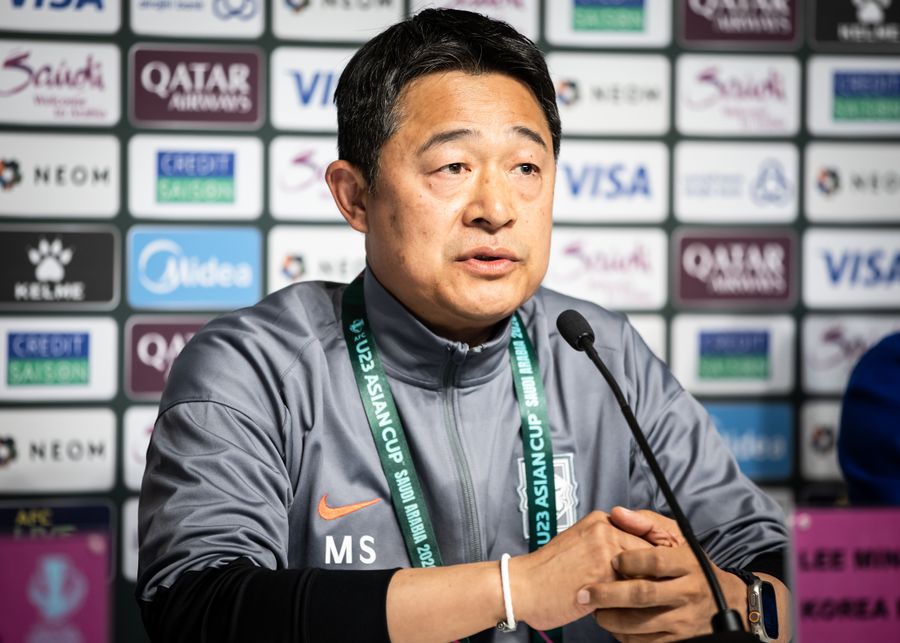
The 2020 champions are aiming to go all the way after making their exit at the quarter-final stage in the last two editions, and head coach Lee min-Sung is confident of their chances.

“We have studied the way Iran play, and they have very good strikers and are good in their build-up,” he said.

“We need to control these aspects, and this will prove to be a very exciting match. “

image content

“The players have had seven training camps since I took over as head coach, and they faced some problems with teamwork and fitness levels, but we overcame these at our final camp.

“Today we are in peak condition, our confidence is high and it is really important that we obtain the best possible result in our opening match.”  

#AFCU23 Saudi Arabia 2026 | Group Stage Preview

Iran head coach Omid Ravankhah echoed Lee’s sentiments about Group C being composed of exceptional teams.

“This is a group with respected teams, but we have set our objective and are determined to perform well,” he said. “We are familiar with the Korea Republic game and they are very strong, but we will go out to win.” 

image content

The Central Asian side did not qualify for the 2024 edition, but their perfect showing in the Saudi Arabia 2026 Qualifiers has boosted their confidence. 

“We have very strong, talented players, and all of them are looking forward to succeeding and achieving a significant result in our first match.”


Trivia

  • This will be the second encounter between Korea Republic and Iran in the AFC U23 Asian Cup, with the former winning the previous meeting 2-1 in 2020.
  • Korea Republic have won 18 games in the AFC U23 Asian Cup, the joint-most by any side in competition history alongside Japan.
  • Iran have failed to progress beyond the group stage in each of their last two AFC U23 Asian Cup participations (in 2022 and 2020), after having done so in their debut edition in 2016.

Korea Republic v Iran
Venue: Al Shabab Stadium (Riyadh)
Kick-off: Wednesday, 14:30 (UTC+3)

Iran Announces Preliminary Squad for AFC Futsal Asian Cup

I

In accordance with AFC regulations, the Iranian national futsal team has submitted its preliminary 25-player list for the upcoming AFC Futsal Asian Cup, hosted by Indonesia.

The submitted squad is as follows:

Saeed Momeni, Bagher Mohammadi, Mehdi Rostamiha, Behzad Rasouli, Mohammad Mehdi Esmailpour, Mohammad Hossein Derakhshani, Amir Hossein Gholami, Hossein Sabzi, Soran Balkaneh, Mehdi Asadshir, Mehdi Yousef, Mehdi Karimi, Muslim Olaghabad, Sajjad Yousefkhah, Amir Hossein Dehghani, Salar Aghapour, Ali Khalilvand, Ali Akrami, Mehdi Mehdikhani, Mohammad Hossein Baziar, Hossein Tayyibi, Saeed Ahmad Abbasi, Amir Hossein Abtahi, Behrouz Azimi, and Amir Hamzeh Sedighzadeh.

Following the conclusion of the 21st week of the domestic league, the technical staff, led by Vahid Shamsaei, will narrow this list down to 20 players for a national team training camp. Tournament rules ultimately permit only 14 players to be registered for the final competition squad.

Iran finds itself in Group D alongside Afghanistan, Saudi Arabia, and Malaysia.

The 18th edition of the AFC Futsal Asian Cup will take place in Indonesia from January 27 to February 7. The tournament will feature 16 teams competing across two venues within a single host city.

Iran enters as the most successful nation in the competition’s history, having claimed the championship title 13 times.


Tournament Details:

  • Dates: 27 January – 7 February
  • Host Country: Indonesia
  • Host City: 1
  • Venues: 2
  • Teams: 16

Dates: 27 January – 7 February

Venue: 2 (in 1 host city)

Host country: Indonesia

Teams 16

Mehdi Taremi faces possible World Cup ban over Iranian military service

The Daily Mirror, UK.
Story by Nathan Ridley
 

Mehdi Taremi of Iran is celebrating after scoring a goal during the AFC Asian Cup 2023 match between Iran and the United Arab Emirates at Education City Stadium in Al Rayyan, Qatar, on January 23, 2023. (Photo by Noushad Thekkayil/NurPhoto via Getty Images)

Mehdi Taremi of Iran is celebrating after scoring a goal during the AFC Asian Cup 2023 match between Iran and the United Arab Emirates at Education City Stadium in Al Rayyan, Qatar, on January 23, 2023. (Photo by Noushad Thekkayil/NurPhoto via Getty Images)© Noushad Thekkayil/NurPhoto via Getty Images

Iran striker Mehdi Taremi faces being denied entry to the 2026 World Cup over his mandatory military service. Taremi, 33, was prolific during qualification, scoring 10 goals in 15 games as Iran topped both of their groups.

Amir Ghalenoei’s side have been placed in Group G alongside BelgiumEgypt and New Zealand. They’ll play their fixtures in the US cities of Los Angeles and Seattle.

But Taremi might not be involved. It comes after the president of the Football Federation Islamic Republic of Iran, Mehdi Taj, revealed that some players are at risk of not receiving visas.

“The United States might not issue visas to some players due to their military service location,” Taj warned. “That’s why we’ve started now and have selected replacements for players who might not receive visas.”

It quickly emerged from various Iranian media outlets that Taremi was among those who the federation chief was referencing. All Iranian men must serve time in a military once they turn 19.

Taremi’s situation, however, is markedly different from most of his team-mates. Between 2010 and 2012, the Olympiacos star served in the Navy of the Islamic Revolutionary Guard Corps (IRGC) in the city of Bushehr near his home.

“My service was right there in Bushehr,” Taremi explained in a 2015 interview. “Close to our own home, at the IRGC Navy base. It wasn’t hard at all.”

The US State Department has firm restrictions for individuals with ties to organisations which it deems as foreign terrorist entities. Their list includes the IRGC.

In a statement provided to Pro Soccer Wire, a US State Department spokesperson didn’t rule out the possibility that some of Iran’s players could see their visa applications denied. “The Trump Administration is committed to doing everything we can to support a successful World Cup,” they said.

Iran's forward #09 Mehdi Taremi celebrates scoring his team's second goal during the FIFA World Cup 2026 Asia zone qualifiers group A football match between Iran and the North Korea at the Azadi Sports Complex in Tehran on June 10, 2025. (Photo by ATTA KENARE / AFP) (Photo by ATTA KENARE/AFP via Getty Images)

Iran’s forward #09 Mehdi Taremi celebrates scoring his team’s second goal during the FIFA World Cup 2026 Asia zone qualifiers group A football match between Iran and the North Korea at the Azadi Sports Complex in Tehran on June 10, 2025. (Photo by ATTA KENARE / AFP) (Photo by ATTA KENARE/AFP via Getty Images)© ATTA KENARE/AFP via Getty Images

“At the same time, the administration will not waver in upholding US law and the highest standards of national security and public safety in the conduct of our visa process.

“We adjudicate each visa application on a case-by-case basis after rigorous review and thorough vetting to determine whether the individual is eligible under US law.”

The ex-Inter Milan and Porto star could therefore miss out on the chance to play at back-to-back World Cups. In 2022, Iran came third in a group alongside EnglandWales and the United States, finishing third on three points.

The Friendly Match Fallacy: Why Iran’s Football Problems Run Deeper Than a High-Profile Game


A persistent narrative among some Iranian football pundits suggests that the key to elevating Team Melli’s standards lies in securing a handful of high-profile friendly matches against European or South American opponents. This notion, while appealing, is a superficial solution that mistakes exposure for evolution. The belief that sharing a pitch with world-class talent can magically transform a national team is not only naive but diverts attention from the deep-rooted, systemic issues that truly dictate success on the global stage.

The genuine criteria for improving Iran’s World Cup prospects are foundational, not ceremonial. They include:

  • Domestic Football Health: The quality of the Persian Gulf Pro League, its infrastructure, training facilities, and talent development pipelines.
  • Player Development & Professionalism: The standard of Iran’s legionnaires abroad, coupled with the technical discipline, personal conduct, and professional attitude of all players.
  • Governance & Leadership: The competence, experience, and integrity of the Football Federation (FFIRI) and its administration.
  • Technical Direction: The quality of coaching, tactical vision, and strategic planning within the national team setup.

With approximately six months until the 2026 World Cup begins, the prospect of meaningful improvement in these areas appears bleak. The domestic league struggles with quality and fan engagement, failing to consistently produce elite talent. Most of Iran’s foreign-based players have yet to set their leagues alight, often occupying modest roles. The nation’s training facilities and stadiums—epitomized by the long-term closure of Azadi, which has left giants like Persepolis and Esteghlal looking like displaced refugees—remain a profound embarrassment.

The FFIRI itself is widely viewed as ineffective, lacking the strategic foresight and operational skill required for modern football governance, with persistent whispers of corruption further eroding trust. This institutional failure directly impacts the pitch.

Coach Amir Ghalenoei, despite his dedication, operates with significant handicaps. Questions surrounding his tactical acumen have grown louder, and his authority within the squad appears weakened. His public communications, often sounding more like political rhetoric than technical analysis, have done little to reassure a frustrated fanbase. The persistent sugar-coating of subpar performances is testing the patience of even the most loyal supporters.

These are not deficits cured by 90 minutes against a top-tier nation. While such friendlies offer valuable exposure and test player cohesion, they are diagnostic tools, not cures. The core pathology remains untreated. Furthermore, the logistical fantasy of such matches collides with reality: serious football nations plan years in advance, while the FFIRI is notorious for last-minute planning and citing prohibitive costs.

With only two FIFA windows remaining before the World Cup, comprising a potential four matches, the pursuit of “realistic” opposition is a more prudent strategy than chasing glamorous, expensive fixtures that may only highlight existing flaws without fixing them.

In conclusion, while fans may dream of seeing Iran face France or Spain, the administration must wake up to a harder truth. Friendly matches can refine a team, but they cannot rebuild a system. Without confronting the profound shortcomings in infrastructure, governance, and domestic football culture, no amount of high-profile friendlies will significantly alter Team Melli’s chances of advancing in the 2026 World Cup. The quest for improvement must look inward, long before it looks for prestigious opponents.

FFIRI President Details World Cup Preparations Amid Challenges.


In a comprehensive update on Iran’s preparations for the 2026 FIFA World Cup, Football Federation President Mehdi Taj addressed critical issues, including friendly match negotiations, visa denials for staff, and logistical planning for the team’s camp in the United States.

Friendly Matches: Portugal and Spain in Sight

Taj confirmed that efforts to secure high-profile friendly matches are advancing. “We aimed to arrange matches for March and June [early spring],” he stated. “For June, we targeted European opponents and have held significant talks with Portugal. This has progressed considerably, and within the next two to three days, we should sign a memorandum of understanding.”

He indicated that Portugal’s second friendly match in that window could be against Iran. Furthermore, Taj revealed ongoing coordination with Qatar for the earlier March window, where Spain and Egypt are scheduled to play. “Spain will come to Qatar and likely play them first, then potentially face us,” he added.

While talks have also been held with Scotland and Iceland, Taj emphasized that no agreements are yet final. “None are definitive at the moment. We must have replacement plans and alternative options ready.”

Visa Denials and Contingency Planning

Addressing the sensitive issue of U.S. visa refusals for some national team members, Taj outlined the federation’s proactive stance. “After consultations, we decided to send three representatives to the draw. We have started identifying replacement options for the World Cup squad,” he explained. “If, for any reason, a player is told he cannot come, we must have an alternative ready.”

He cited the case of team official Saeed Al-Hawie, who was denied a visa, possibly due to his professional history. “Those who may have served in certain capacities could face problems,” Taj noted. He confirmed that Iran has protested the matter to FIFA, suggesting the global body “could have stood up to the United States more firmly.”

Taj also mentioned a joint protest with Egypt regarding the official naming of their World Cup group stage match, which he labeled “unreasonable and supportive of a specific political group,” vowing to pursue the issue.

U.S. Training Camp and Ticket Sales

Regarding Team Melli’s base camp in the United States, Taj identified a preferred location. “We visited a camp approximately 56 kilometers from Los Angeles. The team can reach the city in under an hour, and it is only 12 minutes from the airport,” he said, highlighting its logistical advantage for Iran’s third group match in Seattle. “We hope no complications arise and this camp is secured for us.”

On ticketing, Taj stated that the average ticket price is around $500. While fans inside Iran will not be granted visas for the tournament, the federation plans to facilitate sales for the diaspora. “We must prepare to sell approximately eight thousand tickets per match for our supporters. Iranians living abroad will be able to purchase them through the federation’s website.”


FIFA Days
23–31 March 2026
1–9 June 2026

FIFA World Cup 2026
11 June – 19 July 2026

Group G

June 15, 2026 Belgium Match 16 EgyptLumen FieldSeattle
June 15, 2026Iran Match 15 New ZealandSoFi StadiumInglewood
June 21, 2026Belgium Match 39 IranSoFi StadiumInglewood
June 21, 2026New Zealand Match 40 EgyptBC PlaceVancouver
June 26, 2026Egypt Match 63 IranLumen FieldSeattle
June 26, 2026New Zealand Match 64 BelgiumBC PlaceVancouver

Team Melli’s Rumored German Target: A Logical Fit?


Strong rumors are circulating that a German player, currently without Iranian citizenship or a passport, is in the process of being naturalized and invited to join Team Melli. The player in question is Dennis-Yerai Eckert Ayensa, a 27-year-old forward who currently plays for Standard Liège in the Belgian Pro League. His eligibility reportedly stems from his German-Iranian father.

Eckert’s connection to Iran appears strictly ancestral. He does not speak Farsi, nor is there any indication he has ever visited the country. Culturally, he is rooted in his German and Spanish heritage (his mother is Spanish), and he speaks German, Spanish, and English.

His name has surfaced in Iranian football circles several times. What remains unclear is why he is being singled out and what specific skills he is believed to offer the national team with only six months remaining until the World Cup.

Iran’s attacking options already feature established names such as Mehdi Taremi, Sardar Azmoun, and younger talents like Amir Hossein Hosseinzadeh and Allahyar Sayyadmanesh. In this context, the potential addition of Eckert—a player with no prior connection to Iranian football—risks appearing out of place, both culturally and tactically.

A review of his professional record suggests a modest career trajectory. After coming through the youth ranks at 1. FC Köln, Eckert has played for seven clubs across Germany, Spain, and Belgium. His most productive spell came at FC Ingolstadt in the German third division (3. Liga), where between 2019 and 2022 he scored 25 goals in 78 matches. He permanently signed for Standard Liège in 2023, where he has recorded 7 goals in 33 appearances. At the international youth level, he earned a single cap for Germany’s U19 team in 2015 and was not selected for any further age-group squads.

Given this profile, Eckert appears to be a journeyman player without a significant pedigree. The motivation behind this potential move is ambiguous—it could be interpreted as a sign of desperation or simply another unsubstantiated rumor in the often-volatile sphere of Iranian football politics.

Logic dictates that any new player, particularly one without cultural or linguistic ties to Iran, would require considerable time to acclimate to the team’s dynamics, style, and environment before being expected to contribute meaningfully. With the World Cup on the horizon, there is legitimate doubt whether Eckert’s induction, should it materialize, would yield any tangible benefit for Team Melli in time for the tournament.


Guide to Group G at World Cup 2026

Guide to Group G at World Cup 2026

Dan Goldfarb/The Athletic By The Athletic UK Staff

Dec. 5, 2025Updated Dec. 6, 2025 9:41 pm GMT+3

The World Cup draw is complete and Belgium, Egypt, Iran and New Zealand have been drawn together in Group G.

How did the teams qualify? How do the different countries play? And who are the key protagonists in the group?

Group G

Games in: Los Angeles, Seattle, Vancouver, Canada

See full draw results


The schedule: Games, venues, dates and kick-off times

Matchday 1

  • Monday, June 15: Iran vs New Zealand (9pm ET, 6pm PT, 2am BST+1) — SoFi Stadium, Los Angeles
  • Monday, June 15: Belgium vs Egypt (3pm ET, 12pm PT, 8pm BST) — Lumen Field, Seattle

Matchday 2

  • Sunday, June 21: Belgium vs Iran (3pm ET, 12pm PT, 8pm BST) — SoFi Stadium, Los Angeles
  • Sunday, June 21: New Zealand vs Egypt (9pm ET, 6pm PT, 2am BST+1) — BC Place, Vancouver

Matchday 3

  • Friday, June 26: Egypt vs Iran (11pm ET, 8pm PT, 4am BST+1) — Lumen Field, Seattle
  • Friday, June 26: New Zealand vs Belgium (11pm ET, 8pm PT, 4am BST+1) — BC Place, Vancouver

Belgium

Dan Mullan/Getty Images

How did they qualify?

With relative ease. Despite two draws against North Macedonia and another with Kazakhstan delaying the inevitable, Belgium still went unbeaten across their eight games.

It was never going to be a tough group for Belgium, given it’s been a decade since they last lost a World Cup or European Championship qualifying game. That defeat came against Wales, but the Belgians paid them back in this qualification competition. The Welsh were their closest challengers for top spot, and will be in the UEFA playoffs in March, but got beaten 4-3 and then 4-2 in the two meetings.

What is their World Cup pedigree?

Belgium first made a dent in a World Cup in 1986, finishing fourth. Argentina’s Diego Maradona prevented them reaching the final but Enzo Scifo was named the young player of the tournament, before helping them get out of the group stage again four years later.

It was not until the 2014 World Cup that Belgium were considered a powerful nation once more but they lost to Argentina again in the quarter-finals that year and then at Russia 2018, when they were among the favourites, they lost to eventual champions France beat them in the semi-finals. Both 1-0 defeats were seen as missed opportunities for a team of such quality. Belgium’s failure to make it out of the group in 2022 was widely regarded as the end of that chapter for a golden generation of players who had grown old together.

Who is the coach?

Rudi Garcia. The Frenchman took over in January from Domenico Tedesco, who failed to build on Roberto Martinez’s six-year tenure, half of which they spent in first place in the FIFA world rankings.

Garcia, who oversaw a 4-3 aggregate play-off victory against Ukraine in March to keep Belgium in the top tier of the UEFA Nations League, made his name in club management by winning the French title with Lille in 2011 and finishing second in Italy’s Serie A twice with Roma in 2014 and 2015. Known for his attractive style of play, he also took Lyon to the Champions League semi-finals in 2020 by beating Manchester City but his star has faded in recent years after Napoli’s form dropped off after he was appointed in summer 2023.

The 61-year-old Frenchman’s previous role had been at Saudi Pro League club Al Nassr, but the two parties mutually parted ways after 10 months with the team trailing Al Ittihad in the table and reports of an uneasy relationship between Garcia and star player Cristiano Ronaldo.

How do they play?

Garcia has stuck with a 4-3-3 shape so far, in contrast with Tedesco’s regular switches of formation. Right-back Thomas Meunier has praised how he has breathed fresh optimism into the group with a major focus on possession and counter-pressing. Garcia has been bold in giving opportunities to several new faces, including Rangers midfielder Nicolas Raskin and Club Brugge full-back Joaquin Seys.

Other defenders, such as Sporting CP’s Zeno Debast, Koni De Winter of Milan and Brighton & Hove Albion’s Maxim De Cuyper are taking on the mantle left by the ‘golden generation’ back line featuring Vincent Kompany, Toby Alderweireld, Jan Vertonghen and Thomas Vermaelen. Garcia is blessed in terms of his wide options. Jeremy Doku, Leandro Trossard, Charles De Ketelaere, Alexis Saelemaekers and Malick Fofana have all been utilised, but it is Doku who is emerging as the key threat.

Who is their key player?

Doku. The 23-year-old Manchester City winger has taken a step up at club level this season and looks to be taking on more responsibility with Belgium, too. He started all eight games during qualification, scoring five goals and assisting three, as he switched between the left and right flanks. Napoli midfielder Kevin De Bruyne, once he returns from the serious hamstring injury suffered in late October, could still be their talisman with his vision as a passer but is slowing down at age 34 (he’ll turn 35 during the World Cup). Doku is the player Belgium look to feed most often now, because of his unrivalled one-v-one ability.

What else should we know about them?

They have Thibaut Courtois back in goal after his controversial refusal to play under Tedesco. The Real Madrid goalkeeper fell out with their previous manager and said in August 2024 that he would not add to his then total of 102 caps as long as he remained in the job. Fortunately for Courtois, he only had to wait just over six months and was brought back into the fold post-Euros after talks with new coach Garcia. However, Belgium have had internal problems previously, with big-name players such as De Bruyne and Vertonghen clashing at the last World Cup over the midfielder’s comments about their aging defence.

Jordan Campbell


Egypt

NurPhoto via Getty Images

How did they qualify?

Egypt did not lose a single game in Group A in the African qualifiers, winning eight and drawing twice.

However, they only confirmed their qualification in October, by topping the group after beating Djibouti 3-0 with two goals from Mohamed Salah.

Burkina Faso were tailing them throughout the qualifiers, but the 0-0 draw between the sides in Ouagadougou in September maintained Egypt’s five-point gap and solidified their status at the top of the group.

FIFA MEN'S WORLD CUPTop FIFA MEN’S WORLD CUP Stories

2026 World Cup final set for 3pm ET kick-off: Full tournament schedule

Determining hardest, easiest groups, best games and Golden Boot winner at the 2026 World Cup

This was a World Cup draw to whet the appetite for a tournament full of stars and intrigue

What is their World Cup pedigree?

Despite being the first Arab and African nation to participate in the World Cup, in 1934, Egypt has never won a match at the tournament.

Granted, they only qualified two times after that, in 1990 and 2018, with World Cup qualification being a hoodoo in the period in between. Egypt were pitted in the group of death in the 2002 and 2006 qualifiers, lost a tie-breaker against Algeria in 2009, and broke down against Ghana in the play-off round of the 2014 qualifiers.

The 2018 edition was a disappointment, with Salah entering the tournament injured and the team losing their three matches in the group stage.

Who is the coach?

The legendary striker, Hossam Hassan.

The three-time AFCON winner is one of the best centre-forwards in Egypt’s history. He holds the record for the most goals scored for the national team (69) and is only bettered by Ahmed Hassan (no relation) in terms of the number of appearances.

Hassan, who played in the 1990 World Cup, won numerous domestic trophies alongside the CAF Champions League in 2002 with Zamalek.

However, he had to cross the biggest divide in Egyptian football to join Zamalek. As a young player, Hassan was brought up through Al Ahly’s youth ranks, and went on to become one of the best players in the club’s history.

His managerial career has mainly been inside Egypt, apart from a brief spell with Jordan’s national team in 2013-14.

How do they play?

In their 4-3-3, Salah and Manchester City’s Omar Marmoush flank the front line. It is therefore understandable why Egypt focus on attacking the wide areas, with Salah having the freedom to drop and roam.

Zizo operates as the right-sided midfielder, and his attacking profile complements Salah’s tendency to drop and create from midfield.

The left No 8 role has recently been occupied by Trezeguet, but Emam Ashour’s return from injury might alter the team’s starting line-up.

Ashour’s profile is more suited to the midfield role, and he offers something different than the ex-Aston Villa winger.

Who is their key player?

The man needs no introduction.

Salah has been the key player in Egypt’s national team for many years now, and unlike other Egyptian legends, he has not played with the strongest of squads.

Despite that, he managed to guide Egypt to the 2018 World Cup, ending the country’s 28-year wait to appear at the finals. However, the Liverpool forward’s shoulder injury in the 2018 Champions League final against Real Madrid affected the national team going into the tournament.

Then, his penalty miss in the shootout in the play-off round against Senegal in 2022 harmed Egypt’s chance of reaching the 2022 World Cup.

In 2026, he will be hoping to help open a new page in his country’s World Cup history.

What else should we know about them?

By the World Cup, Salah might be in position to surpass his head coach as the top goalscorer in Egypt’s history.

Currently, Salah is on 63 goals – six away from Hassan – and can increase his tally in the upcoming AFCON.

Yet, it would be a greater achievement if Salah can couple that with winning AFCON and helping Egypt reach the knockout stage of the World Cup for the first time in their history.

Ahmed Walid


Iran

Markus Gillar/Getty Images

How did they qualify?

There were a few bumps along the way and some unconvincing performances, but ultimately Iran made it through without too many alarms and with two games to spare — their only defeat of the entire 16-match, two-round qualifying campaign came against Qatar, after safe passage had already been sealed.

What is their World Cup pedigree?

This will be their fourth World Cup in a row, meaning they will have now participated in more tournaments since 2014 than in their entire history before that. Iran are yet to make it past the group stage, though, with their best performance coming in 2018, when they dramatically beat Morocco and drew with Portugal but a narrow defeat by Spain kept them from the knockouts. Last time, they were comfortably beaten by England and the United States, their only success coming thanks to goals in the 98th and 101st minutes against a Wales side down to 10 men by that stage.

Who is the coach?

This will be their first World Cup since 2006 without Carlos Queiroz in the dugout, his successor Amir Ghalenoei having taken over for a second spell in charge following that 2022 World Cup. On paper, Ghalenoei’s record is pretty good: qualification was relatively straightforward and his win percentage is up in the 70s. But there is plenty of dissatisfaction with his approach, not least that he still relies on the old guard — players in their thirties such as Alireza Jahanbakhsh and former Brentford midfielder Saman Ghoddos.

How do they play?

Do not expect attractive, expansive football. Under Queiroz, they were very solid: no frills, two banks of four with a couple of forwards, usually Mehdi Taremi and Sardar Azmoun. It largely worked, and it continues to work in terms of results, but there has been a desire to offer something slightly more interesting and attacking, which in theory should have come with a younger generation of players emerging, but neither has really materialised.

Who is their key player?

It is still probably Taremi, now scoring goals for Greek champions Olympiacos after a season in Italy with Inter. It will be fascinating to see how they deal with Jahanbakhsh if he does not find a club before the tournament starts. On talent, he would still probably be in their strongest team, but surely they cannot pick someone who, by the time Iran’s first group game kicks off in June, will not have played club football for over a year. In terms of young talent, watch out for midfielder Mohammad Hosseinnejad and striker Kasra Taheri.

What else should we know about them?

Of all the teams at the tournament who will have to deal with outside distractions, Iran surely have the most. The issue of how many of their fans will even be allowed into the United States to watch their games is something that will run and run from now until the whole thing starts in June. And also remember that at the previous World Cup three years ago, Iran’s players protested against the repression of protests back home. Will all of that be too much for them to actually perform as they can?

Nick Miller


New Zealand

Sebastian Frej/Getty Images

How did they qualify?

Since Australia became Asian for footballing purposes ahead of South Africa 2010, New Zealand are the game’s big hitters in Oceania. A bye into the second stage of that confederation’s qualifying competition for the side ranked 86th in the world by FIFA, was followed by three wins from three, 19 goals scored and one conceded as New Zealand breezed past Tahiti, Vanuatu and Samoa. A 7-0 thrashing of Fiji in a third-phase semi-final and then a 3-0 defeat of New Caledonia sealed their World Cup place at a canter.

What is their World Cup pedigree?

Modest. This will be New Zealand’s third appearance at the finals, though each has represented progress of various kinds. Their debut came in 1982, the first edition that was expanded from 16 teams to 24. It started with New Zealand’s first World Cup goals, coming in a 5-2 opening defeat by Scotland. Their group-stage exit was sealed by defeats to the Soviet Union (3-0) and Brazil (4-0). Then in 2010, Winston Reid’s stoppage-time equaliser against Slovakia gave them their first World Cup point. They also led a match in the finals for the first time, during a 1-1 draw against Italy, before finishing third in their four-team group after a goalless draw with Paraguay. New Zealand were the only team to finish that South Africa World Cup unbeaten (eventual winners Spain ost their opening group match against Switzerland).

Who is the coach?

Darren Bazeley will be familiar to some Watford fans. The English-born full-back made almost 300 appearances for that club to begin a senior playing career during which he eventually swapped EFL side Walsall for the Auckland-based New Zealand Knights in the Australian A-League 20 years ago. His subsequent coaching career led him to joining the New Zealand setup as under-17s assistant in 2009 — his only break from the national team since being a stint in MLS with Colorado Rapids and A-League at Newcastle Jets. Come July 2023, Bazeley was appointed New Zealand’s head coach for this World Cup cycle, while simultaneously leading the under-23s at the 2024 Olympics. Bazeley’s side were knocked out in the group stage there, finishing behind the United States and hosts France, who went on to win silver medals.

How do they play?

Despite New Zealand’s limited resources and lowly FIFA ranking, Bazeley has his side trying to play possession football. They use a 4-2-3-1 formation and look to build up without the default option of whacking long balls up to the obvious focal point of Nottingham Forest striker Chris Wood. A 1-0 defeat in Poland and 1-1 draw in Norway — albeit the latter was against a team without Erling Haaland — during their two October friendlies showed this team can make that plan work to a point. The greater difficulty was taking the chances they did create, especially when falling to someone other than their No 9. Wood’s involvement in those two friendlies was limited to 68 minutes.

Who is their key player?

A very simple answer to this. Shall we say it all together? Yes, it’s Wood. The 33-year-old, long-time Premier League striker with West Brom, Leicester, Burnley, Newcastle and now Forest is New Zealand’s highest-profile player, the country’s all-time leading scorer with 45 goals and the joint highest appearance-maker alongside former Eredivisie defender Ivan Vicelich, with 88. The tall, rangy, dangerous finisher is also their captain. Wood has already been prolific in the English top flight, and has scored at European level this season. Come the summer, he will aim to get his first goal at a World Cup.

What else should we know about them?

New Zealand’s All Whites nickname came about when the team appeared in a — no prizes here — all-white kit for the first time in the lead-up to that World Cup debut in Spain. No surprises either that it is a soccer counterpoint to the continuing legend of New Zealand’s rather more successful All Blacks rugby union squad. However, in recent years there have been discussions over cultural diversity and representation, and whether the name should continue to be used. More colourful kits for match officials in modern football at least ensure New Zealand can have an all-black change strip these days.