Guide to Group G at World Cup 2026
Dan Goldfarb/The Athletic By The Athletic UK Staff
Dec. 5, 2025Updated Dec. 6, 2025 9:41 pm GMT+3
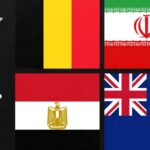
The World Cup draw is complete and Belgium, Egypt, Iran and New Zealand have been drawn together in Group G.
How did the teams qualify? How do the different countries play? And who are the key protagonists in the group?
Group G
Games in: Los Angeles, Seattle, Vancouver, Canada
The schedule: Games, venues, dates and kick-off times
Matchday 1
- Monday, June 15: Iran vs New Zealand (9pm ET, 6pm PT, 2am BST+1) — SoFi Stadium, Los Angeles
- Monday, June 15: Belgium vs Egypt (3pm ET, 12pm PT, 8pm BST) — Lumen Field, Seattle
Matchday 2
- Sunday, June 21: Belgium vs Iran (3pm ET, 12pm PT, 8pm BST) — SoFi Stadium, Los Angeles
- Sunday, June 21: New Zealand vs Egypt (9pm ET, 6pm PT, 2am BST+1) — BC Place, Vancouver
Matchday 3
- Friday, June 26: Egypt vs Iran (11pm ET, 8pm PT, 4am BST+1) — Lumen Field, Seattle
- Friday, June 26: New Zealand vs Belgium (11pm ET, 8pm PT, 4am BST+1) — BC Place, Vancouver
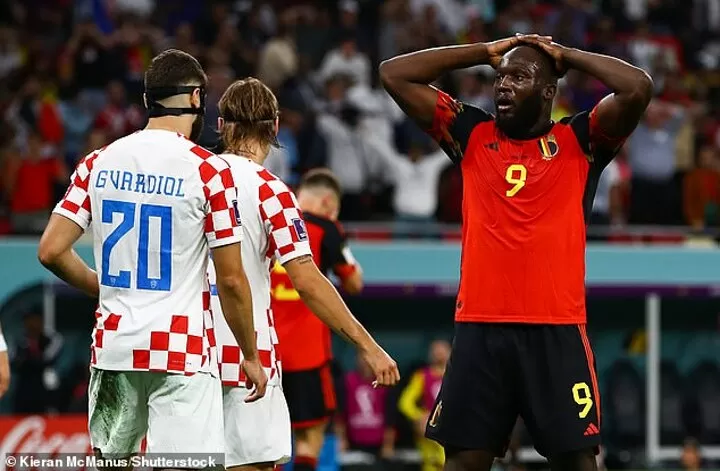
Belgium

Dan Mullan/Getty Images
How did they qualify?
With relative ease. Despite two draws against North Macedonia and another with Kazakhstan delaying the inevitable, Belgium still went unbeaten across their eight games.
It was never going to be a tough group for Belgium, given it’s been a decade since they last lost a World Cup or European Championship qualifying game. That defeat came against Wales, but the Belgians paid them back in this qualification competition. The Welsh were their closest challengers for top spot, and will be in the UEFA playoffs in March, but got beaten 4-3 and then 4-2 in the two meetings.
What is their World Cup pedigree?
Belgium first made a dent in a World Cup in 1986, finishing fourth. Argentina’s Diego Maradona prevented them reaching the final but Enzo Scifo was named the young player of the tournament, before helping them get out of the group stage again four years later.
It was not until the 2014 World Cup that Belgium were considered a powerful nation once more but they lost to Argentina again in the quarter-finals that year and then at Russia 2018, when they were among the favourites, they lost to eventual champions France beat them in the semi-finals. Both 1-0 defeats were seen as missed opportunities for a team of such quality. Belgium’s failure to make it out of the group in 2022 was widely regarded as the end of that chapter for a golden generation of players who had grown old together.
Who is the coach?
Rudi Garcia. The Frenchman took over in January from Domenico Tedesco, who failed to build on Roberto Martinez’s six-year tenure, half of which they spent in first place in the FIFA world rankings.
Garcia, who oversaw a 4-3 aggregate play-off victory against Ukraine in March to keep Belgium in the top tier of the UEFA Nations League, made his name in club management by winning the French title with Lille in 2011 and finishing second in Italy’s Serie A twice with Roma in 2014 and 2015. Known for his attractive style of play, he also took Lyon to the Champions League semi-finals in 2020 by beating Manchester City but his star has faded in recent years after Napoli’s form dropped off after he was appointed in summer 2023.
The 61-year-old Frenchman’s previous role had been at Saudi Pro League club Al Nassr, but the two parties mutually parted ways after 10 months with the team trailing Al Ittihad in the table and reports of an uneasy relationship between Garcia and star player Cristiano Ronaldo.

How do they play?
Garcia has stuck with a 4-3-3 shape so far, in contrast with Tedesco’s regular switches of formation. Right-back Thomas Meunier has praised how he has breathed fresh optimism into the group with a major focus on possession and counter-pressing. Garcia has been bold in giving opportunities to several new faces, including Rangers midfielder Nicolas Raskin and Club Brugge full-back Joaquin Seys.
Other defenders, such as Sporting CP’s Zeno Debast, Koni De Winter of Milan and Brighton & Hove Albion’s Maxim De Cuyper are taking on the mantle left by the ‘golden generation’ back line featuring Vincent Kompany, Toby Alderweireld, Jan Vertonghen and Thomas Vermaelen. Garcia is blessed in terms of his wide options. Jeremy Doku, Leandro Trossard, Charles De Ketelaere, Alexis Saelemaekers and Malick Fofana have all been utilised, but it is Doku who is emerging as the key threat.
Who is their key player?
Doku. The 23-year-old Manchester City winger has taken a step up at club level this season and looks to be taking on more responsibility with Belgium, too. He started all eight games during qualification, scoring five goals and assisting three, as he switched between the left and right flanks. Napoli midfielder Kevin De Bruyne, once he returns from the serious hamstring injury suffered in late October, could still be their talisman with his vision as a passer but is slowing down at age 34 (he’ll turn 35 during the World Cup). Doku is the player Belgium look to feed most often now, because of his unrivalled one-v-one ability.

What else should we know about them?
They have Thibaut Courtois back in goal after his controversial refusal to play under Tedesco. The Real Madrid goalkeeper fell out with their previous manager and said in August 2024 that he would not add to his then total of 102 caps as long as he remained in the job. Fortunately for Courtois, he only had to wait just over six months and was brought back into the fold post-Euros after talks with new coach Garcia. However, Belgium have had internal problems previously, with big-name players such as De Bruyne and Vertonghen clashing at the last World Cup over the midfielder’s comments about their aging defence.
Jordan Campbell
Egypt

NurPhoto via Getty Images
How did they qualify?
Egypt did not lose a single game in Group A in the African qualifiers, winning eight and drawing twice.
However, they only confirmed their qualification in October, by topping the group after beating Djibouti 3-0 with two goals from Mohamed Salah.
Burkina Faso were tailing them throughout the qualifiers, but the 0-0 draw between the sides in Ouagadougou in September maintained Egypt’s five-point gap and solidified their status at the top of the group.
 Top FIFA MEN’S WORLD CUP Stories
2026 World Cup final set for 3pm ET kick-off: Full tournament schedule
Determining hardest, easiest groups, best games and Golden Boot winner at the 2026 World Cup
This was a World Cup draw to whet the appetite for a tournament full of stars and intrigue
What is their World Cup pedigree?
Despite being the first Arab and African nation to participate in the World Cup, in 1934, Egypt has never won a match at the tournament.
Granted, they only qualified two times after that, in 1990 and 2018, with World Cup qualification being a hoodoo in the period in between. Egypt were pitted in the group of death in the 2002 and 2006 qualifiers, lost a tie-breaker against Algeria in 2009, and broke down against Ghana in the play-off round of the 2014 qualifiers.
The 2018 edition was a disappointment, with Salah entering the tournament injured and the team losing their three matches in the group stage.
Who is the coach?
The legendary striker, Hossam Hassan.
The three-time AFCON winner is one of the best centre-forwards in Egypt’s history. He holds the record for the most goals scored for the national team (69) and is only bettered by Ahmed Hassan (no relation) in terms of the number of appearances.
Hassan, who played in the 1990 World Cup, won numerous domestic trophies alongside the CAF Champions League in 2002 with Zamalek.
However, he had to cross the biggest divide in Egyptian football to join Zamalek. As a young player, Hassan was brought up through Al Ahly’s youth ranks, and went on to become one of the best players in the club’s history.
His managerial career has mainly been inside Egypt, apart from a brief spell with Jordan’s national team in 2013-14.

How do they play?
In their 4-3-3, Salah and Manchester City’s Omar Marmoush flank the front line. It is therefore understandable why Egypt focus on attacking the wide areas, with Salah having the freedom to drop and roam.
Zizo operates as the right-sided midfielder, and his attacking profile complements Salah’s tendency to drop and create from midfield.
The left No 8 role has recently been occupied by Trezeguet, but Emam Ashour’s return from injury might alter the team’s starting line-up.
Ashour’s profile is more suited to the midfield role, and he offers something different than the ex-Aston Villa winger.
Who is their key player?
The man needs no introduction.
Salah has been the key player in Egypt’s national team for many years now, and unlike other Egyptian legends, he has not played with the strongest of squads.
Despite that, he managed to guide Egypt to the 2018 World Cup, ending the country’s 28-year wait to appear at the finals. However, the Liverpool forward’s shoulder injury in the 2018 Champions League final against Real Madrid affected the national team going into the tournament.
Then, his penalty miss in the shootout in the play-off round against Senegal in 2022 harmed Egypt’s chance of reaching the 2022 World Cup.
In 2026, he will be hoping to help open a new page in his country’s World Cup history.
What else should we know about them?
By the World Cup, Salah might be in position to surpass his head coach as the top goalscorer in Egypt’s history.
Currently, Salah is on 63 goals – six away from Hassan – and can increase his tally in the upcoming AFCON.
Yet, it would be a greater achievement if Salah can couple that with winning AFCON and helping Egypt reach the knockout stage of the World Cup for the first time in their history.
Ahmed Walid
Iran

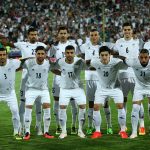
Markus Gillar/Getty Images
How did they qualify?
There were a few bumps along the way and some unconvincing performances, but ultimately Iran made it through without too many alarms and with two games to spare — their only defeat of the entire 16-match, two-round qualifying campaign came against Qatar, after safe passage had already been sealed.
What is their World Cup pedigree?
This will be their fourth World Cup in a row, meaning they will have now participated in more tournaments since 2014 than in their entire history before that. Iran are yet to make it past the group stage, though, with their best performance coming in 2018, when they dramatically beat Morocco and drew with Portugal but a narrow defeat by Spain kept them from the knockouts. Last time, they were comfortably beaten by England and the United States, their only success coming thanks to goals in the 98th and 101st minutes against a Wales side down to 10 men by that stage.
Who is the coach?
This will be their first World Cup since 2006 without Carlos Queiroz in the dugout, his successor Amir Ghalenoei having taken over for a second spell in charge following that 2022 World Cup. On paper, Ghalenoei’s record is pretty good: qualification was relatively straightforward and his win percentage is up in the 70s. But there is plenty of dissatisfaction with his approach, not least that he still relies on the old guard — players in their thirties such as Alireza Jahanbakhsh and former Brentford midfielder Saman Ghoddos.

How do they play?
Do not expect attractive, expansive football. Under Queiroz, they were very solid: no frills, two banks of four with a couple of forwards, usually Mehdi Taremi and Sardar Azmoun. It largely worked, and it continues to work in terms of results, but there has been a desire to offer something slightly more interesting and attacking, which in theory should have come with a younger generation of players emerging, but neither has really materialised.
Who is their key player?
It is still probably Taremi, now scoring goals for Greek champions Olympiacos after a season in Italy with Inter. It will be fascinating to see how they deal with Jahanbakhsh if he does not find a club before the tournament starts. On talent, he would still probably be in their strongest team, but surely they cannot pick someone who, by the time Iran’s first group game kicks off in June, will not have played club football for over a year. In terms of young talent, watch out for midfielder Mohammad Hosseinnejad and striker Kasra Taheri.
What else should we know about them?
Of all the teams at the tournament who will have to deal with outside distractions, Iran surely have the most. The issue of how many of their fans will even be allowed into the United States to watch their games is something that will run and run from now until the whole thing starts in June. And also remember that at the previous World Cup three years ago, Iran’s players protested against the repression of protests back home. Will all of that be too much for them to actually perform as they can?
Nick Miller
New Zealand

Sebastian Frej/Getty Images
How did they qualify?
Since Australia became Asian for footballing purposes ahead of South Africa 2010, New Zealand are the game’s big hitters in Oceania. A bye into the second stage of that confederation’s qualifying competition for the side ranked 86th in the world by FIFA, was followed by three wins from three, 19 goals scored and one conceded as New Zealand breezed past Tahiti, Vanuatu and Samoa. A 7-0 thrashing of Fiji in a third-phase semi-final and then a 3-0 defeat of New Caledonia sealed their World Cup place at a canter.
What is their World Cup pedigree?
Modest. This will be New Zealand’s third appearance at the finals, though each has represented progress of various kinds. Their debut came in 1982, the first edition that was expanded from 16 teams to 24. It started with New Zealand’s first World Cup goals, coming in a 5-2 opening defeat by Scotland. Their group-stage exit was sealed by defeats to the Soviet Union (3-0) and Brazil (4-0). Then in 2010, Winston Reid’s stoppage-time equaliser against Slovakia gave them their first World Cup point. They also led a match in the finals for the first time, during a 1-1 draw against Italy, before finishing third in their four-team group after a goalless draw with Paraguay. New Zealand were the only team to finish that South Africa World Cup unbeaten (eventual winners Spain ost their opening group match against Switzerland).
Who is the coach?
Darren Bazeley will be familiar to some Watford fans. The English-born full-back made almost 300 appearances for that club to begin a senior playing career during which he eventually swapped EFL side Walsall for the Auckland-based New Zealand Knights in the Australian A-League 20 years ago. His subsequent coaching career led him to joining the New Zealand setup as under-17s assistant in 2009 — his only break from the national team since being a stint in MLS with Colorado Rapids and A-League at Newcastle Jets. Come July 2023, Bazeley was appointed New Zealand’s head coach for this World Cup cycle, while simultaneously leading the under-23s at the 2024 Olympics. Bazeley’s side were knocked out in the group stage there, finishing behind the United States and hosts France, who went on to win silver medals.

How do they play?
Despite New Zealand’s limited resources and lowly FIFA ranking, Bazeley has his side trying to play possession football. They use a 4-2-3-1 formation and look to build up without the default option of whacking long balls up to the obvious focal point of Nottingham Forest striker Chris Wood. A 1-0 defeat in Poland and 1-1 draw in Norway — albeit the latter was against a team without Erling Haaland — during their two October friendlies showed this team can make that plan work to a point. The greater difficulty was taking the chances they did create, especially when falling to someone other than their No 9. Wood’s involvement in those two friendlies was limited to 68 minutes.
Who is their key player?
A very simple answer to this. Shall we say it all together? Yes, it’s Wood. The 33-year-old, long-time Premier League striker with West Brom, Leicester, Burnley, Newcastle and now Forest is New Zealand’s highest-profile player, the country’s all-time leading scorer with 45 goals and the joint highest appearance-maker alongside former Eredivisie defender Ivan Vicelich, with 88. The tall, rangy, dangerous finisher is also their captain. Wood has already been prolific in the English top flight, and has scored at European level this season. Come the summer, he will aim to get his first goal at a World Cup.
What else should we know about them?
New Zealand’s All Whites nickname came about when the team appeared in a — no prizes here — all-white kit for the first time in the lead-up to that World Cup debut in Spain. No surprises either that it is a soccer counterpoint to the continuing legend of New Zealand’s rather more successful All Blacks rugby union squad. However, in recent years there have been discussions over cultural diversity and representation, and whether the name should continue to be used. More colourful kits for match officials in modern football at least ensure New Zealand can have an all-black change strip these days.