Tag: FIFA World Cup 2026

Amir Ghalenoei

Iran’s Parliament Pushes for World Cup Participation, but Final Decision Hinges on U.S. Security Assurances

Tehran – Amid widespread popular enthusiasm and a clear political will to compete on the global stage, Iran’s Parliamentary Cultural Commission has confirmed that a specialized committee is actively reviewing the conditions for Team Melli’s potential participation in the FIFA World Cup 2026 in the United States. However, officials stress that no final decision has been reached, and any move forward is contingent on binding security guarantees from hostile U.S. authorities.

Strong Domestic Desire to Compete

Speaking to reporters, Ahmad Rastineh, spokesman for the Islamic Consultative Assembly’s Cultural Commission, underscored that both the Iranian public and political establishment are keenly determined to see Iran’s national team at the World Cup. Following a recent meeting with Ahmad Donyamali, Minister of Sports and Youth, and his deputies, Rastineh noted that participation in the 2026 World Cup is viewed as a matter of national pride and sporting excellence.

“The meeting extensively discussed the need for better planning to prepare national teams for Asian and world competitions, as well as securing future Olympic quotas,” Rastineh said. “Given the immense importance of the World Cup, detailed discussions were held with the minister and commission members. The popular demand and political inclination to participate are very strong, and we are exploring every avenue to make this happen.”

No Final Decision: Awaiting U.S. Assurances

Despite the widespread desire to attend the tournament, Rastineh made it clear that a final decision has not yet been made. The primary obstacle remains the absence of reliable security guarantees from U.S. authorities, whom Iranian officials characterize as a hostile government.

“In light of the multifaceted nature of these competitions and the conditions that occurred during past tensions—specifically the hostile atmosphere created by U.S. authorities—the need to form a specialized working group was emphasized,” Rastineh explained. “It was decided that a final decision will be made soon, but only after receiving concrete assurances from American officials regarding the safety and dignity of Iran’s national team delegation, including players, coaches, and accompanying personnel.”

He added that until such guarantees are provided and thoroughly vetted, the Islamic Republic will not commit to sending Team Melli to the United States, regardless of the strong popular and political inclination to participate.

Looking Ahead

The specialized committee will continue its review, weighing the passionate demands of Iranian football fans against the necessity of securing firm commitments from U.S. authorities. For now, Iran’s World Cup hopes remain alive, but officially on hold.

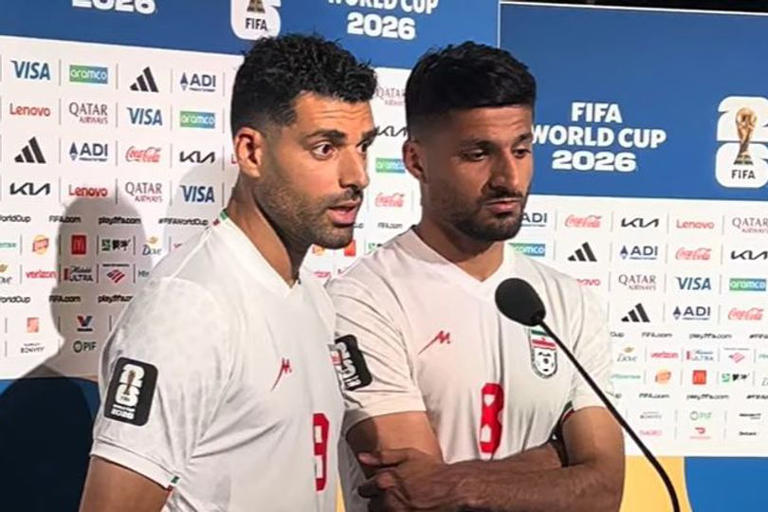
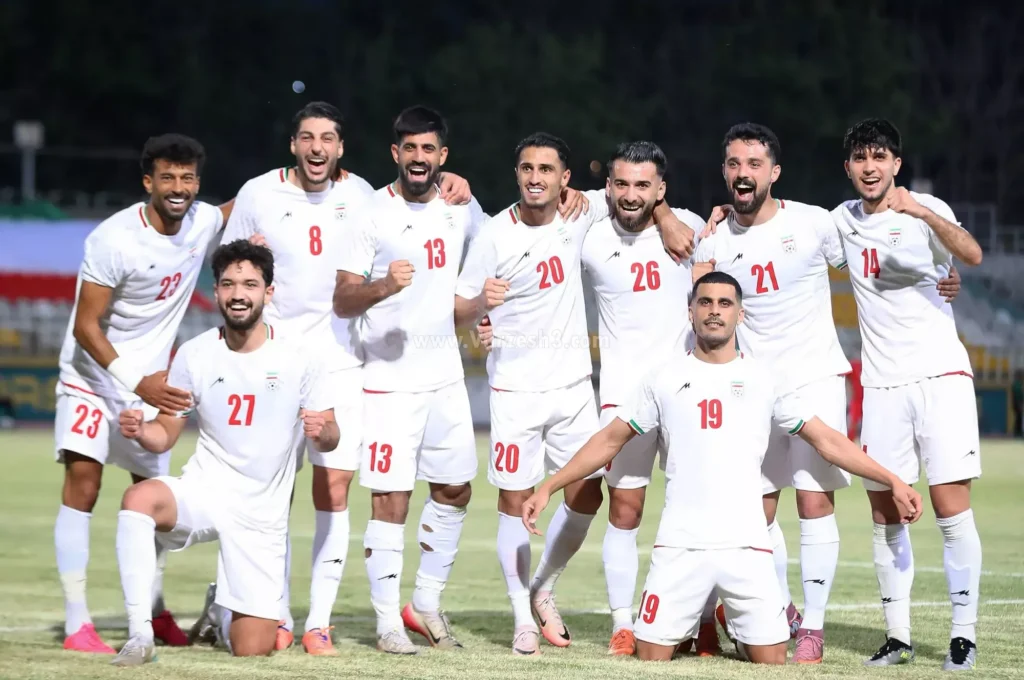
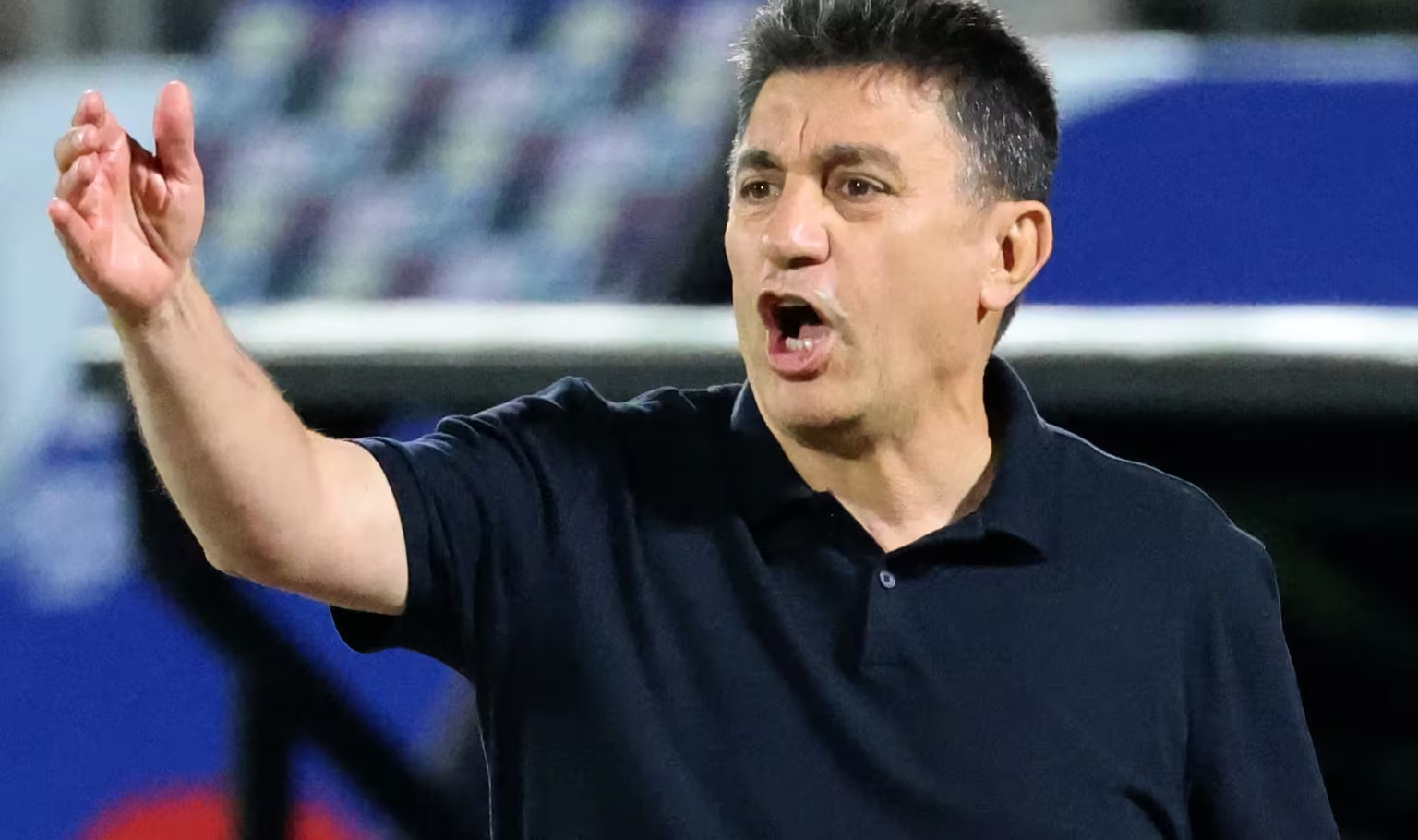
Meanwhile, Team Melli held its first training session under Amir Ghalenoei in preparation for the World Cup. 30 domestic league players are involved in the training camp. Iran matches are to be held in Los Angeles and Seattle.

Team Melli stats training with 30 local players.

With the postponement of the Premier League competitions, and to facilitate the Team Melli preparation program for the FIFA World Cup 2026, the squad will commence it training sessions with immidiate effect.

Accordingly, Amir Ghalenoei , head coach of the Iranian national team, invited 30 players to this stage of training. The names of the invited players are as follows:

The invited players must introduce themselves to the technical staff at the national team camp at 2:00 PM tomorrow, Monday, April 20, according to the federation website.

#Name POSTCLUBage
GOALKEEPERS
1BEIRANVAND, Alireza #1GKTractor33
2KHALIFA, MohammadGKAluminium Arak21
3HOSSEINI, Seyed HosseinGKSepahan33
4NIAZMAND, Payam #12GKPersepolis31
DEFENDERS
5ABARGHOUEI, Hossein #3DFPersepolis29
6AGHASI, Aref #20DFEsteghlal29
7YOUSEFI, Arya #18DFSepahan23
8ESMAELIFAR, DanialDFTractoe33
9EIRI, DanialDFMalavan22
10HAJSAFI, Ehsan #23DFSepahan36
11KANANI-ZADEGAN, Hossein #13DFPersepolis32
12KHALILZADEH, Shojaa #4DFTractor36
13MOHAMMADI, Milad #5DFPersepolis32
14REZAEIAN, Ramin #23DFEsteghlal36
15HARDANI, SalehDFEsteghlal27
16NEMATI, Ali #3DFFoolad Khuzestan30
17NOORAFKAN, Omid #21DFSepahan29
MIDFILED
18MOHEBBI, MasoudMFKhybar Khorramabad21
19TORABI, MehdiMFTractor30
20HAJI EYDI, ArefMFSepahan27
21MOHEBI, MehdiMFSepahan26
22RAZZAGHINIA, AmirmohammadMFEsteghlal20
23CHESHMI, RouzbehMFEsteghlal32
FORWARDS
24ALIPOUR, AliFWPersepolis31
25HASHEMNEJAD, Mehdi #17FWTractor24
26HOSSEINZADEH, Amir Hossein #10FWTractor25
27MAHMOUDI, AmirHosseinFWPersepolis19
28HABIBINEJAD , HadiFWCadormalo Ardakan30
29TAHERI, Kasra #27FWPeykan19
30MAHROUGHI, EhsanFWShams Azar28

World Cup Sacrifice: Iran Suspends Domestic League for Three Months, Leaving Foreign Players in Limbo

TEHRAN – The FFIRI Football League Committee has confirmed the suspension of the Persian Gulf Pro League until the conclusion of Iran’s 2026 World Cup campaign, a move the federation describes as essential for national team preparation but one that plunges the domestic league’s foreign contingent into a three-month professional void.

In a statement released via the federation’s official public relations channels, the committee detailed that the decision was reached following extensive consultations with top-flight club executives. The federation cited the need to prioritize “safety and security conditions” in light of ongoing regional tensions following the recent American-Israeli military aggression, alongside a desire to protect player welfare.

Rationale vs. Reality of a Compressed Return
The committee acknowledged studying the adverse effects of a compressed league format. They concluded that cramming the remaining fixtures into a tight window post-World Cup would increase the risk of player injury and degrade the quality of the competition. Consequently, the 25th season of the Premier League will remain frozen until Team Melli’s journey in the United States, Mexico, and Canada concludes.

“Such an arrangement will give home-based Team Melli players plenty of time for preparation and training in camps,” the committee’s assessment noted. This aligns with the federation’s long-standing policy of clearing the calendar to give the national team coach maximum access to the domestic player pool.

The Foreign Player Fallout
While the hiatus is a logistical win for Amir Ghalenoei’s World Cup preparations, it creates a significant professional crisis for the league’s international imports. With no competitive matches scheduled for over three months, foreign players are effectively out of work and out of match rhythm during a critical period of the global football calendar.

The situation is particularly acute for the strong contingent of Uzbek players currently plying their trade in Iran. Uzbekistan has qualified for the FIFA World Cup 2026 . A three-month gap in competitive action leaves these players in a precarious position regarding their national team futures. Unlike their Iranian teammates who will be in structured camps, these foreign nationals face the prospect of training in empty stadiums with no tangible match fitness to show for it, placing their selection for the Uzbekistan national team under direct threat.


remature Coronation: Why Taj’s World Cup Guarantee for Ghalenoei Undermines Team Melli’s Ambition

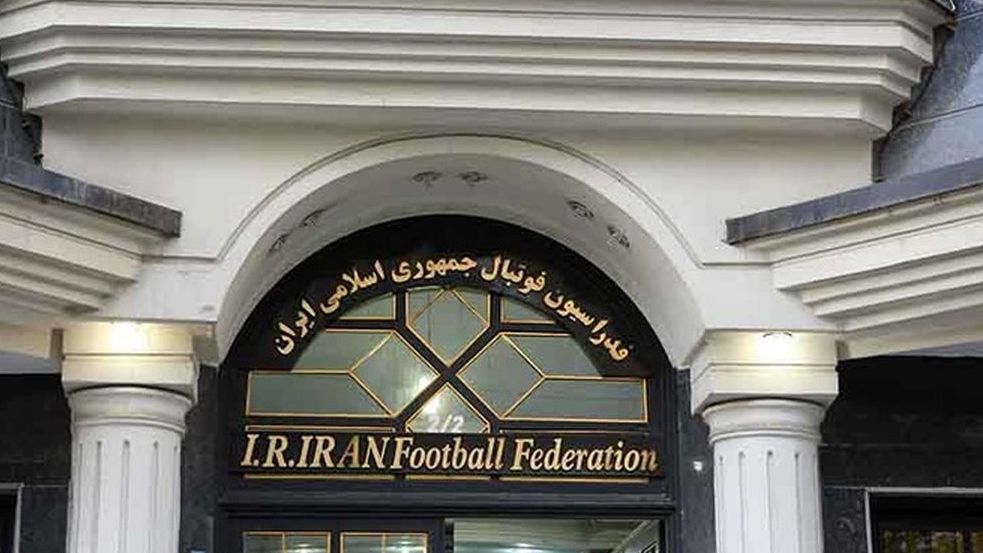
In a move that has raised more eyebrows than confidence within Iranian football circles, Football Federation President Mehdi Taj has effectively removed any suspense or accountability from Team Melli’s impending 2026 World Cup campaign. By publicly assuring that Amir Ghalenoei will remain at the helm regardless of results in North America, Taj has traded the hard edge of professional sport for the comfort of administrative inertia.

Speaking in response to comments made by Ghalenoei, who suggested that after the World Cup, Team Melli would be at the “disposal of the next head coach”, Taj interpreted this as a selfless concession rather than a standard procedural reality. “Ghalenoei has made a concession; he will be the head coach of the national team after the World Cup,” Taj stated.

He doubled down on this assurance, adding: “There is no problem with Ghalenoei’s presence in the national team, and we are very satisfied with him. Ghalenoei is trying to say that he is leaving the federation’s hands open, but he is managing the national team very well.”

While stability is a cherished commodity in the volatile world of international football management, stability without scrutiny is merely stagnation. To confirm a coach’s future without conducting a post-World Cup performance appraisal is not just a vote of confidence; it is an abdication of professional responsibility.

The Illusion of the “Open Hand”

The federation’s framing of this announcement centers on the idea that Ghalenoei is “leaving the federation’s hands open.” In reality, this premature assurance closes the federation’s hands entirely. By locking in the current leadership before a ball is kicked against the world’s elite, the Federation has sent a clear message to the squad and the public: The process in the United States, Canada, and Mexico is an exhibition, not an examination.

What happens if Team Melli suffers a historic defeat? What if the tactical approach that worked in the later stages of Asian qualification proves utterly inadequate against the pace and power of a World Cup group stage? Under this new decree, the answer is apparently nothing. Ghalenoei returns to the bench for the next AFC Asian Cup qualification cycle, safe in the knowledge that the federation’s “satisfaction” predates any actual evidence from the sport’s biggest stage.

This approach stands in stark contrast to the principles of high-performance sport. In any serious footballing nation, or any professional organization, a major project like a World Cup is a natural inflection point. It is a moment for review, for recalibration, and, if necessary, for a fresh voice. By skipping the appraisal step entirely, Taj is demonstrating a lack of desire for improvement and a troubling contentment with the status quo.

A Haunting Precedent

The irony of this situation is not lost on observers. Just over three years ago, the Iranian Football Federation dismissed Dragan Skocic, a coach who had secured qualification for the 2022 World Cup, mere months before the tournament began, citing a lack of confidence in his ability to perform on the world stage. The decision threw the team into a tailspin of instability from which they never recovered in Qatar.

Now, the pendulum has swung to the opposite extreme. Where once the federation acted with rash, destabilizing haste, it now clings to a premature, unearned loyalty. Both extremes stem from the same root: an institutional failure to manage coaching transitions with data-driven professionalism rather than reactive, behind-closed-doors politics.

The Risk of Complacency

The most damaging aspect of this announcement is the potential impact on the dressing room and the coaching staff’s mentality. The World Cup demands every ounce of a team’s focus and fear of consequence. That fear, the knowledge that jobs and legacies are on the line, drives performance. By erecting a safety net in April 2026, two months before the tournament, Taj has softened the ground beneath Ghalenoei’s feet.

While the federation views this as a gesture of unity and support, it is equally plausible that it masks deeper, unaddressed fissures within the national team setup. Maintaining the coach’s position unconditionally is an easy way to avoid confronting internal issues that might otherwise surface during a rigorous post-tournament review.

Conclusion

Mehdi Taj is right to praise the work Amir Ghalenoei has done to steady the ship and navigate Asian qualification. But international football is not an industry of lifetime appointments or performance-blind loyalty. The World Cup is the ultimate litmus test.

By removing the stakes for the man in the technical area, the Federation President has undercut the very essence of competition. It is an unprofessional statement that comforts the coach but shortchanges the 90 million Iranians who expect their national team to be held to the highest possible standard—not just during the World Cup, but in the honest, critical moments that follow it.

FIFA refuses Iran request to move games to Mexico amid US conflict

FIFA has decided against moving Iran’s World Cup matches from the United States to Mexico despite the war in the Middle East, Mexican President Claudia Sheinbaum said on Friday.

Iran requested not to play its three group stage matches in the US, after the US and Israel attacked Iran on February 28 in fighting that has only stopped in recent days in a fragile ceasefire, with Washington threatening to continue its attacks.
“FIFA ultimately decided that the matches cannot be moved from their original venues,” Sheinbaum said at a press conference. From FIFA’s perspective, this would have entailed “an enormous logistical effort,” she said.

The world governing body had previously expressed reservations about Iran’s request to move their matches againast Belgium, New Zealand and Egypt at the June 11-July 19 World in the US, Mexico and Canada.

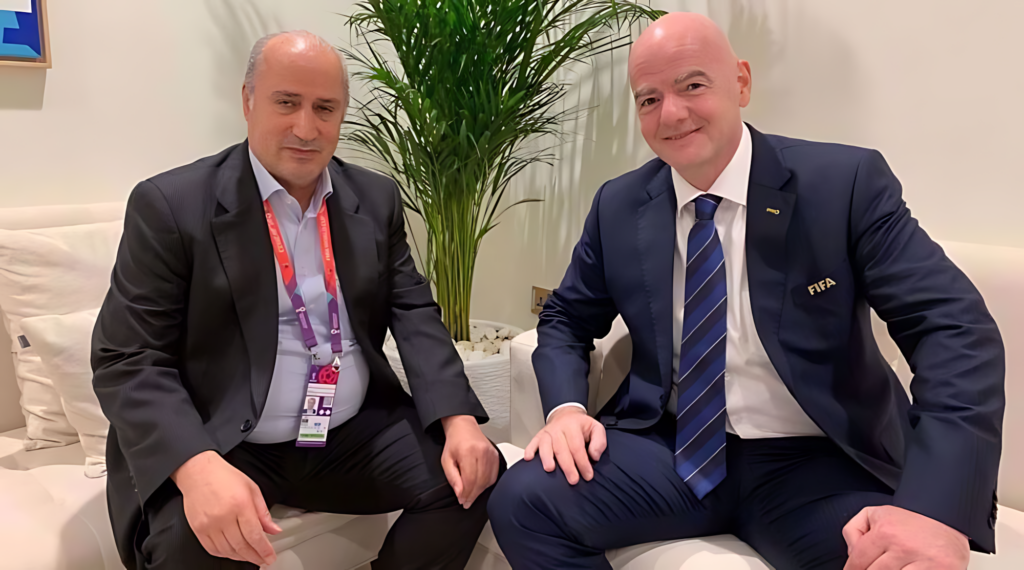
FIFA president Gianni Infantino had been pushing for Iran to take part, despite fraught relations between Tehran and Washington.

“We want Iran to play; and Iran will play in the World Cup. There is no plan B, C or D – there is only plan A,” Infantino told Mexican broadcasters N+ Univision two weeks ago.

Iranian football federation president Mehdi Taj has recently said the team is boycotting the US, but not the World Cup, without providing further details, according state-run news agency IRNA.
US President Donald Trump has said he considers it not “appropriate” for Iran to take part “for their own life and safety”.

Amid the ceasefire, called on Tuesday, talks between the US and Iran on a lasting peace settlement are set to take place in the Pakistani capital, Islamabad, as of Friday.

Iran retaliated after the United States and Israel launched the war, including targeting Gulf states and effectively closing the Strait of Hormuz, a key shipping lane.

Mexican President Claudia Sheinbaum

Team Melli Falls to Nigeria in Antalya Friendly: Progress Evident, but Flaws Persist

In their first international friendly of 2026, Team Melli suffered a narrow 2-1 defeat to Nigeria at the Mardan Stadium in Antalya. Goals from Moses Simon (7’) and Akor Adams (51’) secured the win for the Super Eagles, while Mehdi Taremi scored the lone consolation for Iran in the 67th minute.

The match served as a crucial test for Iran as they resumed preparations for the upcoming World Cup, following a lengthy break from international action. While the final score favored the Africans, the performance offered a mixed bag for head coach Amir Ghalenoei. Despite playing the more cohesive brand of football for large stretches, familiar shortcomings ultimately undermined the result.

Defensive Lapses Prove Costly

The two goals conceded highlighted ongoing concerns at the back, stemming from individual errors rather than systemic breakdowns. Veteran defender Hossein Kanani and Ali Nemati were culpable on the day, with each making costly mistakes that Nigeria ruthlessly exploited.

Tactical Shift Shows Promise

In a bid to inject more attacking impetus, Ghalenoei shifted to a three-man defensive line, deploying a 3-5-2 formation. The tactical adjustment allowed wing-backs Milad Mohammadi and Arya Yousefi to operate as advanced wide midfielders, a change that yielded positive results. Mohammadi, in particular, was a livewire on the left flank; one surging dribble saw him carve through the Nigerian defense to the byline, only for his cut-back to miss , Mohebbi , its intended target by inches inside the six-yard box.

Midfield Control but Attacking Frustration

The midfield trio functioned effectively, with Saman Ghoddos pulling the strings as the deep-lying playmaker. His intelligent distribution provided the platform for the advanced movements of Ghorbani and Ali Gholizadeh.

However, the offensive duo of Mohammad Mohebbi and Mehdi Taremi struggled to find consistent chemistry. Taremi, despite converting Iran’s only goal, delivered a performance that raised concerns. The veteran striker appeared sluggish and was frequently seen appealing for fouls rather than maintaining possession. Whether the issue is a lack of match fitness or a tendency to over-dramatize contact, Taremi’s physical edge, a hallmark of his game, was notably absent.

The second half represented Iran’s best period of the match. They controlled the tempo and created the better chances, yet once again fell victim to a recurring problem: poor finishing. What could have been a winning half instead became a frustrating reminder of the team’s inability to capitalize on momentum.

Lingering Concerns Ahead of the World Cup

Despite the encouraging overall display against a strong African side, the friendly illuminated several critical areas requiring immediate attention. Chief among them is the lack of clinical execution in the final third. Whether it is the weight of the final pass, the composure in front of goal, or the accuracy of the shot, this essential skill set remains alarmingly deficient.

Furthermore, questions linger regarding squad composition. The team’s discipline, on-field body language, and the advanced age of the core squad cast doubt on their ability to withstand the physical demands and high-pressure environment of the World Cup. If Iran is to compete on the global stage, addressing these vulnerabilities will be as crucial as refining the tactical framework that showed flashes of promise against Nigeria.

Mehdi Taj Addresses Team Melli’s World Cup Preparations and AFC Club Competitions


Mehdi Taj, the head of the Football Federation of Iran, has spoken publicly about the current state of Team Melli, the challenges facing the national team ahead of the 2026 FIFA World Cup, now less than 80 days away, and the ongoing complexities surrounding Iran’s participation in Asian club competitions.

World Cup Venue Uncertainty

Addressing FIFA’s apparent reluctance to approve the relocation of Iran’s 2026 World Cup matches to Mexico, Taj acknowledged the logistical difficulties involved. “Everything requires its own preparations, and delays are inevitable,” he said. “Moving matches to another country brings its own set of complications.” He confirmed that the national team will play two friendlies in Turkey during March, with the players to be announced in due course.

A Call for Passion and Resilience

Taj emphasized that the national team must reflect the spirit and enthusiasm of the Iranian people, particularly given the extraordinary circumstances the nation is enduring. “The passion that the people have must also be visible in the national team,” he stated. “The people who proudly remain present in their fields under bombardment will not accept the Football Federation allowing lethargy or complacency to creep into the national teams.”

On Sardar Azmoun’s Status

Regarding the situation of star striker Sardar Azmoun, following rumors that he had been dismissed from the national team setup, Taj declined to comment on individual cases but stressed the collective identity of the squad. “I will not speak about individuals,” he said. “The national team must represent these people. Ninety percent of the team is already aligned with this principle, particularly our legionnaires and the head coach. This approach will continue to be reinforced.”

(NOTE: Azmoun was excluded from the latest list announced today.)

AFC Club Competition Representatives

Turning to domestic matters, Taj provided an update on Iran’s representatives for next season’s Asian club competitions. “The AFC sent us a letter today requesting that we announce Iran’s representatives for the upcoming Asian Elite League and AFC Champions League 2,” he explained. “We informed them that the Iranian champion has not yet been determined. The league organization has made a decision, which we will announce once it has been approved by the Football Federation.”

Will Iran withdarw from the World Cup?

Donald Trump has said that it would not be “appropriate” for Iran to play in this summer’s World Cup following the US and Israeli strikes on the country.

Iran’s sports minister Ahmad Donyamali had previously appeared to rule out the possibility of the country playing at the tournament, saying that “the conditions for participation do not exist”, before Trump’s latest intervention struck a similar tone.
The US president posted on Truth Social: “The Iran National Soccer Team is welcome to The World Cup, but I really don’t believe it is appropriate that they be there, for their own life and safety. Thank you for your attention to this matter!”

Fifa president Gianni Infantino insisted at one point that he had received assurances from Trump that Iran would be welcome at the tournament. However, the organisation is yet to respond to requests for comment regarding Iran’s participation in the finals in the light of Donyamali’s comments or Trump’s remarks.

The tournament takes place across multiple cities in the United States, Mexico and Canada this summer. Iran’s group games are scheduled to be played in the US, between Los Angeles and Seattle.

Iran were the only nation to be missing from a World Cup planning event that included participating teams, held earlier this month in Atlanta.

Could Iran boycott the World Cup?
Iran are scheduled to play two World Cup games in Los Angeles and another in Seattle. They will face New Zealand and Belgium in LA on June 15 and June 21, followed by the match against Egypt in Seattle on June 26.

But little is known about how Iran could respond to the US and Israeli strikes in a sporting context. Iran’s supreme leader Ayatollah Khamenei has been killed, with his son Mojtaba Khamenei replacing him.

There has never been a boycott of the World Cup on political grounds and the last World Cup boycott was 60 years ago, when African teams refused to play in protest of receiving just one-third of a qualifying berth.

There has never before been a situation where a World Cup host has attacked a qualified team so close to the start of the tournament, with just four months to go before the opening game.

As the Independent’s Miguel Delaney highlighted, several European countries discussed a World Cup boycott when the United States threatened to annex Greenland in January.

Even before the strikes, there was political tension over Iran’s involvement in the tournament due to visa restrictions. The country’s football federation followed through on a threat to boycott Novembers’s World Cup draw in Washington DC.

At the time, Iranian Football Federation spokesman Amir Mehdi Alavi said the US had granted visas to four members of the Iranian delegation, including head coach Amir Ghalenoei, but had not issued one to its football president Mehdi Taj.

The boycott of the World Cup draw, Alavi said, followed “unsportsmanlike actions” by one of the host countries.

And the situation has only escalated since then. Athletes, teams members and family members were previously excluded from Trump’s travel ban but the US government could also decide to restrict Iran from competing at all if they cited security risks.

What could happen if Iran don’t play?
In Fifa’s World Cup regulations, published last year and before the qualifying stage of the tournament was complete, it states: “If any Participating Member Association withdraws and/or is excluded from the Fifa World Cup 26, Fifa shall decide on the matter at its sole discretion and take whatever action is deemed necessary. Fifa may decide to replace the Participating Member Association in question with another association.”

Iran qualified automatically for the World Cup, with the United Arab Emirates losing out on an automatic qualification spot and subsequently going out in the play-off rounds. In the event of Iran not playing in the World Cup, they would be the closest replacement. Iraq could only be an option, if they do not come through their intercontinental play-off against either Bolivia or Suriname in Mexico later this month.

But the uncertainty in the Persian Gulf as a result of the US strikes means that replacing Iran with either the UAE or Iraq could be far from straight-forward, and Fifa’s regulations indicate that they could do whatever they would like, anyway.

There is some precedent from last summer when Mexican side Club Leon were kicked out of the Club World Cup due to multi-club ownership rules. Fifa then announced a play-off between Los Angeles Football Club (LAFC) and Mexican team Club America which was won by LAFC, granting them access to the tournament.

Fifa’s World Cup regulations also state: “Fifa has the right to cancel, reschedule or relocate one or more matches (or the entire FIFA World Cup 26) for any reason at its sole discretion, including as a result of force majeure or due to health, safety or security concerns.”

Seemingly, there is therefore the possibility that Iran’s games could be moved from the US; but there is also the possibility that the US and Iran could play each other at the tournament. This would happen if both teams were runners-up in Group D and Group G respectively, with that fixture scheduled to be played in Arlington, Texas.

Iran could face sanctions if it withdraws from the World Cup.

Iran could face disciplinary action from FIFA, including a possible ban from future tournaments, if they unilaterally withdraw from the World Cup.

Donald Trump told Politico last week that he “really doesn’t care” if Iran fail to take part in this summer’s tournament, but FIFA remains committed to the World Cup going ahead with all qualified teams participating.

The president of the country’s football federation, Mehdi Taj, cast doubt on Iran’s involvement last week by saying “we cannot be expected to look forward to the World Cup with hope”, but pulling out may not be straightforward.

Under FIFA statutes, member associations are not permitted to withdraw from competitions, and declining to take part in a World Cup would be unprecedented in the modern era. No country has pulled out of the tournament after the draw since France and India did not take part in 1950, citing travel costs.

FIFA has protections in its tournament rules, which sources have indicated would be upheld. The regulations state that withdrawing before the tournament incurs a fine of between €275,000 (£238,000) and €555,000, depending on the date of the withdrawal, and triggers a referral to FIFA’s disciplinary committee, which could impose sporting sanctions.

“Participating associations that withdraw at any stage of the Fifa World Cup 2026 shall be required to reimburse all funds received from Fifa for the preparation of their national team, as well as any competition-related contributions received from Fifa,” the regulations state.

“The Fifa disciplinary committee may impose additional disciplinary measures, taking into account in particular the timing of the withdrawal or exclusion, the seriousness of the infringement that led to the inadmission or exclusion, possible mitigating factors, and any other relevant circumstances.

“These disciplinary sanctions may include the exclusion of the association concerned from a future Fifa competition or the replacement of that association by another.”

Iran have played at six World Cups, including the past three, in Brazil, Russia and Qatar. Their Group G opponents this summer are New Zealand, Belgium and Egypt, and they would face the United States in the knockout stage if both sides qualify as group runners-up.

Iranians are barred from entering the US under a travel ban introduced by the Trump administration last June, although it permits exemptions for athletes involved in the World Cup or 2028 Olympics in Los Angeles.

FIFA was contacted for comment.

Infantino’s idolisation of Trump has left football with blood on its hands

Story by Barney Ronay
 The Guardian

Mr President. Fellow exco members. We’re going to need a bigger Board of Peace. How many mini‑pitches are we up to now? Gaza got 50 of them last month. What will it take to football-fix the global conflict being set in train by Fifa’s own Peace Prize Boy? A hundred mini-pitches? Four billion mini-pitches? All the mini‑pitches in the universe?

In a more sane version of what we must, out of habit, call the real world, it would seem absurd to talk about sports administration in the context of the US, Iran and the airborne conflict being played out across the borders of their allies.

Sport is the most important of all the unimportant things. Sport is a part of a culture you fight for, but not a part of the battle. Sport is also prone to insisting on its own importance, shoving itself to the front of every photo like a particularly deluded family Labrador.

When news emerged on Monday that Iran had launched a drone attack on the Ras Tanura oil refinery in Saudi Arabia, there was an urge to point out this is a mere 250 miles from Cristiano Ronaldo’s house. Do we need a footballers‑and-their-war-menaced-mansions gallery? Meanwhile the UK government has advised British nationals in Saudi to stay inside and take cover. So … you’re saying this is an Ivan Toney story?

There are two reasons why this dynamic has now shifted, why football is not just an observer but an active participant in this picture; reasons that should in any sane version of reality be hugely damaging for Fifa and its executive.

The basic premise is jaw‑dropping enough. The co‑host of the Fifa World Cup finals this summer is currently bombing one of its participating nations. The co‑host of the tournament has murdered the head of state of the third‑ranked team in Group G.

Nothing quite like this has happened before. Britain was involved in bloody conflicts in Borneo and Aden while it hosted the 1966 World Cup. Russia has been banned from international sport as a consequence of invading the borders of a sovereign state, although this was still deemed unproblematic in 2018.

Clearly, nobody out there will have the will or the courage to apply a similar logic to the US. The issue is the extent of Fifa and Gianni Infantino’s willingness to act as a fluffer, ally and de facto propaganda mouthpiece for Donald Trump’s regime.

Never mind how gravely Infantino might frown, while pretending this has all been necessary realpolitik. The fact is, Fifa has tied itself with unquestioning zeal to a US president who has initiated eight acts of overseas aggression in his second term. And football has blood on its hands now, too.

This might seem like a stretch, or an overly dramatic take on the necessary exercise of Fifa’s global remit. But this has also been a choice. Infantino has, in full view of the consequences, repeatedly put Fifa in the same room as Trump’s autocratic exercise of power. Not as a guest or a bystander, but as an enabler, an active participant in the publicity machine.

Under its own statutes Fifa is supposed to be politically neutral. And yet this has still happened, to a degree that it has by now moved past cartoonish to grotesque. It was a choice to trail after the president like a goggle-eyed teenager offering gifts, a bauble here, a peace prize there, a strange and frightening Club World Cup trophy replica that looks like it contains a tiny drawer full of crow’s heads.

It was a choice not just to award Trump a peace prize, but to invent a peace prize from scratch so he could win it, that fittingly gruesome drag‑me‑to‑hell golden bauble with its nest of clawing hands.

As was the related announcement of the weird and pointless Gaza mini-pitch construction project, with its manipulative background imagery of rubble and displaced people casually tossed into the mix, a gruesome form of public conscience washing.

All of this is doubly absurd given the continued participation in the Fifa-verse of Israel, the same nation that is levelling Gaza’s existing infrastructure. Almost as an afterthought, it goes without saying that the weapons being used to reduce these people’s homes to rubble are being part-funded by the hosts of this summer’s tournament and Infantino’s own daddy‑regime. But never mind. The president has a golden peace ball. Keep looking at the peace ball.

In the end this will catch up with you. The open doors, the hours at the buffet table, the ballroom passes, all come at a cost. Fifa may not be directly responsible for all this. But it is now decisively part of the image-making that has empowered Trump to take his extreme executive actions.

There is of course a hugely complex set of demands in play here. The idea of a right and wrong side of history is never really clear. Sometimes you might straddle many of them all at once. But Fifa is so clearly drawn to the nearest power source, the biggest stick, the grandest stage, all the while presenting itself as grave and stately ambassador of hope, led by a man who increasingly resembles essence of pure inauthenticity, reconstituted into human form, packed into a blue suit and pushed out on stage to talk about peace, in the voice of a man addressing you from the bridge of his own golden ship of hope.

What happens next is entirely uncertain. As news broke of the US bombardment of Tehran, Fifa executives were at Hensol Castle in Wales overseeing the 140th annual general meeting of the International Football Association Board, which is at least a suitably scaled occupation for a bunch of sports administrators.

It seems impossible that Iran can now compete at the World Cup this summer, or indeed that it should have been present in any case given the regime is accused of killing tens of thousands of civilian protesters. The Iranian FA has stated it “cannot be expected to look forward to the World Cup with hope”. Its fans were already banned from entering the US.

Under Fifa’s statutes, there is no direct remedy should Iran drop out, although there is pretty much a free hand under force majeure for the executive committee to act as it sees fit. The United Arab Emirates and Qatar, struck by Iranian bombs in the past few days, were in the same qualifying group. As were North Korea. Perhaps Infantino has a route here to usher in another dear leader.

Some kind of fudge will be offered. A World Cup will take place if there is still a world left to contest it. The US needs this to happen. The show must continue. And this is an incidental aspect of the extraordinary story of Trump and Infantino. Football is always telling you things about the world, always running ahead to the tide.

Amir Ghalenoei

In this case it is providing the ideal, textbook, read-it-and-take-notes lesson in how dictatorships and propaganda work, how power glosses its actions with noise. How spectacle is used to flood the zone, and how nothing floods the zone like football.

In any sane version of sports governance Infantino should, at the end of all this, be forced to explain his actions, to justify taking global football into this space. It won’t happen. His own executive power is absolute.

The money continues to flow to his sub-partners. But history will still judge him, and judge his version of Fifa. There is no way of escaping that lens. And from here it already looks like the most grotesque, post-truth, fawningly complicit version of big sport ever devised.