

The Iranian striker of Shabab Al-Ahli has broken his silence—indirectly—over his controversial omission from the national team squad.
After being unexpectedly left out of Team Melli’s FIFA World Cup 2026 roster and missing two preparatory friendlies against Nigeria and Costa Rica, Sardar Azmoun had hoped for a recall under head coach Ghalenoei. His goal was clear: to earn a place in the 30-man preliminary list for the FIFA World Cup 2026. That call, however, never came.
Iran’s third-highest goalscorer of all time has now taken an indirect but telling stance on the matter. Azmoun, who faced sharp criticism early in the third imposed war against Iran for posting (and quickly deleting) a photo with the ruler of Dubai on his Instagram page, and who previously missed a national team training camp, will now be absent from the United States. In a bid to rebuild bridges, he recently posted a picture of himself in the national team jersey on his Instagram profile—an apparent gesture of regret and a signal of his readiness to return. But it was not enough. The door remained closed, and Azmoun was ultimately left out of the 2026 World Cup.
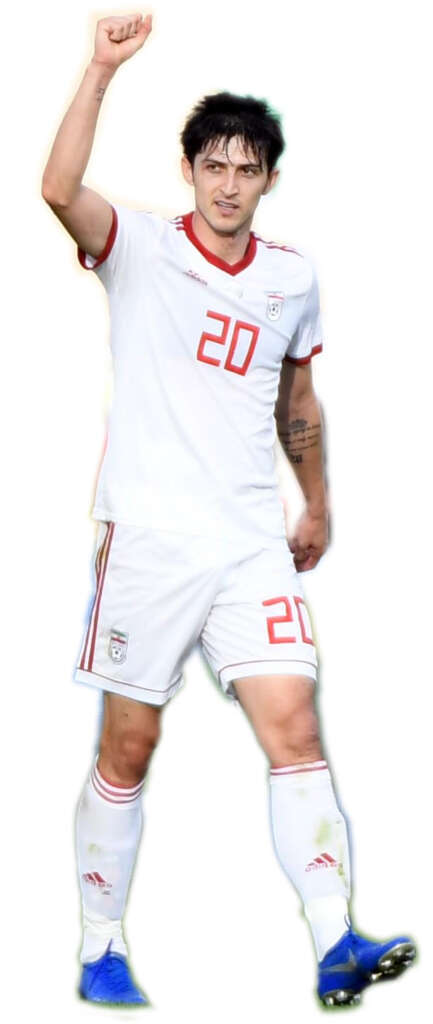
The exclusion of Sardar Azmoun, arguably the finest Iranian striker of his generation alongside Mehdi Taremi, is a glaring injustice and a stark example of how political influence continues to plague Iranian football. This is not the first time Team Melli has been deprived of its best talents. The pattern dates back to the 1978 FIFA World Cup, when Parviz Ghelichkhani, the most decorated player in Iranian football history, was expelled from the squad by the Shah’s regime due to his anti-establishment political activities.
In a political sense, Azmoun is no Ghelichkhani. He can hardly be labeled a political opposition figure in any meaningful sense. Ghleechkhani was arrested and paraded in front of the national Television with a forced reading of his guilt. He was incarcerated and then pleaded for clemency. Nothing like that has happened in Azmoun's case. However, a combination of poor timing, a lack of shrewdness, and occasional petulance has landed him in hot water. Yet, he is far from the only senior member of the current squad guilty of indiscipline or indiscretion. Many players on this roster have committed similar, if not worse, lapses in judgment. The difference with Azmoun lies not in the nature of his actions, but in the timing.
The consequences of this wrong decision are clear: Team Melli, which desperately needs Azmoun’s clinical finishing, movement, and big-game experience, will enter the 2026 World Cup without one of its most potent offensive weapons. His absence weakens Iran’s attacking depth and removes a player capable of changing a match against elite opposition. In tight group-stage encounters, where goals are at a premium, the lack of a striker of Azmoun’s caliber could prove catastrophic.
According to insiders and unconfirmed reports, FFIRI was allegedly helpless, as the final decision lay beyond their control, suggesting higher authorities ruled on Azmoun's exclusion. Whether true or not, the outcome remains the same.
In the end, it is not the officials, not the coaches, and not even Azmoun himself who will suffer most. It will be the millions of Team Melli fans across the globe, passionate, long-suffering, and loyal, who will feel the sting of his absence deepest.
Once again, politics has triumphed over football, and the beautiful game has lost.