Category: News

Alireza Jahanbakhsh’s career at crossroads!


The Premature Decline of Iran’s Football Captain: From Dutch Stardom to Cypriot Obscurity?

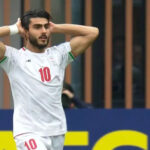
Once hailed as Iran’s brightest European export, Alireza Jahanbakhsh now faces a career trajectory that can only be described as a rapid and perplexing decline. At 31, the captain of Iran’s national team finds himself without a club, with rumors linking him to a move to Cyprus’s Apollon—a team that finished last season with a modest record of 12 wins, 10 draws, and 14 losses. For a player who was once the top scorer in the Dutch Eredivisie, this potential move underscores a staggering fall from grace.

The Rise and Fall of a Former Star

Jahanbakhsh’s peak came in the 2017-18 season when he netted 21 goals for AZ Alkmaar, becoming the first Asian player to claim the Eredivisie Golden Boot. His achievement was historic, sparking pride across Iranian football. Yet, what followed was a series of missteps and unfulfilled potential.

His £17 million move to Brighton & Hove Albion in 2018—a then-club-record fee—turned into a nightmare. Over three Premier League seasons, he managed just two league goals, with his shots on target failing to reach double digits. A return to the Netherlands with Feyenoord offered brief respite, but his subsequent transfer to Heerenveen, a mid-table side, raised eyebrows. Even more telling was Jahanbakhsh’s admission that he sought to extend his stay in the Netherlands primarily for passport eligibility—hardly the ambition expected of a player once destined for greater heights.
A National Team Paradox

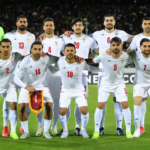
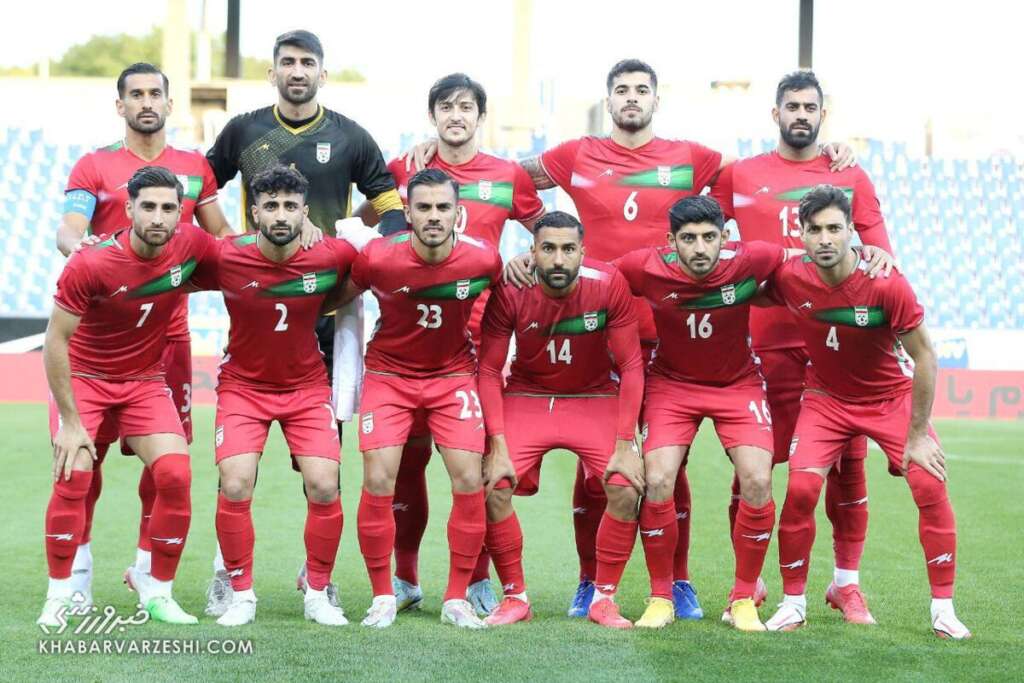
Despite his club struggles, Jahanbakhsh has remained a staple in Iran’s national team under manager Amir Ghalenoui, even earning call-ups while unattached to any club. Yet, his performances in Team Melli have drawn increasing criticism, with fans questioning whether loyalty has outweighed merit.

A Bitter Irony

Perhaps the most striking aspect of Jahanbakhsh’s decline is the contrast between his past advocacy for Iranian players in Europe’s elite leagues and his own fading relevance. While Uzbek and Kazakh teenagers secure contracts with Manchester City and Chelsea, Iran’s former golden boy now faces the prospect of Cypriot football—a league far removed from the prestige he once embodied.

What Comes Next?

At 31, time is running out for a career revival. Whether Jahanbakhsh can rediscover even a fraction of his past brilliance remains uncertain. But one thing is clear: unless he finds a way to reverse this downward spiral, his legacy risks being defined not by his historic Eredivisie triumph, but by a premature and disappointing decline.


Jahanbakhsh’s Downfall: A Case Study in Wasted Potential

From Dutch Stardom to Premier League Flop

Jahanbakhsh’s 21-goal season with AZ Alkmaar in 2017-18 should have been the launchpad for a stellar European career. Instead, his £17 million move to Brighton became a cautionary tale. Hindered by tactical mismatches, physical demands, and a lack of confidence, he managed just two Premier League goals in three seasons. Unlike Japanese or South Korean players who adapt and grow in Europe, Jahanbakhsh regressed—raising concerns about whether Iranian players receive the right preparation for top-tier football.


Why Do Iranian Players Struggle in Europe?

While Japan and South Korea consistently export world-class talents (Son Heung-min, Kaoru Mitoma, Takefusa Kubo), Iran’s European exports often flame out prematurely. Several key factors explain this trend:

1. Poor Career Planning & Agent Influence

Many Iranian players prioritize immediate financial gains over long-term development. Unlike Japanese stars who carefully choose clubs with playing time guarantees (e.g., Mitoma’s move to Brighton after Belgian development), Iranians often join unstable leagues (Qatar, UAE) or make premature jumps to Europe without proper scouting. Agents sometimes push for lucrative but ill-fitting transfers, harming careers.

Example: Sardar Azmoun, despite Bundesliga interest, chose Rubin Kazan for money—delaying his top-five league breakthrough until his late 20s.

2. Lack of Adaptability

European football demands tactical flexibility, physical endurance, and mental resilience—areas where many Iranian players struggle. Jahanbakhsh’s failure at Brighton stemmed partly from his inability to adjust to the Premier League’s intensity. Similarly, Mehdi Taremi, despite success in Portugal, faced criticism for inconsistency in high-pressure matches.

Contrast: South Korea’s Lee Kang-in thrived at Mallorca and PSG by adapting quickly—something few Iranians manage.

3. Weak Domestic Development

Iran’s Pro League lacks modern training methods, sports science, and competitive depth. Even in Asian Iran’s club football is in the fourth of fifth tier of the continent. While Japan’s J-League and South Korea’s K-League actively prepare players for Europe, Iran’s league remains insular. Young talents like Allahyar Sayyadmanesh show promise but often move too early (e.g., his failed Fenerbahçe stint).

4. National Team Pressure vs. Club Form

Iranian players often perform better for the national team than their clubs—partly due to emotional motivation but also because domestic expectations overshadow individual growth. Jahanbakhsh remains a national team regular despite poor club form, reducing his urgency to improve.


Can the Next Generation Break the Cycle?

A few young Iranians offer hope. However, unless Iran improves:

  • Youth development (modern coaching, exposure to European academies)
  • Smart transfers (avoiding money-driven moves to weak leagues)
  • Mental & physical preparation (sports psychology, fitness regimes)

…the cycle of unfulfilled potential will continue.


Conclusion: Jahanbakhsh’s Legacy—A Warning or a Wake-Up Call?

Jahanbakhsh’s decline isn’t just his own—it mirrors systemic flaws in Iranian football. While players like Taremi and Azmoun have had moderate success, none have reached the heights of their Asian counterparts. Unless Iran addresses its structural issues, its next golden generation may suffer the same fate: flashes of brilliance, followed by premature decline.

For now, Jahanbakhsh’s career stands as both a tragedy and a lesson—one that Iranian football must learn from before another talent fades away.

Leeds United possible destination of Taremi

Inter Milan striker Mehdi Taremi will move to the Premier League this summer, with Leeds United ahead of Fulham in the race.

This, according to today’s print edition of Milan-based newspaper Gazzetta dello Sport, via FCInter1908.

Inter Milan striker Mehdi Taremi has been at the centre of several transfer rumours in recent weeks.

The 33-year-old had a very underwhelming first season at Inter. Therefore, there is a widespread feeling that he will be on his way after just one year at the club.

There have been plenty of clubs to show an interest in Taremi’s signature.

The likes of Botafogo and Flamengo have tried to bring the 33-year-old to Brazil. However, his priority has been to stay in Europe.

Meanwhile, Turkish giants Bestikas have also been eyeing up a move for Taremi.

Taremi Set For Premier League Switch – Leeds United Lead Fulham

RIYADH, SAUDI ARABIA – JANUARY 06: Mehdi Taremi of FC Internazionale celebrates scoring his team’s second goal during the Italian Super Cup Final between FC Internazionale and AC Milan at Kingdom Arena on January 06, 2025 in Riyadh, Saudi Arabia. (Photo by Abdullah Ahmed/Getty Images)

In the meantime, however, the interest in Taremi’s signature is also arriving from the Premier League.

And that would certainly be an option that the player himself would welcome.

There are a couple teams in particular to show an interest in signing Taremi.

Fulham have targeted the 33-year-old for much of the summer, the Gazzetta dello Sport note.

However, Craven Cottage is not Taremi’s most probable destination.

Instead, the Gazzetta report, Leeds United are closing in. They are keen to sign a striker after winning promotion to the Premier Division, and Taremi is in their sights.

Russia vs Iran friendly international has been confirmed.

The opening of ticket sales, as well as the match’s kick-off time, will be announced later

MOSCOW, August 8. /TASS/. The Russian national football team will play an exhibition against Iran on October 10 in the south Russian city of Volgograd, the Russian Football Union’s (RFU) press office reported on Friday.

The match will be played at the Volgograd-Arena. The opening of ticket sales, as well as the match’s kick-off time, will be announced later.

The 45,000-seat Volgograd-Arena was built for the 2018 FIFA World Cup in Russia and hosted four group stage matches of the world football championship.

Volgograd, formerly known as Stalingrad, has a population of over one million people, situated along the Volga River. The city and the surrounding areas were the scene of the fiercest battles of World War II, including the Battle of Stalingrad, which was widely considered to be the turning point in the war.

The Iranian national football team is currently 20th in the FIFA Rankings. Russia is 35th.

The Russian and Iranian teams previously played against each other on three occasions: in 2011, when Iran defeated Russia 1-0, and in 2017 and 2023, which both ended in a 1-1 draw.

The USSR also played three matches against Iran, winning all of them: in the quarterfinals of the 1976 Summer Olympics in Canada (2-1), in a 1976 friendly match (1-0) and in the 1985 Nehru Cup (2-0).

The Iranian national football team has already qualified for the 2026 FIFA World Cup, which will be co-hosted by Canada, Mexico and the United States. The matches will be played in 16 cities across the North American continent. This will be the first FIFA World Cup featuring 48 teams compared to the previous 32-team format.

Russia’s football ban

The world’s governing football body, FIFA, announced on February 28, 2022, that the Russian national team and all professional clubs representing the country were barred from participating in FIFA tournaments.

In turn, the Union of European Football Associations (UEFA) made a similar decision regarding the Russian national football team’s participation in UEFA tournaments.

Both FIFA and UEFA cited Russia’s special military operation in Ukraine as grounds for their respective bans on Russian teams’ participation in competitions.

FFIRI Suspension of Alireza Beiranvand includes exclusion from Team Melli selection.

Mashhad, Iran – Mehdi Taj, President of the Iranian Football Federation, confirmed today that goalkeeper Alireza Beiranvand will not join the national team for the foreseeable future due to an ongoing suspension.

The announcement came during a press briefing on the sidelines of the East Azerbaijan Football Board meeting, where Taj also addressed the selection of Mashhad as the host city for the upcoming Tractor vs. Esteghlal match.

Beiranvand’s Suspension: Rules and Next Steps

Regarding Beiranvand’s case, Taj emphasized adherence to regulations while leaving room for further review:

  • The goalkeeper is currently suspended, with half of the penalty still to be served.
  • The Appeals Committee’s detailed 11-page ruling remains open for scrutiny.
  • The option to appeal to the Court of Arbitration for Sport (CAS) is available, per standard statutes.

“While we respect the disciplinary process, the federation is actively working to resolve the situation,” Taj said. “All stakeholders are welcome to present their perspectives formally.”

Commitment to Governance and Future Success

Taj reiterated the federation’s focus on upholding governance standards while supporting teams:
“Our priority is to ensure fair conditions for both the national team and clubs. We remain optimistic about Iranian football’s continued progress.”

The statement concluded with no specified timeline for Beiranvand’s return.

The Controversial Suspension: A Year-Long Saga of Delays

Alireza Beiranvand’s suspension stems from a breach of contract complaint filed by his former club, Persepolis, over a year ago. Despite the straightforward nature of the case, the Football Federation (FFIRI) and its Disciplinary Committee demonstrated puzzling inertia—repeatedly deferring proceedings while Beiranvand completed an entire league season unaffected.

This extraordinary delay in resolving a contractual dispute raises serious concerns:

  • Transparency Issues: Why did a clear-cut case require 12+ months to adjudicate?
  • Selective Enforcement: Was the timing influenced by external pressures or political considerations within Iranian football?
  • Precedent Setting: The federation’s eventual acknowledgment of Beiranvand’s contractual breach—after such protracted deliberations—undermines confidence in its judicial processes.

Critics argue the federation’s sluggishness reflects either institutional incompetence or deliberate stalling to accommodate vested interests. Either way, the handling of this case has become emblematic of systemic governance flaws that demand urgent reform.


Part 2: Systemic Failures Behind Iran’s U23 Disasters – Beyond Just Poor Coaching

While the baffling appointment of Omid Team’s coaching staff highlights the Football Federation’s incompetence, it is only one symptom of a deeper rot. Iran’s 50-year Olympic qualification drought stems from systemic failures—club selfishness, federation weakness, and logistical chaos—that have doomed generations of talent.

Club Selfishness Over National Duty

The primary obstacle? Iran’s top clubs, particularly powerhouses like Persepolis and Esteghlal, routinely refuse to release players for Omid Team duties. Though some fans sympathize with clubs prioritizing league campaigns, this shortsightedness cripples the national team’s preparation. Unlike Saudi Arabia, Qatar, or the UAE—where clubs consider youth development a patriotic duty—Iran’s giants face no consequences for their defiance. The Football Federation (FFIRI), led by Mehdi Taj, lacks the spine to enforce compliance, fearing backlash from influential clubs. Publicly, both sides claim cooperation; privately, it’s a farce.

Why Top Coaches Refuse the Job

Even if a competent coach were appointed, the role is a poisoned chalice. Established managers avoid the Omid Team, knowing they’ll be handed a weakened squad due to club obstinacy. Why risk their reputations coaching a B-team when the federation won’t secure the best players? The result: only desperate or politically connected candidates—like Ravankhah—take the job, perpetuating the cycle of failure.

Chronic Mismanagement & Blame Games

For years, the Olympic Committee (IOC) oversaw the Omid Team, and failures were conveniently blamed on their “interference.” Yet now, with full control handed back to the FFIRI, nothing has improved. The federation’s planning remains shambolic—training camps are poorly scheduled, preparation matches are scarce, and long-term strategy is nonexistent.

A Lost Generation

Iran’s golden era of youth dominance in Asia is long gone. Today’s U23s lack the technical and tactical foundation of their predecessors, and the federation’s negligence has only widened the gap. With clubs hoarding players, unqualified coaches at the helm, and zero accountability, the dream of ending Iran’s Olympic drought grows more distant.

The harsh truth? The FFIRI is not just failing—it is unwilling to succeed. Unless clubs are forced to cooperate, competent coaches are empowered, and the federation is held accountable, even partial progress is impossible. For now, Iranian fans can only watch as their neighbors thrive while their own team languishes in chaos.


Part 1: Iran’s U23 (Omid) team Coaching Appointments: Cronyism Over Competence


A review of recent coaching appointments for Iran’s U23 (Omid) team reveals a glaring truth: experience and a proven track record in high-level football were the last considerations in the selection process.

After months of delays, the Football Federation finally reached an agreement with the National Olympic Committee to assume full control of the Omid team. Yet, rather than appointing a qualified leader, the federation unveiled a head coach whose resume is shockingly inadequate for the role—sparking immediate backlash from fans and media alike.

Omidreza Ravankhah, who transitioned directly from playing into coaching, has spent his career in Iran’s lower divisions, with brief, disastrous stints in the top flight. His sole Premier League experience—with Havadar—ended in relegation after just 17 matches, yielding a pitiful 0.82 points per game. That such a record qualifies him to lead Iran’s Olympic hopefuls is nothing short of farcical.

Even within the Football Federation, dissent has surfaced. Rahman Salari, a board member, openly admitted: “I was unaware of the selection process and learned of it through the media. What upsets me is that credentials were ignored. I remain in shock—how did we go from Yahya Golmohammadi to Omid Ravankhah? Those responsible must be held accountable.”

If the head coach’s appointment was baffling, the choices for his assistants border on sabotage. Ravankhah’s first deputy, Hadi Mahdavikia—brother of legendary Mehdi Mahdavikia—has zero experience coaching in Iran’s top tiers, having only worked with youth teams at the Kia Academy. Iman Mobali, though a former Team Melli player, brings limited experience as an assistant in mid-table clubs.

The most egregious misstep, however, is the appointment of Mehdi Totounchi—a sports presenter—as technical advisor. This role demands a seasoned strategist capable of guiding the coaching staff, yet Totounchi’s sole credential is a youth championship with Saipa. The message is clear: expertise is irrelevant; connections are everything.

This is more than mere cronyism—it is a brazen insult to Iranian football. The federation, under Mehdi Taj’s leadership, operates with utter impunity, disregarding meritocracy while expecting miracles from unqualified appointees.

With such a woefully inexperienced staff, Iran’s dream of ending its 50-year Olympic absence is in peril. The Omid team now resembles a ship steered by the blind, with fans left to pray for divine intervention.

Only a fool would bet on qualification under these conditions. The federation has failed—again—and the price will be paid by the players and the nation.


Taremi Still Expected To Leave Inter Milan This Summer – Fulham, West Ham United, Nottingham Forest, Leeds United & Besiktas Keen

Iran Star Still Expected To Leave Inter Milan This Summer – Fulham, West Ham United, Nottingham Forest, Leeds United & Besiktas Keen

Mehdi Taremi is still expected to leave Inter Milan this summer, with Fulham and West Ham United among the clubs targeting him.

This according to today’s print edition of Rome-based newspaper Corriere dello Sport, via FCInterNews.

Inter Milan striker Mehdi Taremi has been at the centre of a number of transfer rumours in recent weeks.

The 33-year-old had a very underwhelming first season at Inter. Therefore, there is a widespread feeling that he will be on his way after just one year at the club.

There have been plenty of clubs to show an interest in Taremi’s signature. Fulham and West Ham United are reportedly keen to bring the former Porto striker to London.

Meanwhile, the likes of Nottingham Forest and Leeds United are also targeting Taremi from within the Premier League.

And Turkish giants Bestikas are also eyeing up a move.

Mehdi Taremi Still Set To Leave Inter This Summer

LECCE, ITALY – JANUARY 26: Mehdi Taremi of Inter celebrates scoring his team’s 4th goal during the Serie A match between Lecce and FC Internazionale at Stadio Via del Mare on January 26, 2025 in Lecce, Italy. (Photo by Maurizio Lagana/Getty Images)

In the meantime, Taremi has also turned down a move to Botafogo in Brazil.

Reportedly, the 33-year-old’s priority is to remain in Europe.

According to the Corriere dello Sport, though, little has changed. Inter plan to offload Taremi after his unsuccessful first season at the club, and the player himself will accept a departure.

Moreover, the Corriere reports, Taremi’s future has nothing to do with Inter’s pursuit of Ademola Lookman.

Shabab Al-Ahli Signs Rising Iranian Star Reza Ghandipour on a Four-Year Deal

Shabab Al-Ahli continues to strengthen its squad with the addition of yet another Iranian talent. The Dubai-based club has officially announced the signing of Reza Ghandipour, a highly rated young striker from Iran’s youth national team setup. The 19-year-old joins on a four-year contract, marking a significant step in his burgeoning career.

Ghandipour, who was born on January 13, 2006, in Behbahan, Iran, has quickly risen through the ranks of Iranian football. He gained national recognition for his performances in the 2022 CAFA U-16 Championship, where he played a pivotal role in Iran’s title-winning campaign. Scoring four goals in the tournament, he not only helped his team lift the trophy but was also named the tournament’s Most Valuable Player—a testament to his impact and potential.

At the club level, Ghandipour spent the previous season on loan, playing for Malavan Bandar Anzali, while being under contract with Paykan Tehran. His impressive displays in the Persian Gulf Pro League attracted attention beyond Iran’s borders. While the exact terms of the deal have not been disclosed, Transfermarkt currently values the young striker at €1 million, underlining the belief in his future prospects. It remains unclear what fee, if any, was paid by Shabab Al-Ahli to secure his release from Paykan.

With this move, Ghandipour becomes the third Iranian international in the current Shabab Al-Ahli squad, joining experienced national team players Sardar Azmoun and Saeed Ezzatollahi. This growing Iranian presence reflects the club’s increasing interest in the Iranian football market, which has produced a wealth of technically gifted and tactically astute players in recent years.

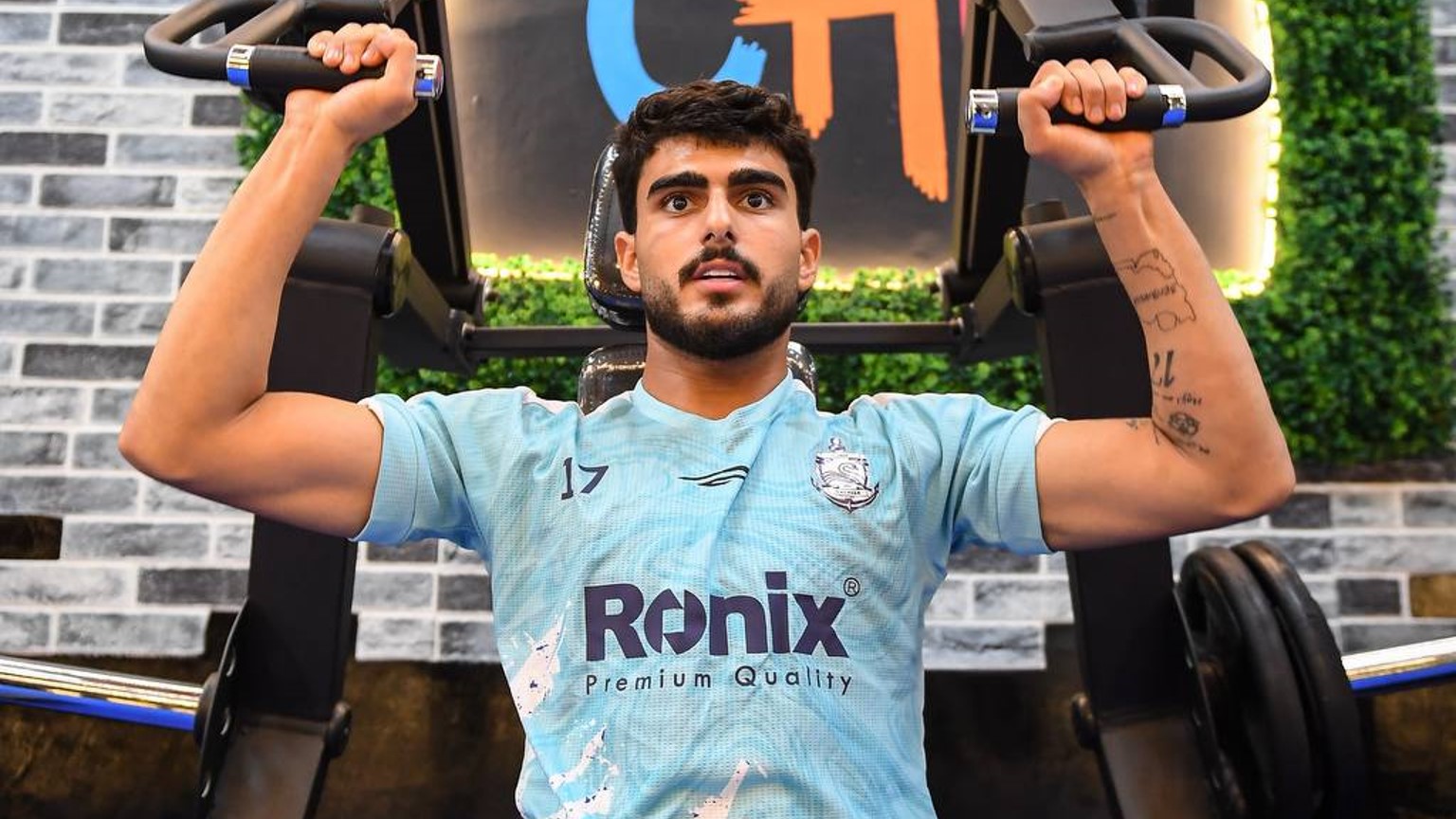
Ghandipour is expected to wear the number 17 shirt for Shabab Al-Ahli in the upcoming season. While he may initially face stiff competition for a starting spot, the club clearly sees him as a long-term investment. His pace, goal-scoring instinct, and composure in front of goal are qualities that could make him a key figure for the UAE Pro League side in the near future.

This move could also serve as a platform for Ghandipour to transition into senior international football with Iran, as consistent performances in a competitive league like the UAE Pro League could catch the eye of Team Melli selectors.


Iranian Defender Mehdi Zare Joins Akhmat Grozny in Russian League

According to Russian media reports, Mehdi Zare, the Iranian international and Gol Gohar central defender, has finalized a move to Akhmat Grozny in the Russian Premier League.

Russian outlet Express reported that the 22-year-old will undergo medical examinations ahead of signing his contract, with both clubs and the player having reached a full agreement. A representative from Akhmat Grozny confirmed the deal to Sport 24, stating, “Mehdi Zare’s transfer to Akhmat has been finalized, and the player will soon travel to Russia for medical tests.”

Zare made 23 appearances in the Iranian Premier League last season and had attracted significant interest from domestic giants Esteghlal and Persepolis. In recent days, Persepolis came close to securing his signature, even agreeing to Gol Gohar’s asking price of 80 billion tomans for a transfer consent letter. However, the Sirjan-based club ultimately opted to sell Zare to Akhmat Grozny.

According to Transfermarkt, the young defender’s market value is estimated at €900,000

Iran Football Federation Denies Approach for Colombian Coach Amid Ghalenoei Criticism

Despite Iran’s qualification for the FIFA 2026 World Cup, the performance of the national team under head coach Amir Ghalenoei continues to draw criticism from experts and pundits, with some calling for his dismissal.

The controversy deepened following a claim by Colombian coach Juan Carlos Osorio, who suggested he had received an offer from the Iranian Football Federation (FFIRI). In response, the FFIRI issued a brief statement: “Following reports of Juan Carlos Osorio’s claim regarding an offer from the Iranian Football Federation, we reiterate our full support for Amir Ghalenoei as head coach of Team Melli. The claim made by this coach is false, and as previously stated, the Federation’s definitive plan is for the national team to compete in the 2026 World Cup under Ghalenoei and his current staff.”

However, such assurances from the FFIRI, particularly under President Mehdi Taj, hold little weight. A similar stance was taken before the abrupt dismissal of Dragan Skočić, who had orchestrated a remarkable turnaround in the 2022 World Cup qualifiers, lifting Iran from third place in their group to secure qualification.

While there is no concrete evidence to substantiate either side’s claims, Osorio’s assertion seems unusual, given his current role as head coach of Mexican top-tier club Tijuana. Nevertheless, the speculation has further fueled debate over Ghalenoei’s suitability for the role.

Critics argue that Ghalenoei lacks the tactical acumen, communication skills, and public support needed to succeed at the highest level. Many within Iranian football, including some Team Melli players, question his ability to compete effectively in a tournament as demanding as the World Cup.

If the FFIRI is genuinely considering a managerial change for the sake of progress, the time to act is now—not months before the World Cup, as was the case with Skočić’s poorly timed dismissal. A decisive move could either solidify confidence in Ghalenoei or pave the way for a more capable successor—before it’s too late.