Author: admin

Part 1: Iran’s U23 (Omid) team Coaching Appointments: Cronyism Over Competence


A review of recent coaching appointments for Iran’s U23 (Omid) team reveals a glaring truth: experience and a proven track record in high-level football were the last considerations in the selection process.

After months of delays, the Football Federation finally reached an agreement with the National Olympic Committee to assume full control of the Omid team. Yet, rather than appointing a qualified leader, the federation unveiled a head coach whose resume is shockingly inadequate for the role—sparking immediate backlash from fans and media alike.

Omidreza Ravankhah, who transitioned directly from playing into coaching, has spent his career in Iran’s lower divisions, with brief, disastrous stints in the top flight. His sole Premier League experience—with Havadar—ended in relegation after just 17 matches, yielding a pitiful 0.82 points per game. That such a record qualifies him to lead Iran’s Olympic hopefuls is nothing short of farcical.

Even within the Football Federation, dissent has surfaced. Rahman Salari, a board member, openly admitted: "I was unaware of the selection process and learned of it through the media. What upsets me is that credentials were ignored. I remain in shock—how did we go from Yahya Golmohammadi to Omid Ravankhah? Those responsible must be held accountable."

If the head coach’s appointment was baffling, the choices for his assistants border on sabotage. Ravankhah’s first deputy, Hadi Mahdavikia—brother of legendary Mehdi Mahdavikia—has zero experience coaching in Iran’s top tiers, having only worked with youth teams at the Kia Academy. Iman Mobali, though a former Team Melli player, brings limited experience as an assistant in mid-table clubs.

The most egregious misstep, however, is the appointment of Mehdi Totounchi—a sports presenter—as technical advisor. This role demands a seasoned strategist capable of guiding the coaching staff, yet Totounchi’s sole credential is a youth championship with Saipa. The message is clear: expertise is irrelevant; connections are everything.

This is more than mere cronyism—it is a brazen insult to Iranian football. The federation, under Mehdi Taj’s leadership, operates with utter impunity, disregarding meritocracy while expecting miracles from unqualified appointees.

With such a woefully inexperienced staff, Iran’s dream of ending its 50-year Olympic absence is in peril. The Omid team now resembles a ship steered by the blind, with fans left to pray for divine intervention.

Only a fool would bet on qualification under these conditions. The federation has failed—again—and the price will be paid by the players and the nation.


Taremi Still Expected To Leave Inter Milan This Summer – Fulham, West Ham United, Nottingham Forest, Leeds United & Besiktas Keen

Iran Star Still Expected To Leave Inter Milan This Summer – Fulham, West Ham United, Nottingham Forest, Leeds United & Besiktas Keen

Mehdi Taremi is still expected to leave Inter Milan this summer, with Fulham and West Ham United among the clubs targeting him.

This according to today’s print edition of Rome-based newspaper Corriere dello Sport, via FCInterNews.

Inter Milan striker Mehdi Taremi has been at the centre of a number of transfer rumours in recent weeks.

The 33-year-old had a very underwhelming first season at Inter. Therefore, there is a widespread feeling that he will be on his way after just one year at the club.

There have been plenty of clubs to show an interest in Taremi’s signature. Fulham and West Ham United are reportedly keen to bring the former Porto striker to London.

Meanwhile, the likes of Nottingham Forest and Leeds United are also targeting Taremi from within the Premier League.

And Turkish giants Bestikas are also eyeing up a move.

Mehdi Taremi Still Set To Leave Inter This Summer

LECCE, ITALY – JANUARY 26: Mehdi Taremi of Inter celebrates scoring his team’s 4th goal during the Serie A match between Lecce and FC Internazionale at Stadio Via del Mare on January 26, 2025 in Lecce, Italy. (Photo by Maurizio Lagana/Getty Images)

In the meantime, Taremi has also turned down a move to Botafogo in Brazil.

Reportedly, the 33-year-old’s priority is to remain in Europe.

According to the Corriere dello Sport, though, little has changed. Inter plan to offload Taremi after his unsuccessful first season at the club, and the player himself will accept a departure.

Moreover, the Corriere reports, Taremi’s future has nothing to do with Inter’s pursuit of Ademola Lookman.

Shabab Al-Ahli Signs Rising Iranian Star Reza Ghandipour on a Four-Year Deal

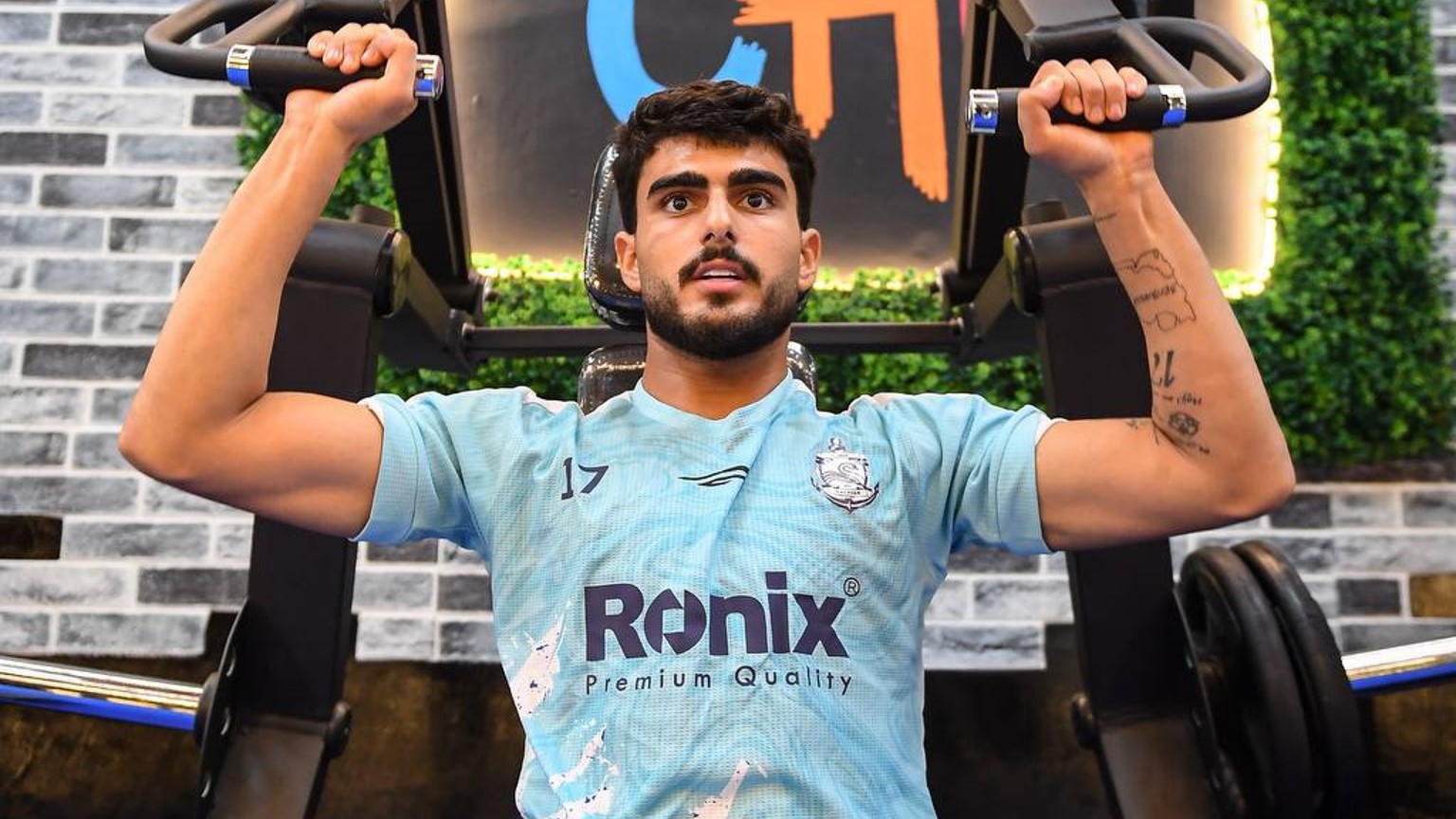
Shabab Al-Ahli continues to strengthen its squad with the addition of yet another Iranian talent. The Dubai-based club has officially announced the signing of Reza Ghandipour, a highly rated young striker from Iran’s youth national team setup. The 19-year-old joins on a four-year contract, marking a significant step in his burgeoning career.

Ghandipour, who was born on January 13, 2006, in Behbahan, Iran, has quickly risen through the ranks of Iranian football. He gained national recognition for his performances in the 2022 CAFA U-16 Championship, where he played a pivotal role in Iran’s title-winning campaign. Scoring four goals in the tournament, he not only helped his team lift the trophy but was also named the tournament's Most Valuable Player—a testament to his impact and potential.

At the club level, Ghandipour spent the previous season on loan, playing for Malavan Bandar Anzali, while being under contract with Paykan Tehran. His impressive displays in the Persian Gulf Pro League attracted attention beyond Iran's borders. While the exact terms of the deal have not been disclosed, Transfermarkt currently values the young striker at €1 million, underlining the belief in his future prospects. It remains unclear what fee, if any, was paid by Shabab Al-Ahli to secure his release from Paykan.

With this move, Ghandipour becomes the third Iranian international in the current Shabab Al-Ahli squad, joining experienced national team players Sardar Azmoun and Saeed Ezzatollahi. This growing Iranian presence reflects the club’s increasing interest in the Iranian football market, which has produced a wealth of technically gifted and tactically astute players in recent years.

Ghandipour is expected to wear the number 17 shirt for Shabab Al-Ahli in the upcoming season. While he may initially face stiff competition for a starting spot, the club clearly sees him as a long-term investment. His pace, goal-scoring instinct, and composure in front of goal are qualities that could make him a key figure for the UAE Pro League side in the near future.

This move could also serve as a platform for Ghandipour to transition into senior international football with Iran, as consistent performances in a competitive league like the UAE Pro League could catch the eye of Team Melli selectors.


Iranian Defender Mehdi Zare Joins Akhmat Grozny in Russian League

According to Russian media reports, Mehdi Zare, the Iranian international and Gol Gohar central defender, has finalized a move to Akhmat Grozny in the Russian Premier League.

Russian outlet Express reported that the 22-year-old will undergo medical examinations ahead of signing his contract, with both clubs and the player having reached a full agreement. A representative from Akhmat Grozny confirmed the deal to Sport 24, stating, "Mehdi Zare's transfer to Akhmat has been finalized, and the player will soon travel to Russia for medical tests."

Zare made 23 appearances in the Iranian Premier League last season and had attracted significant interest from domestic giants Esteghlal and Persepolis. In recent days, Persepolis came close to securing his signature, even agreeing to Gol Gohar’s asking price of 80 billion tomans for a transfer consent letter. However, the Sirjan-based club ultimately opted to sell Zare to Akhmat Grozny.

According to Transfermarkt, the young defender’s market value is estimated at €900,000

Iran Football Federation Denies Approach for Colombian Coach Amid Ghalenoei Criticism

Despite Iran’s qualification for the FIFA 2026 World Cup, the performance of the national team under head coach Amir Ghalenoei continues to draw criticism from experts and pundits, with some calling for his dismissal.

The controversy deepened following a claim by Colombian coach Juan Carlos Osorio, who suggested he had received an offer from the Iranian Football Federation (FFIRI). In response, the FFIRI issued a brief statement: "Following reports of Juan Carlos Osorio’s claim regarding an offer from the Iranian Football Federation, we reiterate our full support for Amir Ghalenoei as head coach of Team Melli. The claim made by this coach is false, and as previously stated, the Federation’s definitive plan is for the national team to compete in the 2026 World Cup under Ghalenoei and his current staff."

However, such assurances from the FFIRI, particularly under President Mehdi Taj, hold little weight. A similar stance was taken before the abrupt dismissal of Dragan Skočić, who had orchestrated a remarkable turnaround in the 2022 World Cup qualifiers, lifting Iran from third place in their group to secure qualification.

While there is no concrete evidence to substantiate either side’s claims, Osorio’s assertion seems unusual, given his current role as head coach of Mexican top-tier club Tijuana. Nevertheless, the speculation has further fueled debate over Ghalenoei’s suitability for the role.

Critics argue that Ghalenoei lacks the tactical acumen, communication skills, and public support needed to succeed at the highest level. Many within Iranian football, including some Team Melli players, question his ability to compete effectively in a tournament as demanding as the World Cup.

If the FFIRI is genuinely considering a managerial change for the sake of progress, the time to act is now—not months before the World Cup, as was the case with Skočić’s poorly timed dismissal. A decisive move could either solidify confidence in Ghalenoei or pave the way for a more capable successor—before it’s too late.


Malaysia’s withdrawal from Cafa Nations Cup disrupts tournament plans


The Central Asian Football Association (CAFA) has expressed strong disapproval over the Football Association of Malaysia’s (FAM) last-minute decision to pull out of next month’s CAFA Nations Cup, disrupting well-advanced tournament preparations.

In a strongly worded statement, CAFA clarified that Malaysia’s participation in the August 29–September 8 tournament in Tajikistan had been confirmed long in advance, with FAM fully aware of the schedule from the outset. “Those dates have never been changed from the beginning,” CAFA emphasized, dismissing FAM’s justification for withdrawal as unconvincing.

While FAM cited concerns over player availability—since the tournament slightly overlaps with non-FIFA windows—CAFA pointed out that the competition allows flexible squad registration, enabling teams to call up players on a match-by-match basis. “This system was designed to maximize participation, even allowing key players to join later if initially withheld by clubs,” the statement read.

FAM, however, claimed that the adjusted dates—which now fall partly outside the FIFA window—created “significant challenges” for assembling a full-strength squad, particularly with Malaysia’s overseas-based players in Spain, Argentina, Colombia, and Japan.

A Questionable Reversal of Commitment

Malaysia’s sudden withdrawal raises serious questions about FAM’s professionalism and foresight. The draw had already placed Harimau Malaya in Group B alongside Tajikistan, Iran, and Afghanistan, with head coach Peter Cklamovski initially expressing enthusiasm about facing strong opponents like Iran.

Yet, just weeks before the tournament, FAM and Cklamovski performed an abrupt about-face, citing logistical and player-release issues that should have been foreseeable from the start. If player availability was truly a dealbreaker, why commit to the tournament in the first place? Either FAM failed to properly assess the calendar constraints—demonstrating poor planning—or it is using the FIFA window as a convenient excuse for deeper internal shortcomings.

Cklamovski’s remarks further strain credibility. After previously welcoming the challenge, he now claims that assembling foreign-based players was “not realistic,” blaming travel, recovery time, and budget constraints. Yet, other participating nations—many with players also based abroad—have managed to adapt.

A Pattern of Unreliability?

Malaysia’s late exit not only disrupts the competition but also damages its own reputation. CAFA had structured the tournament expecting Malaysia’s presence, and its withdrawal forces unnecessary adjustments. This is not the first time FAM has backed out of commitments—raising concerns over whether it takes international football obligations seriously.

While FAM frames its decision as protecting player welfare, the timing suggests a lack of due diligence. If the FIFA calendar was indeed the primary concern, why wait until after the draw to withdraw? The move reeks of indecisiveness or, worse, a federation that fails to honor its commitments.

Ultimately, Malaysia’s absence may not diminish the tournament’s quality—but it certainly highlights FAM’s unreliability. If Malaysian football aspires to greater regional and global relevance, such erratic behavior must be addressed. Last-minute withdrawals harm not only organizers but also the nation’s standing in the football community.

Mehdi Ghayedi signs for Al-Nasr Dubai


Mehdi Ghayedi Rejects Abu Dhabi Offer, Joins Al-Nasr Dubai

According to Emirates Sport, Iranian forward player Mehdi Ghayedi has turned down an offer from an Abu Dhabi-based club in favor of a move to Dubai’s Al-Nasr SC. The 25-year-old winger, coming off an outstanding season with Ittihad Kalba, has reportedly signed a three-year deal with Al-Nasr, a decision described by Emirati media as "unexpected."

Initially, Ghayedi was expected to extend his stay at Ittihad Kalba or return to his parent club, Shabab Al-Ahli, following his impressive performances last season. However, Emirates Sport revealed that the Iranian international opted for Al-Nasr after rejecting a proposal from an Abu Dhabi side just two days prior. The Emirates Al-Khalij newspaper also confirmed the transfer, highlighting its surprising nature.

Ghayedi originally joined Shabab Al-Ahli on a five-year contract but spent only half a season with the club before being loaned to Ittihad Kalba for the past two campaigns. His prolific form at Kalba, where he showcased his goal-scoring ability and attacking flair, drew interest from multiple clubs. However, with Shabab Al-Ahli overloaded in his position, Ghayedi was reportedly unwilling to risk limited playing time. Meanwhile, Ittihad Kalba was unable to meet the financial demands for a permanent transfer, paving the way for his move to Al-Nasr.

This transfer marks a new chapter for Ghayedi as he looks to build on his strong form in the UAE Pro League.


‘It’s offensive’: voices from Iran as fans face 2026 World Cup travel ban


The Guardian
London.

After Donald Trump banned Iranians from entering the US, one of the co-hosts, there are different views on what should be done

“It’s offensive for any football fan to be prevented from participating in the World Cup, not just Iranians,” Ali Rezaei of Tehran’s Borna news agency says. In March, the national team became the second to qualify for the 2026 World Cup that will be hosted by Canada, Mexico and the United States. In June, Donald Trump authorised the dropping of bombs on Iran and hit the country with a travel ban. As things stand, while the national team will be able to enter the US next summer, fans – and perhaps media – will not.

Residents of Tehran and other cities may have had enough to deal with of late, but still, being barred from entry stings, even if Iranians have long found it difficult to get into the US. “If the US government has issues with the Iranian regime for any reason, it should not result in discrimination against Iranian citizens,” Behnam Jafarzadeh, a writer for the leading sports site Varzesh3, says. “If someone hasn’t committed any illegal activity, why should they be punished? It’s not just about the World Cup – the policy needs to change in general.”

What can Iran do? “Boycotting the World Cup is not a solution,” Siavash Pakdaman, a Tehran-based fan, says. “Refusing to play on US soil would be a dangerous precedent – any host country could start excluding teams it has issues with. Just as the Iranian delegation can and should be present at the United Nations in the US, the Iranian team should also play on American soil if the draw requires it – without relocation.”

There is a feeling that staying away would not make much difference anyway. “It would only deprive the national team of the opportunity to participate in a major tournament and would ultimately hurt Iran more,” Jafarzadeh says. “It might even be welcomed by some American officials. It could make headlines briefly, but once the tournament starts, it will be forgotten and will have achieved nothing.”

Questions have been asked – including in Iran, whose supreme leader, Ayatollah Ali Khamenei, has long banned competing against Israeli athletes – about what the international reaction would have been if Qatar had banned citizens from certain nations from attending the 2022 World Cup.

“If the USA makes it difficult for football fans to attend, then changing the host country is necessary,” Rezaei says. “Doing so would harm the USA’s reputation, not the World Cup’s. If strict entry rules remain, we should focus on protecting football. This is supposed to be a celebration of sport.”

Jafarzadeh is not confident that the competition could be taken away from the busiest of the three hosts. “It is not a challenge Fifa and [its president Gianni] Infantino would want to take on.” Perhaps there is another way. “Fifa should use all of its influence to push for a suspension of this policy at least during the World Cup.”

Fifa may find it easier to place Iran in Canada or Mexico and hope that Iran don’t make it to the latter stages, when there would have to be a game in the US. “Playing in Mexico or Canada is not a real solution – it just ignores the actual problem,” Rezaei says.

Many expect it to happen anyway. “Canada has a large Iranian immigrant population, although some of them are opponents of the Iranian regime and the national team can’t count on their support,” Jafarzadeh says. “Mexico is probably a more attractive and less controversial destination for the team.”

That is another question. The Iranian-American community is more than a million strong yet many of these headed west before, or in response to, the Islamic Revolution of 1979.

“It seems that many Iranians who oppose the government consider the national team to be a representation of the regime – which I believe is wrong,” Pakdaman says. “And since a larger number of these opponents live in the US, the team may face pressure from the audience during the matches. Of course, I hope my analysis is wrong.”

Jafarzadeh, who went to the World Cups in Russia and Qatar and would love to go to the United States, says: “Some see the team as one that represents the regime, and this sentiment is even stronger among Iranians living abroad. Of course, the war with Israel has stirred feelings of patriotism among many Iranians, but I’m not sure if this will translate into support for the national team. We’ll have to wait and see how things unfold in the coming months.”

That there is time is perhaps a small reason for optimism that things could change. Iran is one of 19 countries subject to a full or partial US entry ban. Several of the others retain hope of qualifying for the first 48-team World Cup, including Sudan, Sierra Leone, Venezuela and Haiti.

“Considering that there is almost a year left until the 2026 World Cup, there is a possibility that the situation may stabilise,” says Isa Azimi, a columnist and translator, regarding Iran’s situation, though he is not confident. “Despite claims of separating politics from football, Fifa has shown that it is not particularly independent when facing major political powers.”

Especially when Infantino appears to prize his close relationship with President Trump. “If Fifa considers itself a global body independent of governments, it must stand up to such laws and not allow politics to contaminate the world of sports,” Pakdaman says. “Of course, we all know that, unfortunately, such contamination exists – especially when one side of the issue is a superpower that answers to no one. It is Fifa’s duty to treat all member countries equally, but will that actually happen?”


Team Melli Begins CAFA Nations Cup 2024 Campaign Against Afghanistan

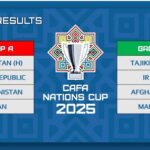
Dushanbe, Tajikistan – The CAFA Nations Cup 2024 is set to kick off on August 29, with Iran’s Team Melli beginning their title defense against Afghanistan in Dushanbe. Host nation Tajikistan will also start their campaign on the same day, facing Malaysia, the sole East Asian representative in the tournament.

Group Stage Fixtures & Key Matches

  • August 29:
  • Iran vs Afghanistan
  • Tajikistan vs Malaysia
  • September 1:
  • Iran vs Malaysia
  • Afghanistan vs Tajikistan
  • September 4 (Final Group Matches):
  • Tajikistan vs Iran (a potential group decider)
  • Afghanistan vs Malaysia

All matches in Group B will be held at Dushanbe’s Central Republican Stadium, while Group A (featuring Uzbekistan, Kyrgyz Republic, Turkmenistan, and Oman) will take place in Tashkent, Uzbekistan.

Tournament Format & Road to the Final

Only the group winners will advance to the final, scheduled for September 8 in Tashkent. The two runners-up will compete for third place in Dushanbe on the same day.

Team Melli’s Dominance & Expectations

As the defending champions of the CAFA Nations Cup, Iran enters the tournament as the favorite. Having won the inaugural edition in 2023, Team Melli will aim to maintain their regional supremacy under coach Amir Ghalenoei. Key players like Mehdi Taremi and Sardar Azmoun are expected to lead the charge.

Meanwhile, Tajikistan, fresh from their impressive 2023 AFC Asian Cup performance, will look to leverage home advantage. Malaysia, invited as a guest team, could be a dark horse, while Afghanistan seeks to make an impact under new management.

Group A Preview: Uzbekistan Favored to Progress

In Tashkent, hosts Uzbekistan are strong contenders, with the Kyrgyz Republic and Oman posing tough challenges. Turkmenistan will aim to spring a surprise in a competitive group. This group is the stronger of the two with a chance of an upset.

CAFA regional has two representatives in the next year FIFA World Cup in Iran and Uzbekistan.

With only one team from each group advancing, every match will be crucial. Football fans across Central Asia can expect an exciting tournament filled with high-stakes clashes.


Team Melli Head Coach Amir Ghalenoei stated:

"Our goal is clear—to defend our title. We respect all opponents, but we are here to win. The players are motivated, and we’ve prepared thoroughly for this challenge."

Tajikistan's Head coach, Petar Šegrt emphasized:

"Playing at home is an advantage, but also a responsibility. We want to make our fans proud and prove we belong among Central Asia’s best."

Afghanistan, under new management, aims to make an impact. Coach Ashley Westwood remarked:

"We’re building something new, and this tournament is a great platform. The players are eager to show their potential."
Malaysia Head Coach, Peter Cklamovski, described the CAFA Nations Cup 2025 as an important step in the Malaysian national squad's journey towards building a more competitive team.
"The Nations Cup is an exciting tournament, and it's an important step in our journey as a national team. We have been waiting for the draw for some time, and we've obviously had plan A and B"

He also described the match against Ira as a great opportunity to assess the true level of the Malaysian National Team.
"They (Iran) are going to the World Cup. It is a massive challenge for us, a massive opportunity for us. We will use it as a way to benchmark ourselves against the best. A test of our football against them, we will take our football to them as hard as we can."
"


Iran vs. Chile friendly called off.

The Iran-Chile match was canceled despite the Chilean side having an initial agreement.

"Paylo Millod," the president of the Chilean Football Federation, announced the cancellation of the international friendly match between the Chilean national team and Team Melli in September, due to the recent hostilities between Israel and Iran.

Apparently, the contract was written in such a way that a final agreement was needed regarding ticket sales, advertising around the field, and the venue of the game. Contrary to the claims made, there is no news of payment or receipt of compensation at this stage, and both parties had the right to withdraw from the memorandum of understanding.

The international department of the Iranian Football Federation is following up on the matter to inform the Chilean side of any assurances regarding the conditions in the region and Iran. They also plan to select another match, which will probably be another South American country, for the friendly match in parallel. It is likely that the Iranian national team will participate in two other quadrennial tournaments after the CAFA nATIONS cUP 2025 tournament and the friendly matches with Russia, in order to prepare itself for the 2026 FIFA World Cup.