
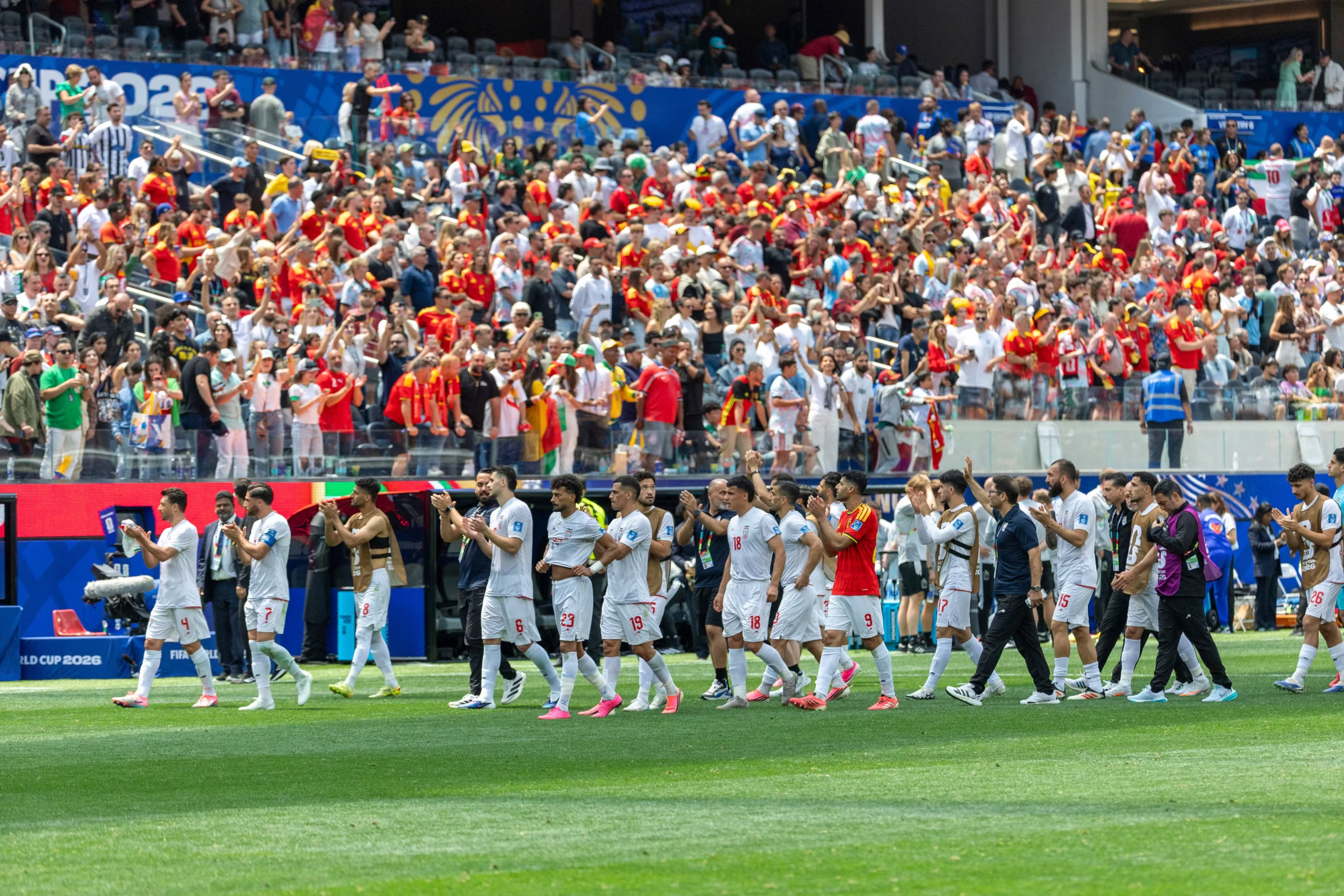
As missiles rain down on King Khalid International Airport and Asian federations scramble to assess the safety of their players, the Football Federation of the Islamic Republic of Iran faces a moment of reckoning—and a potential escape route from a coaching disaster of its own making.
The missile and drone attacks on Riyadh have shattered the assumption that Saudi Arabia can safely host the 2027 AFC Asian Cup. At least 14 people were killed and over 300 wounded in multiple strikes on the capital's international airport over a single weekend, with a second attack striking the terminal just a day later, killing one and injuring eleven more. Airlines Etihad and Qatar Airways have suspended flights to Riyadh, and the airport remains closed until October 17.
The Asian Football Confederation (AFC) now faces an existential question: can it proceed with a tournament scheduled to begin on January 7 in a country where its capital's primary international gateway has been repeatedly targeted by hostile fire?
A Federation of Silence and Selective Security
The AFC's response—or lack thereof—has been telling. While the confederation has yet to issue a formal statement, multiple reports indicate that its executive committee will convene in the coming days to discuss options including postponement, relocation, or outright cancellation. Iranian media, citing Shargh Daily, has reported that FFIRI formally requested clarification from the AFC regarding the security situation and that the possibility of postponement or a change of host is on the table.
Yet the AFC's record on security matters is troublingly inconsistent. As Shahraranews pointedly observed, the confederation moved Iranian clubs' home matches to third countries citing security concerns, even as it has refused to acknowledge the manifest danger in Riyadh. The Saudi Pro League itself cancelled a domestic match between Abha and Al-Faisaly on security grounds, and an AFC Champions League fixture in Riyadh was delayed by an hour due to a Houthi missile alert—yet the AFC still has not formally declared Riyadh unsafe.
This selective application of security standards has not gone unnoticed. As one Iranian outlet put it, "It seems the AFC has changed the concept of insecurity according to its financial and sponsorship interests, putting the lives of footballers in Riyadh at risk".
The Dominoes Are Falling
The ripple effects are already being felt across the continent. South Korea's foreign ministry raised its travel advisory for all of Saudi Arabia to Level 3—"recommending departure"—and urged its citizens to leave unless their business was urgent. The Korea Football Association is in close communication with the AFC and has acknowledged that its planned November friendly in Saudi Arabia is now in doubt, with a federation official stating they are "discussing various possibilities" for the away trip.
Football Australia has similarly signalled its concern. A spokesman said the federation's "experienced security team is actively monitoring developments," adding that "risk assessment is part of our planning for every national team camp, and it will be a key focus of our preparations for January". The players' union, Professional Footballers Australia, emphasised that "the safety of players, fans and staff must be the priority".
The most likely scenario, according to ESPN, is not relocation—which would be logistically prohibitive at short notice—but a twelve-month postponement to January 2028, should the conflict between Saudi Arabia and the Houthi rebels fail to dissipate. Chinese media has echoed this assessment, reporting that if the conflict does not subside in the coming months, the tournament will be pushed back to January 2028.
For Iran, a Postponement Is Not a Setback—It Is Salvation
Herein lies the paradox. For most federations, a postponement would be a logistical nightmare. For Iran, it may be the single best thing that could happen to Team Melli.
The reason is simple: it would give FFIRI the time—and the pretext—to do what it should have done months ago: relieve Amir Ghalenoei of his duties and appoint a competent coach capable of preparing a team that can genuinely compete at the Asian level.
The case against Ghalenoei is overwhelming and growing by the day. Since the World Cup—where Iran failed to win a single match and exited at the group stage despite an expanded 48-team format—the team has suffered two consecutive friendly defeats, to Uzbekistan and Russia, in the October FIFA window. Public polling cited by Iranian media indicates that more than 95 percent of football followers want Ghalenoei removed. As Football360 reported, Ghalenoei "who after the World Cup imagined an easier path to the bench, suddenly faced a bitter reality".
Yet the federation's response has been paralysis. Ghalenoei himself revealed that at a recent board meeting, he spoke for ten minutes and not a single member asked a question. "I swear to God, not a single person asked a question," he said. "I am available to address any concerns, but since no one raised a question, we simply left the meeting". He further stated that he made no promises about winning the Asian Cup and challenged any board member who believed they could take the team to the semi-finals under current conditions to step forward—and no one did.
This is not leadership. This is institutional surrender.
The Candidates Are Already Waiting
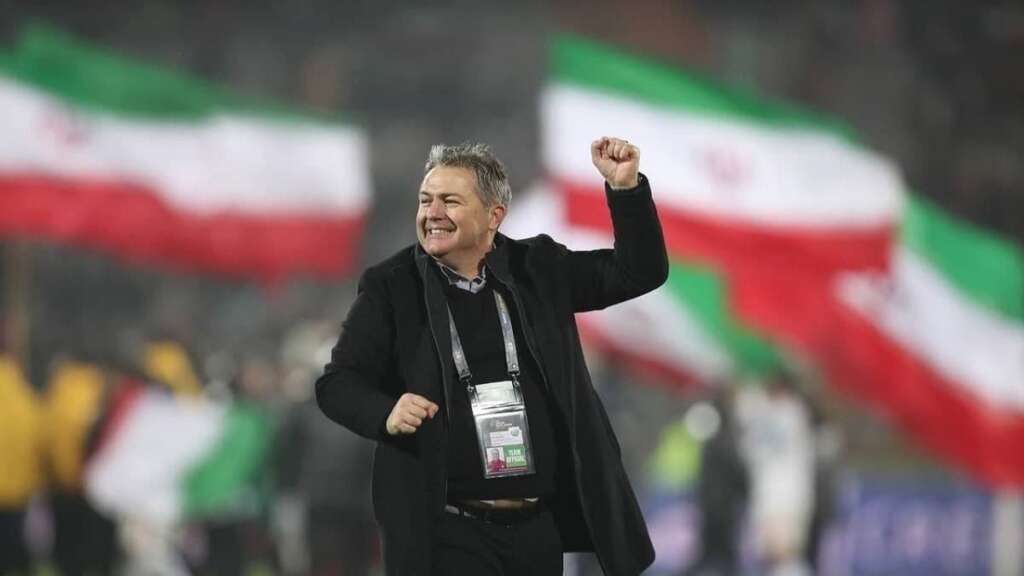
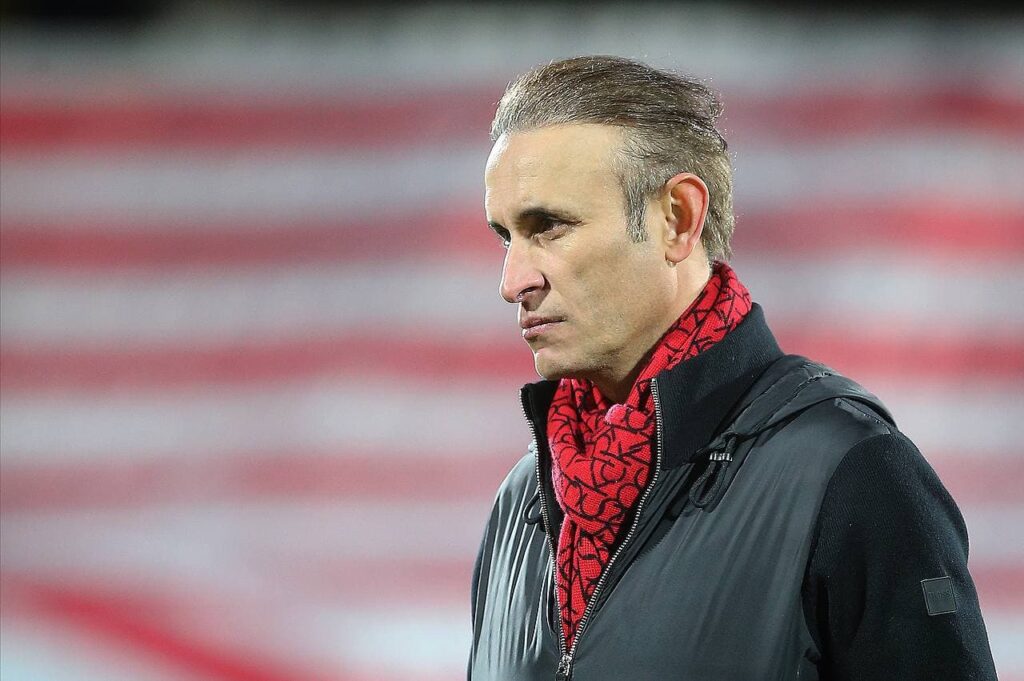
The good news is that viable alternatives exist—and the speculation about Ghalenoei's replacement has already begun in earnest. Iranian media has identified several credible candidates: Yahya Golmohammadi, one of the most decorated domestic coaches with experience managing star players at Persepolis; Farhad Majidi, who led Esteghlal to an unbeaten league title and has expressed a clear desire to coach the national team; and Dragan Skočić, who previously managed Iran and guided the team to World Cup qualification.
Each brings different strengths. Golmohammadi has the pedigree. Majidi has the popularity and the hunger. Skočić has the experience of navigating the unique pressures of Iranian football. What none of them have—and what Ghalenoei has squandered—is a coherent plan for rebuilding a squad that has grown old, stale, and tactically predictable under his watch.
A twelve-month postponement would give a new coach an entire year to implement a fresh vision, integrate younger players, and prepare the team properly for a tournament that Iran has not won since 1976. It would allow FFIRI to negotiate a dignified exit for Ghalenoei—framed not as a firing, but as a strategic reset in light of changed circumstances—and to install a replacement without the pressure of an imminent tournament.
The Window Is Narrow, But It Is Open
Of course, this scenario depends on decisions that have not yet been made. The AFC's executive committee, which will meet with Mehdi Taj participating as an AFC vice president, could opt for a different path: relocation to a neutral venue, which would preserve the January 2027 timeline and deny Iran the breathing room it needs. Or the conflict could escalate further, leading to outright cancellation and a far more chaotic scramble.
But the most probable outcome, as multiple outlets have reported, is postponement. And if that happens, FFIRI will have no excuse. The federation's board members who sat in silence as Ghalenoei delivered his ten-minute monologue will have a full year to find their voices. The question is whether they will use it to ask the questions they should have asked long ago—or whether they will simply allow the cycle of impunity to continue, one postponed tournament at a time.
For the sake of Iranian football, they must choose the former. The missiles in Riyadh are a tragedy for the region. But for Team Melli, they may be the unlikely catalyst for a change that should have happened months ago.