Tag: Amirhossein Hosseinzadeh

Iran Secures 2-0 Victory Over Tanzania in Dubai Friendly

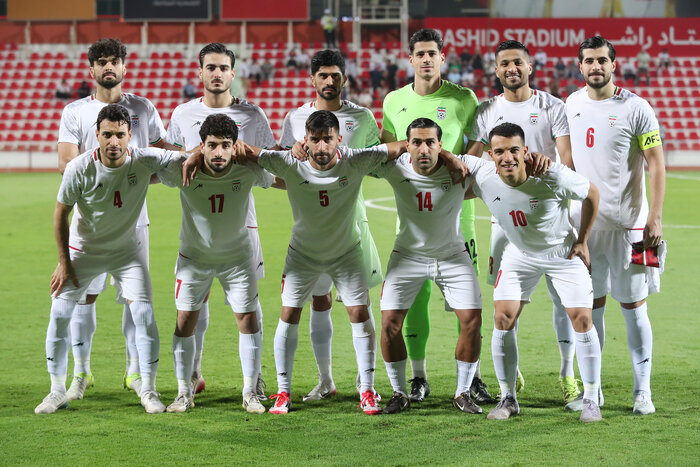
The Iranian national football team, under coach Amir Ghalenoei, secured a 2-0 victory against Tanzania in an international friendly on Tuesday evening. The match, held at Al Rashid Stadium in Dubai, UAE, saw both goals scored in a dominant first-half performance by Team Melli.

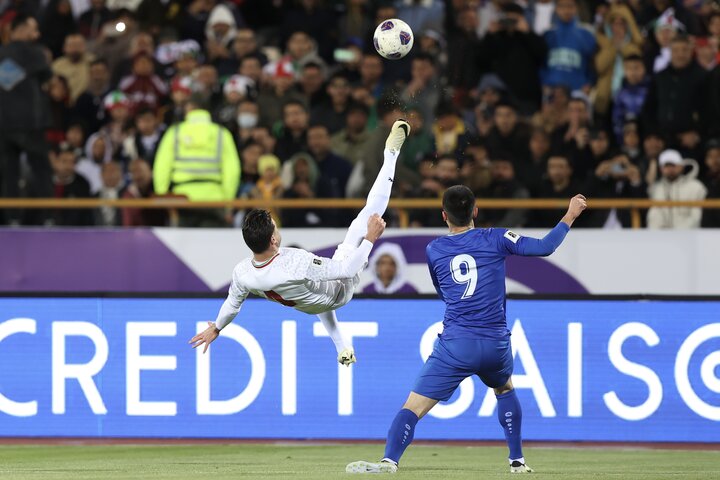
Amir Hossein Hosseinzadeh opened the scoring from the penalty spot in the 14th minute, following a foul on Mohammad Mohebbi, adding to the goal he scored in Iran’s previous match against Russia. Mohammad Mohebi then doubled the lead in the 25th minute with a shot that took a slight deflection off a defender.
First-Half Dominance

Iran started aggressively and created an early chance in the 2nd minute, with Mohammad Mohebi unable to convert. Tanzania responded with a significant opportunity of their own in the 8th minute; a defensive error by Shoja Khalilzadeh left Charles M. Mumba one-on-one with goalkeeper Payam Niazmand, but his shot was parried away for a corner.

The breakthrough came when Kasra Taheri played Mohebi into the box, resulting in a foul from Tanzania’s Ibrahim Abdullah. Hosseinzadeh calmly converted the ensuing penalty. Shortly after, Taheri was again the provider, setting up Mohebi, whose shot deflected past the goalkeeper to make it 2-0.

The first half was marred by an injury to the promising Kasra Taheri, who was forced off in the 39th minute after a heavy challenge and replaced by Mohammad Javad Hosseinnejad.
Second-Half Adjustments

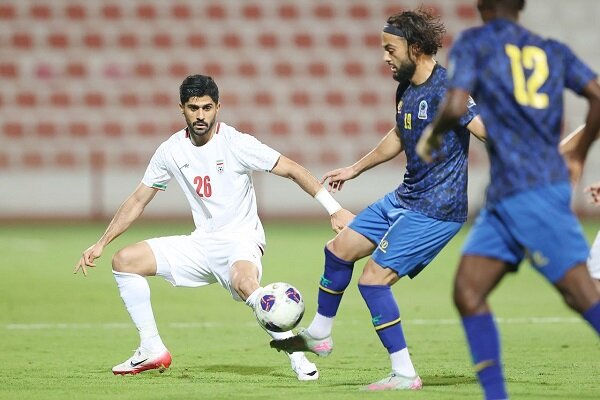
Tanzania began the second half with more purpose, pressuring the Iranian defense. A long-range effort from Yahya Zayed sailed just over the bar in the 47th minute, followed by another chance that required a last-ditch clearance from Danieal Esmailifar.

Iran suffered a second injury setback in the 54th minute when Mohammad Amin Hezbavi went down with a groin issue, making way for Ali Nemati.

The most notable incident of the second half saw Alireza Jahanbakhsh’s long-range shot from outside the box deflect off teammate Milad Mohammadi’s hand and into the net. The referee initially awarded the goal but, after consulting with his assistant, correctly disallowed it for handball.

Tanzania threatened once more in the 73rd minute with a long-range effort that flew wide, but Iran managed the game effectively to see out the 2-0 win.

Lineups:

  • Iran: Niazmand; Esmailifar, Hezbavi (54′ Nemati), Khalilzadeh, M. Mohammadi; Ezzatollahi, Ghoddos (64′ Ghorbani); Mohebi (45′ Jahanbakhsh), Hosseinzadeh (64′ Alipour), Hashemnejad (64′ Sayadmanesh); Taheri (39′ Hosseinnejad).
  • Tanzania: Soliman; Masindo, Munda (45′ Mwaikenda), Mwamenyetu, Abdullah; Zayed, Dismas, Mumba (45′ A. Soliman), Salem (45′ Abraham); Peter (64′ Chikola), Al-Arikhya.

Iran Falls 2-1 to Russia in World Cup Preparatory Friendly

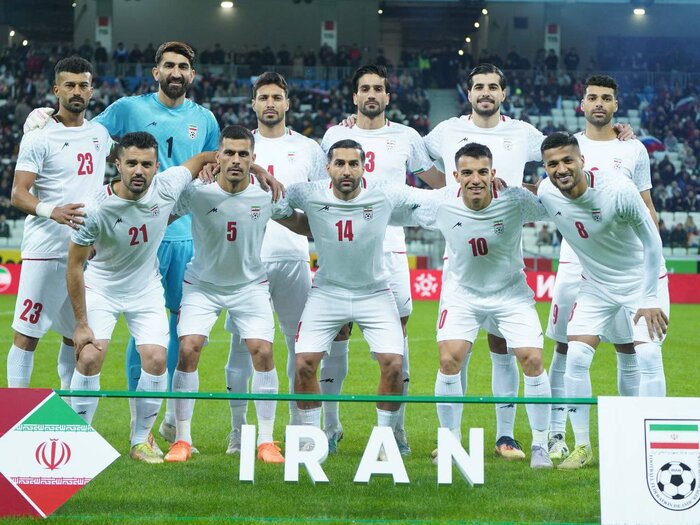
The Iranian national football team continued its preparations for the 2026 World Cup with a 2-1 defeat against Russia in a spirited friendly at a packed Volgograd Arena on Thursday. Despite a second-half equalizer from Amirhossein Hosseinzadeh, a decisive strike from Russia’s Batrakov sealed the victory for the hosts.

The match was steeped in a World Cup atmosphere, with the Russian hosts recreating the pomp of the 2018 tournament. The pre-match ceremony featured the shirts of both nations covering the pitch, and the national anthems were met with a roaring welcome from the 42,000-strong capacity crowd.

Match Summary

  • 22′ (Russia): Rubiev opened the scoring with a calm finish after a beautiful through pass left him one-on-one with Iranian goalkeeper Alireza Beiranvand.
  • 50′ (Iran): Amirhossein Hosseinzadeh leveled the score, tapping into an empty net after a wide pass from Saman Ghoddos found him unmarked in the box.
  • 70′ (Russia): Batrakov secured the win for the hosts, firing a precise shot past Beiranvand from the edge of the penalty area after a cleared header fell to his feet.

A Tale of Two Halves

Iran, fielding a blend of youth and experience, started the brighter of the two sides. They controlled possession in the opening minutes and pinned the Russian team in their own half, though they failed to create any serious chances.

After the initial pressure, the game shifted. Russia grew into the match and began dictating the tempo, with their pressure culminating in Rubiev’s 22nd-minute opener. Iran was nearly dealt a second blow just four minutes later, but a crucial goal-line clearance from Shoja Khalilzadeh bailed out Beiranvand after a mistaken charge from his line.

The second half began promisingly for Team Melli, who found an immediate response. Hosseinzadeh’s timely run and finish five minutes after the restart seemed to set the stage for a strong comeback. The Move started by Ramin Rezaein to Saman Ghoddos, whose brilliant cut, split the Russian defense for Hosseinzadeh to slot the ball easily for the equalizer.

However, Russia reasserted its dominance as the half progressed. The home side controlled possession and created several threatening opportunities before Batrakov’s powerful strike ultimately decided the contest. Coach Amir Ghalenoei responded by introducing fresh legs like Kasra Taheri for his debut and Mohammad Ghorbani, but despite improved pressure in the final stages, Iran could not find a second equalizer.

Key Takeaways and Looking Ahead

While the Iranian team showed moments of promise and a better overall performance compared to recent outings, defensive vulnerabilities proved costly. Both goals conceded highlighted ongoing issues in the team’s defensive structure that will need addressing ahead of the World Cup.

Team Melli will continue its preparation campaign with another friendly against Tanzania on Tuesday in the UAE.

Iran’s Starting XI: Beiranvand; Rezaian, Khalilzadeh, Abarghoei, Nemati; Ezzatollahi (77′ Ghorbani), Norafkan; Ghoddos (77′ Taheri), Mohebi, Hosseinzadeh; Taremi.

Critical Review: Team Melli at the CAFA Nations Cup 2025

An Analytical Assessment of Iran’s Shortcomings Following Its Defeat in the Final

Introduction

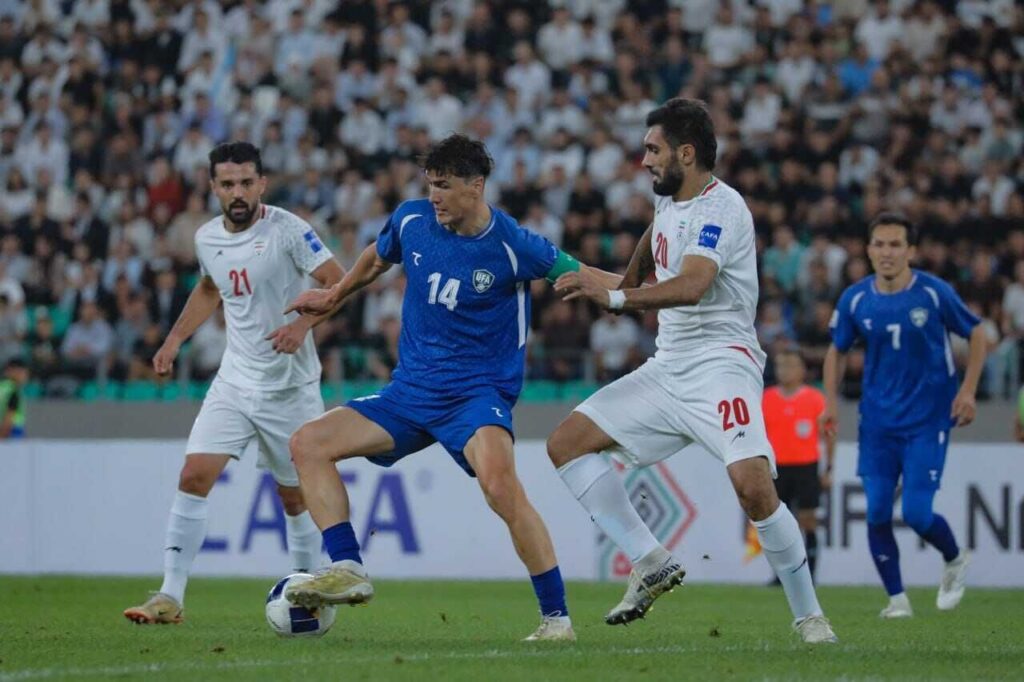
Team Melli’s campaign at the CAFA Nations Cup 2025 concluded in profound disappointment with a narrow defeat to Uzbekistan in the tournament final. Entering as the region’s overwhelming favorite, Team Melli’s journey was undermined by a host of structural and tactical deficiencies that ultimately prevented them from securing the title. This review offers a critical analysis of Iran’s performance, highlighting defensive frailties, midfield inefficiency, a lack of creativity, persistent disciplinary issues, questionable squad selection, and significant coaching shortcomings.

Defensive Vulnerabilities Exposed

Iran’s most glaring weakness throughout the tournament was its defense. The backline was repeatedly exposed, where it struggled to maintain shape and composure under the opponent’s pressure. Defenders displayed poor spatial awareness and were frequently caught out of position, creating dangerous opportunities for the opposition. Individual errors, missed tackles, misjudged clearances, and poor marking directly contributed to goals conceded at critical moments. A palpable lack of cohesion, compounded by communication breakdowns and an absence of authoritative leadership, turned these lapses from isolated mistakes into a recurring theme that doomed the campaign.

Midfield Inefficiency and Lack of Control

The midfield failed to provide a foundation for success, offering neither control nor creativity. Central players struggled to link defense with attack, often resorting to safe, sideways, or backward passes that slowed the tempo and allowed opponents to reorganize. There was a distinct lack of vision and inventiveness, with few attempts to break defensive lines or create meaningful chances for the forwards. Defensively, the midfield offered scant protection, consistently losing duels and allowing opponents to transition quickly and exploit space. This inability to dictate the game’s rhythm left Iran perpetually vulnerable and starved the attack of service.

A Persistent Discipline Problem

Discipline—both personal and tactical—remains a significant concern for Team Melli, a trend that has persisted throughout Amir Ghalenoei’s tenure. Individually, players committed unnecessary fouls in dangerous areas and showed lapses in focus, leading to costly bookings. Tactically, the team frequently abandoned its structure, chasing the ball and creating easily exploitable gaps. This lack of collective discipline undermined any semblance of organized play and is a fundamental issue that must be addressed.

Questionable Squad Selection and Quality

The composition of the squad itself raised serious questions. While credit is due for selecting players from the domestic league, the on-field performance of several individuals was well below the standard required for international football. Key positions were occupied by players lacking the necessary technical ability or tactical intelligence, and a lack of quality depth on the bench severely limited Iran’s options for in-game adjustments.

Naïve Coaching and Tactical Rigidity

The coaching staff’s game plan was notably naïve, lacking the adaptability and strategic sophistication needed for a high-stakes tournament. Iran’s approach was predictable, with little variation in attack and an over-reliance on individual brilliance over cohesive team play. Substitutions and tactical tweaks were often too late or failed to address the core problems, issues that were apparent even during the group stage. The inability to respond to Uzbekistan’s tactical shifts in the final—even considering the gallant effort of playing a man down—exposed a critical lack of preparation and flexibility from the bench.

Conclusion and a Broader Concern

Team Melli’s defeat in the CAFA final is a stark reminder of the immense work required before the 2026 World Cup. To regain regional prominence and prepare for the global stage, Iran must take decisive action: solidify the defense, inject creativity into the midfield, enforce higher disciplinary standards, select players based strictly on merit, and adopt a more sophisticated and adaptable tactical approach.

This tournament also highlighted a disturbing broader trend: the steep decline in the standard of the Iranian domestic league. This was evident in the performances of many league-based players. The fact that Iran now has only one representative in the AFC Champions League Elite, down from four in recent years, underscores this deterioration. This decline is exacerbated by a distorted economic reality where clubs like Esteghlal and Persepolis, receiving significant state support, pay astronomical wages in a struggling economy, yet suffer humiliating results, such as Esteghlal’s 7-1 defeat to UAE’s Al-Wasl.

This is a reality check for Iranian football. The production line of quality players has deteriorated. The few talented individuals must be professionally coached and managed to salvage pride at the 2026 World Cup.


Player Ratings

  • Payam NIAZMAND (4/10): Not an assuring performance across four games against inferior opposition. A worrying sign for the goalkeeping position.
  • Aref AGHASI (4/10): Underwhelming. Numerous shortcomings have rightfully placed his selection under scrutiny.
  • Ali NEMATI (5/10): Failed to live up to expectations based on his club form. Has yet to prove he deserves a starting role.
  • Arya YOUSEFI (5/10): Inconsistent. His poor tackle in the final was unfortunate but costly. Often the target of the manager’s vocal criticism.
  • Hossein KANANI-ZADEGAN (7.5/10): Proved his value when on the pitch, arguably the best defender. However, his known disciplinary liability remains a concern.
  • Saman GHODDOS (5/10): A disappointing tournament from an expected maestro. Lacked creativity, was anonymous in matches, and showed no leadership as captain.
  • Omid NOORAFKAN (6/10): Deployed in multiple roles and was solid, though not instrumental in changing the team’s results.
  • Mohammad GHORBANI (5/10): Looked lost and unsure of his role. Needs to assert himself significantly to earn more playing time.
  • Amir Hossein HOSSEINZADEH (8/10): A talented, opportunistic forward who was a menace to opponents and deserves more minutes.
  • Shahriyar MOGHANLOU (4/10): International football appears beyond his tactical grasp. Offered very little.
  • Mohammad MOHEBI (8/10): An established, consistent, and effective player despite limited time on the pitch.
  • Mehran AHMADI (6/10): Limited appearance but showed some promising moves.
  • Majid ALIYARI (8/10): A towering, clinical finisher. Did not get the playing time his two-goal debut deserved.
  • Ali ALIPOUR (7/10): A hard-working forward who always gives his best, but lacks the elite technical skills for this level.
  • Mehdi HASHEMINEJAD (8/10): An exciting player whose dribbling, runs, and shooting were a breath of fresh air.
  • Ramin REZAEIAN (7/10): Remains a solid player whose flank runs and crossing were valuable. His petulance continues to mar his performances.
  • Amin HEZBAVI (6/10): Rarely used and looked average, prone to errors when called upon.
  • Mehdi TIKDARI (5/10): Another newcomer with limited time. A purely average performance.
  • Alireza KOUSHKI (5/10): Minimal time and minimal impact.
  • Mehdi TAREMI (7/10): Inconsistent and often faded from games. Seemed to lack his usual enthusiasm and will to influence play, mostly due to his concentration and quick trip to Athens..
  • Mohammad KHODABANDEHLO (–/10): Insufficient time due to injury to rate.
  • Mohammadmehdi MOHEBI (7.5/10): A promising player clearly on the rise.
  • AliReza JAHANBAKHSH (6/10): A lack of competitive sharpness was evident. Provided one assist but was otherwise peripheral; his inclusion arguably blocked opportunities for others.

Beyond the Final: A Test of Character for a Struggling Team Melli


As Iran faces Uzbekistan, deep-rooted systemic issues loom larger than the CAFA trophy itself.

While Uzbek coach Timur Kapadze’s pre-match comment that “Iran has weaknesses” is a blunt assessment, for those following Iranian football, it is a painful and long-acknowledged truth.

The upcoming final against Uzbekistan is about more than a regional trophy; it is a profound test of character for a team seemingly at odds with itself. The result, while desirable, is secondary to the urgent need for a coherent identity, tactical intelligence, and a clear path forward.

It is often too easy to place the blame solely on the head coach, and while Amir Ghalenoei is certainly responsible, he is merely the most visible symptom of a deeper malaise within Team Melli. The problems are systemic:

  • Senior Players Underperforming: When veteran leaders and captains are defined more by frustration than by skill and experience, the team’s foundation crumbles.
  • Persistent Defensive Flaws: Long-known defensive vulnerabilities remain unaddressed, match after match.
  • A Misfiring Midfield: The heart of the team, the engine room, is consistently underperforming, failing to control games or link play effectively.

Coach Ghalenoei has his qualities, but his shortcomings are currently defining the team’s style. His unwavering loyalty to a core of senior players—a page taken from the Carlos Queiroz era—is backfiring, as these players increasingly lack both form and motivation. Despite being supported by a large contingent of recently retired ex-players as assistants, this staff has yet to prove they can provide the tactical support and fresh ideas the team desperately needs.

The tactical approach has often been naive. Against weaker teams that employ a deep defensive block, Ghalenoei’s side appears short of ideas. His substitutions are frequently ineffective and poorly timed, often resorting to last-minute changes in a desperate hope for a miracle rather than a strategic shift.

On the pitch, the lack of inspiring figures is glaring. While promising talents like Mehdi Hashemnejad, Amirhossein Hosseinzadeh, and Majid Aliyari have shown flashes of brilliance, they remain fringe players in Ghalenoei’s plans, consistently overlooked.

Instead, the team relies on established names regardless of form. The selection of captain Alireza Jahanbakhsh, currently without a club and match sharpness, raises serious questions about selection criteria being based on reputation rather than merit. The CAFA tournament presented a golden opportunity to integrate his successor; that opportunity seems wasted.

Similarly, much is expected of Mehdi Taremi, but his two appearances so far have provided more cause for concern than confidence.

Tonight’s match is a mirror. It will reflect the team’s true state: its fight, its plan, and its desire. Lifting the CAFA trophy would be a welcome moment of joy, but without addressing these fundamental issues, any celebration will be fleeting. For Team Melli, the real opponent is not just Uzbekistan—it is itself.


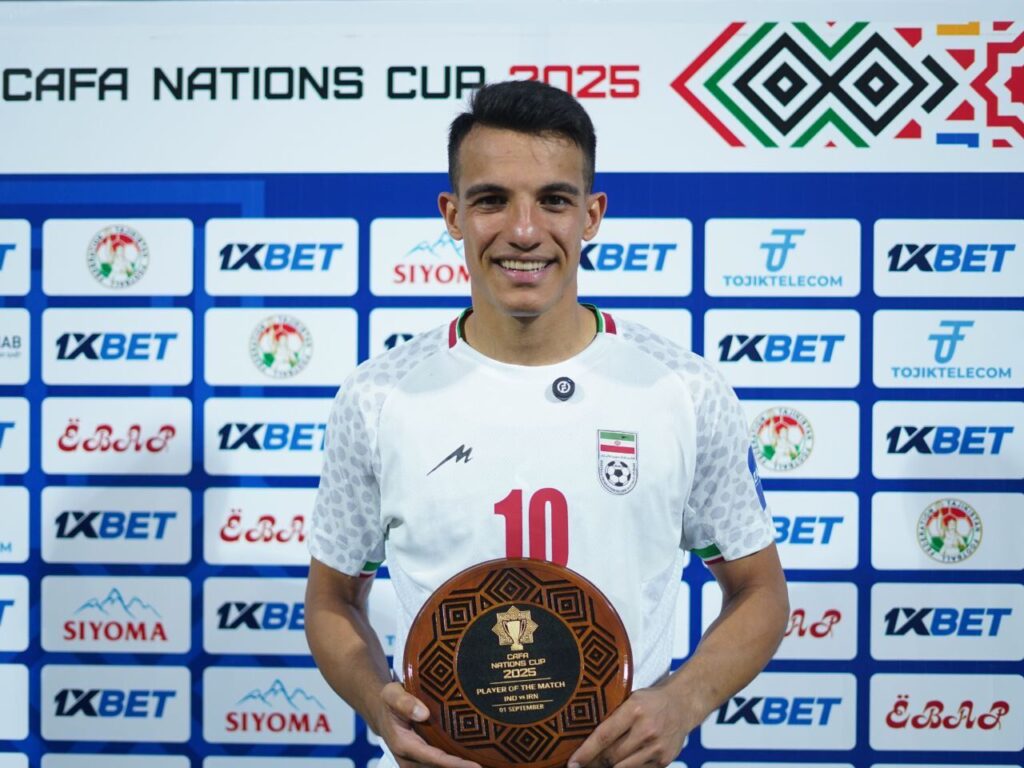
Hosseinzadeh MVP of Iran vs. India match.

Amirhossein Hosseinzadeh, Team Melli and Tractor centar forward, was selected by the CAFA Nations Cup 2025 organizing committee as the Most Valuable Player (MVP) for the match against India.

Hosseinzadeh scored Iran’s opener. It was the second goal of the tournament for the Tractor forward.

Majid Aliyari won the MVP in the match against Afghanistan, where he scored a brace in his debut match.

Iran will play the final match of group B against host Tajikistan on Thursday.

Victory for Team Melli against North Korea

Tehran:
the-afc.com

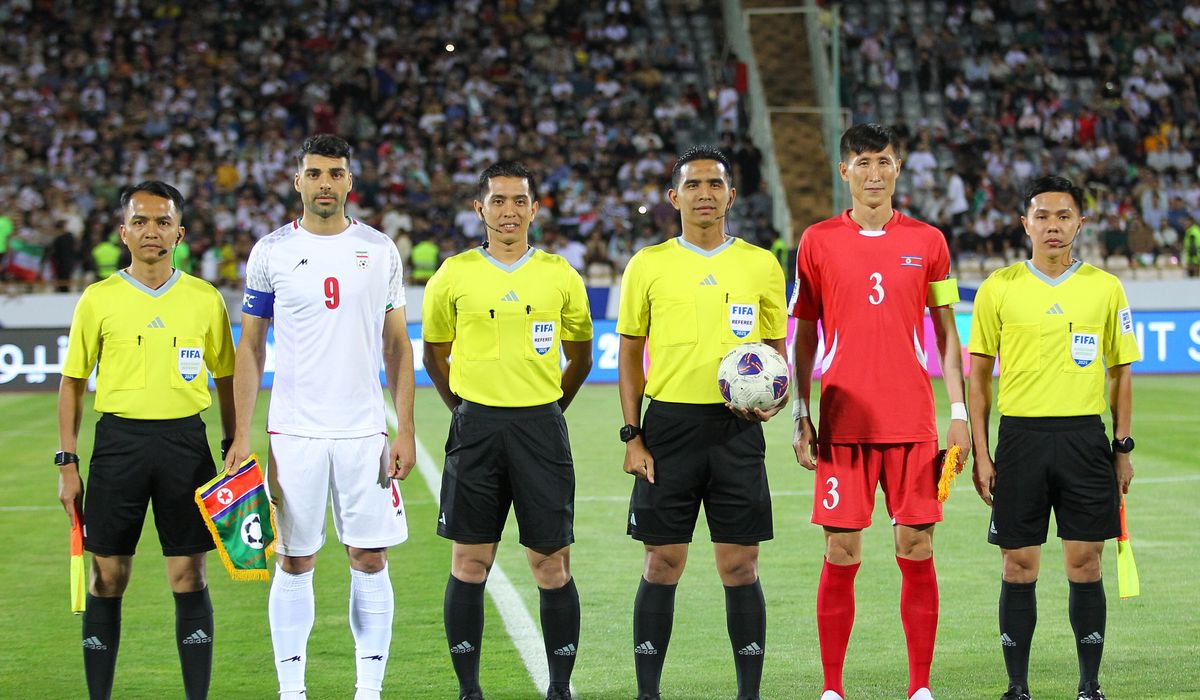
Late goals from Mehdi Mohebi, Mehdi Taremi and Amirhossein Hosseinzadeh earned Iran a 3-0 win over 10-man DPR Korea at the Azadi Stadium on Tuesday to seal top spot in Group A of the AFC Asian Qualifiers™ – Road to 26.

The visitors frustrated Amir Ghalenoi’s side until Kye Tam was sent off for a foul on Omid Noorafkan with 24 minutes remaining and the Iranians took advantage, with Mohebi putting his side ahead in the 74th minute and Taremi adding the second three minutes later.

Hosseinzadeh completed the scoring three minutes into injury time with a composed finish on the run.

Victory confirmed the Iranians, who secured their qualification for the FIFA World Cup in March, as the winners of Group A ahead Uzbekistan while DPR Korea finished rooted to the bottom of the standings at the completion of the third phase of the AFC Asian Qualifiers.

image content

Iranian captain Taremi had presented the DPR Korea defence with a constant threat throughout the opening exchanges, the Inter Milan forward forcing goalkeeper Kang Ju Hyok into a pair of early saves.

His first attempt came in the ninth minute as he unleashed a low drive from 20 yards out that Kang did well to keep out with a dive to his right.

Kang was on hand two minutes later to deny Arya Yousefi’s attempt from the corner of the penalty area while Taremi was frustrated at much closer range, the striker seeing his attempt to side foot an effort from seven yards out blocked by the goalkeeper.

image content

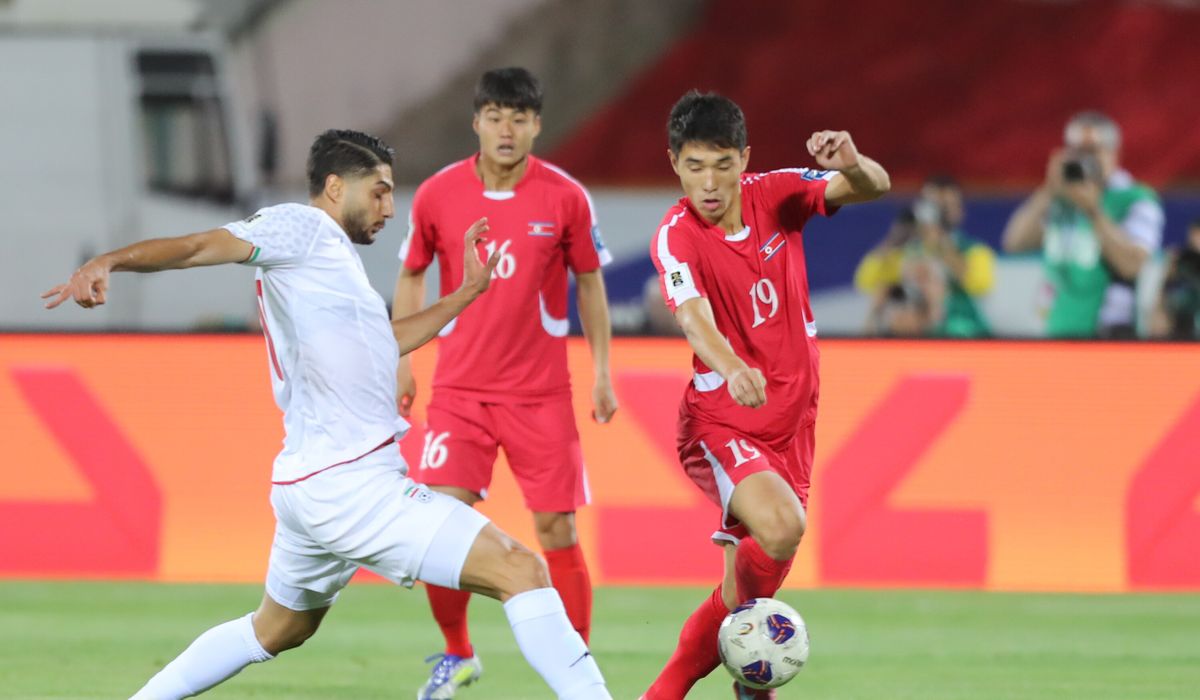
The Iranian pressure continued with Mohebi powering a left-foot drive towards goal from outside the area, but the shot just drifted wide.

After weathering that initial period of dominance from the home side, DPR Korea started to impose themselves on proceedings. Ra Myong Song’s first-time effort was blocked by Saeid Ezatolahi in the 26th minute as Sin Yong Nam’s side finally threatened.

However, the home side should have taken the lead seven minutes before the break. Mohebi was released behind the defence before feeding the ball through to unmarked Shahriyar Moghanloo, but the substitute somehow dragged his shot wide of the target.

Group A: IR Iran v DPR Korea

Having been second-best for much of the first half, DPR Korea almost went in front on the hour mark with Iranian goalkeeper Seyed Hossein Hosseini forced to tip Ri Il Son’g s shot from distance over the bar.

But Kye Tam’s reckless challenge on Noorafkan with 24 minutes remaining saw referee Muhammad Nasaruddin dismiss the midfielder and, within eight minutes, IR Iran went in front.

image content

Noorafkan’s centre from the left skipped through the penalty area towards the unmarked Mohebi, and he slotted past Kang.

Taremi then doubled the lead with a downward header from eight yards out from Mohebi’s clipped cross from the right and Hosseinzadeh put the seal on the win when he raced onto Taremi’s pass to slot beyond Kang.

Hosseinzadeh, a complicated file for Charleroi

Source: https://seo-bestlink.com/

For several days or even weeks, the name of Amirhossein Hosseinzadeh has been coming up regularly as a potential recruit in Charleroi. For the management, it is not, at first sight, an absolute priority for this summer transfer window, but they believe a lot in him and would see him as a reinforcement for the future. The attacking midfielder (21) of Esteghlal FC, defending champion, is considered one of the greatest talents in the country and is already international. His market value has seriously increased in recent months and is approaching one million euros.

Charleroi, via the Iranian connections of Mehdi Bayat, is seduced by the player even if he knows that it will take time for him to adapt. According to our information, Hosseinzadeh considers himself ready to join Europe. Perhaps not as an immediate starter, of course, but above all with the aim of continuing his development.

But then, what is stuck in the transaction? First, several clubs are interested in his services. But above all, according to the Iranian press, Hosseinzadeh is mired in a politico-sports quarrel. Indeed, the player had, it is said in Iran, an agreement with Ahmed Madadi, the former president of the Iranian club, to be able to join Europe in the event of an offer set at 250,000 dollars. Except that Esteghlal, an institution very close to the power of Tehran, has changed president. And that the latter, Mostafa Ajorlou, does not intend to release his nugget for such a sum when he could get three or four times more.

Could the player free himself from his release clause? Will Charleroi succeed in settling this thorny issue? A few days ago, Hosseinzadeh gave the beginning of an answer: “I hope something good will happen. To the Esteghlal club and to me.” In short, the file could still last.

.