Tag: 2026 FIFA World Cup

Internal Strife Threatens Iran’s World Cup Hopes


As the 2026 World Cup approaches, with just five months until the tournament kicks off, the Iranian national football team finds itself grappling not only with technical deficiencies but with a deeply concerning lack of unity—a stark contrast to the harmonious picture painted by head coach Amir Ghalenoei.

Despite repeated warnings from experts about persistent performance and management issues, Football Federation head Mehdi Taj has opted for stability, deciding to retain Ghalenoei. This move signals a clear departure from the federation’s previous approach, which saw the sudden dismissal of a successful Dragan Skocic, who led the team to qualification just before the final of the competition in Qatar in the 2022 World Cup. The message is clear: change is off the agenda, and Ghalenoei will remain at the helm regardless of the team’s precarious state.

The coach has consistently lauded the squad’s exceptional unity over the past three years. Recent events, however, reveal a troubling reality. Growing evidence suggests Ghalenoei may be papering over significant rifts within the Team Melli camp, with claims of solidarity appearing to exist only on paper.

A Public Feud Between Defensive Pillars

The simmering tensions erupted into public view following the Persepolis-Tractor match. Key defenders Shoja Khalilzadeh and Mohammad Hossein Kanaanizadegan, once close enough to call each other “brother”, have engaged in a bitter, public exchange of verbal abuses over minor on-field incidents. This discord is not isolated; similar altercations occurred during the match against Mes Rafsanjan. The rift has grown so severe that videos of the two players “unfollowing” each other on social media have circulated online, fanning flames among supporters and poisoning the team atmosphere.

Beyond the Pitch: Players in the Political Fray

The issue extends beyond a personal feud. These experienced players have entangled themselves in the federation’s political battles, notably the ongoing dispute between businessman Mohammad Reza Zenozi and Mehdi Taj. Instead of focusing on defensive coordination, they have each seemingly aligned with opposing factions, a glaring misstep that highlights a severe lack of managerial control and player discretion.

Their conduct is, unfortunately, characteristic. Both Khalilzadeh and Kanaanizadegan have histories of controversy, abusive, and unprofessional behavior, marked by petulance and unpredictability. At the national team level, Ghalenoei has proven to be a poor disciplinarian, a fact underscored after the Uzbekistan match when star forward Mehdi Taremi bluntly walked away from the coach who was attempting to speak with him. This culture of impunity is pervasive, with disciplinary committees at both club and federation levels often acting as mere formalities rather than enforcing regulations strictly.

A Dire Warning with the World Cup Looming

Drawn into a challenging Group G alongside Belgium, Egypt, and New Zealand, Iran faces an uphill battle. The internal disputes, managerial indecisiveness, and the divisive behavior of key players present a serious threat to the team’s World Cup campaign.

Retaining Ghalenoei without addressing these foundational issues—particularly the breakdown of locker room discipline and the dangerous blurring of lines between playing and political roles—risks catastrophic consequences. It threatens not only Iran’s performance on the world’s biggest stage but also the credibility and honor of Iranian football itself.

World Cup 2026 Draw: Iran’s Golden Opportunity in a Tantalizing Group G


The path for Iran’s historic quest to reach the knockout stages of a FIFA World Cup for the first time since 1978 has been revealed. Drawn into Group G for the 2026 tournament alongside Belgium, Egypt, and New Zealand, Team Melli finds itself in a promising, yet delicately balanced, constellation.

On paper, this is arguably the most favorable draw Iran could have hoped for from Pot 3. Avoiding global powerhouses and continental giants, the group presents a clear hierarchy and a defined target: second place.

The Hierarchical Favorite: A Belgian Juggernaut

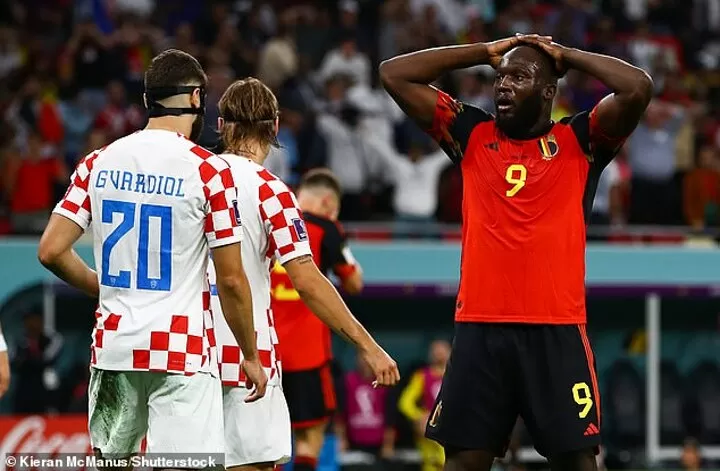
At the summit sits Belgium, the undeniable frontrunner. A nation brimming with elite talent, they represent Iran’s most formidable challenge. Stars like the creative force of Leandro Trossard (Arsenal), the electrifying Jérémy Doku (Manchester City), and the prolific Romelu Lukaku (Napoli) form an attack capable of breaching any defense.

For Iran, this matchup is a dual threat. Not only is it a first-ever meeting at any level, posing tactical unknowns, but it also starkly highlights Team Melli’s most significant vulnerability: a historically inconsistent and vulnerable defensive line. Containing Belgium will require peak organization, discipline, and likely a game plan built on resilient defending and exploiting rare counter-attacking opportunities. A point against the Belgians would be a monumental result; the primary objective will be to keep the goal difference intact.

The Decisive Duel: Iran vs. Egypt for Progression

The pivotal battle in Group G will almost certainly be the clash between Iran and Egypt. This is the match that will likely determine which nation advances alongside Belgium. The Pharaohs, record seven-time African champions, present a fascinating paradox.

While they have experienced a slide in consistency under new manager Hossam Hassan, they possess the ultimate wildcard: Mohamed Salah (Liverpool). Alongside the rising talent of Omar Marmoush (Manchester City), Egypt boasts individual brilliance that can single-handedly decide matches. Iran’s task is clear: neutralize these threats. The midfield battle will be crucial, requiring Iran to control the tempo and deny service to Egypt’s star forwards. A draw here would be a setback; victory would place Iran’s destiny firmly in its own hands.

The Presumed Must-Win: Navigating New Zealand

Completing the group is New Zealand. While the All Whites are a physically robust and organized side, they represent a matchup where anything less than three points would severely damage Iran’s progression hopes. Iran’s historical advantage (undefeated in previous meetings) and New Zealand’s lack of week-in, week-out high-level competition in the OFC confederation are tangible factors in Team Melli’s favor.

However, underestimating New Zealand would be a grave mistake. Their athleticism and set-piece prowess demand utmost respect. This match is where Iran must demonstrate the clinical edge and tactical maturity that has sometimes been lacking in past World Cups.

The Road Ahead: Beyond the Paper Advantage

Labeling this a “golden opportunity” is accurate, but the real work begins now. To transform this favorable draw into history, Team Melli must address deep-seated challenges in the coming months:

  • Tactical Cohesion: Coach Ghalenoei must devise a flexible system—one that can withstand Belgian pressure, wrestle control from Egypt, and break down a stubborn New Zealand.
  • Defensive Solidity: Fixing the frail defense is non-negotiable. This requires identifying a stable backline and cultivating an understanding that can survive 90 minutes against the world’s best.
  • Mental Fortitude: The weight of 48 years of knockout-stage absence is heavy. The team must cultivate a winning mentality, replacing fear with belief in high-stakes moments.
  • Administrative Stability: Off-field harmony and unwavering support from the football federation are essential to provide the team with an optimal environment to prepare.

Conclusion: Group G is a gift of chance, but advancement will be earned through preparation, precision, and passion. The dream is alive and well. For the first time in generations, the path for Iran to make World Cup history is not just a hope—it’s a clear and achievable mission.


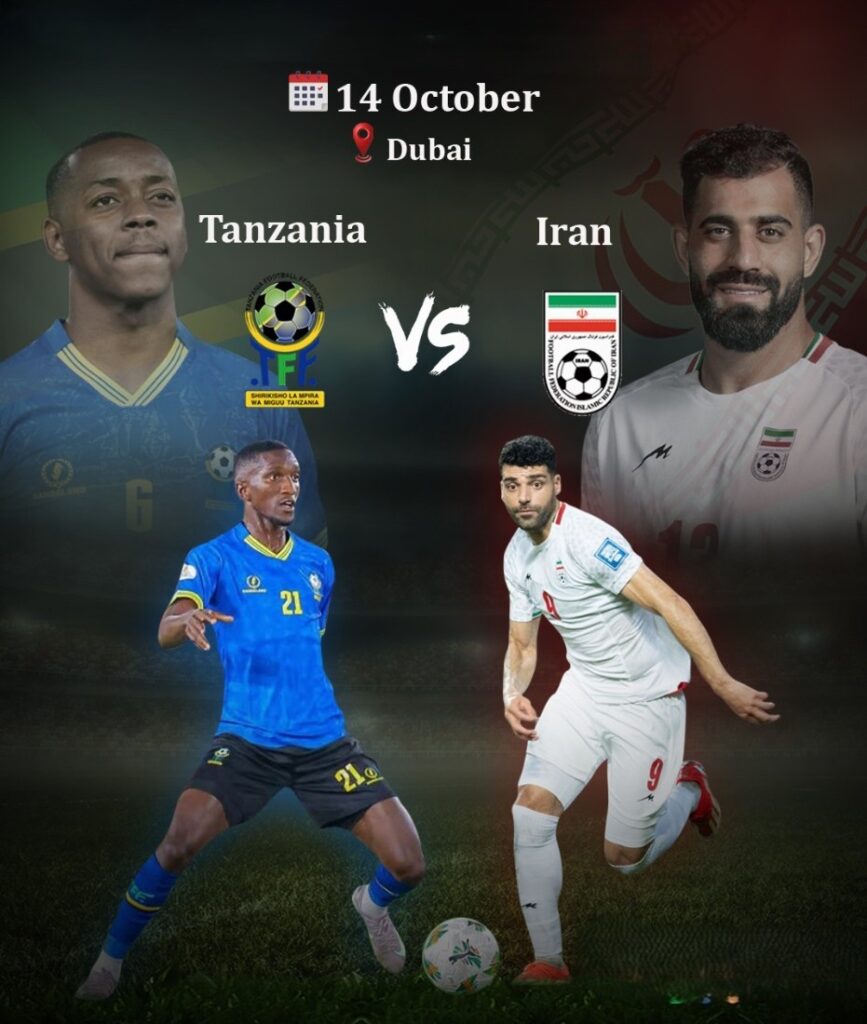
Tanzania Set for Crucial Dubai Friendly Against World Cup-Bound Iran

DAR ES SALAAM – The Tanzania national football team, the Taifa Stars, have departed for Dubai ahead of a high-profile international friendly against Iran on October 14, 2025. The match, scheduled on the official FIFA international calendar, presents a critical challenge for the East African side as they look to rebuild after a disappointing end to their 2026 World Cup qualifying campaign.

The fixture pits a Tanzanian team in a phase of renewal against an Iranian squad already preparing for the global stage, having secured qualification for the 2026 FIFA World Cup.

A Vital Test for Rebuilding

Speaking before the team’s departure, head coach Hemed “Morocco” Seleman described the friendly as a “vital test” for his side. He emphasized its importance in rebuilding squad confidence and improving overall performance after a string of disappointing results.

“It is true that we have not done well in our recent World Cup qualifying matches,” said Morocco, referencing losses to Niger and Zambia. “But that cannot discourage us. We must look ahead, especially with the AFCON 2027 tournament on the horizon. This match will help us assess our squad, raise our standards, and start preparing early.”

The Taifa Stars’ hopes of advancing to the World Cup play-offs were dashed after failing to win their last three qualifying games, a 1-1 draw with Congo Brazzaville followed by 1-0 defeats to both Niger and Zambia. These results leave Tanzania third in their qualifying group.

Despite the setback, Coach Morocco remains optimistic, viewing the game against Iran as a potential turning point. He stressed the need for tactical discipline and mental resilience, noting that the match will provide his technical bench a valuable opportunity to evaluate new players and strengthen team chemistry.

A Unifying Fixture for the Diaspora

Beyond the tactical implications, the friendly has generated significant excitement, particularly within the East African community in the UAE. For many expatriates, the game is more than a fixture; it is a celebration of football culture, unity, and a chance to rally behind their national heroes.

The match is expected to be a vibrant display of support, strengthening sporting ties between Africa and Asia and showcasing football’s power to unite nations. While the exact venue and kick-off time are yet to be officially confirmed, anticipation is steadily building for the Tuesday clash.

Iran: A Formidable Opponent Coming Off a Tight Loss

Tanzania will face a formidable Iranian team that is using this friendly window as crucial preparation for the 2026 World Cup. Iran comes into the match on the back of a tightly contested 2-1 loss to Russia in Volgograd.

A Review of Iran’s Last Game: Russia 2-1 Iran
In a hard-fought encounter against a strong Russian side, Iran demonstrated their characteristic organization and resilience. Despite ultimately falling to a 2-1 defeat, the match was a valuable exercise for Team Melli. They held their own for large periods against a physically imposing opponent, showing flashes of the cohesive, counter-attacking football that earned them World Cup qualification. The narrow scoreline, away from home, against a European powerhouse (albeit one currently suspended from FIFA and UEFA competitions), underscores Iran’s quality and the scale of the challenge awaiting the Taifa Stars. This performance indicates that Iran will be a sharp and battle-tested opponent, eager to refine their tactics in Dubai.

Match Details

  • Who: Iran vs. Tanzania
  • When: October 14, 2025
  • Where: Dubai, United Arab Emirates
  • Significance: For Iran, it’s vital preparation for the 2026 World Cup. For Tanzania, it’s a key building block for their AFCON 2027 preparations and a chance to restore confidence.