Category: News

Malaysia’s withdrawal from Cafa Nations Cup disrupts tournament plans


The Central Asian Football Association (CAFA) has expressed strong disapproval over the Football Association of Malaysia’s (FAM) last-minute decision to pull out of next month’s CAFA Nations Cup, disrupting well-advanced tournament preparations.

In a strongly worded statement, CAFA clarified that Malaysia’s participation in the August 29–September 8 tournament in Tajikistan had been confirmed long in advance, with FAM fully aware of the schedule from the outset. “Those dates have never been changed from the beginning,” CAFA emphasized, dismissing FAM’s justification for withdrawal as unconvincing.

While FAM cited concerns over player availability—since the tournament slightly overlaps with non-FIFA windows—CAFA pointed out that the competition allows flexible squad registration, enabling teams to call up players on a match-by-match basis. “This system was designed to maximize participation, even allowing key players to join later if initially withheld by clubs,” the statement read.

FAM, however, claimed that the adjusted dates—which now fall partly outside the FIFA window—created “significant challenges” for assembling a full-strength squad, particularly with Malaysia’s overseas-based players in Spain, Argentina, Colombia, and Japan.

A Questionable Reversal of Commitment

Malaysia’s sudden withdrawal raises serious questions about FAM’s professionalism and foresight. The draw had already placed Harimau Malaya in Group B alongside Tajikistan, Iran, and Afghanistan, with head coach Peter Cklamovski initially expressing enthusiasm about facing strong opponents like Iran.

Yet, just weeks before the tournament, FAM and Cklamovski performed an abrupt about-face, citing logistical and player-release issues that should have been foreseeable from the start. If player availability was truly a dealbreaker, why commit to the tournament in the first place? Either FAM failed to properly assess the calendar constraints—demonstrating poor planning—or it is using the FIFA window as a convenient excuse for deeper internal shortcomings.

Cklamovski’s remarks further strain credibility. After previously welcoming the challenge, he now claims that assembling foreign-based players was “not realistic,” blaming travel, recovery time, and budget constraints. Yet, other participating nations—many with players also based abroad—have managed to adapt.

A Pattern of Unreliability?

Malaysia’s late exit not only disrupts the competition but also damages its own reputation. CAFA had structured the tournament expecting Malaysia’s presence, and its withdrawal forces unnecessary adjustments. This is not the first time FAM has backed out of commitments—raising concerns over whether it takes international football obligations seriously.

While FAM frames its decision as protecting player welfare, the timing suggests a lack of due diligence. If the FIFA calendar was indeed the primary concern, why wait until after the draw to withdraw? The move reeks of indecisiveness or, worse, a federation that fails to honor its commitments.

Ultimately, Malaysia’s absence may not diminish the tournament’s quality—but it certainly highlights FAM’s unreliability. If Malaysian football aspires to greater regional and global relevance, such erratic behavior must be addressed. Last-minute withdrawals harm not only organizers but also the nation’s standing in the football community.

Mehdi Ghayedi signs for Al-Nasr Dubai


Mehdi Ghayedi Rejects Abu Dhabi Offer, Joins Al-Nasr Dubai

According to Emirates Sport, Iranian forward player Mehdi Ghayedi has turned down an offer from an Abu Dhabi-based club in favor of a move to Dubai’s Al-Nasr SC. The 25-year-old winger, coming off an outstanding season with Ittihad Kalba, has reportedly signed a three-year deal with Al-Nasr, a decision described by Emirati media as “unexpected.”

Initially, Ghayedi was expected to extend his stay at Ittihad Kalba or return to his parent club, Shabab Al-Ahli, following his impressive performances last season. However, Emirates Sport revealed that the Iranian international opted for Al-Nasr after rejecting a proposal from an Abu Dhabi side just two days prior. The Emirates Al-Khalij newspaper also confirmed the transfer, highlighting its surprising nature.

Ghayedi originally joined Shabab Al-Ahli on a five-year contract but spent only half a season with the club before being loaned to Ittihad Kalba for the past two campaigns. His prolific form at Kalba, where he showcased his goal-scoring ability and attacking flair, drew interest from multiple clubs. However, with Shabab Al-Ahli overloaded in his position, Ghayedi was reportedly unwilling to risk limited playing time. Meanwhile, Ittihad Kalba was unable to meet the financial demands for a permanent transfer, paving the way for his move to Al-Nasr.

This transfer marks a new chapter for Ghayedi as he looks to build on his strong form in the UAE Pro League.


‘It’s offensive’: voices from Iran as fans face 2026 World Cup travel ban


The Guardian
London.

After Donald Trump banned Iranians from entering the US, one of the co-hosts, there are different views on what should be done

“It’s offensive for any football fan to be prevented from participating in the World Cup, not just Iranians,” Ali Rezaei of Tehran’s Borna news agency says. In March, the national team became the second to qualify for the 2026 World Cup that will be hosted by Canada, Mexico and the United States. In June, Donald Trump authorised the dropping of bombs on Iran and hit the country with a travel ban. As things stand, while the national team will be able to enter the US next summer, fans – and perhaps media – will not.

Residents of Tehran and other cities may have had enough to deal with of late, but still, being barred from entry stings, even if Iranians have long found it difficult to get into the US. “If the US government has issues with the Iranian regime for any reason, it should not result in discrimination against Iranian citizens,” Behnam Jafarzadeh, a writer for the leading sports site Varzesh3, says. “If someone hasn’t committed any illegal activity, why should they be punished? It’s not just about the World Cup – the policy needs to change in general.”

What can Iran do? “Boycotting the World Cup is not a solution,” Siavash Pakdaman, a Tehran-based fan, says. “Refusing to play on US soil would be a dangerous precedent – any host country could start excluding teams it has issues with. Just as the Iranian delegation can and should be present at the United Nations in the US, the Iranian team should also play on American soil if the draw requires it – without relocation.”

There is a feeling that staying away would not make much difference anyway. “It would only deprive the national team of the opportunity to participate in a major tournament and would ultimately hurt Iran more,” Jafarzadeh says. “It might even be welcomed by some American officials. It could make headlines briefly, but once the tournament starts, it will be forgotten and will have achieved nothing.”

Questions have been asked – including in Iran, whose supreme leader, Ayatollah Ali Khamenei, has long banned competing against Israeli athletes – about what the international reaction would have been if Qatar had banned citizens from certain nations from attending the 2022 World Cup.

“If the USA makes it difficult for football fans to attend, then changing the host country is necessary,” Rezaei says. “Doing so would harm the USA’s reputation, not the World Cup’s. If strict entry rules remain, we should focus on protecting football. This is supposed to be a celebration of sport.”

Jafarzadeh is not confident that the competition could be taken away from the busiest of the three hosts. “It is not a challenge Fifa and [its president Gianni] Infantino would want to take on.” Perhaps there is another way. “Fifa should use all of its influence to push for a suspension of this policy at least during the World Cup.”

Fifa may find it easier to place Iran in Canada or Mexico and hope that Iran don’t make it to the latter stages, when there would have to be a game in the US. “Playing in Mexico or Canada is not a real solution – it just ignores the actual problem,” Rezaei says.

Many expect it to happen anyway. “Canada has a large Iranian immigrant population, although some of them are opponents of the Iranian regime and the national team can’t count on their support,” Jafarzadeh says. “Mexico is probably a more attractive and less controversial destination for the team.”

That is another question. The Iranian-American community is more than a million strong yet many of these headed west before, or in response to, the Islamic Revolution of 1979.

“It seems that many Iranians who oppose the government consider the national team to be a representation of the regime – which I believe is wrong,” Pakdaman says. “And since a larger number of these opponents live in the US, the team may face pressure from the audience during the matches. Of course, I hope my analysis is wrong.”

Jafarzadeh, who went to the World Cups in Russia and Qatar and would love to go to the United States, says: “Some see the team as one that represents the regime, and this sentiment is even stronger among Iranians living abroad. Of course, the war with Israel has stirred feelings of patriotism among many Iranians, but I’m not sure if this will translate into support for the national team. We’ll have to wait and see how things unfold in the coming months.”

That there is time is perhaps a small reason for optimism that things could change. Iran is one of 19 countries subject to a full or partial US entry ban. Several of the others retain hope of qualifying for the first 48-team World Cup, including Sudan, Sierra Leone, Venezuela and Haiti.

“Considering that there is almost a year left until the 2026 World Cup, there is a possibility that the situation may stabilise,” says Isa Azimi, a columnist and translator, regarding Iran’s situation, though he is not confident. “Despite claims of separating politics from football, Fifa has shown that it is not particularly independent when facing major political powers.”

Especially when Infantino appears to prize his close relationship with President Trump. “If Fifa considers itself a global body independent of governments, it must stand up to such laws and not allow politics to contaminate the world of sports,” Pakdaman says. “Of course, we all know that, unfortunately, such contamination exists – especially when one side of the issue is a superpower that answers to no one. It is Fifa’s duty to treat all member countries equally, but will that actually happen?”


Team Melli Begins CAFA Nations Cup 2024 Campaign Against Afghanistan

Dushanbe, Tajikistan – The CAFA Nations Cup 2024 is set to kick off on August 29, with Iran’s Team Melli beginning their title defense against Afghanistan in Dushanbe. Host nation Tajikistan will also start their campaign on the same day, facing Malaysia, the sole East Asian representative in the tournament.

Group Stage Fixtures & Key Matches

  • August 29:
  • Iran vs Afghanistan
  • Tajikistan vs Malaysia
  • September 1:
  • Iran vs Malaysia
  • Afghanistan vs Tajikistan
  • September 4 (Final Group Matches):
  • Tajikistan vs Iran (a potential group decider)
  • Afghanistan vs Malaysia

All matches in Group B will be held at Dushanbe’s Central Republican Stadium, while Group A (featuring Uzbekistan, Kyrgyz Republic, Turkmenistan, and Oman) will take place in Tashkent, Uzbekistan.

Tournament Format & Road to the Final

Only the group winners will advance to the final, scheduled for September 8 in Tashkent. The two runners-up will compete for third place in Dushanbe on the same day.

Team Melli’s Dominance & Expectations

As the defending champions of the CAFA Nations Cup, Iran enters the tournament as the favorite. Having won the inaugural edition in 2023, Team Melli will aim to maintain their regional supremacy under coach Amir Ghalenoei. Key players like Mehdi Taremi and Sardar Azmoun are expected to lead the charge.

Meanwhile, Tajikistan, fresh from their impressive 2023 AFC Asian Cup performance, will look to leverage home advantage. Malaysia, invited as a guest team, could be a dark horse, while Afghanistan seeks to make an impact under new management.

Group A Preview: Uzbekistan Favored to Progress

In Tashkent, hosts Uzbekistan are strong contenders, with the Kyrgyz Republic and Oman posing tough challenges. Turkmenistan will aim to spring a surprise in a competitive group. This group is the stronger of the two with a chance of an upset.

CAFA regional has two representatives in the next year FIFA World Cup in Iran and Uzbekistan.

With only one team from each group advancing, every match will be crucial. Football fans across Central Asia can expect an exciting tournament filled with high-stakes clashes.


Team Melli Head Coach Amir Ghalenoei stated:

“Our goal is clear—to defend our title. We respect all opponents, but we are here to win. The players are motivated, and we’ve prepared thoroughly for this challenge.”

Tajikistan’s Head coach, Petar Šegrt emphasized:

“Playing at home is an advantage, but also a responsibility. We want to make our fans proud and prove we belong among Central Asia’s best.”

Afghanistan, under new management, aims to make an impact. Coach Ashley Westwood remarked:

“We’re building something new, and this tournament is a great platform. The players are eager to show their potential.”
Malaysia Head Coach, Peter Cklamovski, described the CAFA Nations Cup 2025 as an important step in the Malaysian national squad’s journey towards building a more competitive team.
The Nations Cup is an exciting tournament, and it’s an important step in our journey as a national team. We have been waiting for the draw for some time, and we’ve obviously had plan A and B

He also described the match against Ira as a great opportunity to assess the true level of the Malaysian National Team.
They (Iran) are going to the World Cup. It is a massive challenge for us, a massive opportunity for us. We will use it as a way to benchmark ourselves against the best. A test of our football against them, we will take our football to them as hard as we can.”


Iran vs. Chile friendly called off.

The Iran-Chile match was canceled despite the Chilean side having an initial agreement.

“Paylo Millod,” the president of the Chilean Football Federation, announced the cancellation of the international friendly match between the Chilean national team and Team Melli in September, due to the recent hostilities between Israel and Iran.

Apparently, the contract was written in such a way that a final agreement was needed regarding ticket sales, advertising around the field, and the venue of the game. Contrary to the claims made, there is no news of payment or receipt of compensation at this stage, and both parties had the right to withdraw from the memorandum of understanding.

The international department of the Iranian Football Federation is following up on the matter to inform the Chilean side of any assurances regarding the conditions in the region and Iran. They also plan to select another match, which will probably be another South American country, for the friendly match in parallel. It is likely that the Iranian national team will participate in two other quadrennial tournaments after the CAFA nATIONS cUP 2025 tournament and the friendly matches with Russia, in order to prepare itself for the 2026 FIFA World Cup.

CAFA Nations Cup to be held in August to September 2025

The second bi-annual CAFA Nations Cup 2025 will be hosted by Uzbekistan and Tajikistan starting from August 29th until September 8th.

According to the official statement of the CAFA press service, in 2025 football fans will witness another continental tournament – the “CAFA Nations Cup-2025”. Not only Central Asian countries, but also new guest national teams will participate in this prestigious tournament. It has been officially confirmed that the national teams of Uzbekistan, Iran, Kyrgyzstan, Tajikistan, Afghanistan, and Turkmenistan, as well as invited teams Malaysia and Oman, will take part.

Such a wide format of the tournament is being held for the first time, making it even more interesting. The participation of invited Malaysia and Oman, who are serious opponents in their regions, will undoubtedly increase the level of competition. There will be special attention paid to how these teams perform on the CAFA field.

The draw ceremony will be held on July 3 in the capital of Tajikistan – Dushanbe. According to the unique format of the tournament, participants will be divided into two groups: all matches of Group “A” will take place in Uzbekistan, and Group “B” matches will be held in Tajikistan. This will give football fans in both countries the opportunity to experience the live tournament atmosphere.

The tournament is set to start on August 29. Exciting matches will continue until September 8, and the continent’s best team will be determined in the final. Through this tournament, the potential and development of Central Asian football will once again be showcased.

Every match in the CAFA Nations Cup-2025 is a new intrigue, new talent, and a new dream of the championship. Fans are ready to witness history. From the very first matches, all eyes will be on these stadiums!

Taremi stuck in Tehran, left out from Inter squad for Clubs World Cup.

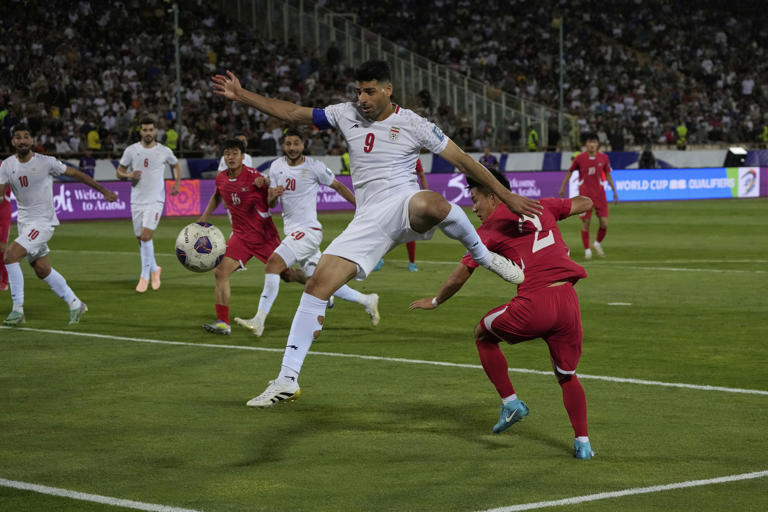
Iran's Mehdi Taremi shoots the ball during the 2026 World Cup Asian qualifier group A soccer match between Iran and North Korea, at Azadi Stadium in Tehran, Iran, Tuesday, June 10, 2025. (AP Photo/Vahid Salemi)

Iran’s Mehdi Taremi shoots the ball during the 2026 World Cup Asian qualifier group A soccer match between Iran and North Korea, at Azadi Stadium in Tehran, Iran, Tuesday, June 10, 2025. (AP Photo/Vahid Salemi)

MILAN (AP) — Inter Milan forward Mehdi Taremi will not be able to join his teammates at the Club World Cup in the United States as he is stuck in Tehran amid the escalating conflict between Iran and Israel.Iran's Mehdi Taremi, left, attempts a shot on North Korea's goal during their Asian qualifier group A soccer match for the 2026 World Cup, Tuesday, June 10, 2025, at Azadi Stadium in Tehran, Iran. (AP Photo/Vahid Salemi)

Iran’s Mehdi Taremi, left, attempts a shot on North Korea’s goal during their Asian qualifier group A soccer match for the 2026 World Cup, Tuesday, June 10, 2025, at Azadi Stadium in Tehran, Iran. (AP Photo/Vahid Salemi)

Flights from all Iranian airports have been grounded following an exchange of military strikes between Iran and Israel over the last two days.

That meant the Iran international was unable to take his scheduled flight on Saturday to join his Inter teammates in Los Angeles.

Taremi will miss Inter’s opening match against Monterrey on Wednesday and Italian media reports the 32-year-old will not feature in the other matches either regardless of whether Iranian airspace reopens.Inter Milan's Mehdi Taremi and Inter Milan's Hakan Calhanoglu pause during a training session ahead of the Champions League final soccer match between Paris Saint-Germain and Inter Milan at the Allianz Arena in Munich, Germany, Friday, May 30, 2025. (AP Photo/Matthias Schrader)

Inter Milan’s Mehdi Taremi and Inter Milan’s Hakan Calhanoglu pause during a training session ahead of the Champions League final soccer match between Paris Saint-Germain and Inter Milan at the Allianz Arena in Munich, Germany, Friday, May 30, 2025. (AP Photo/Matthias Schrader)

Taremi joined Inter from Porto last year.

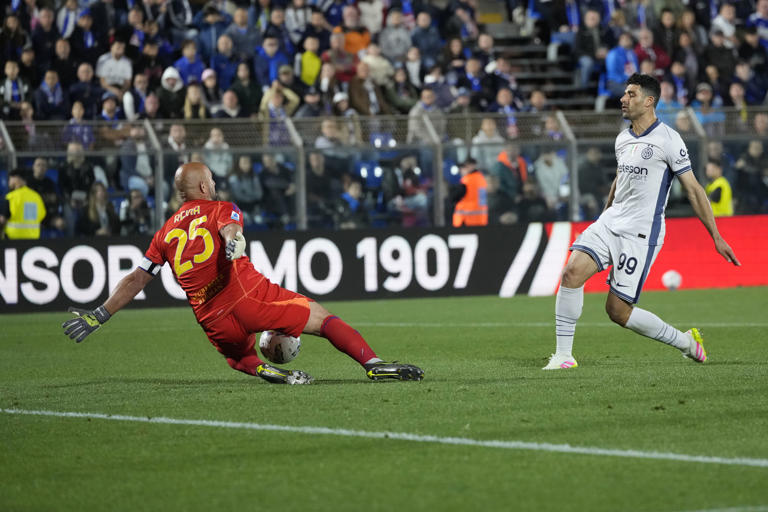
___Como's goalkeeper Pepe Reina, left, saves a shot by Inter Milan's Mehdi Taremi during the Serie A soccer match between Como and Inter Milan at the Sinigaglia stadium in Como, Italy, Friday, May 23, 2025. (AP Photo/Luca Bruno)

Como’s goalkeeper Pepe Reina, left, saves a shot by Inter Milan’s Mehdi Taremi during the Serie A soccer match between Como and Inter Milan at the Sinigaglia stadium in Como, Italy, Friday, May 23, 2025. (AP Photo/Luca Bruno)

A Blooper for the Ages: Moghanlou’s Shocking Miss Against North Korea

One of the most embarrassing moments in Iranian football history unfolded during Team Melli’s match against North Korea at Azadi Stadium on Tuesday. Despite having already secured qualification in March, two rounds before the end of the campaign, Iran’s performance, or lack thereof, left fans in disbelief.

A Disjointed First Half

With several key players absent, head coach Amir Ghalenoei’s experimental lineup failed to click from the start. Ghalenoei, already a frequent target of social media criticism for his questionable substitutions, outdid himself this time with a decision that will be remembered for all the wrong reasons.

When young debutant Razzaghinia went down with an injury in the first half, Ghalenoei turned to his bench for a replacement. In a baffling move, he brought on Shahriar Moghanlou, a decision that defied logic and raised serious questions about player selection criteria.

The Miss That Summed It All Up

The defining moment came in the 37th minute. Mohammad Mohebi, after skillfully bypassing North Korea’s defense, found himself one-on-one with the goalkeeper. Rather than taking the shot himself, he unselfishly squared the ball to Moghanlou, who had an open net in front of him.

What followed was pure farce.

Moghanlou, with no pressure and the entire goal at his mercy, somehow managed to miss completely, sending his effort wide in a manner more befitting a Sunday league match than an international fixture. The miss wasn’t just a personal embarrassment for the striker; it was a damning indictment of Team Melli’s deeper issues.

Cronyism or Incompetence?

Moghanlou’s inclusion in the squad had already raised eyebrows. The Ittihad Kalba forward, an average player at best in the UAE Pro League, is neither a regular starter for his club nor in particularly good form. His decline over the season made his call-up, and subsequent playing time, all the more perplexing.

Meanwhile, Iran’s domestic league top scorers, Amir Hossein Hosseinzadeh and Ali Alipour, watched from the bench. Both had started in the previous match against Qatar but were far from their best, though the entire team struggled after Milad Mohammadi’s reckless red card left them a man down.

Yet, even accounting for those circumstances, Ghalenoei’s insistence on fielding Moghanlou over proven goalscorers speaks volumes. The incident has reignited accusations of favoritism in Team Melli’s selection process, with critics arguing that meritocracy has taken a backseat to personal preferences.

A Moment That Symbolizes Bigger Problems

Moghanlou’s miss wasn’t just a blooper, it was a microcosm of Iranian football’s recurring struggles: questionable managerial decisions, inconsistent player selection, and a lack of accountability. Unless these systemic issues are addressed, such embarrassments will continue to haunt Team Melli on the international stage.

Victory for Team Melli against North Korea

Tehran:
the-afc.com

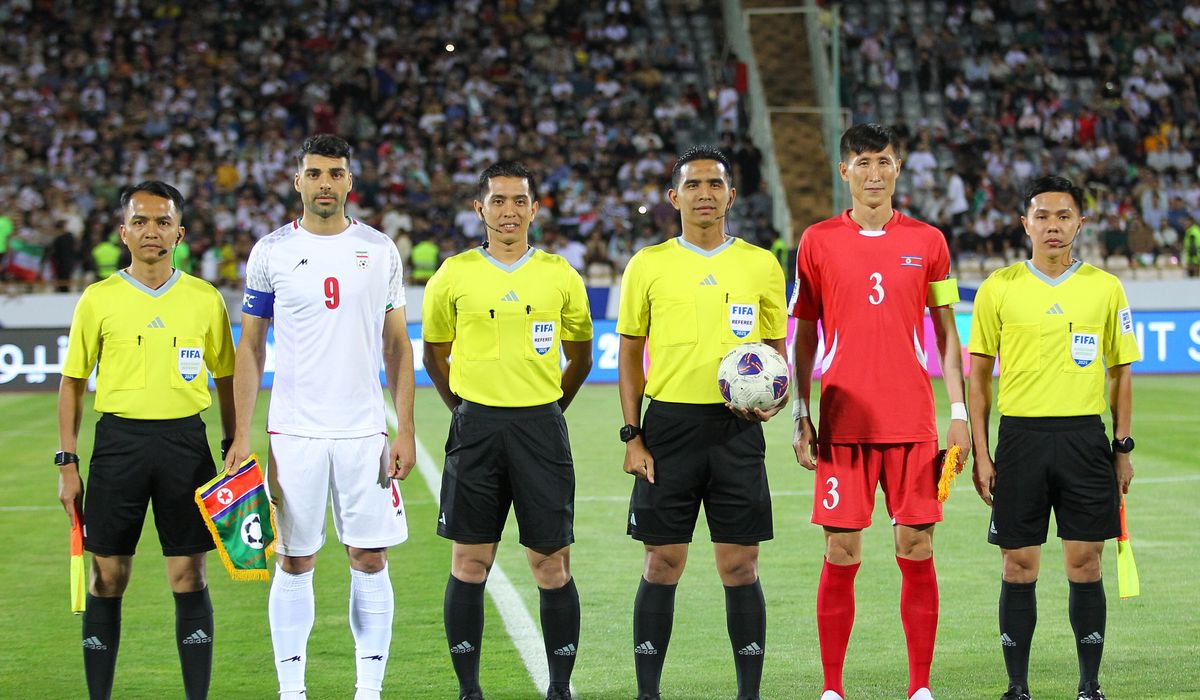
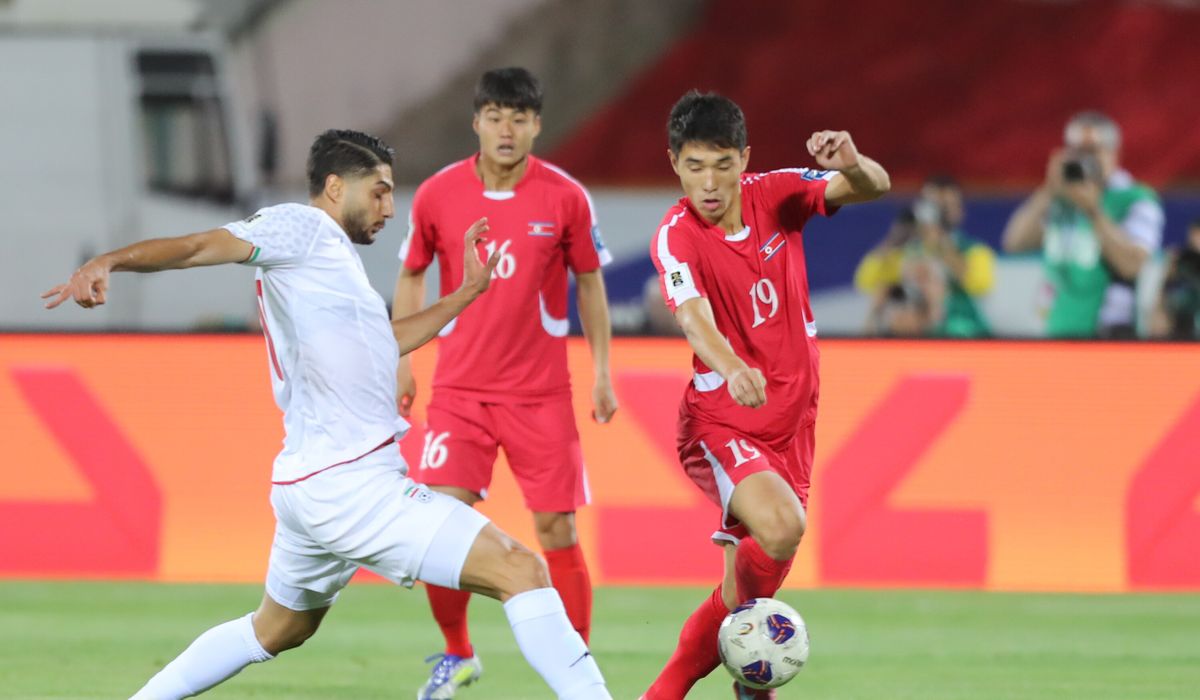
Late goals from Mehdi Mohebi, Mehdi Taremi and Amirhossein Hosseinzadeh earned Iran a 3-0 win over 10-man DPR Korea at the Azadi Stadium on Tuesday to seal top spot in Group A of the AFC Asian Qualifiers™ – Road to 26.

The visitors frustrated Amir Ghalenoi’s side until Kye Tam was sent off for a foul on Omid Noorafkan with 24 minutes remaining and the Iranians took advantage, with Mohebi putting his side ahead in the 74th minute and Taremi adding the second three minutes later.

Hosseinzadeh completed the scoring three minutes into injury time with a composed finish on the run.

Victory confirmed the Iranians, who secured their qualification for the FIFA World Cup in March, as the winners of Group A ahead Uzbekistan while DPR Korea finished rooted to the bottom of the standings at the completion of the third phase of the AFC Asian Qualifiers.

image content

Iranian captain Taremi had presented the DPR Korea defence with a constant threat throughout the opening exchanges, the Inter Milan forward forcing goalkeeper Kang Ju Hyok into a pair of early saves.

His first attempt came in the ninth minute as he unleashed a low drive from 20 yards out that Kang did well to keep out with a dive to his right.

Kang was on hand two minutes later to deny Arya Yousefi’s attempt from the corner of the penalty area while Taremi was frustrated at much closer range, the striker seeing his attempt to side foot an effort from seven yards out blocked by the goalkeeper.

image content

The Iranian pressure continued with Mohebi powering a left-foot drive towards goal from outside the area, but the shot just drifted wide.

After weathering that initial period of dominance from the home side, DPR Korea started to impose themselves on proceedings. Ra Myong Song’s first-time effort was blocked by Saeid Ezatolahi in the 26th minute as Sin Yong Nam’s side finally threatened.

However, the home side should have taken the lead seven minutes before the break. Mohebi was released behind the defence before feeding the ball through to unmarked Shahriyar Moghanloo, but the substitute somehow dragged his shot wide of the target.

Group A: IR Iran v DPR Korea

Having been second-best for much of the first half, DPR Korea almost went in front on the hour mark with Iranian goalkeeper Seyed Hossein Hosseini forced to tip Ri Il Son’g s shot from distance over the bar.

But Kye Tam’s reckless challenge on Noorafkan with 24 minutes remaining saw referee Muhammad Nasaruddin dismiss the midfielder and, within eight minutes, IR Iran went in front.

image content

Noorafkan’s centre from the left skipped through the penalty area towards the unmarked Mohebi, and he slotted past Kang.

Taremi then doubled the lead with a downward header from eight yards out from Mohebi’s clipped cross from the right and Hosseinzadeh put the seal on the win when he raced onto Taremi’s pass to slot beyond Kang.

Ghalenoei’s Missteps : A Failure in Selection and Strategy

Despite the excuses offered by Amir Ghalenoei to justify Iran’s defeat against Qatar, the evidence suggests he fell short in multiple areas, chief among them, player selection. Team Melli lost to the same Qatari side they had convincingly beaten 4-1 in their previous encounter. This time, however, Qatar was significantly weaker: fresh off a 3-1 loss to Kyrgyzstan and with their World Cup qualification hopes dashed, their morale was at rock bottom. The opportunity to exploit their vulnerability was clear, yet Iran failed miserably.

A combination of nostalgia, overconfidence, and questionable decision-making led Ghalenoei to field a lineup that, on paper, never looked capable of securing victory. Whether out of sentimentality (given his history with Al-Sadd) or misplaced faith in certain players, his choices backfired spectacularly. The result? A disjointed, uninspired performance riddled with amateurish errors and a glaring lack of tactical coherence.

A Predictable Outcome

The match followed a familiar script for those who have watched Ghalenoei’s Iran: rigid tactics, reliance on underperforming veterans, and a refusal to adapt. While Japan, Asia’s top-ranked team, experimented with nine new players in their loss to Australia, Ghalenoei stubbornly stuck with the same old faces and paid the price.

A coach resistant to criticism, Ghalenoei only seems to reconsider his approach after humiliating defeats. Yet, even then, his changes tend to be superficial rather than transformative. Many believe he will continue to favor aging, underperforming players unless forced by public pressure to make meaningful adjustments.

What Team Melli’s Lineup Should Be

Based on merit and current form, this is the starting XI Iran should field in upcoming matches against North Korea:

Starting XI:

  • GK: Seyed Hossein Hosseini
  • DEF: Sadegh Moharrami – Amin Hevbavi – Aref Aghasi – Omid Noorafkan
  • MID: Mehdi Hasheminejad – Saman Ghoddos – Roozbeh Cheshmi
  • ATT: Mehdi Taremi – Javad Hosseinnejad – Amir Hossein Hosseinzadeh

Players Who Should Be Dropped

  • Alipour & Moghanlou: Neither has shown the consistency or impact required at this level.
  • Khalilzadeh: Past his prime and prone to costly mistakes.
  • Saleh Hardani: While dangerous as an attacking full-back, his defensive frailties are too glaring to ignore.
  • Milad Mohammadi: His poor disciplinary record and declining form warrant exclusion. Simply pleading for forgiveness isn’t enough—Iran has plenty of alternatives who deserve a chance.

Time for Change

Ghalenoei must stop treating Team Melli as a retirement home for senior players. Iran has a wealth of emerging talent, but they need opportunities to prove themselves. If he continues down this path, the team’s stagnation will only deepen—and more humiliations will follow.