Tag: Tajikistan

Uzbekistan and Iran meet in the final of CAFA Nations Cup 2025

The national football teams of Iran and Uzbekistan will face each other in the final of the CAFA Nations Cup on Monday, September 7, at 6:00 PM local time at the Olympic Stadium in Tashkent. Both Iran and Uzbekistan entered the final with 7 points, finishing as the top teams in their respective groups and setting the stage for a highly anticipated clash.

Iran, the highest-ranked team in the region, will be looking to defend its title after winning the previous edition of the tournament. Uzbekistan, playing with the immense support of a home crowd, will be determined to claim the championship on their own soil and secure a historic victory against a regional powerhouse.
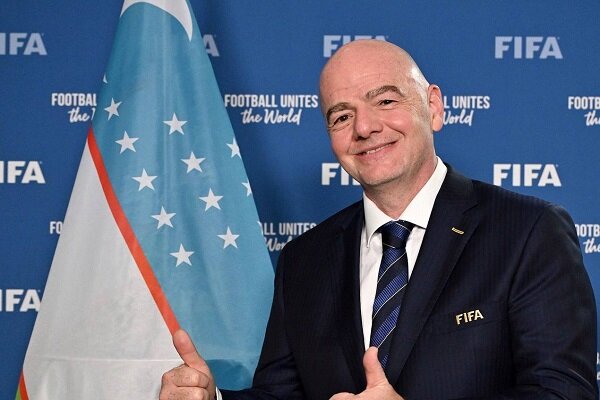
The match has garnered significant international attention, notably with the confirmed attendance of FIFA President Gianni Infantino. The Uzbekistan Football Federation announced that President Infantino will travel to Uzbekistan to review projects related to the further development of football in the country, visit the state-of-the-art National Football Center, and personally watch the final match of the CAFA Nations Cup 2025. His presence as a special guest underscores the growing importance of Central Asian football on the global stage.

This final is not just about regional supremacy but also serves as crucial preparation for both teams ahead of the upcoming joint FIFA World Cup 2026 qualification campaigns, adding an extra layer of significance to the encounter.
Iran defeated Afghanistan 3-1, India 3-0, and drew with Tajikistan 2-2 to reach the final.
Uzbekistan drew with Oman 1-1, defeated Turkmenistan 2-1, and Kyrgyzstan 4-0 to reach the final.
Team Melli Survives Tajikistan Scare to Book Place in CAFA Final

DUSHANBE – Iran’s national football team secured its place in the final of the 2025 CAFA Nations Cup, but not before surviving a monumental scare from a determined Tajikistan side in a thrilling 2-2 draw on Thursday evening. The result, which felt more like a defeat for the Iranians, was enough to see Team Melli top Group B and advance to the championship final match.

The match began according to script for Amir Ghalenoei’s side. Mohammad Mehdi Mohebi broke the deadlock in the first half, capitalizing on an uncharacteristic error by Rustam Yatimov in the Tajikistan goal, who failed to catch a cross and present Mohebi with the chance to put Iran ahead. After the break, his namesake, Mohammad Mohebi, doubled the lead, seemingly putting the game beyond the hosts and setting Iran on a comfortable path to the final.

However, the script was abruptly torn up as Tajikistan, fueled by immense pride and the roaring support of a passionate home crowd, launched a stunning comeback. Their first goal arrived under controversial circumstances. A goal-line scramble resulted in a VAR review, which awarded a goal despite Iranian goalkeeper Payam Niazmand appearing to have clawed the ball to safety. Television replays suggested the decision was fortuitous, handing the hosts a crucial lifeline.

There was nothing fortunate about the equalizer. In the 76th minute, Zoir Dzhuraboev produced a moment of pure quality, finding space between two Iranian defenders to unleash a powerful volley that flew past Niazmand, sending the Dushanbe stadium into a frenzy.

The final minutes were a nervy, frantic affair. Coach Ghalenoei, visibly anxious that a third Tajik goal would eliminate Iran from the tournament, made defensive substitutions, bringing on Hossein Kananizadegan to shore up a suddenly shaky backline and withdrawing Mohammad Mohebi. Tajikistan’s late flurry of attacks tested Iranian resolve, but Team Melli ultimately held on for the point they needed.

Tactical Takeaways and Performance Analysis

Ghalenoei continued his experimental approach, fielding a third different starting lineup in as many games. While this strategy achieved his objective of granting playing time to all squad members, it came at the cost of fluidity and understanding on the pitch.

The introduction of star forwards Mehdi Taremi and Alireza Jahanbakhsh in the second half initially paid dividends, with their experience contributing to Iran’s second goal and a period of controlled play. Yet, this proved to be a false dawn. The most glaring issue was Iran’s complete loss of control in midfield. Even with Saman Ghoddos playing the full 90 minutes, his influence was muted, and the unit failed to provide a platform for attack or a shield for the defense. Jahanbakhsh, operating in a creative role, was ineffective in supplying the forwards.

Despite the progression to the final, the performance raised significant concerns. The team displayed a worrying lack of game management, allowing initiative to slip away against determined opposition. Neither the new faces nor the established stars managed to deliver a convincing display, leaving Ghalenoei with much to ponder.

The Road Ahead

Iran will now face the winner of the other group, either Oman or Uzbekistan, in the final. While the objective of reaching the title match was achieved, this performance serves as a stark warning. If Team Melli is to lift the CAFA trophy, significant improvements in midfield solidity, defensive concentration, and overall tactical cohesion will be required. For now, it is very much back to the drawing board for Amir Ghalenoei.

Team Melli Faces Tajikistan in Pivotal CAFA Group Stage Clash


Iran’s national football team, Team Melli, is set to take on Tajikistan today, Thursday, September 4, at 7:00 PM local time in Dushanbe. This third and final Group B match of the 2025 CAFA Championship presents a fascinating clash that, while framed within a regional tournament, offers a serious test for Amir Ghalenoei’s rejuvenated squad and a clear measure of the footballing divergence between the two nations.

A Common Language, A Different Footballing Reality

A unique subplot to this encounter is the shared Persian language, which could facilitate on-pitch communication and create intriguing interpersonal moments. However, football is ultimately decided by quality and pedigree. Here, Iran holds a significant advantage, boasting a rich history of World Cup appearances and decades of dominance in Asian football—a stark contrast to Tajikistan’s emerging status.

Iran: Seeking Refinement Amidst Results

Fresh from convincing 3-1 and 3-0 victories over Afghanistan and India, a renewed sense of discipline and confidence surrounds Team Melli. While the results have been perfect, placing Iran atop the group, the performances revealed that a new superstar has yet to emerge and consistently attractive football remains a work in progress. A draw or win against the hosts will see Iran advance to the final in Uzbekistan as group winners.

Coach Ghalenoei has been candid, admitting that preparations for the tournament were less than ideal and that player fatigue is a concern. Consequently, this match serves as a critical benchmark for assessing how his young team adapts to the pressures of an international away game.

Tajikistan: Fueled by Passion and Home Support

For Tajikistan, motivation will far exceed the pressure of the result. Playing in front of a passionate home crowd in Dushanbe, they are well aware that defeating Iran is a tall order. However, a cohesive, energetic, and tactically disciplined performance would itself be a monumental achievement for their football. They will likely employ a compact defense and look to disrupt Iran’s rhythm through aggressive pressing and rapid counter-attacks.

Keys to the Match

For Iran, the path to victory hinges on controlling possession, exploiting the width of the pitch to stretch the Tajik defense, and relying on the sharpness of strikers like Aliyari and Alipour to convert chances. The midfield battle will be crucial; they must play intelligently to neutralize Tajikistan’s emotional intensity and establish their own tempo.

Tajikistan’s hope lies in a spirited, organized defensive effort and capitalizing on any lapse in Iranian concentration to create a moment of surprise that could electrify the home crowd.

Conclusion: An Opportunity to Assert Dominance

While football is always capable of producing surprises, the gulf in technical quality and experience makes Iran the clear favorite. For Amir Ghalenoei, this is more than a group stage fixture—it is an opportunity to demonstrate that his young Team Melli can not only win but also display the discipline and fighting spirit that wins the hearts of fans.

Tonight’s match is a meeting of neighbors, but on the pitch, the divide is as wide as their histories in Asian football. With one win and one loss, Tajikistan dreams of a historic upset to reach the final, ensuring the seats of Dushanbe’s Hesar Stadium will be packed and roaring long before the referee’s first whistle.

Head2Head

Match List

#Match DateMatch TypeOpponentScoreResult
11993-06-13OthersTajikistan1-0W
21998-12-10Asian GamesTajikistan5-0W
32000-11-28World Cup QualifierTajikistan2-0W
42012-11-06FriendlyTajikistan6-1W
52025-09-04CAFA Nations CupTajikistanNA

Match Summary

MPWDLGFGAGD
440014113

Goal Scorers

PlayerTotal Goals
Ali DAEI3
Abolghasim DEHNAVI2
Yaghoub KARIMI2
Mehdi HASHIMINASAB1
Karim BAGHERI1
Mohammad KHAKPOUR1
Ali MOUSAVI1
Ali Asghar MODIR ROUSTA1
Ahmad HASSANZADEH1
Alireza ABBASFARD1

Hosseinzadeh MVP of Iran vs. India match.

Amirhossein Hosseinzadeh, Team Melli and Tractor centar forward, was selected by the CAFA Nations Cup 2025 organizing committee as the Most Valuable Player (MVP) for the match against India.

Hosseinzadeh scored Iran’s opener. It was the second goal of the tournament for the Tractor forward.

Majid Aliyari won the MVP in the match against Afghanistan, where he scored a brace in his debut match.

Iran will play the final match of group B against host Tajikistan on Thursday.

Taremi Seals the Deal: Iran Overcomes Stubborn India to Secure Vital CAFA Victory


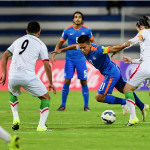
DUSHANBE, Tajikistan – Team Melli secured a commanding 3-0 victory over a resilient Indian side in their second Group B match of the 2025 CAFA Nations Cup at Hisar Stadium on Monday. However, the scoreline belied a tale of two halves, as Iran was frustrated for long periods before a flurry of late goals, including one from new Olympiacos signing Mehdi Taremi, sealed the crucial win.

After a goalless and often scruffy first half, the breakthrough finally came in the 59th minute through Amirhossein Hosseinzadeh. Iran then put the result beyond doubt with two goals in the final moments, courtesy of substitutes Ali Alipour (89′) and Mehdi Taremi (90+6′).

A Tale of Two Halves

Head coach Amir Ghalenoei rang the changes from Iran’s previous outing, fielding a new-look defensive pairing of Hossein Kanaani and Amin Hizbavi, while handing the captain’s armband for the first time to experienced right-back Ramin Rezaeian.

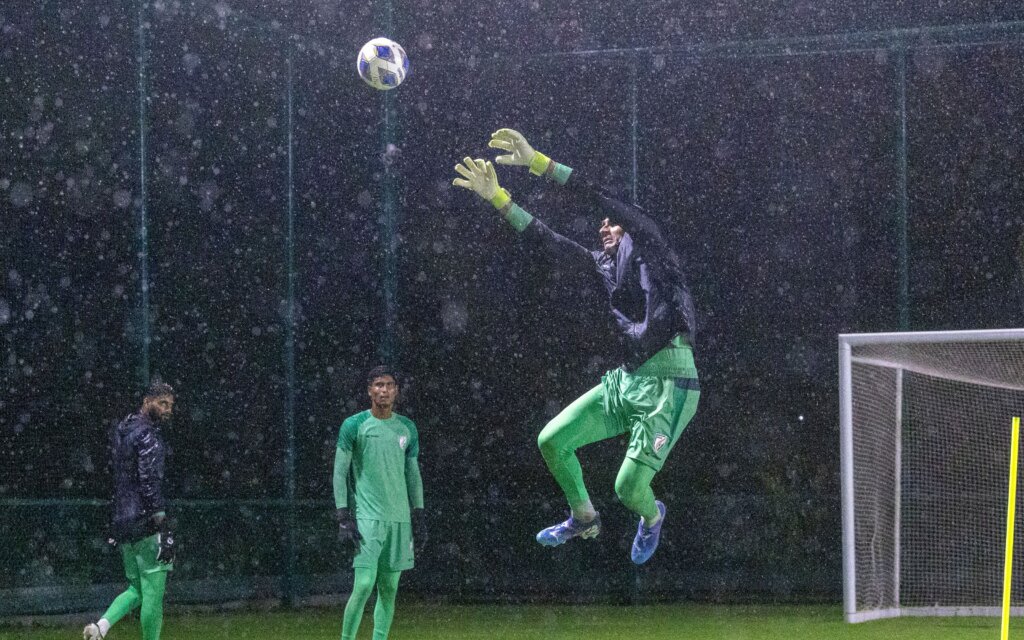
The first half was a story of Iranian dominance met with resolute Indian defending. The Blue Tigers, led by an inspirational performance from captain Sandesh Jhingan and goalkeeper Gurpreet Singh Sandhu, organized a formidable low block. While Iran controlled possession and probed for openings, their final pass and finishing were consistently lacking, allowing India to reach halftime with a clean sheet intact.

The second half saw a more energized and determined Iranian side emerge. The pressure intensified, and the deadlock was finally broken just before the hour mark. A cross from the right flank by Kanaizadegan, caused chaos in the Indian box; after a goalmouth scramble, Amirhossein Hosseinzadeh was quickest to react, poking the ball home from close range.

Super-Subs Make the Difference

Seeking to kill the game, Ghalenoei unleashed his bench, introducing a wave of quality including Alireza Jahanbakhsh, Mehdi Taremi, and Ali Alipour. The move paid immediate dividends as the fresh legs overwhelmed a tiring Indian defense.

With just a minute of regular time remaining, a mild shot from Taremi cannoned off the post, and Ali Alipour was perfectly positioned to tap in the rebound and double Iran’s lead.

The victory was capped off in style deep into stoppage time. Alireza Jahanbakhsh delivered an immaculate cross from the right flank that found Mehdi Taremi striding into the box. The newly-signed Olympiacos striker displayed his class with a composed, first-time finish past the advancing Sandhu, providing a fittingly high-quality end to the match.

The Road Ahead

The defeat severely dents India’s hopes of reaching the final. Their tournament fate now hinges on their final group match against Afghanistan, where a positive result could still see them advance to the third-place playoff.

For Iran, the win all but guarantees a place in the tournament final. They need only a draw against host nation Tajikistan on Thursday to finish top of Group B. While the three points will be welcomed, the performance—particularly in the first half—will give coach Ghalenoei pause for thought. The team’s ability to find a solution and the impact of its world-class substitutes ultimately proved decisive, papering over what was, for long stretches, another unconvincing display.

India faces a tough challange against Iran

IFF Media Team

NEW DELHI: The senior Indian men’s national team, after defeating hosts Tajikistan last week, are now winding up for the clash against Asian giants IR Iran, at the Hisor Central Stadium in Hisor, Tajikistan, which will kick off at 17:30 PM IST, on Monday, September 1, 2025. The match will be streamed live on FanCode.

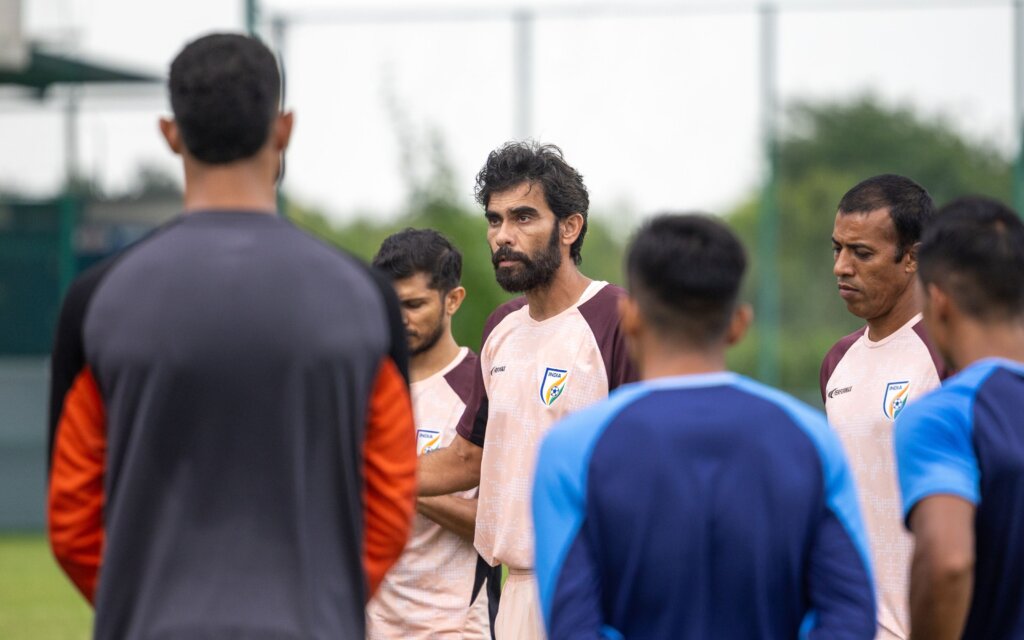
India head coach Khalid Jamil credited the victory against the hosts to the unity amongst the entire team. “The win was all down to the unity that the players showed on the pitch. They all worked in unison. Not only the players, but the entire staff – the technical, non-technical, and medical staff all worked together, and the unity within the team is visible,” Jamil said to the-aiff.com on the eve of the match.

India (133rd in the FIFA rankings) next face Iran (ranked 20th), a match that may very well be termed as a ‘David versus Goliath’ affair. The Indian head coach, however, is focused on getting the Blue Tigers up and ready for the match against the Asian giants.

“The win in the last game was a huge motivation for us, but the main thing right now is for us to be ready for the Iran game. We’ve had two days to recover, and now we need to ensure that everyone is fresh when we face Iran,” said Jamil.

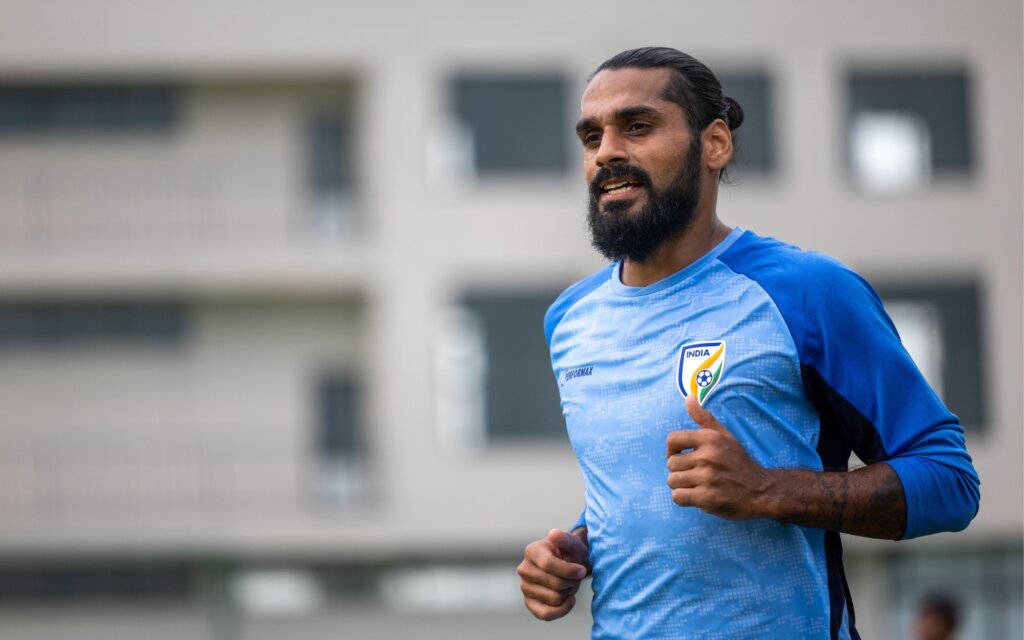
Defender Sandesh Jhingan, who scored the second goal in the 2-1 victory against Tajikistan and was named Player of the Match for his performance, stressed the importance of using the Tajikistan win to build momentum for the real objectives.

“Yes, we are happy that we got a win and that we have three points, but we must build on this win as a nation and as a team. We must continue to improve, because our main aim is to qualify for the AFC Asian Cup for the third consecutive time,” said Jhingan. “These games are important for us to prepare for the upcoming qualifiers (against Singapore).”

Iran have the march over India in the head-to-head record; the former having won four, while the Blue Tigers scored two victories against Team Melli, on the six occasions that the two sides have crossed swords. However, India’s last win against Iran came in 1959 in Ernakulam, when goals from Chuni Goswami, Yusuf Khan, and Tulsidas Balaram helped the hosts win 3-1.

India last faced Team Melli back in 2016 in the World Cup qualifiers, where the latter won 4-0 in Tehran. Of the current squad, only Jhingan, goalkeeper Gurpreet Singh Sandhu, and winger Udanta Singh were present in the team back in 2016.

“I think only the three of us (Jhingan, Sandhu, and Udanta) have played against them in this squad, so we know what kind of a challenge they will pose,” said Sandhu. And of course, they have only gotten better over the years, playing in the World Cup on a regular basis,” said Sandhu. “What we have learned playing against top opposition like Iran is that we have to make the most of our chances when they come by, and minimise our mistakes as much as we can, because such teams will punish any lapses.

“But the most important thing is to believe in the team and stay united at all times,” said Sandhu. “We must follow the plans laid out by the coach with all honesty. We must make sure that we make life difficult for them. We must show bravery and desire. Nothing is impossible in football – the Grimsby vs Manchester United (match) was an example of that.”

Iran’s Title Defense: Ghalenoei Bets on Experience for CAFA Nations Cup 2025


Head coach Amir Ghalenoei has named a seasoned 27-man squad for Iran’s upcoming CAFA Nations Cup 2025 title defense, opting for continuity and experience over a significant generational shift. The tournament will be held in Uzbekistan and Tajikistan from August 29th.

Despite the general perception of the CAFA region’s modest competitive level—with Uzbekistan being the clear exception—Ghalenoei has largely stuck with his established core. The squad is a blend of veteran internationals and a select few emerging talents from the Iranian Premier League, signaling a clear intent to retain the trophy won against Uzbekistan in the 2023 final.

The team’s preparations are hampered by significant absences. Key stars such as Sardar Azmoun, Mehdi Ghaedi, and Ali Gholizadeh are all sidelined due to injury, while first-choice goalkeeper Alireza Beiranvand is out through suspension. These omissions have undoubtedly diluted the squad’s overall strength.

Navigating the Group Stage

Team Melli’s campaign begins with a match against Afghanistan, a fixture they will be expected to win comfortably. The following games against India and hosts Tajikistan are anticipated to present progressively tougher challenges. However, the ultimate test is expected to be a potential final rematch against a strong Uzbek side.

Concerns Over Key Figures

The squad list reveals concerns regarding the fitness and form of its leadership. Captain Alireza Jahanbakhsh is currently without a club, having yet to secure a contract for the new European season. With transfer windows beginning to close, his match sharpness remains a major question mark.

Meanwhile, vice-captain and team star Mehdi Taremi finds himself in a difficult situation at Inter Milan. Despite his high-profile move, the striker has been relegated to train with the club’s U23 side and has been excluded from the senior squad as the Italian giants seek a buyer for him.

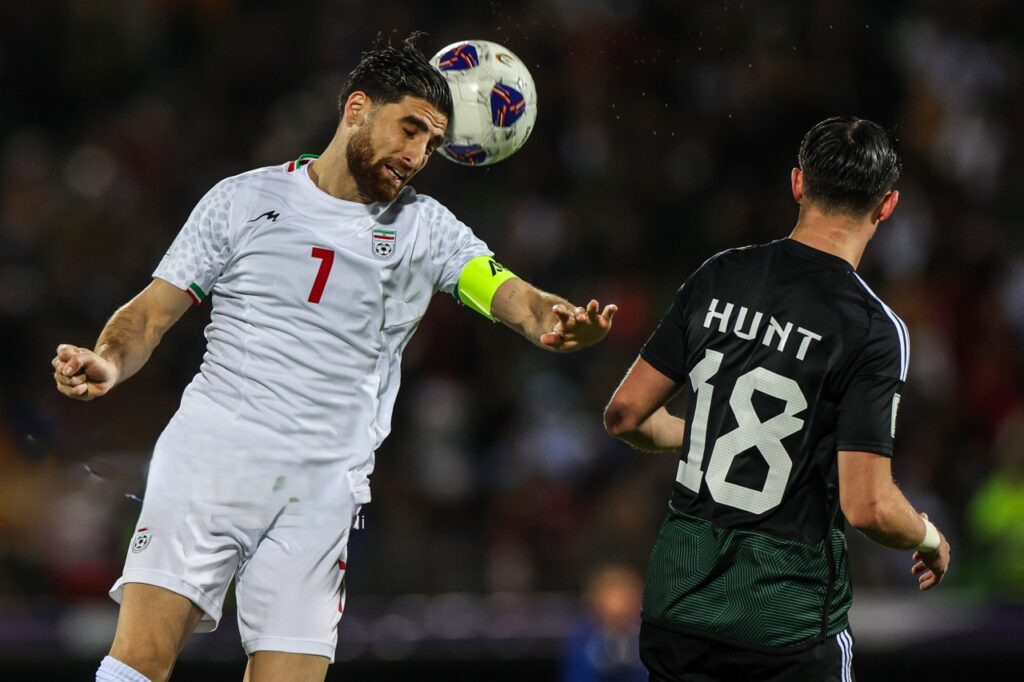
Alireza Jahanbaksh heading against Hunt of UAE

Squad Composition

The selection highlights the dominance of Iran’s domestic league, with the country’s top clubs providing the bulk of the players.

  • Sepahan: 6 players
  • Esteghlal: 5 players
  • Persepolis: 4 players
  • Tractor: 3 players
  • Other Clubs: The remainder of the squad is drawn from other domestic teams and includes three players from UAE’s Etihad Kalba.

The Full 27-Player Squad:


GOALKEEPERS:
1- Payam Niazmand – 30 years -(Persepolis),
2- Nima Mirzad – 28 years – (Mes Rafsanjan),
3- Seyed Hossein Hosseini – 33 years- (Sepahan)

Defenders:

4- Mohammad Hossein Kananizadegan – 31 years- (Persepolis),
5-Mohammad Naderi – 28 years – (Tractor),
6- Aref Aghasi – 28 years – (Esteghlal),
7-Ramin Rezaeian -35 years- (Esteghlal),
8- Ali Nemati -29 years- (Foolad),
9- Omid Noorafkan -28 years- (Sepahan),
10- Amin Hezbavi – 22 years- (Sepahan),
11- Aria Yousefi -23 years- (Sepahan),

Midfielders:

12- Mohammad Mohebi – 26 years- (Rostov, Russia),
13- Mehdi Hasheminejad – 24 years- (Tractor)
14- Saman Ghodoos -31 years- (Etihad Kalba UAE),
15- Mehdi Mohebi -25 years- (Etihad Kalba UAE),
16- Mohammad Khodabandelou -25 years- (Presepolis),
17- Rouzbeh Cheshmi -32 years- (Esteghlal),
18- Alireza Koushki -25 years- (Esteghlal),
19- Mohammad Ghorbani -23 years- (Al-Wahda, UAE),
20- Mehdi Tikdari Nejad – 29 years- (Sepahan),
21- Alireza Jahanbakhsh – 32 years- (No Club),

Forwards:

22-Mehdi Taremi -33 years- (Inter Milan, Italy),
23- Mehran Ahmadi – 27 years- (Esteghlal),
24- AmirHossein Hosseinzadeh – 24 years- (Tractor)
25- Ali Alipour -29 years- (Persepolis),
26- Shahriyar Moghanlou – 30 years- (Ittihad Kalba , UAE),
27- Majid Aliyari -29 years- (Sepahan)

Malaysia’s withdrawal from Cafa Nations Cup disrupts tournament plans


The Central Asian Football Association (CAFA) has expressed strong disapproval over the Football Association of Malaysia’s (FAM) last-minute decision to pull out of next month’s CAFA Nations Cup, disrupting well-advanced tournament preparations.

In a strongly worded statement, CAFA clarified that Malaysia’s participation in the August 29–September 8 tournament in Tajikistan had been confirmed long in advance, with FAM fully aware of the schedule from the outset. “Those dates have never been changed from the beginning,” CAFA emphasized, dismissing FAM’s justification for withdrawal as unconvincing.

While FAM cited concerns over player availability—since the tournament slightly overlaps with non-FIFA windows—CAFA pointed out that the competition allows flexible squad registration, enabling teams to call up players on a match-by-match basis. “This system was designed to maximize participation, even allowing key players to join later if initially withheld by clubs,” the statement read.

FAM, however, claimed that the adjusted dates—which now fall partly outside the FIFA window—created “significant challenges” for assembling a full-strength squad, particularly with Malaysia’s overseas-based players in Spain, Argentina, Colombia, and Japan.

A Questionable Reversal of Commitment

Malaysia’s sudden withdrawal raises serious questions about FAM’s professionalism and foresight. The draw had already placed Harimau Malaya in Group B alongside Tajikistan, Iran, and Afghanistan, with head coach Peter Cklamovski initially expressing enthusiasm about facing strong opponents like Iran.

Yet, just weeks before the tournament, FAM and Cklamovski performed an abrupt about-face, citing logistical and player-release issues that should have been foreseeable from the start. If player availability was truly a dealbreaker, why commit to the tournament in the first place? Either FAM failed to properly assess the calendar constraints—demonstrating poor planning—or it is using the FIFA window as a convenient excuse for deeper internal shortcomings.

Cklamovski’s remarks further strain credibility. After previously welcoming the challenge, he now claims that assembling foreign-based players was “not realistic,” blaming travel, recovery time, and budget constraints. Yet, other participating nations—many with players also based abroad—have managed to adapt.

A Pattern of Unreliability?

Malaysia’s late exit not only disrupts the competition but also damages its own reputation. CAFA had structured the tournament expecting Malaysia’s presence, and its withdrawal forces unnecessary adjustments. This is not the first time FAM has backed out of commitments—raising concerns over whether it takes international football obligations seriously.

While FAM frames its decision as protecting player welfare, the timing suggests a lack of due diligence. If the FIFA calendar was indeed the primary concern, why wait until after the draw to withdraw? The move reeks of indecisiveness or, worse, a federation that fails to honor its commitments.

Ultimately, Malaysia’s absence may not diminish the tournament’s quality—but it certainly highlights FAM’s unreliability. If Malaysian football aspires to greater regional and global relevance, such erratic behavior must be addressed. Last-minute withdrawals harm not only organizers but also the nation’s standing in the football community.

Team Melli Begins CAFA Nations Cup 2024 Campaign Against Afghanistan

Dushanbe, Tajikistan – The CAFA Nations Cup 2024 is set to kick off on August 29, with Iran’s Team Melli beginning their title defense against Afghanistan in Dushanbe. Host nation Tajikistan will also start their campaign on the same day, facing Malaysia, the sole East Asian representative in the tournament.

Group Stage Fixtures & Key Matches

  • August 29:
  • Iran vs Afghanistan
  • Tajikistan vs Malaysia
  • September 1:
  • Iran vs Malaysia
  • Afghanistan vs Tajikistan
  • September 4 (Final Group Matches):
  • Tajikistan vs Iran (a potential group decider)
  • Afghanistan vs Malaysia

All matches in Group B will be held at Dushanbe’s Central Republican Stadium, while Group A (featuring Uzbekistan, Kyrgyz Republic, Turkmenistan, and Oman) will take place in Tashkent, Uzbekistan.

Tournament Format & Road to the Final

Only the group winners will advance to the final, scheduled for September 8 in Tashkent. The two runners-up will compete for third place in Dushanbe on the same day.

Team Melli’s Dominance & Expectations

As the defending champions of the CAFA Nations Cup, Iran enters the tournament as the favorite. Having won the inaugural edition in 2023, Team Melli will aim to maintain their regional supremacy under coach Amir Ghalenoei. Key players like Mehdi Taremi and Sardar Azmoun are expected to lead the charge.

Meanwhile, Tajikistan, fresh from their impressive 2023 AFC Asian Cup performance, will look to leverage home advantage. Malaysia, invited as a guest team, could be a dark horse, while Afghanistan seeks to make an impact under new management.

Group A Preview: Uzbekistan Favored to Progress

In Tashkent, hosts Uzbekistan are strong contenders, with the Kyrgyz Republic and Oman posing tough challenges. Turkmenistan will aim to spring a surprise in a competitive group. This group is the stronger of the two with a chance of an upset.

CAFA regional has two representatives in the next year FIFA World Cup in Iran and Uzbekistan.

With only one team from each group advancing, every match will be crucial. Football fans across Central Asia can expect an exciting tournament filled with high-stakes clashes.


Team Melli Head Coach Amir Ghalenoei stated:

“Our goal is clear—to defend our title. We respect all opponents, but we are here to win. The players are motivated, and we’ve prepared thoroughly for this challenge.”

Tajikistan’s Head coach, Petar Šegrt emphasized:

“Playing at home is an advantage, but also a responsibility. We want to make our fans proud and prove we belong among Central Asia’s best.”

Afghanistan, under new management, aims to make an impact. Coach Ashley Westwood remarked:

“We’re building something new, and this tournament is a great platform. The players are eager to show their potential.”
Malaysia Head Coach, Peter Cklamovski, described the CAFA Nations Cup 2025 as an important step in the Malaysian national squad’s journey towards building a more competitive team.
The Nations Cup is an exciting tournament, and it’s an important step in our journey as a national team. We have been waiting for the draw for some time, and we’ve obviously had plan A and B

He also described the match against Ira as a great opportunity to assess the true level of the Malaysian National Team.
They (Iran) are going to the World Cup. It is a massive challenge for us, a massive opportunity for us. We will use it as a way to benchmark ourselves against the best. A test of our football against them, we will take our football to them as hard as we can.”


CAFA Nations Cup to be held in August to September 2025

The second bi-annual CAFA Nations Cup 2025 will be hosted by Uzbekistan and Tajikistan starting from August 29th until September 8th.

According to the official statement of the CAFA press service, in 2025 football fans will witness another continental tournament – the “CAFA Nations Cup-2025”. Not only Central Asian countries, but also new guest national teams will participate in this prestigious tournament. It has been officially confirmed that the national teams of Uzbekistan, Iran, Kyrgyzstan, Tajikistan, Afghanistan, and Turkmenistan, as well as invited teams Malaysia and Oman, will take part.

Such a wide format of the tournament is being held for the first time, making it even more interesting. The participation of invited Malaysia and Oman, who are serious opponents in their regions, will undoubtedly increase the level of competition. There will be special attention paid to how these teams perform on the CAFA field.

The draw ceremony will be held on July 3 in the capital of Tajikistan – Dushanbe. According to the unique format of the tournament, participants will be divided into two groups: all matches of Group “A” will take place in Uzbekistan, and Group “B” matches will be held in Tajikistan. This will give football fans in both countries the opportunity to experience the live tournament atmosphere.

The tournament is set to start on August 29. Exciting matches will continue until September 8, and the continent’s best team will be determined in the final. Through this tournament, the potential and development of Central Asian football will once again be showcased.

Every match in the CAFA Nations Cup-2025 is a new intrigue, new talent, and a new dream of the championship. Fans are ready to witness history. From the very first matches, all eyes will be on these stadiums!