Tag: Amir Ghalenoei

Iran’s Title Defense: Ghalenoei Bets on Experience for CAFA Nations Cup 2025


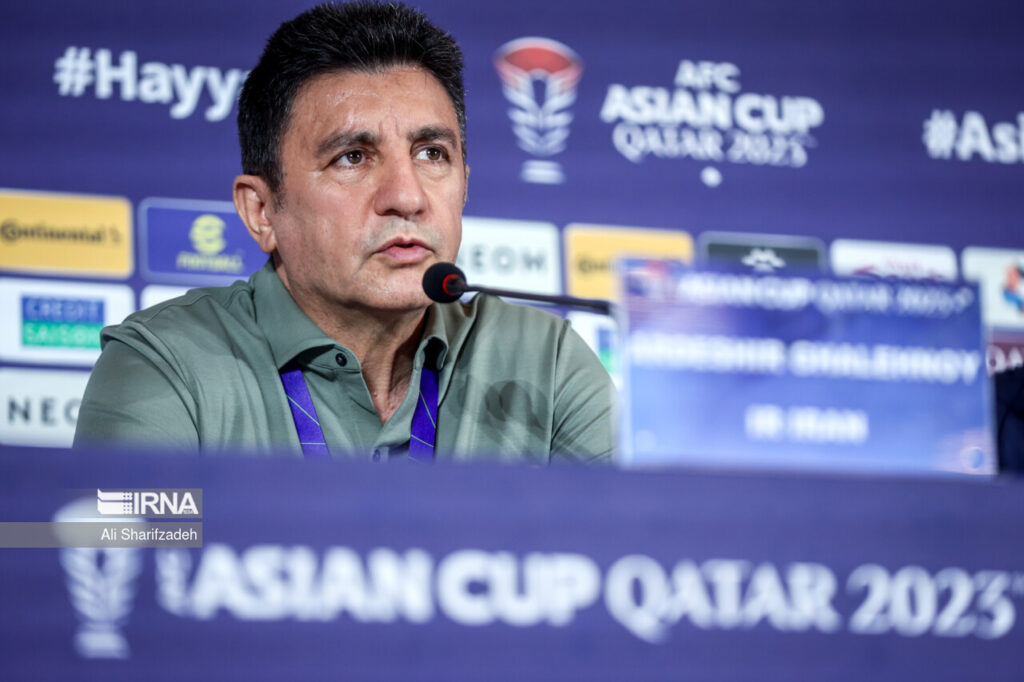
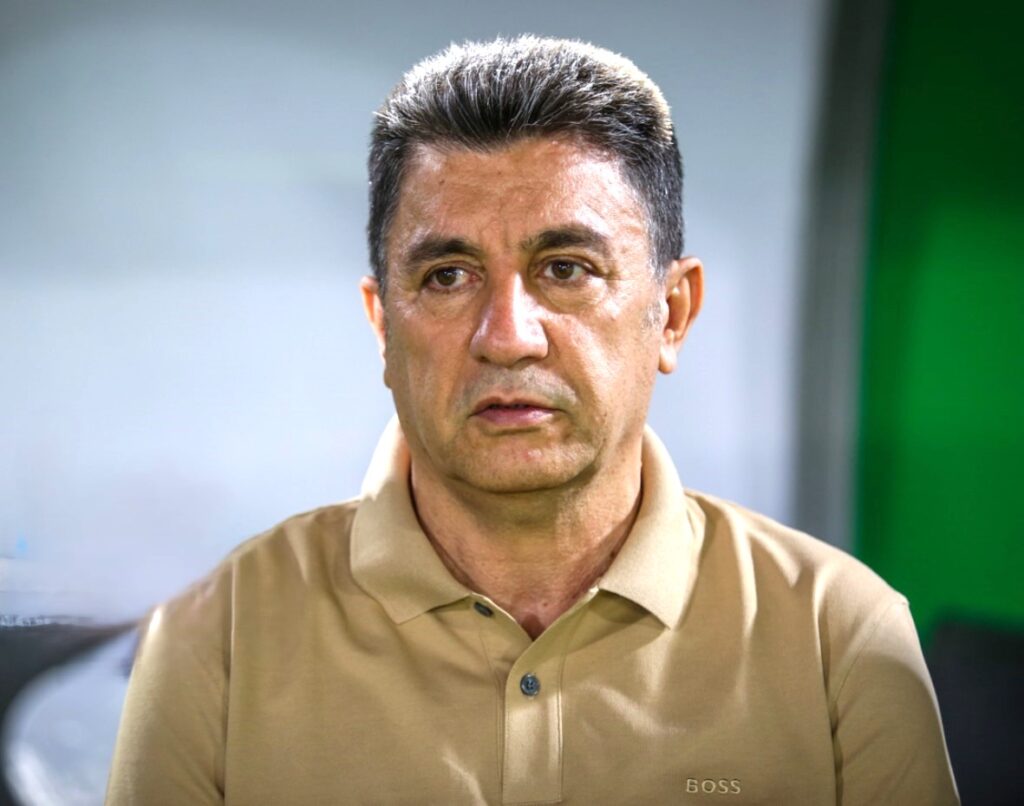
Head coach Amir Ghalenoei has named a seasoned 27-man squad for Iran’s upcoming CAFA Nations Cup 2025 title defense, opting for continuity and experience over a significant generational shift. The tournament will be held in Uzbekistan and Tajikistan from August 29th.

Despite the general perception of the CAFA region’s modest competitive level—with Uzbekistan being the clear exception—Ghalenoei has largely stuck with his established core. The squad is a blend of veteran internationals and a select few emerging talents from the Iranian Premier League, signaling a clear intent to retain the trophy won against Uzbekistan in the 2023 final.

The team’s preparations are hampered by significant absences. Key stars such as Sardar Azmoun, Mehdi Ghaedi, and Ali Gholizadeh are all sidelined due to injury, while first-choice goalkeeper Alireza Beiranvand is out through suspension. These omissions have undoubtedly diluted the squad’s overall strength.
Navigating the Group Stage

Team Melli’s campaign begins with a match against Afghanistan, a fixture they will be expected to win comfortably. The following games against India and hosts Tajikistan are anticipated to present progressively tougher challenges. However, the ultimate test is expected to be a potential final rematch against a strong Uzbek side.

Concerns Over Key Figures

The squad list reveals concerns regarding the fitness and form of its leadership. Captain Alireza Jahanbakhsh is currently without a club, having yet to secure a contract for the new European season. With transfer windows beginning to close, his match sharpness remains a major question mark.

Meanwhile, vice-captain and team star Mehdi Taremi finds himself in a difficult situation at Inter Milan. Despite his high-profile move, the striker has been relegated to train with the club’s U23 side and has been excluded from the senior squad as the Italian giants seek a buyer for him.
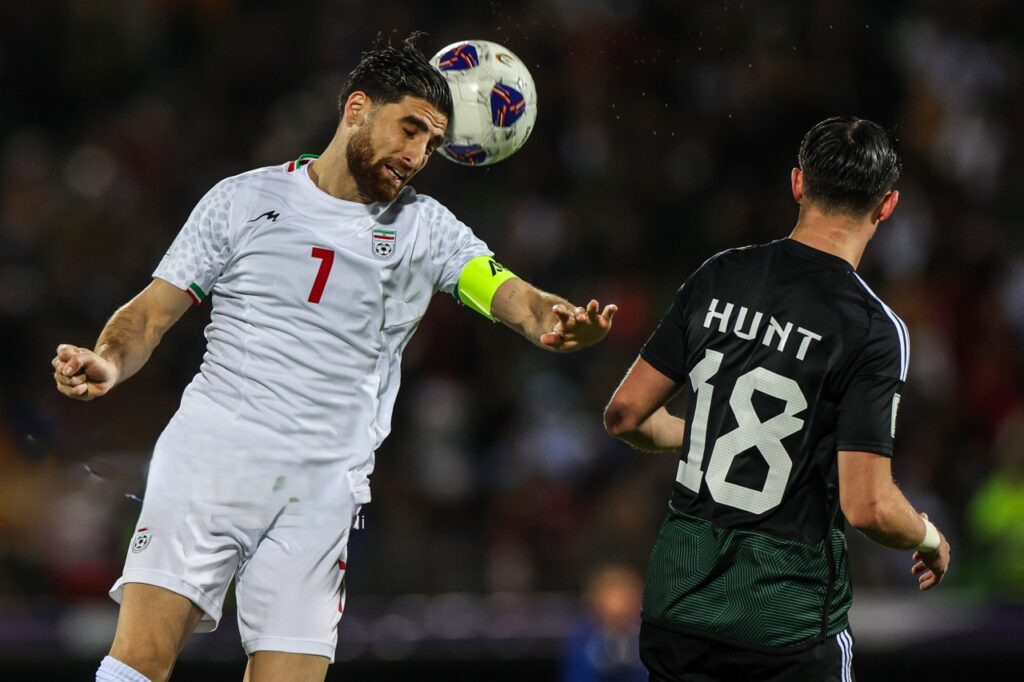
Alireza Jahanbaksh heading against Hunt of UAE

Squad Composition

The selection highlights the dominance of Iran’s domestic league, with the country’s top clubs providing the bulk of the players.

  • Sepahan: 6 players
  • Esteghlal: 5 players
  • Persepolis: 4 players
  • Tractor: 3 players
  • Other Clubs: The remainder of the squad is drawn from other domestic teams and includes three players from UAE’s Etihad Kalba.

The Full 27-Player Squad:


GOALKEEPERS:
1- Payam Niazmand – 30 years -(Persepolis),
2- Nima Mirzad – 28 years – (Mes Rafsanjan),
3- Seyed Hossein Hosseini – 33 years- (Sepahan)

Defenders:

4- Mohammad Hossein Kananizadegan – 31 years- (Persepolis),
5-Mohammad Naderi – 28 years – (Tractor),
6- Aref Aghasi – 28 years – (Esteghlal),
7-Ramin Rezaeian -35 years- (Esteghlal),
8- Ali Nemati -29 years- (Foolad),
9- Omid Noorafkan -28 years- (Sepahan),
10- Amin Hezbavi – 22 years- (Sepahan),
11- Aria Yousefi -23 years- (Sepahan),

Midfielders:

12- Mohammad Mohebi – 26 years- (Rostov, Russia),
13- Mehdi Hasheminejad – 24 years- (Tractor)
14- Saman Ghodoos -31 years- (Etihad Kalba UAE),
15- Mehdi Mohebi -25 years- (Etihad Kalba UAE),
16- Mohammad Khodabandelou -25 years- (Presepolis),
17- Rouzbeh Cheshmi -32 years- (Esteghlal),
18- Alireza Koushki -25 years- (Esteghlal),
19- Mohammad Ghorbani -23 years- (Al-Wahda, UAE),
20- Mehdi Tikdari Nejad – 29 years- (Sepahan),
21- Alireza Jahanbakhsh – 32 years- (No Club),

Forwards:

22-Mehdi Taremi -33 years- (Inter Milan, Italy),
23- Mehran Ahmadi – 27 years- (Esteghlal),
24- AmirHossein Hosseinzadeh – 24 years- (Tractor)
25- Ali Alipour -29 years- (Persepolis),
26- Shahriyar Moghanlou – 30 years- (Ittihad Kalba , UAE),
27- Majid Aliyari -29 years- (Sepahan)

Team Melli Begins CAFA Nations Cup 2024 Campaign Against Afghanistan

Dushanbe, Tajikistan – The CAFA Nations Cup 2024 is set to kick off on August 29, with Iran’s Team Melli beginning their title defense against Afghanistan in Dushanbe. Host nation Tajikistan will also start their campaign on the same day, facing Malaysia, the sole East Asian representative in the tournament.

Group Stage Fixtures & Key Matches

  • August 29:
  • Iran vs Afghanistan
  • Tajikistan vs Malaysia
  • September 1:
  • Iran vs Malaysia
  • Afghanistan vs Tajikistan
  • September 4 (Final Group Matches):
  • Tajikistan vs Iran (a potential group decider)
  • Afghanistan vs Malaysia

All matches in Group B will be held at Dushanbe’s Central Republican Stadium, while Group A (featuring Uzbekistan, Kyrgyz Republic, Turkmenistan, and Oman) will take place in Tashkent, Uzbekistan.

Tournament Format & Road to the Final

Only the group winners will advance to the final, scheduled for September 8 in Tashkent. The two runners-up will compete for third place in Dushanbe on the same day.

Team Melli’s Dominance & Expectations

As the defending champions of the CAFA Nations Cup, Iran enters the tournament as the favorite. Having won the inaugural edition in 2023, Team Melli will aim to maintain their regional supremacy under coach Amir Ghalenoei. Key players like Mehdi Taremi and Sardar Azmoun are expected to lead the charge.

Meanwhile, Tajikistan, fresh from their impressive 2023 AFC Asian Cup performance, will look to leverage home advantage. Malaysia, invited as a guest team, could be a dark horse, while Afghanistan seeks to make an impact under new management.

Group A Preview: Uzbekistan Favored to Progress

In Tashkent, hosts Uzbekistan are strong contenders, with the Kyrgyz Republic and Oman posing tough challenges. Turkmenistan will aim to spring a surprise in a competitive group. This group is the stronger of the two with a chance of an upset.

CAFA regional has two representatives in the next year FIFA World Cup in Iran and Uzbekistan.

With only one team from each group advancing, every match will be crucial. Football fans across Central Asia can expect an exciting tournament filled with high-stakes clashes.


Team Melli Head Coach Amir Ghalenoei stated:

“Our goal is clear—to defend our title. We respect all opponents, but we are here to win. The players are motivated, and we’ve prepared thoroughly for this challenge.”

Tajikistan’s Head coach, Petar Šegrt emphasized:

“Playing at home is an advantage, but also a responsibility. We want to make our fans proud and prove we belong among Central Asia’s best.”

Afghanistan, under new management, aims to make an impact. Coach Ashley Westwood remarked:

“We’re building something new, and this tournament is a great platform. The players are eager to show their potential.”
Malaysia Head Coach, Peter Cklamovski, described the CAFA Nations Cup 2025 as an important step in the Malaysian national squad’s journey towards building a more competitive team.
The Nations Cup is an exciting tournament, and it’s an important step in our journey as a national team. We have been waiting for the draw for some time, and we’ve obviously had plan A and B

He also described the match against Ira as a great opportunity to assess the true level of the Malaysian National Team.
They (Iran) are going to the World Cup. It is a massive challenge for us, a massive opportunity for us. We will use it as a way to benchmark ourselves against the best. A test of our football against them, we will take our football to them as hard as we can.”


Mehdi Torabi Skips Team Melli Training Without Notice, Risking World Cup Exclusion

Tehran, Iran – Mehdi Torabi, the Tractor midfielder, has sparked controversy by failing to report for the Iranian national team’s latest training camp ahead of June’s crucial fixtures—despite being called up by head coach Amir Ghalenoei.

According to a Mehr News report, Torabi’s unexplained absence has forced the coaching staff to consider a replacement, with Mohammad Hossein Sadeghi now invited to fill the void. This move raises serious questions about Torabi’s future in Team Melli, especially with the 2026 World Cup qualifiers looming.

A Pattern of Exclusion and Frustration

Torabi’s absence follows his omission from Iran’s recent matches against the UAE and Uzbekistan during the Nowruz period (March 2025). Despite being a consistent performer for his club over the past four years, the 29-year-old has struggled to cement a regular starting role under Ghalenoei.

Sources suggest that Torabi’s no-show could stem from:

  • Frustration over limited playing time with the national team.
  • Fatigue after a grueling club season with Tractor.
  • A calculated gamble, possibly testing the federation’s patience.

However, his decision to skip camp without prior notice has backfired, damaging his standing with the coaching staff.

Consequences: A World Cup Dream in Jeopardy

Torabi’s unprofessional conduct may cost him dearly. The national team’s management values discipline, and his unexplained absence could lead to:

  • Immediate removal from the upcoming June squad.
  • Long-term exclusion from World Cup qualifiers.
  • A damaged reputation, making future call-ups uncertain.

Broader Implications for Team Melli

This incident highlights a recurring issue in Iranian football—the tension between club commitments and national team loyalty. While player burnout is a legitimate concern, communication with the coaching staff is non-negotiable. Torabi’s silence has only worsened his situation.

Under Ghalenoei, Torabi is a second such case after Ahmad Nourollahi left the Team Melli camp without permission or knowledge of the head coach. Nourollahi has never been invited to Team Melli since and remains on the black list.

If he hopes to salvage his international career, a public explanation and apology may be necessary from Torabi. Otherwise, his name could soon disappear from Team Melli’s plans altogether and join his mate Nourollahi

 Ghalenoei pays tribute to game-changer Taremi

Tehran: Amir Ghalenoei praised the contribution of Mehdi Taremi after the Inter Milan forward rose to the occasion to help Iran reach a fourth consecutive FIFA World Cup.

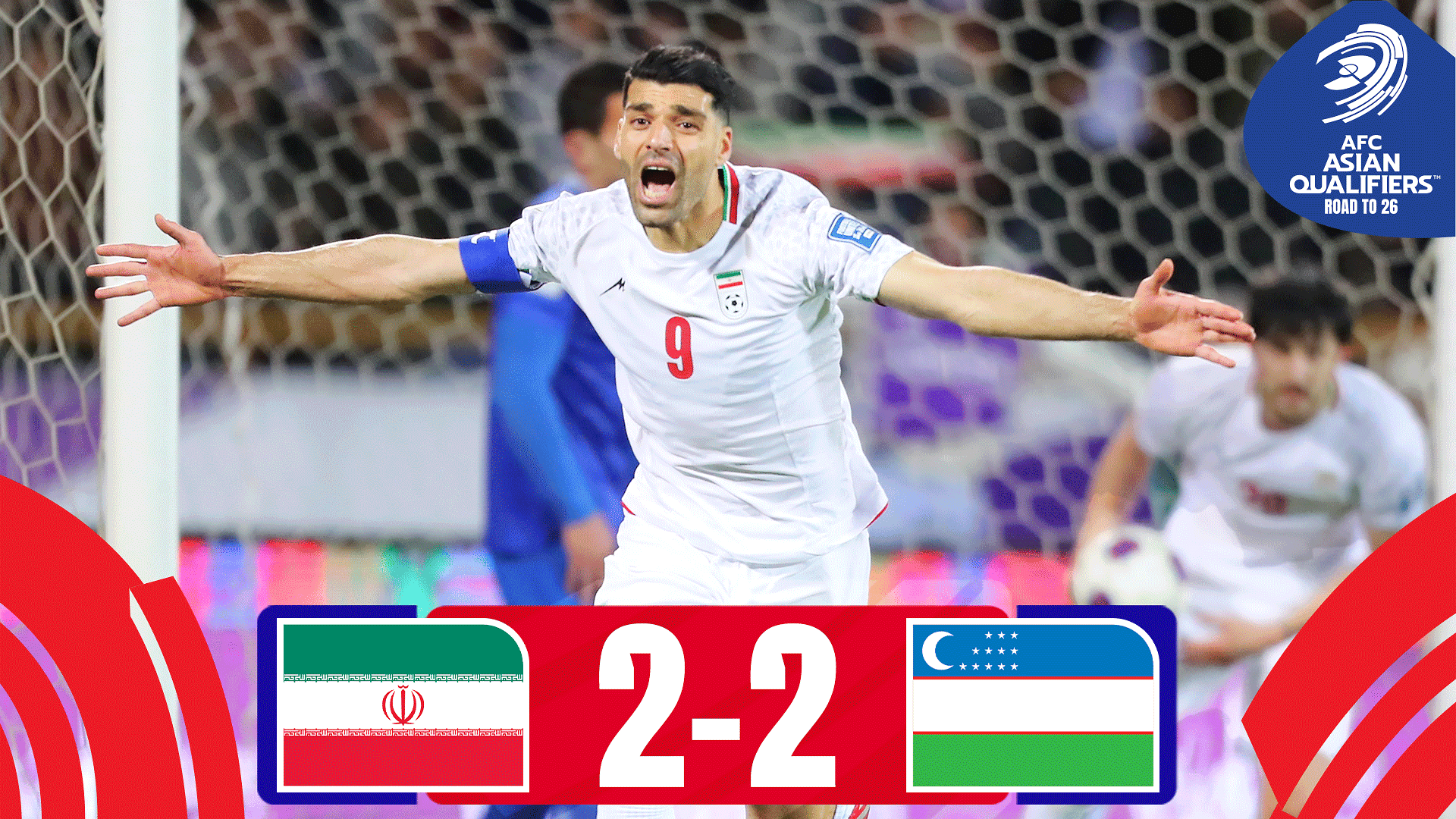
Staring at their first World Cup qualifier home defeat since 2012, Ghalenoei needed someone from his team to step up to the plate and Taremi did not disappoint, scoring his second in the 83rd minute to salvage a 2-2 draw against Uzbekistan with the point sufficient to clinch qualification.

#AsianQualifiers - Road To 26 | Group A : IR Iran 2 - 2 Uzbekistan

“A great player must help both technically and physically,” said Ghalenoei. “Taremi is one of them, and even though he plays for a great team and is not in good condition and could have missed the season, he played and was with the team and played for the people. 

“He became the best player on the field and I am happy that in most games, he is the best player on the field from the Iranian national team.”

Ghalenoei went on to reiterate that reaching the Finals in the United States, Canada and Mexico only meant the beginning of more hard work with the wily head coach targeting a first ever knockout stage appearance at the global showpiece.

“I congratulate the Iranian people on this qualification. Qualification was not an easy task. Look at the capabilities of other teams and you will see that the players were able to achieve this qualification through difficult circumstances. 

“We will give a very good plan to the officials in the next two to three weeks and we hope that it will be implemented and we will be able to advance to the Round of 32 in the World Cup.”

image content

Goals from Hojimat Erkinov and Abbosbek Fayzullaev had given head coach Timur Kapadze hope that Uzbekistan themselves could book their spot at the FIFA World Cup 2026 but it wasn’t to be.

However, the Central Asians are still very much in control of their own destiny as they hold a four-point lead over United Arab Emirates with two matches remaining.

image content

“First of all, I would like to congratulate the Iranian national team on qualifying for the World Cup and wish them success in this tournament,” said Kapadze. 

“The game was interesting and exciting, both teams had chances. I think the result was fair. We could have beaten Iran, but it didn’t happen.

“The people of Uzbekistan deserve the World Cup and I thank them for their prayers. We are trying to achieve the desired result in the next game and qualify.”

Alireza Jahanbaksh heading against Hunt of UAE

Iran v. Uzbekistan: Match Review

Team Melli needs only a draw against Uzbekistan at the Azadi Stadium in Tehran on Tuesday to secure a spot at the 2026 World Cup, joining Japan as confirmed qualifiers.

Iran, aiming for their fourth consecutive World Cup appearance, leads Uzbekistan by three points in Group A and holds a nine-point advantage over the United Arab Emirates with three matches remaining.

In what is arguably the toughest test of their qualification campaign, Iran appears to be the slight favorite in this top-of-the-table clash. With a convincing win against the UAE and a stable squad with minimal changes to the lineup, Ghalenoei’s men are confident. Barring any major lapses in concentration or individual errors, Team Melli should secure their ticket to North America next year.

Meanwhile, Uzbekistan endured a challenging match in the previous round, narrowly defeating Kyrgyzstan. The team also suffered the departure of long-time head coach Srečko Katanec, who resigned due to health issues. His replacement, Timur Kapadze, is no stranger to Iranian football, having played multiple matches against Team Melli during his career.

Iran’s head coach Amir Ghalenoei expressed pride in his team’s performance following their 2-0 victory over the UAE and urged his players to complete their qualification mission ahead of schedule.

Even in the event of a loss, Iran could still qualify if the UAE and Qatar drop points in their respective matches.

For Uzbekistan, this match presents a significant opportunity. If they win and both the UAE and Qatar fail to secure victories, they will qualify for the World Cup. A draw could also be enough if both the UAE and Qatar lose their matches.

Team News

Uzbekistan faces squad challenges, with three players potentially missing the match:

  • Husniddin Alikulov (Rizespor, Turkey) is sidelined due to injury and also missed the match against Kyrgyzstan.
  • Jaloliddin Masharipov (Esteghlal) is suspended due to yellow card accumulation.
  • Oston Orunov, who missed the previous match, remains doubtful but could return to the lineup.

On the Iranian side, Saeid Ezzatollahi has returned to training after missing the UAE match due to injury. With his replacement, Cheshmi, now injured, the Shabab Al-Ahli midfielder may see playing time against Uzbekistan. Additionally, 32-year-old striker Mehdi Taremi remains a doubt for the game.

Pre-Match Insights

At a pre-match press conference, Uzbekistan head coach Timur Kapadze acknowledged the challenge ahead, stating:

“An exciting match awaits us. We know Iran’s strength and understand our own capabilities. We have prepared well, and everyone is ready for the game. We have met Iran several times in recent years and have gathered the necessary information to prepare accordingly.”

Kapadze refrained from comparing past and present Uzbek teams, emphasizing that the current squad represents the strongest generation available.

Regarding missing players, he commented:

“Both Masharipov and Orunov are important, but this is football. Others will step up in their place. Orunov had an injury, and we will assess his readiness. The rest of the squad is fit.”

Uzbek midfielder Abbosbek Fayzullayev (CSKA Moscow) echoed the team’s ambition:

“We are here to win and will give everything to achieve that result.”

Iranian head coach Amir Ghalenoei reflected on his experience in Tashkent, where he received medical assistance from Uzbekistan’s staff, expressing gratitude for their support.

“Uzbekistan has invested heavily in its youth development over the past decade, yielding excellent results. We recognize the challenge ahead.”

Regarding Uzbekistan’s tactical approach, he noted:

“They operate in a 3-4-3 formation and are result-oriented. We have analyzed their system and prepared accordingly. Our match against the UAE was one of our best statistically, and we hope to carry that momentum forward.”

Ghalenoei dismissed suggestions that Iran’s qualification is already assured:

“We have two more finals after this match. Every game is a final because it becomes part of history. Our motivation remains high for all upcoming fixtures.”

On Mehdi Taremi’s availability, he stated:

“His health is our priority. The medical team is assessing him, and we will decide on his participation closer to match time.”

Road to the World Cup

The top two teams from each of Asia’s three groups in the third phase of qualifying advance directly to the World Cup in the United States, Canada, and Mexico. Teams finishing third and fourth will enter a fourth-round playoff in October.

Japan was the first nation to secure qualification last Thursday.

Iran and Uzbekistan have faced each other three times in the 2026 qualifiers, with all encounters ending in draws. This match will be pivotal in determining the fate of both teams in their journey to the World Cup.

Team Melli’s Mini-Training Camp Canceled Amid Speculations Over Player Selection

Team Melli’s proposed mini-training camp has been canceled at the request of league coaches, according to head coach Amir Ghalenoei. Speaking briefly to reporters during the Persepolis vs. Havadar match, Ghalenoei expressed regret for not elaborating further, citing illness due to the flu. He assured the media that a comprehensive press conference would be held soon to provide updates on Team Melli’s preparations for the FIFA World Cup 2026 Qualifiers in March, where they are set to face the UAE and Uzbekistan.

In the meantime, Iranian football circles are abuzz with rumors surrounding a potential new addition to the national team—a 27-year-old Iranian-German striker, Yerai Eckert Ayensa, currently playing for the Belgian side Standard Liège. Reports suggest that Eckert is on the brink of receiving a call-up for Team Melli’s upcoming matches.

However, Eckert’s performance this season has raised questions about the merit of his potential inclusion. In 13 appearances for Standard Liège—12 starts and one substitute appearance—he has accumulated 1,060 minutes of playing time, registering just one goal against Charleroi and one assist against Saint-Truiden. Such modest statistics hardly make a compelling case for a national team selection, especially for a squad boasting one of the strongest attacking lineups in Asia, led by Sardar Azmoun and Mehdi Taremi.

Sayyadmanesh vs. Eckert: A Tale of Contrasting Performances

The speculation over Eckert’s call-up becomes even more puzzling when compared to the standout performances of Allahyar Sayyadmanesh, another Iranian player excelling in the same Belgian Pro League. The 22-year-old forward, who previously represented Team Melli, has been a consistent performer for Westerlo this season. By the 20th week of the league, Sayyadmanesh had featured in all 20 matches, contributing six goals and five assists—far surpassing Eckert’s output.

Despite his superior form and younger age, Sayyadmanesh appears to be overlooked by Ghalenoei, sparking debate about the rationale behind the rumored interest in Eckert. Both players are versatile, capable of playing as center forwards or wingers. However, at 27, Eckert is four years older than Sayyadmanesh, making the argument for youth and potential less convincing.

Transfer Value and Player Caliber

Another point of comparison is their market value. On Transfermarkt, Eckert is valued at €2.5 million, while Sayyadmanesh’s valuation stands at €4 million—a reflection of the latter’s higher standing in international football. While transfer value isn’t the sole determinant of a player’s worth to the national team, it offers an indicator of their performance and potential.

Given these considerations, the idea of inviting Eckert—whose current form is far from ideal—over Sayyadmanesh raises eyebrows. If there is no place for a proven, younger talent in Team Melli’s camp, what justifies the attention toward a player with less impressive statistics?

As Team Melli gears up for crucial World Cup qualifiers, such decisions will inevitably come under scrutiny. Fans and analysts alike will await Amir Ghalenoei’s forthcoming press conference for clarity on the direction and priorities of the national team.


Challenges Facing Team Melli and Iranian Football: A Deep Dive into Management, Performance, and Future Prospects

The dust has temporarily settled after the intense criticism that followed Team Melli’s 2026 World Cup qualifiers. Amir Ghalenoei, the national team coach, and the players found themselves under fire from the media, critics, and fans alike. This debate extended beyond football, touching on sensitive issues such as patriotism, loyalty, and politics. Social media is rife with claims that the current national team no longer represents the Iranian people, with a growing sentiment that it lacks widespread support.

There was also criticism within the team as Sardar Azmoun, the savior of Team Melli against Kyrgyzstan with a splendid winner, admitted that Team Melli lacks professional mentality after the match.

Discontent with Team Performance

A key source of dissatisfaction is Team Melli’s underwhelming performances, particularly in the second halves of matches. Both North Korea and Kyrgyzstan managed to score two goals each against Iran’s fragile defense, and only the woodwork prevented Korea from securing an equalizer. These second-half collapses have left many fans frustrated.

However, much of the criticism has been directed at Amir Ghalenoei himself. His appointment after Carlos Queiroz’s departure following the 2022 World Cup was controversial. Ghalenoei’s tenure has been marked by strained relations with critics and a lack of public rapport. Instead of addressing concerns about his defensive strategies with confidence, Ghalenoei has accused his detractors of unpatriotic behavior or personal grudges—an approach that has done little to calm tensions but much to turn the former Esteghlal player and coach into a hated figure.

Prominent Critics Speak Out

Ghalenoei’s critics include high-profile media figures and former Team Melli coaches. Jalal Cheragpour , former Team Melli coach, has openly stated that Ghalenoei is not up to the job and should be replaced before the next World Cup. TV anchor Javad Khiabani launched impassioned critiques, highlighting the lack of professionalism and etiquette among some national team players, which he deemed unfit for international representation.

Ebrahim Ghasempour, a member of Iran’s 1978 World Cup team, who played with legends such as Ghleechkhani, Hejazi, Rowshan, Parvin, has also weighed in on the broader issues afflicting Iranian football. He cited systemic failures in both club and national setups, emphasizing that the foundations of Iranian football are weak.

Systemic Issues in Iranian Football

Ghasempour pointed to poor management and the absence of proper infrastructure as critical challenges. “The backbone of our national team is our clubs, but they face a myriad of problems,” he explained. He criticized the performances of Iran’s premier clubs, Persepolis and Esteghlal, in recent Asian competitions, where they struggled against relatively weaker teams. Esteghlal, for example, failed to beat Al-Rayyan, a second-tier Qatari club.

The veteran footballer highlighted a troubling trend: Iran’s failure to achieve results in international competitions across all levels. From the senior national team’s empty-handed returns from the AFC Asian Cup to the U23 team’s failure to qualify for the Olympics, Iranian football has struggled to make a mark.

Mismanagement and Wasted Resources

According to Ghasempour, decades of mismanagement have left Iranian football stagnant. Clubs lack proper tools and infrastructure, despite significant financial resources flowing into the sport, mainly from the government. These funds are often misallocated or squandered. For example, grassroots development in clubs like Foolad Khuzestan and Sepahan exists in name only, as few academy graduates are promoted to senior teams.

This lack of a pipeline has also affected Esteghlal and Persepolis, Iran’s most popular clubs. Despite their large fan bases, these teams rarely field players from their own academies. Instead, they spend billions of tomans on player salaries without seeing a proportional return on investment.

Ghasempour lamented the poor quality of players and astronomical wages, stating, “A player earning 40 or 50 billion tomans often lacks basic skills, like passing accurately to a teammate. These contracts need serious scrutiny.”

The Path Forward

Ghasempour believes the solution lies in overhauling football management at every level, from the Football Federation to local clubs. He called for competent skilled leaders with practical plans to take charge, rather than the current nepotistic system where posts are handed to relatives and close friends. “If we want to elevate Iranian football, we must start at the top,” he concluded. “Only then can we hope for real growth.”


Match preview: Kyrgyzstan vs Iran

Bishkek: Iran will expect to take another step towards sealing qualification when they play Kyrgyz Republic in Group A of the AFC Asian Qualifiers™ – Road to 26 on Tuesday.
Seeking a fourth consecutive and seventh overall appearance at the global showpiece, Iran holds a three-point lead at the summit, with the top two sides to qualify automatically for the Finals.

Despite a fightback from DPR Korea, Iran were deserved winners of their tie on Thursday after a dominant first half which saw them taking a 3-0 lead.
Head coach Amir Ghalenoei will want his side to avoid another nervous finish, which was sparked by Shojae Khalilzadeh’s 50th minute sending off.
“We have to be able to adapt to different situations. We managed to control the game through our substitutions and we must now shift our focus to the next game,” said Ghalenoei.

Kyrgyz Republic, appearing at this stage of the AFC Asian Qualifiers for the first time, only have three points on the board but remain in contention and will be determined to make home ground advantage count against Iran.
Maksim Lisitsyn’s lost 3-0 to United Arab Emirates on Thursday with the head coach attributing their heaviest defeat so far in the AFC Asian Qualifiers to mistakes of their own doing.
The Central Asian side were, however, a handful to their opponents in their earlier matches and will hope for a result against Iran, who were restricted to a 1-0 win when the sides met in September.
Kyrgyz Republic v IR Iran

Team Melli will be without Saman Ghoddos (injured) and Shoja’a Khalilzdeh (suspension). Mohammed Mohebbi will be doubtful and awaiting a fitness test.


Venue: Dolen Omurzakov Stadium (Bishkek)
Kick-off: 20:00 (UTC+6)

HEAD2HEAD

DateCompetitionScoreScorers
4th Jun 1997World Cup Qualifier7 – 0Farhad Majidi (2),Ali Mousavi , Ali Daei , Mehrdad Minavand , Karim Bagheri (2)
9th Jun 1997World Cup Qualifier3 – 1Khodada Azizi (2),Karim Bagheri
7th Jun 2016Friendly6 – 0Masoud Shojaei ,Mehdi Taremi ,Mehdi Torabi , Karim Ansarifard (2), Sardar Azmoun (1)
16th Jun 2023CAFA Nations Cup5 – 1Mehdi Taremi (3), Sardar Aazmoun (2)
5th Sep 2024World Cup Qualifier1 – 0Mehdi Taremi

North Korea’s last attempy to seek qualifcation.

Vientiane: Iran will face DPR Korea in Group A of the Asian Qualifiers™ – Road to 26 knowing that victory will almost surely secure their ticket to the FIFA World Cup 2026.

Iran, on 10 points, lead the standings ahead of Uzbekistan on goal difference with both sitting six clear of the United Arab Emirates and Qatar after just four matches. 

Seeking a fourth consecutive appearance at the FIFA World Cup and seventh overall, Iran’s qualification campaign has been serene.

The opening two matchdays saw the Central Asian side registering 1-0 wins over Kyrgyz Republic and UAE, with a tough 0-0 draw with Uzbekistan following.

Iran, however, were at their scorching best against Qatar on Matchday Four as they cruised to an emphatic 4-1 win and with their key players all available, they will fancy their chances against DPR Korea in the neutral venue of Vientiane.

“We are well aware that we have a tough game. The Korean team has a strong defense. They also work very well and quickly in attacks. In this game, we have to go to the field with more focus and responsibility than in the previous matches. We got a good result in the last two games, but those two matches are history now,” Ghalenoei said.

The Team Melli coach says that the match against North Korea and Kyrgyzstan are “the most important” matches of the national team.

“We must play with high concentration from the first minute to the 90th minute. We have analyzed North Korea and we know how strong they are. Even in the match against Uzbekistan, where they lost, or in the match against the UAE, where they shared the spoils, they could have won the match, so we must face this opponent with full attention,” he added.

Asked his is there any challenge ahead of Iran football team against the Korean team, Ghalenoei said, “Fortunately, we don’t have any special challenge ahead of us and the players are ready to play. I have to thank the Iran Football Federation, because we traveled to Laos by direct flight, otherwise it would endure a 30-hour trip.

 However, the truth of the game is when the referee blows the whistle to start the game, and I hope that the players of the national team will start and finish their work in this match with the same concentration they had in the game against Qatar and use the opportunities effectively.

In response to the question about the history of matches between two teams, North Korea have always been a difficult opponent, Ghalenoei said, “Football in Asia has progressed and you can see this in the World Cup qualifiers. North Korea have also shown that they are a good team with a plan, and their past results prove this. The matches against North Korea and Kyrgyzstan are our most important matches and we want to do our best to secure our berth in the World Cup.”.

While DPR Korea still have a mathematical chance of securing one of the two top spots which will guarantee automatic qualification, they will need to win their remaining matches and hope other results go in their favour.

With just two points on the board, victory is a must against Iran and DPR Korea can be expected to produce their best as they strive to keep their campaign alive. 


DPR Korea v IR Iran

Venue: Lao National Stadium KM16 (Vientiane)

Kick-off: Thursday, 19:00 (UTC+7)

Ghalenoei’s Outburst: A Coach’s Unusual Rant Against Critics

Following Team Melli’s emphatic victory against Qatar, head coach Amir Ghalenoei surprised many with a heated outburst, targeting his critics and demanding that Iran’s national broadcaster, IRIB, stop airing their opinions. His remarks, unusually severe even by his own standards, sparked widespread reactions across media outlets.

In the post-match press conference, Ghalenoei expressed his frustration, saying, “They [the critics] did not help the team. If you’re going to talk about someone, speak from your experience. Not everyone deserves a platform to criticize. It seems anyone with an issue against Amir Ghalenoei gets a voice on radio and television. Check these people’s resumes and compare them to mine.”

He went on to highlight his accomplishments: “I’m not just Amir Ghalenoei from the league. I’ve earned over a thousand points coaching various teams, not just one. I’ve taken responsibility for teams that were struggling both financially and in terms of scheduling. For example, Sepahan, a club I’m proud of, was 14th in the table when I took over, and we achieved great results on a minimal budget.”

He continued by mentioning his time with Tractor Sazi, where he led the team to its first-ever qualification for the AFC Champions League, which he considers one of his proudest achievements. Ghalenoei also highlighted his success with Esteghlal, his boyhood club. Wrapping up his speech, he addressed IRIB officials directly: “Team Melli and I are not without flaws. Criticize us, but don’t hold grudges. Some people are given a platform to criticize, not based on merit, but out of past grievances. One day I’ll respond to all of them, but for now, I must stay silent due to my position. Mr. Taj has also asked me to remain calm, but the day will come when I answer them all.”

While coaches often feel targeted by criticism, believing that dissent is a personal attack, Ghalenoei’s remarks crossed a line by calling for national media censorship. His demand that IRIB, Iran’s only authorized television and radio network, silence his critics struck many as authoritarian.

The backlash was swift. Javad Khiabani, a veteran broadcaster and respected authority on Team Melli, was one of the most outspoken critics. Khiabani condemned Ghalenoei’s arrogance and accused him of attempting to stifle free speech and the press’s role in providing objective analysis. He reminded Ghalenoei that journalism’s duty is to scrutinize and hold those in power accountable. “Ghalenoei acts as though he is beyond criticism, but his resume, despite his boasting, is lacking in international success,” Khiabani pointed out. “Beating Qatar is not an achievement to be proud of like defeating world champions, France or Brazil. Ghalenoei has twice failed to win the AFC Asian Cup as Iran’s coach and has yet to qualify for the World Cup, something an Iranian coach achieved decades ago with far fewer resources and fewer finalist (16 teams).”

Khiabani further criticized Ghalenoei for trying to dictate the terms of criticism, a job that rightly belongs to journalists. He emphasized that no coach should be immune from analysis, especially when leading the national team.

Ghalenoei’s tirade reveals a deep-seated insecurity and fear of criticism, suggesting a lack of confidence in his own abilities. His unreasonable demand for IRIB to suppress negative opinions is unlikely to be entertained by the authorities, and it may only amplify the voices of his critics. By lashing out at the media, Ghalenoei has likely emboldened his detractors, who will now scrutinize every aspect of his leadership, from player selections to tactics.

In the end, Ghalenoei’s rant may have done more harm than good, intensifying the spotlight on his tenure and raising questions about his ability to handle the pressures of leading Team Melli.