Tag: Alireza Jahanbakhsh

Alireza Jahanbakhsh Seeks Revival with Surprise Move to Belgian Strugglers Dender

In a move that underscores a pivotal juncture in his career, Iranian international winger Alireza Jahanbakhsh has signed a one-year contract with Belgian Pro League club FC Dender, with an option for a further year. The signing concludes a period of unemployment for the 32-year-old after his departure from Eredivisie side Heerenveen.

A Career of Highs and Lows

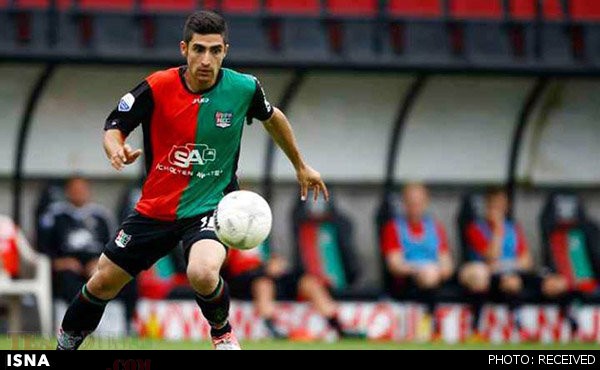
The official announcement from Dender highlighted the “wealth of experience” Jahanbakhsh brings to the squad. Indeed, his career trajectory has been a rollercoaster. After making his name in the Netherlands with NEC Nijmegen, his prolific spell at AZ Alkmaar culminated in a historic achievement: becoming the first Asian player to finish as the Eredivisie’s top scorer in the 2017-18 season, netting 21 goals for AZ.

This golden boot win earned him a high-profile, multi-million euro transfer to the English Premier League’s Brighton & Hove Albion. However, his time in England was largely underwhelming, as he struggled to adapt to the pace and physicality of the league. Seeking to rediscover his form, he returned to the Netherlands, first with Feyenoord and later with Heerenveen, but was unable to consistently replicate the goal-scoring prowess of his peak years.

On the international stage, Jahanbakhsh has been a fixture for Team Melli, earning 95 caps and scoring 17 goals. He has represented Iran at two FIFA World Cups (2018 and 2022) and multiple AFC Asian Cups, often playing a key role in the team’s attacking line.
A Move Born of Necessity

The sporting context of this transfer is stark. FC Dender is currently in a dire situation, sitting at the very bottom of the Belgian Pro League table without a single win after 13 matches, having secured only four points from four draws. For a player of Jahanbakhsh’s former stature, a move to a club fighting relegation is a clear step down.

This decision is widely seen as a direct consequence of the intense scrutiny over his recent standing with the Iranian national team. For months, Jahanbakhsh had been selected for Team Melli by head coach Amir Ghalenoei despite being a free agent and visibly lacking match fitness and sharpness.

The Team Melli Controversy: A Note on Recent Poor Form and Selection Debate

Jahanbakhsh’s inclusion in recent national team squads has been one of the most contentious issues of Amir Ghalenoei’s tenure. While other Iranian attackers were performing regularly for their clubs, Jahanbakhsh, without a team, was consistently named to the squad and often granted significant playing time.

This policy sparked significant backlash. Reports from the Team Melli camp suggested growing discontent among players and staff, with accusations of favoritism and nepotism leveled at Ghalenoei. Critics argued that it was demoralizing for in-form players to be benched in favor of one who was effectively on an extended leave.

The pressure from the media and, reportedly, from within the squad, reached a boiling point. It is believed that Ghalenoei was forced to issue an ultimatum to Jahanbakhsh: find a club or be left out of future national team selections. The move to Dender, therefore, appears to be a direct response to this pressure. For Jahanbakhsh, the priority was not the prestige of the club, but simply being registered as a professional player to maintain his international eligibility.

An Uncertain Future

For FC Dender, the signing is a low-risk gamble on a player hoping to rediscover his form and leadership. For Alireza Jahanbakhsh, it is a desperate attempt to rescue his place in the national team and prove he can still compete at a professional level. Whether this move to the bottom of the Belgian league will be the launchpad for a career renaissance or simply a last resort before an inevitable decline remains to be seen. All eyes will now be on whether this move is enough to secure his spot in Team Melli for the upcoming World Cup qualifiers.
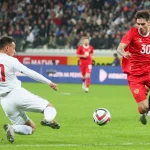
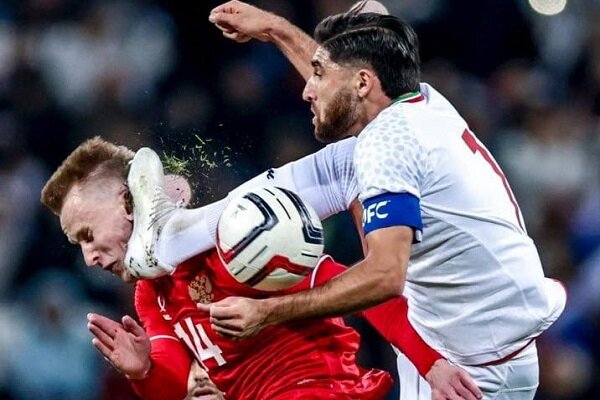
Jahanbakhsh’s Embarrassing Foul Highlights Ghalenoei’s Failing Strategy


The recent international friendly against Russia not only ended in a 2-1 loss for Iran but also exposed a deepening crisis within Team Melli, one rooted in the repeated poor judgment of head coach Amir Ghalenoei. The central emblem of this failure was the embarrassing and dangerous performance of Captain Alireza Jahanbakhsh.

Jahanbakhsh, who has been without a club since his contract with SC Heerenveen was terminated after a single, unremarkable season, was a liability from the moment he stepped onto the pitch as a substitute. His 20-minute cameo was widely described on social media as “confused,” “ineffective,” and “agitated,” culminating in one of the ugliest scenes in recent Team Melli history.

The Incident: A Moment of Shocking Ill-Discipline

During the second half, Jahanbakhsh recklessly raised his foot high, making direct and dangerous contact with the head of Russian defender Lechi Sadulayev. The foul was so egregious that a straight red card was the only appropriate outcome by any standard of the game. To the shock of fans and the Russian team alike, the referee only produced a yellow.

The result was stark: Sadulayev lay in clear agony, the stud marks from Iran’s captain visibly etched on his face and neck as he received treatment. This moment was not merely a lapse from a veteran player; it was a symptom of a deeper sickness within the squad—a lack of discipline and professionalism that falls directly at the feet of the manager.

Ghalenoei’s Culpability in a Deepening Crisis

This incident is not an isolated one. Under Ghalenoei’s tenure, the Iranian national team has been plagued by discipline issues, amassing a concerning seven red cards. Jahanbakhsh’s foul should have been the eighth, and it underscores a pattern of tactical and selection weakness.

The core of the problem is Ghalenoei’s baffling persistence with Jahanbakhsh. The captain has been in a spiral of declining form for at least two seasons and, critically, has been without a club for nearly six months. A fundamental principle of international football is that players must be fit, in form, and actively competing. By selecting a rusty, unattached player, Ghalenoei not only set Jahanbakhsh up to fail but also knowingly introduced a liability into the team.

The foul itself, while lacking obvious ill intent, was a direct product of this rustiness and a complete lack of match sharpness—a flaw for which the coach is entirely culpable. This repeated poor judgment in player selection points to a tactical weakness that extends beyond a single game; it reflects a stubborn refusal to build a squad based on merit and current ability.

Unsurprisingly, this episode has intensified calls from fans and experts for the 35-year-old Jahanbakhsh to retire from international duty. However, the larger demand is for accountability from the dugout. Until Ghalenoei is held responsible for his failing strategy and misguided loyalty to underperforming veterans, Team Melli’s progress will remain stalled.

Iran’s Title Defense: Ghalenoei Bets on Experience for CAFA Nations Cup 2025


Head coach Amir Ghalenoei has named a seasoned 27-man squad for Iran’s upcoming CAFA Nations Cup 2025 title defense, opting for continuity and experience over a significant generational shift. The tournament will be held in Uzbekistan and Tajikistan from August 29th.

Despite the general perception of the CAFA region’s modest competitive level—with Uzbekistan being the clear exception—Ghalenoei has largely stuck with his established core. The squad is a blend of veteran internationals and a select few emerging talents from the Iranian Premier League, signaling a clear intent to retain the trophy won against Uzbekistan in the 2023 final.

The team’s preparations are hampered by significant absences. Key stars such as Sardar Azmoun, Mehdi Ghaedi, and Ali Gholizadeh are all sidelined due to injury, while first-choice goalkeeper Alireza Beiranvand is out through suspension. These omissions have undoubtedly diluted the squad’s overall strength.

Navigating the Group Stage

Team Melli’s campaign begins with a match against Afghanistan, a fixture they will be expected to win comfortably. The following games against India and hosts Tajikistan are anticipated to present progressively tougher challenges. However, the ultimate test is expected to be a potential final rematch against a strong Uzbek side.

Concerns Over Key Figures

The squad list reveals concerns regarding the fitness and form of its leadership. Captain Alireza Jahanbakhsh is currently without a club, having yet to secure a contract for the new European season. With transfer windows beginning to close, his match sharpness remains a major question mark.

Meanwhile, vice-captain and team star Mehdi Taremi finds himself in a difficult situation at Inter Milan. Despite his high-profile move, the striker has been relegated to train with the club’s U23 side and has been excluded from the senior squad as the Italian giants seek a buyer for him.

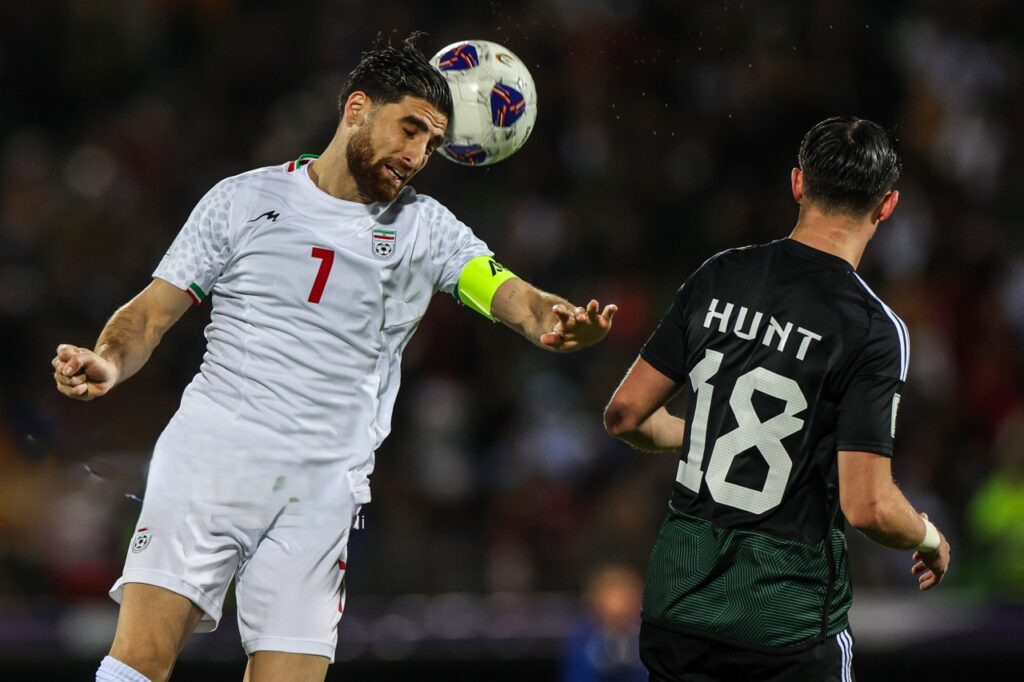
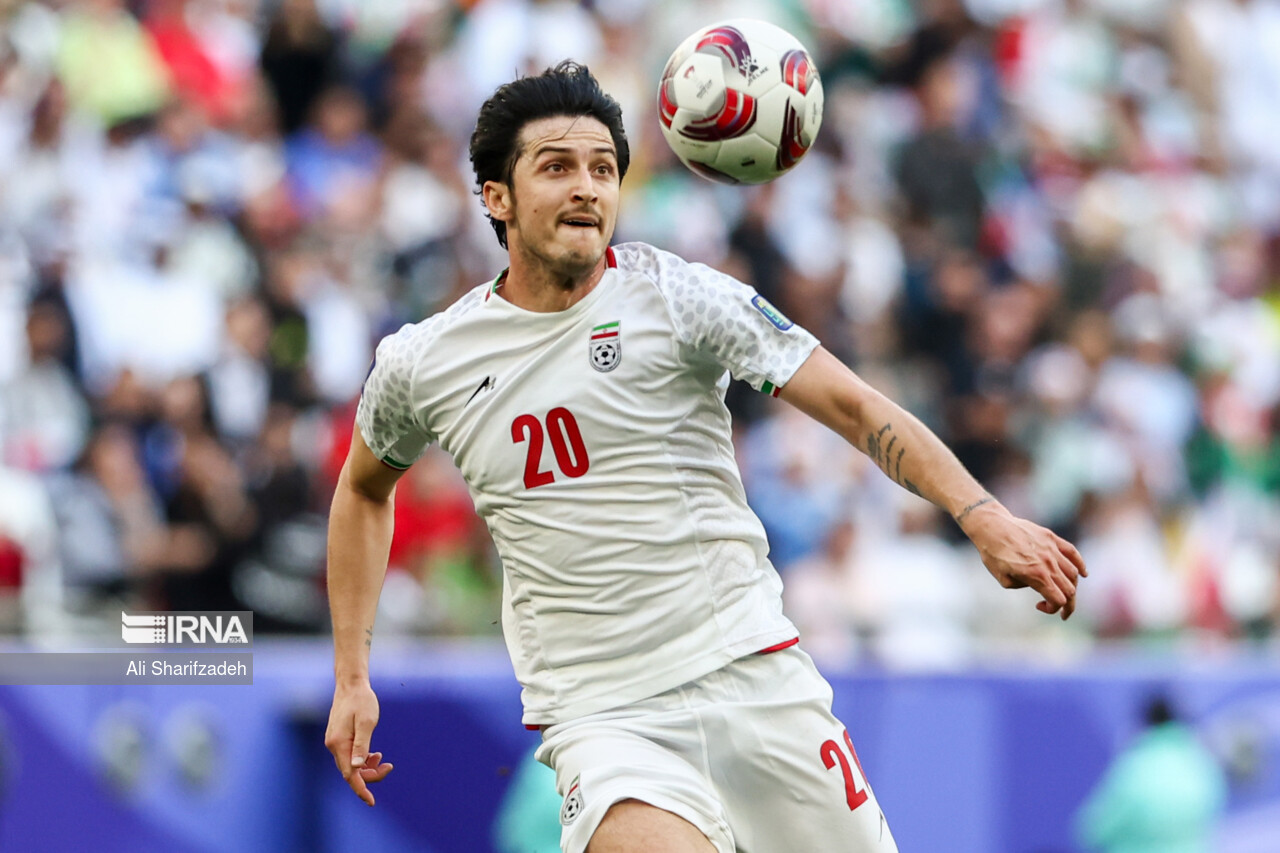
Alireza Jahanbaksh heading against Hunt of UAE

Squad Composition

The selection highlights the dominance of Iran’s domestic league, with the country’s top clubs providing the bulk of the players.

  • Sepahan: 6 players
  • Esteghlal: 5 players
  • Persepolis: 4 players
  • Tractor: 3 players
  • Other Clubs: The remainder of the squad is drawn from other domestic teams and includes three players from UAE’s Etihad Kalba.

The Full 27-Player Squad:


GOALKEEPERS:
1- Payam Niazmand – 30 years -(Persepolis),
2- Nima Mirzad – 28 years – (Mes Rafsanjan),
3- Seyed Hossein Hosseini – 33 years- (Sepahan)

Defenders:

4- Mohammad Hossein Kananizadegan – 31 years- (Persepolis),
5-Mohammad Naderi – 28 years – (Tractor),
6- Aref Aghasi – 28 years – (Esteghlal),
7-Ramin Rezaeian -35 years- (Esteghlal),
8- Ali Nemati -29 years- (Foolad),
9- Omid Noorafkan -28 years- (Sepahan),
10- Amin Hezbavi – 22 years- (Sepahan),
11- Aria Yousefi -23 years- (Sepahan),

Midfielders:

12- Mohammad Mohebi – 26 years- (Rostov, Russia),
13- Mehdi Hasheminejad – 24 years- (Tractor)
14- Saman Ghodoos -31 years- (Etihad Kalba UAE),
15- Mehdi Mohebi -25 years- (Etihad Kalba UAE),
16- Mohammad Khodabandelou -25 years- (Presepolis),
17- Rouzbeh Cheshmi -32 years- (Esteghlal),
18- Alireza Koushki -25 years- (Esteghlal),
19- Mohammad Ghorbani -23 years- (Al-Wahda, UAE),
20- Mehdi Tikdari Nejad – 29 years- (Sepahan),
21- Alireza Jahanbakhsh – 32 years- (No Club),

Forwards:

22-Mehdi Taremi -33 years- (Inter Milan, Italy),
23- Mehran Ahmadi – 27 years- (Esteghlal),
24- AmirHossein Hosseinzadeh – 24 years- (Tractor)
25- Ali Alipour -29 years- (Persepolis),
26- Shahriyar Moghanlou – 30 years- (Ittihad Kalba , UAE),
27- Majid Aliyari -29 years- (Sepahan)

Alireza Jahanbakhsh’s career at crossroads!


The Premature Decline of Iran’s Football Captain: From Dutch Stardom to Cypriot Obscurity?

Once hailed as Iran’s brightest European export, Alireza Jahanbakhsh now faces a career trajectory that can only be described as a rapid and perplexing decline. At 31, the captain of Iran’s national team finds himself without a club, with rumors linking him to a move to Cyprus’s Apollon—a team that finished last season with a modest record of 12 wins, 10 draws, and 14 losses. For a player who was once the top scorer in the Dutch Eredivisie, this potential move underscores a staggering fall from grace.

The Rise and Fall of a Former Star

Jahanbakhsh’s peak came in the 2017-18 season when he netted 21 goals for AZ Alkmaar, becoming the first Asian player to claim the Eredivisie Golden Boot. His achievement was historic, sparking pride across Iranian football. Yet, what followed was a series of missteps and unfulfilled potential.

His £17 million move to Brighton & Hove Albion in 2018—a then-club-record fee—turned into a nightmare. Over three Premier League seasons, he managed just two league goals, with his shots on target failing to reach double digits. A return to the Netherlands with Feyenoord offered brief respite, but his subsequent transfer to Heerenveen, a mid-table side, raised eyebrows. Even more telling was Jahanbakhsh’s admission that he sought to extend his stay in the Netherlands primarily for passport eligibility—hardly the ambition expected of a player once destined for greater heights.

A National Team Paradox

Despite his club struggles, Jahanbakhsh has remained a staple in Iran’s national team under manager Amir Ghalenoui, even earning call-ups while unattached to any club. Yet, his performances in Team Melli have drawn increasing criticism, with fans questioning whether loyalty has outweighed merit.

A Bitter Irony

Perhaps the most striking aspect of Jahanbakhsh’s decline is the contrast between his past advocacy for Iranian players in Europe’s elite leagues and his own fading relevance. While Uzbek and Kazakh teenagers secure contracts with Manchester City and Chelsea, Iran’s former golden boy now faces the prospect of Cypriot football—a league far removed from the prestige he once embodied.

What Comes Next?

At 31, time is running out for a career revival. Whether Jahanbakhsh can rediscover even a fraction of his past brilliance remains uncertain. But one thing is clear: unless he finds a way to reverse this downward spiral, his legacy risks being defined not by his historic Eredivisie triumph, but by a premature and disappointing decline.


Jahanbakhsh’s Downfall: A Case Study in Wasted Potential

From Dutch Stardom to Premier League Flop

Jahanbakhsh’s 21-goal season with AZ Alkmaar in 2017-18 should have been the launchpad for a stellar European career. Instead, his £17 million move to Brighton became a cautionary tale. Hindered by tactical mismatches, physical demands, and a lack of confidence, he managed just two Premier League goals in three seasons. Unlike Japanese or South Korean players who adapt and grow in Europe, Jahanbakhsh regressed—raising concerns about whether Iranian players receive the right preparation for top-tier football.


Why Do Iranian Players Struggle in Europe?

While Japan and South Korea consistently export world-class talents (Son Heung-min, Kaoru Mitoma, Takefusa Kubo), Iran’s European exports often flame out prematurely. Several key factors explain this trend:

1. Poor Career Planning & Agent Influence

Many Iranian players prioritize immediate financial gains over long-term development. Unlike Japanese stars who carefully choose clubs with playing time guarantees (e.g., Mitoma’s move to Brighton after Belgian development), Iranians often join unstable leagues (Qatar, UAE) or make premature jumps to Europe without proper scouting. Agents sometimes push for lucrative but ill-fitting transfers, harming careers.

Example: Sardar Azmoun, despite Bundesliga interest, chose Rubin Kazan for money—delaying his top-five league breakthrough until his late 20s.

2. Lack of Adaptability

European football demands tactical flexibility, physical endurance, and mental resilience—areas where many Iranian players struggle. Jahanbakhsh’s failure at Brighton stemmed partly from his inability to adjust to the Premier League’s intensity. Similarly, Mehdi Taremi, despite success in Portugal, faced criticism for inconsistency in high-pressure matches.

Contrast: South Korea’s Lee Kang-in thrived at Mallorca and PSG by adapting quickly—something few Iranians manage.

3. Weak Domestic Development

Iran’s Pro League lacks modern training methods, sports science, and competitive depth. Even in Asian Iran’s club football is in the fourth of fifth tier of the continent. While Japan’s J-League and South Korea’s K-League actively prepare players for Europe, Iran’s league remains insular. Young talents like Allahyar Sayyadmanesh show promise but often move too early (e.g., his failed Fenerbahçe stint).

4. National Team Pressure vs. Club Form

Iranian players often perform better for the national team than their clubs—partly due to emotional motivation but also because domestic expectations overshadow individual growth. Jahanbakhsh remains a national team regular despite poor club form, reducing his urgency to improve.


Can the Next Generation Break the Cycle?

A few young Iranians offer hope. However, unless Iran improves:

  • Youth development (modern coaching, exposure to European academies)
  • Smart transfers (avoiding money-driven moves to weak leagues)
  • Mental & physical preparation (sports psychology, fitness regimes)

…the cycle of unfulfilled potential will continue.


Conclusion: Jahanbakhsh’s Legacy—A Warning or a Wake-Up Call?

Jahanbakhsh’s decline isn’t just his own—it mirrors systemic flaws in Iranian football. While players like Taremi and Azmoun have had moderate success, none have reached the heights of their Asian counterparts. Unless Iran addresses its structural issues, its next golden generation may suffer the same fate: flashes of brilliance, followed by premature decline.

For now, Jahanbakhsh’s career stands as both a tragedy and a lesson—one that Iranian football must learn from before another talent fades away.

Who Really Runs Team Melli? Torabi’s Explosive Claims Expose the Shadow Leaders

Mehdi Torabi’s recent outburst was not just a complaint—it was a bombshell revelation about the corrupt power dynamics controlling Iran’s national football team. The usually reserved Tractor Tabriz winger, known for his quiet demeanor, shocked fans by exposing what many have long suspected: Team Melli is not run by the coach, but by a powerful clique of players who dictate call-ups, tactics, and even team selections.

Torabi’s Rebellion: A Breaking Point for Team Melli

Torabi is not a troublemaker. He rarely speaks out, avoids controversy, and has never been one to rock the boat. So why now?

Because the rot in Team Melli has reached unbearable levels.

In his explosive interview, Torabi stopped short of naming names, but his message was clear:

“The criteria for selection in Team Melli are not based on merit. Personal relationships, favoritism, and outside influences decide who gets called up. This is a betrayal of the fans and the sport.”

His words confirm what insiders have whispered for years—a shadowy “player mafia” controls the national team, manipulating coaches, administrators, and even the FFIRI (Iranian Football Federation).

The Gang Behind the Curtain: Who Are They?

While Torabi avoided direct accusations, multiple sources within Team Melli point to two key figures as the ringleaders:

1. Alireza Jahanbakhsh – The Declining Star Who Won’t Let Go

  • Once a Golden Boot winner in the Dutch league (21 goals in 2017/18), Jahanbakhsh’s career has plummeted since his failed move to Brighton.
  • Last seven seasons (140 games, 14 goals) – a pathetic 0.082 goals per game for club.
  • For Team Melli (since 2018): 13 goals in 57 games (0.23 per game) – hardly the stats of an irreplaceable star.
  • Yet, despite his decline, he remains untouchable, taking minutes from younger, hungrier players like Torabi.

Why? Because he wields influence behind the scenes, leveraging his status to maintain his place regardless of form.

2. Mehdi Taremi – The Undisputed Leader (On and Off the Pitch)

  • Unlike Jahanbakhsh, Taremi’s club performances (until recently) justified his place—his Porto stint was stellar.
  • But his disastrous move to Inter Milan (minimal impact in a failed title bid) raises questions about his current level.
  • More troubling, however, is his reported role as the locker room’s “godfather.”
  • Insiders claim he dictates team politics, influencing call-ups and sidelining those who challenge his authority.

How the “Player Mafia” Operates

  1. Pressure on Coaches – Senior players threaten unrest if their preferred teammates are excluded.
  2. Favoritism Over Merit – Underperforming veterans (like Jahanbakhsh) keep their spots, while in-form players (like Torabi) are ignored.
  3. Backroom Deals – Rumors persist of agents and federation officials colluding with player cliques to maintain control.

Why Nothing Changes

  • FFIRI is Weak & Complicit – The federation lacks the will (or courage) to investigate.
  • No Independent Oversight – Unlike in Europe, where media and federations hold power players accountable, Iran’s system protects the status quo.
  • Political Protection – As long as the team qualifies for tournaments, no one in power cares how the sausage is made.

What Happens Next?

  • Torabi’s Career in Jeopardy – Will he be blacklisted like Ahmad Noorollahi?
  • Ghalenoei’s Choice – Will he crack down on player power or kowtow to the mafia to save his job?
  • Fan Backlash – If corruption isn’t cleaned up, Team Melli’s credibility will collapse entirely.

The Big Question: Will Anyone Be Held Accountable?

Torabi has broken the silence, but unless:

  • Media keeps pressure up,
  • Fans demand transparency,
  • FFIRI is forced to act,

Nothing will change.

Team Melli belongs to the people of Iran, not a privileged few. It’s time to take it back.

Who’s with Torabi?

Eight Team Melli Players at Risk of Suspension Ahead of Uzbekistan ClashTeam Melli players under the threat of suspension

Eight key Team Melli players face the risk of suspension for Iran’s crucial match against Uzbekistan on March 25 if they receive yellow cards in Thursday’s game against the UAE.

Iran will host the UAE at Azadi Stadium on the final day of the Iranian calendar year 1403 as part of the FIFA World Cup 2026 qualifiers. Head coach Amir Ghalenoei will send his team onto the field under the looming threat of potential suspensions, with eight players carrying yellow cards from previous matches.

The players at risk are Alireza Jahanbakhsh, Hossein Kananizadegan, Milad Mohammadi, Sardar Azmoun, Mehdi Ghayedi, Mohammad Mohebi, Aria Yousefi, and Saeed Ezzatollahi—all just one booking away from missing the showdown with Uzbekistan.

If any of these players receive a yellow card against the UAE, they will be ruled out of the Uzbekistan match. Additionally, should any of them receive a caution against Uzbekistan, they risk suspension for Iran’s final two qualifiers.

Disciplinary issues have historically been a weak spot for Team Melli, and this trend has persisted under Ghalenoei’s tenure. Managing player discipline will be crucial in ensuring Iran fields its strongest squad for the decisive matches ahead.


Heerenveen has clubless Jahanbakhsh in their sights


Nov. 4 2024

SC Heerenveen is in the market for Alireza Jahanbakhsh. The former Feyenoord player is currently without a club and is seen as a possible reinforcement for Robin van Persie’s team.

Heerenveen has clubless Jahanbakhsh in their sights

General manager Ferry de Haan confirms to Omrop Fryslân that there is contact with the 31-year-old Jahanbakhsh. ‘He has certain qualities that we are missing in our squad at the moment’, says the director. ‘Alireza has depth in his game and of course, has the necessary international experience. Normally, these kinds of guys are not affordable for us, but he doesn’t have a club at the moment.”

Jahanbakhsh previously played in the Eredivisie for NEC, AZ and Feyenoord. At the latter club, he has been on the payroll for the past three years; Jahanbakhsh scored seventeen goals in 106 games for Feyenoord. Last season, he suffered a lot from injuries.

Heerenveen currently has four wingers in the squad, namely Jacob Trenskow, Ilias Sebaoui, Danilo Al-Saed and Che Nunnely. The latter has an expiring contract and Sebaoui is on loan from Feyenoord.

Currently, SC Heerenveen is in a precarious position and ranked 15th out of 18 in the Eredivisie with 9 points from 11 games.

Team Melli Legionnaires: Navigating Uncertain Paths

As the end of 2023/2024 season, the future prospects of Team Melli’s legionnaire players hang in the balance. Unfortunately, their performances in European leagues have been less than stellar. Let’s delve into the individual stories of these key players:

Mehdi Taremi

In the 2022/23 season, Taremi dazzled as a key player for FC Porto, scoring 22 goals in 33 Primeira Division games. However, last season, contract negotiations and reduced playing time dimmed his star. Porto’s head coach favored other players, and Taremi featured in only 23 league matches, netting 6 goals. His heart now beats for a move to Inter Milan, although no official contract has been announced yet.

Sardar Azmoun

Azmoun’s loan spell at AS Roma in Serie A didn’t pan out as expected. Despite Bayer Leverkusen’s Bundesliga triumph, Azmoun played second fiddle to Lukaku and Dybala. His 23 appearances included just 3 starts, with 20 substitute roles. He found the net 3 times. AS Roma’s contract with Azmoun ends soon, and Leverkusen seeks offers—preferably an outright sale—to recoup their investment.

Alireza Jahanbakhsh

Jahanbakhsh’s stint at Feyenoord was forgettable. In 16 Eredivisie matches, he failed to score. Starting in only 3 games, he spent most of his time as a substitute. Feyenoord has let go of the 30-year-old captain and winger. Jahanbakhsh’s agents are actively scouting West European clubs, though Turkish sides have shown interest at lower wages.

Saman Ghoddos

Brentford’s Premier League journey didn’t feature Ghoddos prominently. His one-year contract expires soon, and the club shows no interest in an extension. Ghoddos made 19 appearances, mostly as a substitute, but did manage a memorable goal. His versatility caught the eye, but his next destination remains uncertain. Sweden beckons, but Ghoddos hopes for a more ambitious opportunity.

The Crucible Awaits: Team Melli’s Legionnaires

As the 2023/2024 season draws its final curtain, Team Melli’s legionnaire players find themselves at a crossroads. Their lackluster performances in European leagues cast shadows over their prospects. The stakes are high—the FIFA World Cup 2026 looms on the horizon, and Iran eyes a coveted spot among the final 48 teams.

The Unyielding Challenge

While Iran’s group isn’t insurmountable, the team’s fate hinges on its key players. Their game time and exposure to strong leagues will reverberate through every match. Can they rise to the occasion and propel Team Melli to glory?

The Race Against Time

With the 2024/25 season kicking off in August, these players face a tight schedule. Settling into new teams swiftly becomes paramount. As winter approaches, the four World Cup qualifying matches await—a litmus test for their mettle.

The arena awaits, and Team Melli’s fate hangs in the balance. Will these legionnaires seize their moment or fade into obscurity? Only time will tell.

Jahanbakhsh’s imminent departure from Feyenoord.

Reports in Dutch media predicted the departure of Team Melli winger Alireza Jahanbakhsh from Feyenoord at the end of the season.

Feyenoord has officially terminated Alireza Jahanbakhsh’s contract, making him a free agent at the end of the season. According to the Dutch media outlet “nu,” Feyenoord had a one-way option to extend Jahanbakhsh’s 30-year-old contract for one more year, but this extension needed to be activated before April 1. Since Feyenoord managers decided not to renew the contract, Jahanbakhsh’s departure from Feyenoord is now official. However, it’s important to note that Jahanbakhsh is not definitively separated from the club. As a free agent this summer, he can negotiate with other clubs, including Feyenoord. There’s a possibility that he may return under a different contract, similar to what happened with Saman Ghoddos last summer at Brentford. Nevertheless, given the current composition of Feyenoord’s players, it seems unlikely that he will remain with the team.

Jahanbakhsh joined Feyenoord in the summer of 2021, and this season he primarily served as a reserve player. He only started 2 games only while coming in from the bench 8 times. During the previous season, when Feyenoord won the Dutch championship, he played in 28 games scoring 5 goals. In addition to Jahanbakhsh, Costas Lampero, the reserve goalkeeper for the team, has also been informed that he can leave in the summer. The 32-year-old Greek player signed a one-year contract with Feyenoord last summer but did not play a single minute this season.

The 30-year-old winger has been experiencing a gradual decline in form both at club and international level.

Team Melli loses in thrilling semifinal

www.the-afc.com
Doha
:
Qatar moved within one match of retaining their AFC Asian Cup™ title after emerging 3-2 victors against Iran in their Qatar 2023 semi-final at the Al Thumama Stadium on Wednesday.

Almoez Ali, the 2019 Most Valuable Player and top scorer, struck the winner eight minutes before the end in a thrilling last-four tie which saw the Maroons snap a six-game losing run against Team Melli to set up a final meeting with Jordan.

image content

Both teams made two changes each to their starting lineups, Iran’s Ardeshir Ghalehnoy reinstating Ehsan Hajsafi and Mehdi Taremi while Marquez Lopes gave starts to Yusuf Abdurisag and Homam Ahmed.

It was Team Melli who got off to a spectacular start, Sardar Azmoun capitalising on Qatar’s inability to deal with a throw-in to hook an acrobatic effort past a stranded Meshaal Barsham in the fourth minute.

image content

Qatar, however, did not trail for long, drawing level 13 minutes later with Akram Afif’s cutback setting up Jassem Gaber for a shot that took a deflection off Saeid Ezatohali, looped over Alireza Beiranvand and settled in the back of the net.

Iran continued to dominate possession with Qatar relying on counterattacks, and it almost paid off for the hosts in the 32nd minute when Afif pounced on a loose back pass to surge unchallenged but hit his shot straight at a grateful Beiranvand.

image content

The Al Sadd SC star, however, was not to be denied two minutes before the end of the first half when after receiving a pass from Ahmed Fathy on the left, he took a couple of steps before unleashing a powerful drive for his fifth goal of the tournament.

image content

Iran were quick to assert control when the second half got underway and needed only six minutes to restore parity, a VAR review determining Ezatohali’s shot had hit Fathy’s hands. Jahanbakhsh calmly slotted home from the penalty spot for his second goal of the tournament.  

Qatar’s response was almost immediate, but for the heroics of Beiranvand who pulled off a smart save near his post to deny Abdurisag with Shojae Khalilzadeh then making a goal-line clearance of Pedro Miguel’s header from the subsequent corner.

image content

Having had to rely on counter attacks for glimpses at goal, Qatar burst into life in the 82nd minute when Abdulaziz Hatem laid the ball to an unmarked Ali, who had ample time to pick his spot before slotting home, the goal taking his overall tally to 11 as he moved into second place in the all-time topscorers list.

Thirteen minutes of additional time gave Iran hope, but a surging Afif run was checked by Khalilzadeh, with a VAR review replacing an initial yellow card to red.

Even then, Iran twice came close to drawing level, Jahanbakhsh’s attempt hitting the left upright and Barsham getting his palm to a goalmouth scramble as Qatar held on for victory.