Tag: Ali Daei

Football and politics in Iran

Mehdi Taremi is the latest player to receive threats from Iran’s regime after criticising the conditions in his home country. Photograph: Anadolu/Getty Images

Mehdi Taremi is the latest player to receive threats from Iran’s regime after criticising the conditions in his home country. Photograph: Anadolu/Getty Images© Photograph: Anadolu/Getty Images

Story by John Duerden

 •The Guardian

Mehdi Taremi did what he does best. On Saturday, the Iranian striker turned inside the area and scored for Olympiakos, a well-taken eighth goal of the season for the 33-year-old that clinched a 2-0 win at Atromitos and a place at the top of the Greek Super League. Usually, millions of people in Iran follow every step of Taremi’s European career, one that took off with Porto and has settled in Piraeus via Milan, but not this time.

The ruling regime in Tehran has cut the internet and all communications, which meant that residents of the football-loving nation also missed the non-celebration that followed. “It actually has to do with the conditions in my country,” Taremi said. “There are problems between the people and the government. The people are always with us, and that’s why we are with them. I couldn’t celebrate in solidarity with the Iranian people. I know that Olympiakos fans would like me to be happy, but I don’t celebrate the goals, in solidarity with what the Iranian people are going through.”

And what they are going through seems worse than at any time since the 1979 Islamic Revolution deposed the Shah and put Ayatollah Khomeini in power. Surging inflation and a collapsing currency have sparked major anti-government protests and unrest across Iran. The response has been brutal. The ruling regime is clinging on to power by dealing out death, more repression and an internet blackout that has lasted for days. WhatsApp messages remain with one tick, emails are undelivered and websites are unreachable. For the millions of people outside the country with loved ones inside, there is fear and worry.

Football has always occupied a central place in Iran, a country where the government, like many authoritarian regimes, is wary of the power of mass gatherings and their potential to turn political but is also ready to use success for its own ends. When Iran qualified for the 1998 World Cup, players were told to delay their return so celebrations could subside, and in a vital 2010 qualifier, several wore green armbands in support of the opposition leader Mir Hossein Mousavi during protests over a disputed election. Mahmoud Ahmadinejad, the declared winner, visibly tied himself to the team, visiting training sessions and lending his presidential plane for World Cup qualifiers, while at home most clubs remain closely linked, directly or indirectly, to the state.

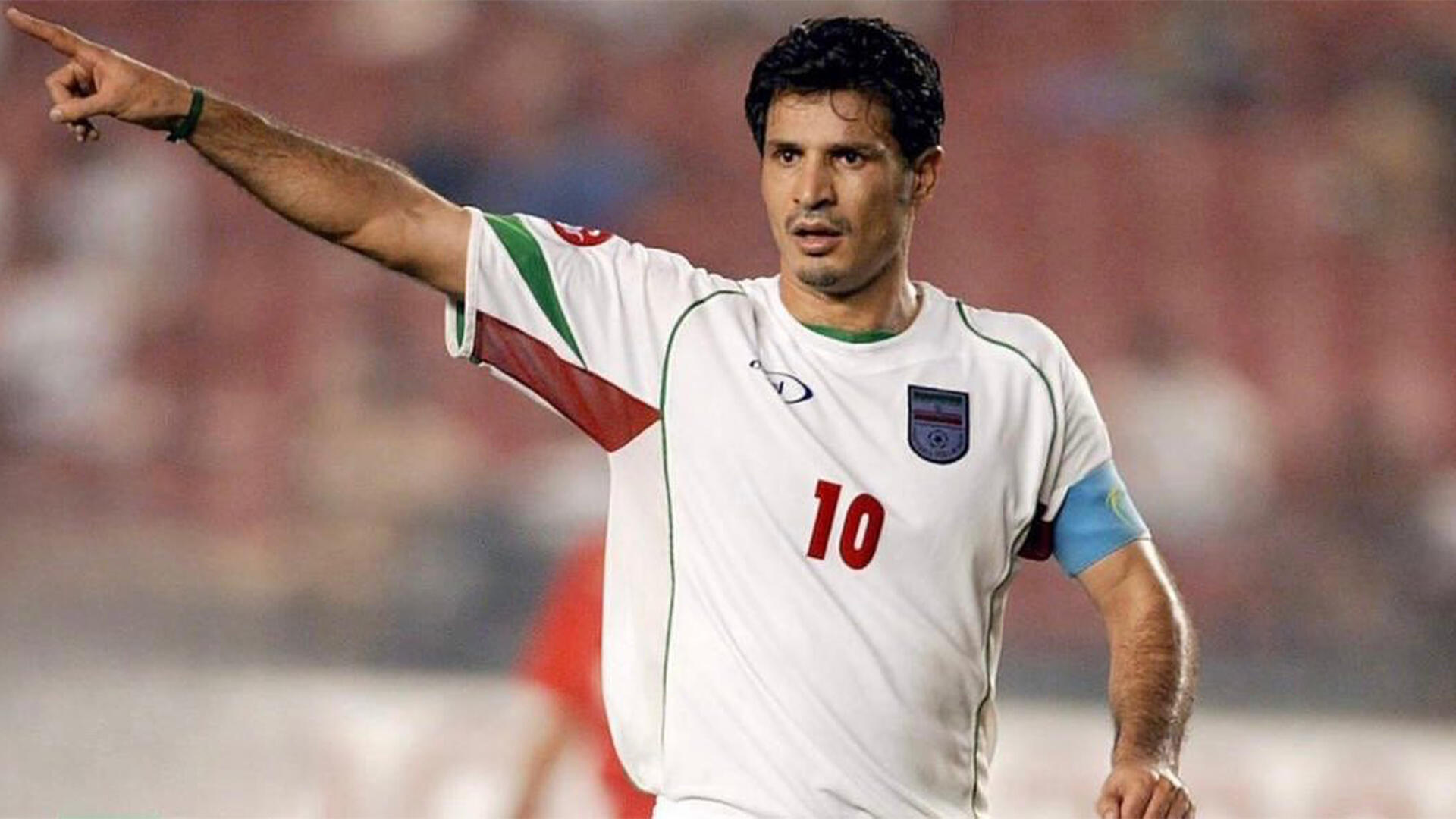
Speaking out is not easy. Ali Daei, like Taremi a cultural icon, backed protests in 2022 and subsequently saw his family prevented from leaving the country. During the last World Cup, which coincided with nationwide protests following the death of Mahsa Amini – a 22-year-old woman arrested for allegedly wearing her hijab improperly – former national team defender Voria Ghafouri was detained for, according to the Fars News Agency, “spreading propaganda against Iran”.

Last week, Ghafouri, the former captain of 10-time champions Tehran Esteghlal, reportedly announced that he was closing his cafes in the capital in solidarity with the protesters. IranWire, a news outlet run by Iranian journalists in exile and citizen reporters inside the country, reported that Fars had warned of repercussions. “These unrests will soon come to an end, but the real test for officials of the football federation will begin afterwards, when they must show that calls for chaos will receive a firm response.”

Threats against Taremi may not work. Few Iranians are better known internationally. Despite once being seen as a supporter of the regime, it seems as though the player has evolved since making a name for himself at Tehran giants Persepolis. Taremi has criticised the state of facilities back home, including the capital’s iconic Azadi Stadium, and has asked why there is a reluctance to allow big crowds to gather. He was the leader of the team at the 2022 World Cup that did not sing the national anthem in the first game with England, an act repeated on 7 January in the Under-23 Asian Cup in Saudi Arabia when the Iranian team kept quiet before their fixture against South Korea.

In Qatar three years ago, the players and head coach, Carlos Queiroz, grew frustrated at what they saw as constant questions from western media on the protests back home, rather than football issues, and demanded to know why counterparts went unquizzed. “Why don’t you ask the other coaches?” Queiroz said. “Why don’t you ask Southgate: ‘What do you think about England and the United States that left Afghanistan and all the women alone?’”

Now there is a desire for more questions and more information with Iran cut off from the world. At the weekend, Queiroz took to social media with a post that included a line attributed to the influential Tehran-born poet Ahmad Shamlou, born 100 years ago last month. “Freedom is breathing in an air where there is no lie.”

“To all Iranian people, My beloved Players, Staff and Friends,” Queiroz added, “I have spent many years among the Iranian people – players, staff, families, friends – and I know their dignity, warmth, and resilience. My heart and thoughts are with the people of Iran during these difficult but challenging days of hope. I am deeply concerned for their safety and well-being.”

Minutes Played Reveals Iran’s True Iron Men

The record books show Javad Nekounam stands alone with 157 caps for Team Melli, surpassing the iconic Ali Daei. However, this metric only tells part of the story. When total minutes on the pitch are calculated, a different legend emerges: Ali Daei remains the untouchable pinnacle of Iranian football endurance, ruling supreme over all players, past and present.

The table below ranks the top 25 Iranian footballers by total minutes played, revealing a fascinating narrative of longevity across generations.

A testament to his extraordinary legacy, Parviz Ghalenoei’s name still appears on this list a half-century later, holding the 22nd position. Now 78 and in exile, Ghalenoei was just 18 years old when he made his debut in a historic match against East Germany at the 1964 Tokyo Olympics. His international career was abruptly cut short in 1977 due to his anti-government political activities, yet his impact remains etched in the record books.

He is joined from that era by the revered Ali Parvin, who occupies the 19th spot. Parvin completes a unique trifecta in Iranian football history, having served Team Melli with distinction as a player, captain, and later as a coach.

What makes their achievements truly staggering is the context of their era. With far fewer international matches played in the last century, the high minute totals of Ghalenoei and Parvin underscore their immense consistency and indispensable role in the team, cementing their status as household names decades later.

From the current generation, only three active players have cracked this exclusive list: Mehdi Taremi, Sardar Azmoun, and Saeid Ezatolahi. With many playing years likely ahead of them, their ascent up the rankings seems inevitable. However, closing the gap on the monumental total set by Ali Daei remains a truly daunting task, a challenge that defines the ultimate test of longevity in Iranian football.

RankNameMinutesStarterSubCaps
1Ali DAEI13,0661456151
2Javad NEKOUNAM12,65614413157
3Ali KARIMI10,20212010130
4Ehsan HAJSAFI9,89911823141
5Jalal HOSSEINI9,6191077114
6Mehdi MAHDAVIKIA9,1541074111
7Andranik TEYMOURIAN7,8489011101
8Karim BAGHERI7,29384387
9Hossein KAEBI7,24884892
10Mehdi TAREMI7,152841599
11Javad ZARINCHEH6,96080181
12Ebrahim MIRZAPOUR6,82479079
13Alireza BEIRANVAND6,81681081
14Mehdi RAHMATI6,68174276
15Yahya GOLMOHAMMADI6,63180282
16Ahmadreza ABEDZADEH6,59674377
17Mohammad NOSRATI6,56174983
18Sardar AZMOUN6,453771491
19Ali PARVIN6,18968472
20Hamidreza ESTILI6,16572981
21Afshin PEYROVANI6,00066268
22Parviz GHLEECHKHANI5,90667067
23Hadi AGHILI5,77166369
24Saeid EZATOLAHI5,662661278
25Alireza VAHEDI-NIKBAKHT5,610661076


Iranian President Orders Ban on Football Legend Ali Daei to Be Lifted

Iranian President Masoud Pezeshkian has instructed the country’s sports minister to lift the ban on football legend Ali Daei, the Etemad newspaper, which is closely aligned with the presidential office, reported on Tuesday.

This move clears the way for Daei to return to football, a decision seen by many as an attempt to quell political unrest in the country. The former national team captain, who is highly revered in Iran, was banned from football-related activities by authorities after publicly supporting the mass protests that erupted in September 2022. The protests, which were ignited by the tragic death of Mahsa Amini—an Iranian Kurdish woman who died in police custody after being detained for allegedly violating Iran’s strict dress codes—saw widespread participation, including from many prominent figures such as Daei.

Daei’s popularity among the masses surged during the uprising, with many seeing him as a symbol of resistance against the government’s oppressive policies. His support for the protests, including his public calls for justice for Amini, made him a hero to many, particularly in the context of his status as a national sports icon. Despite the government’s decision to lift the ban, Daei has firmly refused to engage in any football activities under the current circumstances.

The football federation in Iran, often criticized for its ties to the government and its politicized nature, is seen by many as heavily influenced by the country’s ruling elite, including leaders of the Islamic Revolutionary Guard Corps (IRGC). This connection has prompted Daei to reject any involvement in football administration as long as the federation remains under the control of those who enforce the government’s political agenda. In earlier statements, Daei made it clear that he would not participate in football activities unless the circumstances in Iran change and the sport is allowed to function independently of political pressures.

Despite Daei’s reluctance to return to the field or take on any official roles in the current climate, his legacy as one of the greatest footballers of all time remains unquestioned. He played in Germany from 1997 to 2002, representing clubs like Arminia Bielefeld, Bayern Munich, and Hertha Berlin, and is the most-capped player in Iranian football history, with 149 international appearances until Javad Nekounam over took him. His goal-scoring achievements are also remarkable—Daei is the third-highest scorer in international football with 109 goals, behind only Portugal’s Cristiano Ronaldo and Argentina’s Lionel Messi.

The decision to lift Daei’s ban is widely regarded as a gesture to ease tensions within the country, but it also underscores the ongoing political and social struggles within Iranian football, where figures like Daei, who are seen as independent of government influence, remain at odds with the politicized sports institutions.


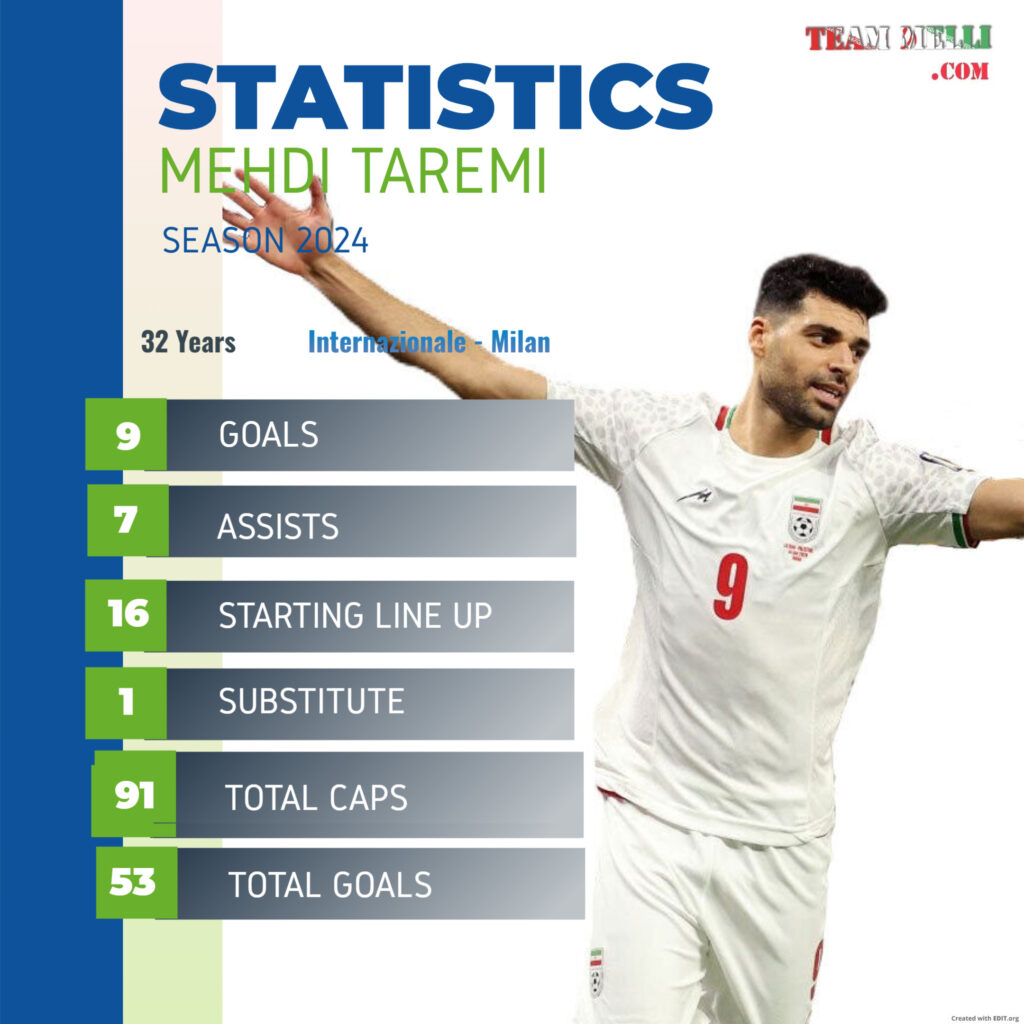
Statistics: Mehdi Taremi


Mehdi Taremi’s statistics speak volumes about his value to Team Melli. A key player who has consistently delivered over the years, Taremi’s contributions were particularly significant during the 2024 season, where his goals made a substantial impact. Despite his risky move to Inter Milan in Serie A, where he struggled to secure a spot in the starting lineup, his modest club performance amidst stiff competition from world-class players did not significantly affect his performance at the national team level. As the highest scorer and top assist provider for Team Melli, Mehdi Taremi has proven to be an indispensable player for the team.

Many critics doubted Taremi’s readiness and ability to perform at the international level due to his limited playing time at the club. This skepticism was evident in a few matches with Team Melli, where he was wasteful and even missed a penalty. However, his determination and perseverance compensated for these setbacks, ensuring that his performance for Team Melli remained strong.

Mehdi Taremi’s goal tally ranks him third all-time, behind his mentor Ali Daei and teammate Sardar Azmoun. Since his debut in 2015, Taremi has scored 53 goals, solidifying his place among the greats of Iranian football.


The illustration below captures the essence of Taremi’s achievements and highlights his contributions to Team Melli’s success!

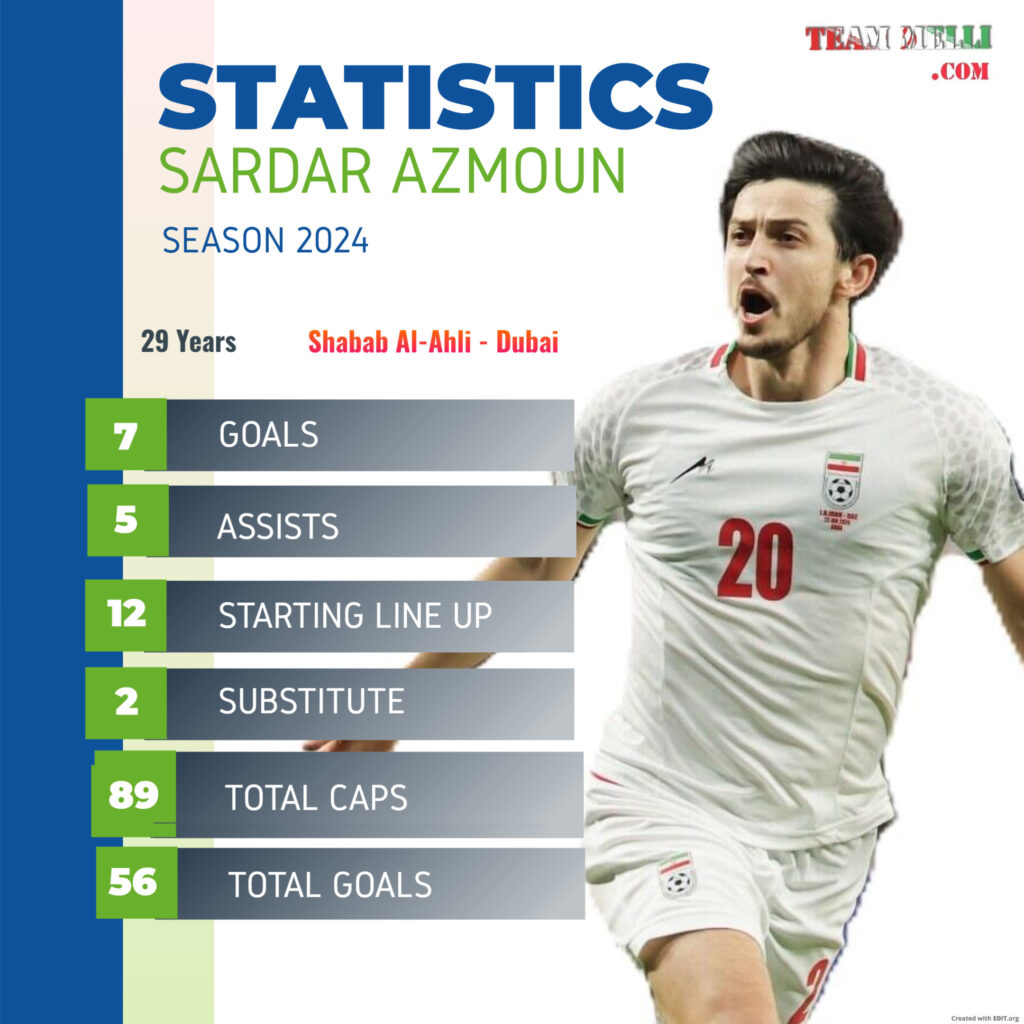
Statistics: Sardar Azmoun

Sardar Azmoun had an outstanding year with Team Melli, leading the Persians to the top of Group A in the FIFA World Cup 2026 qualifiers. Following his transition from the elite European leagues to the less prestigious Persian Gulf Football, there were concerns that the star player might experience a decline in performance, which had prompted his transfer.

However, Azmoun defied expectations. His exceptional goal-scoring ability, combined with his vision and awareness to create spectacular assists for his teammates, proved to be the driving force behind Team Melli’s success. The year 2024 stood out as one of Azmoun’s most successful years with Team Melli, showcasing his prowess and solidifying his status as a key player for the national team.

Azmoun is now the second-highest Team Melli Goal scorer after the Legendary Ali Daei.


This illustration captures the essence of Azmoun’s achievements and highlights his contributions to Team Melli’s success!

H2H: Uzbekistan

On Tuesday, Team Melli will play its final match in the FIFA World Cup 2026 round 2 qualification against Uzbekistan.

The match will determine who will lead the group as both teams have accumulated 13 points from their five matches with Iran leading by the +12 goal difference while Uzbekistan is +9.

The first time these two teams met was in the 1998 Asin Games in Bangkok, where Ali Daei single-handedly swept past the Uzbek with a hat trick, and Ali Mosavi completed the rout with a goal.

It took 14 years for Uzbekistan to register its first and only win against Iran in the 2014 World Cup qualifiers.

Azmoun, Taremi, and Daei are jointly the top scorers against Uzbekistan with 3 goals each.

MPWDLGFGAGDwin%GPM
1310111851376.9%1.38

ScorerGoals
Ali DAEI3
Sardar AZMOUN3
Mehdi TAREMI3
Jalal HOSSEINI2
Mehdi TORABI2
Javad KAZEMIAN1
Ali MOUSAVI1
MohamadReza KHALATBARY1
Rouzbeh CHESHMI1
Ramin REZAEIAN1

Azmoun has an amazing scoring record.

Sardar Azmoun scored against Palestine to reach the 50-goal mark equaling Karim Bagheri. As Azmoun has a higher Goal Per Match GPM, he stands second only to the legendary Ali Daei whose record will not be broken anytime soon.

Azmoun is only 29 years old and has a good 5-6 years left for him to reach a scoring figure close to Daei. He has been playing for a decade for Team Melli and narrowly missed selection for the FIFA World Cup Brazil 2014. However, he has been present in every season since, and this year he celebrates 10 years with an amazing record of 50 goals.

Azmoun’s records show that he played an average of 7.6 matches for Team Melli every year and scored 5 goals in these 7.6 matches an average of .66 GPM. A terrific record only bettered by the legendary Ali Daei whose Goals Per Match is 0.74

Astonishingly, Sardar has yet to play in the domestic league, although he was registered with Sepahan at the start of his career. As he was playing abroad all his career, he missed many chances to play for Team Melli.

SARDAR AZMOUN CAREER
SeasonOpenin.Subst.Caps.GoalsYellowsReds
2014123100
20159211720
2016628810
2017538610
201810010210
201910010820
2020101110
2021909620
2022628200
2023617800
2024011100
Total63137650100

TEAM MELLI TOP SCORING CHART

RANKSCORERGOALSGPMACTIVE
1ALI DAEI113.74N
2SARDAR AZMOUN50.66Y
3KARIM BAGHERI50.54N
4MEHDI TAREMI45.58Y
5JAVAD NEKOUNAM41.26N
6MOHAMMAD ALI KARIMI38.29N
7KARIM ANSARIFARD29.29Y
8GHOLAMHOSSEIN MAZLOOMI19.45N

THE 100 CAPS (CENTURY) CLUB

Only 8 players in the history of Team Melli have managed to pass the 100 caps club, the latest of them is Karim Ansarifard. The list is headed by Javas Nekounam followed by Daei with Ehsan Hajsafy lurking in third place with 15 matches short of Daei. The 33-year-old Team Melli Captain has a good chance of surpassing both Daei and Nekounam as Team Melli is involved in the FIFA World Cup 2026 preliminaries with games coming thick and fast.


RankPlayerCaps
1Javad NEKOUNAM 157
2Ali DAEI 151
3Ehsan HAJSAFI 136
4Mohammad Ali KARIMI 130
5Jalal HOSSEINI 114
6Mehdi MAHDAVIKIA 111
7Andranik TEYMOURIAN 101
8Karim ANSARIFARD 101

Iran-Palestine: Match preview

  • 24 hours to go for Team Melli’s first Match.
    * Palestine will not be easy prey.
    * Ghalenoei “We will play attacking football”

Iran and Palestine will start their campaign in the 18th AFC Asian Cup 2023 at Education City Stadium at 20:30 local time. In the pre-match Press Conference, both managers followed the standard narratives and claims about the importance of the match, with Ghalenoei considering it like a Final for Team Melli!

What is certain though, is Palestine will be playing a solid defensive game, perhaps like parking a double-decker in front of their goalkeeper. The responsibility is on Ghalenoei to form a plan to break this tactic which is now being followed by many weaker teams in front of more powerful opposition.

This gameplan by Palestine, with an eye on quick counterattacks on Iran’s goal might spring a surprise on the final result. The more the Palestinian team can hold on, the more difficult is the task for Iran and that includes the psychological pressure and fan’s reaction to a deadlock.

On the other hand, an early goal by Iran will make Team Melli play at a comfortable pace and dictate the match. On paper, Iran is a much stronger team in every sense. They have the experience, the pedigree, the quality, and have been playing some eye-catching football recently. They are undefeated in two years since losing to the USA in the FIFA World Cup 2022.

Palestine has not enjoyed much success at the international level and has been winless since they defeated Bahrain 2-1 in March 2023. Palestine played eight matches since and has failed to register a win, losing 5 times and drawing 3. In those 8 matches, they scored one goal only while failing to score in seven. This team has a big problem up front. On the other hand, they have a solid defense and one that has yet to crash against the might of Australia, Uzbekistan, and Saudi Arabia.

So, expecting a goal ruch from Azmoun and Taremi, is easier said than done, hence the importance of an early goal.

Interestingly, they have two professional players who play in the Israel league. They have not featured as regulars as many other professionals occupy the starting lineup.

First time
This will be the first meeting between Iran and Palestine in the AFC Asian Cup; the last time Team Melli faced a team for the first time in the competition was on 12 January 2019 v Vietnam – scoring a 2-0 win.

Win target
Palestine is yet to register a victory in the AFC Asian Cup, having gone winless (D2 L4) in the 2015 and 2019 editions; this is their third appearance in the competition.

Unbeatable
Iran are unbeaten in each of their last 20 group stage games (W15 D5) in the AFC Asian Cup; in fact, the last time they lost the opening game in the competition was a 1-2 loss to Iraq in 1996, having won the last six such games since then on the bounce. 

Terrific duo
No player recorded more touches in the opposition box in 2019 than Iran’s duo of Sardar Azmoun (42) and Mehdi Taremi (33); Palestine’s best player in this category in the previous edition was Mahmoud Wadi with six such touches. 

Milestone
Sardar Azmoun has scored 49 goals for Team Melli. He needs just one more goal to equal Karim Bagheri who has 50 goals and is only second to the legendary Ali Daei in the list of the highest scorers of Team Melli.

Possible sanctions against athletes.

Iranian athletes could face punishment if they don’t participate in annual Quds Day marches across the country later this month, according to IranWire, in what would be yet another example of state interference in sports.

The Islamic Republic’s authorities are organizing the rallies on the last Friday of the Islamic month of Ramadan, which this year falls on April 14, in solidarity with the Palestinians.

A directive seen by IranWire and signed by Karamali Iraji, the deputy director-general of the Ministry of Sports and Youth, says that athletes are required to attend the rallies, citing the “noble cause of…the Palestinian resistance,” a resolution of the Coordination Council for Islamic Propagation and instructions by the Tehran Governorate.

The directive was agreed upon last week during a meeting between Minister of Sports and Youth Hamid Sajjadi and his deputies.

The source at the Ministry of Sports and Youth who provided the document to IranWire said that copies were sent to all provincial sports boards across the country.

The ministry is considering possible incentives for athletes who will attend the state-sanctioned rallies and punishment for those who won’t, the source said.

Iranian sports has become increasingly politicized. Most sports bodies had been taken over by political or security-military organizations, with former members of the Islamic Revolutionary Guard Corps holding key positions in clubs and federations. Many footballers were sanctioned or punished for their support of the protests including Ali Karimi, Aldi Daei, Vouria Ghafouri.

Earlier this year, the European Union imposed sanctions on Sajjadi for pressuring Iranian athletes into silence, including climber Elnaz Rekabi who competed in South Korea without mandatory headscarves amid widespread anti-government protests inside Iran.

Last month, the International Olympic Committee (IOC) said it had “expressed serious concerns over the past few months vis-à-vis the situation of the Iranian athletes and the Olympic community as a whole in the current context of the upheavals and demonstrations in the country.”

The IOC has urged the Iranian National Olympic Committee to “take appropriate action with the highest authorities to protect the athletes and members of the Olympic community from a humanitarian perspective.”

The statement warned that the IOC Executive Board “reserves the right to take any appropriate action” relating to the participation of the Iranian NOC and athletes in the 2024 Olympic Games in Paris, “depending on the developments in this situation.”

Hossein Faraki seems to be the lead candidate for Team Melli job.

With the withdrawal of Amir Ghalenoei and Mehdi Tarter, the exclusion of Yahya Golmohammadi from the initial list, and the outright rejection of the offer to coach Team Melli by Ali Daei, Hossein Faraki seems to be the leading candidate for the job.

Notwithstanding the two other candidates (Majidi & Nekounam) both of whom have discipline and stability issues in addition to lack of proper international experience required for the job, Faraki seems to tick all the boxes of FFIRI and most importantly to the authorities, being politically acceptable and loyal.

 In an interview with ISNA, Hossein Faraki acknowledged that his name was amongst several for the post of Team Melli head coach and said ” I was offered the chance for the job in a call made by FFIRI leadership. They sent me an invitation and asked me for a roadmap and plan for participating in the AFC Asian Cup 2023. Of course, there are other options and they specified a deadline for me to respond.”

He continued: “Anyway, it is the national team and it is where I played for many years and had coaching experience too. In the last one or two years, I have had proposals from several clubs, which I have not yet decided on. One of the reasons was the Corona issue, and after that, I realized that the place I want to go to, must have the right conditions and atmosphere to conduct my job. Maybe some clubs have problems and lack facilities, and I also wanted to be in a place where the conditions are available so that I can have an impact. I would like to do something for the national team if I can,”

The former coach of the national team added: “If I feel that something can be done, I will think about it. Many people would love to see me take the post and would love for this to happen to me and for me to get what I deserve. There are different opinions in this regard. Some agree and some disagree, but everyone is entitled to his opinions are it should be respected “

” So far I have not sent my program but I am in the process and will soon submit it to the federation. It will be sent by tomorrow and whatever the outcome will be, it will happen.”

“I don’t like to talk about speculation,” Farraki said about the selection of an Iranian or foreign coach for Team Melli. “Anyway, the decision maker is the Football Federation. Many of our coaches have potential and the desire of every coach is to lead the national team. We also need to motivate the Iranian coach. Foreign coaches have their own values, but under the current circumstances, it is better to give the Iranians the opportunity.

Faraki was born in Tehran on 22nd March 1957 and started his playing career with PAS Tehran from 1976 to 1992), He played for Team Melli  (22 caps/11 goals for Iran), and his coaching career included Esteghlal Tehran, Sepahan Isfahan, Persepolis Tehran

Hossein Faraki played for Team Melli in the first Iranian qualification for the World Cup in 1978. He also won third place in the AFC Asian Cup 1980 in Kuwait with the national team. Faraki served as assistant coach to Branko Ivankovic for three years. Faraki also has the experience of being the head coach of Iran’s Omid national team in 2004. He led Foolad Khuzestan to the League Title in 2012-2013. He also led the Sepahan Isfahan team to the title in 2013-2014, so within 2 years, he has led two different clubs to the championship titles in the Iran Premier Football League.